





Details
Description
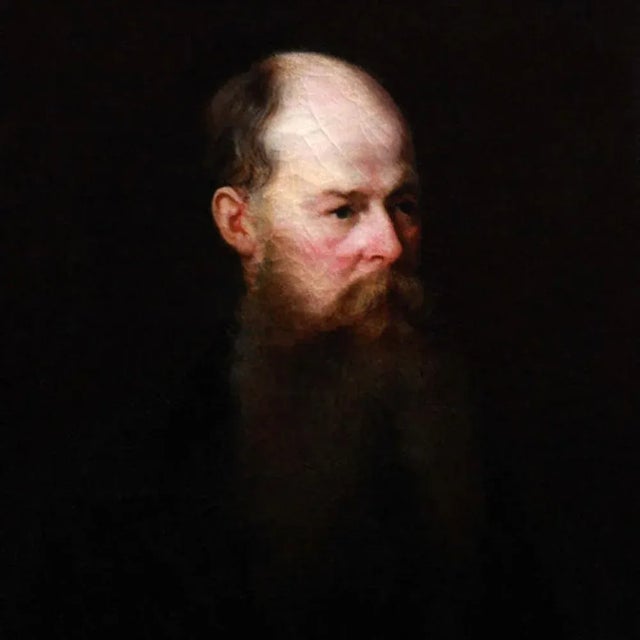
19th-century oil on canvas portrait of the renowned Russian author Leo Tolstoy (1828-1910). The painting is housed in a prominent, …
Read more
19th-century oil on canvas portrait of the renowned Russian author Leo Tolstoy (1828-1910). The painting is housed in a prominent, ornate gold frame. The artwork is characterized by a dark background that focuses attention on Tolstoy's face and his long, white, and bushy beard. His expression is one of serious, contemplative reflection, with the eyes particularly detailed to convey depth and intellect.
Leo Tolstoy (1828–1910) was a Russian writer and moral philosopher, widely regarded as one of the greatest novelists of all time. Born into an aristocratic family, he is best known for his epic novels War and Peace and Anna Karenina.
Frame D: 24”x18-1/2”
Painting D: 18-1/2”x13-3/4”
See less
- Dimensions
- 13ʺW × 4ʺD × 18ʺH
- Styles
- Traditional
- Frame Type
- Framed
- Period
- Late 19th Century
- Item Type
- Vintage, Antique or Pre-owned
- Materials
- Canvas
- Oil Paint
- Condition
- Good Condition, Original Condition Unaltered, Some Imperfections
- Color
- Black
- Condition Notes
- Good Condition For Its Age Good Condition For Its Age less
Questions about the item?
Returns & Cancellations
Return Policy - All sales are final 48 hours after delivery, unless otherwise specified in the description of the product.
Cancellation Policy - Prior to shipping or local pickup, buyers may cancel an order for up to 48 hours, unless otherwise specified.
Related Collections
- Photorealism Canvas Paintings
- Photorealism Paintings in New York
- Ed Ruscha Paintings
- Richard Serra Paintings
- Herman Miller Paintings
- Jo Baskerville Paintings
- Louise Nevelson Paintings
- Karen Offutt Paintings
- Nicola Simbari Paintings
- BDDW Paintings
- James McCray Paintings
- Jaanika Peerna Paintings
- Leroy Neiman Paintings
- Black Photorealism Paintings
- Jeff Slemmons Paintings
- Gold-filled Paintings
- Milton Avery Paintings
- Soicher Marin Paintings
- Vienna Secession Paintings
- Johannes Andersen Paintings
- Pedro Friedeberg Paintings
- Peter Behrens Paintings
- Piet Hein Eek Paintings
- Raphael Paintings
- Photorealism Paintings in Los Angeles