

Starting at 25% Off
Sale Ends Today! - Shop Now
Details
Description
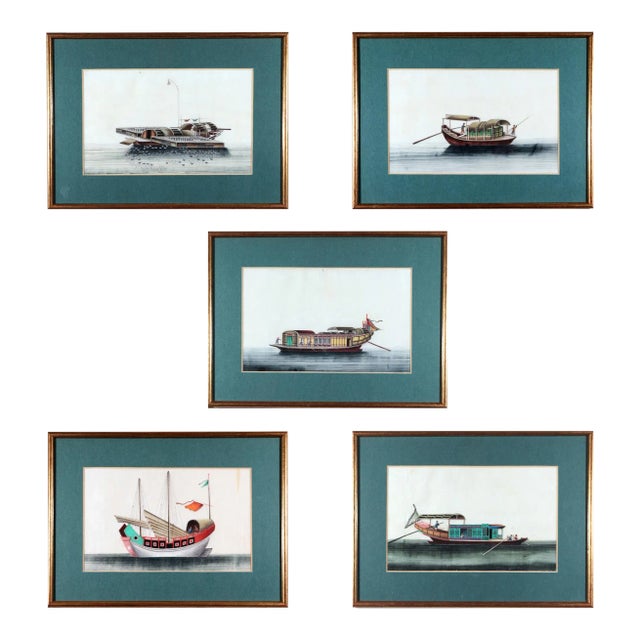
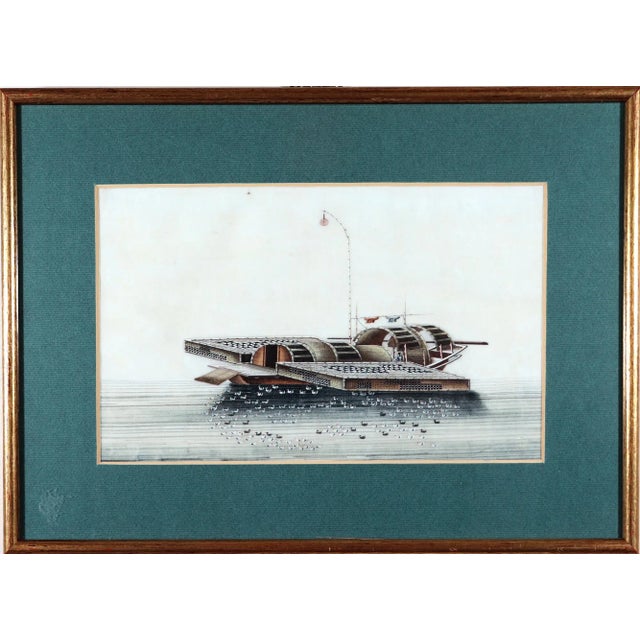
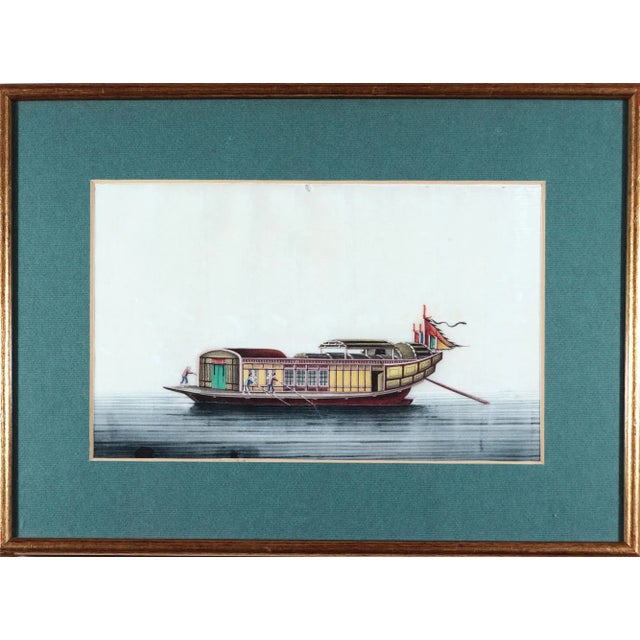
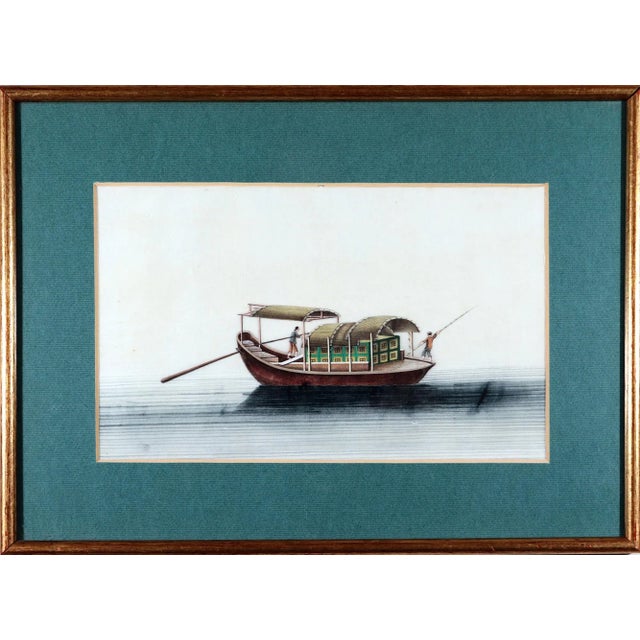
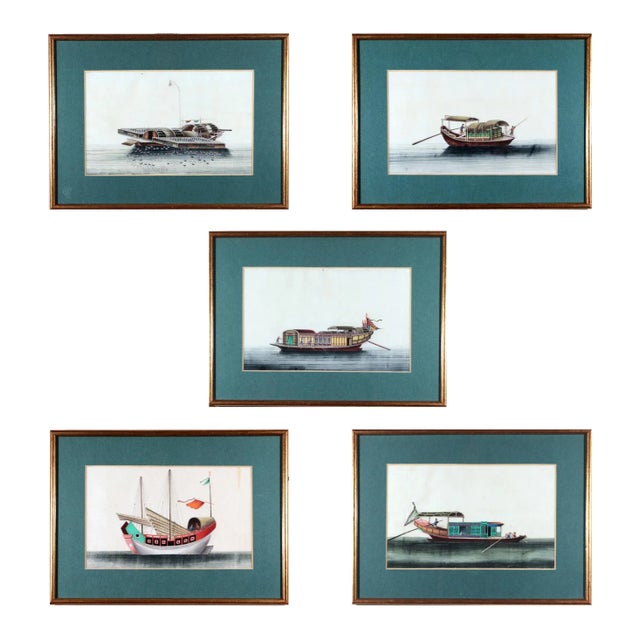
A captivating set of five China Trade watercolors, painted in Canton around 1850, each one a little portrait of a …
Read more
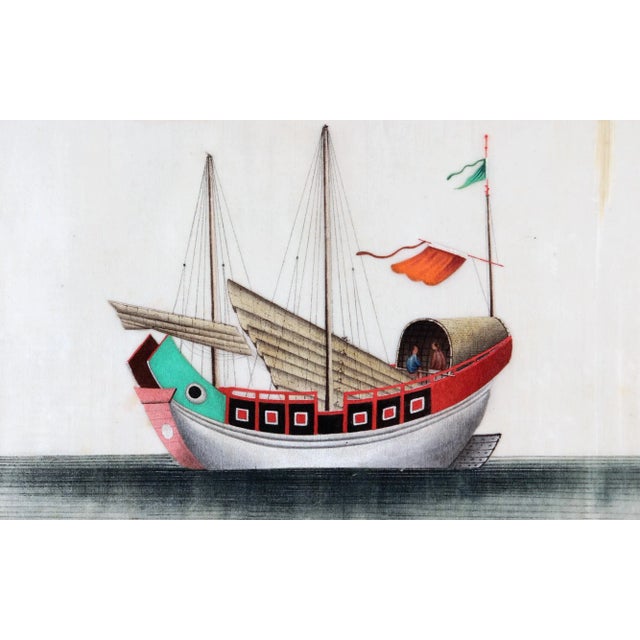
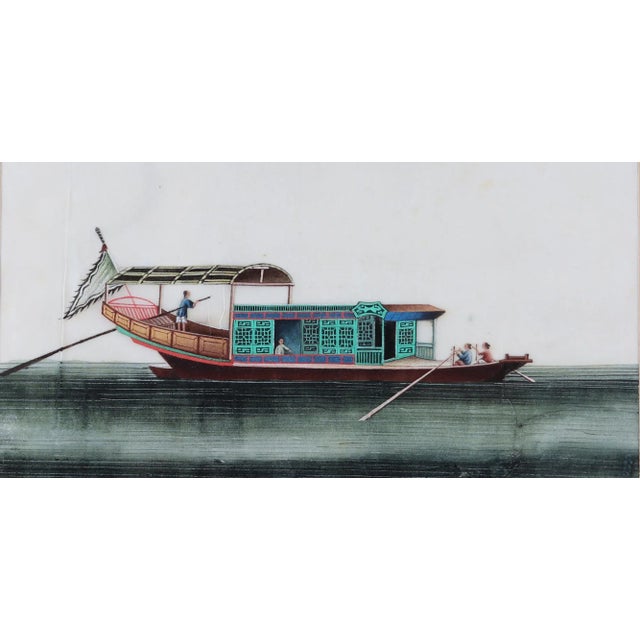
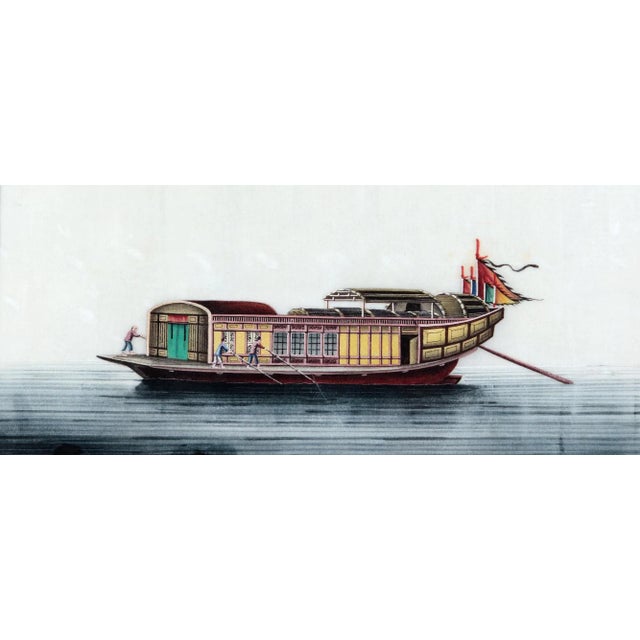
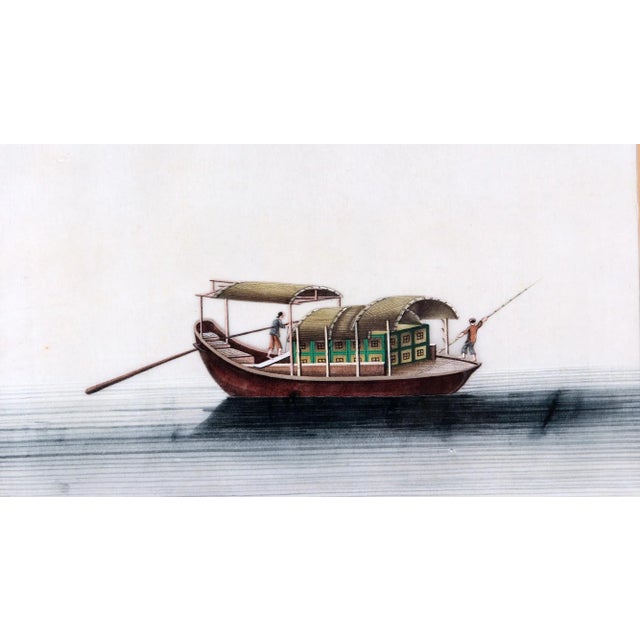
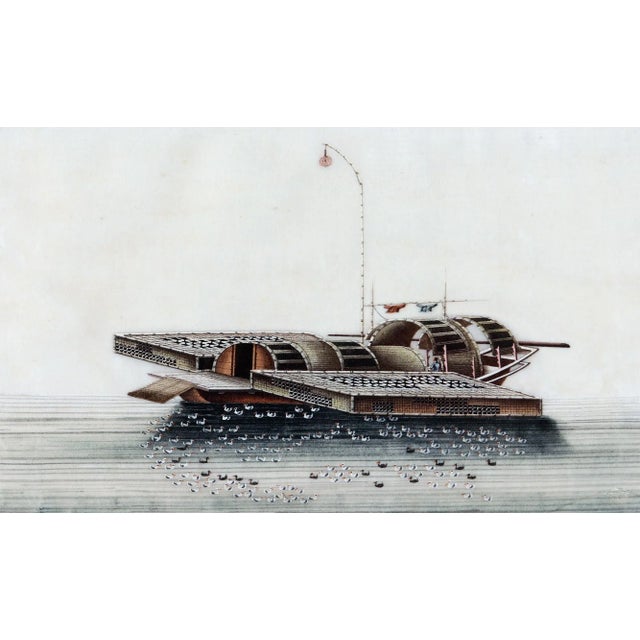
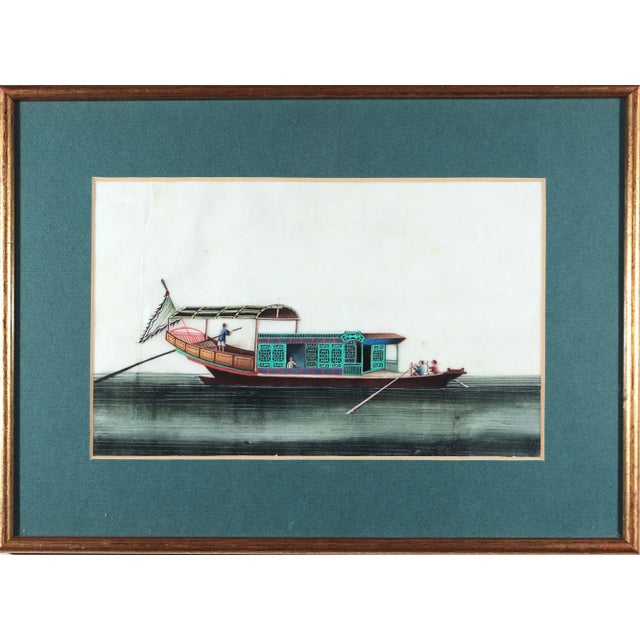
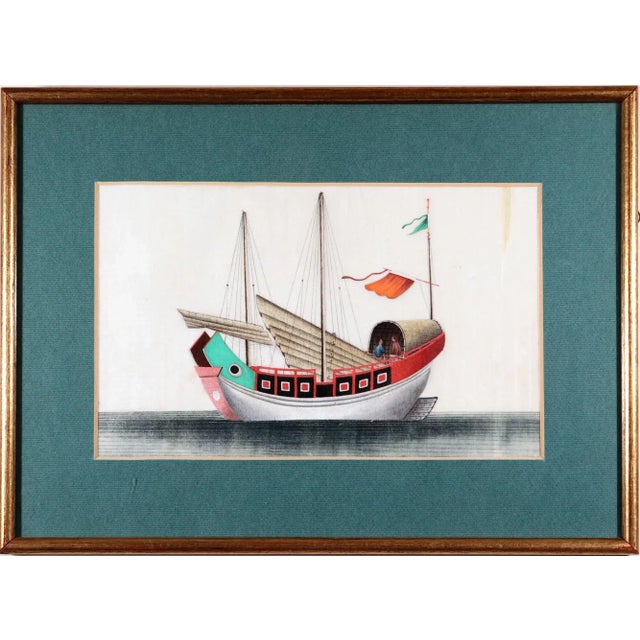
A captivating set of five China Trade watercolors, painted in Canton around 1850, each one a little portrait of a different vessel from the bustling waterways of the Pearl River. There’s a stately seagoing junk with battened sails and a watchful eye painted on its prow, a houseboat with turquoise fretwork worthy of a jewel box, a yellow-paneled passenger boat trailing pennants, a cargo boat stacked with crates, and — the conversation piece of the group — a floating duck farm, its flock of tiny ducks paddling in every direction.
The paintings are worked in watercolor and gouache on pith, the delicate, translucent sheet often called rice paper, which holds the pigment on its surface so the colors seem lit from within. Cantonese studios made these as luxurious souvenirs for the sea captains and merchants of the China Trade, and complete sets in this condition, with their color intact, have become genuinely hard to find. Each is framed in gilt with a deep teal-green mat — ready to hang as they are.
Hang all five in a grid or a column for an instant gallery wall — they’re made for a stair hall, a study, or above a sofa in a room that leans classic or coastal. The teal mats play beautifully with blue-and-white porcelain, grasscloth, and warm wood, and the maritime subject brings quiet charm to a hallway or a gentleman’s office.
(Ref: NY9666-iimr)
See less
Starting at 25% Off
Sale Ends Today! - Shop Now
Questions about the item?
Returns & Cancellations
Return Policy - All sales are final 48 hours after delivery, unless otherwise specified in the description of the product.
Cancellation Policy - Prior to shipping or local pickup, buyers may cancel an order for up to 48 hours, unless otherwise specified.
Related Collections
- Ralph Lauren Paintings
- Ed Ruscha Paintings
- Photorealism Canvas Paintings
- Photorealism Paintings in New York
- Karen Offutt Paintings
- Richard Serra Paintings
- Mark Lewis Art Paintings
- Mark Lewis Paintings
- FM Mobler Paintings
- Jo Baskerville Paintings
- Vienna Secession Paintings
- Silk Velvet Paintings
- Jeff Slemmons Paintings
- Black Photorealism Paintings
- BDDW Paintings
- Photorealism Paintings in Los Angeles
- Michelle Arnold Paine Paintings
- Herman Miller Paintings
- Cassina Paintings
- Louise Nevelson Paintings
- Lee Reynolds Paintings
- Mid-Century Modern Paintings
- Abstract Paintings
- Nautical Paintings
- Velvet Paintings