

Details
Description
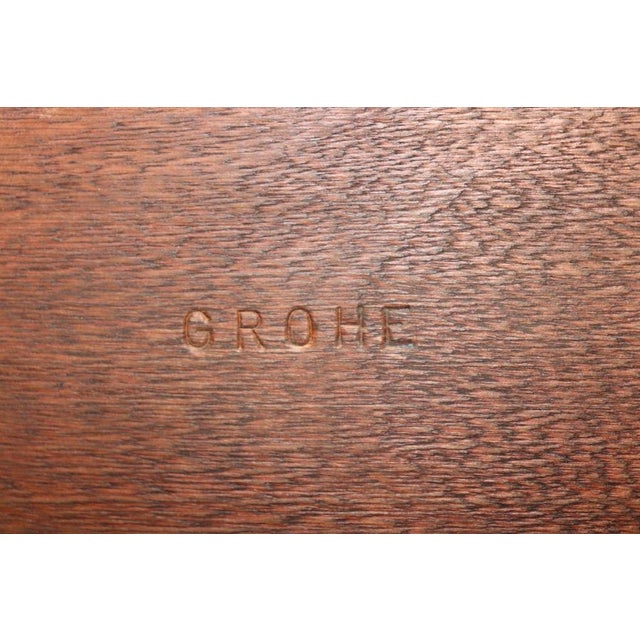
An exceptional pair of French Louis XVI style bronze-mounted walnut console tables attributed to the celebrated Parisian cabinetmaker Guillaume Grohé, …
Read more
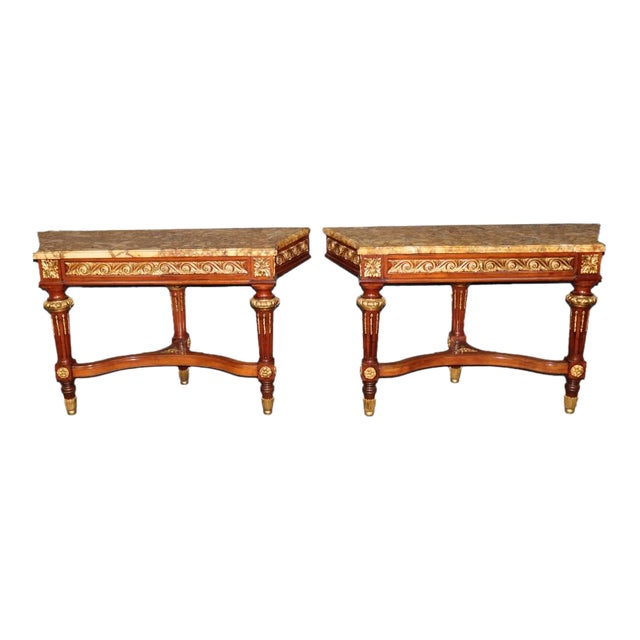
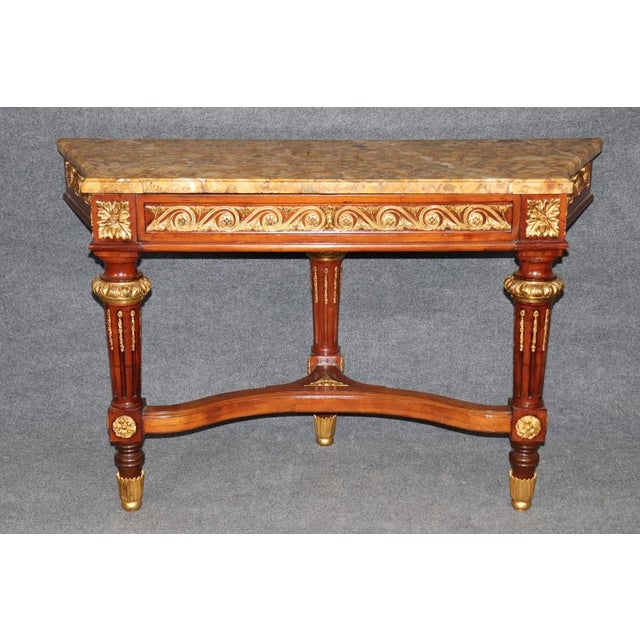
An exceptional pair of French Louis XVI style bronze-mounted walnut console tables attributed to the celebrated Parisian cabinetmaker Guillaume Grohé, dating to approximately 1880. These magnificent tables exemplify the refined craftsmanship, architectural elegance, and luxurious decorative traditions associated with the finest French cabinetmaking of the nineteenth century. Distinguished by their richly figured marble tops, beautifully proportioned walnut frames, and elaborate gilt-bronze mounts, the pair represents a sophisticated interpretation of eighteenth-century French Neoclassical furniture.
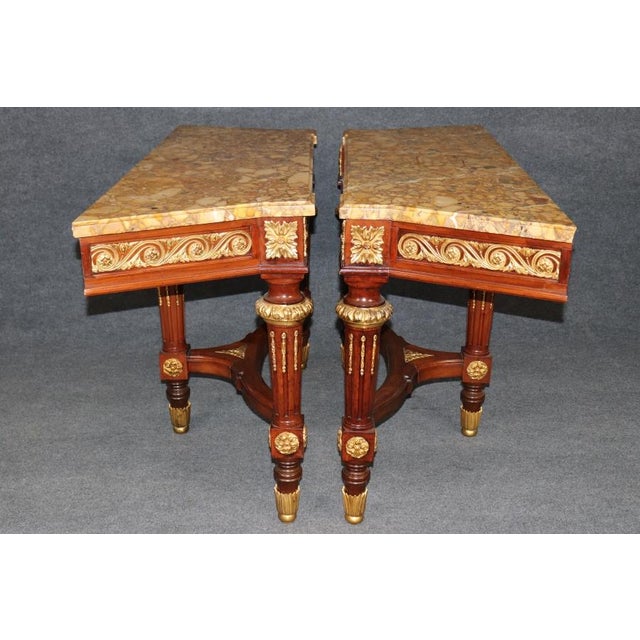
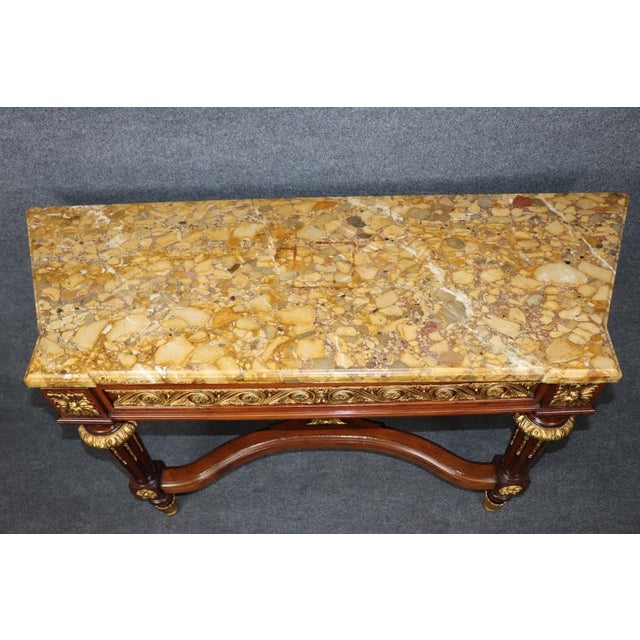
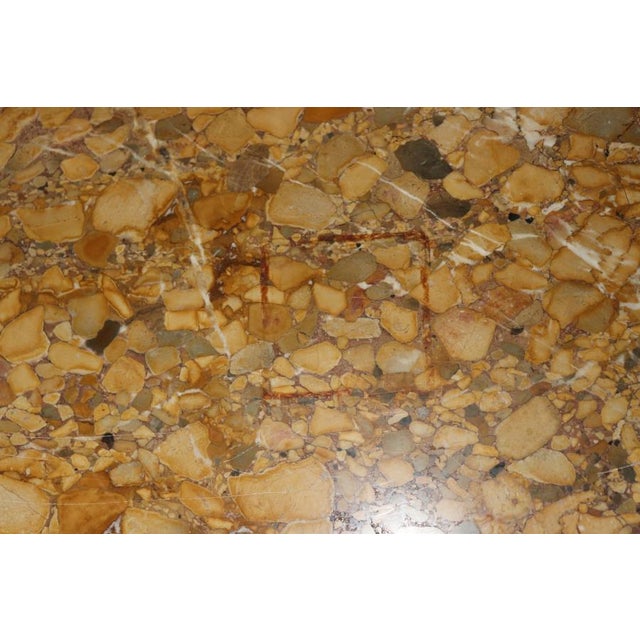
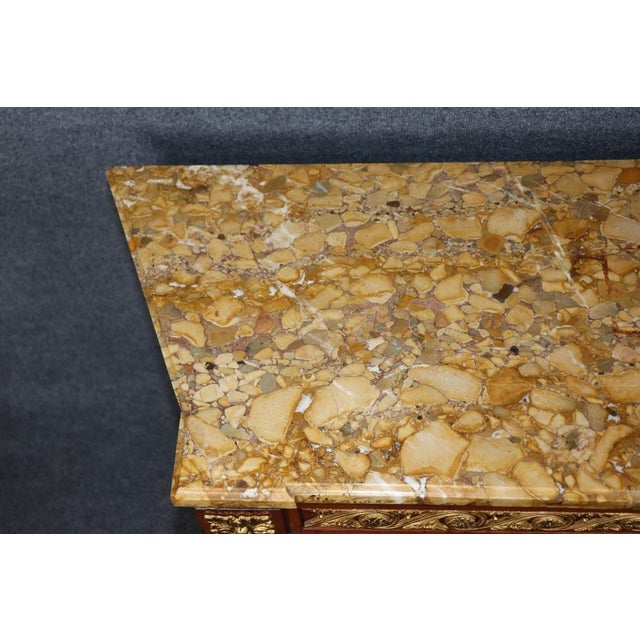
Each console features a gorgeous rectangular marble top displaying an extraordinary variety of natural veining, intricate mineral patterns, and beautifully blended tones of cream, beige, amber, brown, and warm gray. The marble surfaces exhibit remarkable visual depth, with their complex coloration providing an elegant contrast to the rich reddish-brown walnut frames beneath. The substantial marble tops are finished with carefully defined edges, enhancing their architectural presence and emphasizing the quality of their construction.
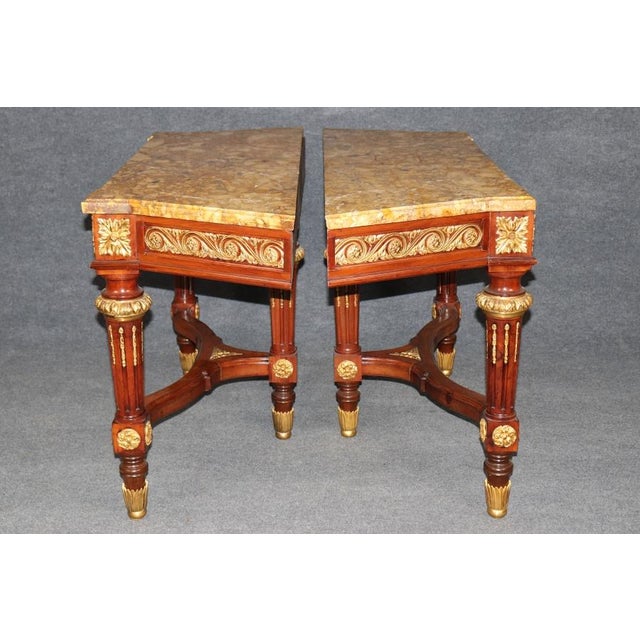
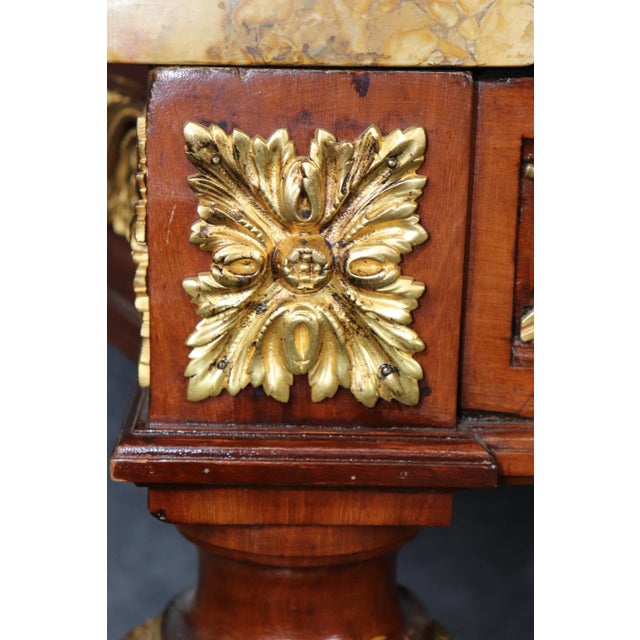
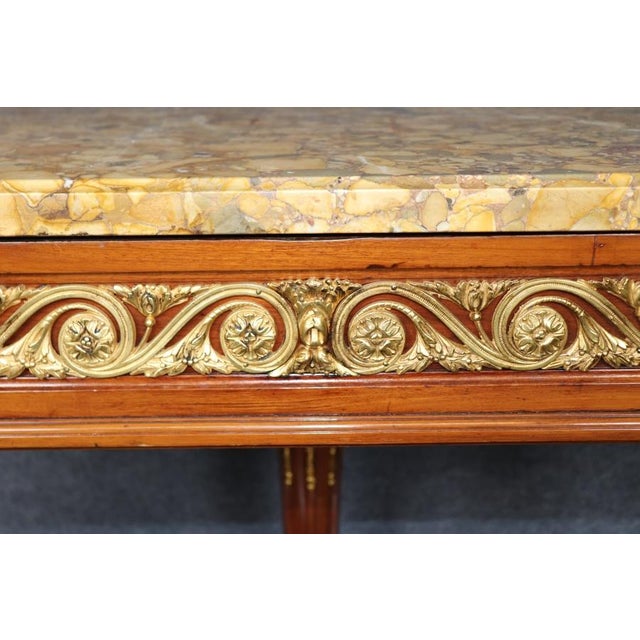
Directly beneath the marble, the walnut aprons are adorned with exceptionally decorative gilt-bronze mounts arranged in a continuous horizontal pattern of scrolling foliage, classical rosettes, and repeating circular ornaments. These finely detailed bronze embellishments create a striking decorative border across the front of each table, while additional bronze ornamentation extends along the visible sides. Prominent gilt-bronze floral mounts accentuate the corners, providing a beautifully balanced transition between the horizontal apron and the vertical supports.
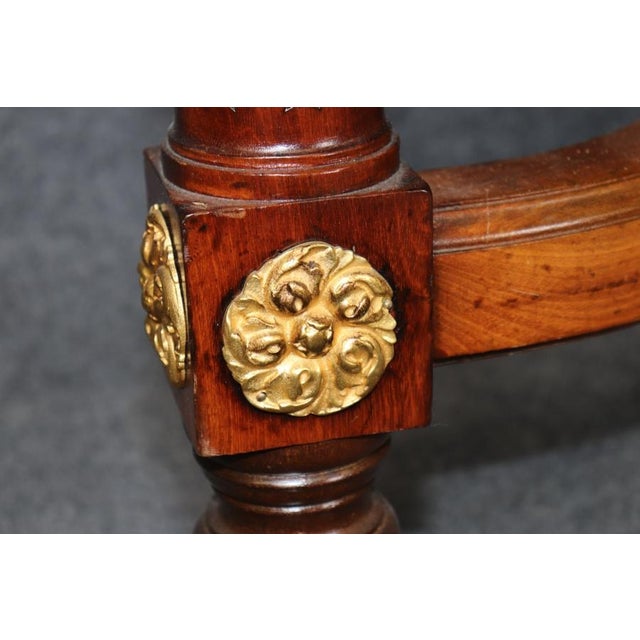
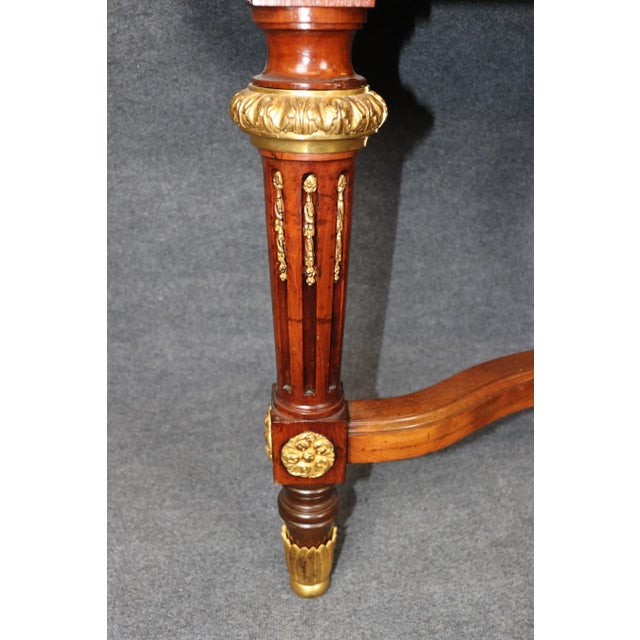
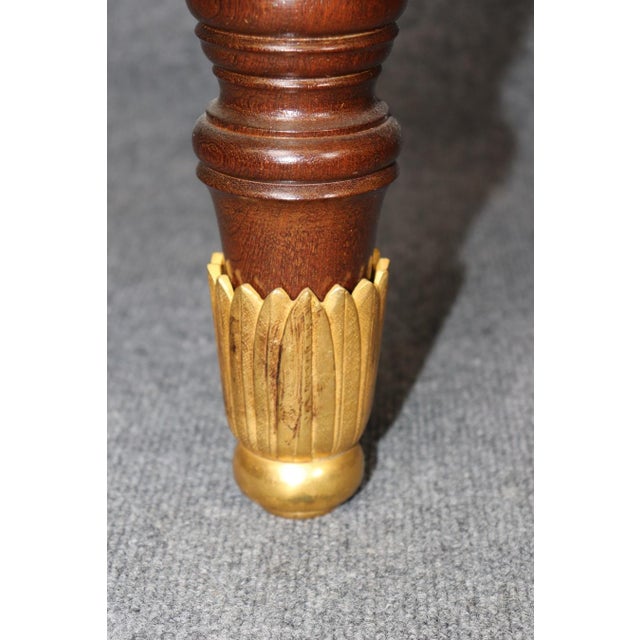
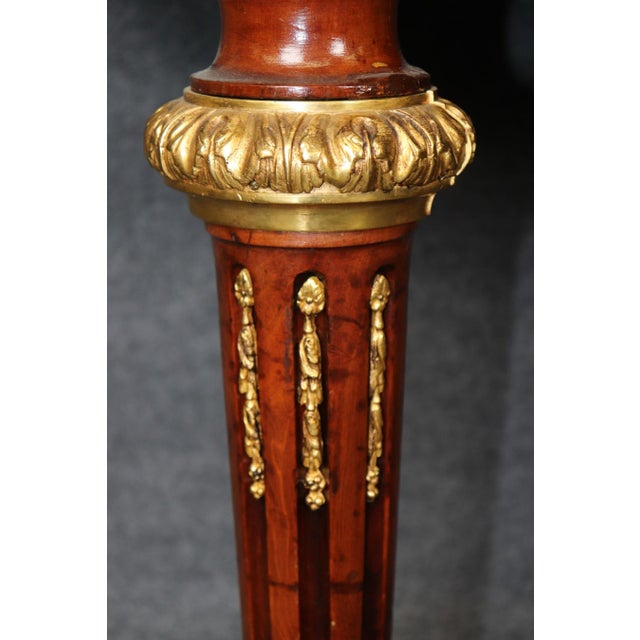
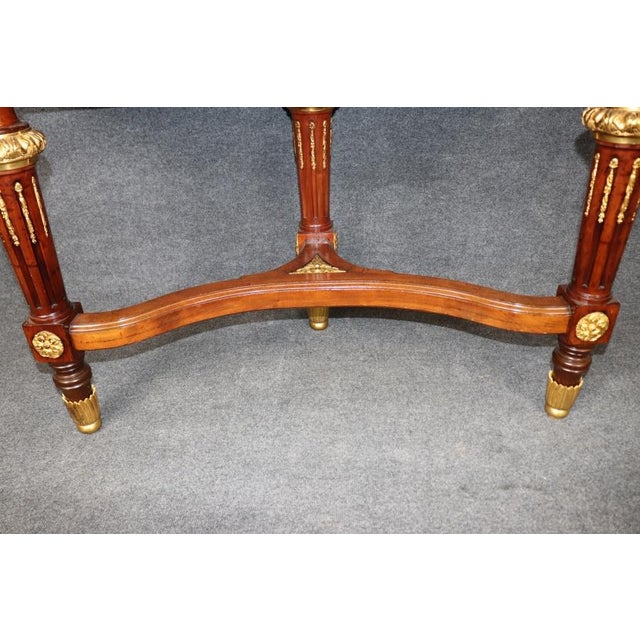
The tables stand upon elegantly proportioned, tapering walnut legs inspired by the classical vocabulary of the Louis XVI period. Each leg features a finely modeled gilt-bronze capital beneath the apron, followed by delicate vertical bronze ornaments that emphasize the graceful lines of the supports. Additional circular gilt-bronze rosettes decorate the lower sections, while finely detailed bronze sabots complete the feet.
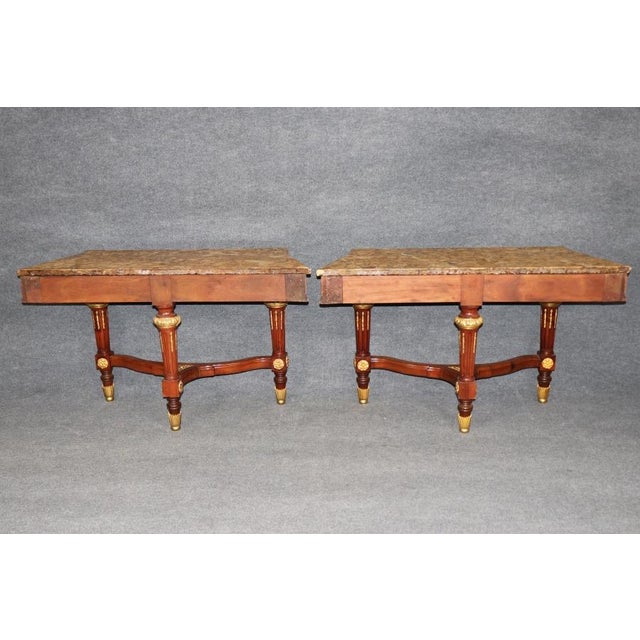
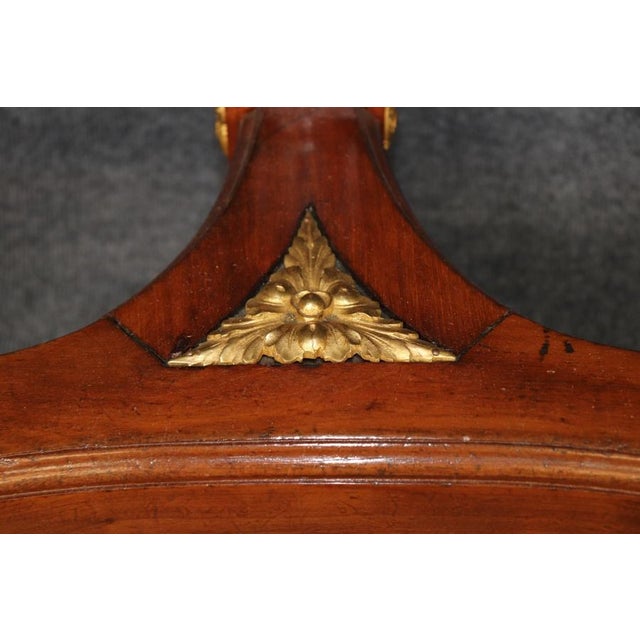
A particularly attractive feature is the architectural stretcher arrangement connecting the legs. Gracefully curved horizontal walnut stretchers extend between the supports, meeting at a central upright element that reinforces the composition while contributing considerable decorative interest. The restrained curvature of these stretchers introduces a subtle sense of movement beneath the otherwise rectilinear structure.
The combination of rich walnut, brilliantly detailed gilt-bronze mounts, and beautifully patterned marble produces a harmonious composition characteristic of the finest French furniture of the late nineteenth century. The contrast between the warm tones of the frames and the luminous golden ornamentation is especially appealing, while the marble surfaces provide a luxurious finishing element.
Both tables are in good condition, retaining their handsome presentation and impressive decorative character. Their beautifully preserved overall appearance allows the intricate bronze ornamentation, richly finished walnut frames, and gorgeous marble tops to be appreciated as a unified decorative ensemble.
**Guillaume Grohé and the Tradition of French Cabinetmaking**
Guillaume Grohé (1808–1885) was among the most distinguished French cabinetmakers of the nineteenth century, celebrated for the exceptional quality of his furniture and his mastery of historical revival styles. Born in Germany, Grohé established his career in Paris, where he became an important figure in the development of luxury French furniture during the reign of Louis-Philippe and the Second Empire.
Together with his brother Jean-Michel Grohé, he established the renowned furniture-making enterprise known as Grohé Frères in Paris in the early nineteenth century. The firm developed an outstanding reputation for producing furniture of extraordinary craftsmanship, combining traditional cabinetmaking techniques with the decorative sophistication demanded by Europe's most prestigious patrons.
The Grohé workshops became particularly celebrated for their interpretations of Louis XIV, Louis XV, and Louis XVI furniture, as well as their beautifully executed Renaissance and other historical revival designs. Their productions frequently incorporated richly figured cabinetwoods, elaborate gilt-bronze mounts, luxurious marble, and carefully considered architectural details.
Grohé's reputation extended well beyond Paris. His furniture was admired at major international exhibitions, where the exceptional standards of French decorative craftsmanship attracted considerable attention. The firm received important recognition for the quality and artistic sophistication of its work, contributing to France's international prominence in luxury furniture production.
Among Grohé's distinguished clientele were members of European royalty and the French aristocracy. His workshops supplied furnishings for prestigious residences, including commissions associated with the French imperial court. The firm's ability to combine historical accuracy with nineteenth-century refinement made its furniture particularly desirable among wealthy collectors and influential patrons.
Following the dissolution of the partnership with his brother, Guillaume Grohé continued to operate under his own name, maintaining the reputation for excellence established by the family enterprise.
These remarkable console tables reflect the decorative ideals associated with Grohé's celebrated cabinetmaking tradition. Their finely articulated gilt-bronze mounts, elegant Louis XVI architectural proportions, richly finished walnut frames, and exceptional marble tops embody the sophistication of late nineteenth-century French furniture.
As a matching pair, they offer remarkable decorative versatility and visual symmetry, making them particularly appropriate for placement in a grand entrance hall, formal drawing room, or distinguished residential interior. Their combination of architectural refinement, luxurious materials, and accomplished craftsmanship makes them an impressive expression of French decorative artistry from the 1880s.
Dimensions: 32.75 inches high x 54.25 inches wide x 18.5 inches deep
See less
- Dimensions
- 54.25ʺW × 18.5ʺD × 32.75ʺH
- Styles
- Louis XVI
- Table Shape
- Other (unique shapes)
- Period
- Late 19th Century
- Country of Origin
- France
- Item Type
- Vintage, Antique or Pre-owned
- Materials
- Marble
- Condition
- Good Condition, Original Condition Unaltered, Some Imperfections
- Color
- Brown
- Condition Notes
- Wear consistent with age and use Wear consistent with age and use less
Questions about the item?
Returns & Cancellations
Return Policy - All sales are final 48 hours after delivery, unless otherwise specified in the description of the product.
Cancellation Policy - Prior to shipping or local pickup, buyers may cancel an order for up to 48 hours, unless otherwise specified.
Related Collections
- Tommy Bahama Console Tables
- Mid-Century Modern Walnut Console Tables
- Lily's Living Console Tables
- Maison Baguès Console Tables
- Vivai del Sud Console Tables
- Tony Duquette Console Tables
- Cerulean Console Tables
- Adrian Pearsall Console Tables
- Blue Lacquer Console Tables
- Black Console Tables in Los Angeles
- Media Console Tables
- Spanish Console Tables
- Mid-Century Modern Console Tables
- Bamboo Console Tables
- French Console Tables
- Teak Console Tables
- Ming Console Tables
- Narrow Console Tables
- Ethan Allen Console Tables
- Marble Console Tables
- Henredon Console Tables
- Brass Glass Console Tables
- Drexel Heritage Console Tables
- Travertine Console Tables
- Maitland - Smith Console Tables