

Starting at 20% Off
Sale Ends November 25th, 2026 - Shop Now
Details
Description
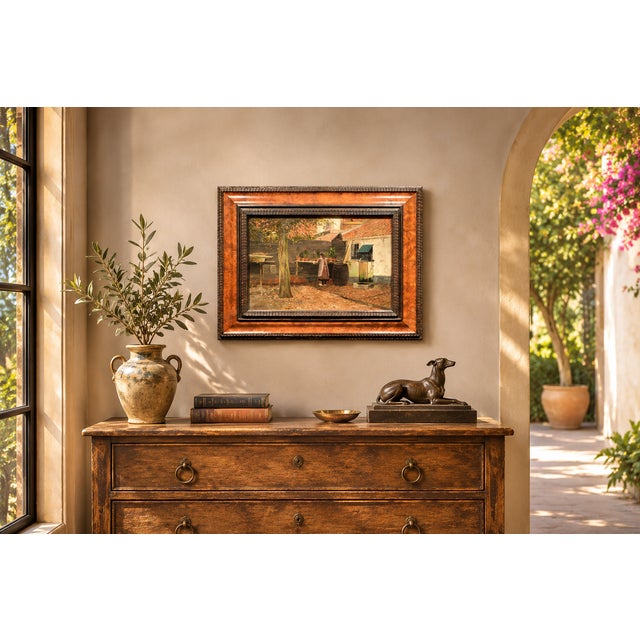
Charles Paul Gruppé–Dutch Girl Potting Flowers in a Courtyard–c.1890s Oil Painting
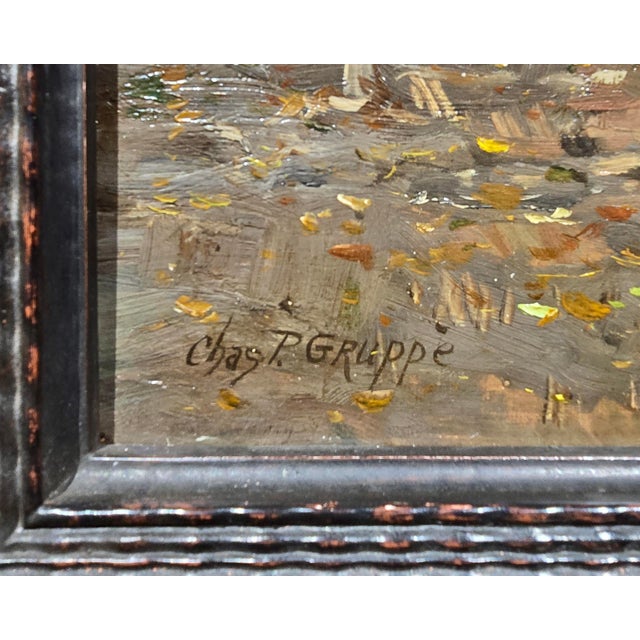
American impressionist - Oil painting on canvas - signed …
Read more
Charles Paul Gruppé–Dutch Girl Potting Flowers in a Courtyard–c.1890s Oil Painting
American impressionist - Oil painting on canvas - signed - circa 1890s
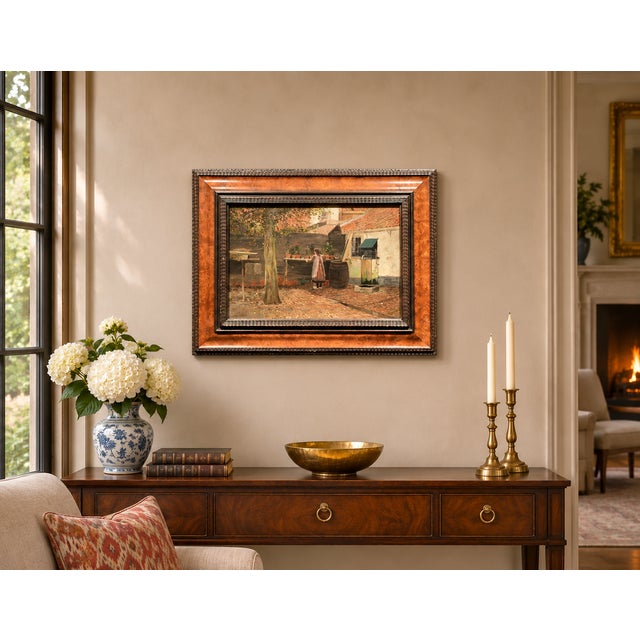
Canvas size 15x22 -Frame size 24x30x1"
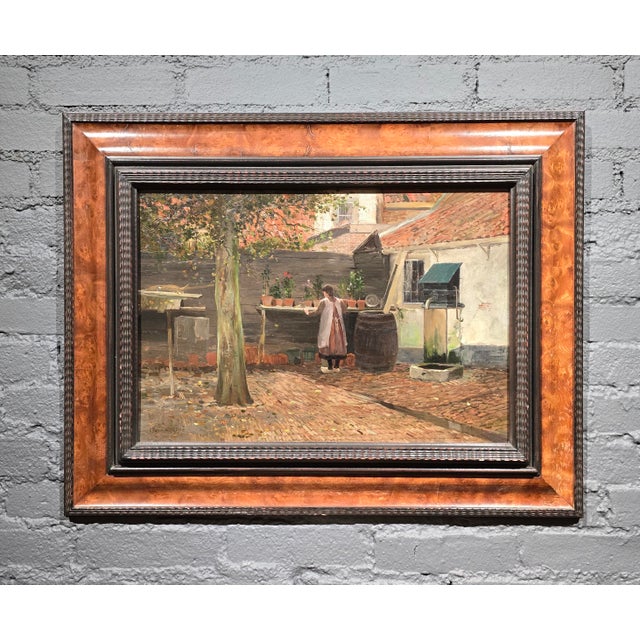
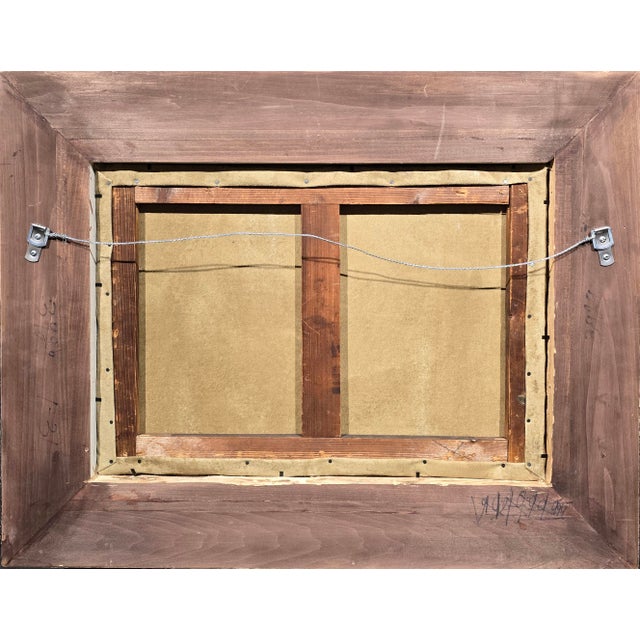
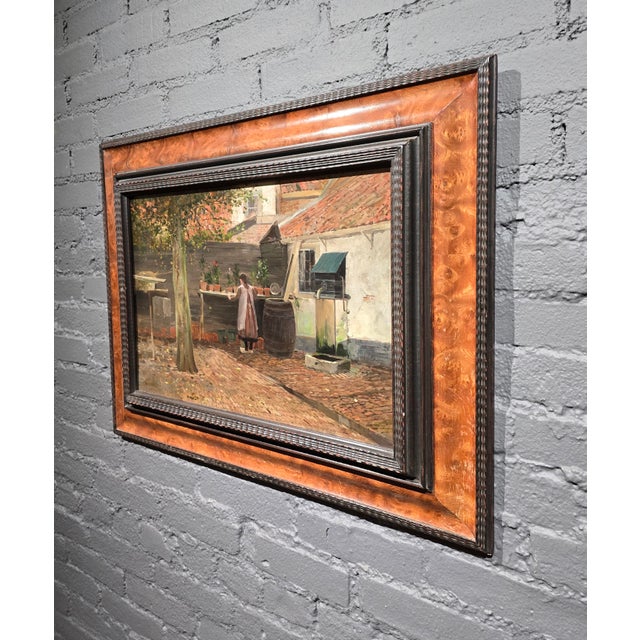
Condition: Recently professionally cleaned and conserved; presented in a period-style ripple-molded burl wood and ebonized frame.
Visual & Composition Description
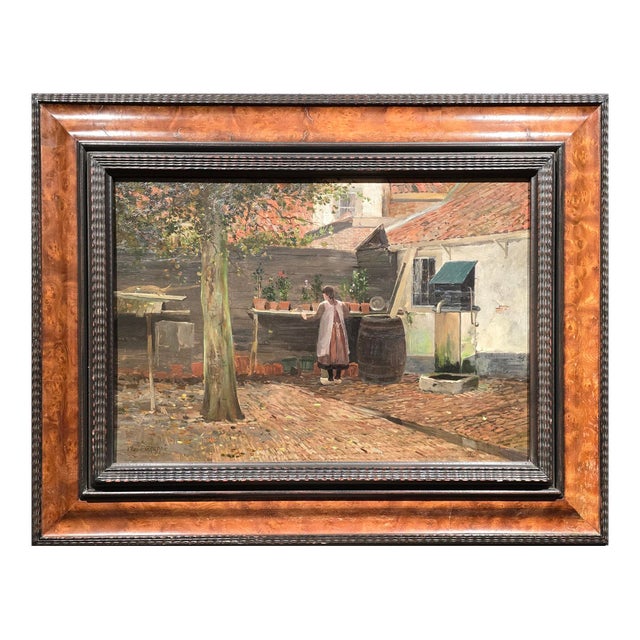
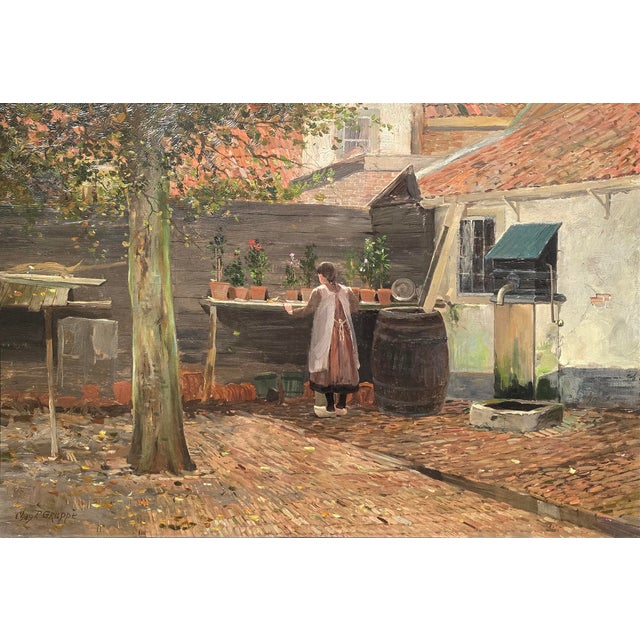
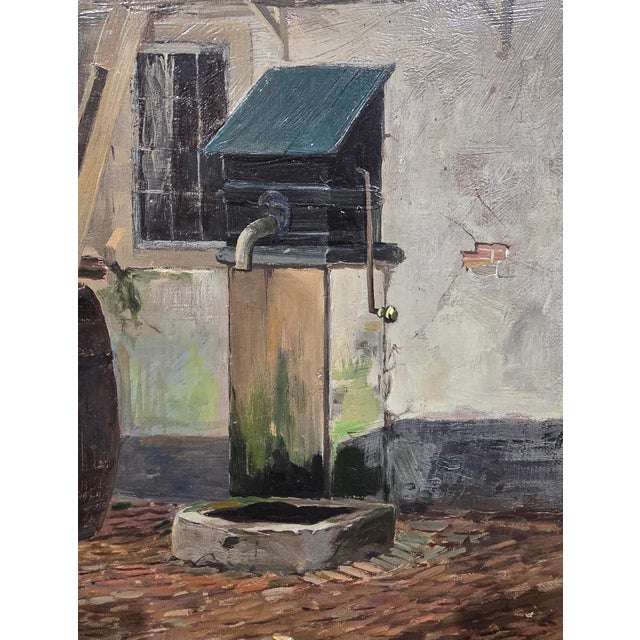
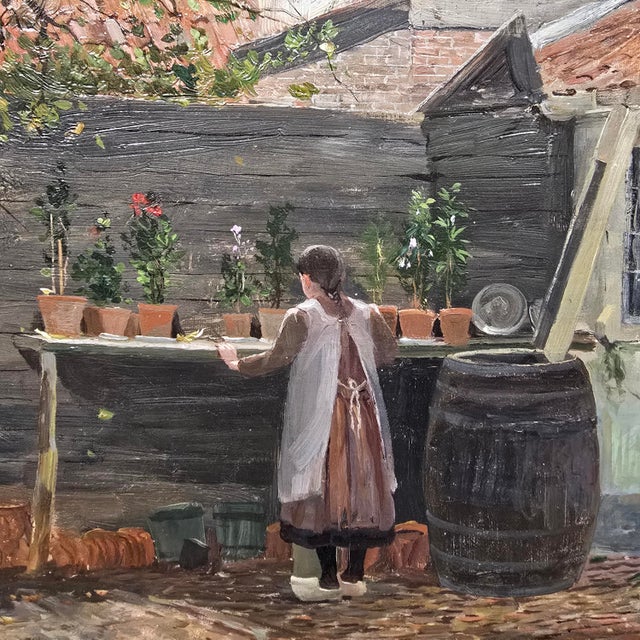
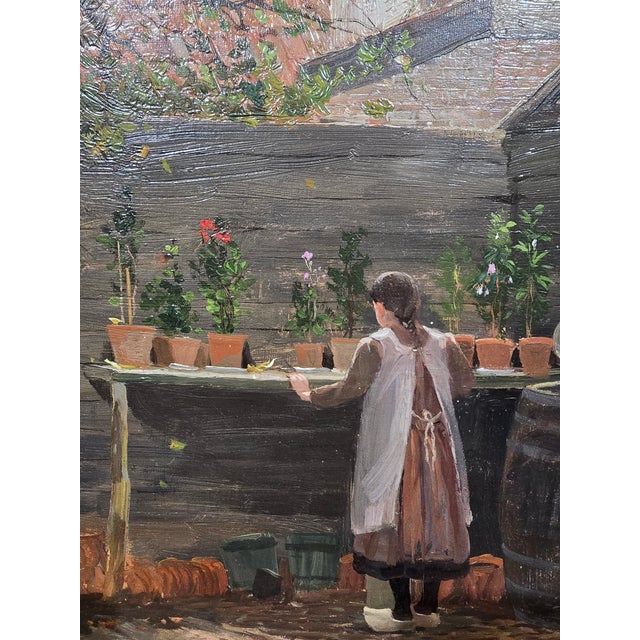
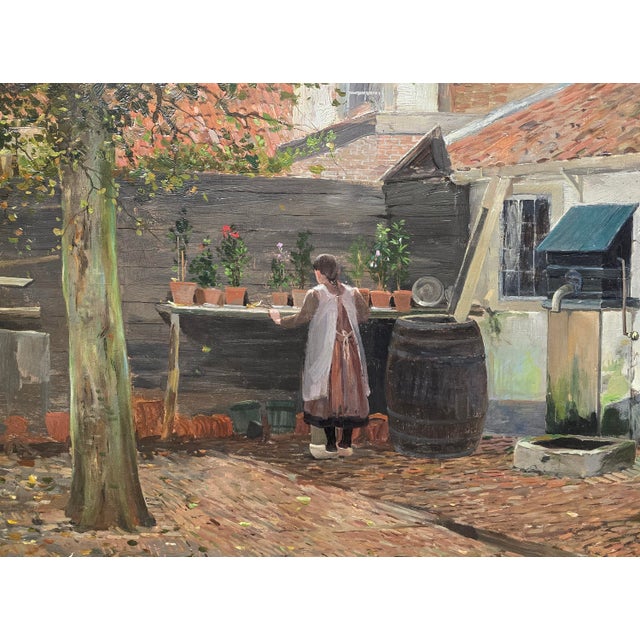
In this atmospheric Dutch genre scene, Charles Paul Gruppé captures a quiet moment of domestic routine within an enclosed, sun-dappled courtyard. The composition is anchored on the left by the sturdy, moss-dappled trunk of a mature deciduous tree, whose overhanging branches filter soft natural light onto the warm, reddish-brown brick paving below. Scattered fallen leaves across the ground suggest the gentle transition from late summer into autumn.At the center of the courtyard, a young Dutch girl—seen from behind in traditional provincial attire consisting of a brown skirt, crisp white apron, and pale wooden clogs (klompen)—stands at a weathered wooden potting bench built against a dark timber fence. She tends to a row of terracotta pots holding blooming red geraniums and leafy green plants, with additional clay pots stacked neatly underneath.To the right, Gruppé incorporates characteristic architectural and utilitarian details of rural Dutch life: a heavy, iron-hooped wooden rain barrel rests beside a whitewashed stucco cottage topped with a pitched terracotta tile roof. Adjacent to the cottage window stands a traditional Dutch courtyard water pump encased in wood and crowned with a dark green-painted metal hood, complete with a curved spout, long iron pump handle, and a carved stone catch basin below.Following recent professional cleaning and conservation, the painting reveals renewed clarity, rich tonal depth, and the harmonious interplay of warm earth tones, muted greens, and softly illuminated architectural surfaces.
Artistic Technique & Painterly Quality
Beyond its charming subject matter, this painting is distinguished by the exceptional quality of Gruppé's brushwork, sophisticated handling of natural light, and remarkable attention to detail. The artist demonstrates an impressive command of texture and color, contrasting the broad, confident horizontal brushstrokes of the weathered wooden fence with the lively, richly textured impasto of the overhanging foliage and flowering plants.Particularly noteworthy is the sensitive rendering of the young girl's braided hair, traditional clothing, and softly illuminated white apron, where subtle variations of ivory, lavender, gray, and warm brown create a convincing sense of volume and natural movement. The individual terracotta flowerpots, delicate blossoms, and scattered gardening implements are depicted with an economy of brushwork that conveys both spontaneity and careful observation.Throughout the composition, Gruppé balances precise descriptive details with the loose, expressive handling associated with Impressionism. His ability to integrate carefully observed everyday objects into a unified atmospheric setting lends the painting an engaging sense of authenticity and intimacy, transforming an ordinary moment of Dutch domestic life into a richly evocative work of art.
Artist Biography: Charles Paul Gruppé (1860–1940)
Born on September 3, 1860, in Picton, Ontario, Canada, Charles Paul Gruppé moved to Rochester, New York, at the age of three following the death of his father. Largely self-taught in his youth, he worked in a sign-painting shop to help support his family while sketching and painting in his spare time. His early dedication led him, at just twelve years old in 1872, to become one of the founding members of the Rochester Art Club. In the 1880s, after saving enough money to travel steerage to Europe, Gruppé journeyed through France and Germany before discovering the Netherlands. Captivated by the coastal light, fishing villages, and rural traditions of Holland, he settled in The Hague and built a home and studio in the nearby fishing village of Katwijk aan Zee. Between 1889 and 1913, he immersed himself in the Hague School, studying under the renowned marine painter Hendrik Willem Mesdag and painting alongside masters such as Anton Mauve and Bernard Blommers. Gruppé assimilated so thoroughly into Dutch artistic circles—even learning to speak fluent Dutch—that he was elected to the prestigious Pulchri Studio in The Hague, a rare distinction for a North American artist. During his decades in Holland, his work was eagerly collected by prominent European patrons, including members of the Dutch Royal Family.Ahead of World War I in 1913, Gruppé returned permanently to the United States with his wife, Helen Elizabeth Mitchell, and their four children—all of whom pursued careers in the arts, most notably his son, the celebrated Cape Ann Impressionist painter Emile Albert Gruppé (1896–1978). Dividing his time between his row house in New York City and his summer studio in Rockport, Massachusetts, Gruppé continued to paint American landscapes and coastal scenes while acting as a major dealer and advocate for Dutch art among American collectors. Gruppé exhibited widely throughout Europe and North America, winning two silver medals at the 1904 St. Louis World's Fair and competing in the art competitions at the 1932 Summer Olympics. He was an active member of the Salmagundi Club, the National Arts Club, and the American Watercolor Society. Today, his paintings are held in major public collections including the Smithsonian American Art Museum, the Detroit Institute of Arts, and the National Gallery of Canada.
Provenance & Exhibition History
Provenance:
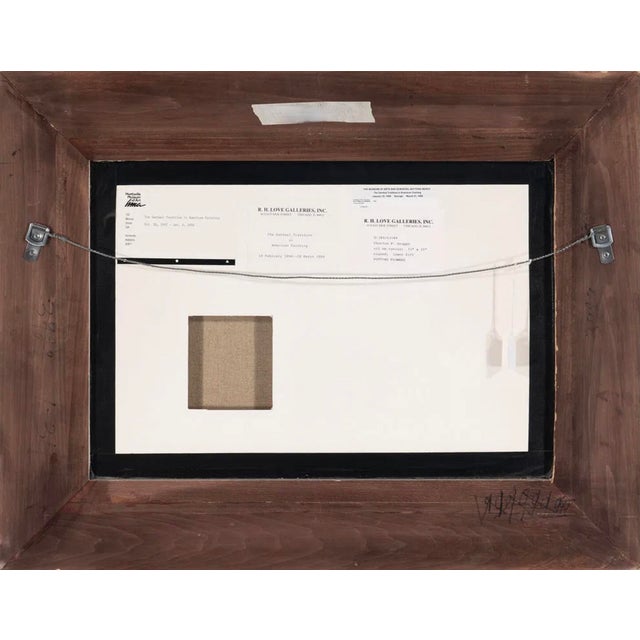
R.H. Love Galleries, Inc., Chicago, Illinois
Acquired from the above by the present owners
Exhibited:
Huntsville, Alabama, Huntsville Museum of Art, The Genteel Tradition in American Painting, October 26, 1997 – January 4, 1998.
Traveling to Chicago, Illinois, R.H. Love Galleries, February 14 – March 28, 1998.
Traveling to Daytona Beach, Florida, The Museum of Arts and Sciences, January 15 – March 21, 1999
See less
- Dimensions
- 30ʺW × 1ʺD × 24ʺH
- Styles
- American
- Impressionist
- Frame Type
- Framed
- Art Subjects
- Figure
- Architecture
- Period
- Late 19th Century
- Country of Origin
- United States
- Item Type
- Vintage, Antique or Pre-owned
- Materials
- Canvas
- Oil Paint
- Condition
- Good Condition, Original Condition Unaltered, Some Imperfections
- Color
- Brick Red
- Condition Notes
- Excellent - Minor wear consistent with age and history Excellent - Minor wear consistent with age and history less
Starting at 20% Off
Sale Ends November 25th, 2026 - Shop Now
Questions about the item?
Returns & Cancellations
Return Policy - All sales are final 48 hours after delivery, unless otherwise specified in the description of the product.
Cancellation Policy - Prior to shipping or local pickup, buyers may cancel an order for up to 48 hours, unless otherwise specified.
Related Collections
- Photorealism Canvas Paintings
- Photorealism Paintings in New York
- Ed Ruscha Paintings
- Richard Serra Paintings
- Herman Miller Paintings
- James McCray Paintings
- Louise Nevelson Paintings
- Karen Offutt Paintings
- Johannes Andersen Paintings
- Pedro Friedeberg Paintings
- Soicher Marin Paintings
- Joseph Stella Paintings
- Laddie John Dill Paintings
- Nicola Simbari Paintings
- BDDW Paintings
- Red Abstract Paintings
- Eames Paintings
- Stellar Union Paintings
- Stellar Works Paintings
- Cassina Paintings
- Claude Lalanne Paintings
- George Condo Paintings
- Jeff Koons Paintings
- Margaret Kennedy Paintings
- Jaanika Peerna Paintings