

Details
Description
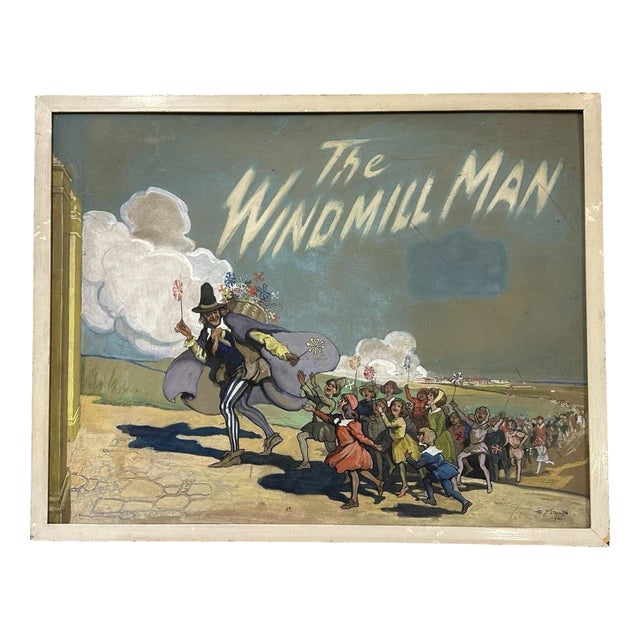
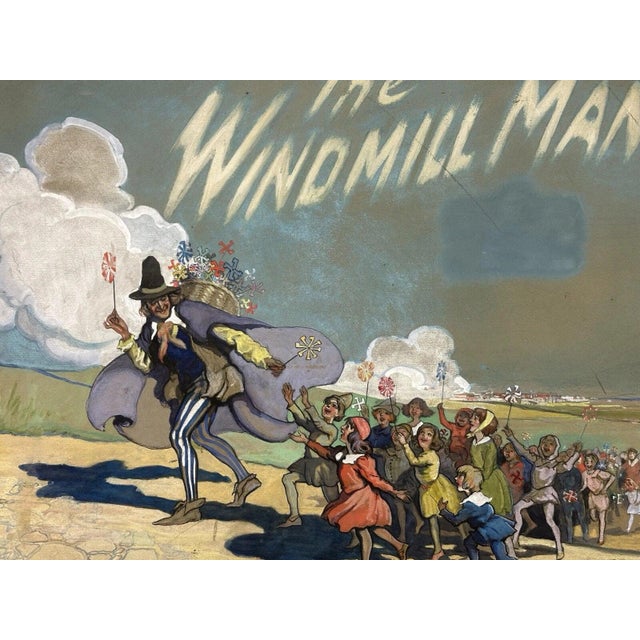
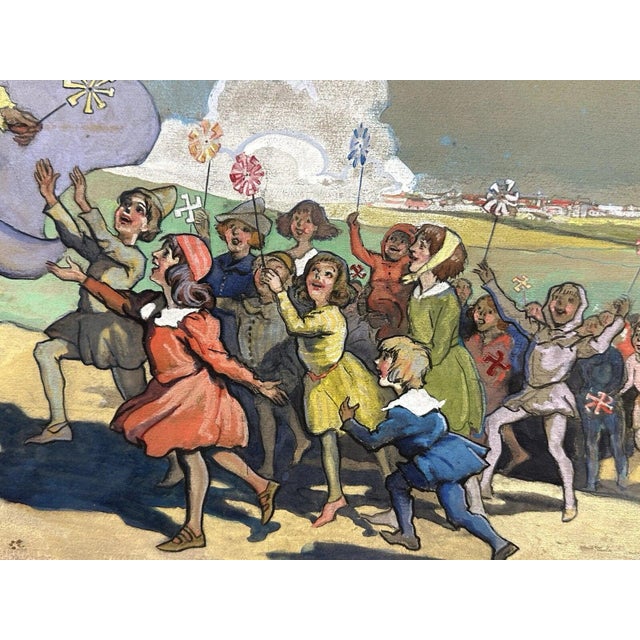
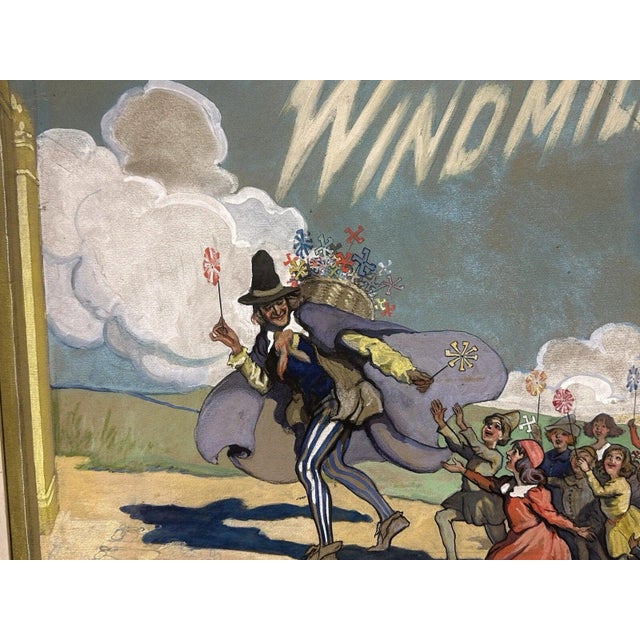
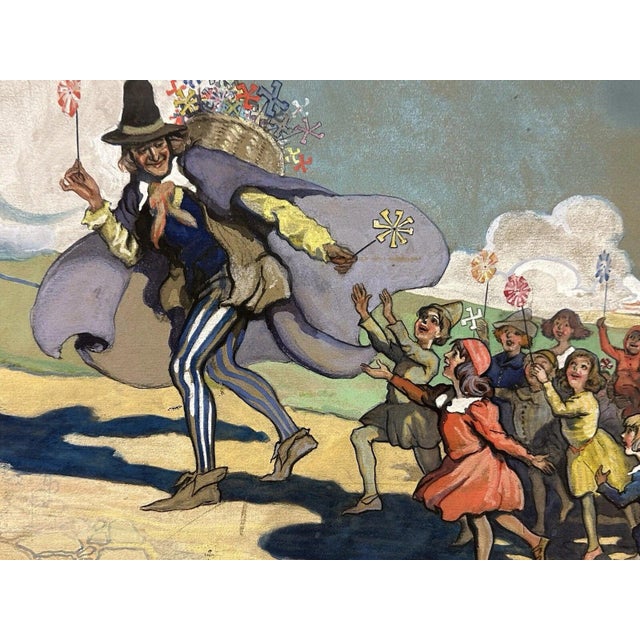
A striding figure in blue-and-white striped hose, a pointed dark hat, and a billowing lavender cloak leads an eager gathering …
Read more
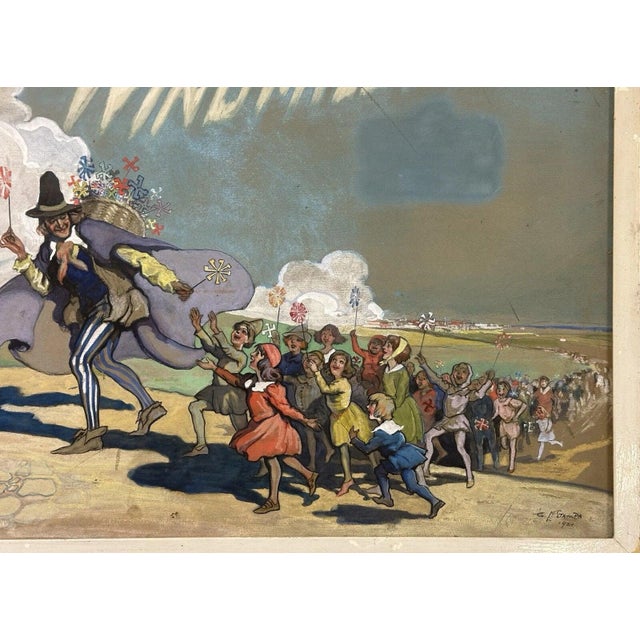
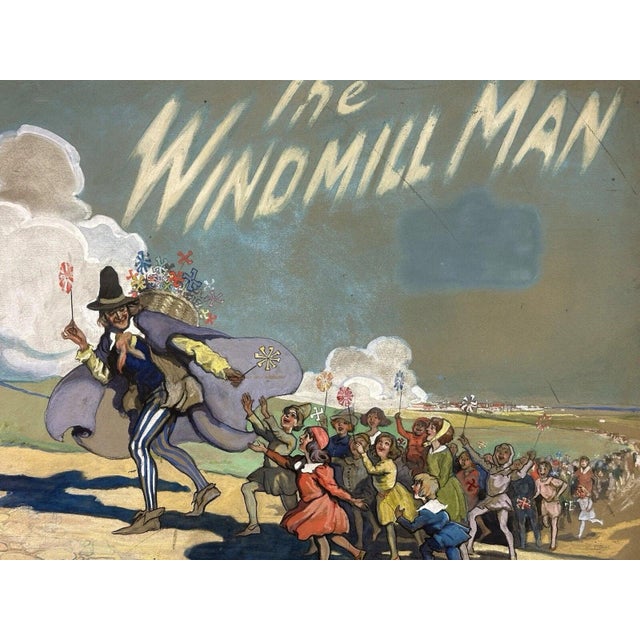
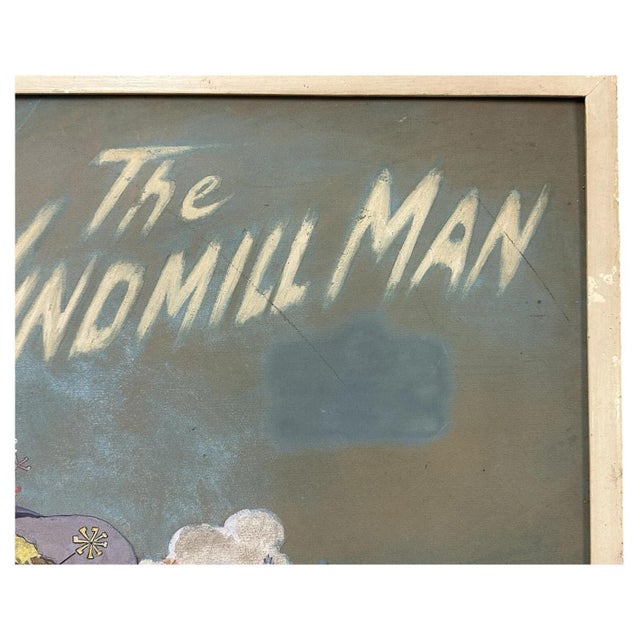
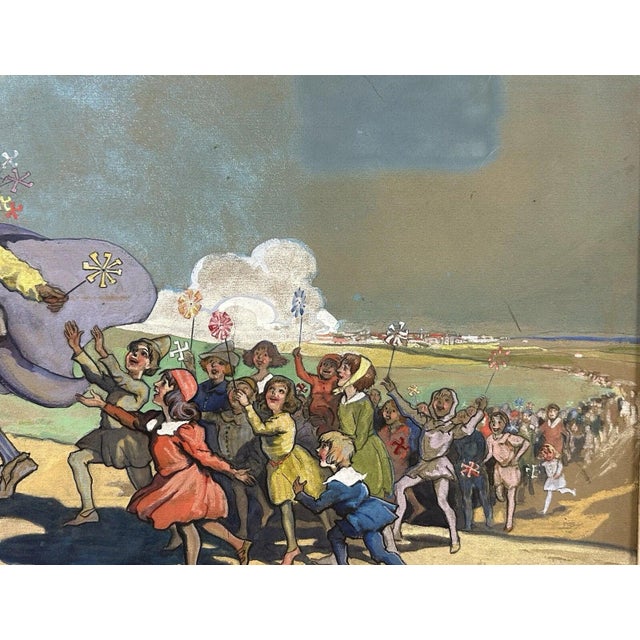
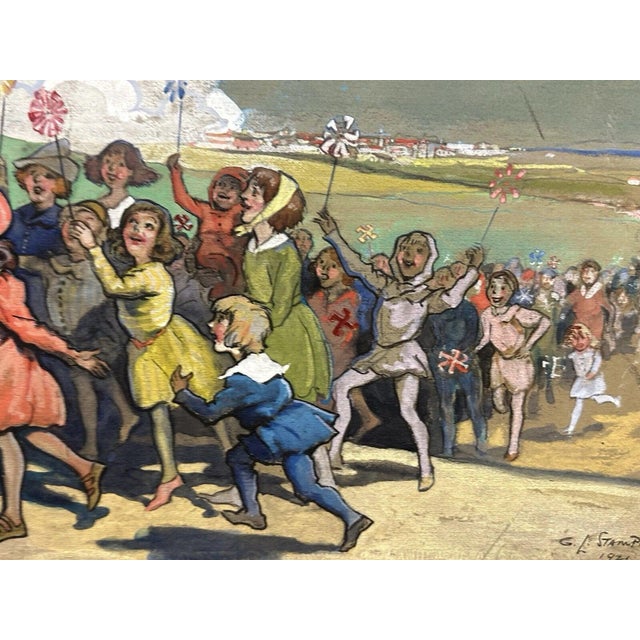
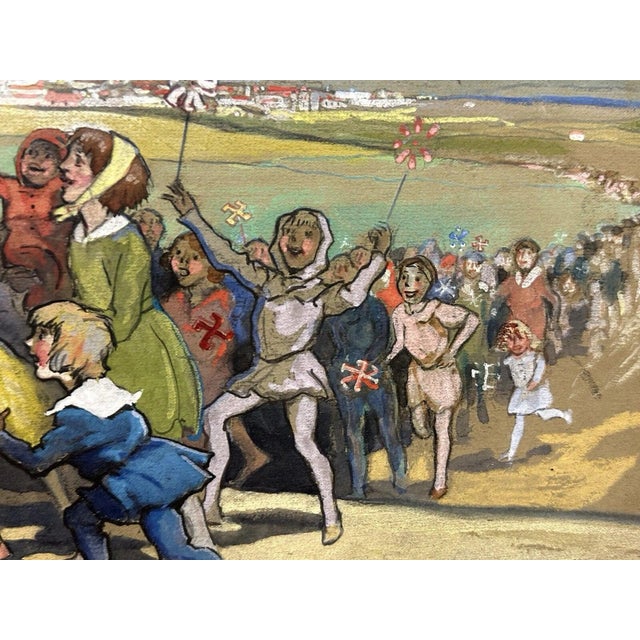
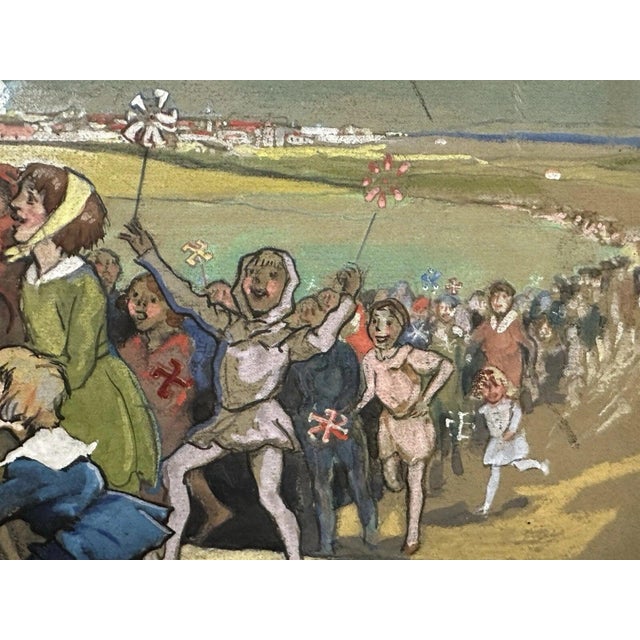
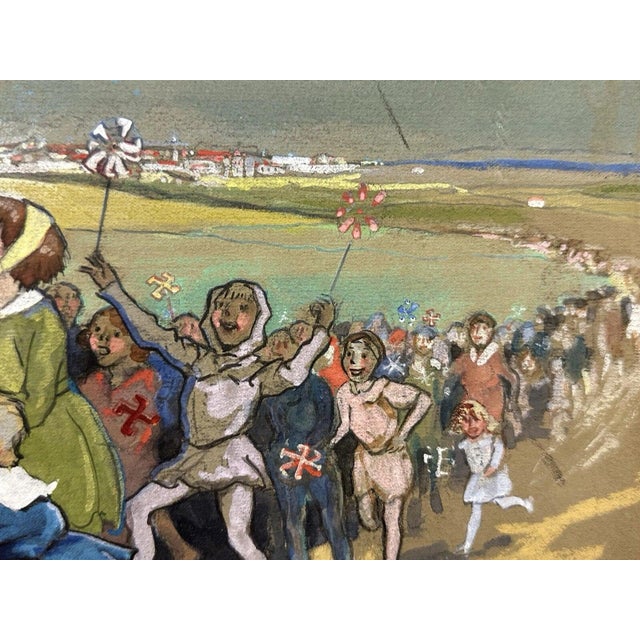
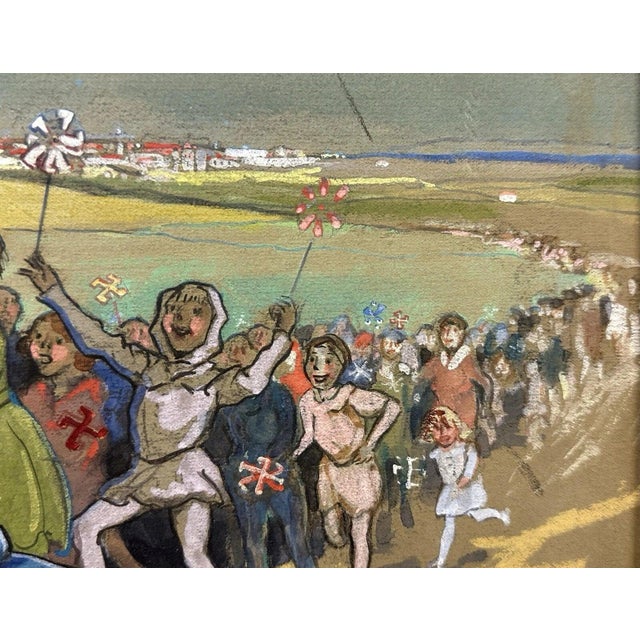
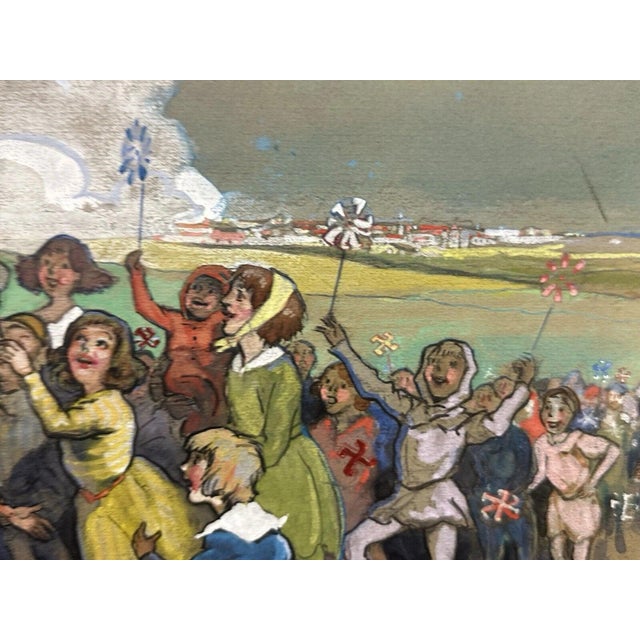
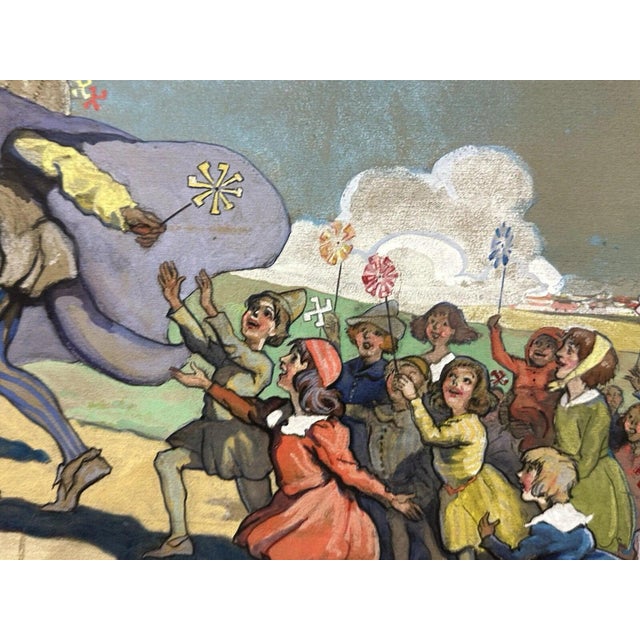
A striding figure in blue-and-white striped hose, a pointed dark hat, and a billowing lavender cloak leads an eager gathering of children across a pale flagstone path. Titled in prominent shaded lettering across the atmospheric blue-grey sky, 'The Windmill Man' is executed in mixed media combining gouache paint and soft pastels on artist board. The theatrical protagonist carries a woven wicker basket laden with colourful toy pinwheels on his back while handing individual windmills to the excited children following behind. The figures wear an array of brightly tinted caps, tunics, and dresses, trailed by a dense procession winding away towards a distant coastal shoreline and low-lying town beneath scudding clouds.
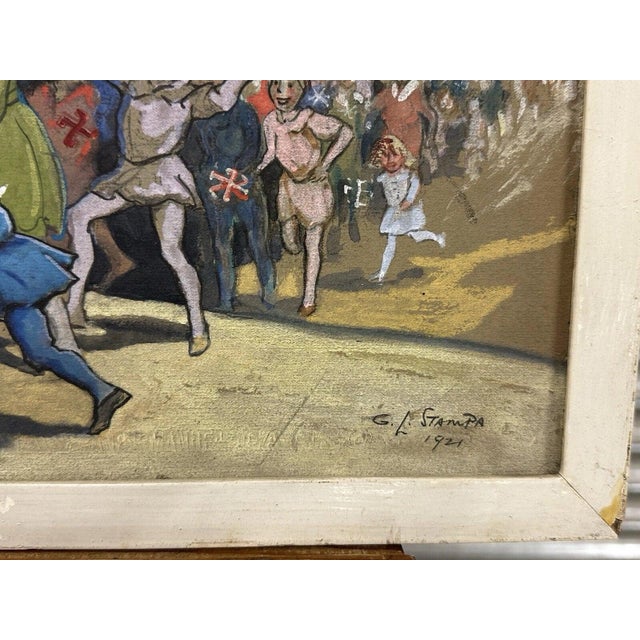
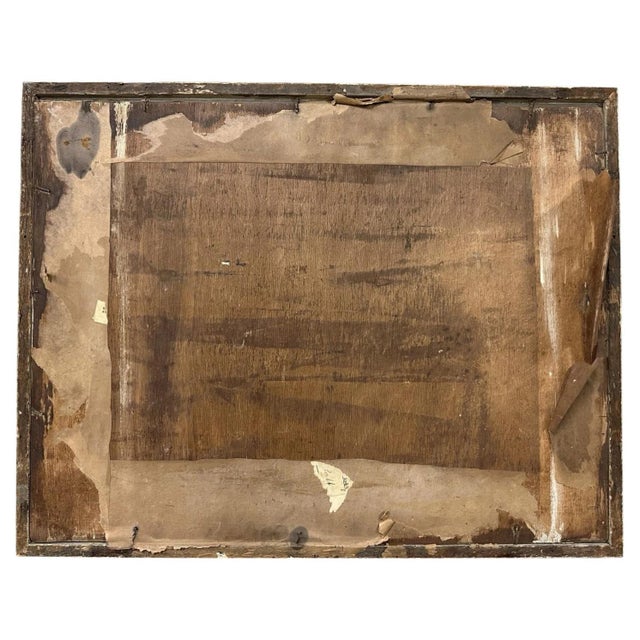
The artwork measures approximately 66 cm by 52 cm within a plain, white-painted wooden moulding. It is unglazed, leaving the tactile chalk and gouache medium exposed to view. Towards the bottom right corner, the picture bears the artist's original handwritten signature alongside the year 1921, positioned directly above faint pre-existing impressed lettering in the paper surface. On the reverse, the framing is completed by a solid timber panel held by small framing pins, showing historic tears to the brown backing paper, old adhesive marks, and partial paper inventory labels.
George Loraine Stampa (1875–1951) was born in Constantinople, where his father of Franco-Italian heritage worked as an architect to Sultan Abdul Hamid. Forced to leave Turkey by the political uprising of 1878, the family settled at Battlebarrow House in Appleby, Westmorland. Stampa attended the local grammar school before continuing his studies from age eleven at Bedford Modern School. He pursued formal artistic education in London, training first at Heatherley's from 1892 to 1893 and then attending the Royal Academy Schools from 1893 to 1895, where his peers included Lewis Baumer and W. Heath Robinson.
After sharing a studio with Savile Lumley, Stampa contributed illustrations to Punch magazine starting in 1894, continuing in the graphic tradition of Charles Keene and Phil May with drawings of London street life, energetic urchins, and mongrel dogs. Alongside his satirical work and his long tenure illustrating the Punch theatre review column, Stampa was a frequent exhibitor at the Royal Academy and the Royal Institute of Painters in Water Colours. He was an active member of the Savage Club and served as Chairman of the Langham Sketching Club in 1914.
See less
- Dimensions
- 25.98ʺW × 0.79ʺD × 20.47ʺH
- Styles
- Modern
- Art Subjects
- Abstract
- Period
- 1920s
- Item Type
- Vintage, Antique or Pre-owned
- Materials
- Wood
- Condition
- Good Condition, Unknown, Some Imperfections
- Color
- Blue
- Condition Notes
- Very Good — This vintage item has no defects, but it may show slight traces of use. Very Good — This vintage item has no defects, but it may show slight traces of use. less
Returns & Cancellations
Return Policy - All sales are final 48 hours after delivery, unless otherwise specified in the description of the product.
Cancellation Policy - Prior to shipping or local pickup, buyers may cancel an order for up to 48 hours, unless otherwise specified.
Related Collections
- Jeff Slemmons Drawings
- Maison Jansen Drawings
- Salvador Dalí Drawings
- Guillaume Azoulay Drawings
- Leroy Neiman Drawings
- Erté Drawings
- Piet Hein Eek Drawings
- Carl-Axel Acking Drawings
- Joseph Stella Drawings
- Charcoal Drawings
- Fashion Drawings
- 1950s Fashion Drawings
- Pencil Drawings
- Ink Drawings
- Stephanie Cate Drawings