

Details
Description
A remarkable fusion of traditional Japanese ceramic artistry, historic copper-red glazing, and sculptural modern elegance.
This striking signed Japanese porcelain …
Read more
A remarkable fusion of traditional Japanese ceramic artistry, historic copper-red glazing, and sculptural modern elegance.
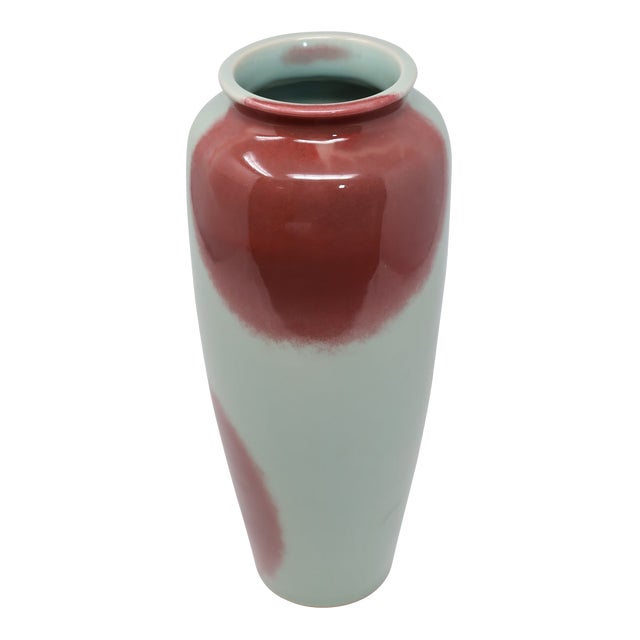
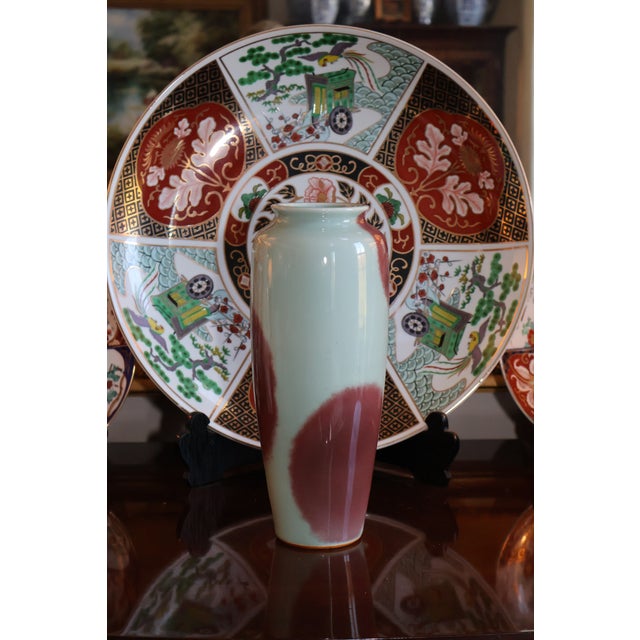
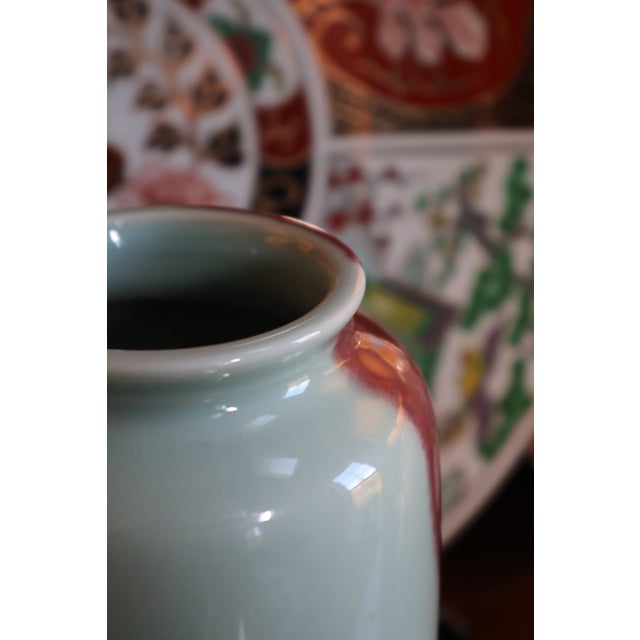
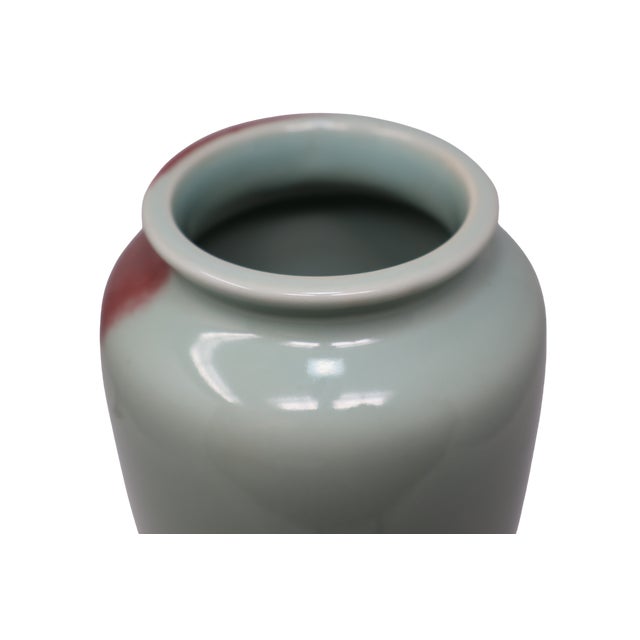
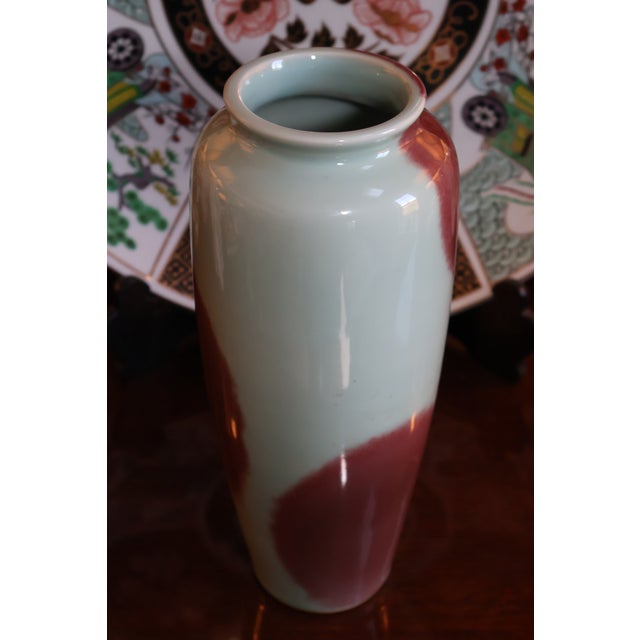
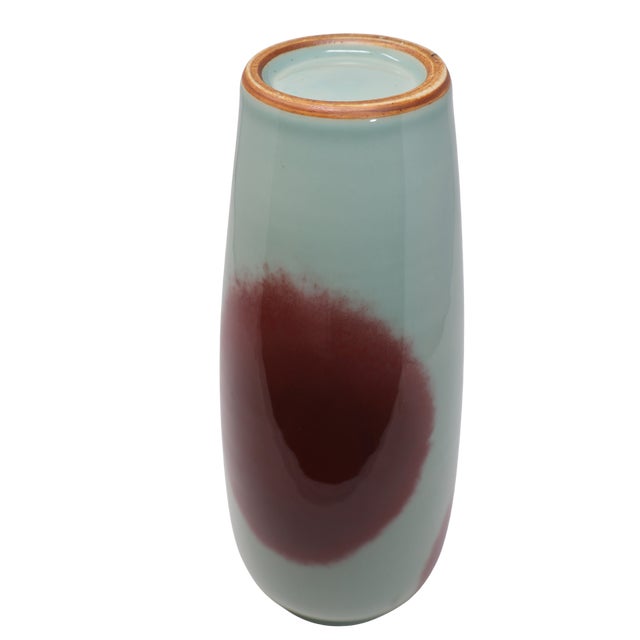
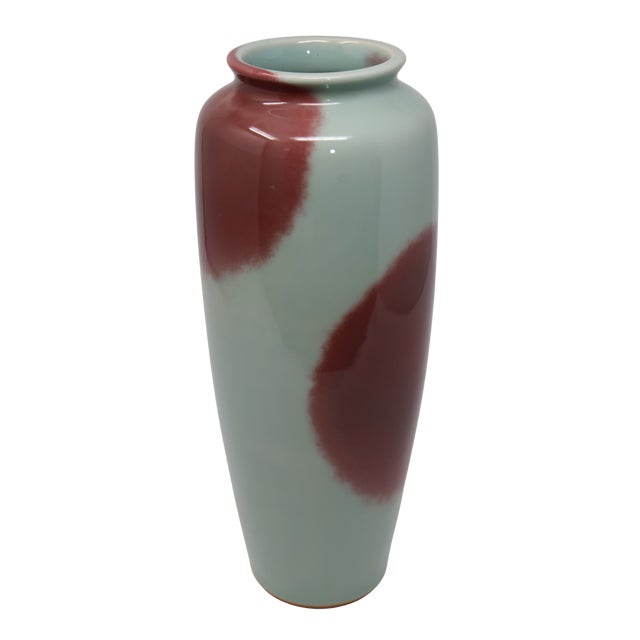
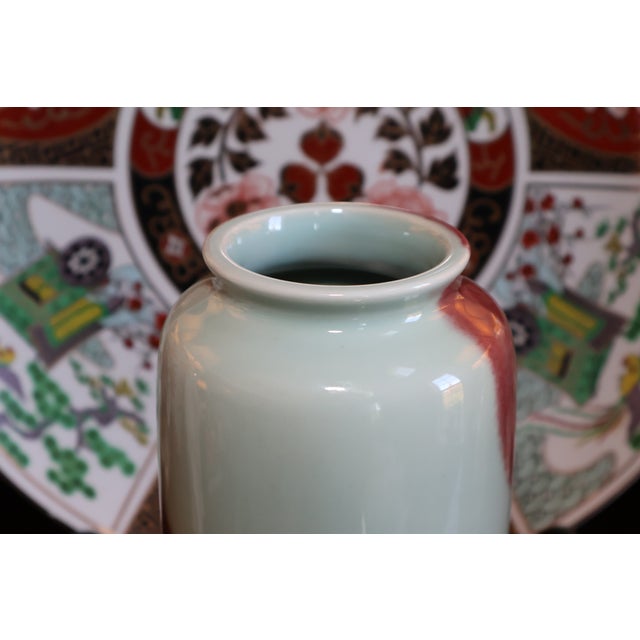
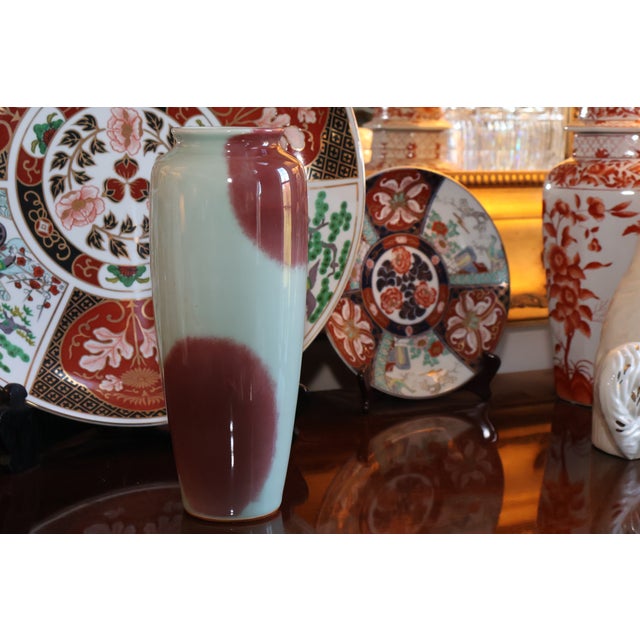
This striking signed Japanese porcelain vase is distinguished by its extraordinary combination of luminous celadon and richly expressive copper-red shinsha glazing. Standing 11.75 inches tall, the vessel possesses a beautifully refined, elongated silhouette, with a gently tapering body, rounded shoulders, short neck, and softly flared circular mouth.
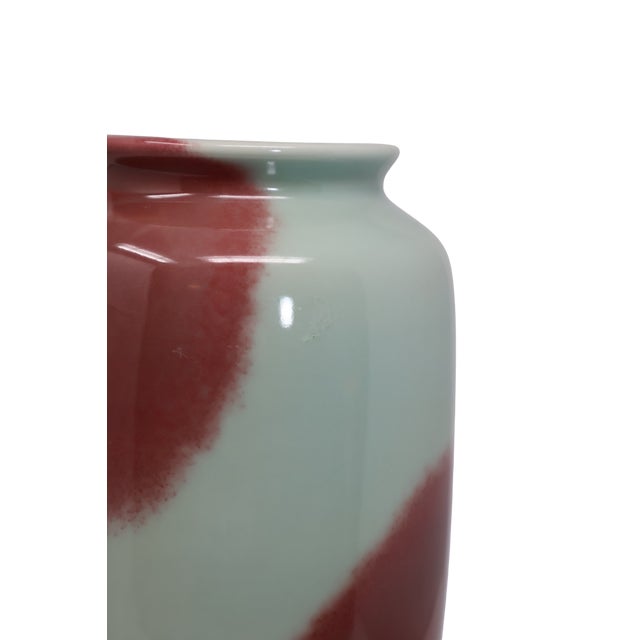
Its most captivating characteristic is the dramatic interplay of contrasting glazes. A serene, translucent seafoam-to-jade-green celadon ground is interrupted by sweeping, asymmetrical passages of copper red, displaying remarkable variations of dusty rose, cranberry, burgundy, and deep oxblood.
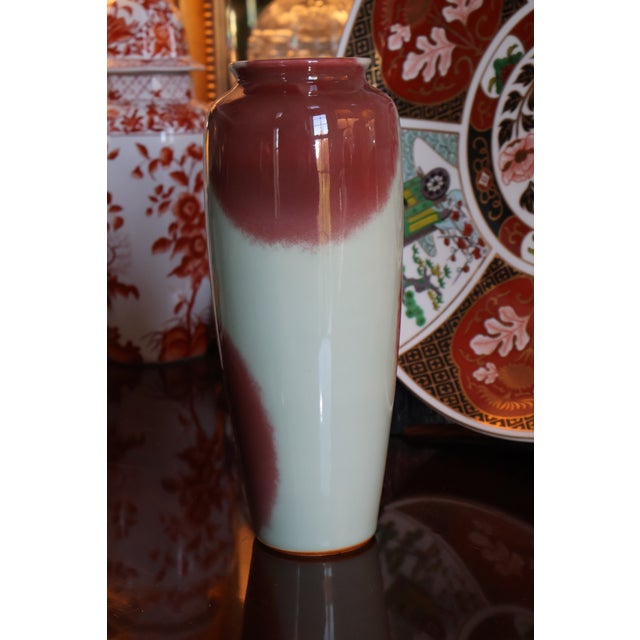
The red decoration appears almost suspended within the glaze, with richly saturated centers dissolving into delicate, feathered edges. Rather than following a repetitive painted pattern, the colors flow organically across the vessel, creating an expressive composition that changes with every viewing angle.
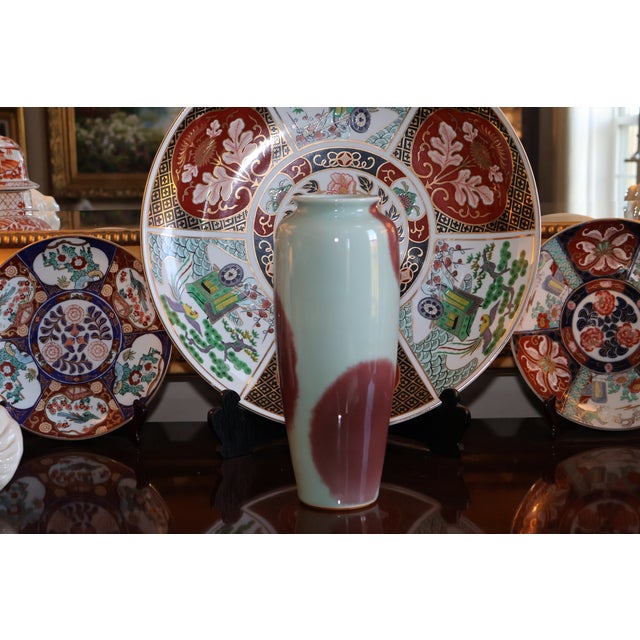
From one perspective, the vase reveals broad, dramatic passages of copper red. From another, an almost uninterrupted expanse of luminous celadon emphasizes the purity of its form. This remarkable duality gives the piece both the contemplative beauty of classical Asian ceramics and the commanding visual presence of modern abstract art.
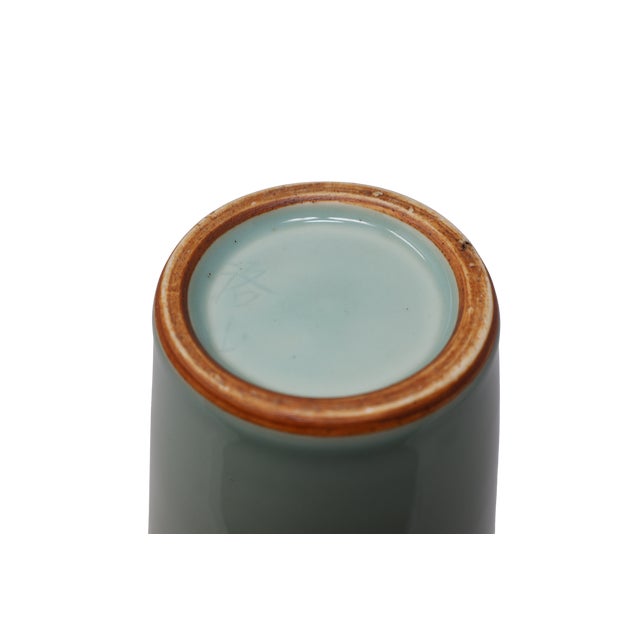
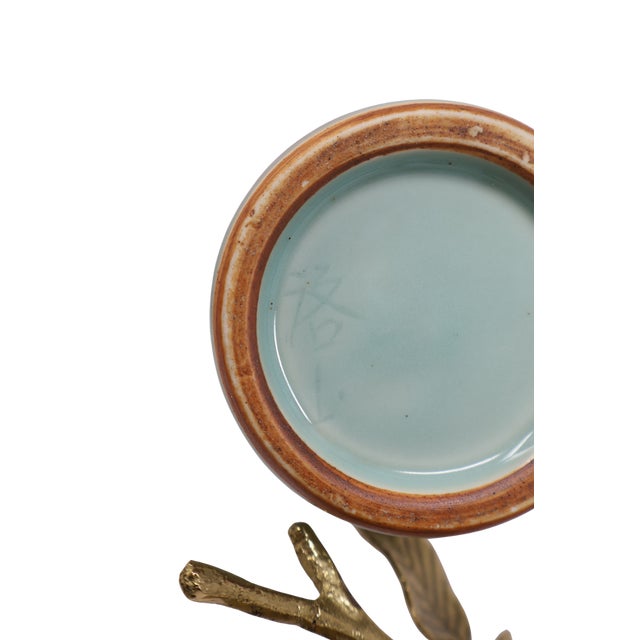
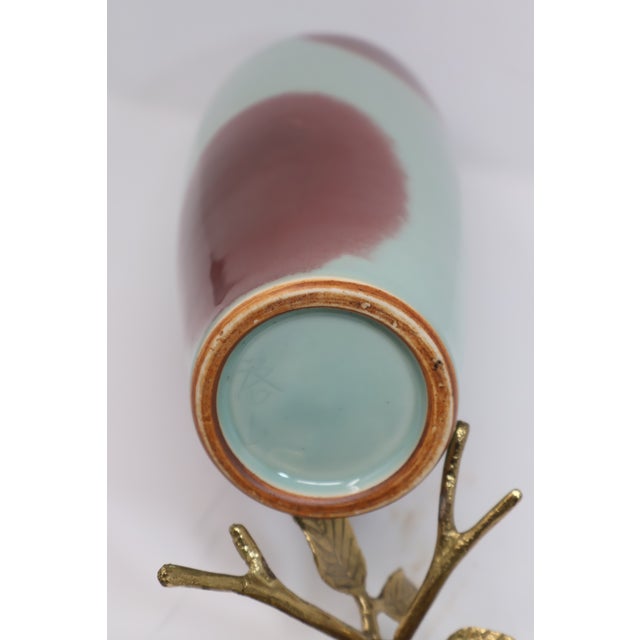
The recessed underside bears the Japanese two-character signature 啓山 (Keizan), hand-incised or impressed beneath the translucent glaze and framed by a substantial, exposed iron-brown ceramic foot ring.
Acquired from a Northern Virginia estate with its original auction catalog identification, the vase represents a compelling union of documented provenance, traditional craftsmanship, and exceptional decorative appeal.
The History of Celadon — A Tradition of Refinement
Celadon is among the most revered ceramic glaze traditions in East Asian decorative arts, prized for its luminous jade-like appearance, subtle translucency, and association with artistic refinement.
Its history extends back centuries, reaching exceptional levels of technical sophistication during China's Song dynasty (960–1279). The celebrated celadon wares of the Longquan kilns became especially admired for their beautiful blue-green coloration and softly reflective surfaces.
Celadon subsequently influenced ceramic traditions throughout Korea and Japan, where accomplished potters studied and reinterpreted the forms, finishes, and techniques of earlier Chinese masterpieces.
In Japan, celadon became an important artistic pursuit among ceramicists seeking to balance the technical precision of historic porcelain-making with their own expressive approaches to form and glaze.
The present vase reflects this artistic heritage through its luminous blue-green finish, carefully considered proportions, and restrained architectural silhouette.
Shinsha — The Extraordinary Art of Copper-Red Glazing
Complementing the tranquil celadon ground is the dramatic application of shinsha (辰砂), the traditional Japanese term associated with copper-red ceramic glazing.
Unlike ordinary painted decoration, copper-red coloration develops through the interaction of copper compounds, glaze chemistry, and carefully controlled kiln-firing conditions.
The successful development of copper red traditionally requires a reducing kiln atmosphere, making the technique highly sensitive to firing conditions. Variations in temperature, glaze composition, and the behavior of copper during firing can produce a remarkable range of colors.
These effects may range from soft blush and rose to vibrant crimson, cranberry, burgundy, and deep oxblood.
On this vase, the copper-red glaze displays especially compelling tonal variations. Saturated red passages soften into translucent pink margins before disappearing into the surrounding celadon.
The resulting transitions have an almost watercolor-like quality, giving the surface extraordinary visual movement and depth.
Particularly beautiful is the way the red extends across portions of the rounded shoulders and flared mouth, visually connecting the expressive exterior to the predominantly celadon-glazed interior.
Rather than simply decorating the vessel, the glaze becomes the defining artistic feature of the work.
Japanese Studio Ceramics and the Historical Significance of the Glaze
The combination of celadon and copper-red shinsha occupies an important place in Japanese ceramic history.
During the early 20th century, Japanese studio ceramicists increasingly revisited historic Chinese and Korean pottery, experimenting with classical forms and challenging glaze techniques.
Among the important artists exploring these traditions was Kawai Kanjirō (1890–1966), whose circa-1924 Celadon-Glazed Vase with Copper-Red Decoration is preserved in the collection of the Asahi Group Oyamazaki Villa Museum of Art in Japan.
The museum-documented example illustrates the longstanding artistic appeal of combining serene celadon with expressive copper-red decoration.
This historic relationship between the two glazes continued to influence Japanese ceramic artistry throughout the 20th century.
The present vase belongs aesthetically to this broader tradition, bringing together classical ceramic techniques and an unusually expressive, abstract treatment of color.
Its striking appearance is especially compelling for the contrast between its disciplined, elegant form and the fluid character of its glaze.
The Keizan Signature — 啓山
A particularly important feature is the two-character Japanese signature 啓山 (Keizan) on the underside.
The inscription is executed in a subtle cursive style and appears incised or impressed into the ceramic beneath the translucent celadon glaze.
The recessed base is surrounded by a broad, exposed iron-brown foot ring displaying concentric finishing marks, naturally varied firing coloration, and subtle mineral speckling.
The name Keizan appears within Japanese ceramic-mark references and is associated with Japanese pottery traditions.
The Japanese ceramic world also includes the historically significant Katō Keizan (加藤渓山) lineage, celebrated for its revival of Chinese Song-dynasty celadon and related glaze techniques. The Katō family's documented signature uses different written characters, 渓山, and a direct connection between that lineage and the present vase has not been established.
The vase is presented under its documented 啓山 (Keizan) signature, preserving the exact identification recorded in the original estate auction catalog.
The original estate catalog describes the piece as:
“Signed Japanese celadon porcelain vase with copper red (shinsha) accents. Seemingly marked 啓山 (Keizan). 11.75””
An Exceptional Addition to a Considered Collection
The appeal of this vase extends well beyond its decorative beauty.
Its combination of traditional celadon and expressive shinsha glazing brings together two historic ceramic techniques, while its signed base and estate documentation provide important identifying details.
The result is a distinctive Japanese ceramic vessel that offers collectors and design enthusiasts a connection to the artistic traditions of East Asian porcelain.
Its sculptural form and sophisticated color palette also give it exceptional versatility within thoughtfully curated interiors.
At nearly one foot tall, the vase has enough presence to stand independently on a library shelf, console table, mantel, or pedestal, while remaining beautifully proportioned for display within a collection of antique and contemporary decorative arts.
The soft celadon harmonizes with natural oak, walnut, mahogany, antique brass, dark lacquer, and richly textured neutral furnishings. The dramatic copper-red glazing introduces warmth and an unexpected burst of color.
Especially suited to Japandi, Japanese-inspired, organic modern, contemporary, eclectic, and collected traditional interiors, the vessel offers a sophisticated way to introduce historic ceramic craftsmanship into present-day design.
Its combination of elegant form, distinctive glaze artistry, signed identification, and estate provenance makes it a compelling acquisition for collectors seeking individual character rather than mass-produced decoration.
A beautifully realized Japanese ceramic vase whose striking copper-red passages, luminous celadon ground, and Keizan signature create a distinctive and enduring decorative presence.
Item Details
Origin: Japan
Signature: 啓山 (Keizan)
Material: Porcelain, as identified in the original estate catalog
Glaze: Celadon with copper-red shinsha accents
Technique: Traditional ceramic glazing with copper-red decorative effects
Colors: Pale jade green, seafoam, celadon blue-green, dusty rose, cranberry, burgundy, and oxblood
Height: 11.75 inches
Form: Slender tapering body, rounded shoulders, short neck, flared rim
Base: Recessed celadon-glazed underside with exposed iron-brown ceramic foot
Period: Likely 20th century; precise production date not established
Provenance: Northern Virginia estate
Maker: Signed Keizan (啓山); specific artist or workshop not independently identified
See less
- Dimensions
- 3ʺW × 3ʺD × 11.75ʺH
- Styles
- Chinoiserie
- Japanese
- Period
- Mid 20th Century
- Country of Origin
- Japan
- Item Type
- Vintage, Antique or Pre-owned
- Materials
- Porcelain
- Condition
- Good Condition, Unknown, Some Imperfections
- Color
- Celadon
- Condition Notes
- The vase presents with a beautifully glossy celadon and copper-red glaze. No chips, breaks, or restoration are seen; the vase … moreThe vase presents with a beautifully glossy celadon and copper-red glaze. No chips, breaks, or restoration are seen; the vase is in great condition. Subtle speckling and firing variations are visible along the exposed ceramic foot, together with minor surface characteristics consistent with its manufacture and age. less
Questions about the item?
Returns & Cancellations
Return Policy - All sales are final 48 hours after delivery, unless otherwise specified in the description of the product.
Cancellation Policy - Prior to shipping or local pickup, buyers may cancel an order for up to 48 hours, unless otherwise specified.
Related Collections
- Franco Bucci Vases
- Dorothy Draper Vases
- Workaday Handmade Vases
- Frederick Cooper Vases
- St. Louis Crystal Vases
- Poltronova Vases
- Gambone Vases
- Surface Ceramics Vases
- Arcore Ceramica Vases
- Vases in Panama City, FL
- Liz Marsh Vases
- Raymor Import Vases
- Bimini Glass Vases
- Libbey Glass Co. Vases
- Ralph Lauren Home Vases
- From Vienna Vases
- Green Fenton Art Glass Company Vases
- Blenko Vases
- Lenox Vases
- Swung Vases
- Fenton Art Glass Company Vases
- Haeger Vases
- Italian Vases
- Orrefors Vases
- Viking Glass Company Vases