

Details
Description
Monumental Japanese Cloisonne Enamel Dragon Vase, Meiji Period, Circa 1890
An extraordinary and exceptionally large Japanese cloisonne enamel vase from …
Read more
Monumental Japanese Cloisonne Enamel Dragon Vase, Meiji Period, Circa 1890
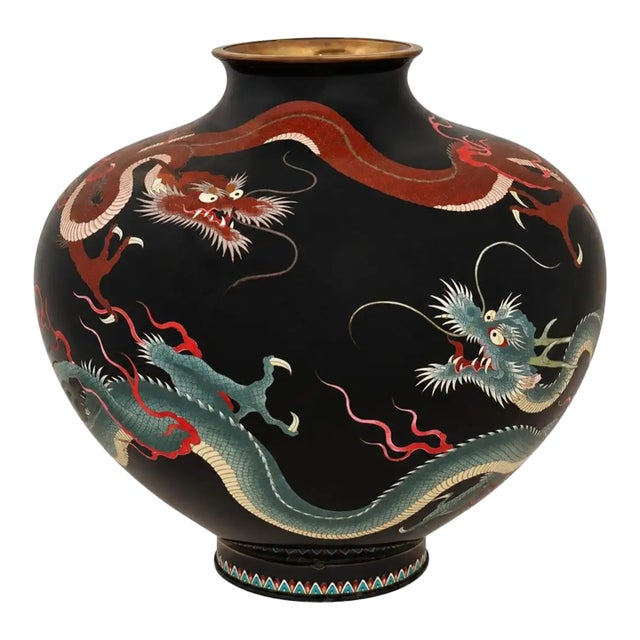
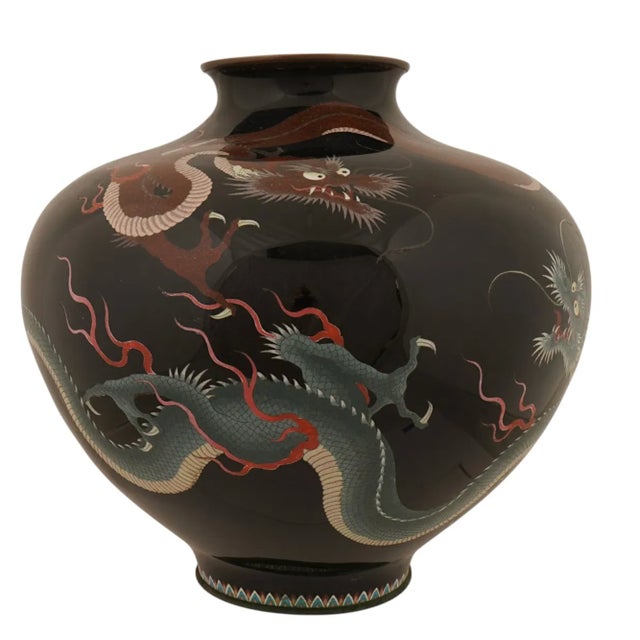
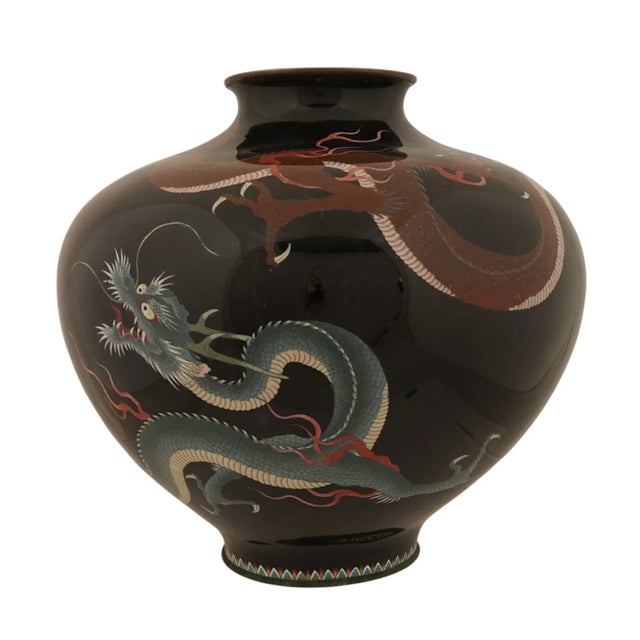
An extraordinary and exceptionally large Japanese cloisonne enamel vase from the Meiji period (1868–1912), circa 1890, featuring a magnificent composition of two powerful, intricately detailed dragons dramatically intertwined against a deep, lustrous black enamel ground. Measuring an impressive 16 inches in height and approximately 18 inches in diameter, this monumental, generously proportioned vase is an outstanding example of the artistic ambition, technical sophistication, and extraordinary decorative achievements of Japanese enamel craftsmanship during the late 19th century.
The vase is distinguished by its remarkably broad, almost spherical body, beautifully rounded shoulders, short tapering neck, and elegantly flared mouth. Its exceptional width, exceeding its height, creates an imposing and visually commanding silhouette rarely encountered among more conventional Japanese cloisonne vases. The massive globular form provides an expansive surface for the elaborate decoration, allowing the dragons to move freely across the vessel in a continuous, dynamic composition.
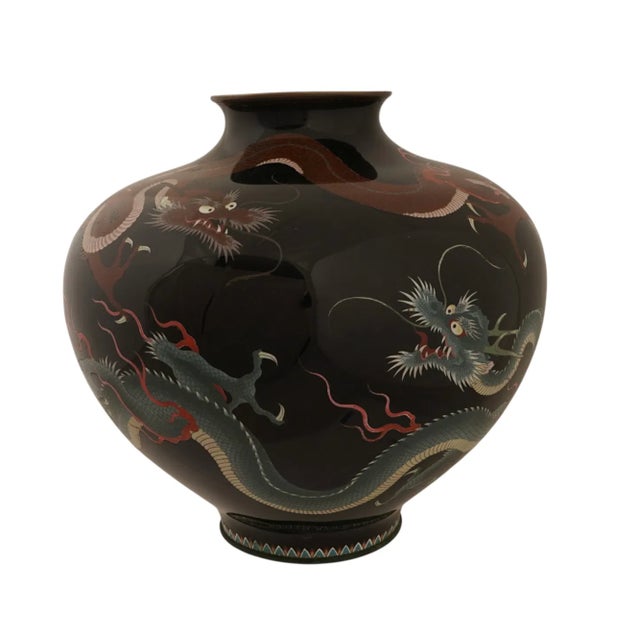
The principal decoration consists of two magnificent dragons, one rendered in rich reddish-brown and copper tones and the other in contrasting shades of blue-green and turquoise. Their elongated, serpentine bodies sweep dramatically across the rounded surface of the vase, creating a remarkable sense of movement, energy, and visual depth.
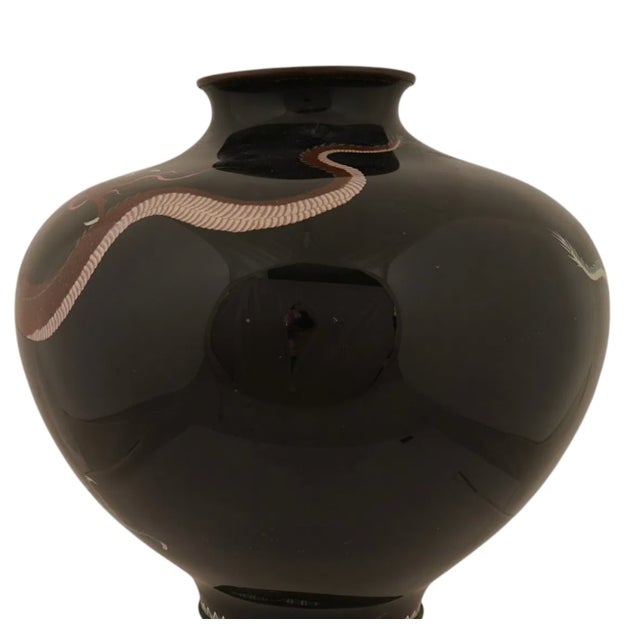
The upper dragon, executed in warm russet and reddish-brown enamels, stretches majestically across the shoulders and upper body of the vessel. Its powerful, sinuous form wraps around the broad circumference, with an intricately detailed head featuring fierce expressive eyes, an open mouth displaying sharp teeth, elaborate whiskers, and finely articulated claws. The individually delineated scales and delicately rendered pale underbelly demonstrate the extraordinary precision and refinement of the enamelwork.
The second dragon, beautifully executed in muted turquoise and blue-green enamels, winds dramatically around the lower body. Its richly patterned scales, pale cream-colored underbelly, prominent claws, and expressive facial features provide a striking contrast to the warmer tones of the upper dragon. Flowing crimson and rose-colored flame-like ribbons weave through the composition, further emphasizing the dynamic interaction between the two mythical creatures.
Particularly remarkable is the expansive black enamel ground, which provides a dramatic backdrop for the elaborate decoration. The deep, glossy surface intensifies the brilliance of the colored enamels while allowing the intricately rendered dragons to emerge with extraordinary clarity. The restrained yet sophisticated palette of reddish-brown, turquoise, ivory, cream, and crimson creates a harmonious balance between bold decorative impact and refined artistic expression.
The detailed wirework outlining the dragons' scales, whiskers, claws, facial features, and flowing bodies reflects the remarkable skill required of accomplished Japanese cloisonne craftsmen. Each element has been carefully arranged to create a composition of exceptional intricacy while maintaining a powerful overall visual effect. The contrast between the densely decorated dragons and the broad expanses of uninterrupted black enamel is particularly successful, giving the vessel a sophisticated and commanding aesthetic.
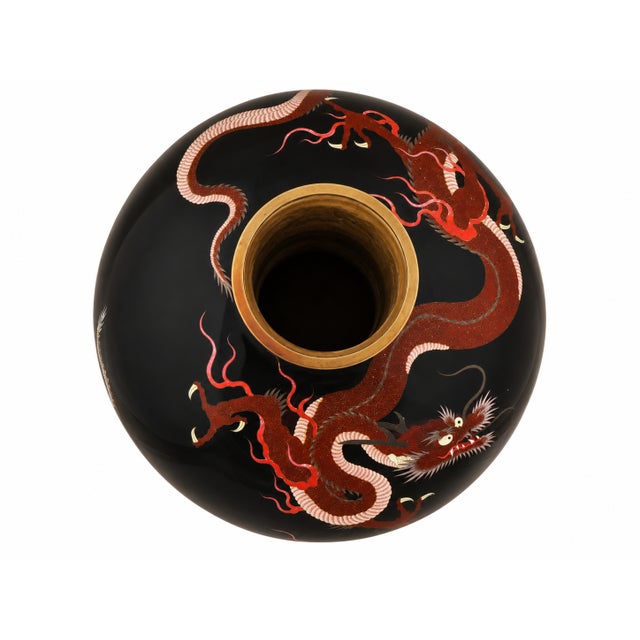
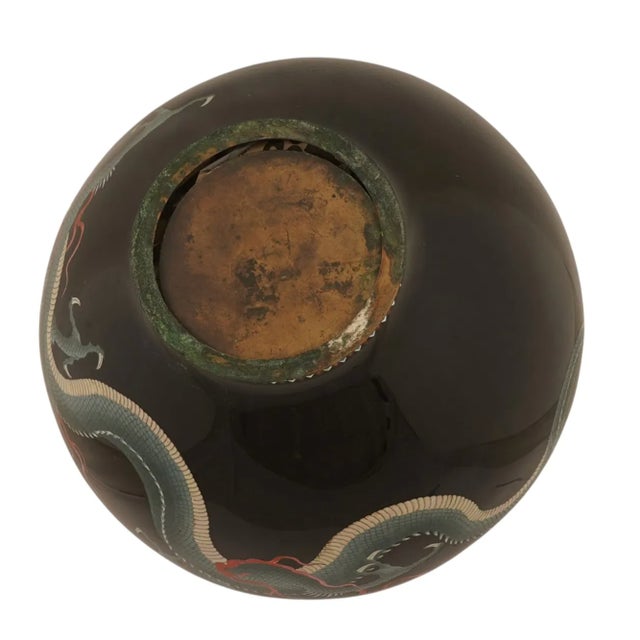
The decoration continues across the rounded shoulders of the vase and is particularly impressive when viewed from above, where the reddish-brown dragon can be seen dramatically encircling the neck and mouth. This continuous treatment of the surface demonstrates the thoughtful integration of decoration and form, transforming the vase into a sculptural work intended to be appreciated from multiple perspectives.
The mouth is finished with a substantial gilt-bronze-colored metal rim, providing an elegant contrast to the dark enamel ground. The vase rests upon a short circular foot decorated with a finely executed geometric border of repeating triangular motifs in turquoise, ivory, and reddish tones, creating a refined ornamental conclusion to the composition.
In traditional Japanese art and symbolism, the dragon represents strength, wisdom, prosperity, authority, and auspicious power. Closely associated with water, clouds, and the forces of nature, dragons were among the most celebrated subjects in Japanese decorative arts. Their powerful, serpentine forms were particularly well suited to the curved surfaces of cloisonne vessels, allowing master craftsmen to create elaborate compositions conveying movement, vitality, and extraordinary artistic expression.
The Meiji period represented the golden age of Japanese cloisonne enamel production. During the second half of the 19th century, Japanese enamelers achieved unprecedented levels of technical refinement, transforming cloisonne from a decorative craft into an internationally admired art form. Advances in enamel preparation, wirework, firing, and polishing enabled craftsmen to produce increasingly ambitious works distinguished by their sophisticated color palettes, intricate designs, and extraordinary surface finishes.
Large-scale cloisonne vessels were particularly demanding to manufacture. The application of enamel across such an expansive, continuously curved surface required exceptional precision and technical control. The repeated firing and polishing necessary to achieve a smooth, lustrous finish presented considerable challenges, particularly with a vessel of such substantial proportions.
At approximately 18 inches in diameter and 16 inches in height, the present vase is especially impressive for its massive, rounded form. Its nearly spherical proportions distinguish it from the more commonly encountered slender baluster and elongated trumpet-shaped cloisonne vases of the period. The extraordinary breadth of the body gives the piece an almost architectural presence, while the dramatic dragon decoration enhances its monumental character.
Beyond its technical accomplishments, this magnificent vase possesses exceptional decorative appeal. Its dramatic black ground, richly colored dragons, and commanding proportions make it a remarkable statement piece suitable for a distinguished collection of Japanese decorative arts, an important Asian art interior, or a sophisticated contemporary setting.
An exceptional and visually captivating example of Japanese Meiji-period cloisonne enamel, combining monumental scale, impressive craftsmanship, powerful symbolism, and an extraordinarily dynamic decorative composition. Its substantial proportions and striking artistic presence make it a particularly desirable addition to a serious collection of Japanese decorative arts.
**Origin:** Japan
**Period:** Meiji Period (1868–1912)
**Date:** Circa 1890
**Material:** Cloisonne enamel on metal
**Decoration:** Two intertwined dragons on a deep black enamel ground
**Height:** 16 inches (40.6 cm)
**Diameter:** Approximately 18 inches (45.7 cm)
**Condition:** Mint condition, with only a few minor surface scratches consistent with age and gentle handling. Overall, exceptionally well preserved for a Japanese cloisonne enamel vase of this substantial size and period.
See less
- Dimensions
- 18ʺW × 17ʺD × 16ʺH
- Styles
- Japanese
- Period
- Late 19th Century
- Country of Origin
- Japan
- Item Type
- Vintage, Antique or Pre-owned
- Materials
- Cloisonné
- Condition
- Good Condition, Original Condition Unaltered, Some Imperfections
- Color
- Black
- Condition Notes
- **Condition:** Mint condition, with only a few minor surface scratches consistent with age and gentle handling. Overall, exceptionally well preserved … more**Condition:** Mint condition, with only a few minor surface scratches consistent with age and gentle handling. Overall, exceptionally well preserved for a Japanese cloisonne enamel vase of this substantial size and period. less
Questions about the item?
Returns & Cancellations
Return Policy - All sales are final 48 hours after delivery, unless otherwise specified in the description of the product.
Cancellation Policy - Prior to shipping or local pickup, buyers may cancel an order for up to 48 hours, unless otherwise specified.
Related Collections
- Franco Bucci Vases
- Dorothy Draper Vases
- Workaday Handmade Vases
- Bimini Glass Vases
- Libbey Glass Co. Vases
- Raymor Import Vases
- Karl Springer Vases
- Southeast Asia Vases
- The American School Vases
- St. Louis Crystal Vases
- Gambone Vases
- Liz Marsh Vases
- From Vienna Vases
- Poltronova Vases
- Surface Ceramics Vases
- Arcore Ceramica Vases
- Blenko Vases
- Lenox Vases
- Swung Vases
- Fenton Art Glass Company Vases
- Haeger Vases
- Viking Glass Company Vases
- Italian Vases
- Orrefors Vases
- Royal Haeger Vases