

Details
Description
An exceptional and unusually large Japanese cloisonne enamel box, signed Inaba on the underside, dating to the Meiji period, circa …
Read more
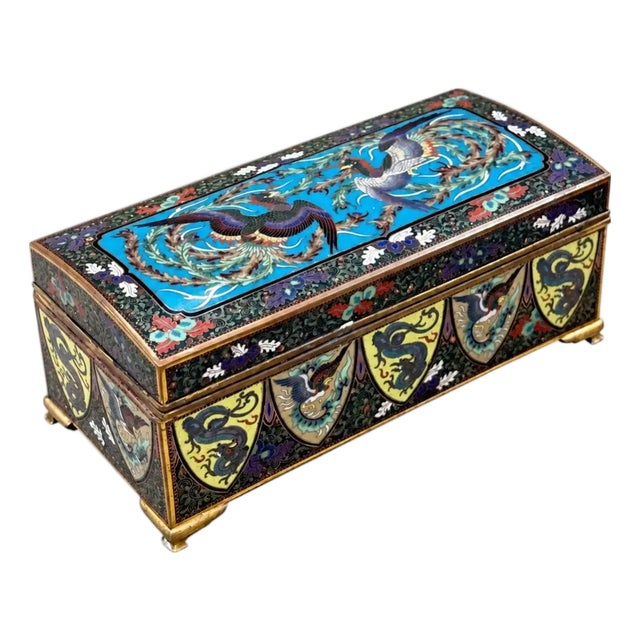
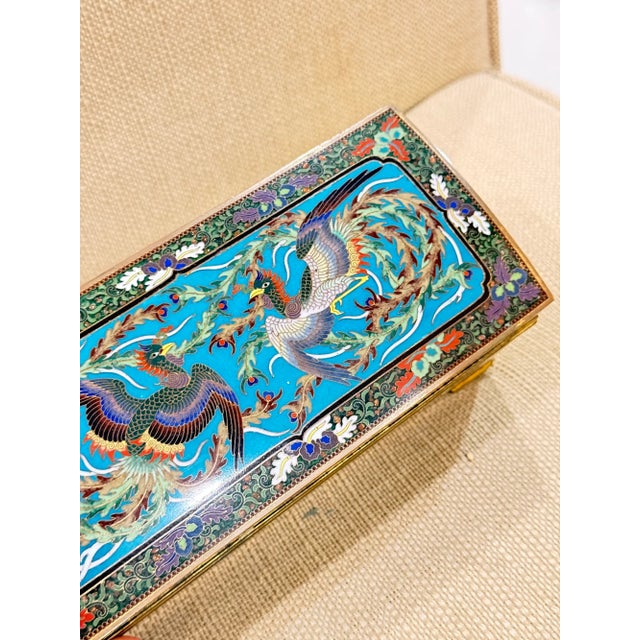
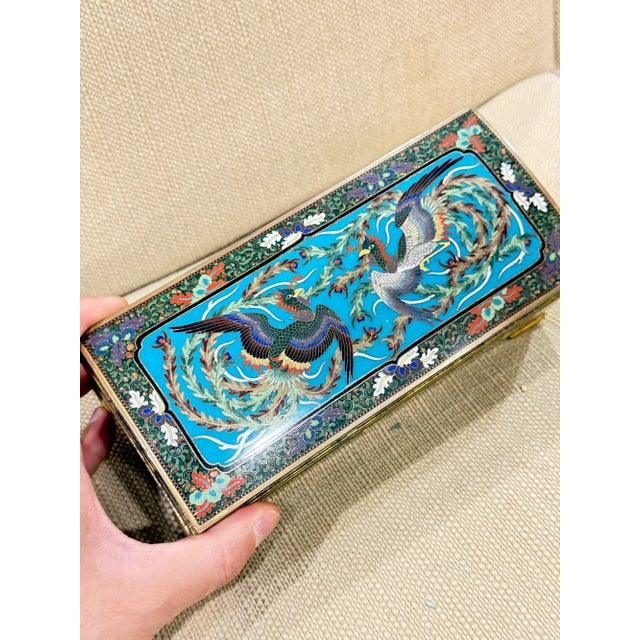
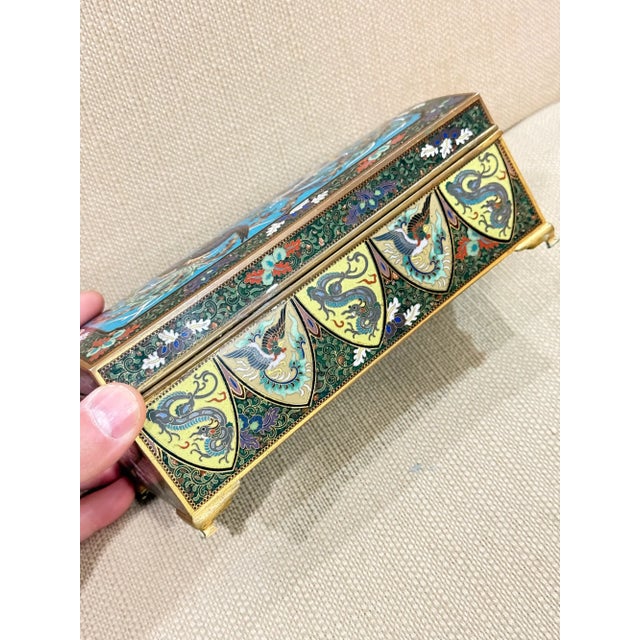
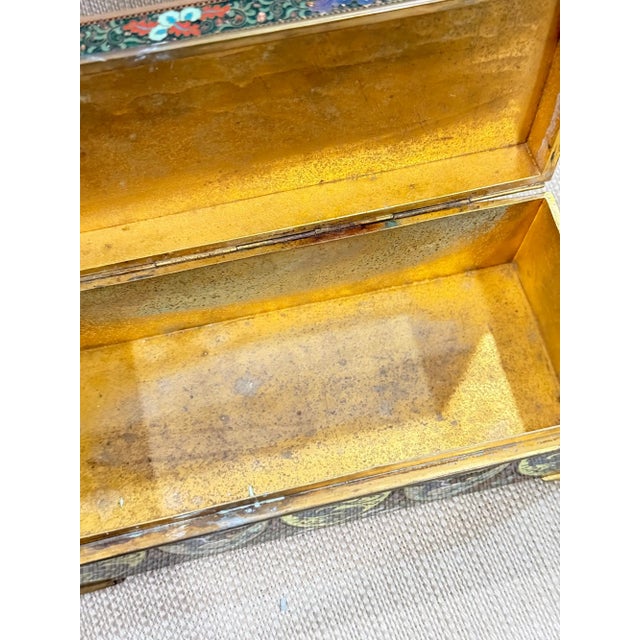
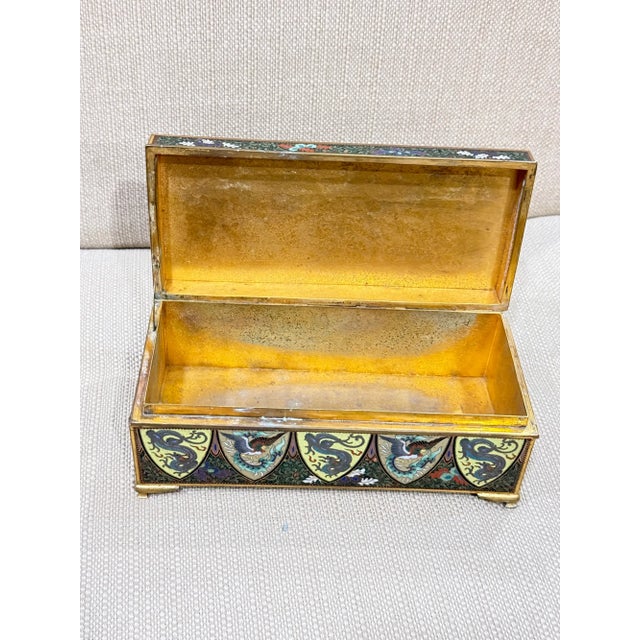
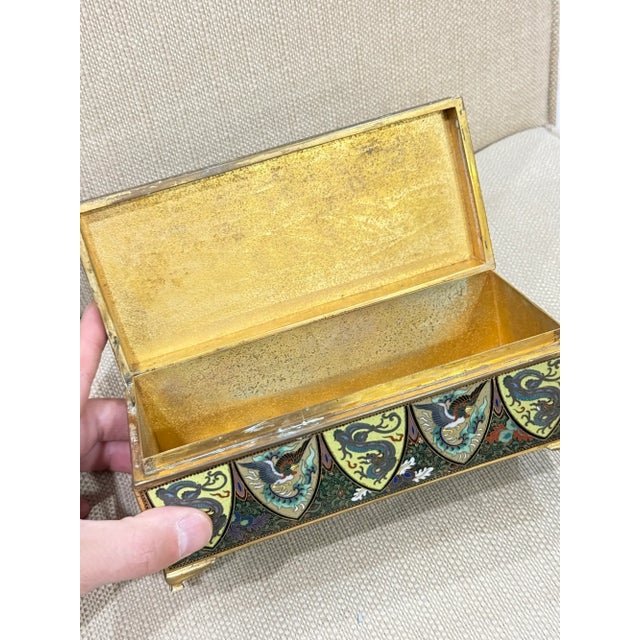
An exceptional and unusually large Japanese cloisonne enamel box, signed Inaba on the underside, dating to the Meiji period, circa 1895. A magnificent example of Japanese decorative artistry, this remarkable box combines extraordinary enamel workmanship, brilliant coloration, intricate silver and gilt wire detailing, and a sophisticated arrangement of traditional Japanese and Chinese-inspired motifs. Particularly noteworthy is the extensive use of richly colored green goldstone enamel, creating a shimmering, jewel-like surface that distinguishes this piece from more conventional Meiji cloisonne.
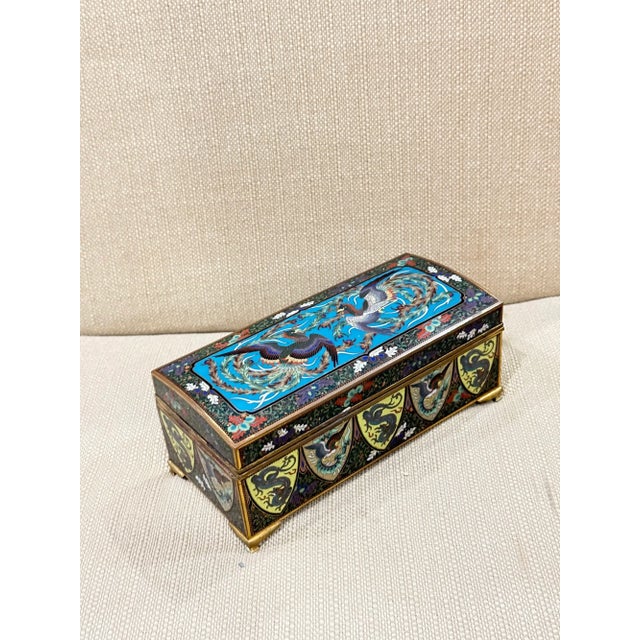
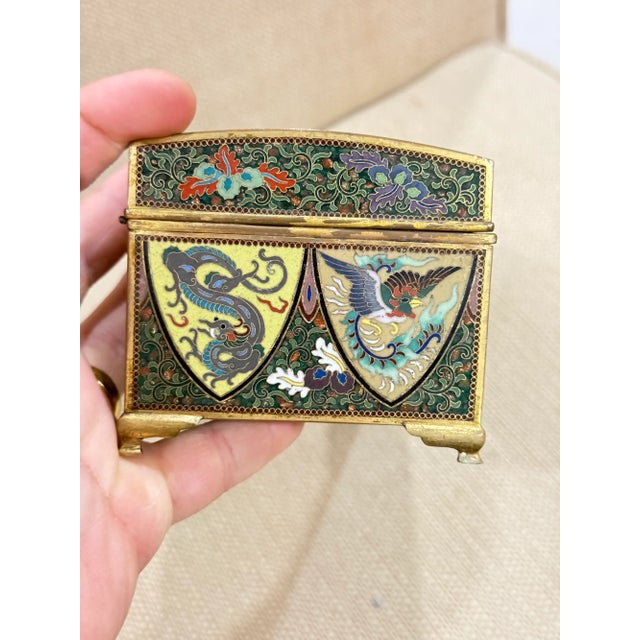
Measuring an impressive 7 ½ inches wide, 3 ½ inches deep, and 3 inches high, this substantial rectangular box possesses a commanding presence rarely encountered in smaller decorative cloisonne boxes of the period. Its architectural proportions, finely fitted hinged lid, gilt metal mounts, and four raised feet further emphasize the quality and refinement of its construction.
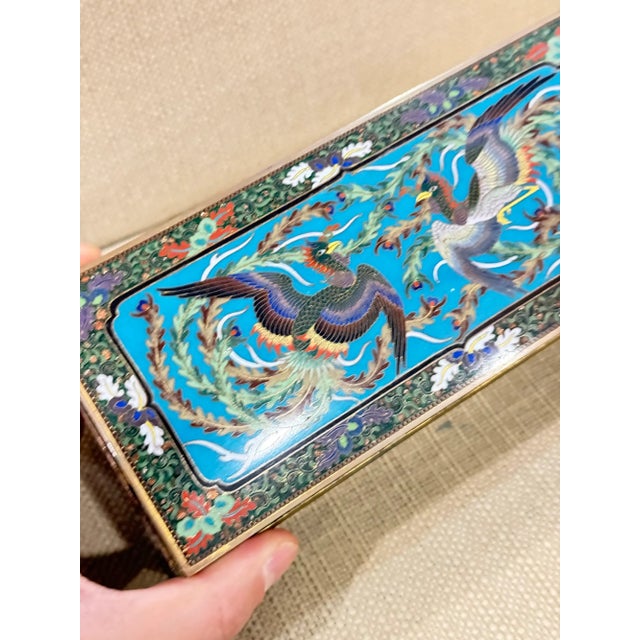
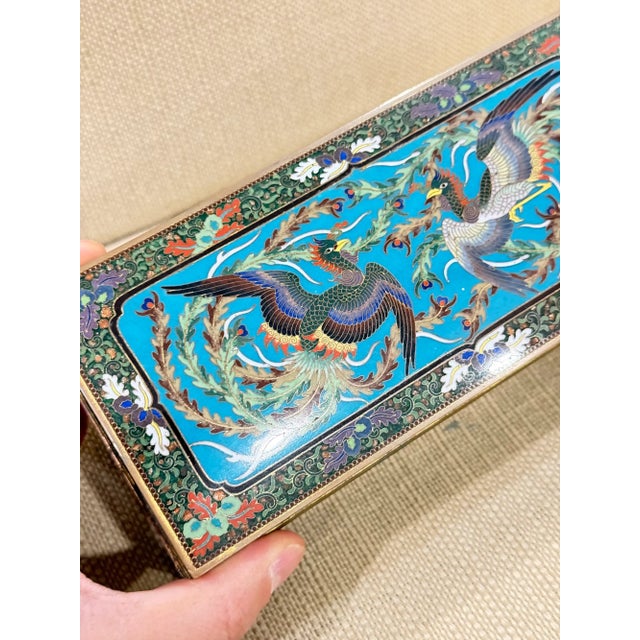
The lid features a spectacular composition of two magnificent phoenixes in flight, their elaborate wings outstretched and their flowing tail feathers intertwined with scrolling foliage against a luminous turquoise blue enamel ground. The birds are rendered with remarkable precision, displaying individually articulated feathers in deep cobalt blue, emerald green, lavender, ivory, black, and warm reddish tones. Their dynamic movement creates an extraordinary sense of energy and elegance.
Surrounding the central composition is a richly ornamented border of flowering vines and scrolling foliage worked against a deep green ground enriched with sparkling goldstone enamel. The subtle metallic brilliance of the goldstone creates a luxurious contrast with the vivid turquoise central panel, lending the entire composition exceptional depth and visual richness.
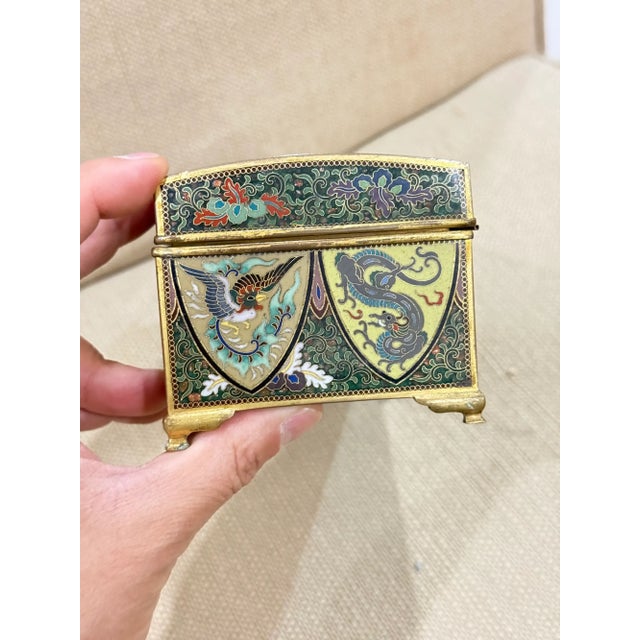
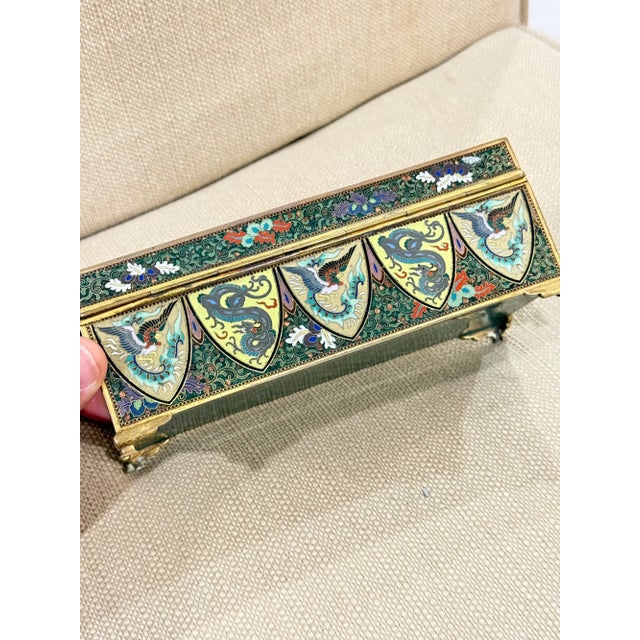
Equally impressive are the four sides of the box, which display an elaborate sequence of alternating dragon and phoenix motifs enclosed within shield-shaped reserves. The dragons, depicted in dark blue and green against pale yellow grounds, are rendered with sinuous bodies, expressive faces, and finely articulated scales. The phoenixes appear against softly colored grounds of ivory, turquoise, and pale blue, their wings and elaborate plumage executed with extraordinary delicacy.
These alternating dragon and phoenix motifs are particularly significant within East Asian decorative traditions, symbolizing harmony, prosperity, power, and good fortune. Their combination gives the box an additional layer of cultural and artistic significance.
The surrounding enamel decoration is exceptionally intricate, featuring densely arranged scrolling vines, stylized flowers, and richly colored botanical ornament against a deep green goldstone ground. Fine metallic wires define the individual elements, demonstrating the remarkable technical control required to execute such elaborate designs on a relatively small surface.
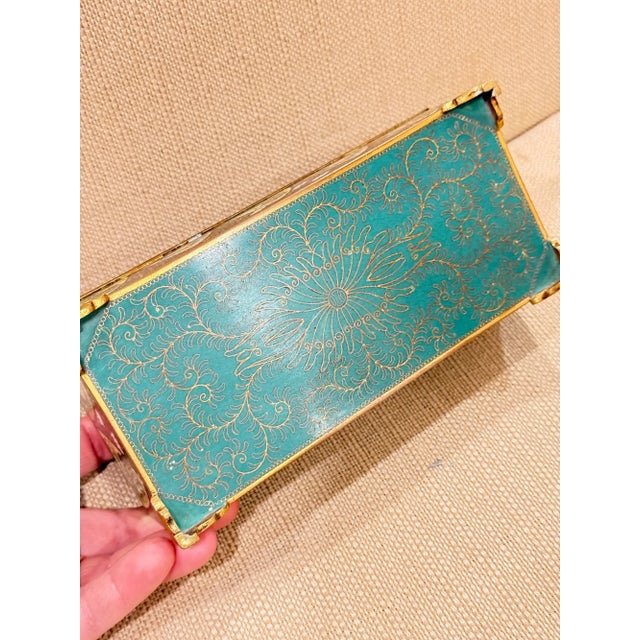
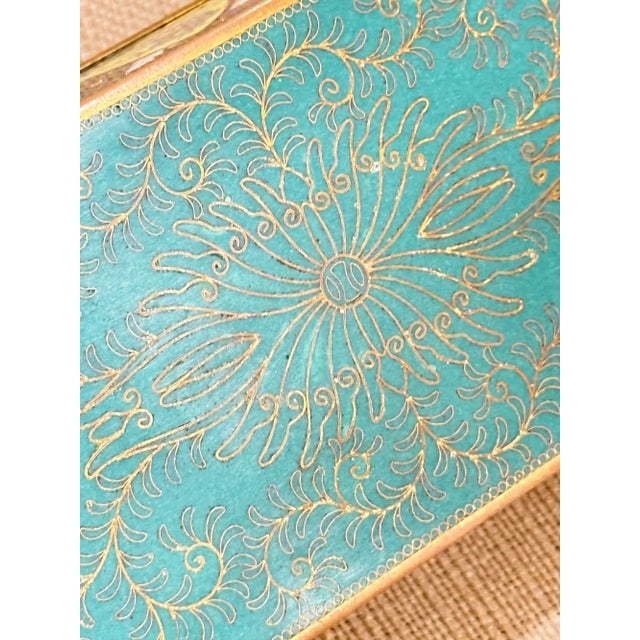
The underside is finished in a beautiful turquoise green enamel, ornamented with an elaborate symmetrical floral design formed entirely from delicate gilt wire. At its center is a large stylized chrysanthemum surrounded by gracefully scrolling foliage, creating a decorative composition that is itself a testament to the attention devoted to every surface of the box.
The box is signed Inaba on the underside, associating it with the celebrated Japanese cloisonne tradition of the Inaba workshop, recognized for its elaborate designs and accomplished enamel craftsmanship during the Meiji period.
The combination of its unusually generous proportions, elaborate phoenix and dragon imagery, brilliant turquoise enamel, richly detailed green goldstone grounds, and sophisticated ornamental borders makes this an especially desirable example of Japanese Meiji cloisonne.
A magnificent collector's piece, equally suited for display within an important collection of Japanese decorative arts or as a striking decorative object in a distinguished interior.
**Dimensions:** 7 ½ inches wide × 3 ½ inches deep × 3 inches high.
**Origin:** Japan
**Period:** Meiji period, circa 1880–1900
**Signature:** Inaba, underside
See less
Questions about the item?
Returns & Cancellations
Return Policy - All sales are final 48 hours after delivery, unless otherwise specified in the description of the product.
Cancellation Policy - Prior to shipping or local pickup, buyers may cancel an order for up to 48 hours, unless otherwise specified.
Related Collections
- Tony Duquette Boxes
- Abaca Boxes
- Violet Boxes
- Acacia Wood Boxes
- Ettore Sottsass Boxes
- Bright Green Boxes
- Port 68 Boxes
- Gustavsberg Boxes
- Polyester Boxes
- Towle Silversmiths Boxes
- Zitan Boxes
- Enzo Mari Boxes
- Anthony Redmile Boxes
- Alessandro Albrizzi Boxes
- Jewelry Boxes
- Burlwood Boxes
- Hat Boxes
- Pill Boxes
- Japanese Boxes
- Silver Boxes
- Maitland - Smith Boxes
- Porcupine Quill Boxes
- Cigar Boxes
- Porcelain Boxes
- Tool Boxes