




Details
Description
A magnificent and exceptionally large Italian polychrome maiolica charger dating from the late 19th century, decorated with an elaborate mythological …
Read more
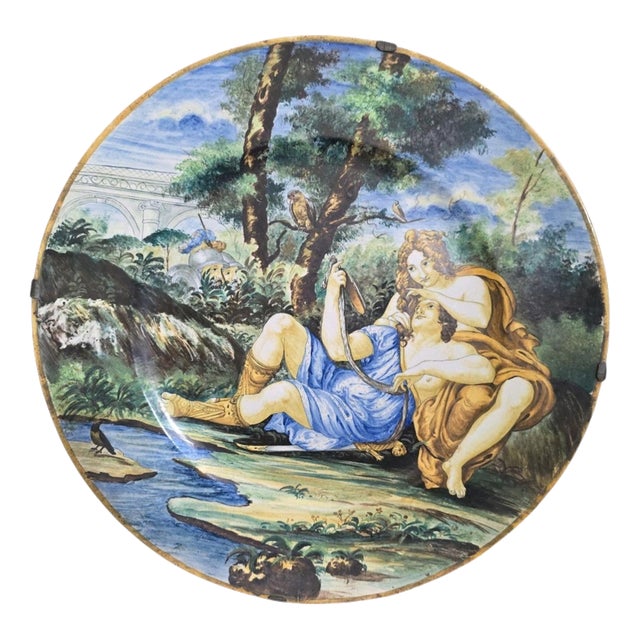
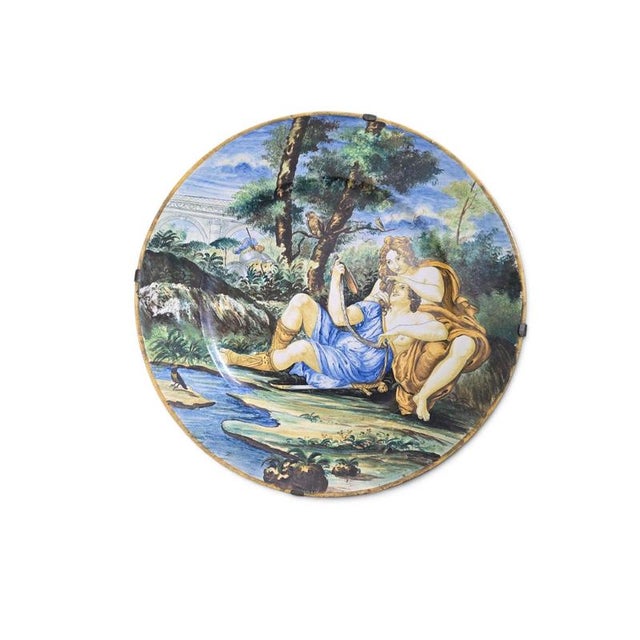
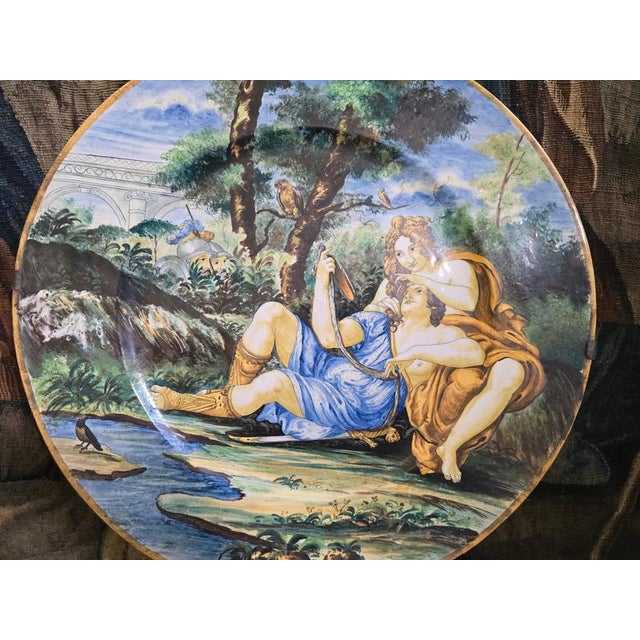
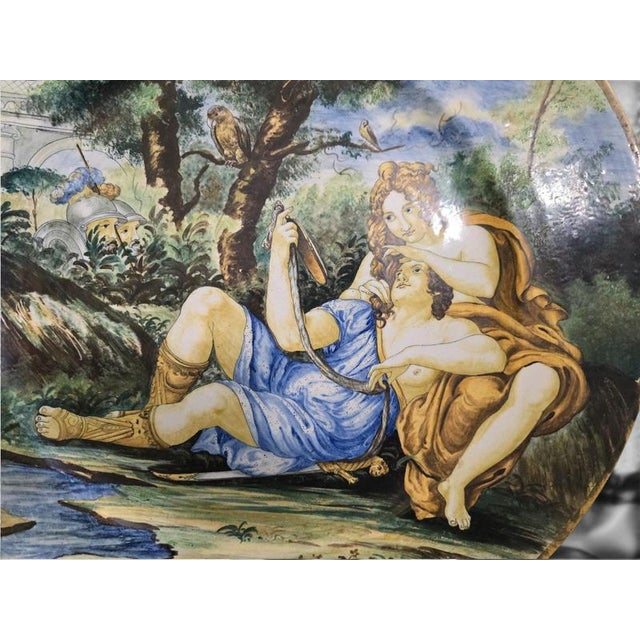
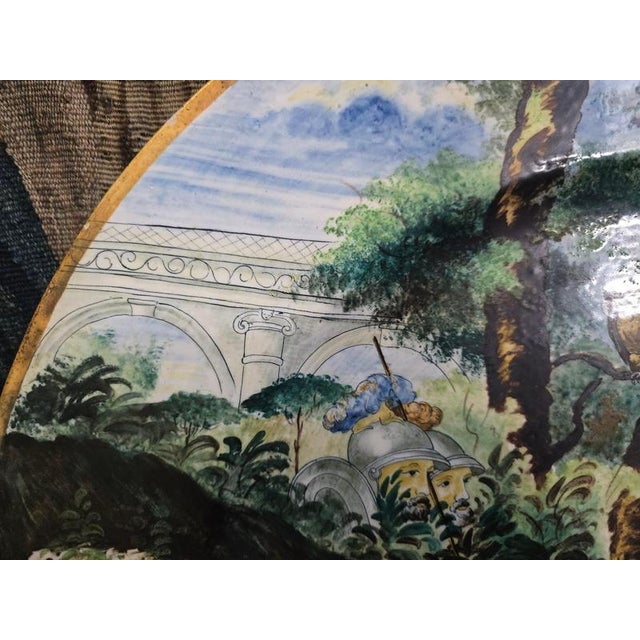
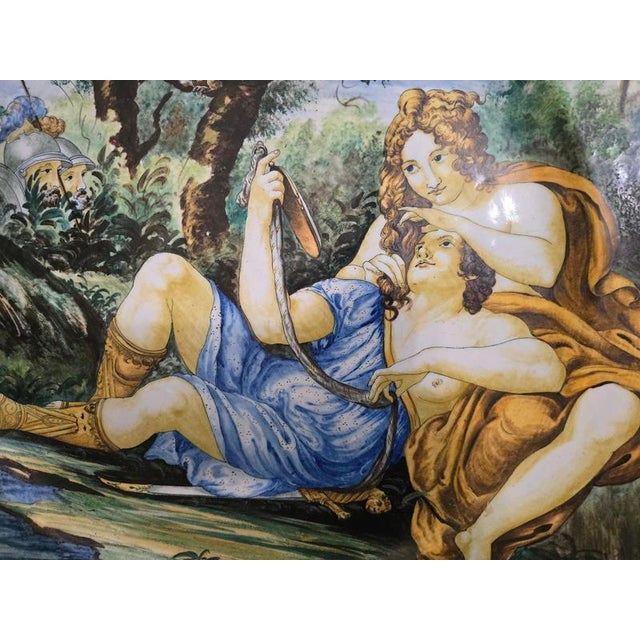
A magnificent and exceptionally large Italian polychrome maiolica charger dating from the late 19th century, decorated with an elaborate mythological and literary scene depicting Rinaldo and Armida, inspired by Torquato Tasso's celebrated epic poem Jerusalem Delivered (Gerusalemme Liberata). Measuring an impressive 63 cm (24.8 inches) in diameter, this remarkable ceramic work exemplifies the artistic richness and decorative sophistication of the Italian istoriato tradition, in which entire surfaces were transformed into complex pictorial narratives. Rinaldo and Armida — A Romantic and Mythological Subject The central composition illustrates an episode from the story of Rinaldo and Armida, one of the most celebrated romantic narratives in Italian Renaissance literature. In Tasso's Jerusalem Delivered, the Christian knight Rinaldo falls under the enchantment of Armida, a beautiful sorceress whose magical powers and seductive charm lead him away from his heroic duties. Their story, combining love, temptation, enchantment and heroic destiny, became an important source of inspiration for European painters, sculptors and decorative artists. The subject was particularly well suited to the Italian istoriato tradition, which frequently drew upon mythology, classical history, Renaissance literature and allegorical narratives. Exceptional Polychrome Maiolica Decoration The charger displays a richly conceived hand-painted polychrome composition, characterized by its ambitious narrative subject and impressive decorative impact. The painted scene transforms the ceramic surface into a pictorial work of art, continuing the distinguished tradition established by the great Italian Renaissance maiolica workshops. The term istoriato, meaning narrative or history painting, refers to a sophisticated form of ceramic decoration that flourished in Italy during the 16th century, particularly in centers such as Urbino, Castel Durante and Faenza.
During the 19th century, Italian ceramic workshops revived these celebrated Renaissance techniques, producing elaborate historical and mythological compositions for collectors and prestigious interiors. Italian Production, Late 19th Century Although unsigned and unmarked, the charger is stylistically consistent with Italian maiolica production of the late 19th century, possibly originating from a workshop in Abruzzo or Tuscany. This regional attribution remains stylistic rather than documentary. The quality of the painted decoration, ambitious subject matter and monumental proportions make this an especially striking example of the Italian Renaissance Revival taste that flourished during the second half of the 19th century.
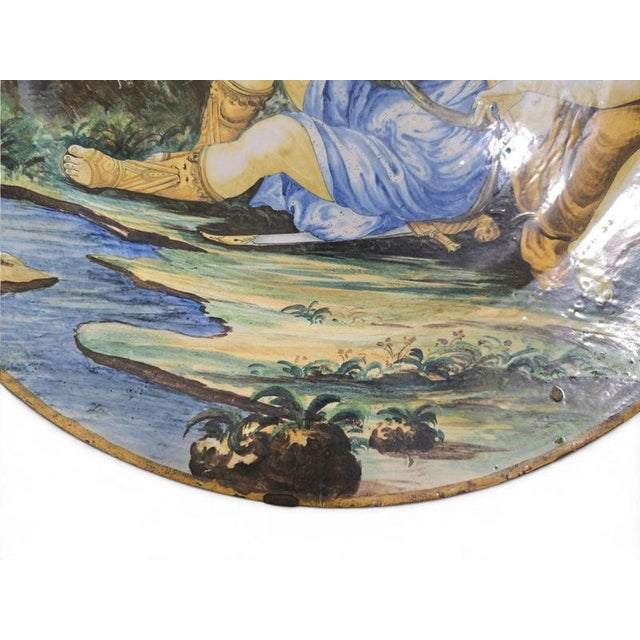
with its remarkable 63 cm diameter, this charger possesses an imposing presence and is particularly suitable for display as a decorative wall plate or as a centerpiece in an important collection of European ceramics. Its generous proportions allow the narrative composition to be appreciated in detail, while the vibrant polychromy creates an impressive visual effect. The piece is preserved in excellent condition, with no restorations, breaks or hairline cracks, an especially desirable characteristic for a ceramic object of this age and substantial size. An outstanding and highly decorative late 19th-century Italian istoriato maiolica charger, combining Renaissance-inspired craftsmanship, a celebrated literary subject and exceptional monumental proportions.
Origin Italy, possibly Abruzzo or Tuscany Period Late 19th Century, circa 1870–1900 Style Italian Renaissance Revival / Istoriato Maiolica Subject Rinaldo and Armida, inspired by Torquato Tasso's Jerusalem Delivered Materials Glazed Earthenware, Polychrome Hand-Painted Maiolica
Dimensions Diameter: 24.8 in. (63 cm) Marks Unsigned and unmarked.
Condition Excellent antique condition. No restorations, breaks or hairline cracks. Exceptionally well preserved for its age and substantial dimensions.
See less
- Dimensions
- 24.8ʺW × 3.15ʺD × 24.8ʺH
- Period
- 19th Century
- Item Type
- Vintage, Antique or Pre-owned
- Materials
- Ceramic
- Condition
- Good Condition, Unknown, Some Imperfections
- Color
- Gold
- Condition Notes
- Very Good — This vintage item has no defects, but it may show slight traces of use. Very Good — This vintage item has no defects, but it may show slight traces of use. less
Returns & Cancellations
Return Policy - All sales are final 48 hours after delivery, unless otherwise specified in the description of the product.
Cancellation Policy - Prior to shipping or local pickup, buyers may cancel an order for up to 48 hours, unless otherwise specified.
Related Collections
- Ralph Lauren Decorative Plates
- Sherle Wagner Decorative Plates
- Nickel Decorative Plates
- Kenneth Ludwig Chicago Decorative Plates
- Soapstone Decorative Plates
- Pickard China Decorative Plates
- Silk Decorative Plates
- Cantagalli Decorative Plates
- Joseph Holdcroft Decorative Plates
- Ox Bow Decor Decorative Plates
- Tatiana Alida Decorative Plates
- Tapio Wirkkala Decorative Plates
- Japanese Decorative Plates
- Chinese Decorative Plates
- Fruit Plates
- Brass Decorative Plates
- Spanish Decorative Plates
- Copper Decorative Plates
- Italian Decorative Plates
- Blue Decorative Plates
- Piero Fornasetti Decorative Plates
- Chinoiserie Decorative Plates
- Wedgwood Decorative Plates
- Gold Decorative Plates
- Green Decorative Plates