

Details
Description
Pair of French Louis XV-Style Marble and Bronze Candelabra, Early 20th Century
This handsome pair of French Louis XV-style candelabra, …
Read more
Pair of French Louis XV-Style Marble and Bronze Candelabra, Early 20th Century
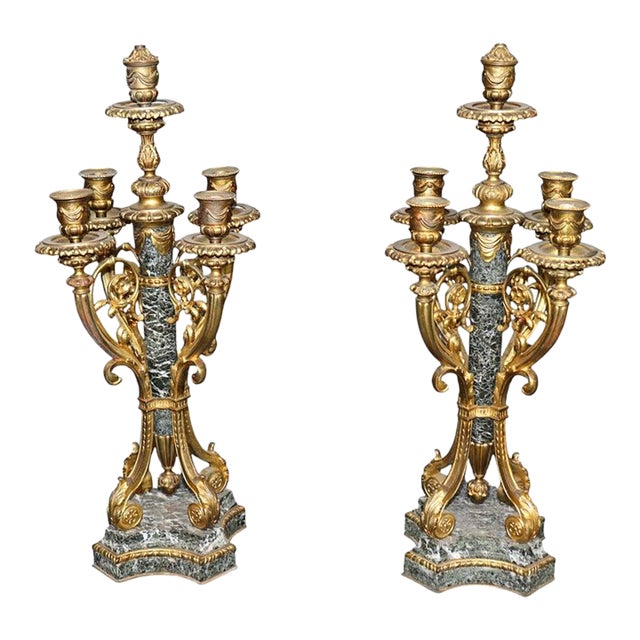
This handsome pair of French Louis XV-style candelabra, dating to the early 1900s, combines richly modeled gilt bronze with dramatically veined marble to create an exceptionally decorative and architectural presence. Designed as traditional candleholders and never converted or wired for electricity, the pair retains the character and function for which such ornamental objects were originally conceived. Their elaborate scrolling forms, floral details, curving branches, and contrasting marble elements reflect the enduring French taste for the elegance and exuberance of eighteenth-century decorative arts.
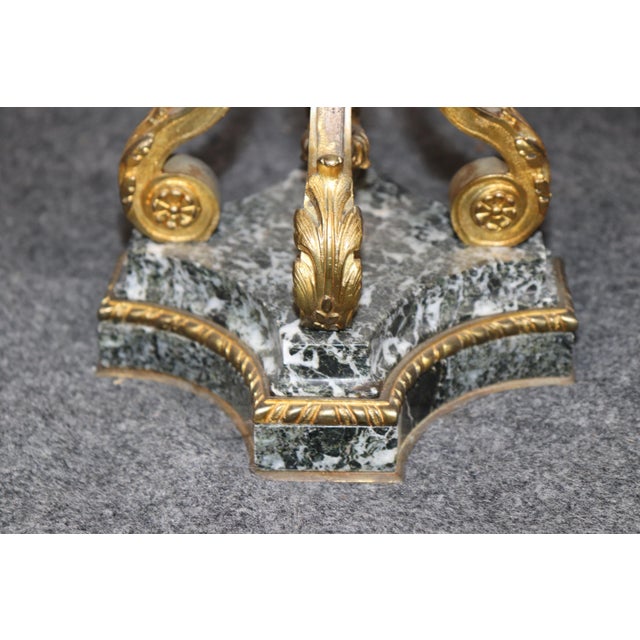
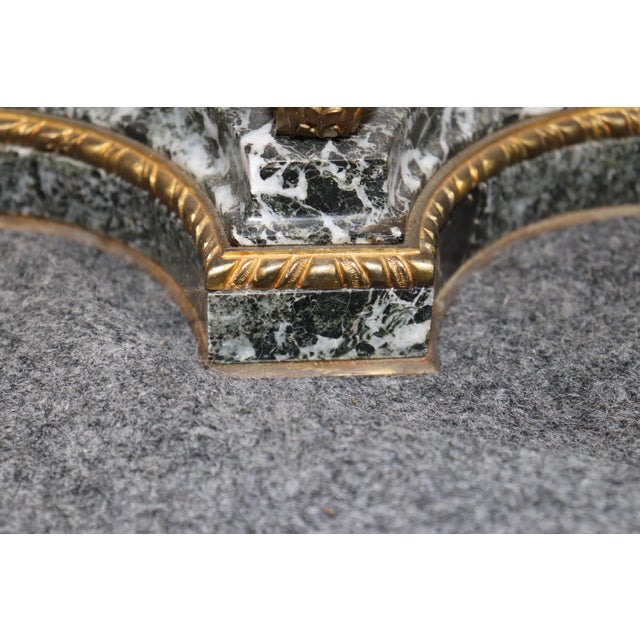
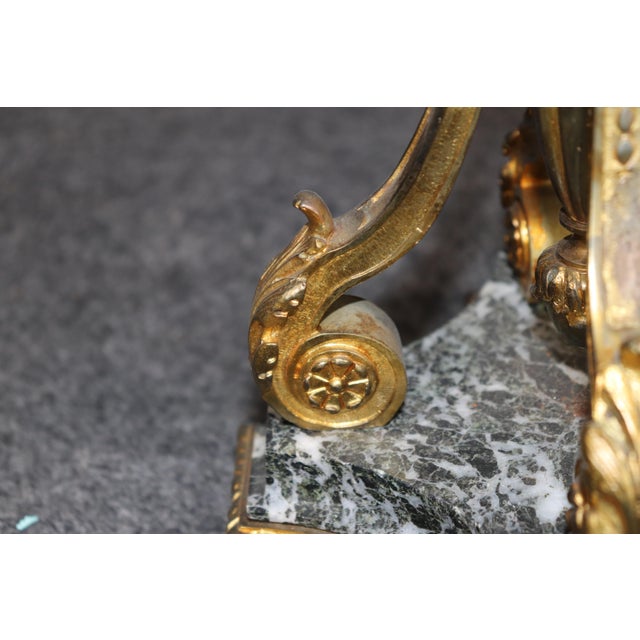
Each candelabrum rises from a substantial shaped marble plinth. The stone displays an attractive mixture of gray, black, white, and muted green tones, with irregular natural veining that provides a striking visual counterpoint to the warm golden surface of the bronze. The bases are molded and stepped, their serpentine outlines relieved by gilt-bronze mounts following the contours of the stone. This combination gives the pieces both visual weight and stability while establishing the luxurious contrast of materials that continues throughout the design.
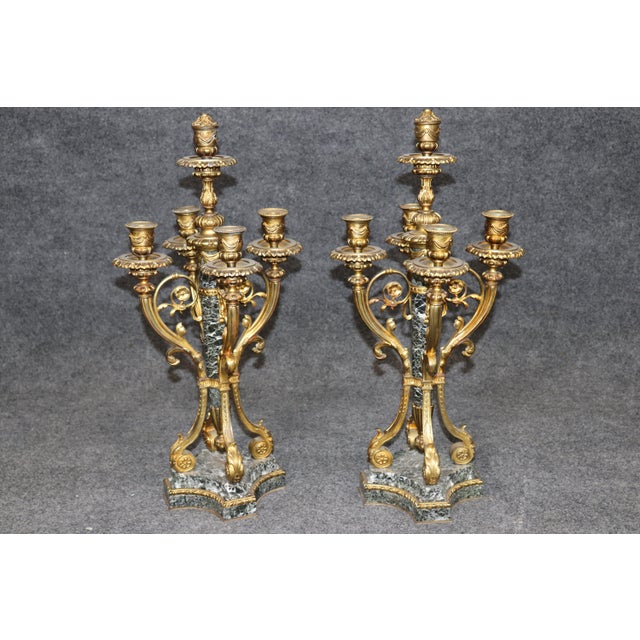
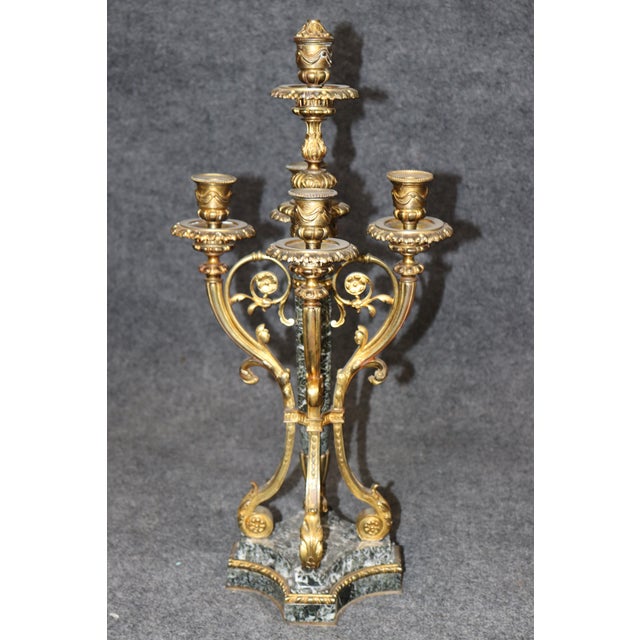
Above the marble bases, three slender bronze supports rise in an elegant tripod arrangement. Their feet terminate in bold scrolling forms enriched with foliate ornament and circular rosette-like details. These supports curve inward as they ascend, surrounding the central marble column rather than concealing it. The open construction gives the lower section a graceful sense of movement and prevents the substantial candelabra from appearing overly heavy.
At the center of each piece is a tall column of matching veined marble. Its dark, complex pattern provides a strong vertical accent, while gilt-bronze collars and decorative mounts divide the shaft into distinct architectural sections. The juxtaposition of polished stone and sculptural metalwork is particularly effective: the marble introduces color, texture, and natural variation, while the bronze provides brilliance and intricate ornamental detail.
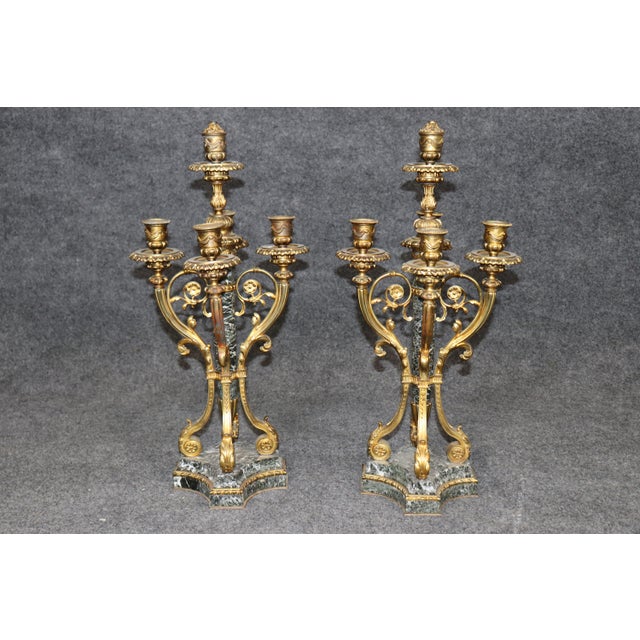
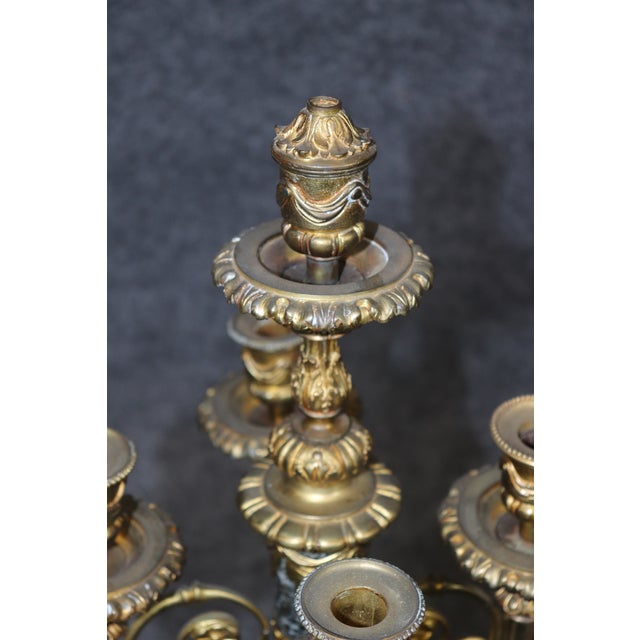
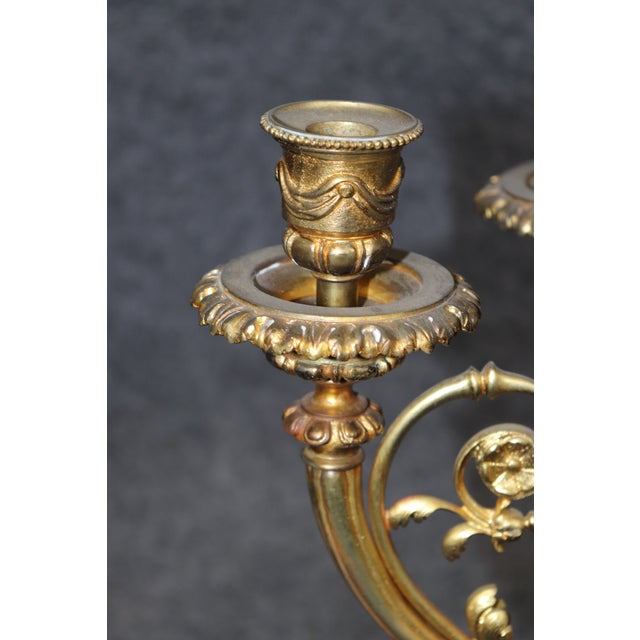
The upper portion becomes increasingly elaborate. From the central shaft emerge four gracefully curved branches, arranged around a taller central candle socket to form a five-light composition. The branches sweep outward and upward in fluid, asymmetrical curves characteristic of the Louis XV revival style. Openwork scrolls, leafy motifs, and small floral ornaments fill the spaces around the branches, creating a lively silhouette when the candelabra are viewed from either the front or side.
Each candle socket is supported by a broad circular drip pan with a scalloped, leaf-like border. The candle cups themselves are decorated with molded swags and classical ornamental bands. The central light rises considerably above the surrounding four, giving each candelabrum a strong pyramidal profile. Its tall stem incorporates a sequence of ornamental elements—rounded knops, acanthus-inspired foliage, fluting, and sculptural moldings—before terminating in the uppermost candle cup. This graduated arrangement creates an impressive vertical rhythm and would have allowed five candle flames to illuminate the gilt surfaces from different heights.
Although described as Louis XV, these candelabra are early twentieth-century French interpretations of the eighteenth-century Rococo vocabulary rather than pieces made during the reign of Louis XV. Their sweeping curves, scrolling foliage, asymmetrical flourishes, and preference for movement over rigid geometry are all derived from the decorative language associated with the Louis XV period. At the same time, the substantial proportions and highly architectural construction are typical of later French revival furnishings intended for grand interiors.
The pair is especially appealing because the two candelabra were conceived as companions. Placed together on a mantel, console, buffet, or large dining-room sideboard, their symmetrical relationship creates an imposing decorative effect. The gilt surfaces catch and reflect light, while the darker marble grounds the elaborate metalwork and emphasizes its sculptural quality.
Importantly, these candelabra remain unwired. They are traditional candle-burning decorative objects rather than later adaptations into electric lamps. This preserves the integrity of their original appearance: there are no visible electrical sockets, cords, or modern fittings interrupting the ornamental composition.
With their combination of richly chased bronze, beautifully figured marble, five-light arrangement, and elaborate Rococo Revival design, these early twentieth-century French candelabra embody the opulence and craftsmanship associated with the continuing Louis XV tradition. Monumental yet graceful, they function not merely as candleholders but as substantial decorative sculptures, designed to bring symmetry, warmth, and unmistakably French grandeur to an interior.
Dimensions: 24 inches high x 12 inches wide x 12 inches deep
See less
- Dimensions
- 12ʺW × 12ʺD × 24ʺH
- Styles
- Louis XV
- Period
- 1910s
- Country of Origin
- France
- Item Type
- Vintage, Antique or Pre-owned
- Materials
- Bronze
- Marble
- Condition
- Good Condition, Original Condition Unaltered, Some Imperfections
- Color
- Bronze
- Condition Notes
- The piece is in good antique/vintage condition with the exception of some light surface scratches, Minor finish loss and normal … moreThe piece is in good antique/vintage condition with the exception of some light surface scratches, Minor finish loss and normal age related wear. As to be expected with items of age and use. less
Questions about the item?
Returns & Cancellations
Return Policy - All sales are final 48 hours after delivery, unless otherwise specified in the description of the product.
Cancellation Policy - Prior to shipping or local pickup, buyers may cancel an order for up to 48 hours, unless otherwise specified.