




Details
Description
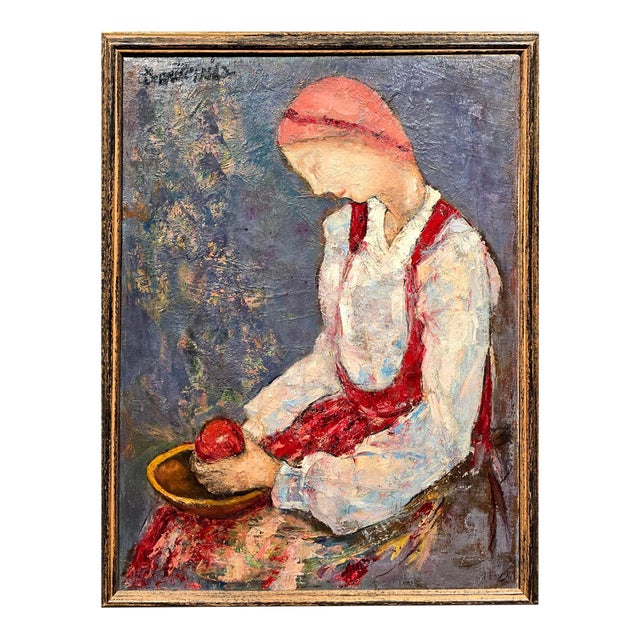
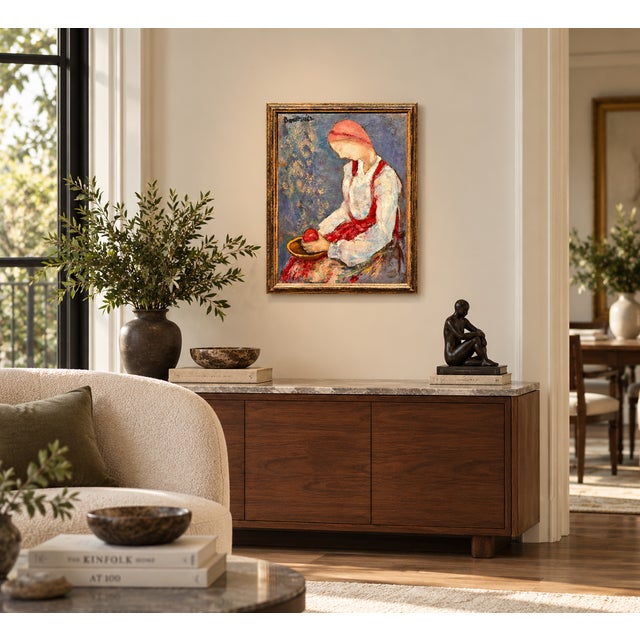
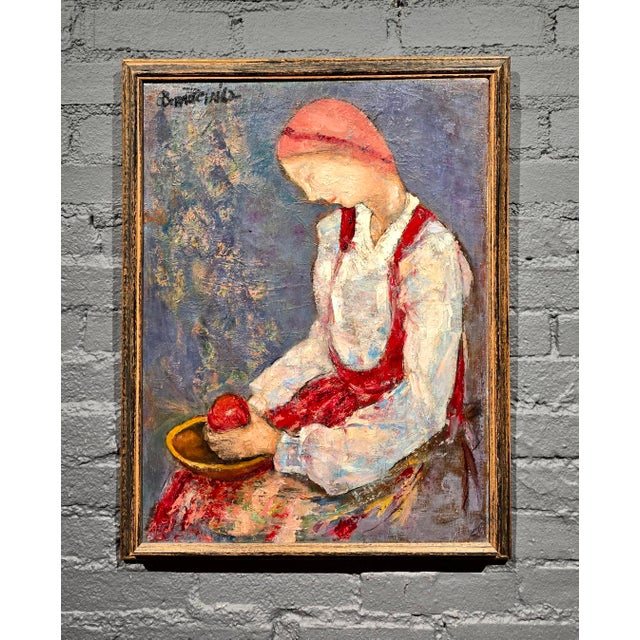
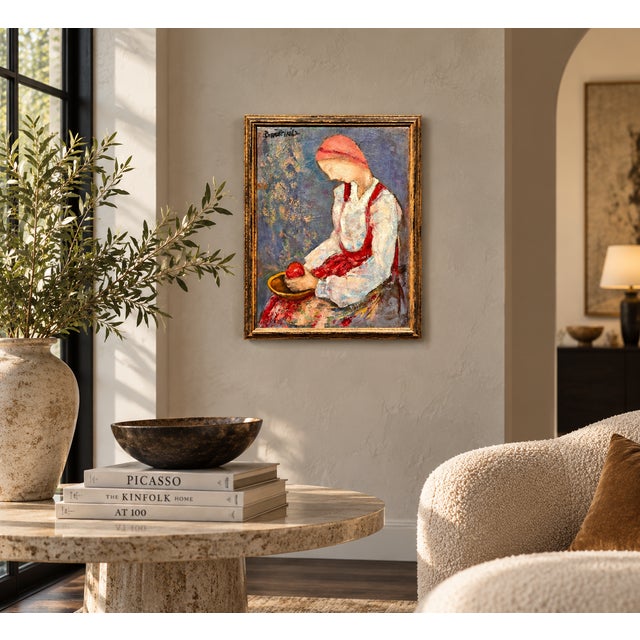
Theresa Bernstein "Contemplation with a Red Apple” 1962 American Modernist Oil Painting
American Expressionist - Oil Painting on canvas -Signed …
Read more
Theresa Bernstein "Contemplation with a Red Apple” 1962 American Modernist Oil Painting
American Expressionist - Oil Painting on canvas -Signed and dated .
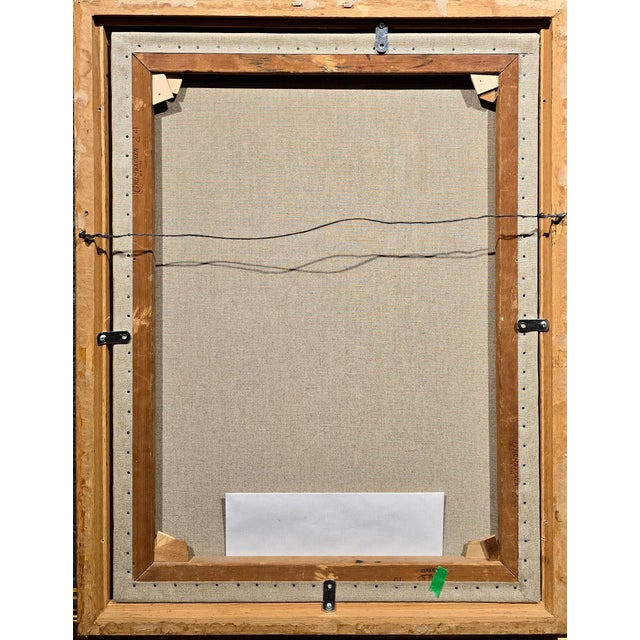
Canvas size: 24x18" : frame Size: 27 × 21 x 2"
Description:
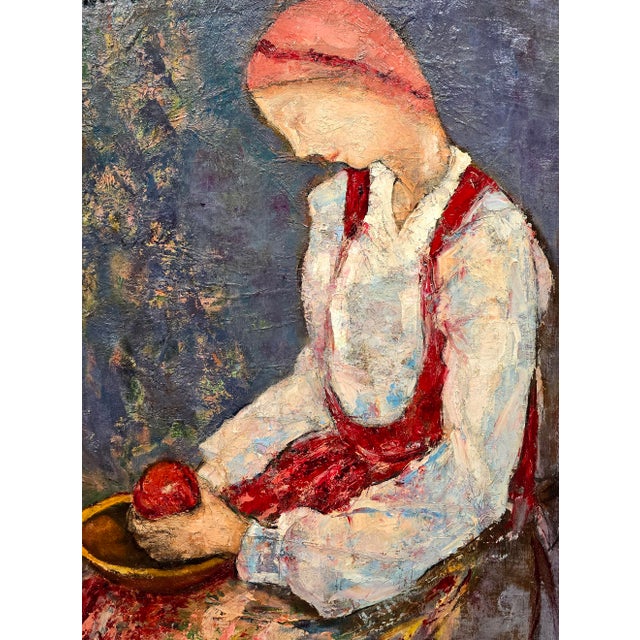
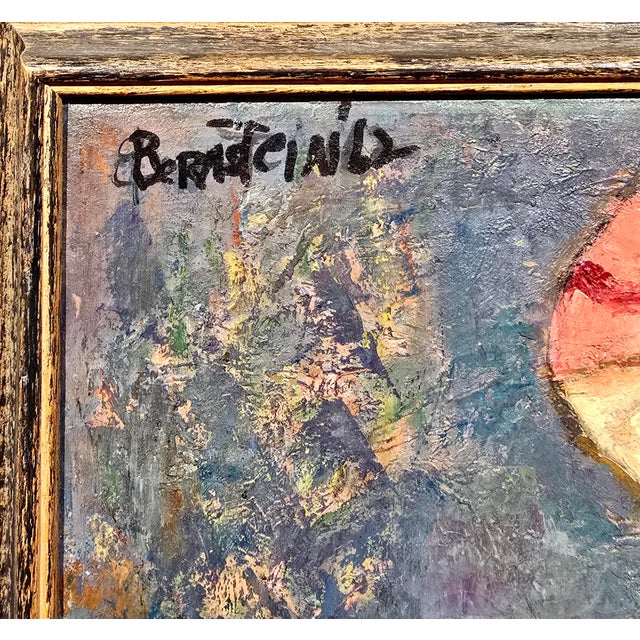
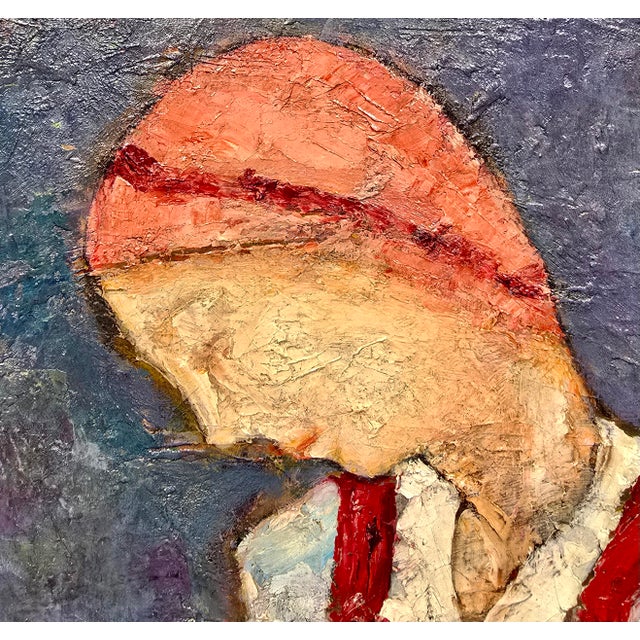
This compelling 1962 oil painting by celebrated American modernist Theresa Bernstein presents an intimate and deeply introspective image of a young woman seated in quiet contemplation. Executed with Bernstein's characteristically vigorous handling of pigment, the composition combines richly worked impasto, expressive color, and simplified figurative form to create an image that is at once distinctly modern and timeless in atmosphere.The young woman is shown seated in profile, her head bowed gently toward her hands. Rather than describing the sitter through conventional portrait detail, Bernstein reduces the face almost entirely to form and color: the eyes, nose, and mouth dissolve beneath broad passages of pigment. This deliberate abstraction shifts attention away from individual identity and toward gesture, posture, and mood.She wears a vivid coral-red head covering and crimson pinafore over a loose white blouse, clothing suggestive of traditional European folk dress. Her bent figure forms a graceful descending rhythm through the composition, culminating in her hands, which cradle a brilliant red apple above a shallow ochre-colored bowl.The apple becomes a powerful visual focal point. Its saturated vermilion echoes the reds of the woman's head covering and dress, creating a rhythmic progression of color from the top of the composition through the figure and into the lower foreground. Whether interpreted simply as an element of everyday life or more symbolically, the fruit introduces an intriguing narrative element to an otherwise meditative scene.Bernstein establishes a striking contrast between the warmth of the figure and the cool, atmospheric background. Coral, crimson, creamy white, pale yellow and touches of turquoise animate the sitter, while the surrounding field is constructed from layered slate blue, smoky violet, muted indigo, moss green, ochre and pale gold. These fragmented colors emerge through one another, producing an almost weathered, fresco-like surface.Particularly impressive is the painting's sculptural handling of oil pigment. Bernstein builds the surface through substantial passages of impasto, employing heavily loaded brushwork and palette-knife-like strokes that leave ridges, fractures and overlapping planes of color visible throughout the composition. The white blouse is especially effective: cool blue and turquoise accents break through the creamy pigment, defining the folds of the sleeves without relying upon conventional modeling.The background is treated with equal energy. Short, broken strokes and scraped passages create a richly mottled surface against which the simplified figure emerges with remarkable presence. This vigorous paint handling provides a compelling counterpoint to the profound stillness of the sitter.The work is signed “Bernstein” in dark pigment at the upper left and remains housed in a complementary distressed giltwood frame.What makes the painting particularly successful, in my opinion, is its combination of physical surface and psychological quiet. Bernstein gives us remarkably little facial information, yet the bowed head, curved shoulders and concentration of the hands communicate a convincing sense of inward reflection. The result is not merely a portrait of a particular young woman but an evocative study of solitude, contemplation and human presence.
Artist Biography:
Theresa Ferber Bernstein (1890-2002)was a pioneering American realist, modernist painter, and author whose extraordinary career spanned nearly a century. Born in Kraków, Poland, she emigrated to the United States with her family as a child, settling in Philadelphia. She received her formal art education at the Philadelphia School of Design for Women (now Moore College of Art and Design) before moving to New York City, where she studied at the prestigious Art Students League under legendary instructor William Merritt Chase.
Artistic Style and the Ashcan School
In New York, Bernstein became closely associated with the Ashcan School, an artistic movement defined by its gritty, honest depictions of daily urban life. She quickly established herself as a master colorist with a fiercely independent voice. Rejecting the delicate, highly polished feminine art tropes expected of women in the early 1900s, Bernstein embraced a raw, muscular, and highly physical style. She loaded paint heavily onto her brushes and used palette knives to sculpt thick, structural impasto directly onto her canvases. Her bold brushwork and dynamic compositions were so powerful that early in her career, critics biased against female artists frequently assumed her paintings were executed by a man. To combat this institutional sexism and ensure her work was judged solely on its merit, she frequently signed her canvases with just her last name, "Bernstein."
Global Motifs and Universal Themes
While Bernstein is widely celebrated for her kinetic, crowded scenes of New York jazz clubs, subway cars, parades, and beaches, she was also an avid traveler. Alongside her husband, fellow modernist artist William Meyerowitz, Bernstein traveled extensively through Europe and Israel. These journeys deeply influenced her aesthetic, sparking a lifelong fascination with regional heritages, local cultures, and folk traditions. This specific painting beautifully reflects that global folk influence. By completely smoothing over the subject's facial features, Bernstein elevates the peasant girl from a specific person into an anonymous, timeless symbol of rural tranquility, heritage, and maternal grace.
Legacy and Institutional Collections
Theresa Bernstein painted well into her nineties and lived to the remarkable age of 111, leaving behind an immense and vital contribution to American art history. Today, she is recognized not only as an essential pillar of early 20th-century American Realism but also as a trailblazing feminist icon who paved the way for future generations of women in fine art. Her masterpieces are highly prized by collectors and reside in the permanent collections of the world's most prestigious institutions, including:
The Metropolitan Museum of Art (New York)
The Smithsonian American Art Museum (Washington, D.C.)
The National Gallery of Art (Washington, D.C.)
The Brooklyn Museum (New York)
The Harvard Art Museums (Cambridge, Massachusetts)
See less
- Dimensions
- 21ʺW × 2ʺD × 27ʺH
- Styles
- American
- Expressionism
- Art Subjects
- Portrait
- Frame Type
- Framed
- Period
- 1960s
- Country of Origin
- United States
- Item Type
- Vintage, Antique or Pre-owned
- Materials
- Canvas
- Oil Paint
- Condition
- Good Condition, Original Condition Unaltered, Some Imperfections
- Color
- Red
- Condition Notes
- Excellent - Minor wear consistent with age and history Excellent - Minor wear consistent with age and history less
Questions about the item?
Returns & Cancellations
Return Policy - All sales are final 48 hours after delivery, unless otherwise specified in the description of the product.
Cancellation Policy - Prior to shipping or local pickup, buyers may cancel an order for up to 48 hours, unless otherwise specified.
Related Collections
- Ed Ruscha Paintings
- Ralph Lauren Paintings
- Photorealism Paintings in New York
- Photorealism Canvas Paintings
- Richard Serra Paintings
- Louise Nevelson Paintings
- Silk Velvet Paintings
- Herman Miller Paintings
- BDDW Paintings
- Jo Baskerville Paintings
- Jean-Paul Barray Paintings
- Johannes Andersen Paintings
- Peter Behrens Paintings
- Karl-Erik Ekselius Paintings
- Carl-Axel Acking Paintings
- Joseph Stella Paintings
- Raphael Paintings
- Pedro Friedeberg Paintings
- Piet Hein Eek Paintings
- James McCray Paintings
- Milton Avery Paintings
- Hans Andersen Paintings
- Cassina Paintings
- Photorealism Paintings in Los Angeles
- Leroy Neiman Paintings