



Details
Description
An extraordinary example of early Spanish architectural ironwork, this monumental wrought-iron locking assembly is attributed to 17th-century Spain and embodies …
Read more
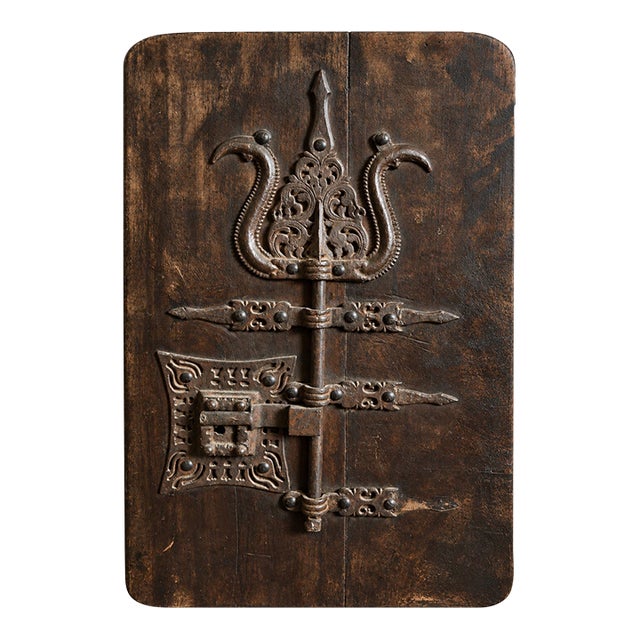
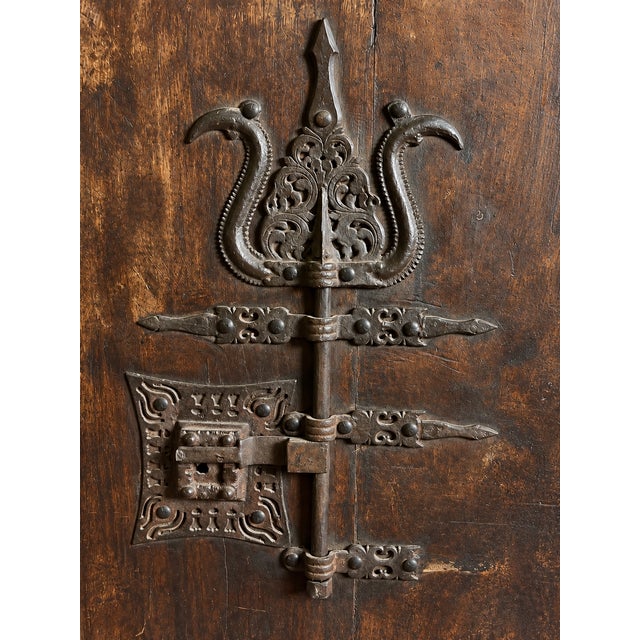
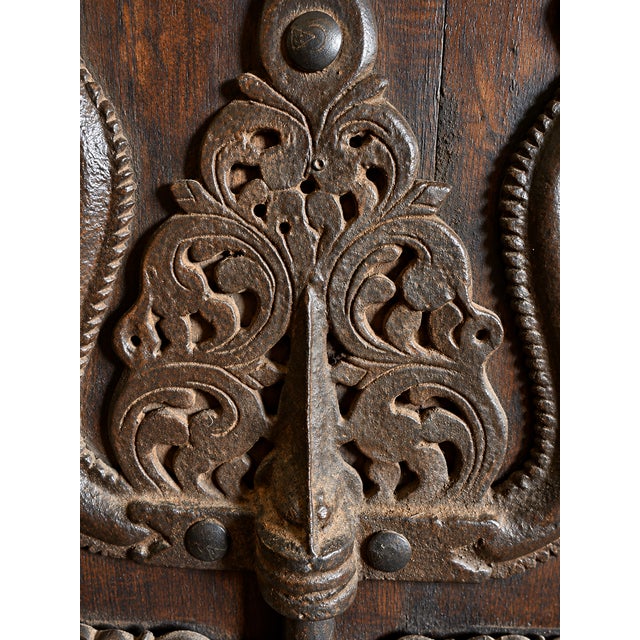
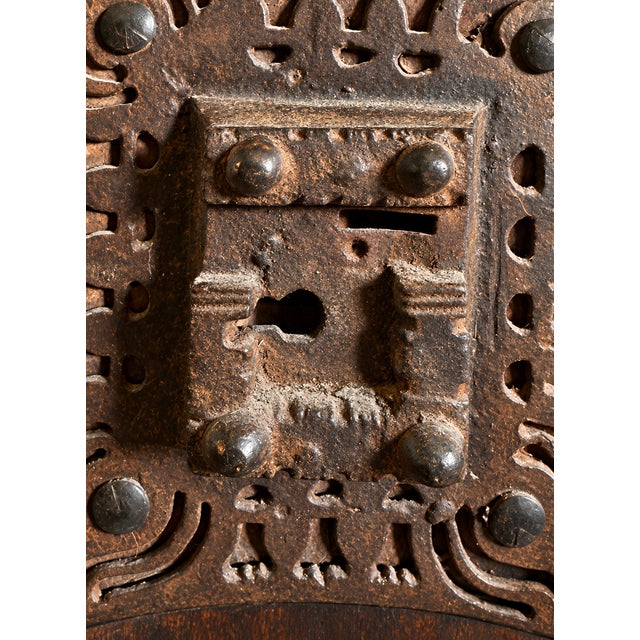
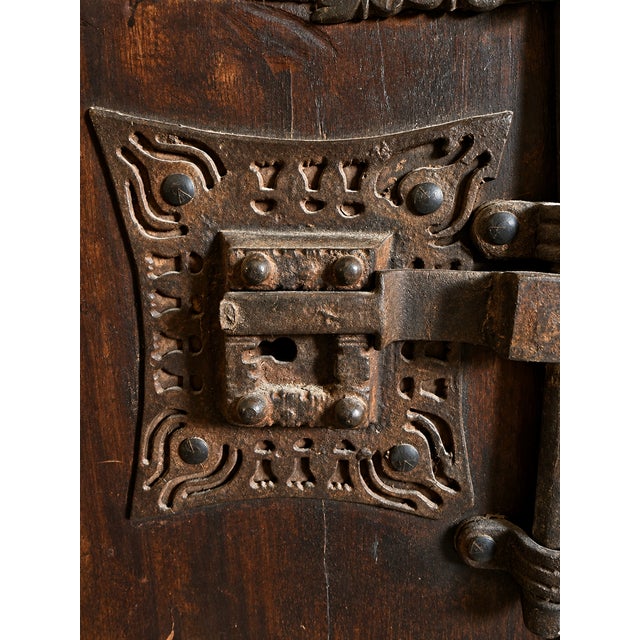
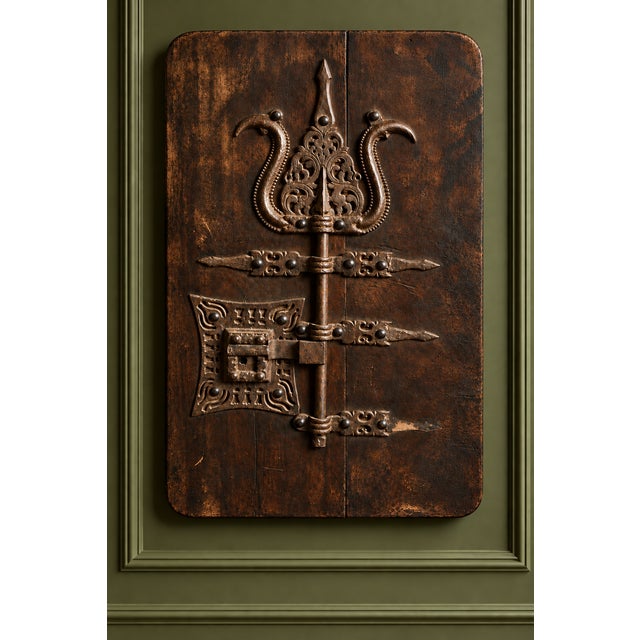
An extraordinary example of early Spanish architectural ironwork, this monumental wrought-iron locking assembly is attributed to 17th-century Spain and embodies the remarkable union of security, engineering, and ornament characteristic of the Spanish Baroque locksmithing tradition. Measuring approximately 30 inches high by 20 inches wide, the piece combines an elaborate hand-worked iron locking system with a substantial two-plank timber ground, creating an architectural artifact of exceptional sculptural presence.
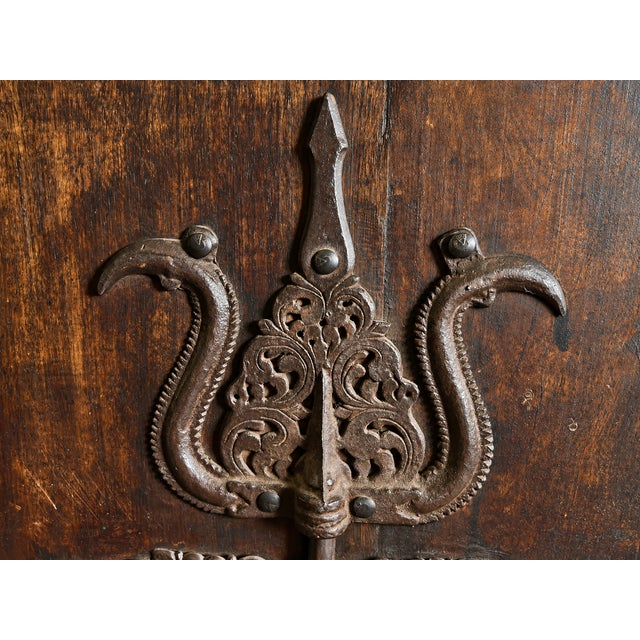
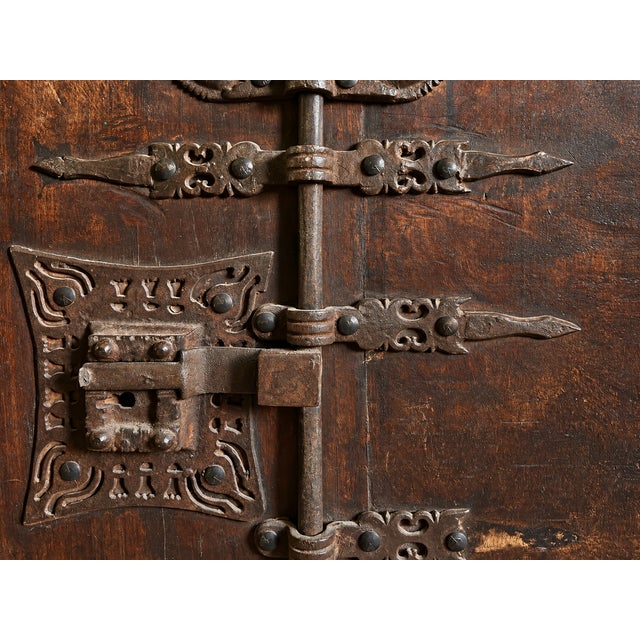
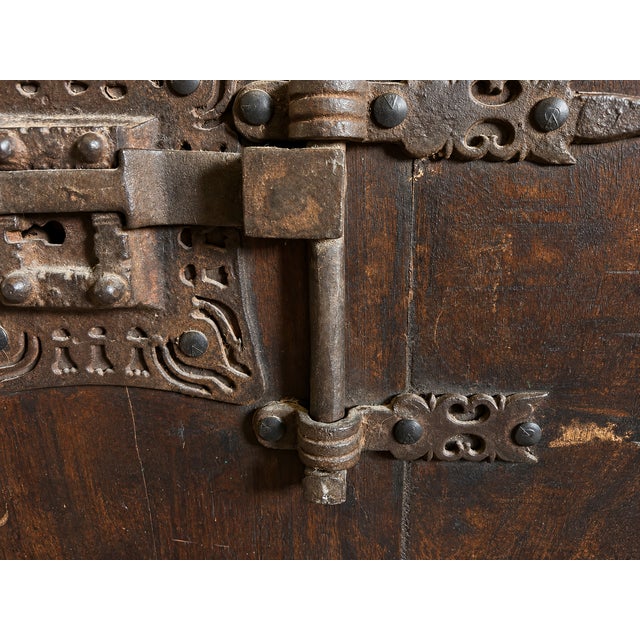
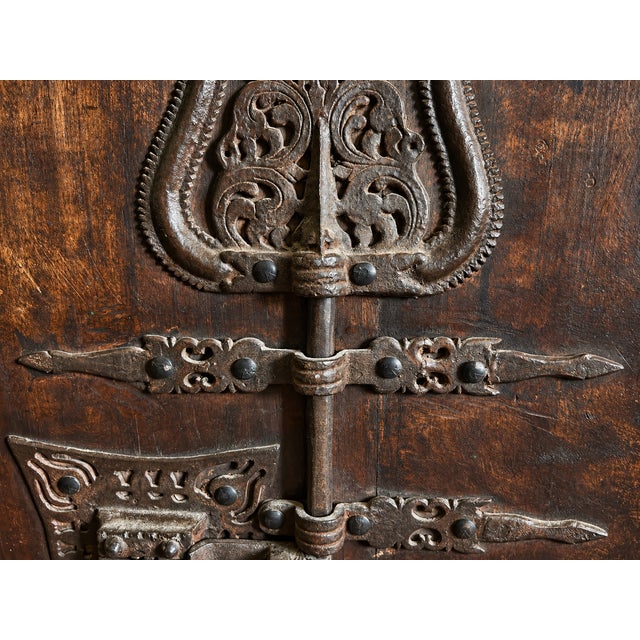
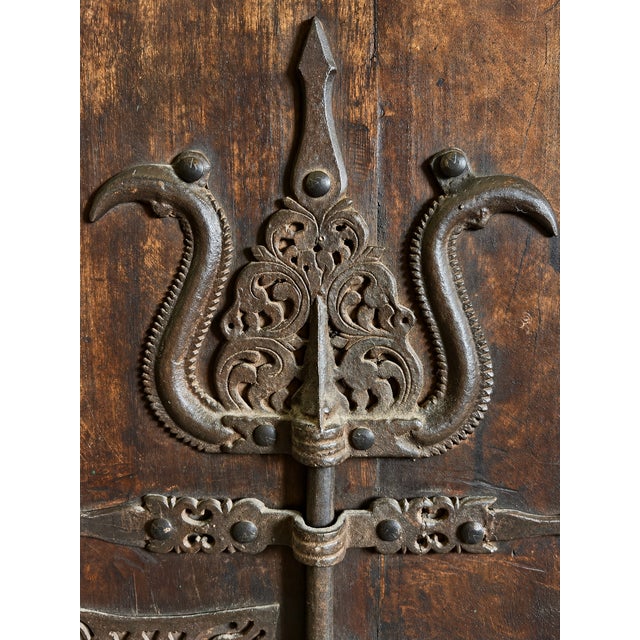
The composition is dominated by a substantial central vertical iron member intersecting three horizontal locking elements and an elaborate central lock assembly. Surrounding the mechanism is a remarkable vocabulary of pierced and worked iron ornament, including scrolling openwork, engraved and punched decoration, shaped terminals, domed fasteners, and a dramatic symmetrical pair of stylized dragon or serpentine creatures framing the upper section. Irregular edges, subtle asymmetry, surface tooling, and variations inherent to individually worked iron remain visible throughout.
The elaborate treatment has strong precedent in 17th-century Spanish locksmithing. Surviving Spanish museum examples document locks constructed from wrought and superimposed iron plates enriched with pierced, or calado, decoration, vegetal ornament, and architecturally conceived compositions. During the Spanish Baroque period, sophisticated locks, bolts, and related security hardware were important features of churches, convents, monasteries, and other significant institutional buildings. Rather than concealing the locking apparatus, Spanish smiths could transform the mechanism itself into an elaborate decorative feature of the architecture.
The monumental proportions, sophisticated multiple locking arrangement, and unusually elaborate ornament of this example are consistent with the type of important architectural hardware associated with an ecclesiastical, monastic, or institutional setting. A monastery or ecclesiastical origin is plausible and consistent with documented Spanish usage of elaborate locking systems during the period, although no surviving documentation identifies the specific building or institution from which this piece originated.
Remarkably, the central latch and bolt mechanism retains movement and can still be manually operated. This surviving mechanical function gives the object considerably more than decorative interest, preserving a tangible connection to the working security apparatus for which the ironwork was originally created.
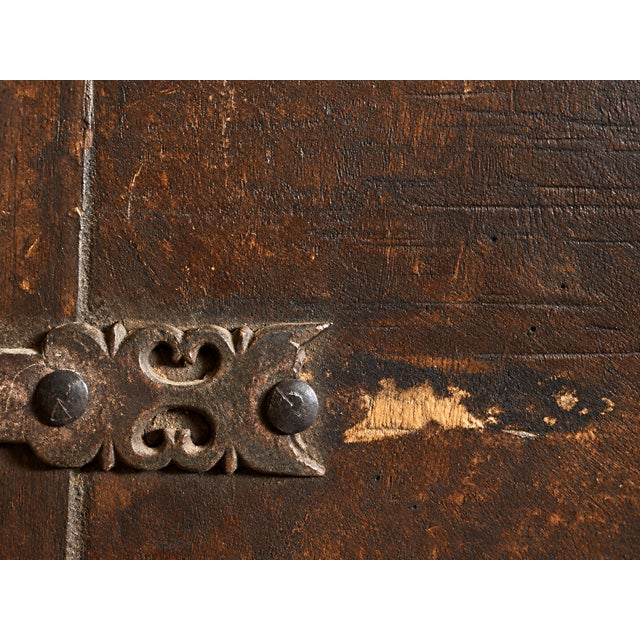
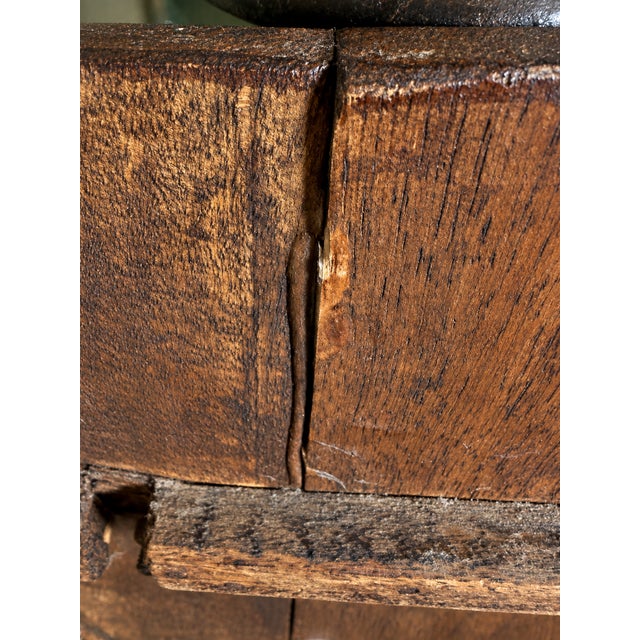
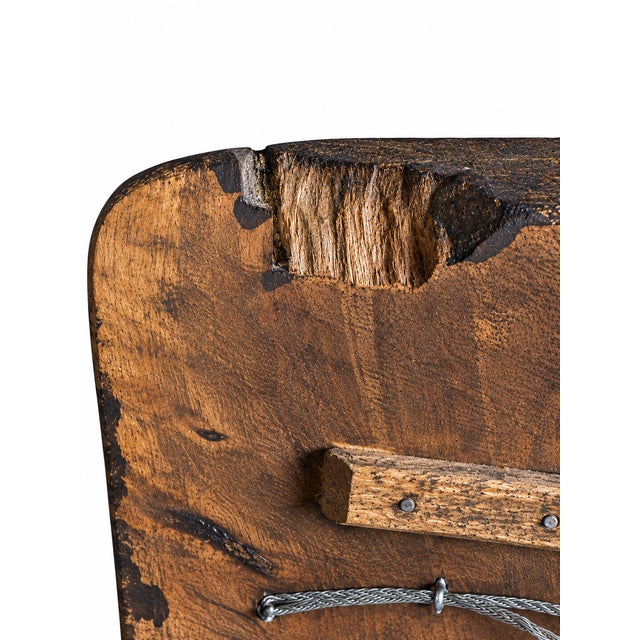
The deeply aged timber provides a striking ground for the ironwork. Its surface ranges from deep brown to warmer and lighter exposed areas created through generations of wear. Shrinkage, fissures, scratches, abrasions, tool marks, and surface losses remain visible throughout, creating the extraordinary texture expected of an architectural element that has experienced extensive use and subsequent preservation.
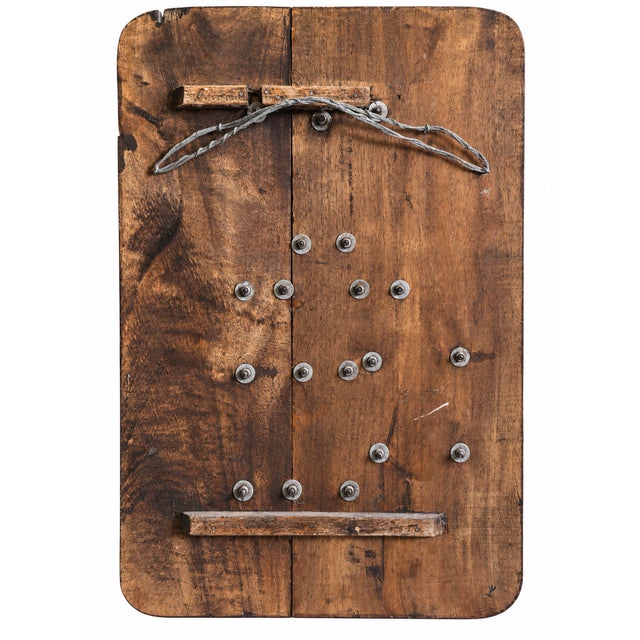
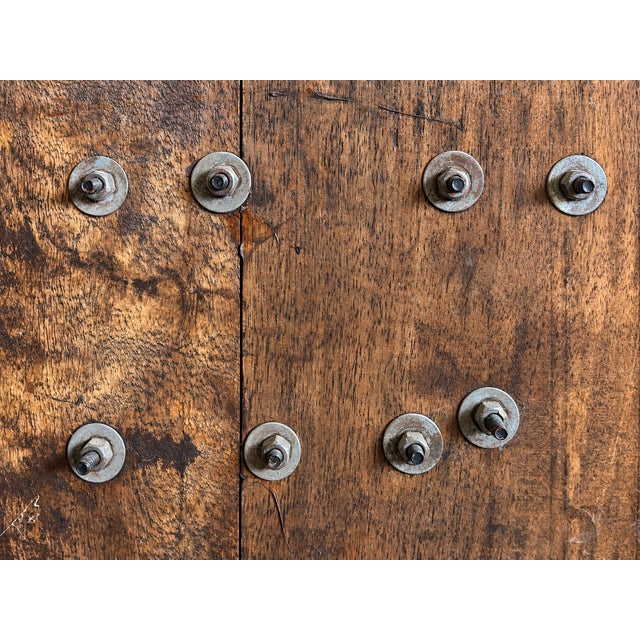
The reverse provides important evidence of the object’s later history. Threaded studs, washers, and hex nuts have been introduced during a later remounting or stabilization of the assembly and are not represented as original 17th-century fasteners. Whether the present two-plank timber ground survives from the original architectural installation, incorporates historic reused timber, or represents a later mounting for the earlier ironwork has not been definitively established. These later interventions are fully disclosed and do not obscure the remarkable hand-worked character and visual presence of the historic ironwork.
Today the piece functions as both an important architectural fragment and monumental wall sculpture. Its approximately 30-inch height, dramatic silhouette, deeply patinated iron, and centuries-old character would command an important wall in a library, great room, entry, collection room, or interior incorporating Spanish, Continental, ecclesiastical, or architectural antiques. It is a powerful surviving expression of an era in which an object created for security could also become an extraordinary work of decorative art.
See less
- Dimensions
- 20ʺW × 1ʺD × 30ʺH
- Styles
- Baroque
- Handing
- Reversible / Universal
- Door Thickness
- 1.0 in
- Period
- Early 18th Century
- Country of Origin
- Spain
- Item Type
- Vintage, Antique or Pre-owned
- Materials
- Wood
- Wrought Iron
- Condition
- Good Condition, Original Condition Unaltered, Some Imperfections
- Color
- Brown
- Condition Notes
- Antique condition with extensive age-related wear consistent with the considerable age and architectural history of the piece. The hand-worked iron … moreAntique condition with extensive age-related wear consistent with the considerable age and architectural history of the piece. The hand-worked iron exhibits deep historic patination, oxidation, pitting, rubbing, scratches, abrasions, surface irregularities and variations in coloration throughout. Individual pierced and forged elements show irregular edges, wear and localized losses. The locking assembly shows evidence of age, use and alteration, with possible losses to elements of the original mechanism. The principal latch/bolt remains movable and can still be manually operated. The two-plank timber panel exhibits substantial age-related character and wear, including shrinkage, visible separation along the central joint, fissures, checking, scratches, scuffs, abrasions, indentations, small holes and penetrations, worn surface finish, areas of exposed lighter wood and localized surface losses. A noticeable horizontal area of lighter abrasion/surface loss is present on the right side of the panel adjacent to the ironwork. Additional smaller areas of wear and loss are visible throughout and are shown in the photographs. The reverse shows later intervention and stabilization, including threaded metal studs, broad washers and machine-made hex nuts securing portions of the ironwork. These are later replacements or additions and are not represented as original period fasteners. The exact date of this intervention is unknown. Whether the present timber panel represents the original architectural substrate, historic reused timber, or a later mounting for the earlier ironwork has not been definitively established. Overall, the piece retains exceptional historic character and a richly aged surface. No attempt has been made to conceal or minimize the oxidation, timber separation, surface losses, mechanical alterations, later fasteners, abrasions or other evidence of age and use. Please review all photographs carefully, as they form an important part of the condition description. less
Questions about the item?
Returns & Cancellations
Return Policy - All sales are final 48 hours after delivery, unless otherwise specified in the description of the product.
Cancellation Policy - Prior to shipping or local pickup, buyers may cancel an order for up to 48 hours, unless otherwise specified.