

Details
Description
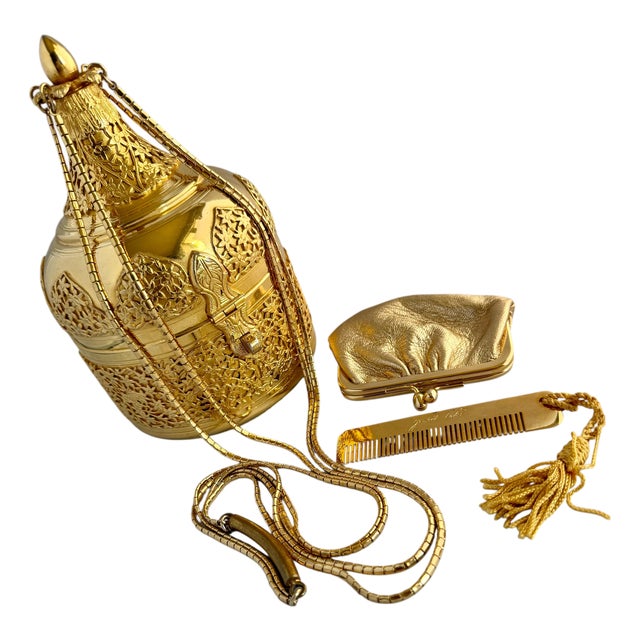
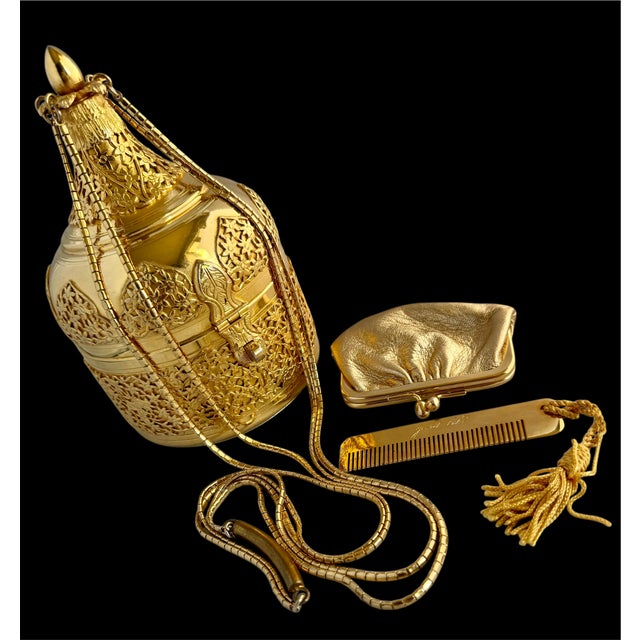
This gorgeous bag estimated from 1983 (photo 2 from the archives, the late Judith Leiber holding with this bag and …
Read more
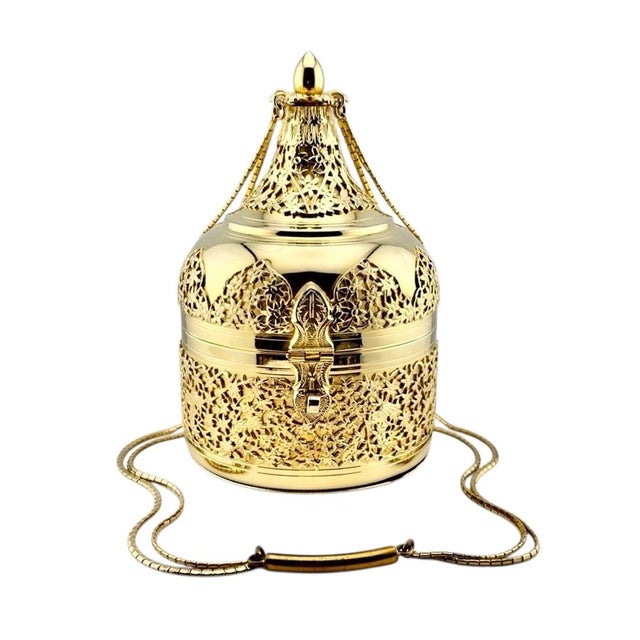
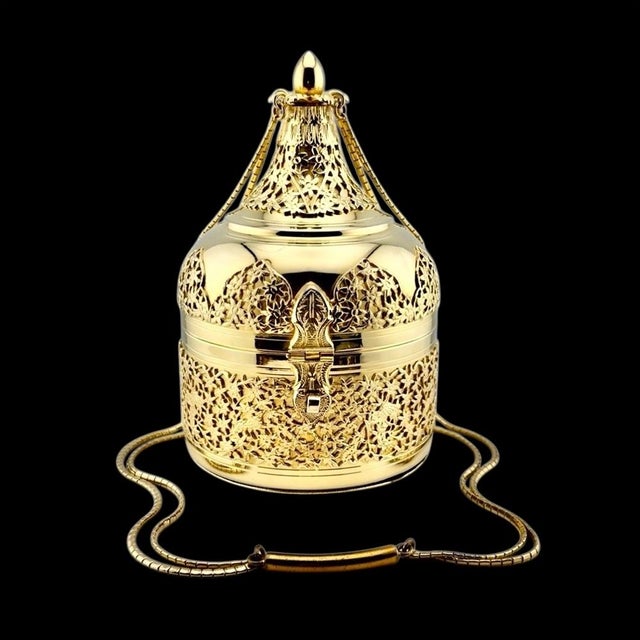
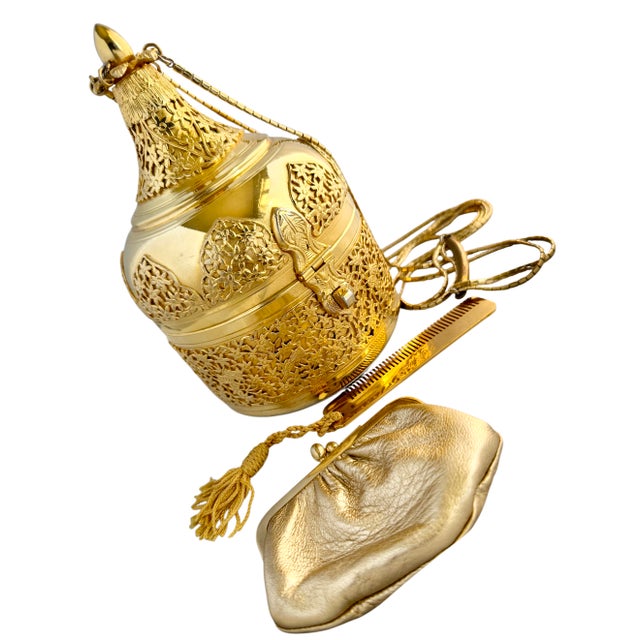
This gorgeous bag estimated from 1983 (photo 2 from the archives, the late Judith Leiber holding with this bag and others she designed that year in this series) was inspired by an antique brass Indian Mughal Pandan (last photo presented here for reference only).
Features:
gold plated metal
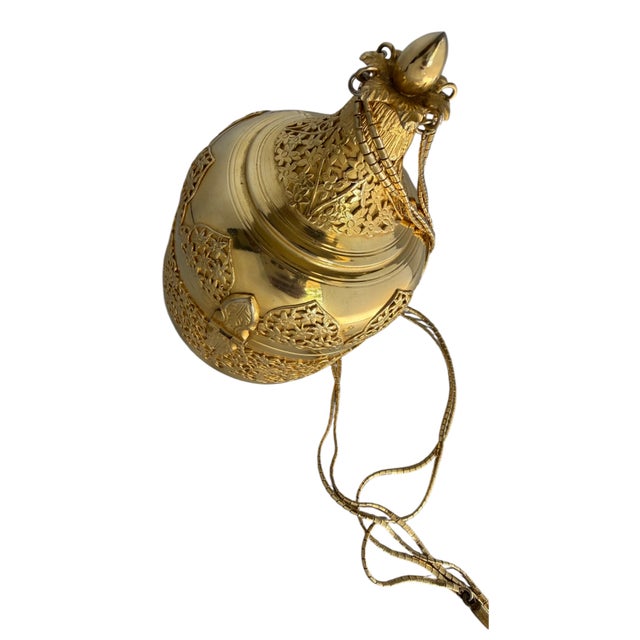
is topped by a blooming jasmine
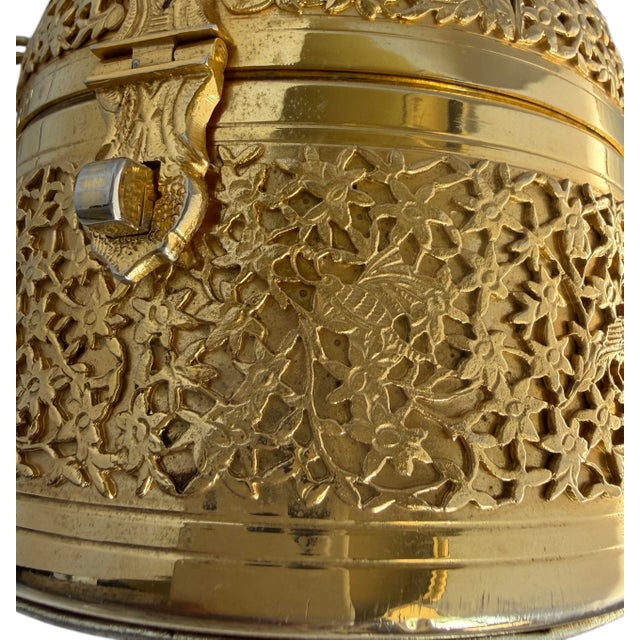
Embossed floral motifs bands
Border of arches filled with detailed filigri reminscent of Mughal architecture
Lower band consists of detailed garden of trellis of flowers with singing birds
Dual chain shoulder strap
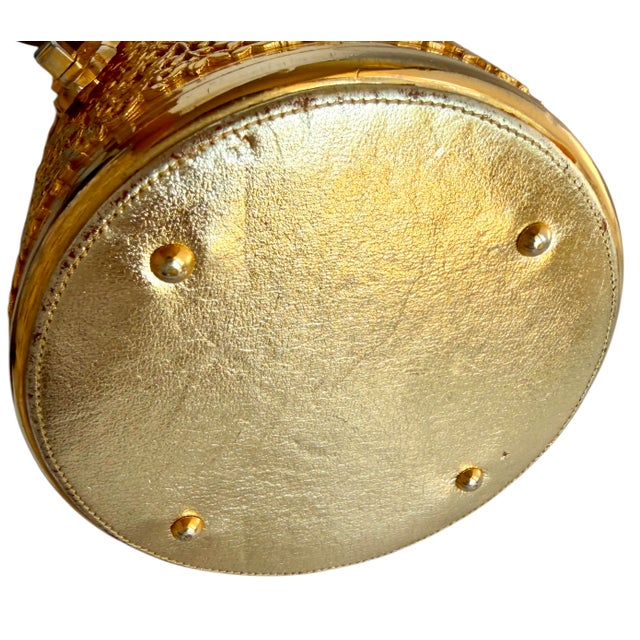
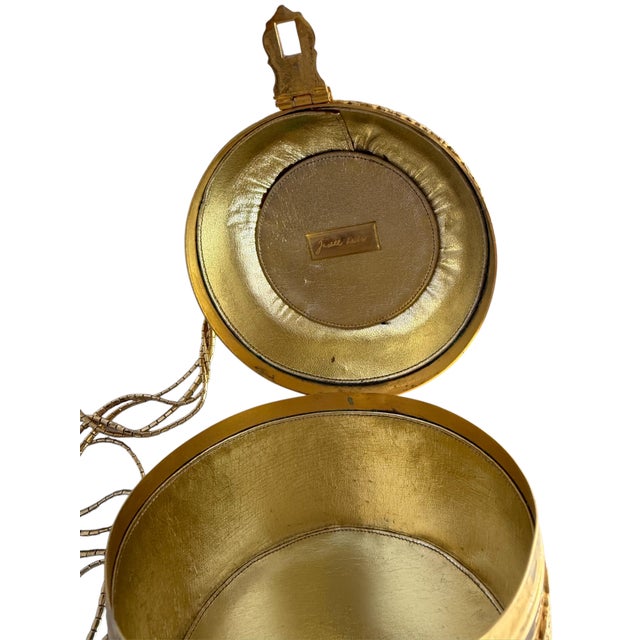
Lined in signature gold lame leather
Interior wall signature Leiber tag
Tiny metal 'feet' at base to protect the base
Made in Italy
Stamps/Markings: Signature logo tag inside of bag and on all accessories
Style Notes:
This architectural piece was inspired by classic Eastern design and Islamic metalwork, specifically mimicking antique Indian betel leaf containers (pandan) and Moroccan incense burners (mabkhara).
Throughout her career, Judith Leiber regularly drew direct design inspiration from her extensive world travels, art history, and antiquities. In creating this specific 1980s minaudière, she blended functional high-fashion with the aesthetic traditions of the East:
Moorish & Indo-Islamic Architecture: The distinct onion-dome silhouette and the stylized pointed arches carved into the frame directly mirror architectural elements found in traditional Indian mosques and Moroccan palatial gates.
Jali and Filigree Metalwork: The intricate, open-air floral lace pattern mimics traditional Jali (pierced stone or metal lattice screens) common in South Asian design, designed to let light or scent filter through beautifully.
Traditional Households Objects: The bag replicates the exact scale and look of an antique royal pandan (a prized box used to store betel leaves and spices) or a bakhur dan (an incense container used across the Middle East).
By reimagining a traditional decorative container into an ultra-luxury, gold-plated evening clutch, Leiber transformed a piece of cultural history into a wearable conversation piece for Western high society.
To style this spectacular 1980s Judith Leiber filigree minaudière, you want to lean into its architectural weight and warm gold tone without letting it get lost. Because it is a heavily textured statement piece, it pairs beautifully with clean lines or rich, solid colors that serve as a canvas.
Here are a few ways to style it for high-end events:
Style 1: The Modern Monarch (Black Tie Evening)
Let the bag be the absolute center of attention by contrasting it against sharp, monochromatic luxury fabrics.
The Outfit: A floor-length, sleek silk-crepe gown in emerald green, midnight navy, or rich burgundy. A minimalist silhouette with a high neckline or an architectural off-the-shoulder cut works best.
The Shoes: Simple gold metallic minimalist stiletto sandals with thin straps.
Jewelry: Mirror the openwork of the bag with a statement gold filigree cuff bracelet on one wrist, paired with understated gold stud earrings. Avoid long necklaces that might clash with the bag’s chain strap.
✨ Style 2: Heritage Luxe (Cultural Festive)
Celebrate the bag's traditional roots by leaning into rich Eastern silhouettes and textures.
The Outfit: A solid-colored silk or brocade Sari, an elegant monochromatic Kaftan with delicate metallic embroidery, or a sleek velvet Lehenga. Jewel tones like ruby red, deep plum, or sapphire blue will make the gold pop brilliantly.
The Shoes: Pointed-toe embroidered mules or gold block-heel sandals.
Jewelry: Antique or matte gold statement earrings (like traditional Jhumkas or Chandbalis) to lean into the vintage aesthetic.
Style 3: 1980s Studio 54 Glam (Cocktail Party)
Nod to the era the bag was created by embracing high-shine textures and a vintage silhouette.
The Outfit: A metallic gold pleated midi dress, a fluid cream silk jumpsuit, or a sleek black tuxedo suit with a silk camisole underneath.
The Shoes: Metallic gold platform heels to anchor the 80s vibe.
Jewelry: High-shine chunky gold rings or a sleek, polished gold collar necklace.
Styling Tips to Keep in Mind:
The Strap: Decide whether you want to carry it as a clutch or wear it as a shoulder bag. Letting the delicate chain drape over a dark jacket or dress adds beautiful vertical alignment to your outfit.
Avoid Busy Prints: Stay away from heavy floral prints, multi-colored patterns, or sequins. The intricate lace design of the metal can quickly clash with busy fabrics, making the overall look feel chaotic
Judith Leiber sourced her original design inspirations from antique shops, flea markets and estate auctions across Europe and New York City, as well as from historic artifacts she observed during her extensive international travels.
Rather than sending a production team to replicate pieces abroad, Leiber was a voracious collector of antiquities herself. She frequented curated antique dealers and global markets to acquire physical artifacts—such as 19th-century Indian betel leaf boxes (Pandian), Middle Eastern bakhoor burners, Japanese lacquered boxes, and vintage European metal handbag frames.
Once she purchased an inspiring object, she would bring it directly into her New York studio. From there, she adapted its historic proportions and architectural lines into structural, wearable fashion, hand-crafting patterns that preserved the antique aesthetic while hiding the mechanics of a modern luxury evening purse.
Judith Leiber’s Judith Leiber’s translation of antique, decorative objects into high-fashion minaudières was a rigorous engineering and artisanal process. As the only female certified master pattern-maker in the United States handbag industry at the time, she possessed unique technical skills that allowed her to re-engineer heavy, stationary artifacts into lightweight, wearable luxury.
She accomplished this structural transformation through a distinct multi-step pipeline:
1. Structural Scaling and Re-Proportioning
Antique objects like Indian pandans or Middle Eastern incense burners were originally designed to sit flat on tables, made from heavy cast brass or bronze. Leiber meticulously measured her sourced antiques and worked with a classically trained sculptor in her New York studio to scale down the dimensions. They reshaped the object to fit comfortably in a woman's hand or hang gracefully at the hip, thinning out the walls of the design to drastically reduce the weight.
2. The Lost-Wax Casting Process
Once the scaled plaster model was perfected, it was sent to specialized metal foundries—primarily located in Florence, Italy - where master metalsmiths cast the bag's hard shells.
The Technique: They utilized the lost-wax casting process (cire perdue). A wax replica of the sculpted model was covered in a ceramic mold and melted away, leaving a cavity that was filled with molten raw brass or white metal.
The Filigree Details: For openwork pieces like this dome clutch, the intricate floral lattice window cuts (jali) were preserved directly in the casting stamps, then refined by hand-polishing and diamond-tip milling to ensure the edges were flawlessly smooth.
3. Engineering Precision Closures and Linings
An antique spice box or burner simply features a loose, drop-on lid. To turn this into a secure purse, Leiber had to introduce high-end jewelry mechanics:
The Hinge and Seam: The foundry precision-cut the brass shell exactly down the horizontal center axis. They soldered specialized hidden push-button clasps and tension hinges directly into the metal frame to prevent the purse from accidentally spilling its contents.
The Finial Loop: The decorative dome finial at the very top was re-engineered as an anchor point, fitted with secure welded loops to attach a delicate 20-inch drop chain shoulder strap.
The Lining: To ensure items wouldn't fall through the open filigree windows, Leiber lined the interior using a structural, bespoke metallic leather capsule. This gave the box a solid, shimmering background while sealing the purse functionally.
4. Electroplating and Polishing
Once assembly and soldering were complete, the raw brass shells underwent a meticulous acid-cleaning and polishing stage. The bags were then finished in a heavy 24-karat gold or silver electroplating bath, giving the final accessory the gleaming, permanent jewelry-grade finish that defined the luxury house
Persian metalwork was another foundational pillar for Judith Leiber, heavily influencing her interpretation of surface texture and hard-case luxury. Historically, Persia (modern-day Iran) produced some of the world's most sophisticated metalware, renowned for its intricate geometric precision, engraving, and interplay of precious metals.
Leiber translated these specific Persian traditions into her collection using several core design concepts:
1. Rhomboid and Arabesque Engraving
Unlike her smooth European-style metal frames, Leiber's Persian-inspired bags relied on tight, repeating arabesques (interlocking fluid floral and vine motifs). She emulated the Galam-Zani (traditional Persian metal engraving) by stamping or hand-tooling intricate, relief patterns across entire brass purse shells.
2. The Khurasan Silhouette
Many of Leiber's structural boxes adopted the exact architecture of 12th- to 19th-century Persian artifacts, specifically lidded bowls and spherical incense burners originating from the historic Khurasan region. She took the flaring bases, perfectly rounded lower basins, and pointed dome lids of these ancient vessels and sliced them cleanly down the middle to produce structural evening clutches.
3. Combining Iranian Textiles with Metalwork
In a celebrated technique highlighting her design versatility, Leiber frequently paired antique metal bag frames with highly detailed, vintage Persian brocades and silk textiles. She would build heavy, jewel-encrusted or intricately carved top frames that explicitly paid homage to the royal court metalwork of the Qajar and Safavid eras, suspending rich Iranian silks below them.
4. Metal Inlaying with Crystals
Traditional Persian smiths were famous for inlaying bronze or brass with silver and gold wire to create contrasting luster. Leiber adapted this look for the modern evening market. Instead of wire inlaying, she used channel-set Swarovski crystals and rhinestones mapped directly into the carved grooves of the metal, creating a brilliant, shimmering line that mimicked ancient Persian royal treasures
See less
- Dimensions
- 4ʺW × 4ʺD × 7ʺH
- Bag Handle Drop
- 18.0 in
- Brand
- Judith Leiber
- Designer
- Judith Leiber
- Period
- 1980s
- Country of Origin
- Italy
- Item Type
- Vintage, Antique or Pre-owned
- Materials
- Gold-Plate
- Leather
- Condition
- Good Condition, Original Condition Unaltered, Some Imperfections
- Color
- Gold
- Authenticity Mark
- Captured in
- Condition Notes
- Purchase includes accessories Faint scratches Dried glue Loss off finish Refer photos for detsil Purchase includes accessories Faint scratches Dried glue Loss off finish Refer photos for detsil less
Questions about the item?
Returns & Cancellations
Return Policy - All sales are final 48 hours after delivery, unless otherwise specified in the description of the product.
Cancellation Policy - Prior to shipping or local pickup, buyers may cancel an order for up to 48 hours, unless otherwise specified.