

Details
Description
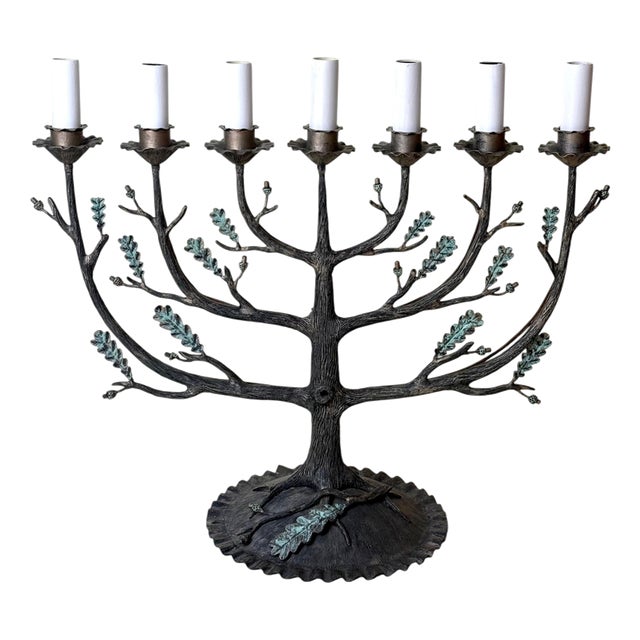
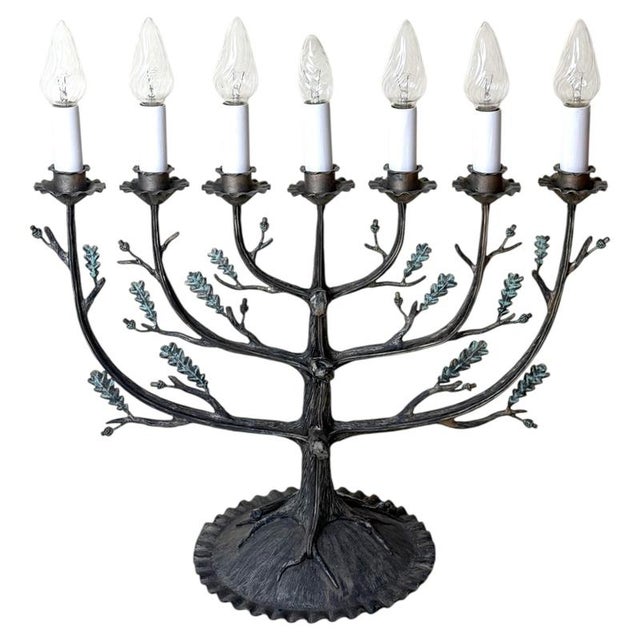
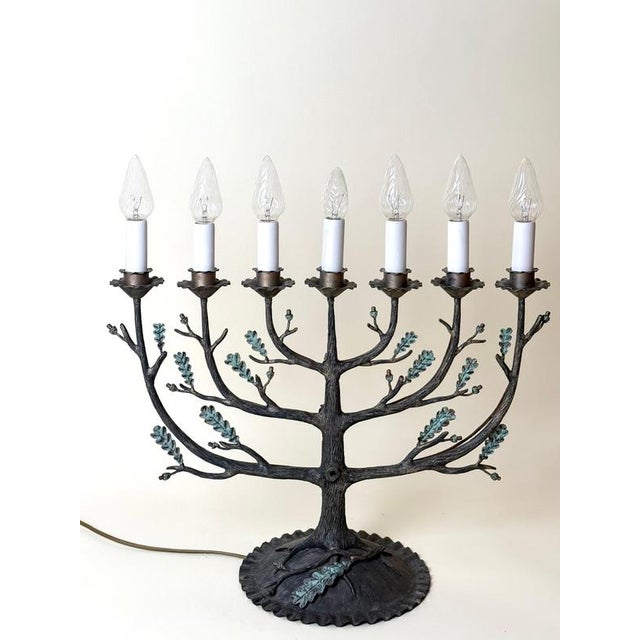
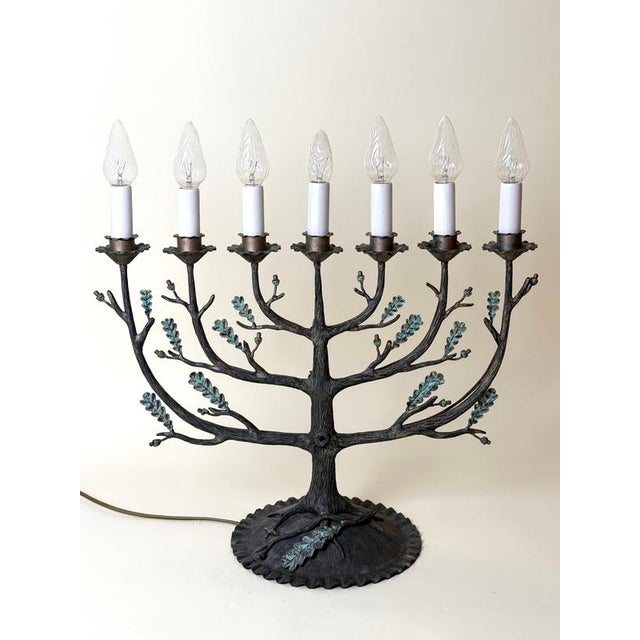
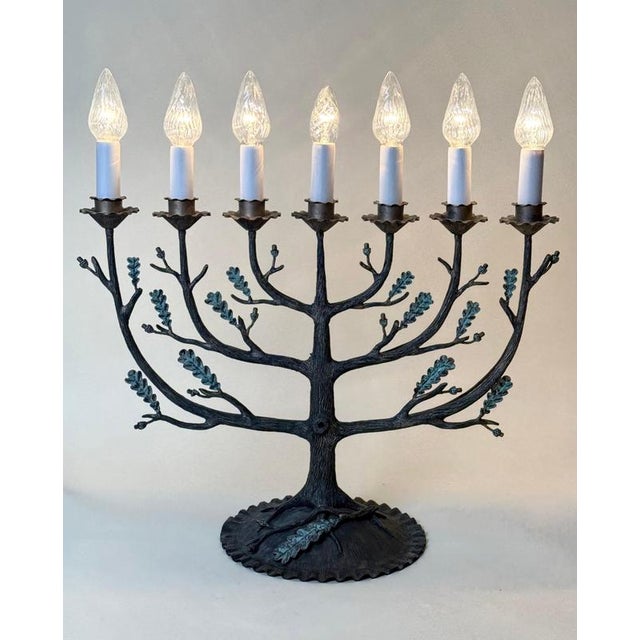
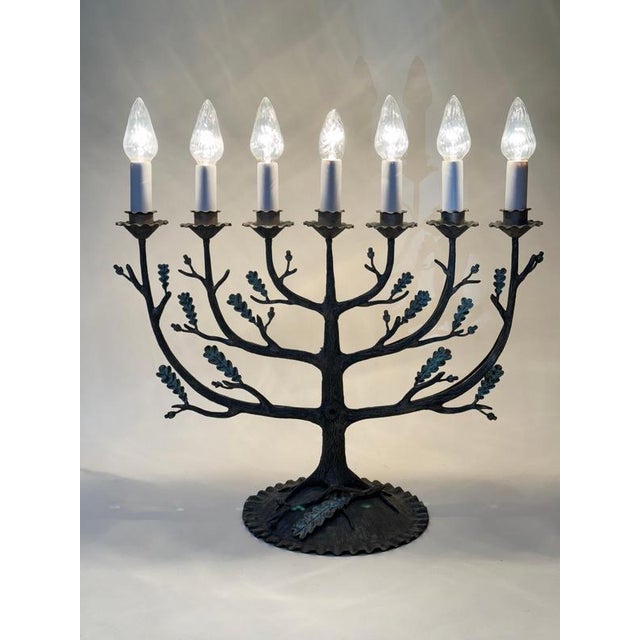
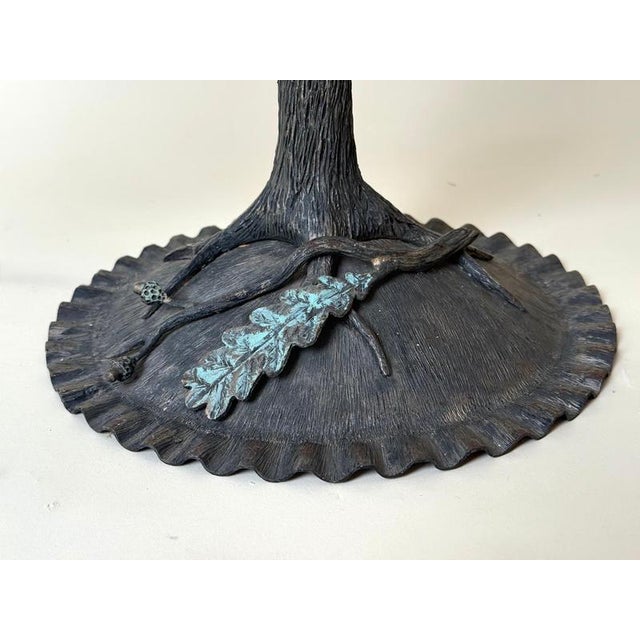
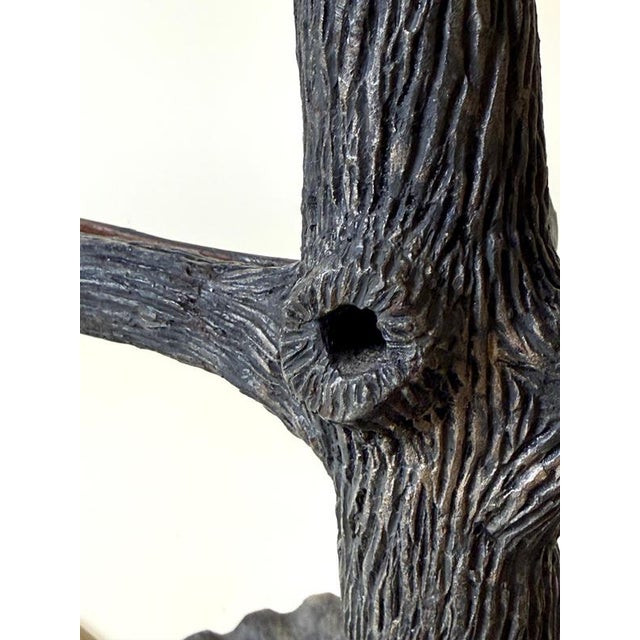
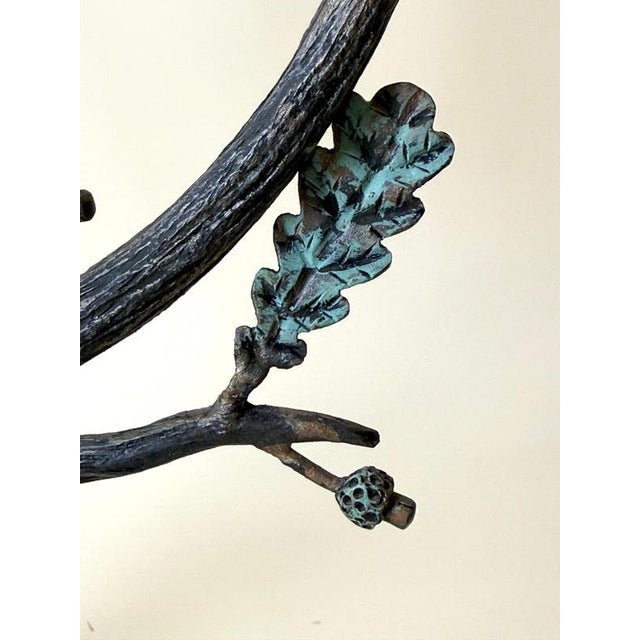
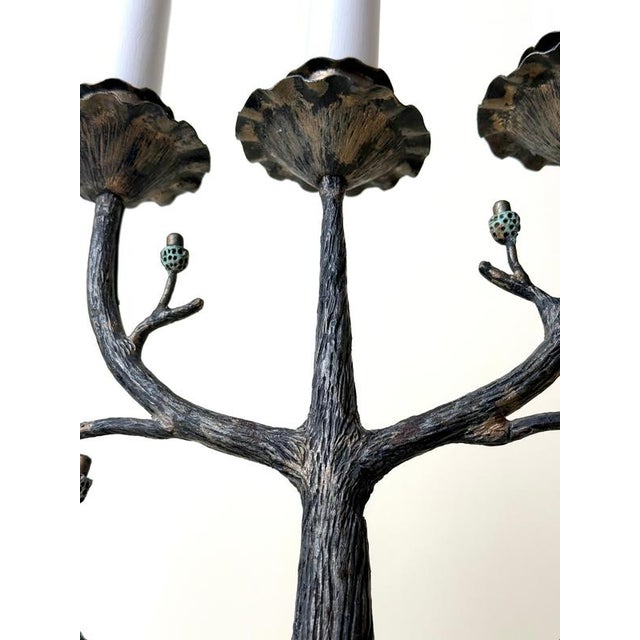
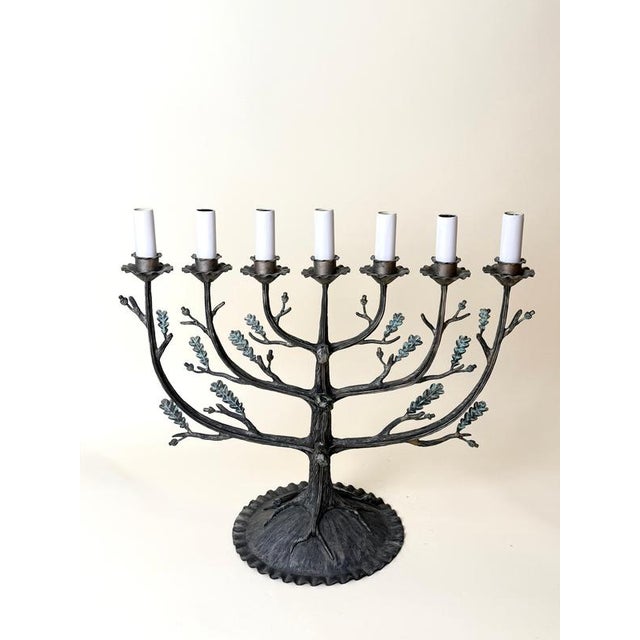
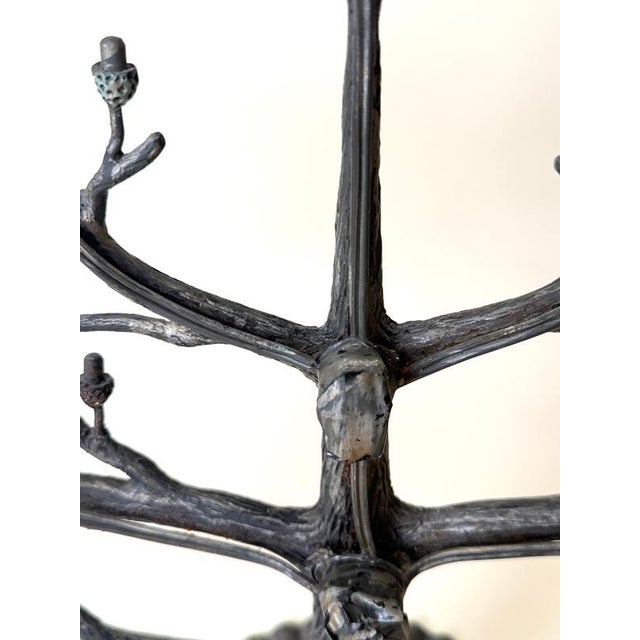
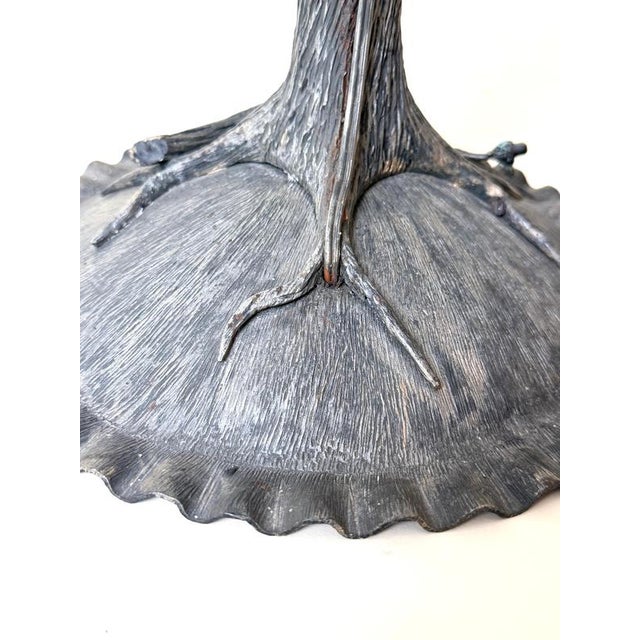
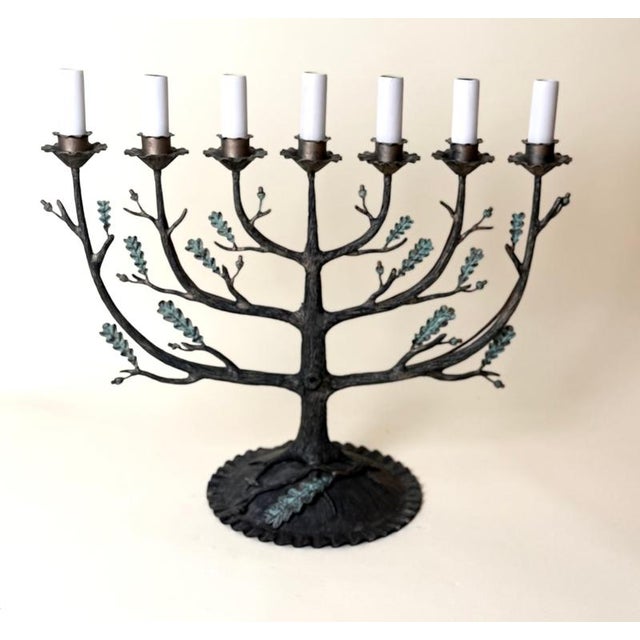
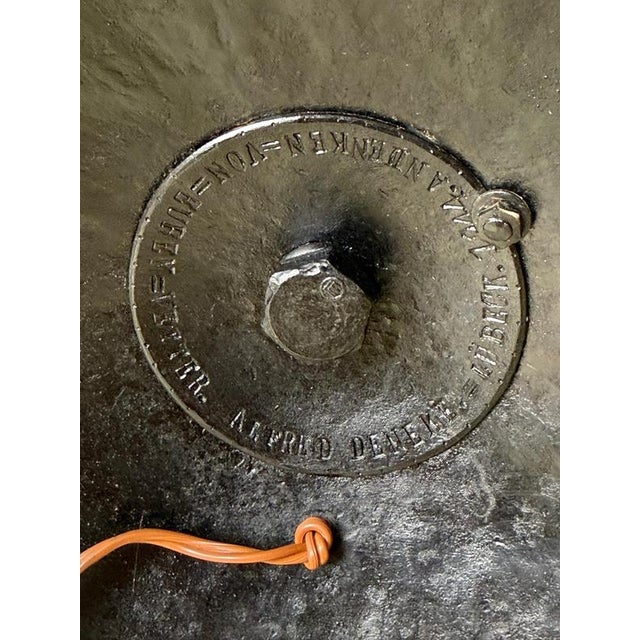
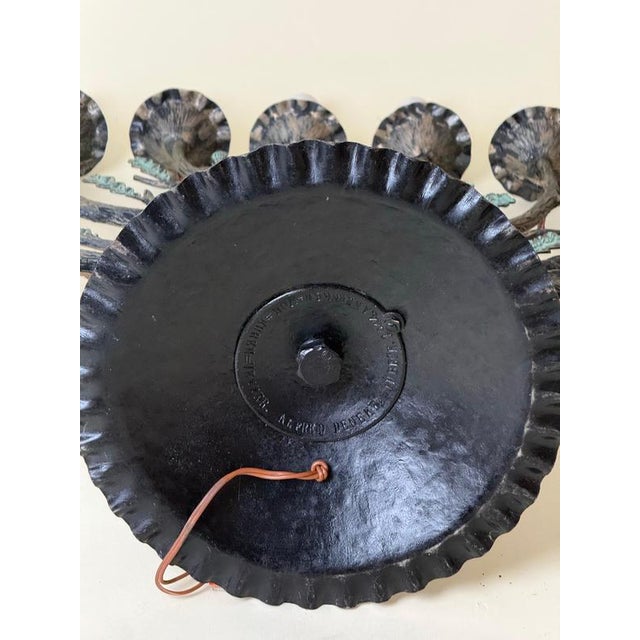
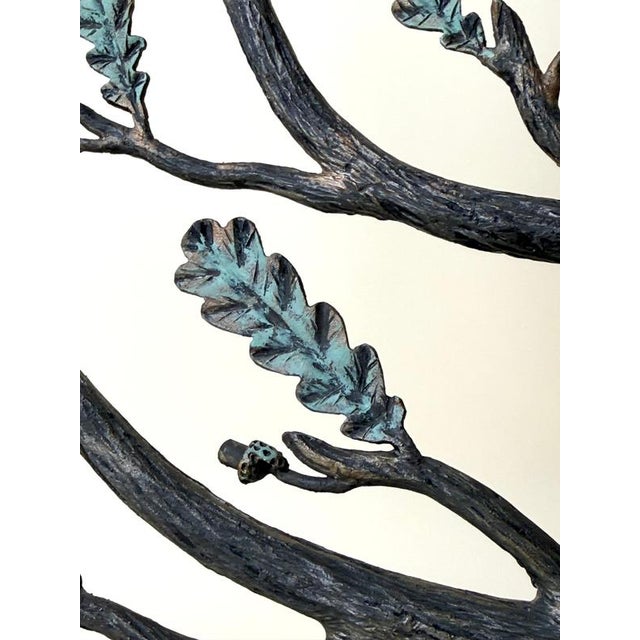
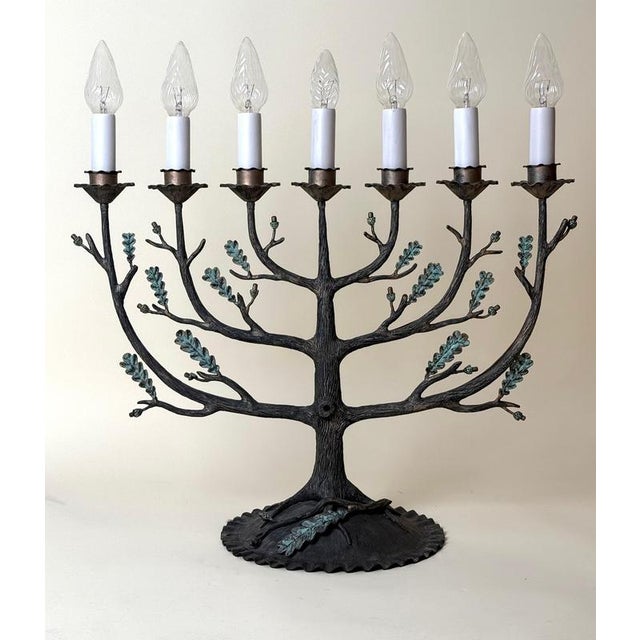
This exceptional seven-light candelabrum takes the form of a monumental oak tree and was most likely created within a Northern … Read more This exceptional seven-light candelabrum takes the form of a monumental oak tree and was most likely created within a Northern German artistic or metalworking tradition, possibly by an artist or workshop based in Lübeck. Stylistically, the piece combines naturalistic sculpture with the strict symmetry, architectural strength and restrained monumentality associated with German Art Deco of the 1930s and early 1940s. Although fully modelled in three dimensions, the tree was deliberately conceived as an almost planar composition. This unusual balance between sculpture and relief gives the candelabrum a remarkably strong silhouette while allowing it to be displayed close to a wall, on a mantelpiece or on a large console. The exceptionally detailed modelling demonstrates a high level of artistic and technical skill. Deeply worked lines reproduce the structure of mature oak bark and continue naturally through the trunk, branch junctions and progressively tapering limbs. The seven upright candle stems rise from substantial flower-shaped drip pans, creating a powerful architectural crown. Individually formed oak leaves and acorns are emphasized by a contrasting verdigris-green finish, while exposed high points reveal warm silver, bronze and golden tones beneath the dark patinated surface. One of the most remarkable features is the detached oak branch resting across the roots. This is not accidental damage but an intentional part of the original composition: a corresponding, carefully modelled branch scar remains visible in the lower trunk. The fallen branch therefore forms an important element of the work’s visual narrative. The seven-branched silhouette recalls the form of a menorah, while the oak leaves and acorns carry a distinctly German cultural association. Together with the deliberately separated yet still living branch at the roots, the composition creates a powerful image of loss, separation, remembrance and survival. It could be interpreted in relation to the consequences of the First World War or the political and human upheavals experienced in Germany during the following decades. Its precise intended meaning, however, remains undocumented and is left open to interpretation. An engraved dedication plate on the underside reads: “Zum Andenken – von eurem Vetter – Alfred Deneke – Lübeck – 1944,” translating approximately as: “In remembrance – from your cousin – Alfred Deneke – Lübeck – 1944.” Alfred Deneke appears to have been the donor rather than the artist. The inscription establishes that the candelabrum was presented in Lübeck in 1944, although its formal language and elaborate workmanship suggest that it may have been created somewhat earlier. Its regional provenance and artistic character make an origin in Northern Germany, and quite possibly Lübeck itself, highly probable. The exact metal composition has not been scientifically analyzed. The substantial weight, construction and surface appearance suggest an iron-rich cast metal alloy, subsequently sculpturally finished and patinated by hand. A magnet reacts only weakly to the material. The surface displays a complex interplay of dark grey, silver, bronze and golden tones, complemented by the deliberately applied green coloration of the foliage and acorn cups. The candelabrum was originally designed for candles and was carefully electrified at a later date. Its ivory-white candle sleeves visually extend the tapering branches and enhance the height and elegance of the composition. These later electrical additions were installed reversibly and can be removed with minimal effort by a qualified person, allowing the piece to be returned to its original candle-operated configuration without materially altering the sculpture. The existing two-wire electrical installation is functional but not grounded and does not comply with current electrical safety standards. Professional inspection and grounding can be arranged upon request before shipping; please allow approximately one additional week. E14-to-E12 socket reducers and a European-to-US plug adapter can be included for use in the United States. The plug adapter changes only the plug format and is not a voltage converter; bulbs suitable for the local voltage must be used. Dimensions including the later candle sleeves: Height: 51 cm / approximately 20.1 in Width: 58 cm / approximately 22.8 in Depth: 27 cm / approximately 10.6 in Height without the later candle sleeves, corresponding to the original candle-operated appearance: 44 cm / approximately 17.3 in. Weight: approximately 6 kg / 13.2 lb. A rare and highly expressive work positioned between functional design, commemorative sculpture and Northern German Art Deco metalwork. See less
- Dimensions
- 22.83ʺW × 10.63ʺD × 20.08ʺH
- Period
- 1930s
- Country of Origin
- Germany
- Item Type
- Vintage, Antique or Pre-owned
- Materials
- Iron
- Condition
- Good Condition, Unknown, Some Imperfections
- Color
- Gold
- Condition Notes
- Very Good — This vintage item has no defects, but it may show slight traces of use\. Rewired and electrified … moreVery Good — This vintage item has no defects, but it may show slight traces of use\. Rewired and electrified at a later date with seven E14 sockets and ivory candle sleeves, The reversible installation can be removed to restore candle use, The current two-wire system is functional but ungrounded, professional inspection is advise less
Returns & Cancellations
Return Policy - All sales are final 48 hours after delivery, unless otherwise specified in the description of the product.
Cancellation Policy - Prior to shipping or local pickup, buyers may cancel an order for up to 48 hours, unless otherwise specified.