

Details
Description
MEASUREMENTS:
Height: 11 cm; Width: 14 cm; Depth: 12 cm; Weight: 0.577 kg
Item :
An extraordinary sculpture in the …
Read more
MEASUREMENTS:
Height: 11 cm; Width: 14 cm; Depth: 12 cm; Weight: 0.577 kg
Item :
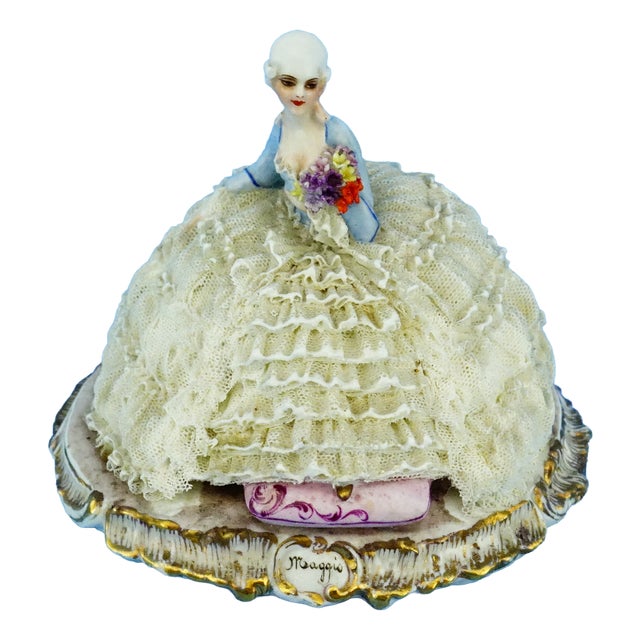
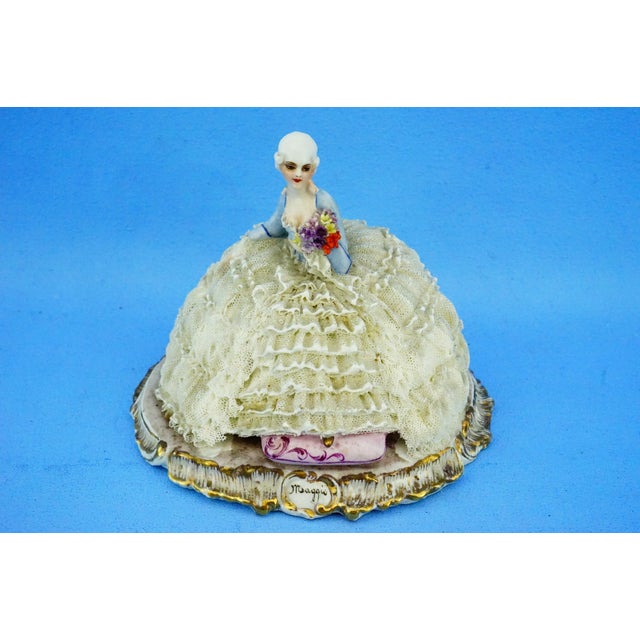
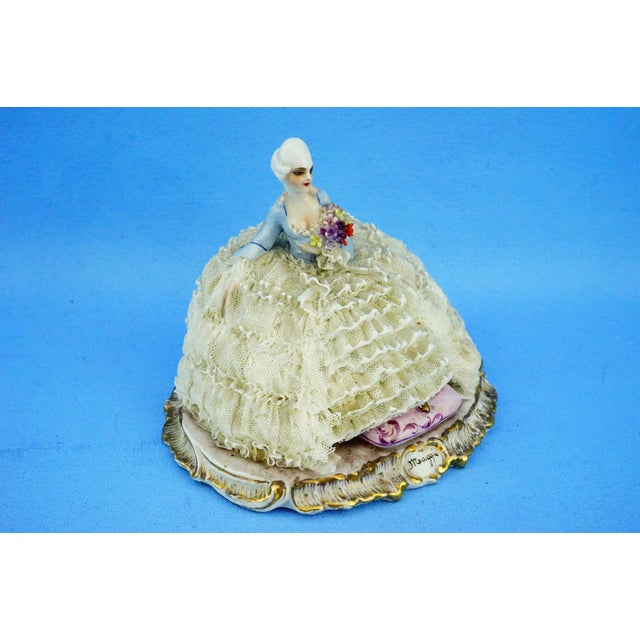
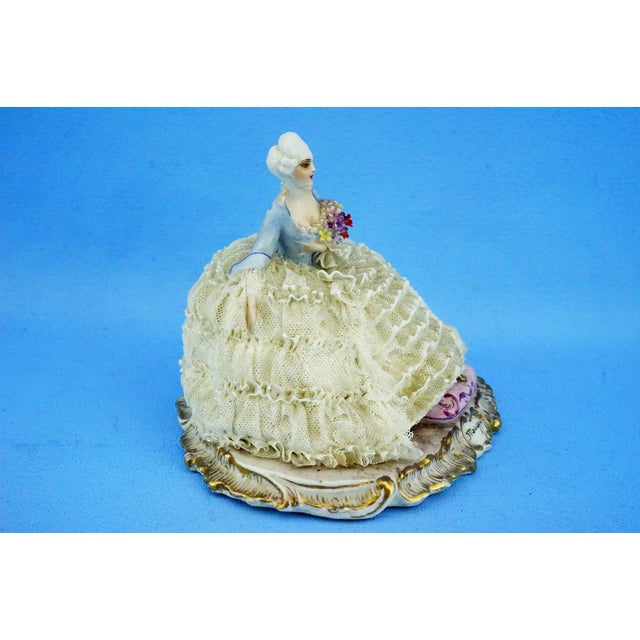
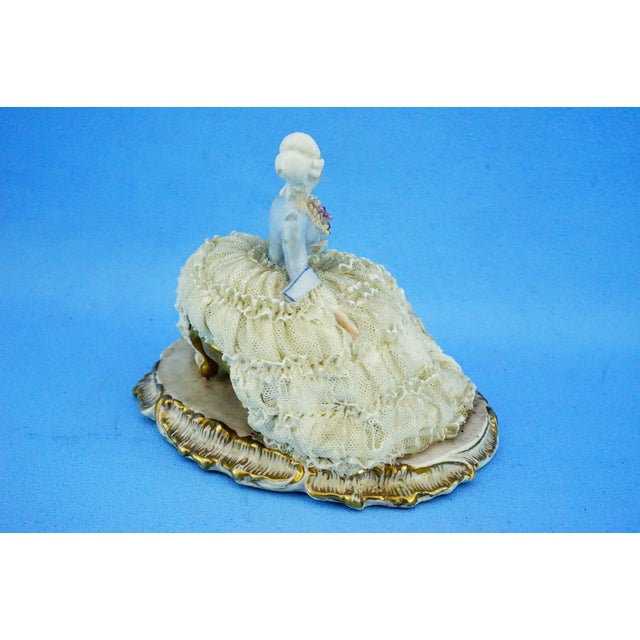
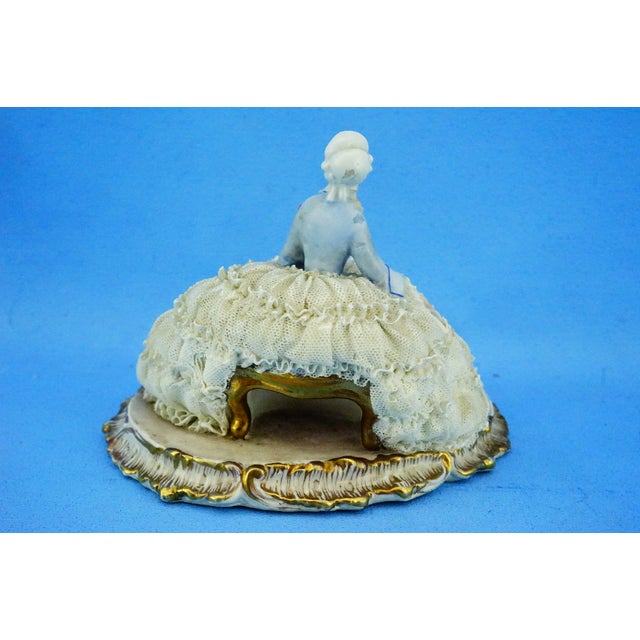
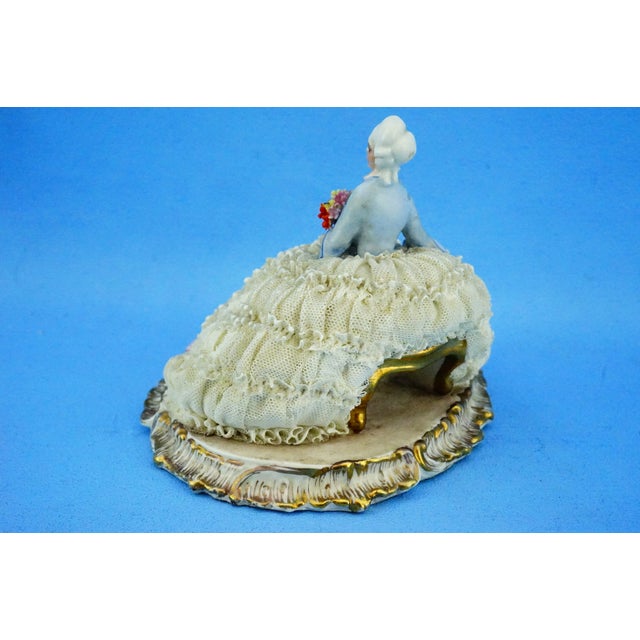
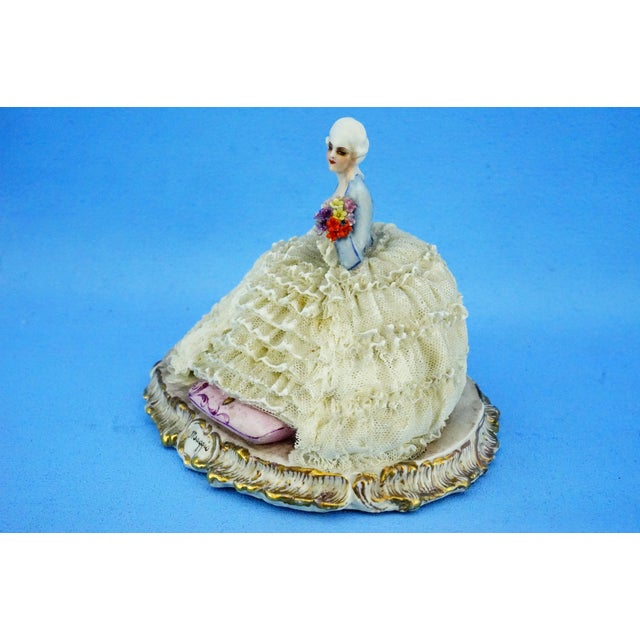
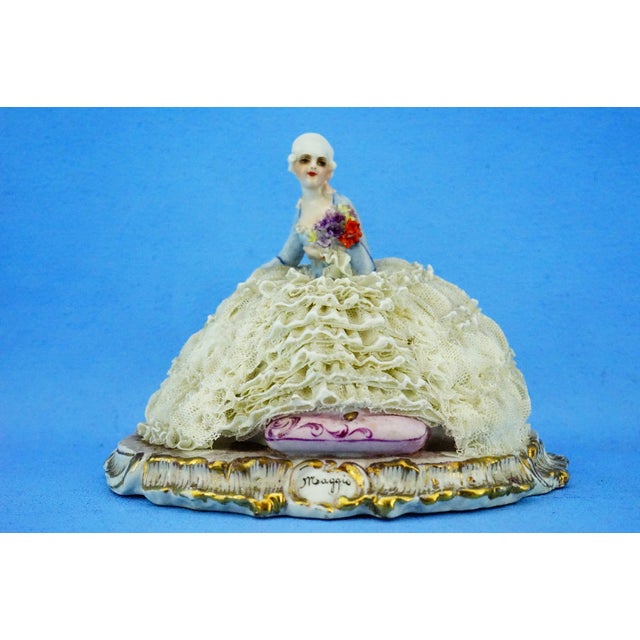
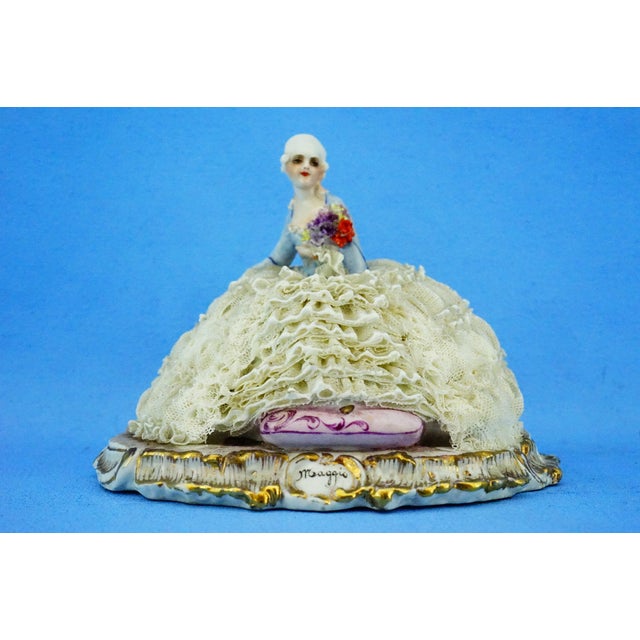
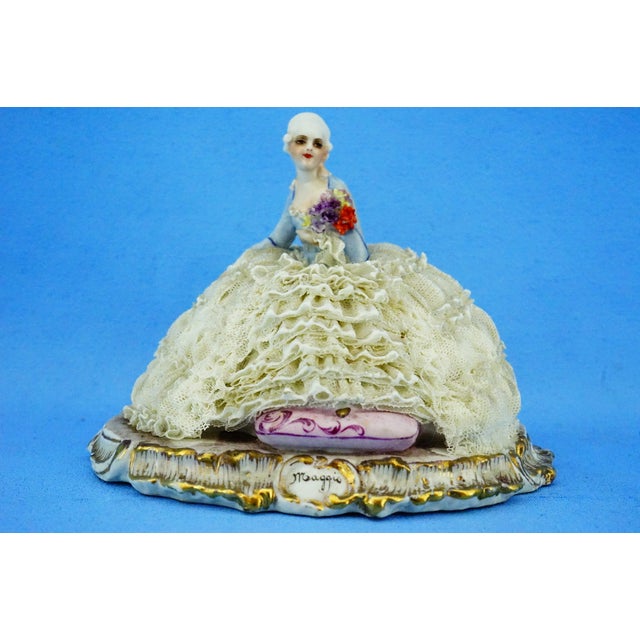
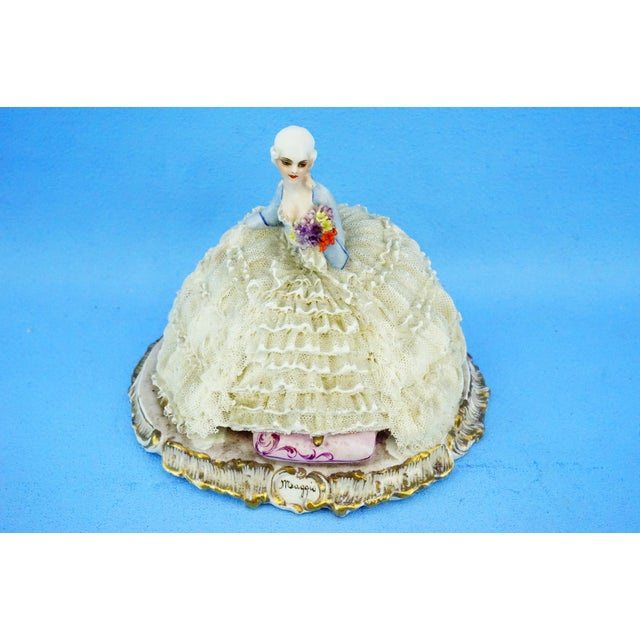
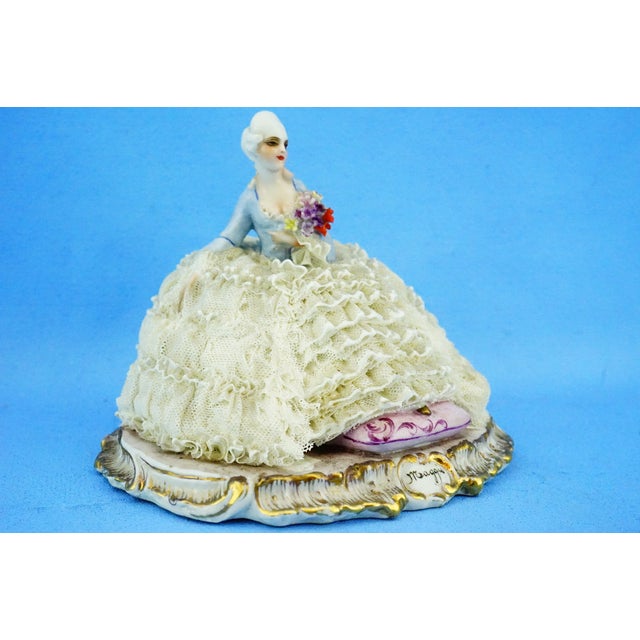
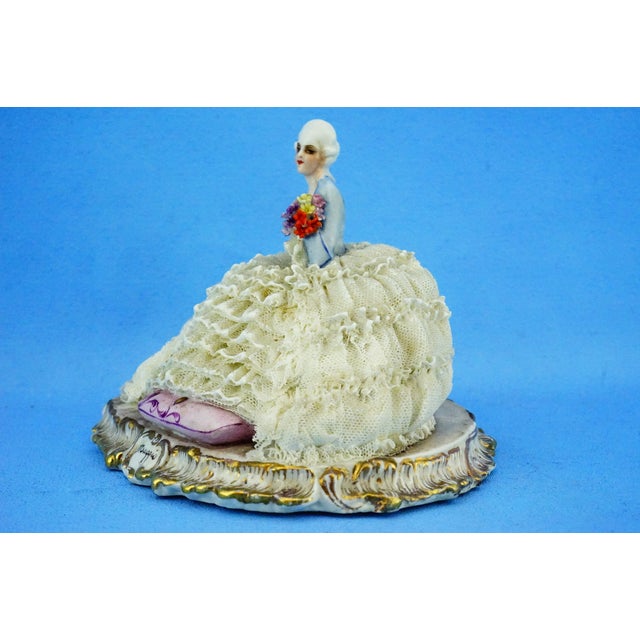
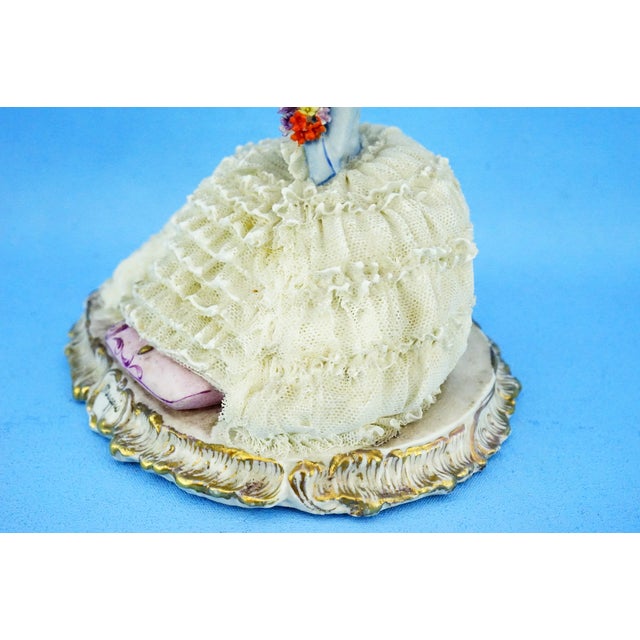
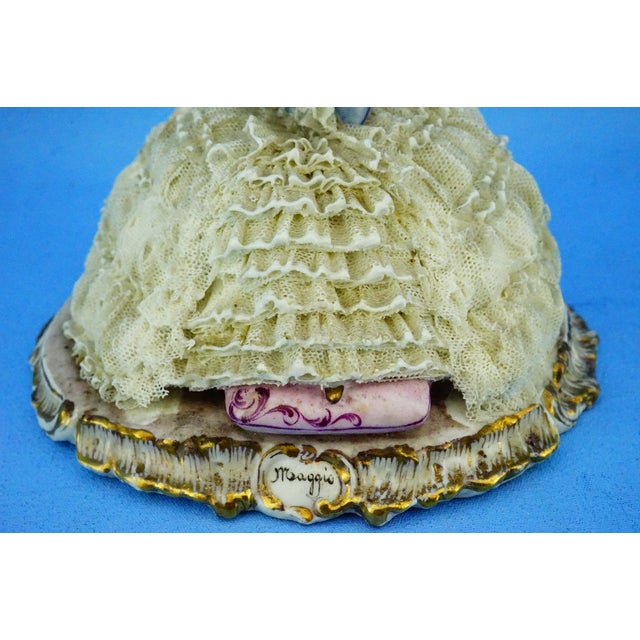
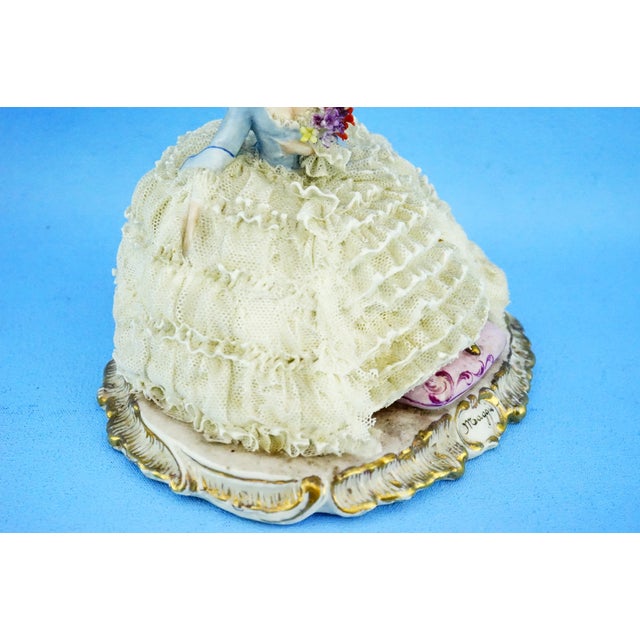
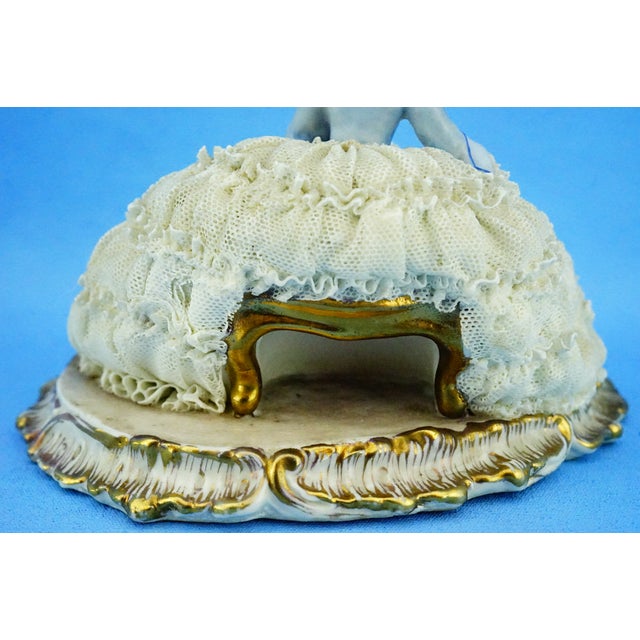
An extraordinary sculpture in the finest polychrome vitrified porcelain depicting a lady of the court, a fine example of high-quality Italian artistic craftsmanship from the early decades of the 20th century. The work depicts an 18th-century lady idealized as an allegory of the month of May, as indicated by the baroque cartouche painted on the front of the rocaille base embellished with pure gold highlights. The female figure is distinguished by the grace of her finely miniatured face, her elaborate powdered wig, and a powder blue bodice complemented by a bouquet of tiny wildflowers. The majestic and full skirt, resting on a gilded baroque folding seat, is crafted using the legendary and complex "porcelain lace" (or submerged lace) technique: real cotton lace is applied raw to the sculpture, soaked in liquid slip, and vitrified during firing at extremely high temperatures, a process in which the fabric burns, leaving an incredibly realistic porcelain filigree pattern. Under the base, the sculpture bears the calligraphic signature in iron red and the anchor monogram, certifying its direct attribution to the renowned Luigi Fabris factory. Note the superbly expressive rendering of the artist's typical "doe-like" eyes and the sculpture's mastery of lacemaking, qualities that have made the Fabris brand famous worldwide.
Information on the artist and/or manufacturer:
Luigi Fabris is an Italian sculptor and ceramist. Born in Bassano del Grappa on August 23, 1883, he studied at the Academy of Fine Arts in Venice, a student of Antonio Dal Zotto. In 1911, after working as a modeler at "Passarin," he began his career as a ceramic entrepreneur, taking over the old Bassano factory where he worked. In his factory, he created several exquisitely crafted porcelain figurines depicting knights and ladies in 18th-century costume, which quickly brought him fame on the market. In 1917, after the defeat at Caporetto, he sold Passarin to Agostinelli & dal Prà and found himself a refugee in Milan, where he opened a new ceramics factory called Fabris Ceramiche. His porcelain works enjoyed increasing success both in Italy and abroad. In the 1920s, Luigi Fabris was elected Head of the Lombardy Ceramics Community and appointed a Member of the Fascist Experimental Ceramics Institute. In 1929, he presented his porcelain production at the Leipzig Trade Fair, where it achieved significant commercial success. In 1942, the Milan factory was completely destroyed by bombing, and after the war, Luigi Fabris returned to Bassano del Grappa, his hometown, where he re-established his factory. His production consists of statuettes of ladies, knights, and gallant scenes with figures in 18th-century dress. The works are marked with an anchor similar to the one used in the 18th century by the "Cozzi" factory. Luigi Fabris died in his hometown in 1952, leaving the factory to his son Augusto, who ran it until 1979, when he sold it to the Elite company, which also acquired the rights to reproduce the historical pieces. The artist's great success is further confirmed by a beautiful anecdote. Luigi Fabris was invited by the famous Italian poet Gabriele D'Annunzio to commission eight sculptures based on the poet's drawings. Benito Mussolini, visiting the Vittoriale, a villa on the shores of Lake Garda, Gabriele D'Annunzio's final home before his death, was jealous of this commission and commissioned Luigi Fabris to create a full-length sculpture of himself. The artist was later called a second time for a commission to create a sculpture of the Duce on horseback, which was to be created in Rome. However, when work began, a catacomb was discovered underground, and the work was interrupted. The sculpture was never built; only a sketch of the work remained. This piece has an attribution mark,
I am sure that it is completely authentic and take full responsibility for any authenticity
issues arising from misattribution
See less
Returns & Cancellations
Return Policy - All sales are final 48 hours after delivery, unless otherwise specified in the description of the product.
Cancellation Policy - Prior to shipping or local pickup, buyers may cancel an order for up to 48 hours, unless otherwise specified.
Related Collections
- Straw Sculpture
- Louis XIV Sculpture
- Roman Bronze Works Sculpture
- Fernando Botero Sculpture
- Constantin Brancusi Sculpture
- Georgian Sculpture
- Bakelite Sculpture
- Medium-Density Fibreboard Sculpture
- Gold-Plate Sculpture
- Antique Iron Finish Sculpture
- Sculpture in Columbus
- Polished Brass Finish Sculpture
- Recycled/Repurposed Sculpture
- Gourd Sculpture
- Geode Sculpture
- Photography Sculpture
- Sculpture in Panama City, FL
- René Lalique Sculpture
- Albert Ernest Carrier-Belleuse Sculpture
- Barovier and Toso Sculpture
- Worlds Away Sculpture
- Far Pavilions Sculpture
- Maison Jansen Sculpture
- Flavio Poli Sculpture
- Austin Productions Sculpture