

Details
Description
Theodoor van thulden (bois-le-duc, 1606 - 1669) attributed
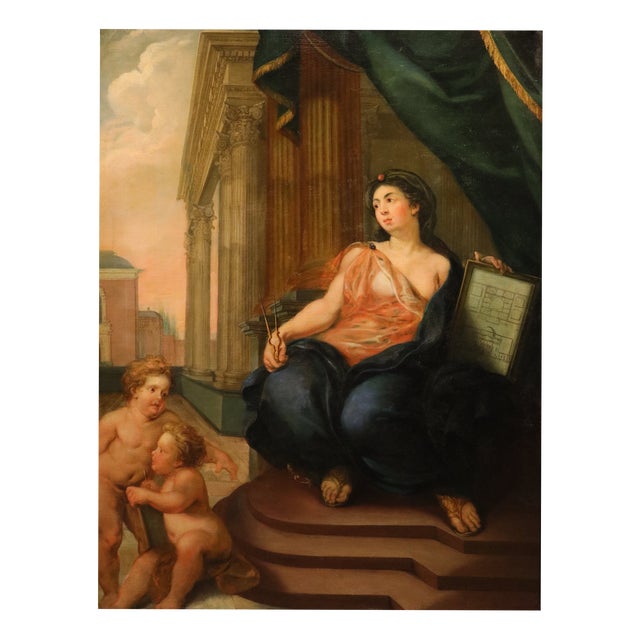
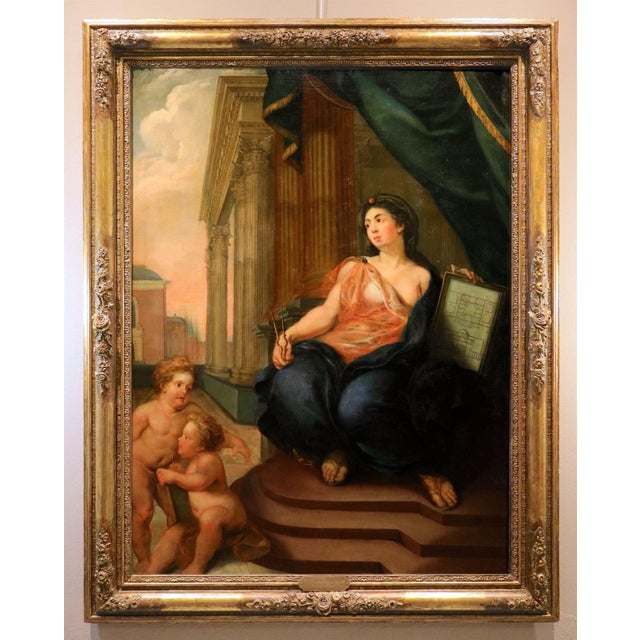
allegory of architecture
oil on canvas (127 x 97 cm - framed …
Read more
Theodoor van thulden (bois-le-duc, 1606 - 1669) attributed
allegory of architecture
oil on canvas (127 x 97 cm - framed 148 x 118 cm)
provenance: hampel munich, 02/04/2020
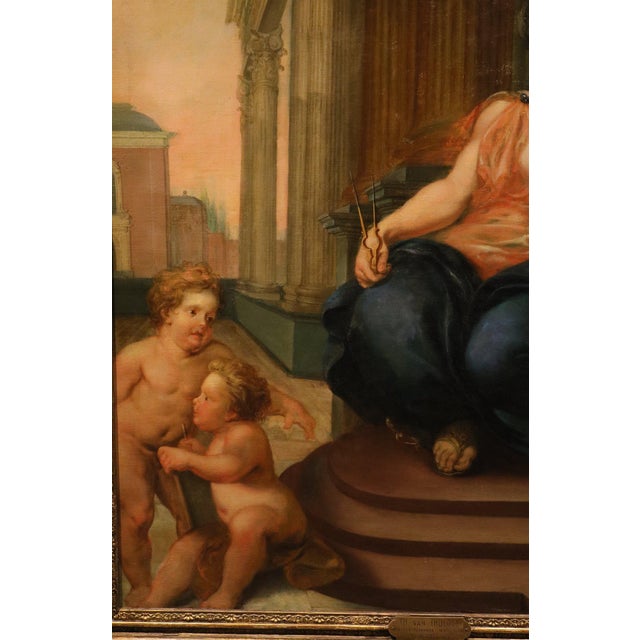
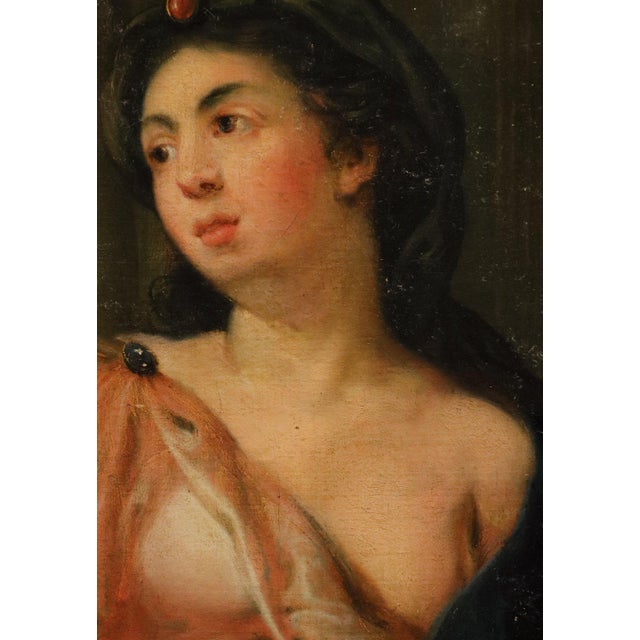
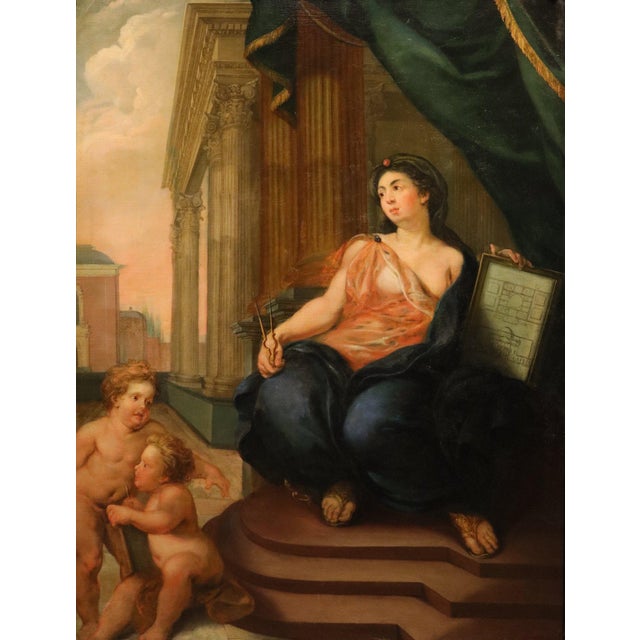
the painting belongs to the tradition of so-called "cultured allegories," a pictorial genre widespread during the renaissance and baroque periods, in which abstract concepts are personified by human figures, often beautiful young women, accompanied by particular iconographic attributes.
in our case, the meaning of the composition revolves around the celebration of the liberal arts and, in particular, it is an allegory of architecture, one of the art forms that has accompanied humanity since ancient times.
it is a painting by the flemish master theodoor van thulden (1606 - 1669), a specialist in depicting large allegorical compositions, a genre to which he masterfully applied the monumentality and expressiveness he learned from working with peter paul rubens.
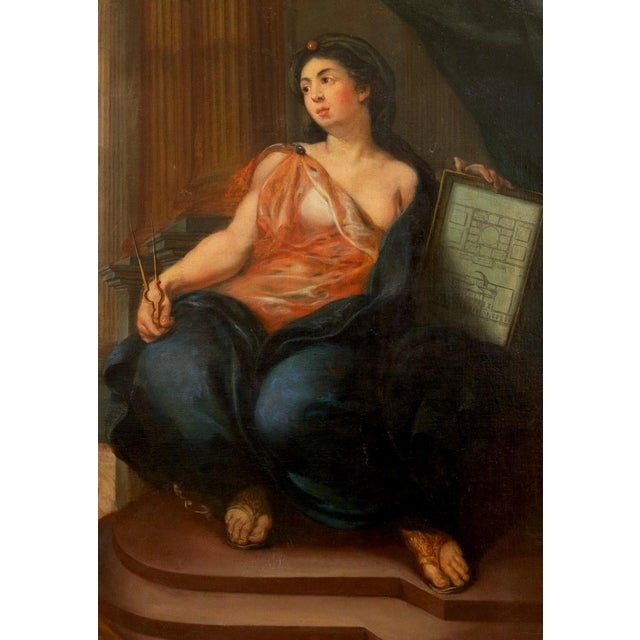
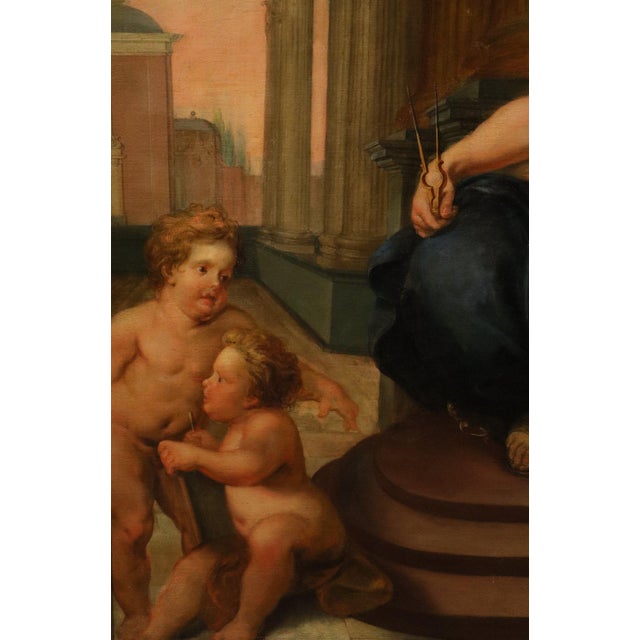
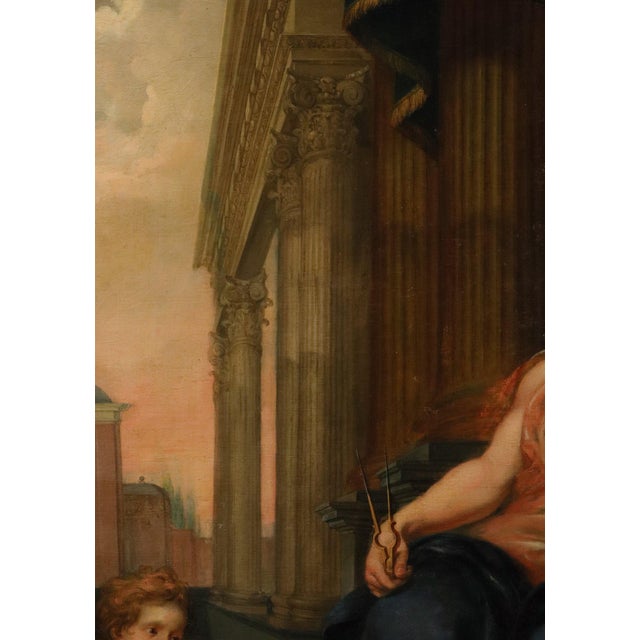
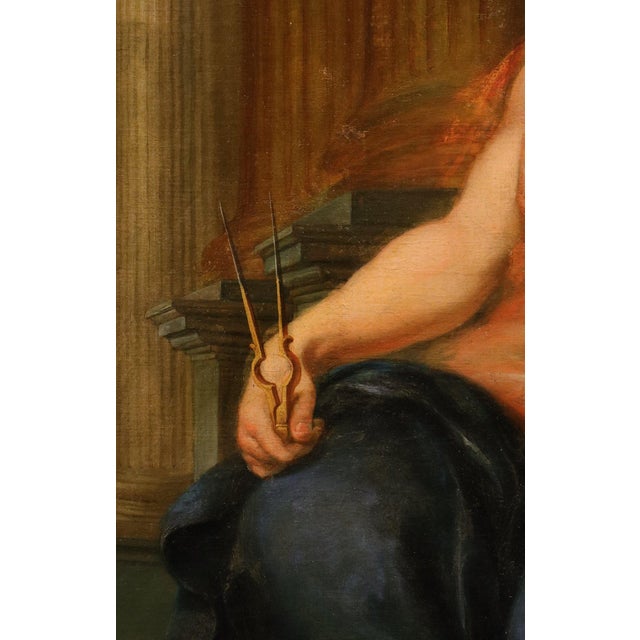
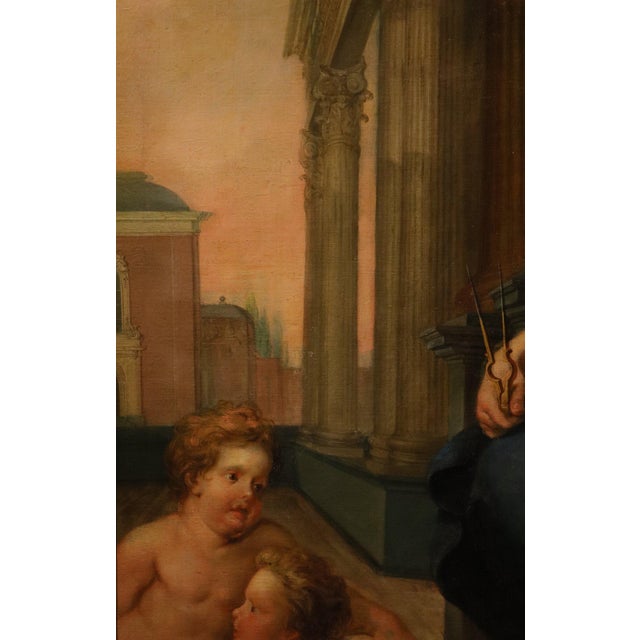
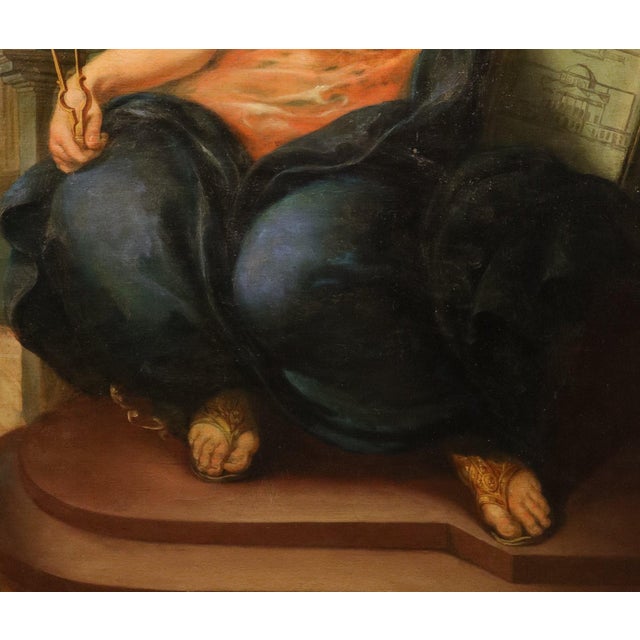
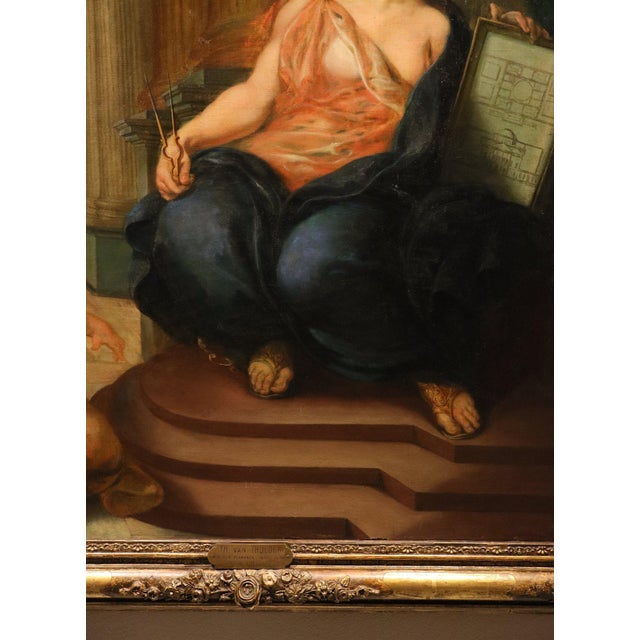
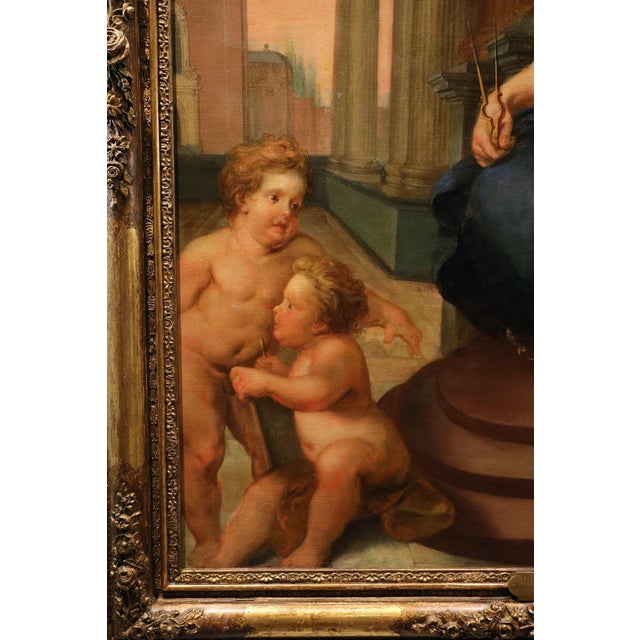
the artist masterfully portrayed the subject, giving architecture the appearance of a seductive young woman, classical and elegant, richly dressed in draped robes reminiscent of a classical deity. She sits on classical steps beneath an imposing colonnade and a green drape, holding measuring instruments and displaying a framed blueprint.
every visual detail is designed to celebrate value, not only as a practical craft, but as a supreme intellectual discipline.
the architectural structures surrounding her, particularly the columns (inspired by ancient roman and greek monuments), evoke solidity and durability over time, while the massive base represents practice and the foundations of knowledge, the solid foundation upon which human ingenuity rests.
at her feet appear two curious cupids, holding measuring instruments (compasses and a set square), observing curiously; their presence completes the allegory, embodying geometry and proportion, indicating that architecture is founded on precise mathematical rules, rational planning, and the pursuit of ideal symmetry.
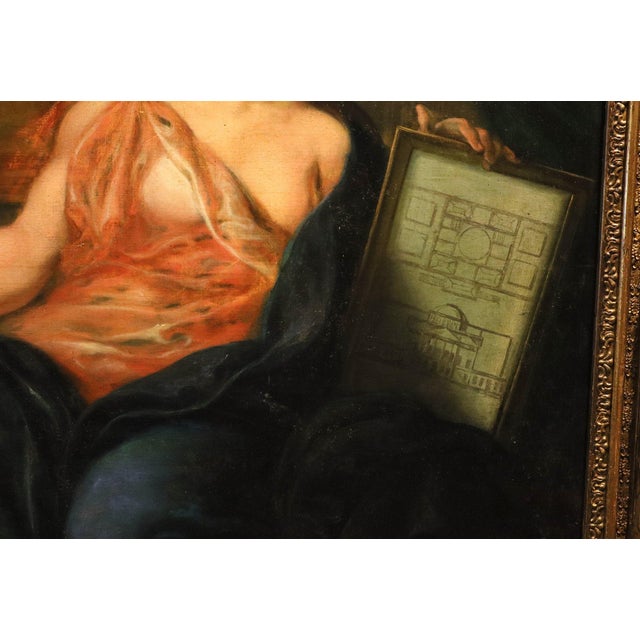
a symbolically interesting element is the architectural design with the elevation and plan of a palladian villa, which the woman elegantly displays.
during his stay in italy, rubens closely studied the palaces and villas of the veneto, developing a deep admiration for the architecture of andrea palladio, an interest he passed directly on to his circle of collaborators and students, most notably theodoor van thulden.
the architectural order, which also embodies the broader concept of universal harmony, is thus perfectly expressed: the perfect symmetry of the plan, square with a circle at its center, represents the harmony of the cosmos reflected in human proportions.
from his master, van thulden also inherited the use of light, a visual instrument that directly illuminates the allegory and symbolizes the intellect and knowledge that guide humanity out of the darkness of ignorance through the liberal arts.
we can now mention, for comparative purposes, some works within the painter's allegorical production that are structurally similar to our own. Among these is the allegory of the return of peace (image 1 - 1657 - noordbrabants museum), which depicts two female personifications in sculptural poses, accompanied by putti, and shares with our work the rich color palette and strong light contrasts derived from rubens. In the allegory of justice and peace (image 2 - museum of art and culture, münster), we also see a solemn setting where the abstract concepts of good governance and law are humanized through classicizing poses and monumental elements in the background, much like the columns in our allegory of architecture. Finally, the allegory of the city of antwerp (image 3 - national museum of fine arts, valletta), with a richly dressed female figure seated on a throne to personify the city, presents the same pyramidal layout with the principal entity at the center surrounded by iconographic elements.
by observing these three works, we can also see van thulden's evolution from the models of his master, rubens: these works all share an elegant classicism, where the exuberance of the flemish baroque is tempered by more orderly, geometric, and profoundly intellectual compositions.
additional information:
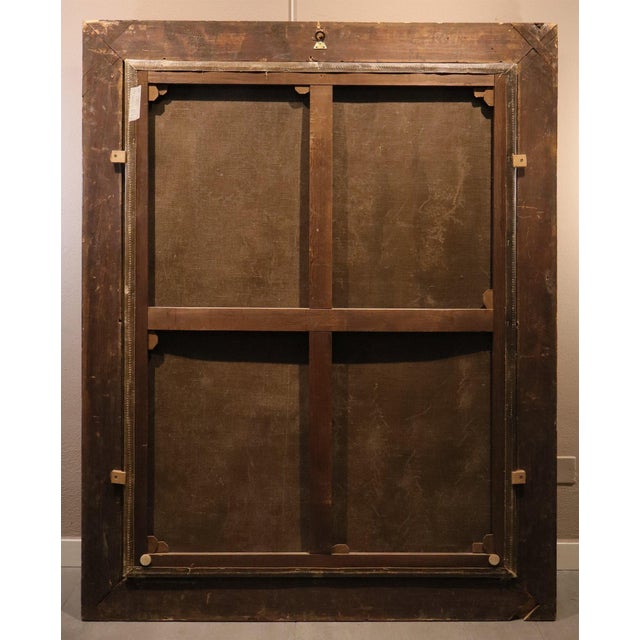
the work is beautifully framed and comes with a certificate of authenticity and an iconographic . This piece is attributed to the mentioned designer/maker. It has no attribution mark and no
official proof of authenticity,
however it is well documented in design history. I take full responsibility for any authenticity
issues arising from misattribution
See less
- Dimensions
- 46.46ʺW × 4.72ʺD × 58.27ʺH
- Styles
- Baroque
- Art Subjects
- Figure
- Period
- 17th Century
- Country of Origin
- Belgium
- Item Type
- Vintage, Antique or Pre-owned
- Condition
- Good Condition, Unknown, Some Imperfections
- Color
- Condition Notes
- Patina Consistent with Age and Use,Reupholstered,Partially Restored Patina Consistent with Age and Use,Reupholstered,Partially Restored less
Returns & Cancellations
Return Policy - All sales are final 48 hours after delivery, unless otherwise specified in the description of the product.
Cancellation Policy - Prior to shipping or local pickup, buyers may cancel an order for up to 48 hours, unless otherwise specified.
Related Collections
- Photorealism Canvas Paintings
- Ed Ruscha Paintings
- Ralph Lauren Paintings
- Photorealism Paintings in New York
- Richard Serra Paintings
- Louise Nevelson Paintings
- Silk Velvet Paintings
- Herman Miller Paintings
- BDDW Paintings
- Jean-Paul Barray Paintings
- Johannes Andersen Paintings
- Peter Behrens Paintings
- Carl-Axel Acking Paintings
- Joseph Stella Paintings
- Karl-Erik Ekselius Paintings
- Pedro Friedeberg Paintings
- Piet Hein Eek Paintings
- James McCray Paintings
- Milton Avery Paintings
- Raphael Paintings
- Jaanika Peerna Paintings
- Hans Andersen Paintings
- Cassina Paintings
- Photorealism Paintings in Los Angeles
- Leroy Neiman Paintings