

Details
Description
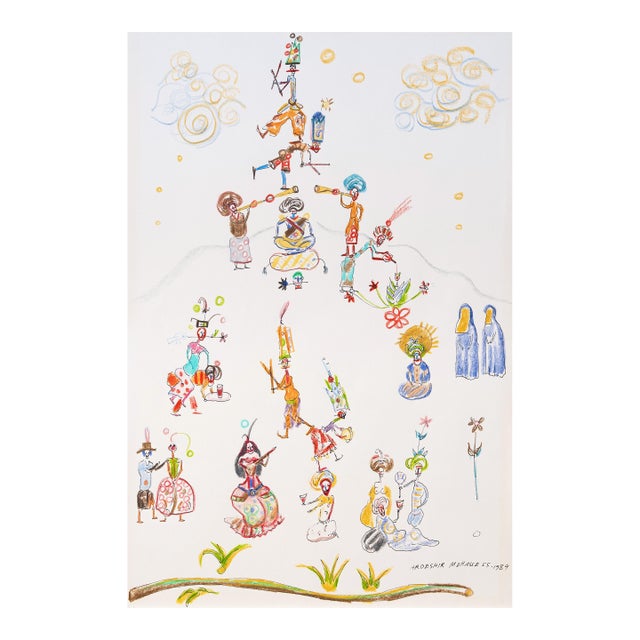
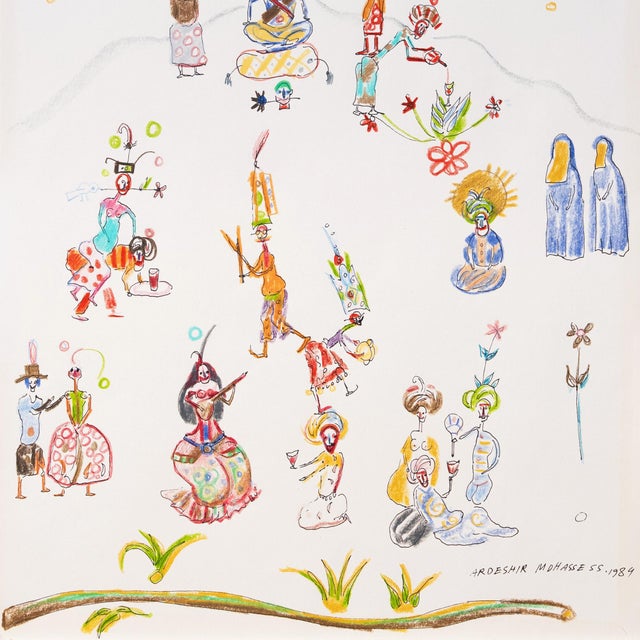
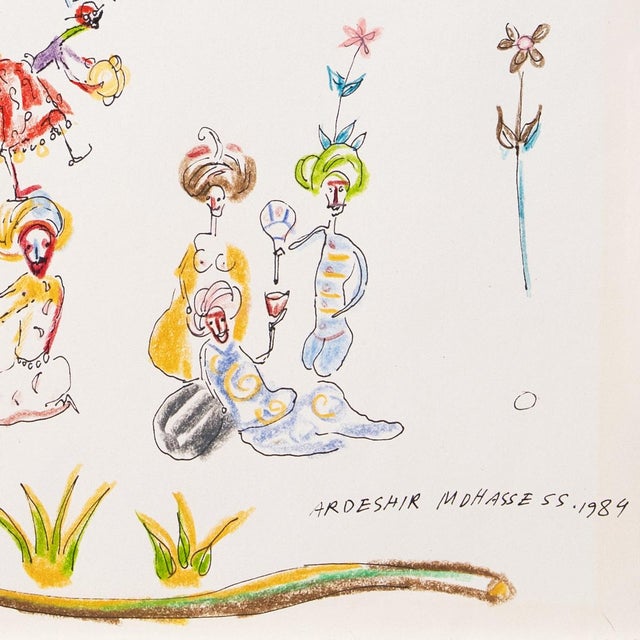
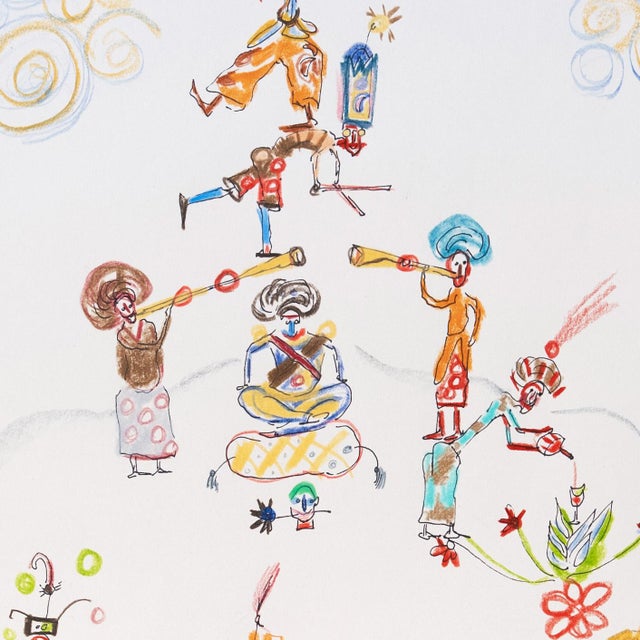
Signed lower right ‘Ardeshir Mohassess’ (Iranian, 1938 - 2008) and dated 1984.
Drawing on the tradition of Iranian miniature painting …
Read more
Signed lower right ‘Ardeshir Mohassess’ (Iranian, 1938 - 2008) and dated 1984.
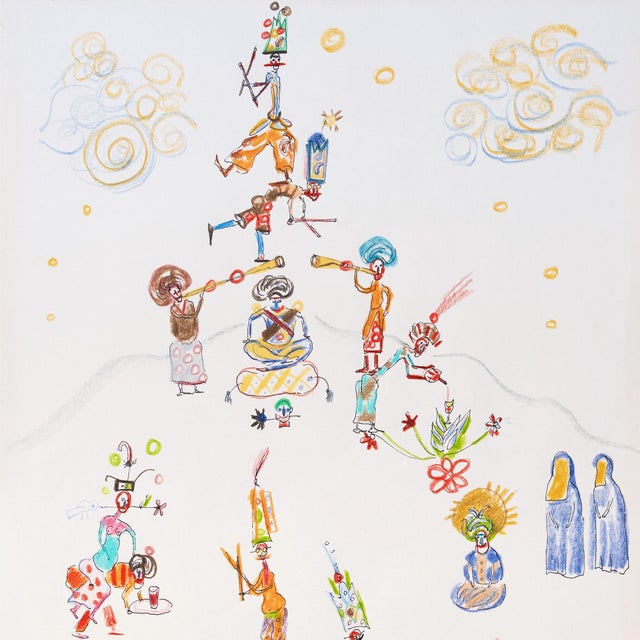
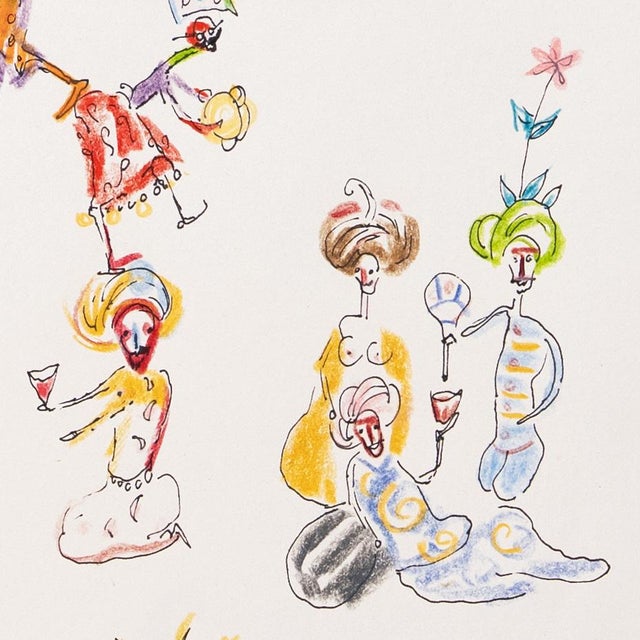
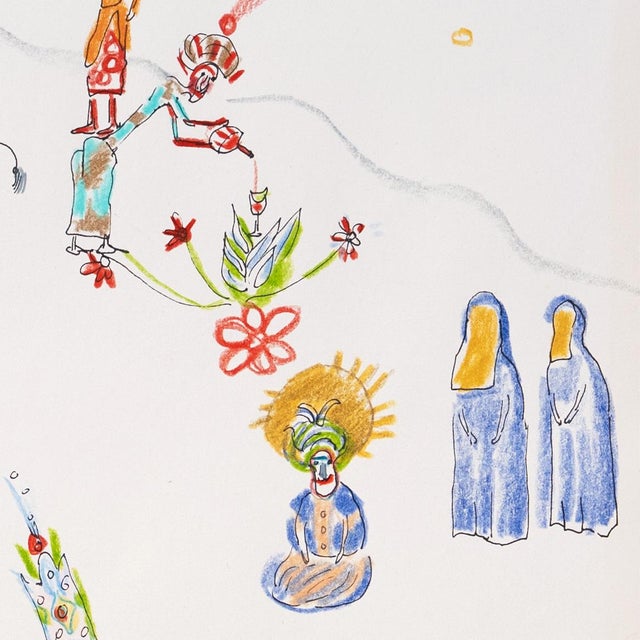
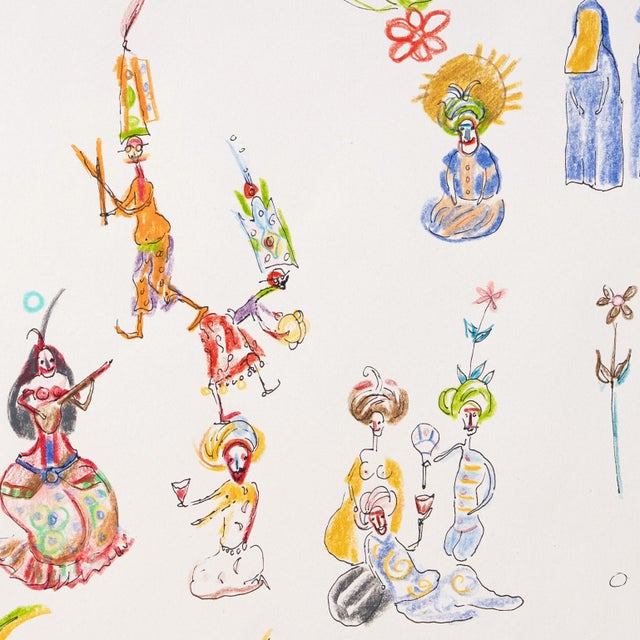
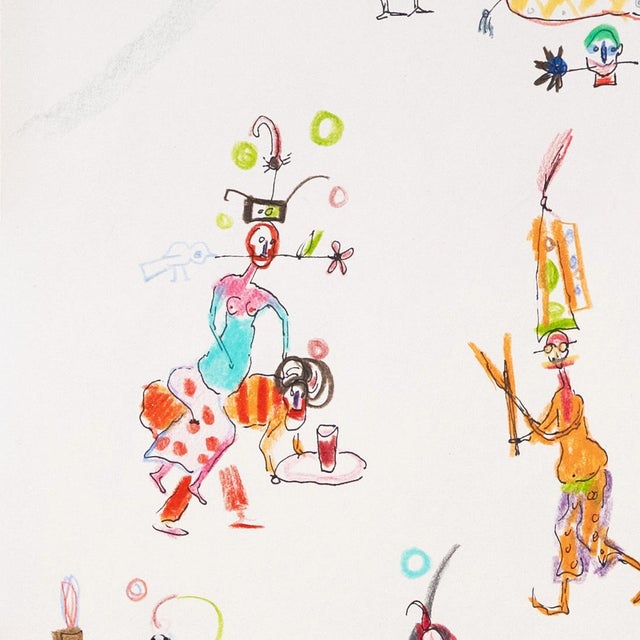
Drawing on the tradition of Iranian miniature painting while also advancing his own modernist style and palette, Mohassess depicts caricaturish Persian aristocrats and courtiers arranged in a pageant of exaggerated revelry. Created during the early years of the Islamic Republic of Iran and filled with iconography from the pre-imperial Qajar era, this work exemplifies the artist’s commitment to critiquing authoritarian power of all stripes by using humor and evocative symbolism.
“. . .an overview of Mohassess's art facilitates an understanding of the modern political history of Iran, from nineteenth to twenty-first centuries: a history that proves to be overwhelmingly dark and authoritarian. Mohassess's depiction of Iranian rulers over this timespan reveals the devastating truth that the tragedy of Iran seems to repeat itself, with no escape. He puts the kings of the Qajar period (1833-1925), Mohammad Reza Pahlavi (1941-79), Ayatollah Khomeini (1979-89), and the current leaders all in startlingly similar categories.” (Transit Tehran: Young Iran and Its Inspirations)
Born into an educated and influential family, Ardeshir Mohassess began his artistic career at the age of three and, later, was accepted as a top applicant to Iran’s School of Fine Arts. While Mohassess chose to study Political Science and Law at the University of Tehran (graduating in 1962), he did not abandon art during this time and, from 1958 to 1964, exhibited annually at the Tehran Biennial. After university, Mohassess began to produce satirical illustrations for leftist Iranian magazines and was soon creating artwork for well-known American and European periodicals, including The New York Times. His growing international success and unwaveringly critical sense of humor in the face of power pushed him into disfavor with the Iranian Shah, whose regime was regularly lampooned by his drawings. Under mounting pressure from the SAVAK secret police, Mohassess fled to New York in 1976. While he originally hoped to return to Iran, the 1979 Iranian Revolution and the advent of the Islamic Republic of Iran cemented his status as an artist in exile.
Ardeshir Mohassess exhibited widely and with success including at the Qandriz Gallery (Tehran, 1967), Sayhoun Gallery (Tehran, 1969), Musée d’Art Moderne (Paris, 1971), Musée du Louvre (1974), the Graham Gallery (New York, 1975), the Asia Society (New York, 2008) and the Museum of Modern Art in New York. The work of Ardeshir Mohassess can be found in the permanent collections of prestigious institutions including the New York Metropolitan Museum, Los Angeles County Museum of Art, the Library of Congress, and the Tehran Museum of Contemporary Art, among others.
In an interview published in Cartoonist PROfiles, Mohassess said the following of his own process:
“I begin the morning looking at and making sketches from old pictures and photos, Persian miniatures, and old Iranian religious paintings that are full of scenes of beheadings, spears, and scimitars that drip blood on the flowers and grass on the hills in the background. I end the day drawing people in cafes, cabarets and music halls, dancers and acrobats leaping and jumping. I arrange my characters in the manner of the colored lights strung above the shops and streets of Iran during festivals and religious celebrations. If a work requires colors, I use the same colors that once decorated the handles of the old meat cleavers and carcasses of lambs in butcher shops.
While I’m drawing, everything I’ve read or heard goes around in my head. Sometimes I recall an anecdote the famous poet of Iran, Ahmad Shamlu, related to me. It seems an Arab general, noted for his incredible strength in wielding a sword, could strike with such speed that his victims continued to fight without realizing that they were sliced in half. The general would call out to them, "If you're a man, move!" When they did, they fell into two pieces. Whenever I am involved with a drawing that isn't going the way it should and one of the characters isn't doing what I want him to, I lift my pen from the paper and say softly, “If you're a man, move."” (The Cartoonist PROfiles #34, June 1977, New York).
Reference:
Transit Tehran: Young Iran and Its Inspirations, Ed. Malu Halasa and Maziar Bahari, Reading, U.K. : Garnet Pub. 2009, page 83; Cartoonist PROfiles June 1977, #34, Ed. Jud Hurd, Cartoonist PROfiles Inc: Connecticut, pages 96-99; website: ‘Ardeshir Mohasses: Art and Satire in Iran’, The Asia Society, New York; et al.
See less
- Dimensions
- 12ʺW × 0.01ʺD × 18ʺH
- Styles
- Modern
- Art Subjects
- Figure
- Frame Type
- Unframed
- Period
- 1980s
- Country of Origin
- United States
- Item Type
- Vintage, Antique or Pre-owned
- Materials
- Color Pencil
- Paper
- Condition
- Good Condition, Original Condition Unaltered, Some Imperfections
- Color
- Orange
- Condition Notes
- minor toning from previous mat; unframed, shows well minor toning from previous mat; unframed, shows well less
Questions about the item?
Returns & Cancellations
Return Policy - All sales are final 48 hours after delivery, unless otherwise specified in the description of the product.
Cancellation Policy - Prior to shipping or local pickup, buyers may cancel an order for up to 48 hours, unless otherwise specified.
Related Collections
- Maison Jansen Drawings
- Tempera Drawings
- John James Audubon Drawings
- Guillaume Azoulay Drawings
- Joseph Stella Drawings
- Erté Drawings
- Salvador Dalí Drawings
- Leroy Neiman Drawings
- Piet Hein Eek Drawings
- Carl-Axel Acking Drawings
- Charcoal Drawings
- Fashion Drawings
- 1950s Fashion Drawings
- Pencil Drawings
- Ink Drawings
- Stephanie Cate Drawings
- Art Glass Drawings
- Gustavian (Swedish) Drawings