

Details
Description
An exceptional and monumental late 19th-century Black Forest hunting plaque, attributed to the renowned Swiss master carver Johann Flück. Executed …
Read more
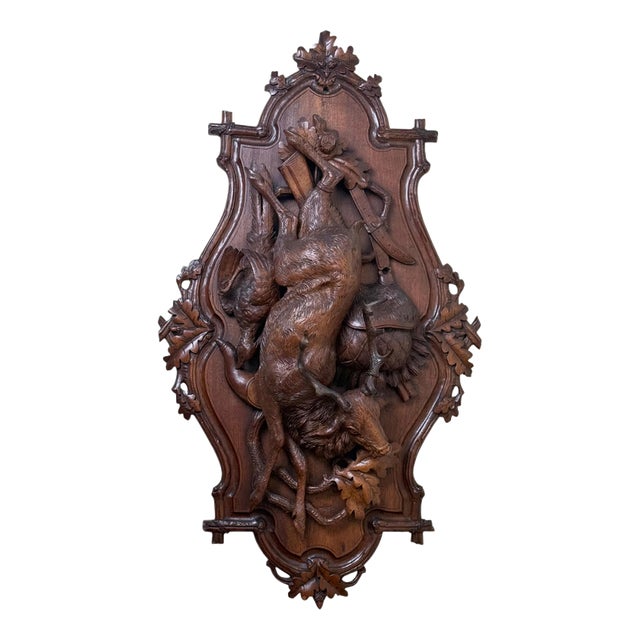
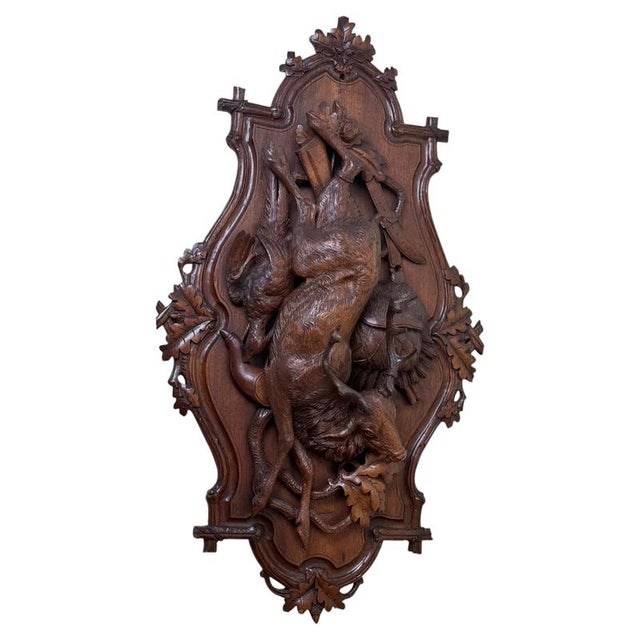
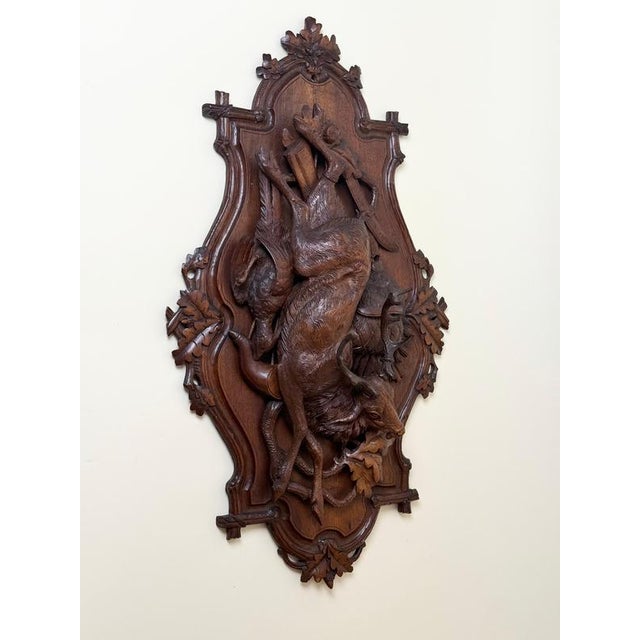
An exceptional and monumental late 19th-century Black Forest hunting plaque, attributed to the renowned Swiss master carver Johann Flück. Executed in richly toned walnut, this extraordinary work is distinguished by its remarkable sculptural depth, sophisticated composition, anatomical observation, and exceptionally refined hand carving. with impressive dimensions of 87 cm (34.25 in.) high, 50 cm (19.69 in.) wide and an extraordinary 14 cm (5.51 in.) deep, the plaque weighs approximately 5 kg (11.02 lbs).
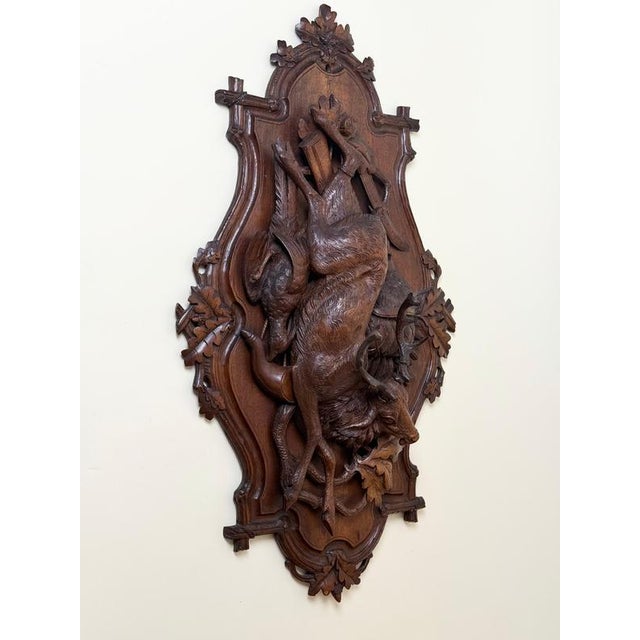
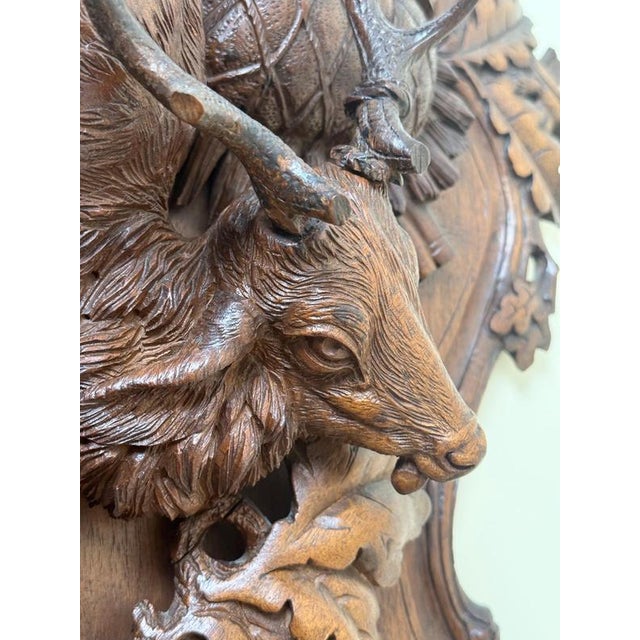
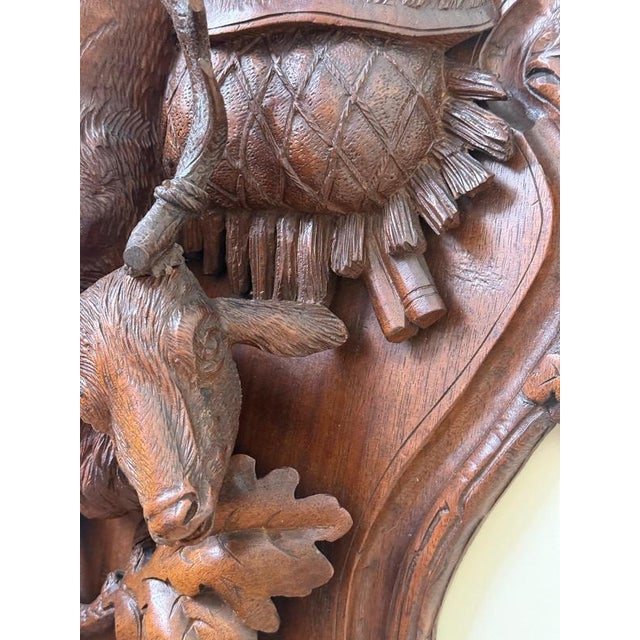
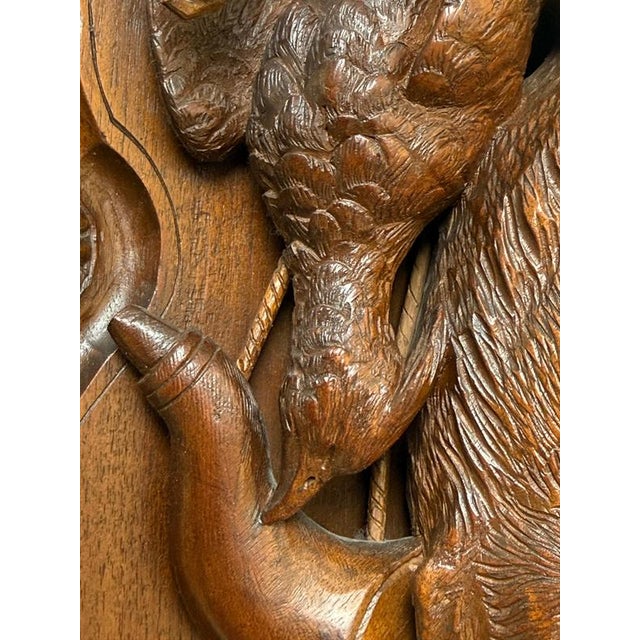
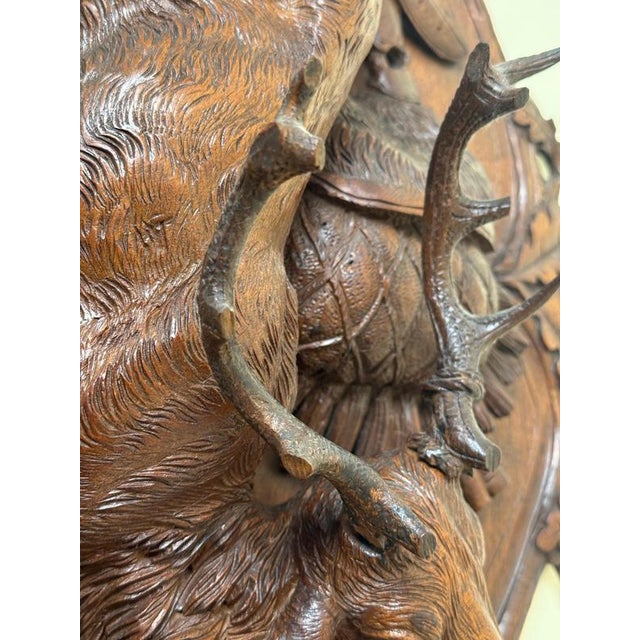
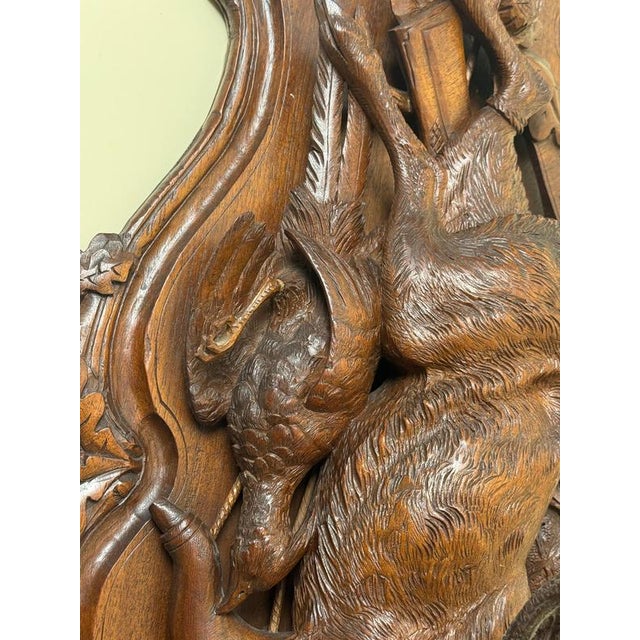
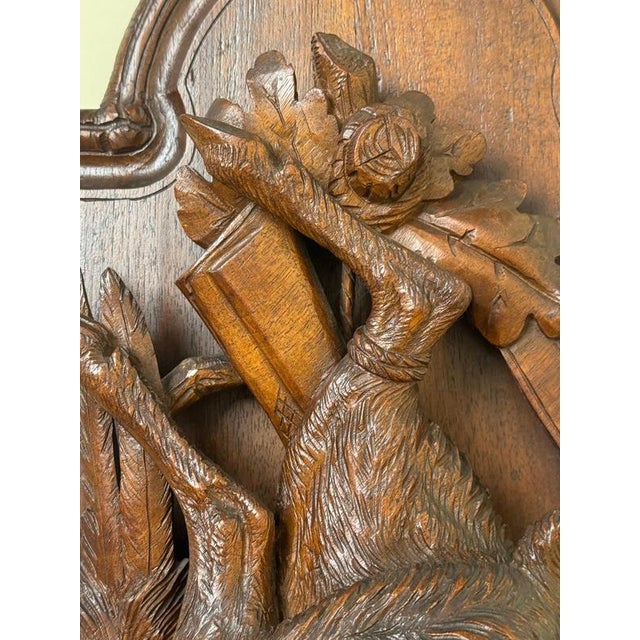
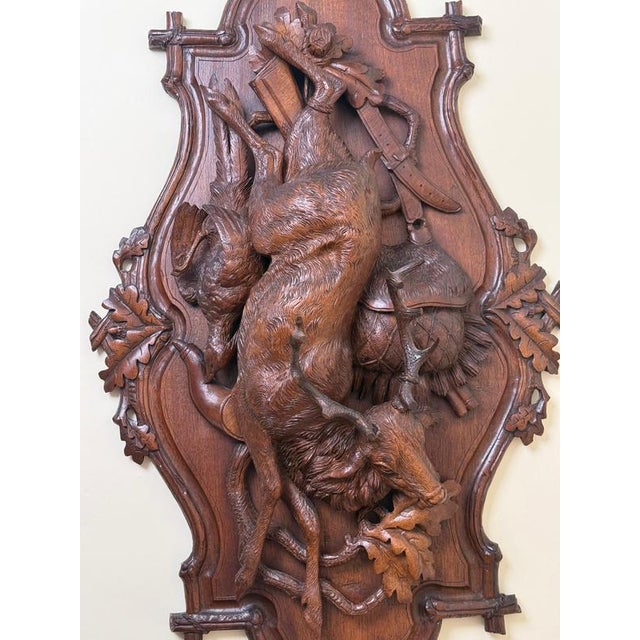
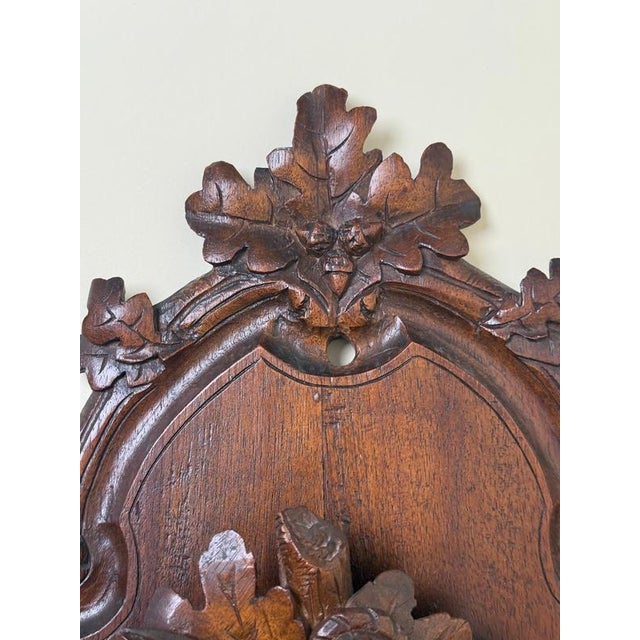
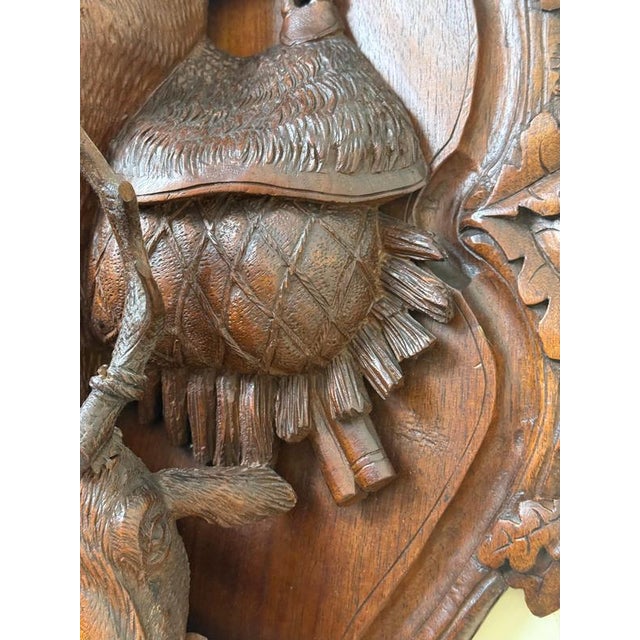
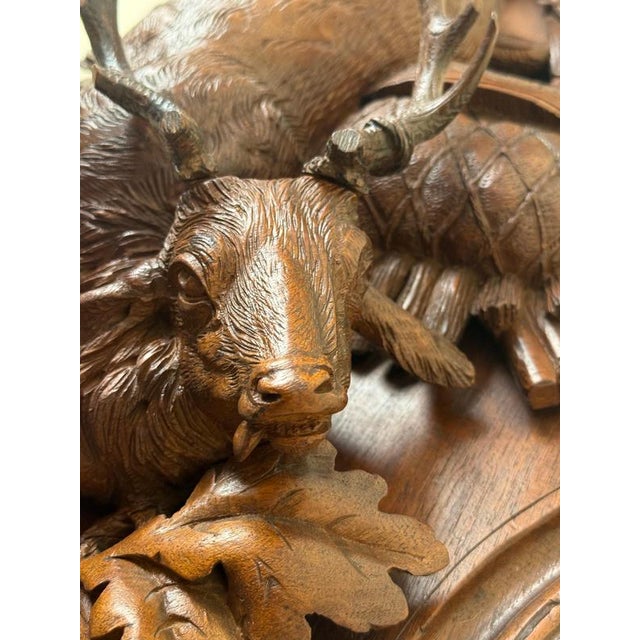
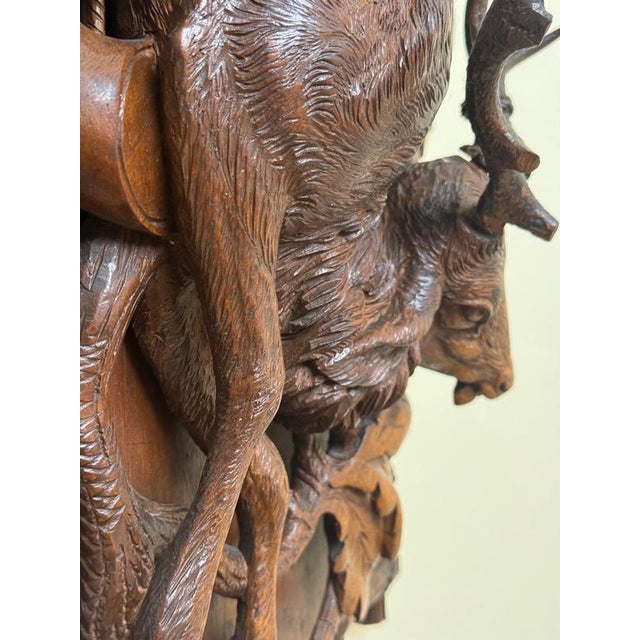
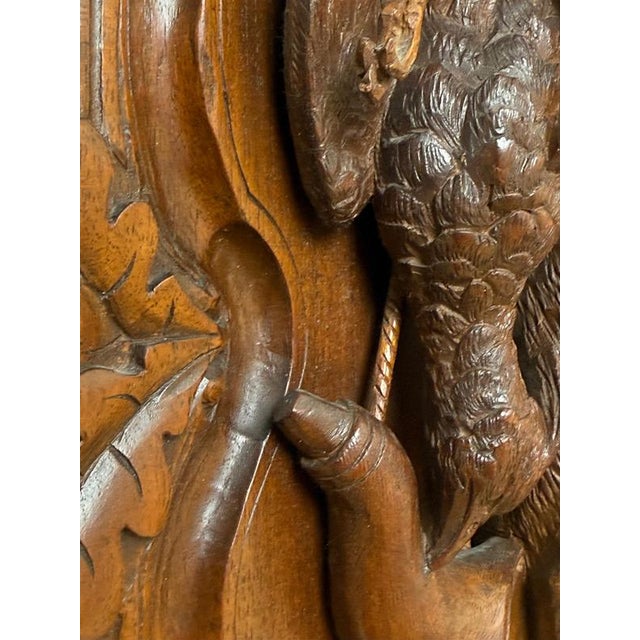
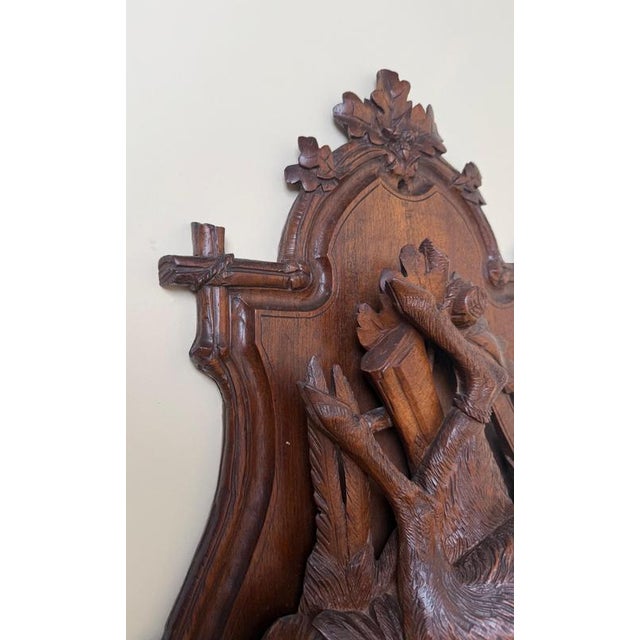
Its considerable depth is particularly significant: this is far more than a conventional carved relief. Major elements project dramatically from the backplate and are carved almost completely in the round, placing the work at the fascinating boundary between high relief and fully three-dimensional sculpture. The composition is dominated by an exceptionally modeled roe deer, surrounded by further game and an elaborate arrangement of traditional hunting attributes. The roe deer represents perhaps the most impressive element of the carving. Its elongated body, delicate legs, individually articulated coat, deeply modeled facial features and remarkably expressive eye demonstrate an extraordinary understanding of animal anatomy. Even minute details have been considered. The slightly open mouth reveals the animal’s protruding tongue, lending the representation an unusual degree of naturalism and poignancy. The antlers project boldly into space and include the remarkable detail of a carved binding around one section. The surrounding game is treated with equal attention. The plumage of the birds is individually articulated, while the different surfaces of fur, feathers, leather, woven materials and wood are convincingly distinguished through variations in the carver’s technique. The hunting equipment is particularly elaborate. A hunting knife and sheath, horn, straps, woven game bag, fringes and other implements are layered throughout the composition. Oak leaves and finely carved acorns reinforce the traditional hunting symbolism and connect the central sculptural group with the surrounding frame. Technically, the carving is remarkable for its extensive use of deep undercutting and pierced work. Animals, antlers, legs, foliage and hunting equipment overlap across numerous spatial planes. When viewed from the side, the extraordinary 14 cm depth becomes particularly apparent, with several elements effectively becoming independent sculptures attached to the composition. The elaborate walnut backplate and border should also be regarded as an important part of the artistic conception.
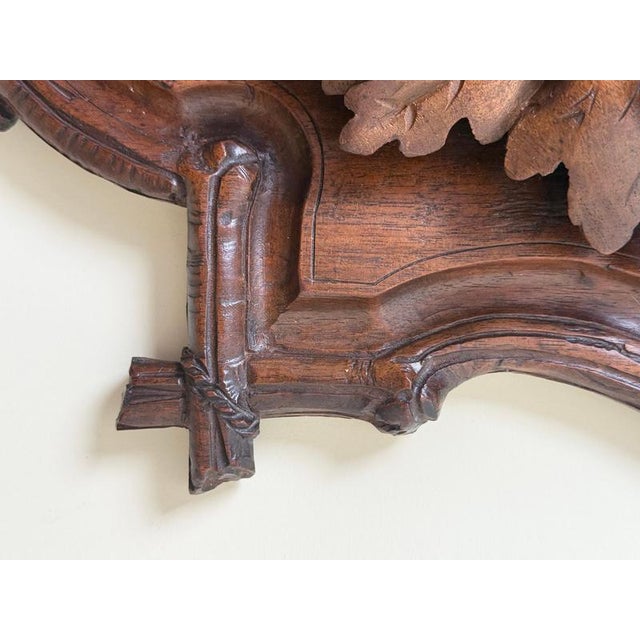
Naturalistically carved branches appear to form portions of the frame and are joined by convincing carved bindings, while pierced oak leaves and acorns extend beyond the principal outline. These sophisticated details demonstrate that the frame was conceived together with the game composition rather than merely serving as its background. The choice of walnut is particularly appropriate for a carving of this caliber. Its dense yet workable structure allows exceptionally crisp detail while retaining sufficient strength for deeply undercut and projecting elements. The warm, naturally varied brown tones of the aged walnut further emphasize the different levels of the carving and have developed an attractive, mature surface and patina. The reverse retains an old handwritten inscription or signature. In addition, a small carved marking within the composition may possibly be interpreted as the initials “JF.” These observations are noteworthy but should not alone be regarded as proof of authorship. The attribution to Johann Flück is based primarily upon stylistic and technical comparison with documented works associated with the celebrated Swiss carver and is therefore deliberately presented as an attribution rather than definitive authorship. The extraordinary sculptural treatment, monumental scale, complex multi-layered composition and remarkable attention to even the smallest details distinguish this plaque from more conventional examples of late 19th-century Black Forest hunting carving.
A highly accomplished and exceptionally decorative example of the Swiss Black Forest carving tradition, combining virtuoso craftsmanship with an unusually powerful sculptural presence. Details * Attributed to: Johann Flück * Origin: Switzerland, Black Forest / Brienz tradition * Period: Late 19th century * Material: Hand-carved walnut * Technique: Hand carving, extremely high relief, deep undercutting and pierced carving * Height: 87 cm / 34.25 in. * Width: 50 cm / 19.69 in. * Depth: 14 cm / 5.51 in. * Weight: approx. 5 kg / 11.02 lbs. * Style: Black Forest / Swiss Brienz * Subject: Hunting, game and traditional hunting attributes
See less
- Dimensions
- 19.29ʺW × 5.51ʺD × 34.25ʺH
- Period
- 19th Century
- Country of Origin
- Switzerland
- Item Type
- Vintage, Antique or Pre-owned
- Materials
- Walnut
- Condition
- Good Condition, Unknown, Some Imperfections
- Color
- Black
Returns & Cancellations
Return Policy - All sales are final 48 hours after delivery, unless otherwise specified in the description of the product.
Cancellation Policy - Prior to shipping or local pickup, buyers may cancel an order for up to 48 hours, unless otherwise specified.
Related Collections
- Helmut Friedrich Schäffenacker Sculptural Wall Objects
- Medium-Density Fibreboard Sculptural Wall Objects
- Dada Sculptural Wall Objects
- Maison Jansen Sculptural Wall Objects
- Antique Copper Finish Sculptural Wall Objects
- Ralph Lauren Sculptural Wall Objects
- Asian Sculptural Wall Objects
- Greg Copeland Sculptural Wall Objects
- Mid-Century Modern Sculptural Wall Objects
- Curtis Jere Sculptural Wall Objects
- Brutalist Sculptural Wall Objects
- Plaster Sculptural Wall Objects
- Japanese Sculptural Wall Objects
- Sarreid Ltd. Sculptural Wall Objects
- Wenge Sculptural Wall Objects
- Platinum Sculptural Wall Objects
- The American School Sculptural Wall Objects
- Arteriors Home Sculptural Wall Objects
- Stainless Steel Sculptural Wall Objects
- Silverplate Sculptural Wall Objects