

Details
Description
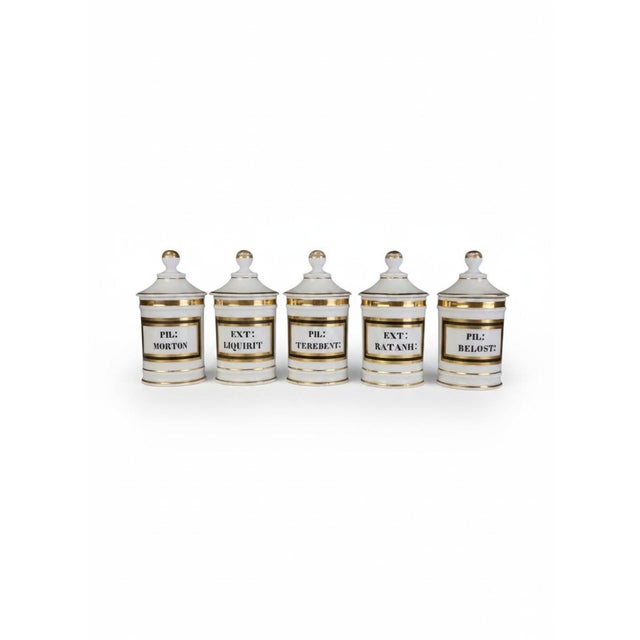
Beautifully proportioned and elegantly understated, this charming set of five late nineteenth-century opaline glass apothecary jars offers a fascinating glimpse …
Read more
Beautifully proportioned and elegantly understated, this charming set of five late nineteenth-century opaline glass apothecary jars offers a fascinating glimpse into the world of Victorian pharmacy and European scientific heritage.
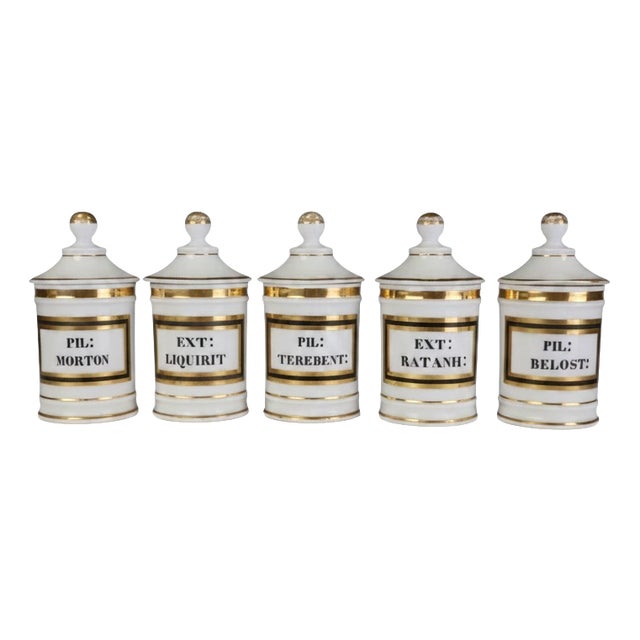
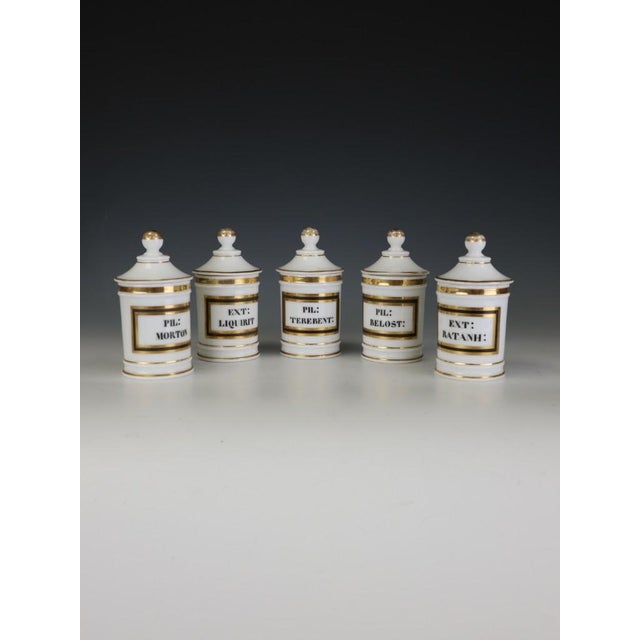
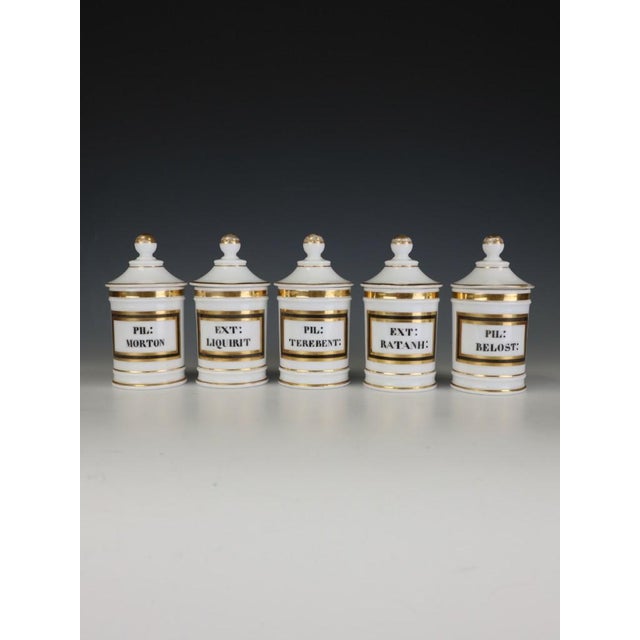
Probably French and acquired in Belgium, each jar is crafted in luminous white opaline glass with finely hand-painted gilt decoration and original Latin pharmaceutical labels. Once intended to house medicinal extracts and pill preparations within a pharmacist's dispensary, they have long since transcended their practical origins to become highly decorative objects, admired for their simplicity, craftsmanship and historical charm.
Whether displayed upon open shelving, within a glazed cabinet, or incorporated into a carefully curated country house interior, they possess a timeless elegance that complements both traditional and contemporary homes.
History
Throughout the nineteenth century, pharmacies across Europe displayed rows of beautifully labelled jars containing medicinal ingredients, herbal extracts and pill preparations. Latin remained the universal language of medicine, enabling physicians and pharmacists to prescribe and dispense remedies regardless of nationality.
These elegant jars would once have formed part of a well-appointed dispensary, where order, precision and presentation reflected the professionalism of the pharmacist. Their restrained decoration and crisp typography were designed not only for practical identification but also to inspire confidence in an era when pharmacy was rapidly becoming a respected scientific profession.
Today, original nineteenth-century apothecary jars are highly sought after by collectors and interior designers alike, appreciated as much for their decorative appeal as for the rich history they represent.
The Original Pharmaceutical Labels
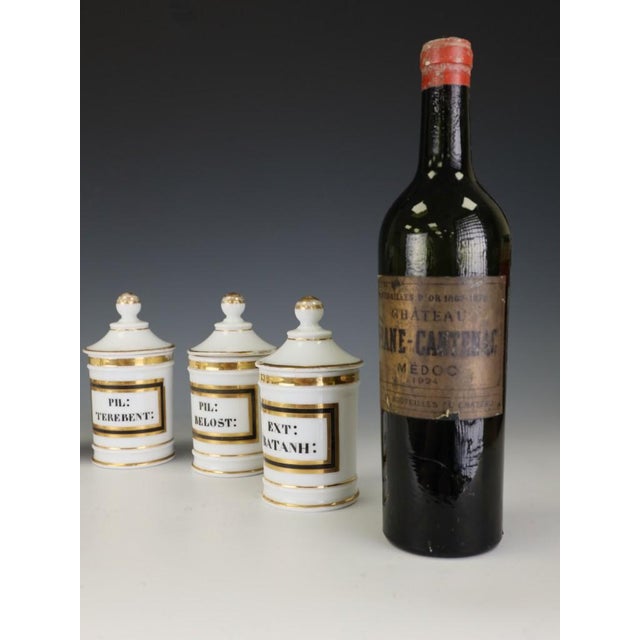
Each jar retains its original hand-painted Latin label, reflecting the traditional abbreviations used by nineteenth-century pharmacists.
Pil. Morton
Pilulae Morton
A pill preparation made according to the Morton formula, named after a pharmacist or physician. Proprietary pill recipes were commonly identified by the surname of their creator rather than listing individual ingredients.
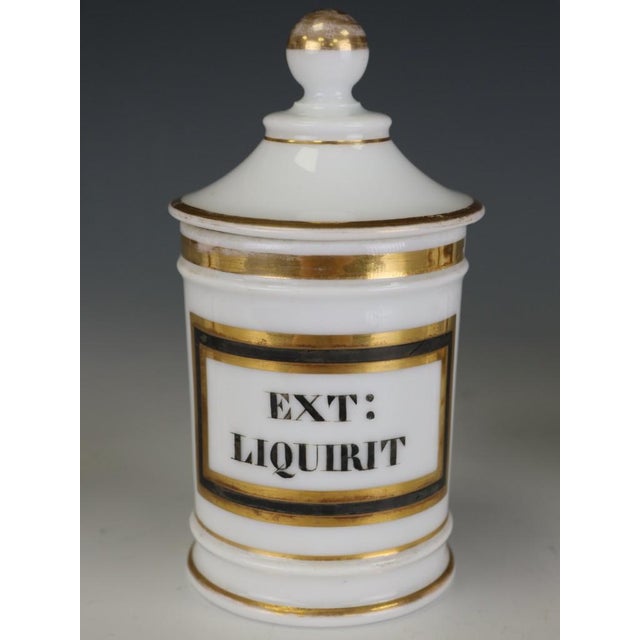
Ext. Liquirit
Extractum Liquiritiae
Liquorice Extract
Traditionally prescribed to soothe coughs, throat irritation and digestive complaints, liquorice extract was one of the most widely used botanical remedies in nineteenth-century pharmacy.
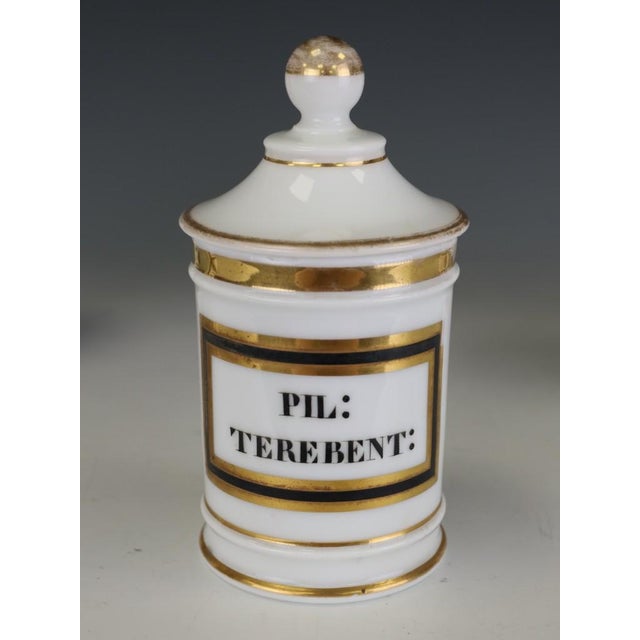
Pil. Terebent
Pilulae Terebinthinae
Turpentine Pills
Historically prescribed for respiratory ailments, urinary complaints and intestinal conditions. Medicinal turpentine was a recognised therapeutic ingredient throughout the nineteenth century.
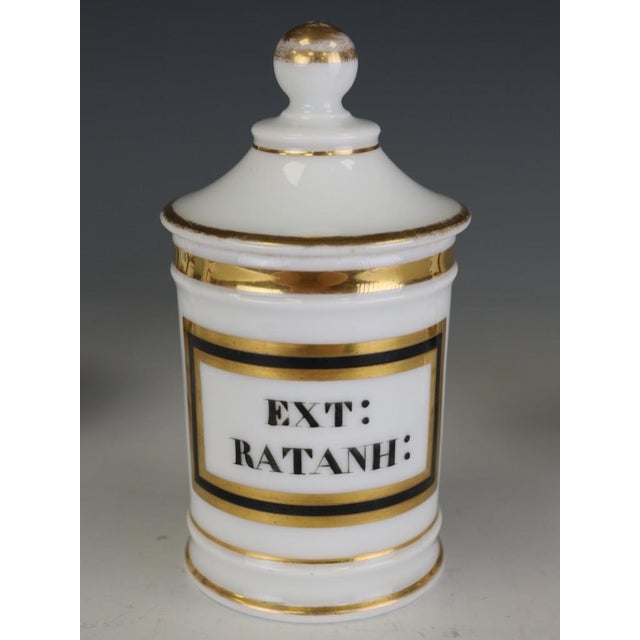
Ext. Ratanh.
Extractum Ratanhiae
Extract of Rhatany Root
Derived from the South American Rhatany plant, this extract was valued for its powerful astringent properties and commonly used in preparations for the mouth, throat and digestive system.
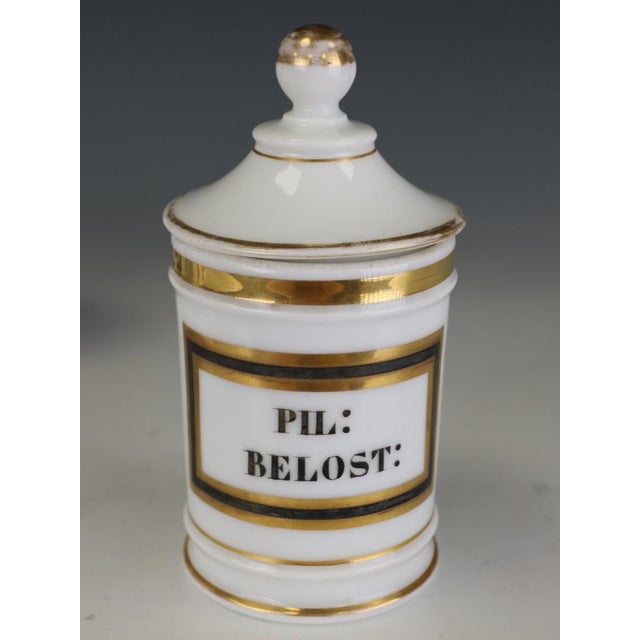
Pil. Belost.
Pilulae Belost
A traditional pharmaceutical pill preparation, almost certainly referring to a proprietary Victorian formula whose exact composition varied between pharmacists. As with many nineteenth-century medicines, the abbreviated title identified the recognised preparation rather than its individual ingredients.
Craftsmanship
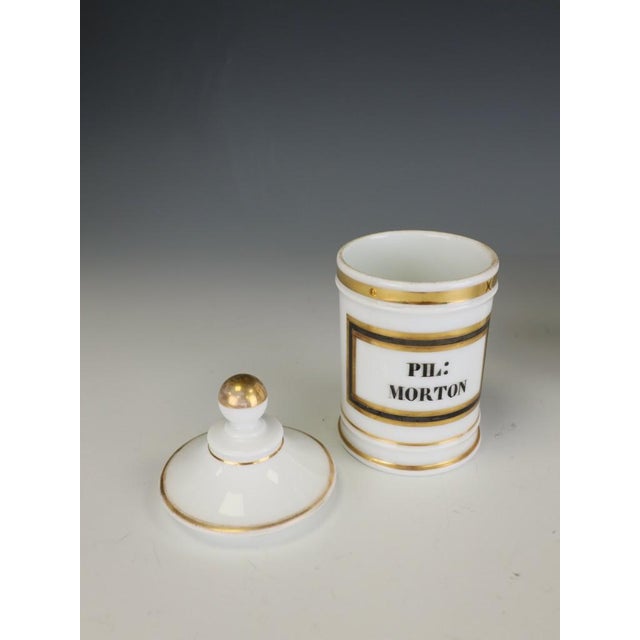
Each jar has been beautifully formed in white opaline glass with gently tapering cylindrical bodies, elegant domed covers and turned knop finials.
Delicate hand-painted gilt bands frame the original pharmaceutical labels, creating a refined balance between practicality and decoration. The crisp black lettering remains beautifully legible, while the luminous opaline glass provides a timeless quality that has ensured these jars remain as desirable today as when they first graced the shelves of a nineteenth-century pharmacy.
Decorative Appeal
Original apothecary jars have become increasingly desirable among collectors, interior designers and stylists who appreciate authentic historical objects with sculptural simplicity.
Displayed together, they create an elegant composition that celebrates both history and craftsmanship.
Provenance
Origin: Probably France
Date: Circa 1880–1900
Materials
White opaline glass
Hand-painted gilt decoration
Original Latin pharmaceutical labels
Matching domed lids
Dealer's Comments
"There is something wonderfully elegant about antique apothecary jars. Originally created for everyday professional use, they now possess an understated beauty that feels entirely timeless. This charming matching set has survived together for well over a century, retaining its original delicate gilt decoration. Whether displayed in a country house kitchen, library or contemporary interior, they bring with them an immediate sense of history, craftsmanship and quiet sophistication."
Condition Report
The set remains in excellent decorative condition, displaying only light age-related wear consistent with the late nineteenth century.
The white opaline glass retains a beautiful glossy finish, while the original hand-painted gilt decoration and Latin labels remain remarkably well preserved. There is minor rubbing to some gilding together with light surface wear expected from over a century of careful use and display.
Each lid fits well, and the jars present beautifully as a complete matching set.
Measurements (Each Jar)
Height: 15 cm / 5.9 inches
Width: 8 cm / 3.1 inches
Depth: 8 cm / 3.1 inches
Weight: 0.3 kg / 0.66 lbs This piece is designed in the style of the selected designer and/or manufacturer
See less
- Dimensions
- 3.15ʺW × 3.15ʺD × 5.91ʺH
- Period
- 19th Century
- Country of Origin
- Belgium
- Item Type
- Vintage, Antique or Pre-owned
- Materials
- Porcelain
- Condition
- Good Condition, Unknown, Some Imperfections
- Color
- White
- Condition Notes
- Very Good — This vintage item has no defects, but it may show slight traces of use. Very Good — This vintage item has no defects, but it may show slight traces of use. less
Returns & Cancellations
Return Policy - All sales are final 48 hours after delivery, unless otherwise specified in the description of the product.
Cancellation Policy - Prior to shipping or local pickup, buyers may cancel an order for up to 48 hours, unless otherwise specified.
Related Collections
- Bottles and Jars and Jugs in Lexington, KY
- Khaki Bottles and Jars and Jugs
- Port 68 Bottles and Jars and Jugs
- Acrylic Bottles and Jars and Jugs
- Roger Capron Bottles and Jars and Jugs
- Ralph Lauren Bottles and Jars and Jugs
- Gold-Plate Bottles and Jars and Jugs
- Medieval Bottles and Jars and Jugs
- Borosilicate Glass Bottles and Jars and Jugs
- Cherry Wood Bottles and Jars and Jugs
- Crocks
- Wicker Bottles and Jars and Jugs
- Apothecary Jars
- Cookie Jars
- Japanese Bottles and Jars and Jugs
- 1800s Perfume Bottles
- Candy Jars
- Antique Water Jugs
- Murano Glass Bottles and Jars and Jugs
- 1950s Perfume Bottles
- Apothecary Bottles
- Deruta Bottles and Jars and Jugs
- Portieux Vallerysthal Bottles and Jars and Jugs
- Lead Bottles and Jars and Jugs
- Mottahedeh Bottles and Jars and Jugs