

Details
Description
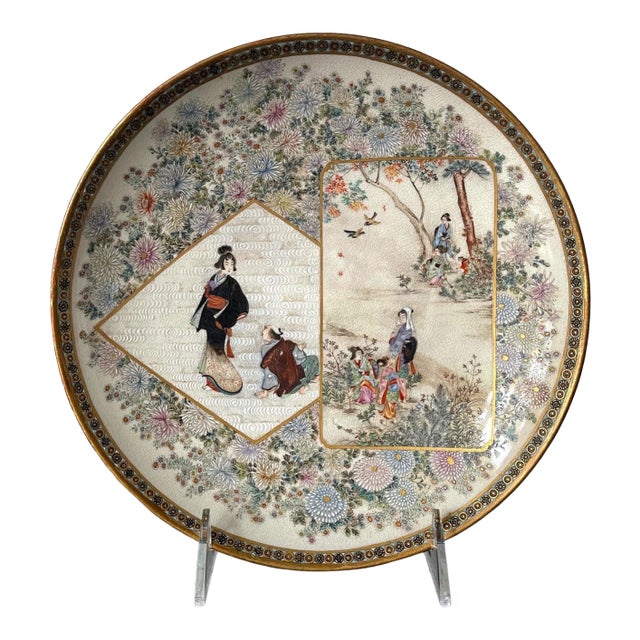
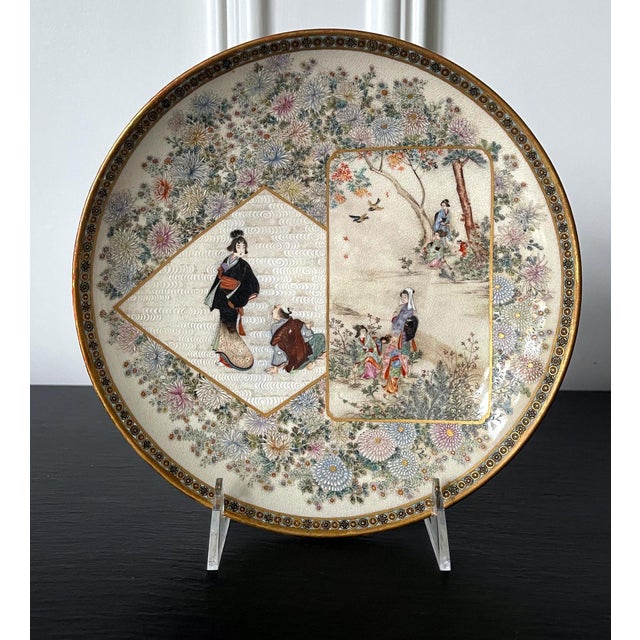
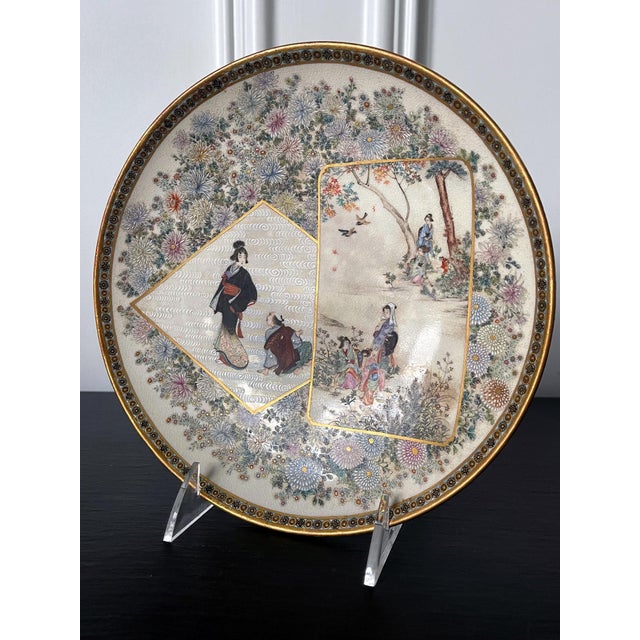
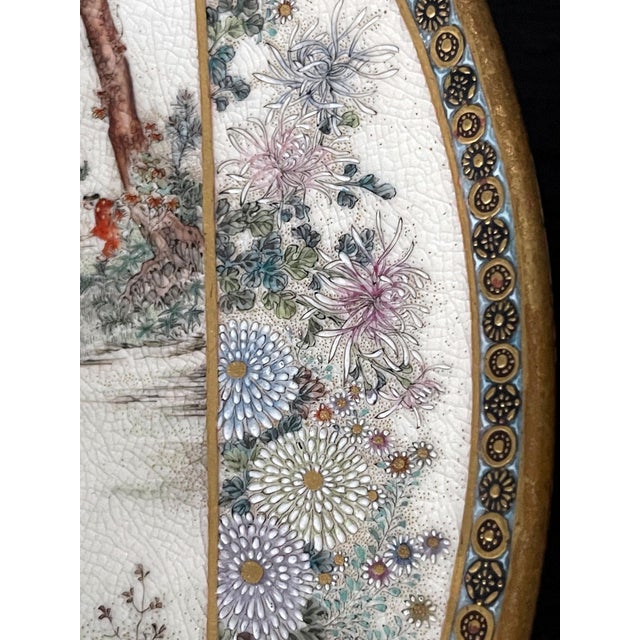
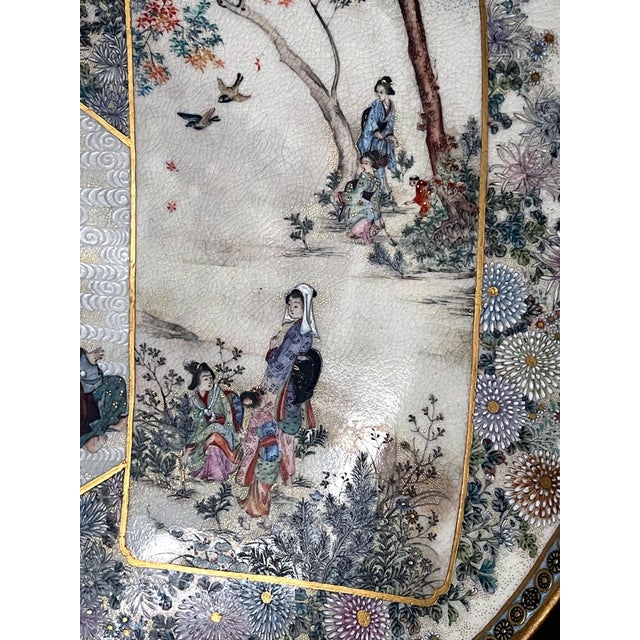
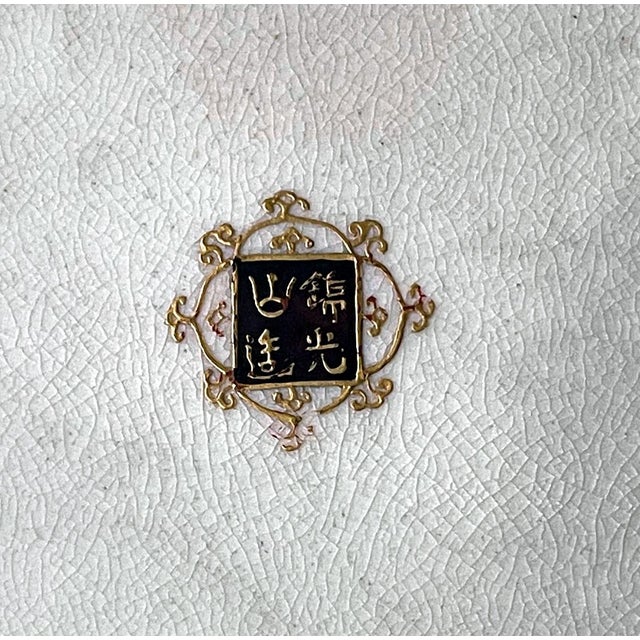
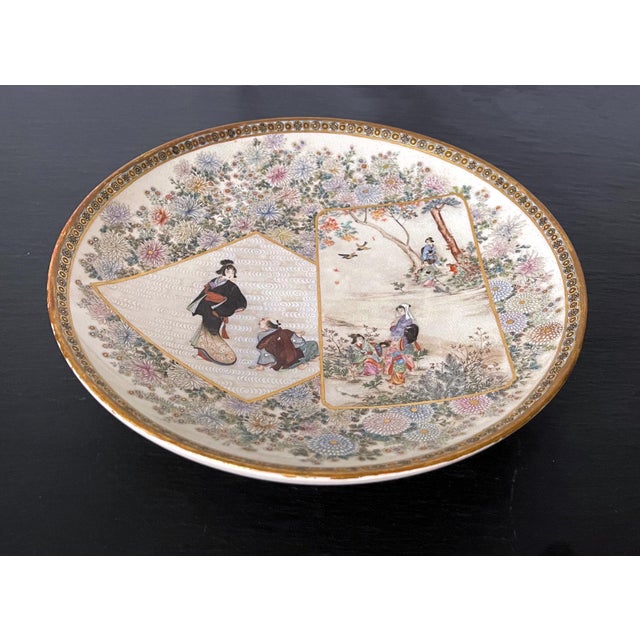
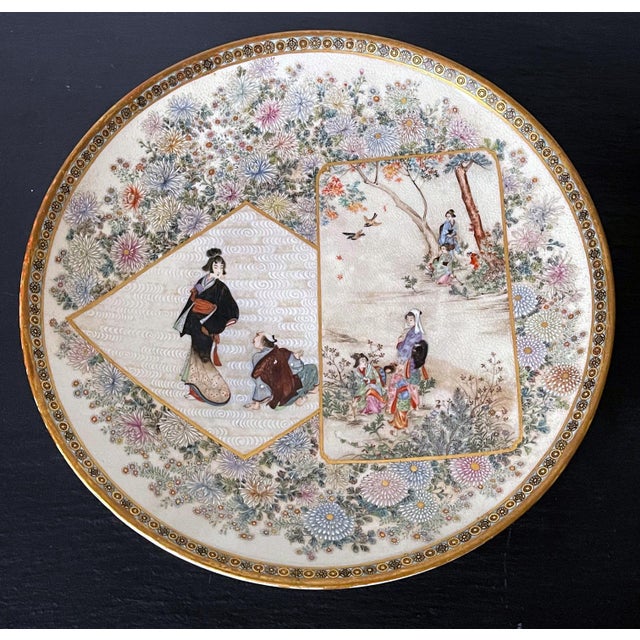
A satsuma ceramic dish made by Kinkozan studio circa 1980-1900s in the late Meiji Period. The dish with a thick …
Read more
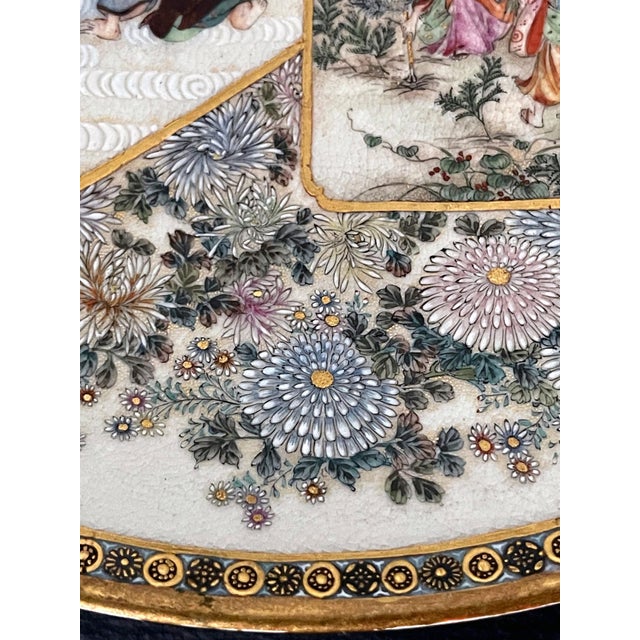
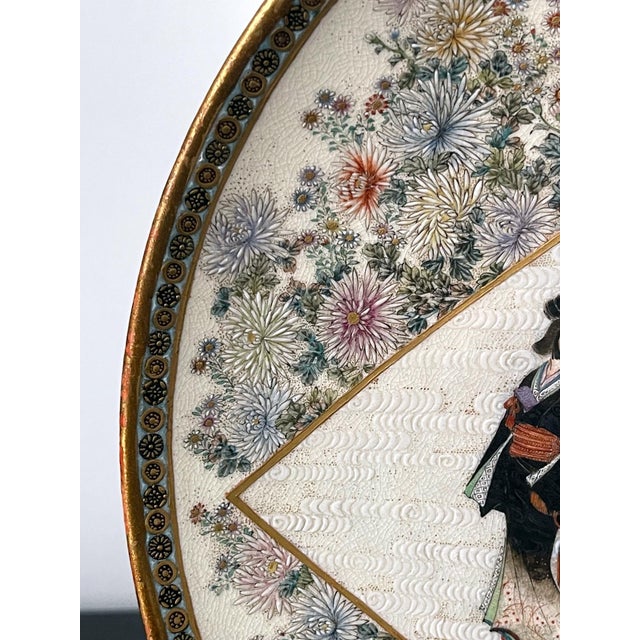
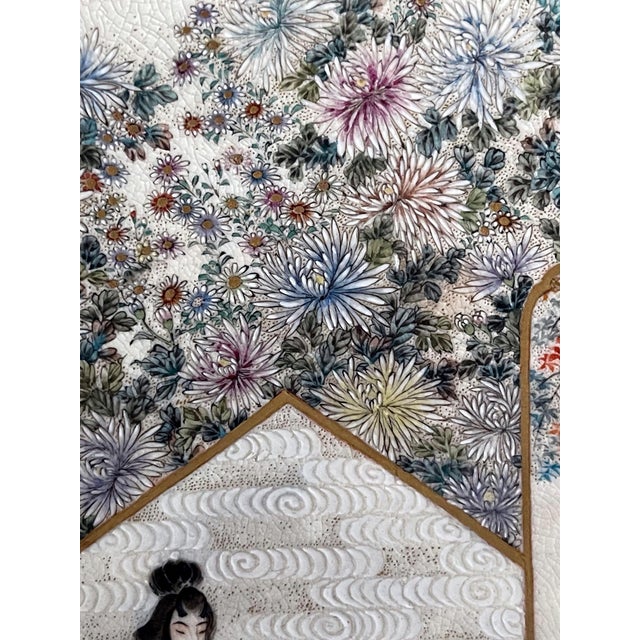
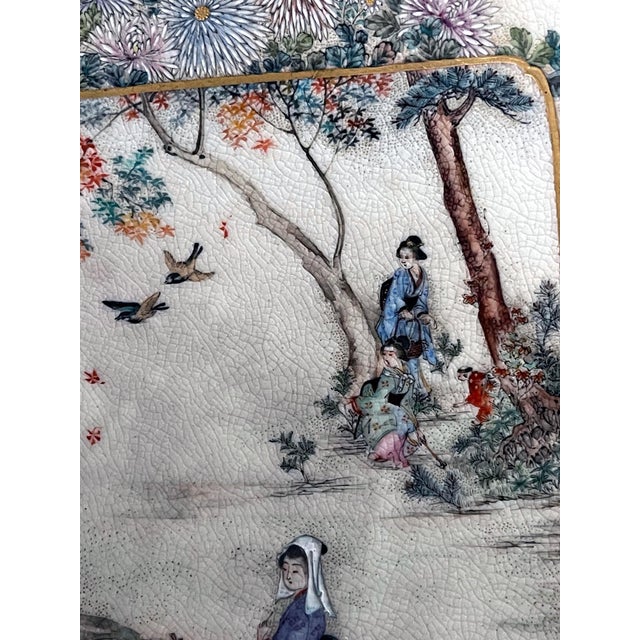
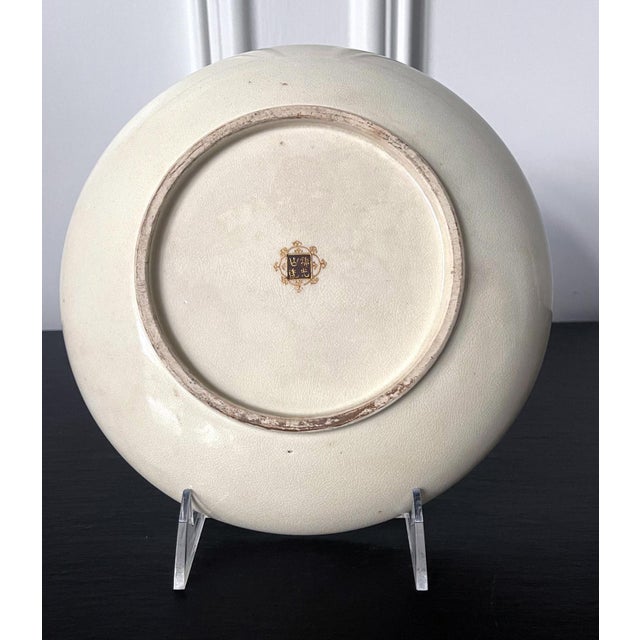
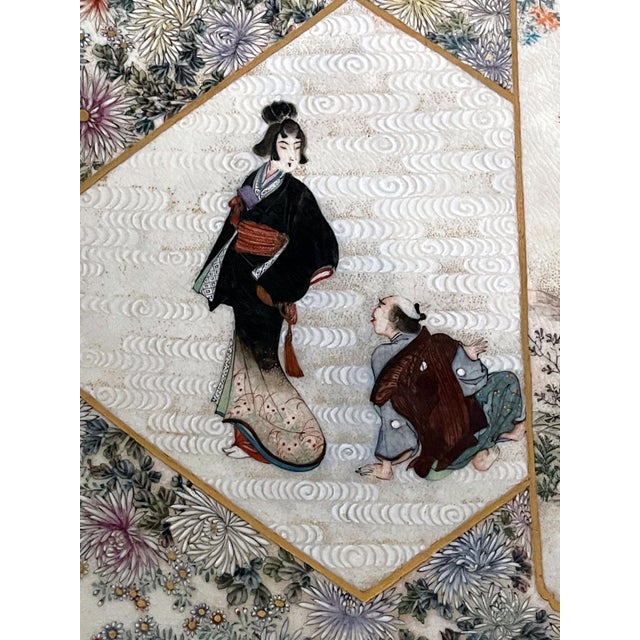
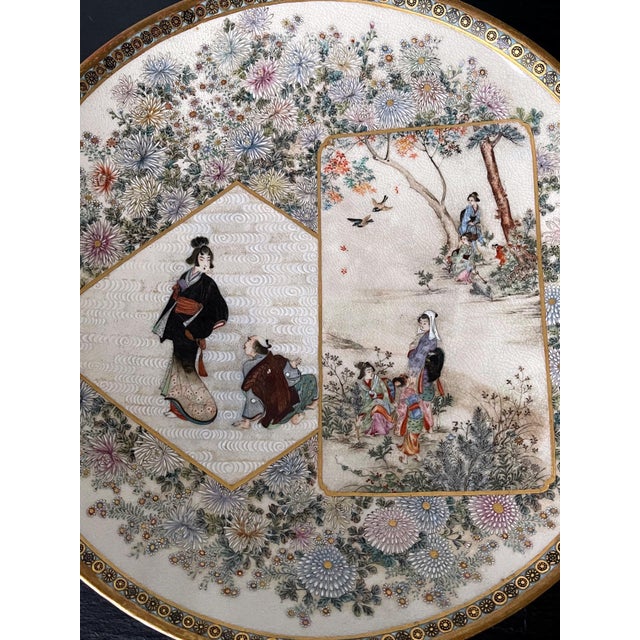
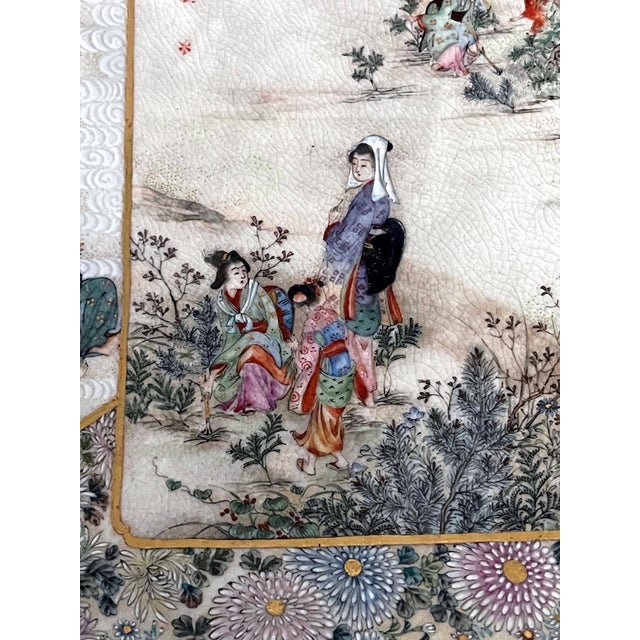
A satsuma ceramic dish made by Kinkozan studio circa 1980-1900s in the late Meiji Period. The dish with a thick robust wall is supported by a large ring base and features finely detailed surface decoration, clearly done by a master hand. Surrounded by clusters of chrysanthemums blossoms in a wide range of varieties, the center of the dish showcases two overlapping panels outlined by gilt borders. One panel depicts a couple with the man sitting on the floor while the lady walking away. The figures were elaborately detailed with attires and coiffures and set on a moriage wave pattern background. The other panel depicts a wooded landscape dotted with flowering plants and flying birds, in which two groups of women and children are pictured playing at their leisure. The composition is natural, with movements and an emphasis on depth in dimension. The rim of the dish is encircled with a band of circles and blossom motifs. The base is signed with hand-scripted four-character "Kinkozan Tsukuru" in a black square with gilt scrolling tendril design. The glaze displays an overall even fine crackle. The workmanship is superb and can be catalogized as "miniature art" characterized by the painstaking details. The chrysanthemum clusters were done in a subtly raised moriage with precision in forms and painterly application of colors. The lively rendition of all the characters is meticulous to the tiniest detail such as the raised texture of the woman's white head scarf and woven pattern in their kimonos.
The Kinkozan family established their pottery business first in 1645 and by the end of 19th century, it had become the largest studio producer of Satsuma ware. By the 1850s, Kinkozan Sobei (Kinkozan IV; 1824-84) started to export the wares to the west, particularly to America, together with the Kyoto manufacturer Taizan VIII. This continued and expanded under the leadership of Kinkozan V (1868-1927) until his death in 1927 when the studio closed. Although due to the large output from the studio and target of the markets, the quality varied considerably, Kinkozan did produce some of the best satsuma pieces from Meiji period. This dish is a good example.
See less
- Dimensions
- 8.75ʺW × 1.75ʺD × 8.75ʺH
- Styles
- Mid-Century Modern
- Period
- Late 19th Century
- Country of Origin
- Japan
- Item Type
- Vintage, Antique or Pre-owned
- Materials
- Ceramic
- Condition
- Good Condition, Original Condition Unaltered, Some Imperfections
- Color
- White
Questions about the item?
Returns & Cancellations
Return Policy - All sales are final 48 hours after delivery, unless otherwise specified in the description of the product.
Cancellation Policy - Prior to shipping or local pickup, buyers may cancel an order for up to 48 hours, unless otherwise specified.
Related Collections
- Ralph Lauren Decorative Plates
- Sherle Wagner Decorative Plates
- Tatiana Alida Decorative Plates
- Nickel Decorative Plates
- Kenneth Ludwig Chicago Decorative Plates
- Soapstone Decorative Plates
- Pickard China Decorative Plates
- Silk Decorative Plates
- Tapio Wirkkala Decorative Plates
- Cantagalli Decorative Plates
- Joseph Holdcroft Decorative Plates
- Japanese Decorative Plates
- Chinese Decorative Plates
- Brass Decorative Plates
- Fruit Plates
- Spanish Decorative Plates
- Copper Decorative Plates
- Italian Decorative Plates
- Blue Decorative Plates
- Piero Fornasetti Decorative Plates
- Chinoiserie Decorative Plates
- Wedgwood Decorative Plates
- Green Decorative Plates
- Metal Decorative Plates
- Gold Decorative Plates