

Details
Description
This exceptional, heavy cast brass bench-style Hanukkah lamp represents the pinnacle of 19th-century Eastern European Judaica metalware, dating to circa …
Read more
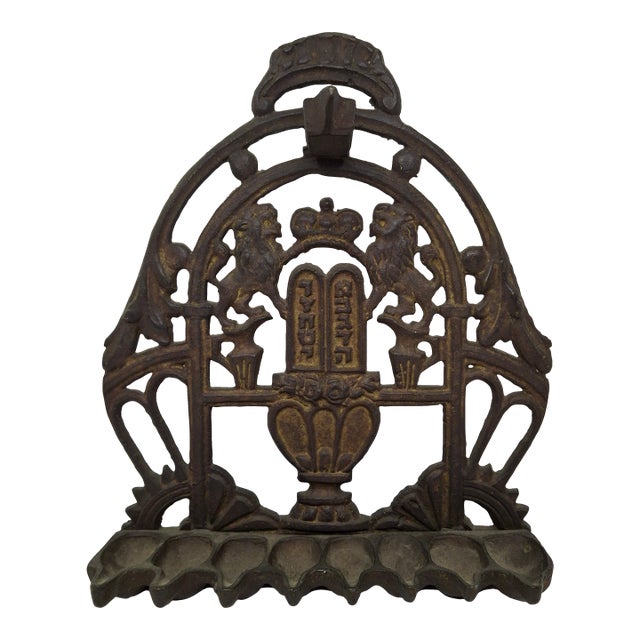
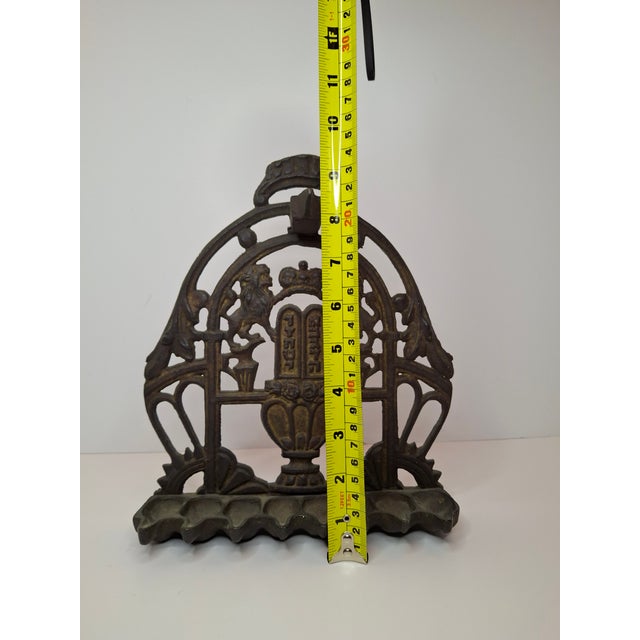
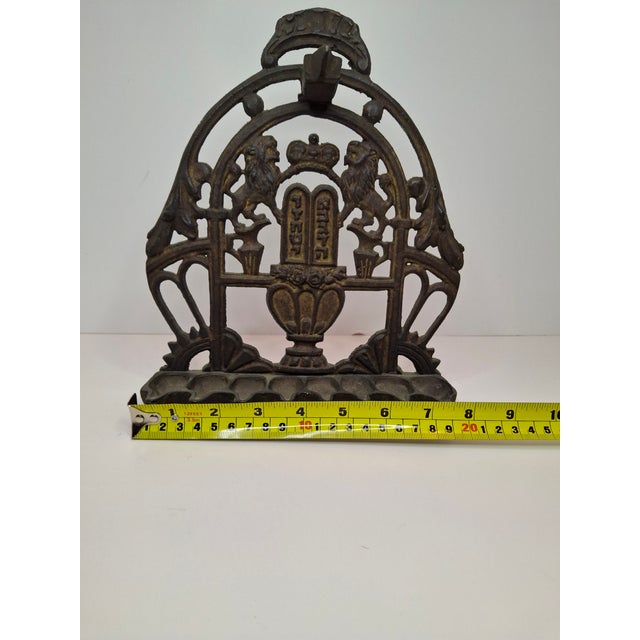
This exceptional, heavy cast brass bench-style Hanukkah lamp represents the pinnacle of 19th-century Eastern European Judaica metalware, dating to circa 1850–1880. A commanding liturgical object of full ceremonial scale, it stands 10" tall and 8.5" wide at the base, completely distinguishing itself from the lightweight, mass-produced travel replicas and mid-20th-century Israeli tourist exports common to the online marketplace.
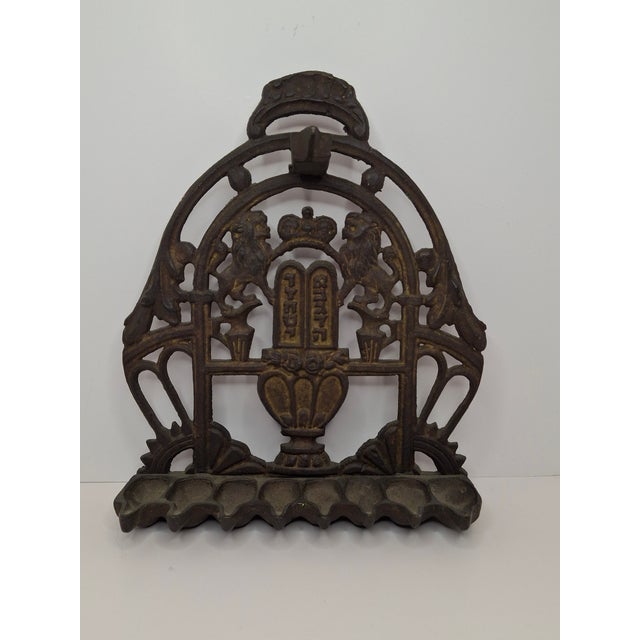
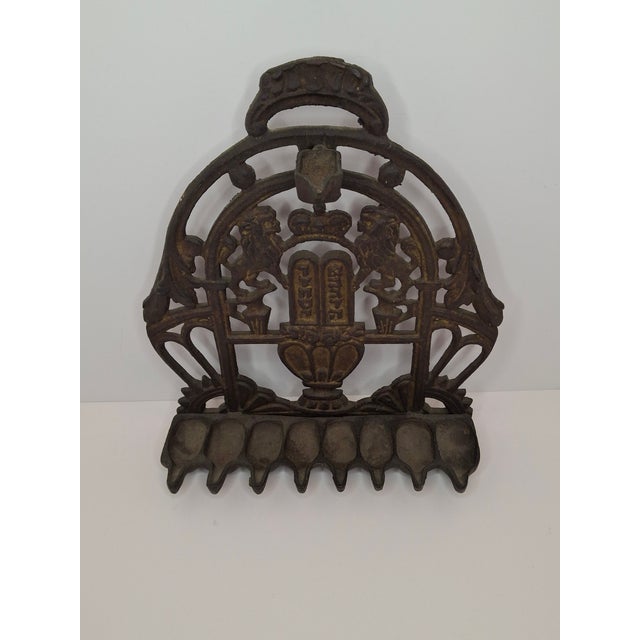
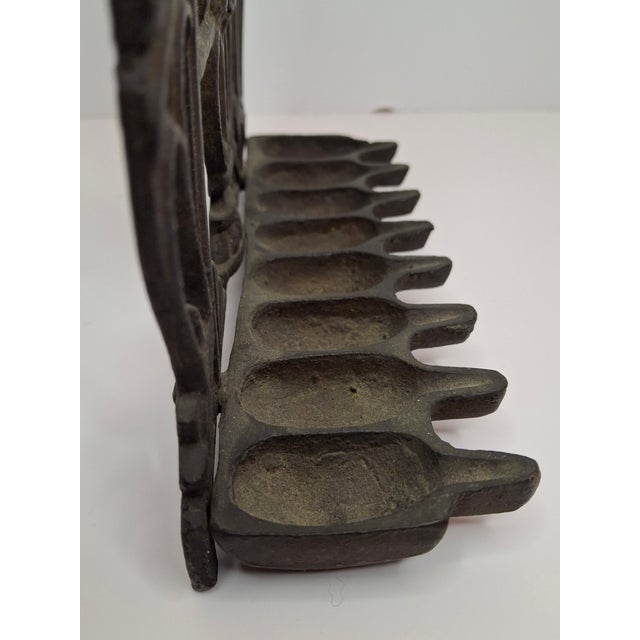
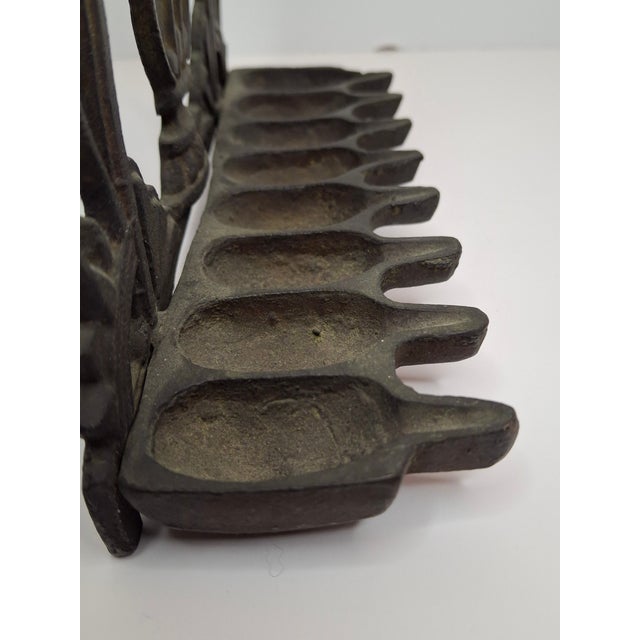
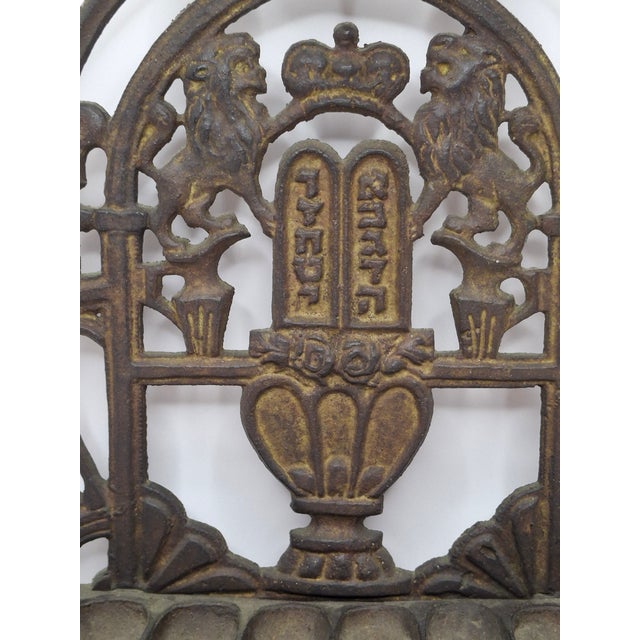
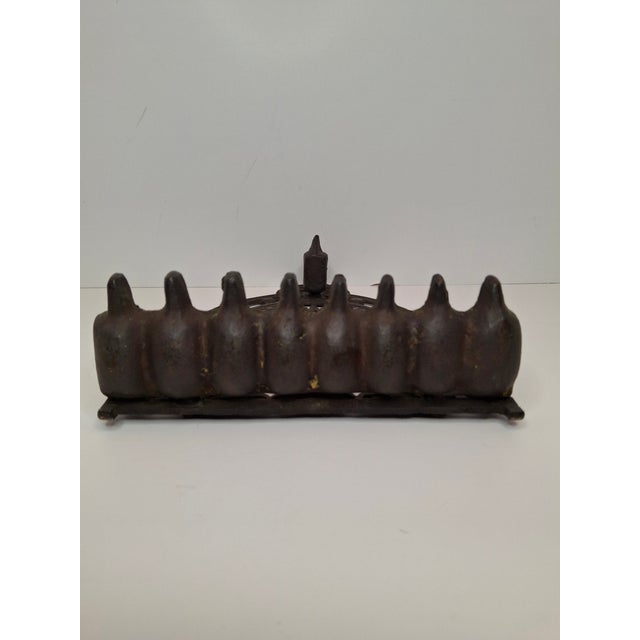
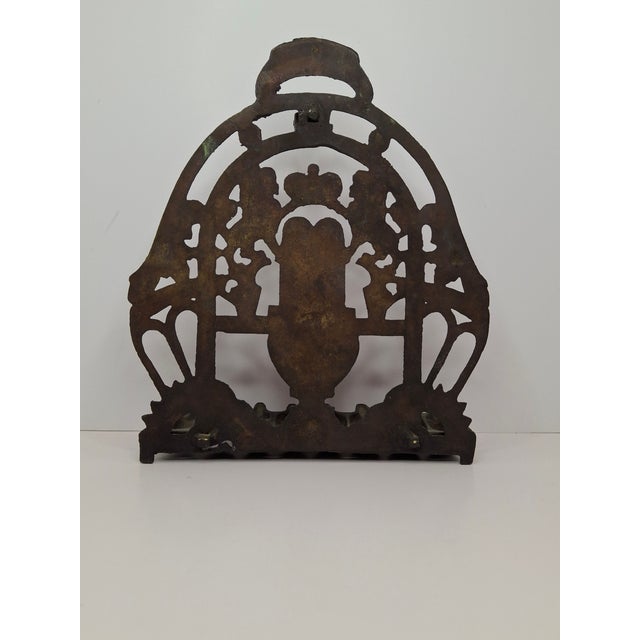
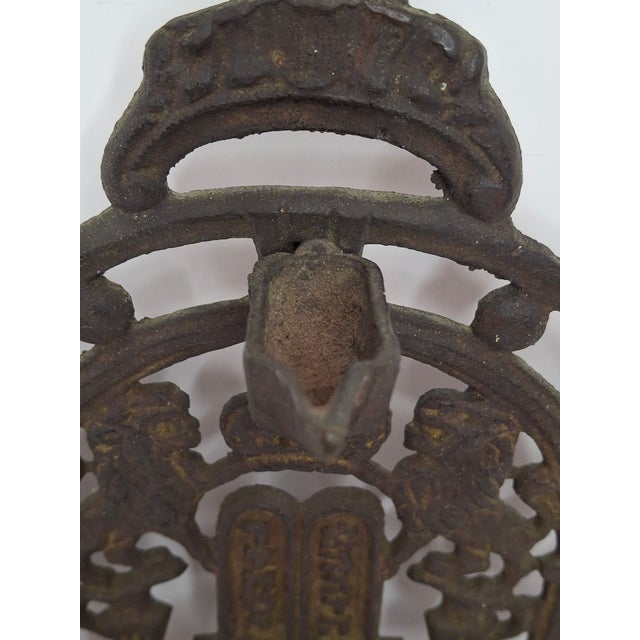
The highly detailed openwork backplate features a prominent central Decalogue (Tablets of the Law) inscribed with dimensional Hebrew characters representing the Ten Commandments, supporting a traditional, prominent Torah Crown above. Flanking the Tablets are two classic rampant Lions of Judah, standing symmetrically upon architectural plinths amidst an intricate baroque scrolled archway motif. The lower midsection displays a decorative gadrooned urn/vase motif sitting directly above the horizontal frame, which holds the traditional "bench" configuration of eight deep, integrated oil/candle fonts with extended pouring spouts cast sequentially across the front. Affixed near the apex of the backplate is the original, removable servant light (Shamash).
Item Details
Item Type: Bench-style Hanukkah Lamp (Hannukiah)
Origin: Poland / Eastern Europe (Galician tradition)
Estimated Age: 19th Century (Circa 1850–1880)
Material: Solid Cast Brass (Heavy Sand-Casted Construction)
Dimensions: 9.5" tall × 7.5" wide at base
Material & Structural Analysis
A physical examination confirms the underlying composition to be an authentic, dense brass alloy rather than cast iron. Hidden wear surfaces and high-friction contact points near the base show bright, golden-yellow brass beneath the superficial surface layering. The heavy, tactile weight is indicative of classic mid-to-late 19th-century European foundries specializing in ceremonial brassware.
Authenticity Assessment
This piece passes all standard forensic metrics for 19th-century Eastern European sand-cast brassware:
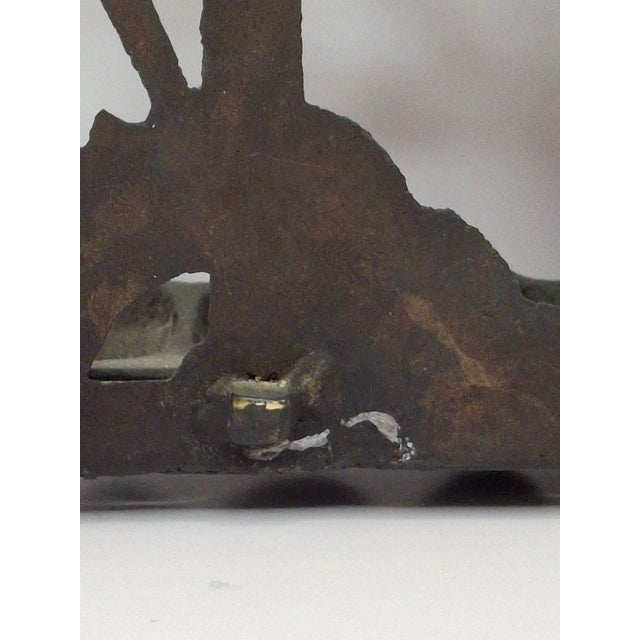
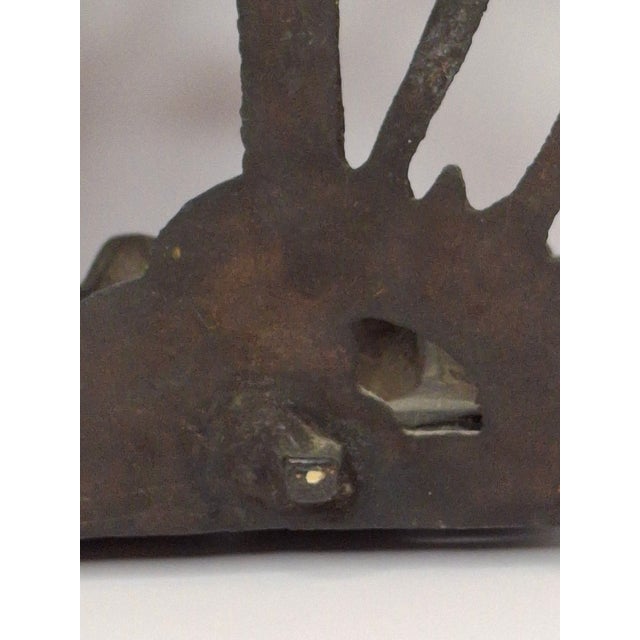
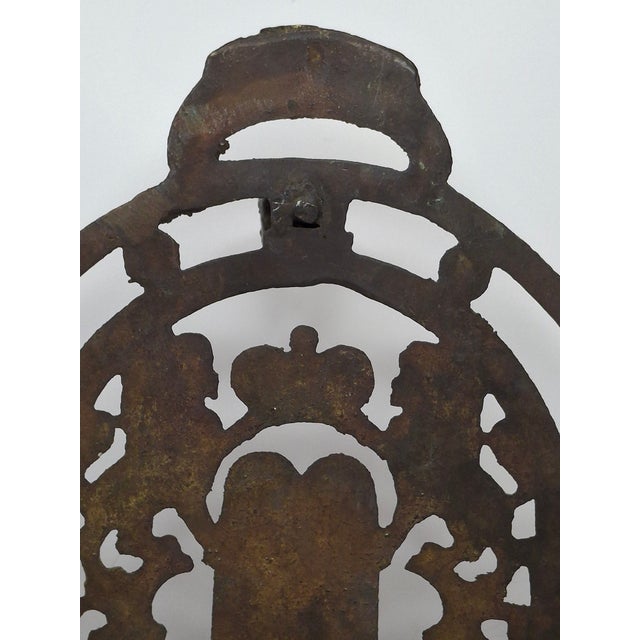
Casting Attributes: The reverse shows classic, uneven texture, cooling variations, and file marks typical of authentic sand-casting molds.
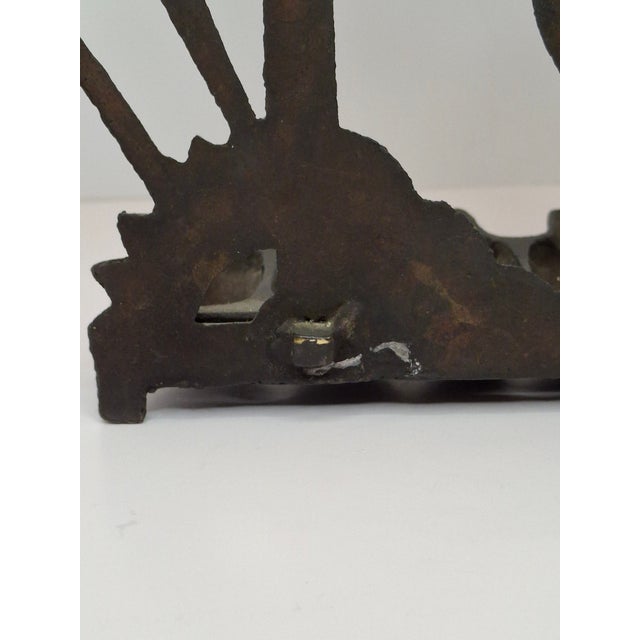
Hardware and Joints: The lower bench assembly utilizes hand-cut, square-pegged structural tabs and authentic period-appropriate threaded post configurations with hand-turned hex-tension retaining tabs.
Surface Wear: Natural, deep oxidation and centuries of cumulative heat exposure have produced an exceptional, untouched historical patina. Patches of dark brown and soft green verdigris settle naturally into the deep relief lines of the openwork.
Lettering: The Hebrew characters on the Decalogue show authentic softening and dimensional variations consistent with hand-carved wooden master patterns rather than razor-sharp modern stampings or reproduction molds.
Forensic Material Analysis
For the discerning collector, the high-end fair market value of this piece is fully supported by several critical, unrepeatable markers of authentic 19th-century casting and period metallurgy:
Authentic Sand-Cast Construction: Unlike flat, smooth-backed modern reproductions, the reverse of this backplate exhibits a rugged, highly irregular, and porous texture with visible hand-filing marks along the perimeter—clear evidence of a period sand-cast mold.
Period Joinery & Hardware: The lower bench assembly is secured to the backplate utilizing primitive, hand-cut, square-pegged mounting tabs and irregular, hand-turned compression blocks rather than clean, uniform, modern machine-cut screws or hex nuts.
Softened Iconography: The Hebrew characters on the Decalogue and the features of the heraldic lions display the characteristic structural softening and minor dimensional variations typical of a hand-carved wooden master pattern rather than a modern, razor-sharp factory stamp.
Untouched Historical Patina: The surface boasts a magnificent, completely unaltered dark chocolate-and-mustard bronze patina. The deep browning in the crevices, combined with localized natural verdigris, is the organic result of decades of liturgical heat exposure and slow environmental oxidation, not a sprayed-on chemical wash.
Reference
For an identically styled architectural backplate and comprehensive historical discussion regarding 19th-century Polish sand-cast bench lamps, see:
Book Title: Five Centuries of Hanukkah Lamps from The Jewish Museum: A Catalogue Raisonné
Author: Susan L. Braunstein
Page Reference: Page 298 (Section: Polish Brass Bench Lamps)
Item dimensions: 10" tall × 8.75" wide × 3" deep
Weight of item only: 3 lb 5.8 oz
Historical Provenance & Design Significance
This bench lamp stands as a quintessential artifact of the Galician brass-casting tradition. The composition masterfully harmonizes religious text with animal heraldry, heavily influenced by traditional synagogue Torah Ark carvings. Its dense openwork construction demonstrates an extraordinary balance of negative space and structural weight, displaying the artistic resilience of Eastern European Jewish metalsmiths during the mid-to-late 19th century.
Curator's Note & Decorative Utility
Boasting a rich, deep chocolate-and-mustard bronze patina, this rare 19th-century Polish bench menorah brings exceptional historic character and architectural structure to any curated collection. Its commanding profile, pierced silhouette, and symbolic motifs offer outstanding decorative utility as a sculptural focal piece for modern or traditional mantels, consoles, and bookshelves. An irreplaceable piece of decorative folk art that captures the eye of selective interior designers looking for depth, history, and authentic old-world warmth.
See less
- Dimensions
- 8.75ʺW × 3ʺD × 10ʺH
- Styles
- Religious
- Period
- Late 19th Century
- Country of Origin
- Poland
- Item Type
- Vintage, Antique or Pre-owned
- Materials
- Brass
- Condition
- Good Condition, Original Condition Unaltered, Some Imperfections
- Color
- Brass
- Condition Notes
- Excellent Antique Condition. The piece retains its magnificent, original, untouched historical patina with rich, uncleaned natural oxidation throughout. The structural … moreExcellent Antique Condition. The piece retains its magnificent, original, untouched historical patina with rich, uncleaned natural oxidation throughout. The structural integrity is outstanding; there are no cracks, structural breaks, or repaired welds across the openwork backplate. The fonts are complete with minor historical wax and carbon residue consistent with liturgical use. The original Shamash is present and functionally tight. less
Questions about the item?
Returns & Cancellations
Return Policy - All sales are final 48 hours after delivery, unless otherwise specified in the description of the product.
Cancellation Policy - Prior to shipping or local pickup, buyers may cancel an order for up to 48 hours, unless otherwise specified.