

Details
Description
---
# DESCRIPTION
Hold one of these and history has weight — literally. Heavy cast bronze, portraits modeled by hands …
Read more
---
# DESCRIPTION
Hold one of these and history has weight — literally. Heavy cast bronze, portraits modeled by hands that knew exactly what they were doing, patinas gone warm and dark with two centuries of careful keeping. These aren't decorative objects that happen to be old. They're historical objects that happen to be beautiful.
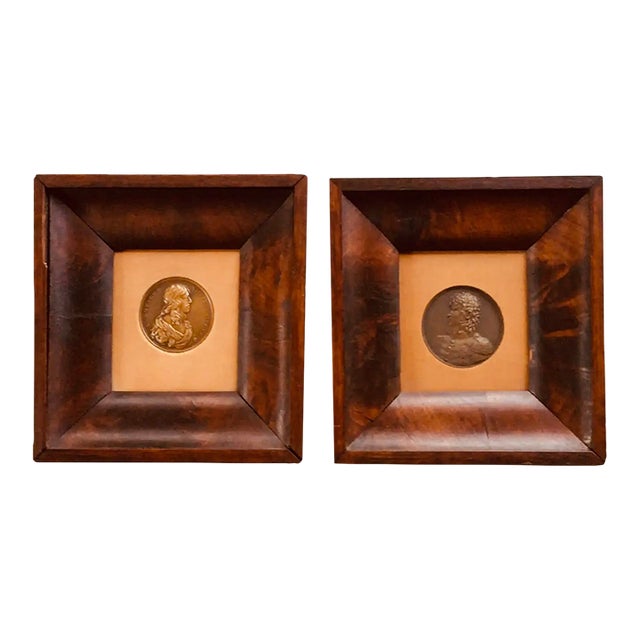
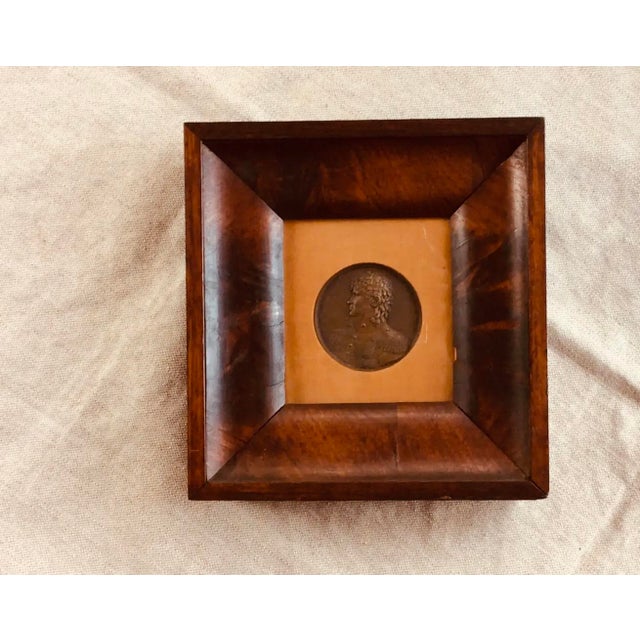
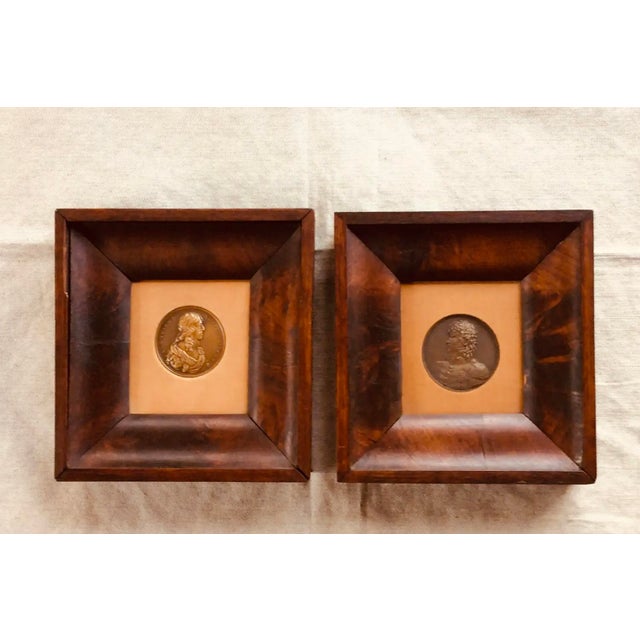
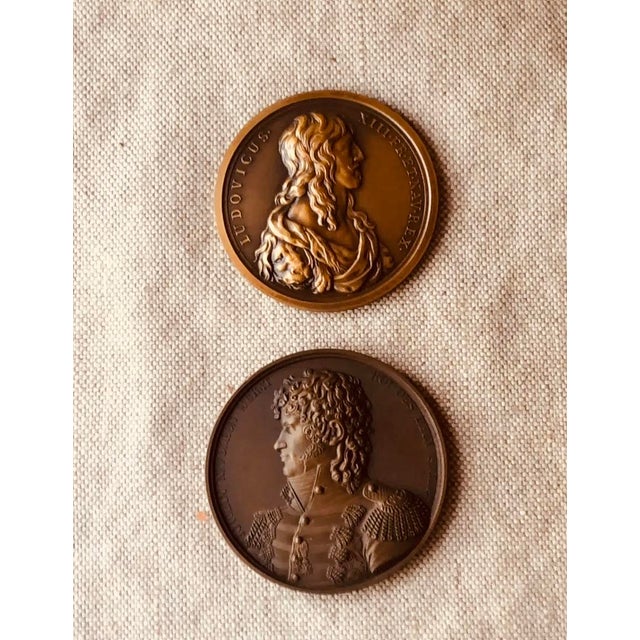
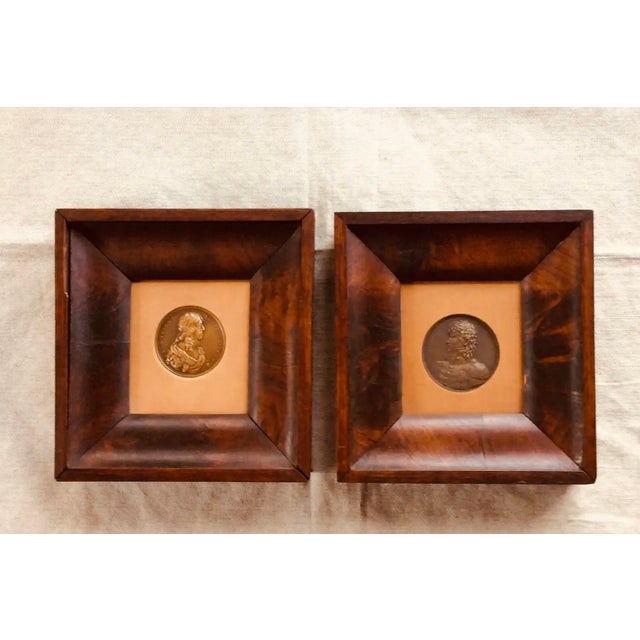
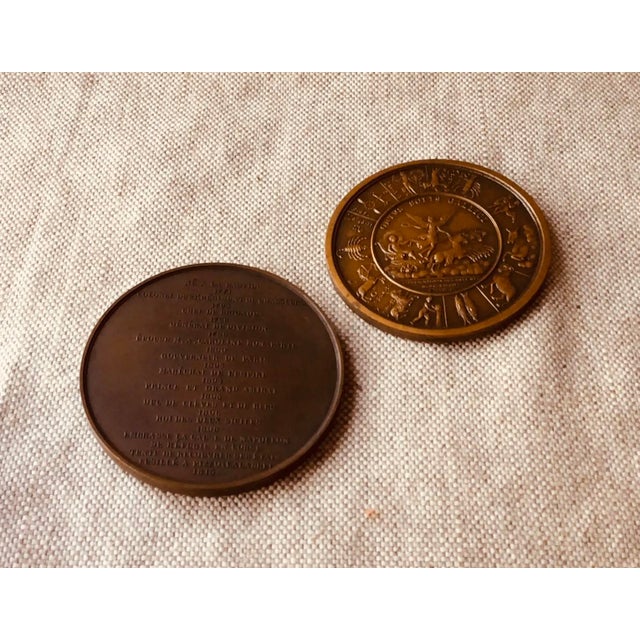
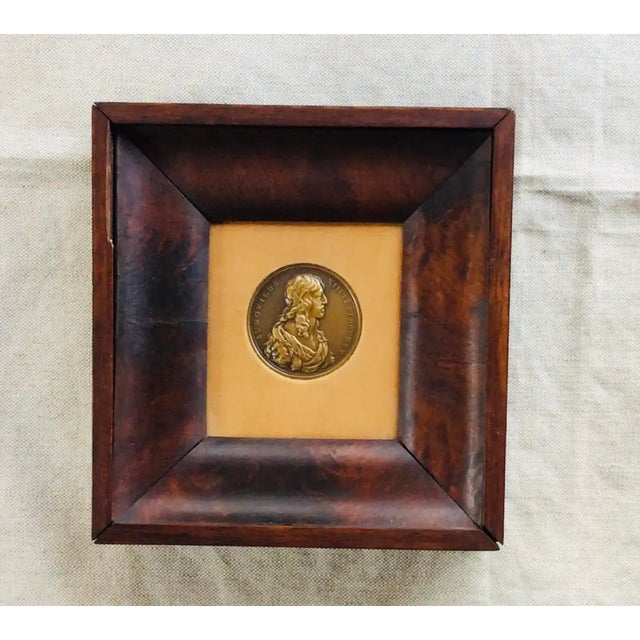
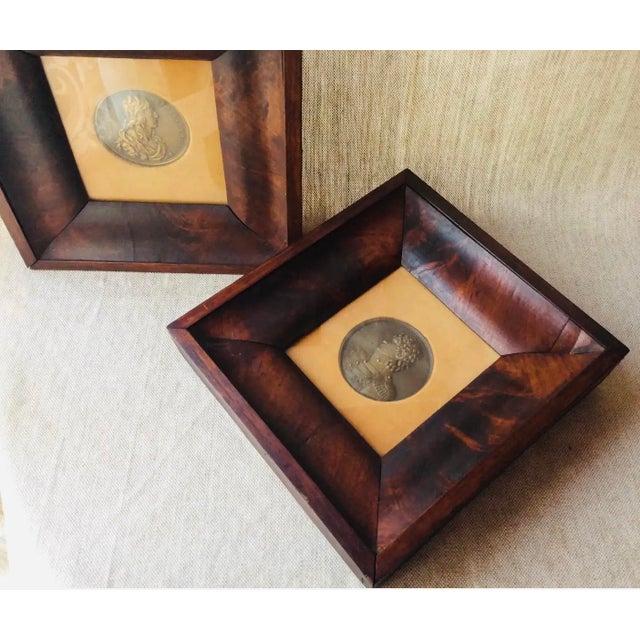
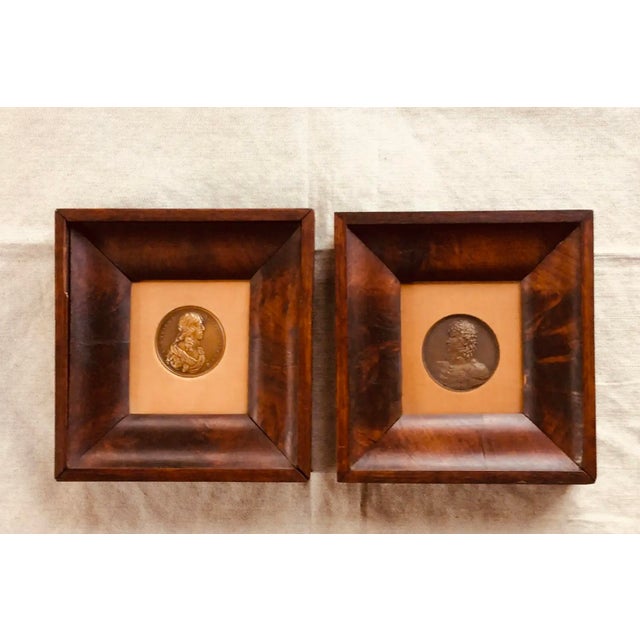
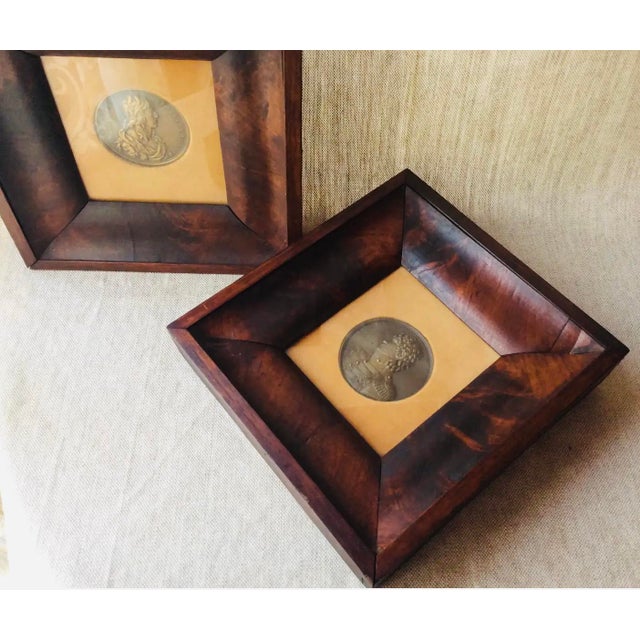
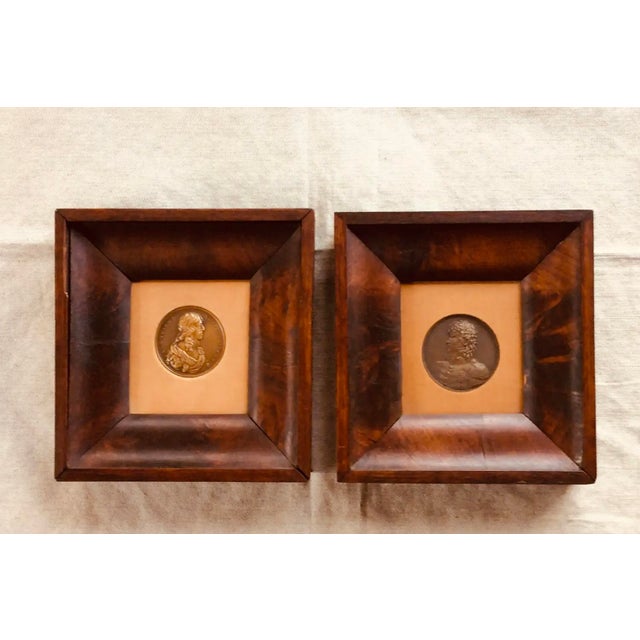
A pair of antique French bronze portrait medallions, each mounted in its own bespoke walnut shadow box, united by a shared history of acquisition rather than a shared sitter. One depicts Louis XIII, the Bourbon king who reigned from 1610 to 1643 and consolidated the French crown through Cardinal Richelieu. The other depicts Joachim Murat — Napoleon's cavalry marshal, husband of Caroline Bonaparte, later King of Naples, whose reverse carries an engraved career summary running from his 1795 commission as colonel of a chasseur regiment through his 1808 crowning as King of the Two Sicilies to his 1815 execution by firing squad at Pizzo, Calabria. Two centuries of French history, standing shoulder to shoulder on the same wall.
**Louis XIII**
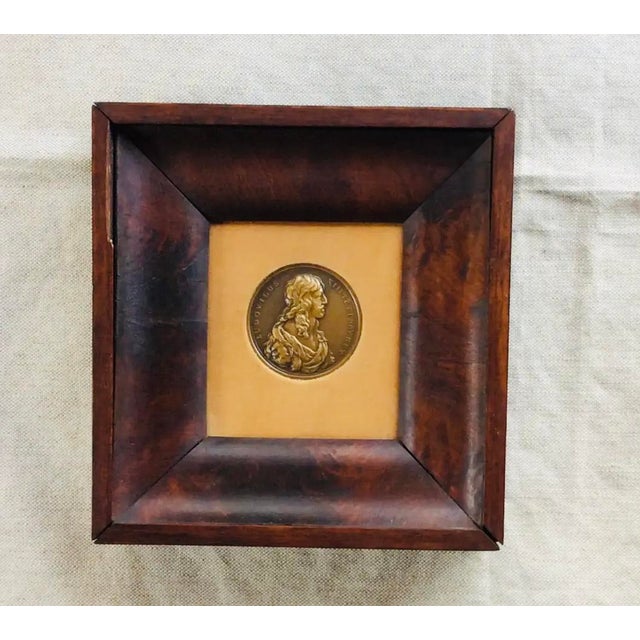
The obverse reads LUDOVICUS XIII FR ET NAV REX — Louis XIII, King of France and Navarre — in a lighter, warmer bronze with a long curled wig and draped cloak, characteristic of the 19th-century revival medallions produced when French collectors looked back at the Bourbon monarchs with equal parts nostalgia and national pride. The reverse carries an allegorical sun and zodiac composition, solar imagery long associated with the Bourbon crown.
**Joachim Murat**
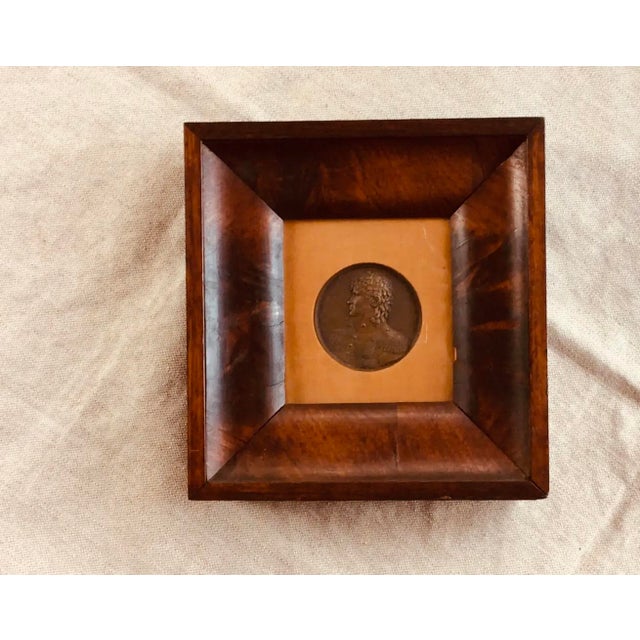
The obverse, in a darker, more oxidized bronze, shows Murat in military uniform with epaulettes and braided frogging rather than court dress — a soldier's portrait for a soldier's life. The reverse is a rare document in miniature: an engraved timeline of his rise from provincial cavalry officer to Marshal of the Empire, Prince and Grand Admiral, Duke of Cleves and Berg, and finally King of Naples, ending in the stark fact of his execution. Murat draws a genuinely passionate collector base — Napoleonic history, the extended Bonaparte family, the drama of the marshals — and this reverse is doing real narrative work for anyone who knows the story.
**The Bespoke Frames**
Each medallion is housed in its own hand-hewn walnut shadow box — not factory-made, not a matched production pair, but genuinely bespoke construction with the specific character of frames built by tools rather than machines. The aged golden yellow velvet matting is period-appropriate and beautifully preserved; that particular warm gold does something to the dark bronze, pulling the heat out of the patina and letting the relief modeling read with real clarity. Someone had these built specifically to house these two medallions, and the craftsmanship of the framing is as much a part of what you're buying as the bronzes themselves — bespoke work of this quality, executed with this level of hand-finishing, is increasingly hard to find intact and original.
**The Provenance**
Acquired during diplomatic service in France in 1950 — the Marshall Plan years, early NATO, the moment Franco-American relations were being rebuilt on shared postwar purpose. American diplomats posted to Paris then had real access to serious French material through reputable dealers and private estates, at a moment when the French art market was still absorbing the disruptions of the occupation. Whoever assembled this pair knew exactly what they were buying — a Bourbon king and a Napoleonic marshal, framed to stand together.
**The Wall Presence**
A pair of framed bronze medallions in bespoke walnut shadow boxes is a specific, quietly powerful kind of wall object. Relief sculpture reads differently from a painting — it catches light across the day and keeps changing, the modeling reading deeper or shallower as the light shifts. On a library wall, in a study, a gentleman's dressing room, a paneled hallway, these command attention without asking for it. They belong beside books, beside maps, beside the other serious accumulated objects of a considered life. The kind of thing a guest picks up to look at closely — then looks at again, especially once they read the Murat reverse.
**Condition & Specifications**
Very good antique condition. Both medallions retain their original patina, deep and warm with appropriate age. Relief modeling crisp and well-preserved on both. Hand-hewn walnut shadow box frames, bespoke construction, with beautiful aged character. Aged golden yellow velvet matting. Each medallion approximately 3" diameter. Overall framed dimensions: 9.5"W × 10.5"H × 2.25"D each. Bronze, walnut, velvet. France, 19th century. U.S. diplomatic collection, Paris, 1950.
See less
- Dimensions
- 10ʺW × 2ʺD × 12ʺH
- Styles
- Louis XIII
- Period
- 1950s
- Country of Origin
- France
- Item Type
- Vintage, Antique or Pre-owned
- Materials
- Walnut
- Condition
- Good Condition, Original Condition Unaltered, Some Imperfections
- Color
- Bronze
- Condition Notes
- Gorgeous Gorgeous less
Questions about the item?
Returns & Cancellations
Return Policy - All sales are final 48 hours after delivery, unless otherwise specified in the description of the product.
Cancellation Policy - Prior to shipping or local pickup, buyers may cancel an order for up to 48 hours, unless otherwise specified.
Related Collections
- Ralph Lauren Sculptural Wall Objects
- Helmut Friedrich Schäffenacker Sculptural Wall Objects
- Antique Copper Finish Sculptural Wall Objects
- Medium-Density Fibreboard Sculptural Wall Objects
- Dada Sculptural Wall Objects
- Maison Jansen Sculptural Wall Objects
- Asian Sculptural Wall Objects
- Greg Copeland Sculptural Wall Objects
- Mid-Century Modern Sculptural Wall Objects
- Curtis Jere Sculptural Wall Objects
- Plaster Sculptural Wall Objects
- Brutalist Sculptural Wall Objects
- Japanese Sculptural Wall Objects
- Sarreid Ltd. Sculptural Wall Objects
- Wenge Sculptural Wall Objects
- Arteriors Home Sculptural Wall Objects
- Stainless Steel Sculptural Wall Objects
- Silverplate Sculptural Wall Objects
- Platinum Sculptural Wall Objects
- The American School Sculptural Wall Objects