

Details
Description
Measurements:
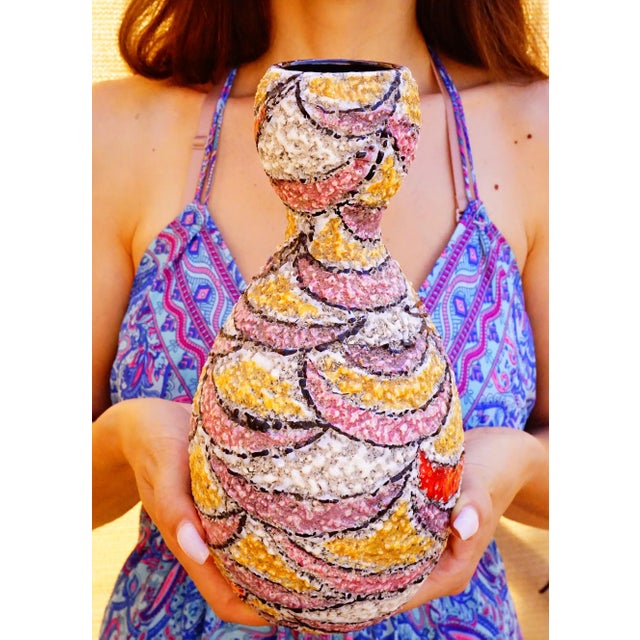
height: 26 cm; diameter: 13 cm; weight: 0.977 kg
important ceramic art vase, modeled and decorated entirely by hand, …
Read more
Measurements:
height: 26 cm; diameter: 13 cm; weight: 0.977 kg
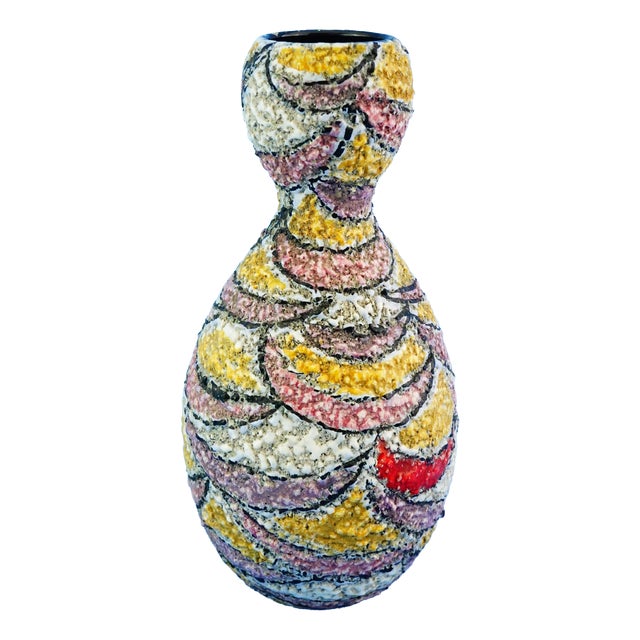
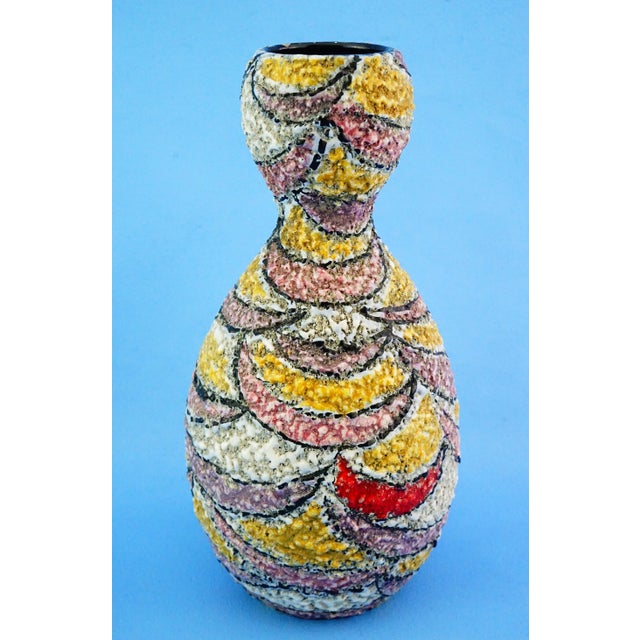
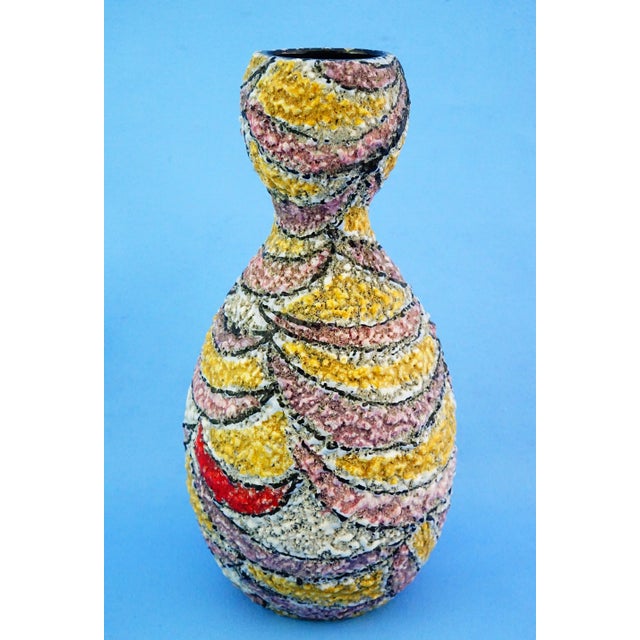
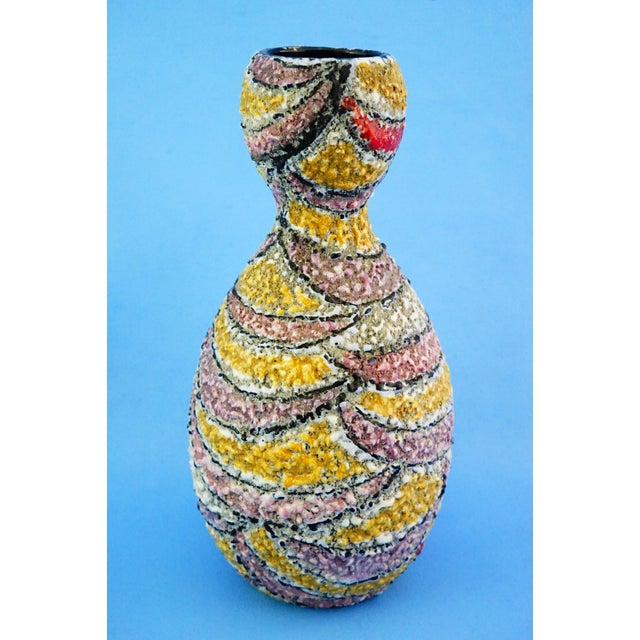
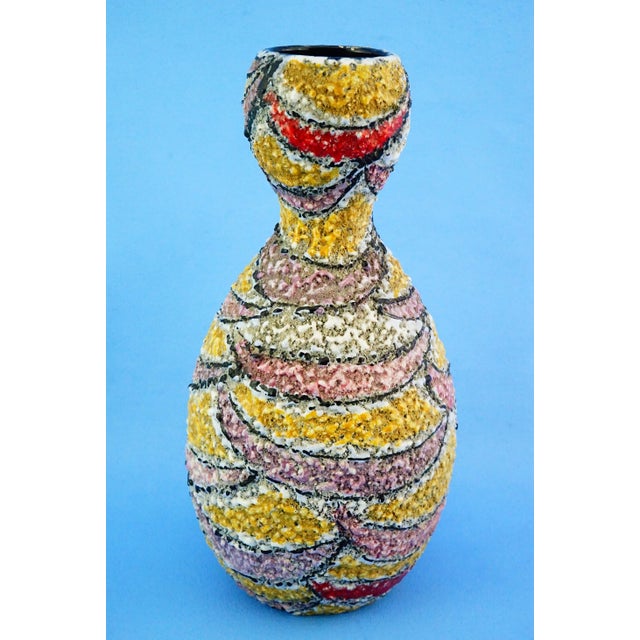
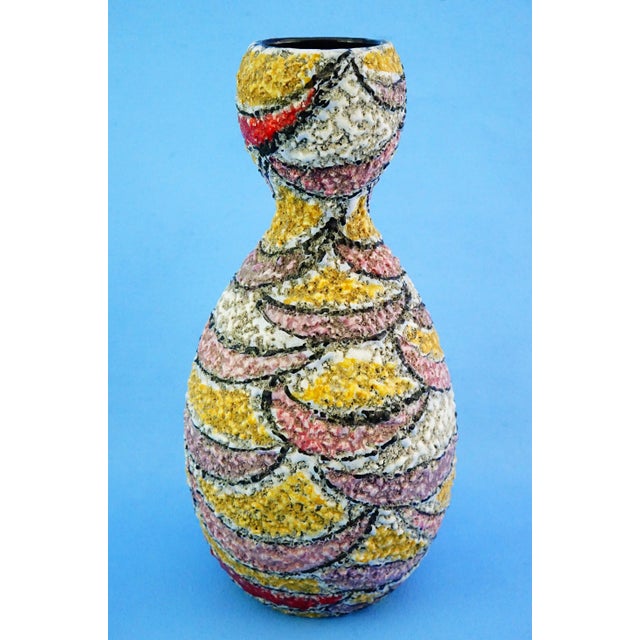
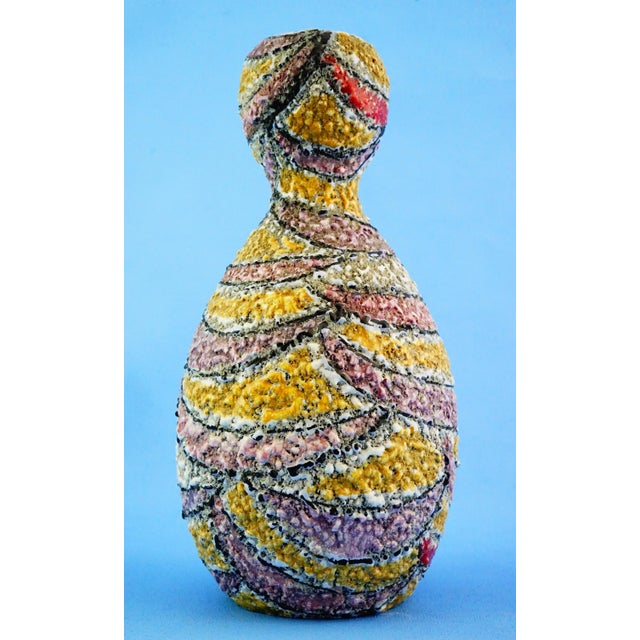
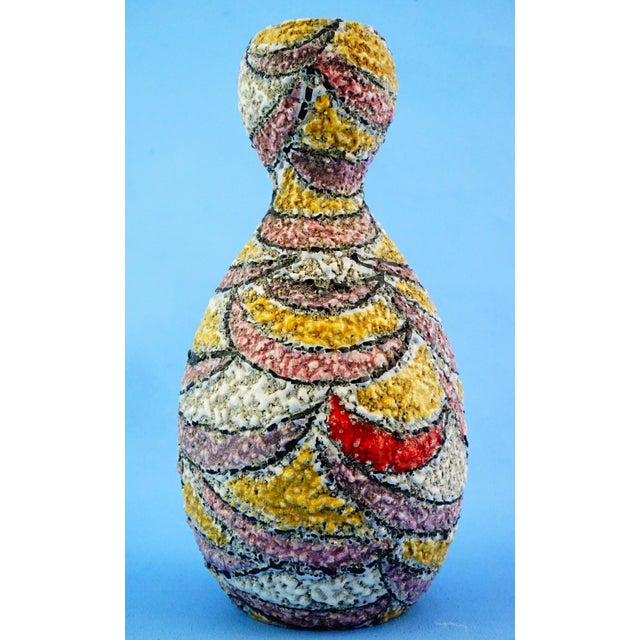
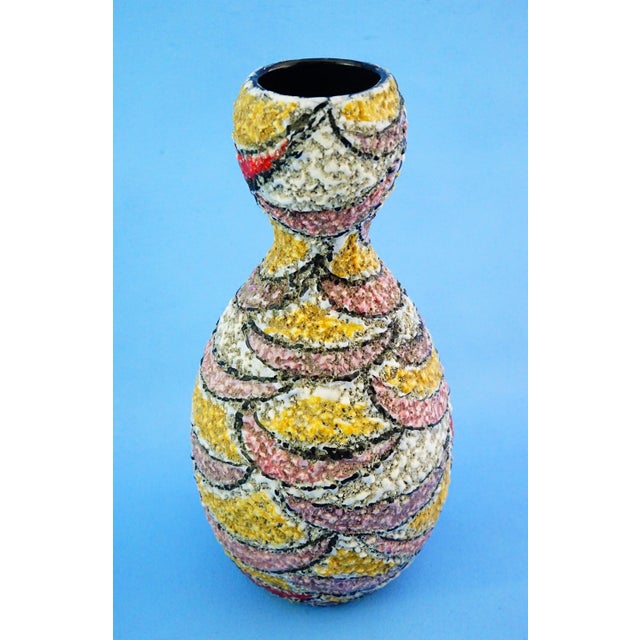
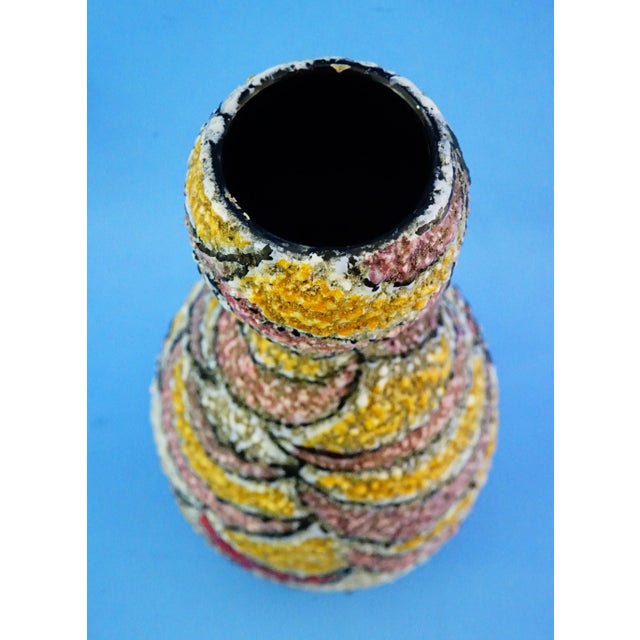
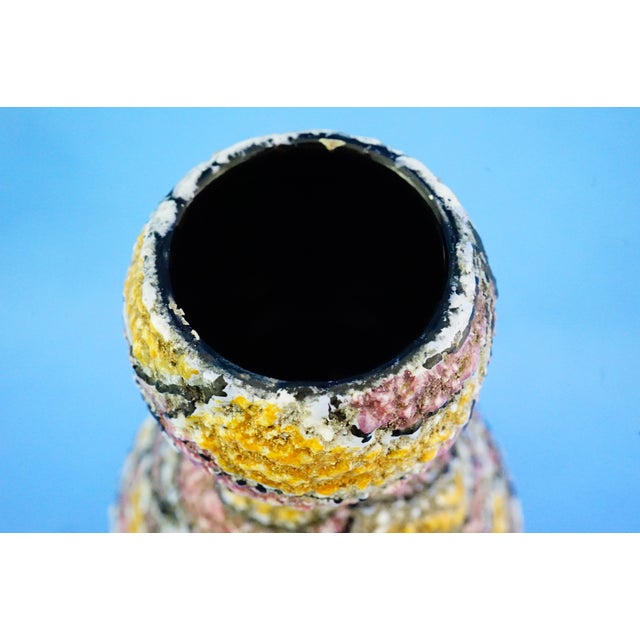
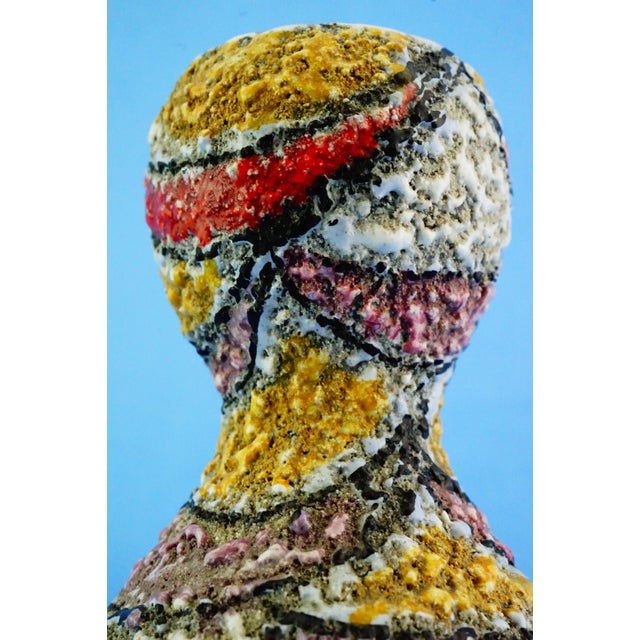
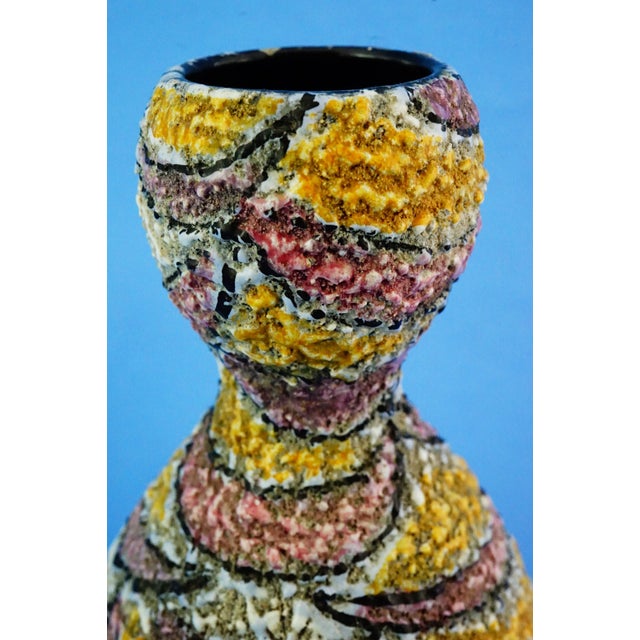
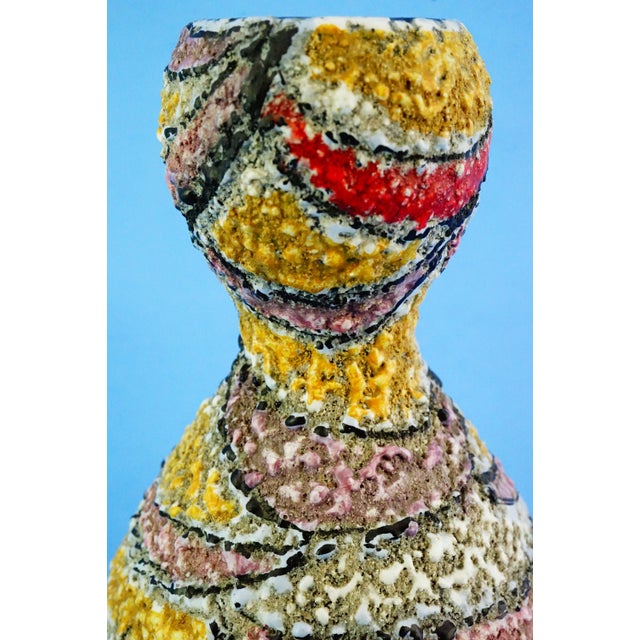
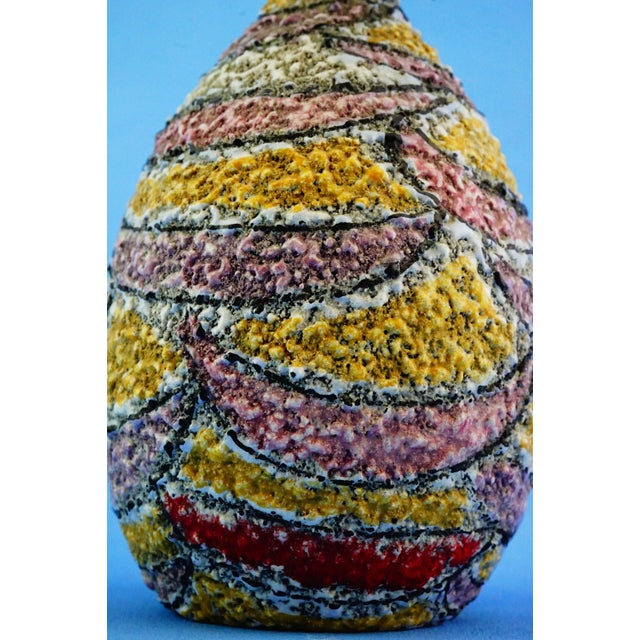
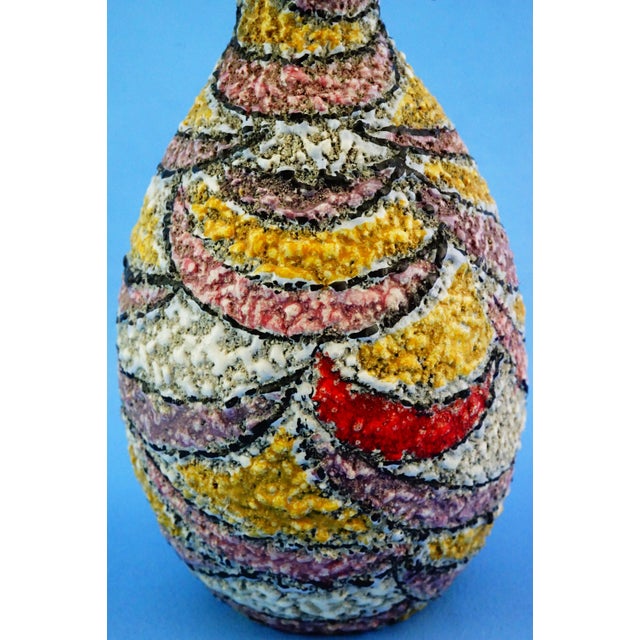
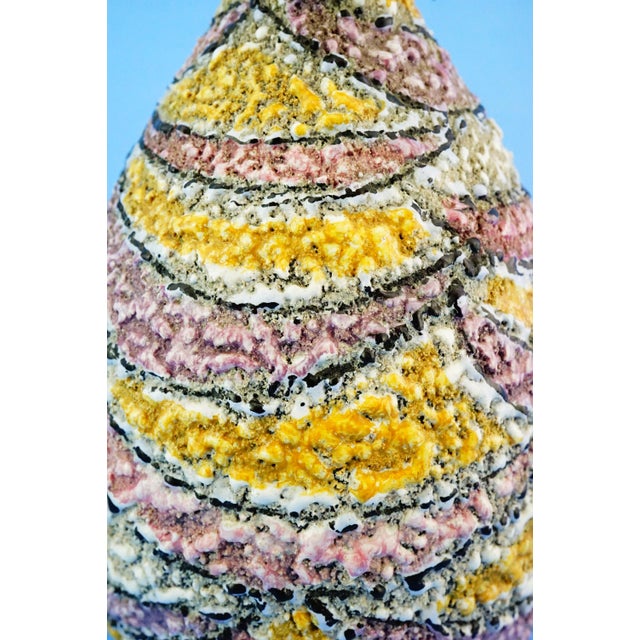
important ceramic art vase, modeled and decorated entirely by hand, crafted in the second half of the 20th century and characterized by a captivating textured surface with dramatic lava-effect glazes. The harmonious shape, with a tapered neck and ovoid body, is embellished with a refined abstract decoration composed of sinuous bands in shades of yellow ochre, pink, white, and black, with vibrant red accents, achieved through a skillful combination of glazes that lend depth and movement to the entire composition. On the bottom is a handwritten signature, executed with a brush in black, only partially legible due to the unique finish of the base and the natural passage of time. The handwriting appears to be "somacrea," but this does not allow definitive identification of the artist or manufacturer. Given its technical, stylistic, and decorative characteristics, the vase can be attributed, with reasonable probability, to the artistic production of the vallauris area, a major french ceramics center of the 20th century. Between the 1950s and 1970s, numerous master ceramists and independent ateliers were active, renowned for their experimentation with textured glazes and so-called "fat lava" effects. This vibrant artistic environment produced unique works or very small series, often hand-signed by the artist. Although the signature on the bottom does not allow for a definitive attribution to a specific artist, the work's characteristics are fully consistent with the production of the vallauris workshops, making this vase a significant testament to french ceramic research in the late 20th century and a refined collector's item.
information on the artist and/or manufacturer:
artistic ceramics from vallauris, a renowned town on the french riviera located between cannes and antibes, boasts a millennia-old tradition linked to the rich deposits of refractory clay in its area, whose origins date back to the gallo-roman era. A first fundamental revival of its production occurred in the 16th century, when several families of italian potters settled in the area to repopulate the village after a devastating epidemic, laying the foundations for a thriving production of traditional terracotta tableware. The real artistic turning point, however, came towards the end of the 19th century thanks to the massier family, particularly clément, delphin, and jérôme massier, who introduced iridescent glazes and metallic highlights of hispano-moorish inspiration, transforming utilitarian ceramics into refined decorative works of art appreciated throughout europe. Vallauris's absolute pinnacle and golden age occurred after world war ii, between the late 1940s and the 1960s, when the village became the hub of global avant-garde ceramics. This extraordinary artistic renaissance was sparked in 1946 by the dazzling encounter between pablo picasso and the couple suzanne and georges ramié, founders of the atelier madoura, established in 1938. Picasso was so fascinated by the plastic potential of clay that he settled in vallauris from 1948 to 1955, creating approximately four thousand original works and an extraordinary body of limited editions right there in the madoura workshop. The spanish master's presence transformed the town into a magnet for the artistic elite of the time, attracting giants of painting such as marc chagall, henri matisse, fernand léger, and victor brauner, and establishing the work of local master ceramists such as roger capron, jean derval, robert picault, and jean gerbino, the latter renowned for his complex polychrome mosaic technique known as neriage. Reflecting its historical significance, the vallauris international biennial of contemporary ceramics was established in 1968, a prestigious art competition that for decades has recognized the formal innovation and creative excellence of the world's greatest designers and sculptors. Today, ceramics created in this artistic district enjoy a thriving market and are constantly sought after by collectors in the antiques and modern art markets. Works from vallauris, especially those from its golden age, are regular features at major global auction houses such as christie's and sotheby's; a prime example is the historic 2015 auction of marina picasso's madoura ceramic collection, which achieved record sales of over seventeen million euros, confirming the enduring value and commercial appeal of this extraordinary chapter in twentieth-century art. This piece is attributed to the mentioned designer/maker. It has no attribution mark and no
official proof of authenticity,
however it is well documented in design history. I take full responsibility for any authenticity
issues arising from misattribution
See less
- Dimensions
- 5.12ʺW × 5.12ʺD × 10.24ʺH
- Styles
- Modern
- Period
- 1950s
- Country of Origin
- France
- Item Type
- Vintage, Antique or Pre-owned
- Materials
- Ceramic
- Condition
- Good Condition, Original Condition Unaltered, Some Imperfections
- Color
Returns & Cancellations
Return Policy - All sales are final 48 hours after delivery, unless otherwise specified in the description of the product.
Cancellation Policy - Prior to shipping or local pickup, buyers may cancel an order for up to 48 hours, unless otherwise specified.
Related Collections
- Clarice Cliff Vases
- Dorothy Draper Vases
- Franco Bucci Vases
- Gesso Vases
- Kähler Keramik Vases
- Liz Marsh Vases
- The American School Vases
- Ralph Lauren Home Vases
- Vases in Panama City, FL
- Cristalleries De Sevres Vases
- Southeast Asia Vases
- Karl Springer Vases
- Louis Dage Vases
- From Vienna Vases
- Bimini Glass Vases
- Libbey Glass Co. Vases
- Arcore Ceramica Vases
- Poltronova Vases
- Surface Ceramics Vases
- Graphite Vases
- Workaday Handmade Vases
- St. Louis Crystal Vases
- Lenox Vases
- Blenko Vases
- Swung Vases