

Details
Description
Table (smålandsharpa) g. & w. Andersson, nässjö – näshult, sweden · late 19th century (circa 1889–1890)
the circular-top table in …
Read more
Table (smålandsharpa) g. & w. Andersson, nässjö – näshult, sweden · late 19th century (circa 1889–1890)
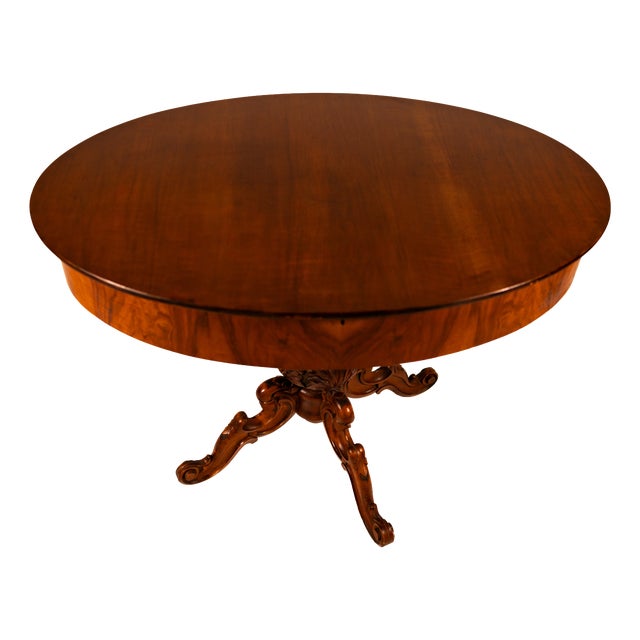
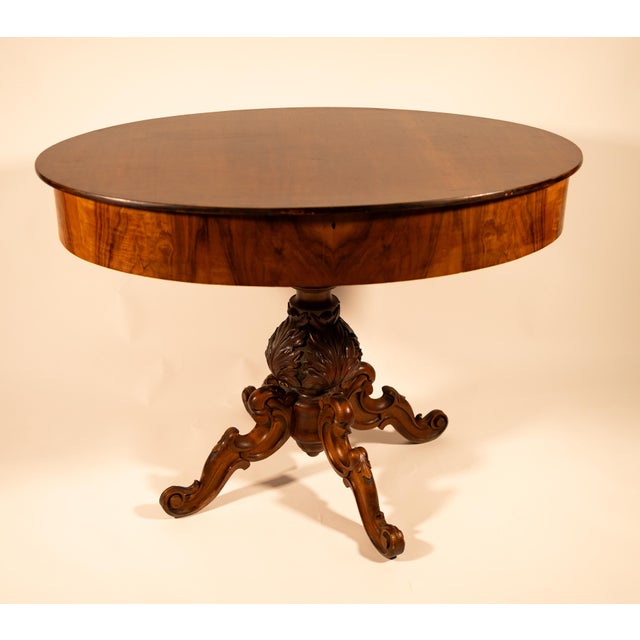
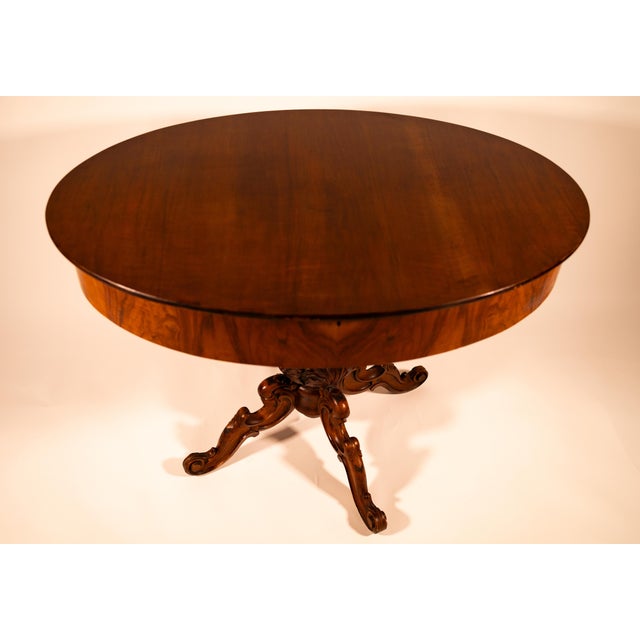
the circular-top table in burl walnut veneer with a carved pedestal base, in the taste of the late swedish nyrenässans style
identification
type table ("pianoharpa" / "smålandsharpa")
manufacturer g. & w. Andersson, nässjö – näshult (småland, sweden)
date late 19th century, circa 1889–1890
patent swedish patent no. 2239 of 1889, invention attributed to johannes magnusson
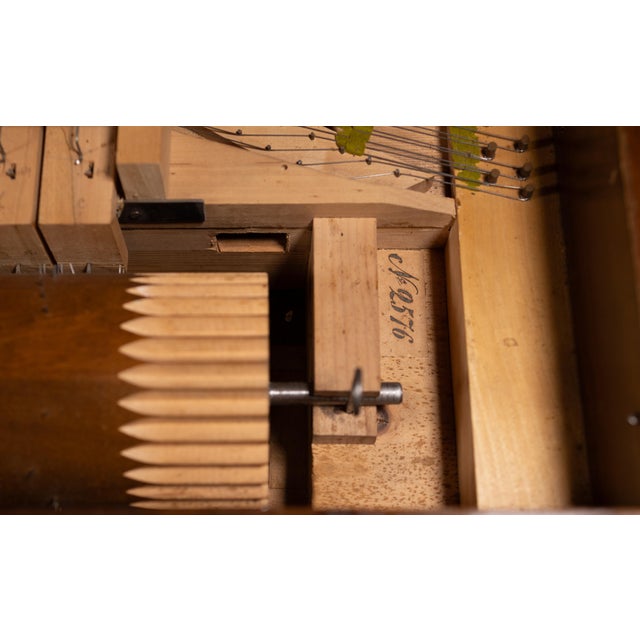
serial number no. 25576 (handwritten on the inner base of the mechanism)
materials burl walnut, carved solid walnut, spruce for the soundboard, metal strings, felt
style late swedish nyrenässans style (a nordic reinterpretation of renaissance and rococo)
condition excellent, mechanism complete and functioning
description
rare and elegant musical parlour table belonging to the celebrated swedish "pianoharpa" production, a refined union of artistic cabinetmaking and musical mechanics, made by the g. & w. Andersson manufactory of nässjö and näshult, in småland, among the most important scandinavian makers of mechanical musical instruments of the late nineteenth century.
this particular piece represents a type almost exclusive to swedish production, created to satisfy the taste of the wealthy nordic bourgeoisie, who desired an elegant piece of furniture capable, when needed, of transforming into a sophisticated automatic musical instrument.
structure and materials
the table features a wide circular top embellished with a burl walnut veneer, carefully selected and arranged in a mirrored pattern, creating an elegant flame-like effect that enhances the natural beauty of the wood.
the apron beneath the top is veneered in walnut with pronounced vertical grain, while the central support consists of a substantial carved shaft with foliate motifs and deeply carved acanthus leaves, developing into four robust shaped legs ending in refined scrolls. The whole recalls the taste of the late swedish nyrenässans style, particularly appreciated in the last decades of the 19th century. The proportions are perfectly balanced, giving the piece a sober elegance.
view of the top
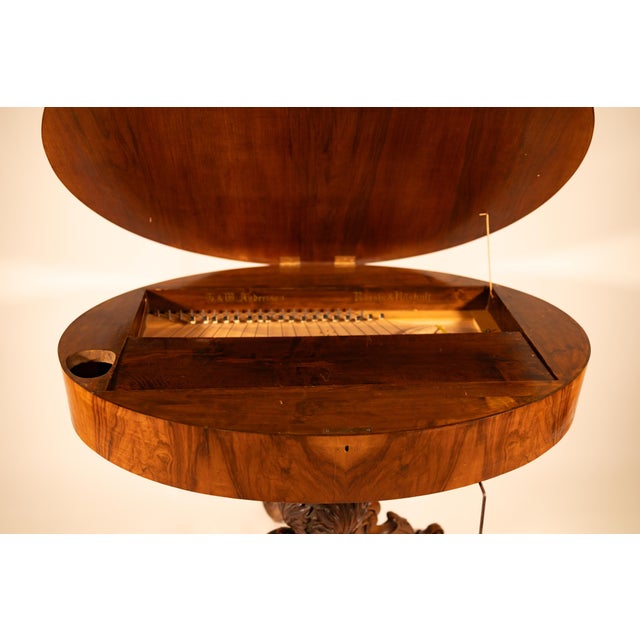
view of the open top showing the mechanism
the musical mechanism
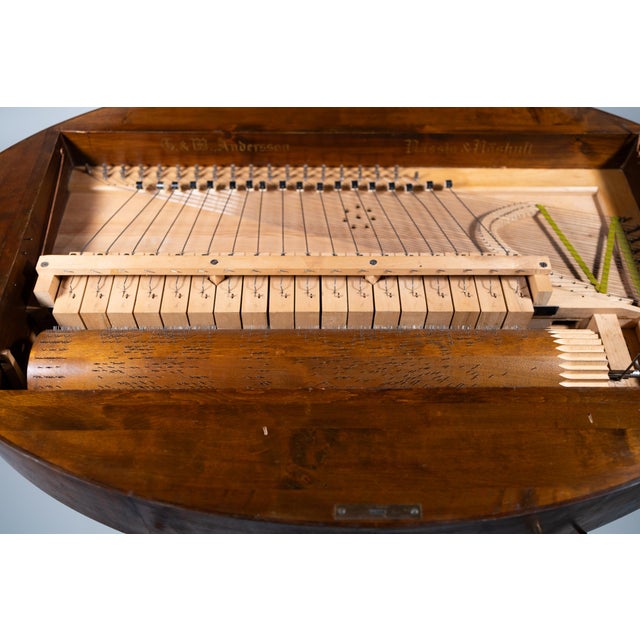
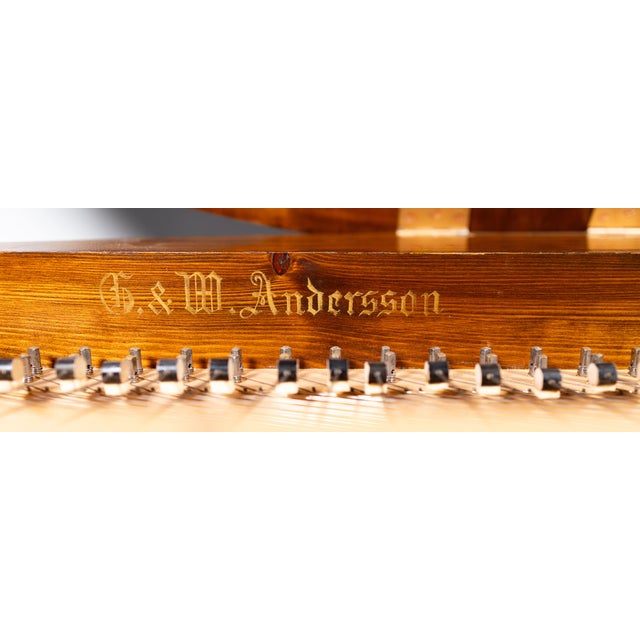
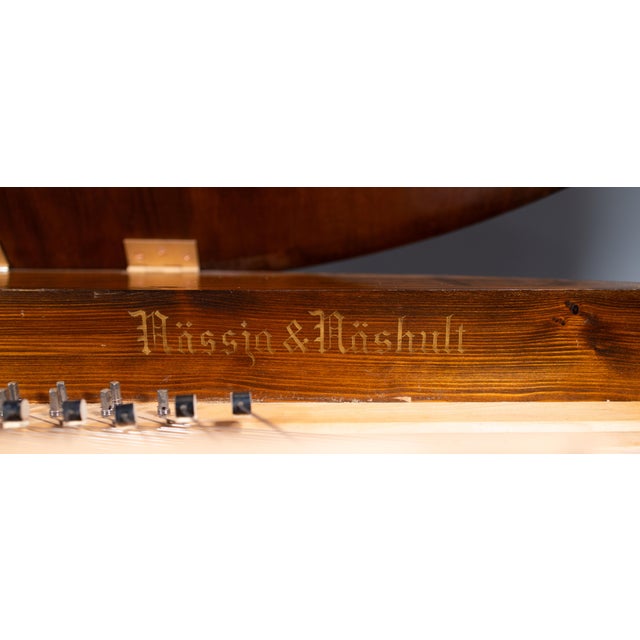
lifting the hinged top gives access to the internal musical mechanism. The system consists of a pianoharpa (smålandsharpa), in which a wooden cylinder studded with small pins operates a series of levers that pluck metal strings, producing a melody characteristic of these mechanical instruments. The movement is operated manually by means of an external crank. Inside the compartment there is also a small side housing for storing the crank. On the internal crossbars, the original inscriptions in gilt gothic lettering are still perfectly legible: "g. & w. Andersson" and "nässjö & näshult", the authentic signature of the manufacturer. On the base of the mechanism, next to the cylinder shaft, the serial number "n. 25576" is also handwritten, a detail useful for the precise dating of this example within the manufactory's production.
the gilt inscriptions "nässjö & näshult" and "g. & w. Andersson" on the internal crossbars of the mechanism
the serial number "n. 25576" handwritten on the inner base of the mechanism, next to the studded cylinder
detail of the studded wooden cylinder and the lateral sliding mechanism, with metal crank
historical notes
the pianoharpa, also known as the smålandsharpa, is one of the most interesting inventions of the swedish musical tradition. The system was patented in 1889 (swedish patent no. 2239), and its invention is traditionally attributed to the self-taught organ builder johannes magnusson of nässjö, in småland, although the corresponding patent application was filed by a member of the andersson family. The instrument was subsequently produced by the firm g. & w. Andersson, which perfected its construction, turning it into a widespread domestic musical instrument in scandinavia.
production, which according to sources reached about 5,000 examples, continued until 1929, when a fire destroyed the nässjö factory. Nineteenth-century examples such as the one described here are today the most sought after by international collectors. These musical tables were intended for the parlours of the swedish upper bourgeoisie and were used both as elegant reception tables and as instruments of entertainment during family and social gatherings.
condition
the piece is in excellent condition. The original veneer is intact and well preserved, with a splendid patina developed over time and minimal signs of wear consistent with its age. The base retains its structural stability and rich original carving. The musical mechanism is complete with strings, studded cylinder, levers, bridges, and original components, representing a rare example of almost entirely intact preservation.
collecting considerations
pianoharpa musical tables are today considered among the most fascinating objects of swedish artistic production of the late 19th century. They masterfully combine the quality of nordic cabinetmaking with sophisticated musical mechanics, representing an extremely rare category of furniture on the international market.
the presence of the original signatures of the g. & w. Andersson manufactory, the high quality of execution, and the excellent state of preservation make this piece one of considerable museum and collecting interest, suited to specialized collections of mechanical musical instruments, nordic furniture, and 19th-century european decorative arts.
See less
- Dimensions
- 47.24ʺW × 23.62ʺD × 31.5ʺH
- Period
- 19th Century
- Country of Origin
- Sweden
- Item Type
- Vintage, Antique or Pre-owned
- Materials
- Wood
- Condition
- Good Condition, Original Condition Unaltered, Some Imperfections
- Color
- Brown
Returns & Cancellations
Return Policy - All sales are final 48 hours after delivery, unless otherwise specified in the description of the product.
Cancellation Policy - Prior to shipping or local pickup, buyers may cancel an order for up to 48 hours, unless otherwise specified.
Related Collections
- Mid-Century Modern Walnut Side Tables
- Fine Arts Furniture Co. Side Tables
- Charles Limbert Side Tables
- Hermès Side Tables
- Mid-Century Modern Teak Side Tables
- Fiber Concrete Side Tables
- R. J. Horner and Co. Side Tables
- Palladio Side Tables
- Leighton Hall Furniture Side Tables
- Polyester Side Tables
- Vatne Møbler Side Tables
- Otto Wagner Side Tables
- Jorge Zalszupin Side Tables
- Sigurd Ressell Side Tables
- Surya Side Tables
- Minotti Side Tables
- Hemp Side Tables
- Romweber Side Tables
- Pistachio Side Tables
- Charak Furniture Co. Side Tables
- Concrete Side Tables in Los Angeles
- Marble Side Tables in Los Angeles
- Black African Side Tables
- Guillerme et Chambron Side Tables
- Edmond J. Spence Side Tables