

Details
Description
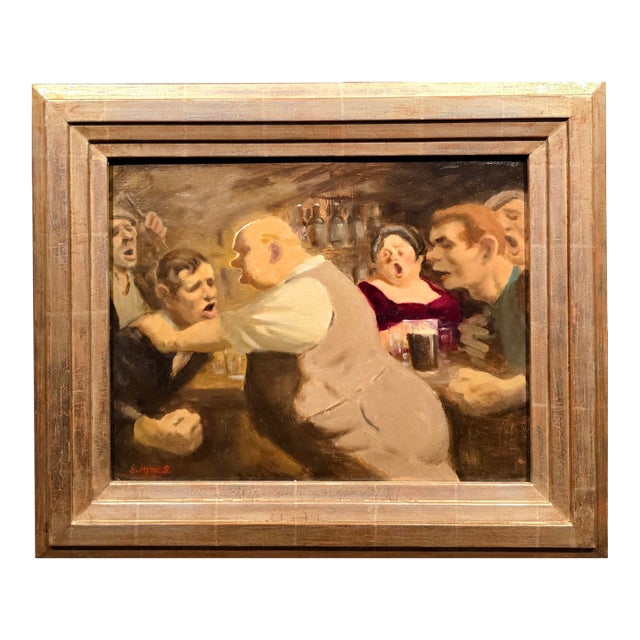
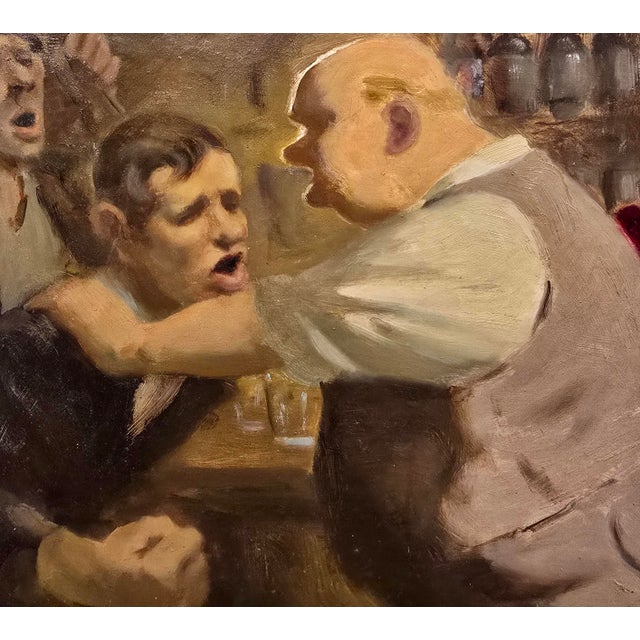
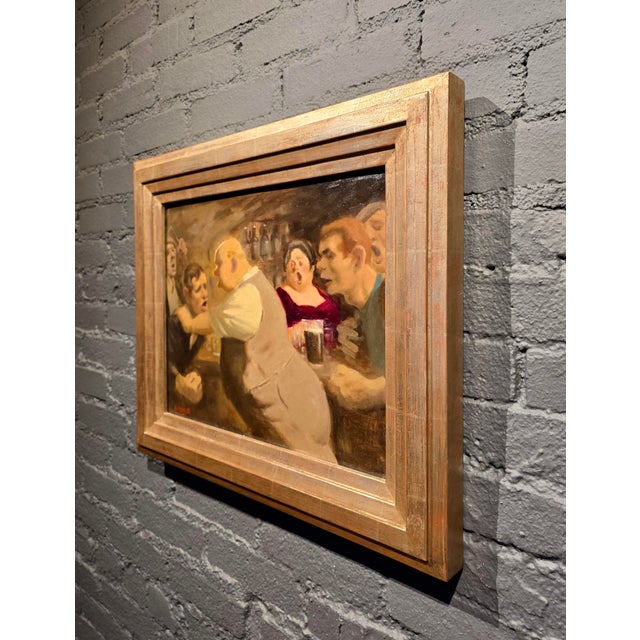
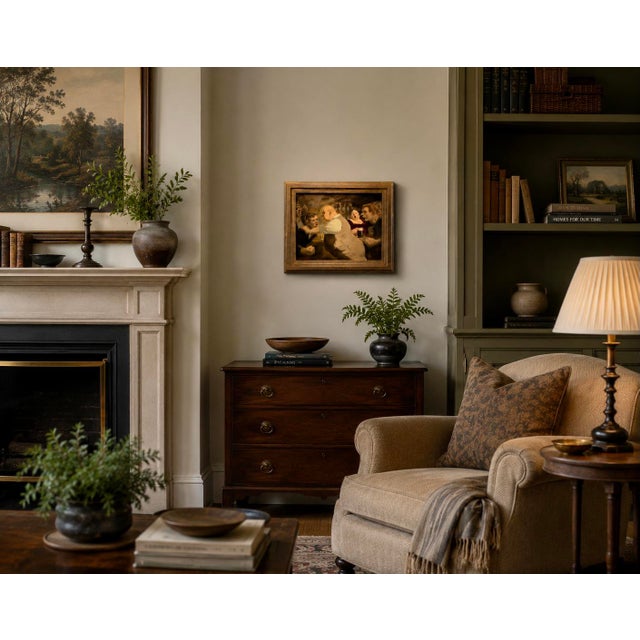
Edward Sylvester Hynes -The Pub Brawl -c.1930s Oil Painting
English Expressionist / illustrator - Oil painting on board - Signed …
Read more
Edward Sylvester Hynes -The Pub Brawl -c.1930s Oil Painting
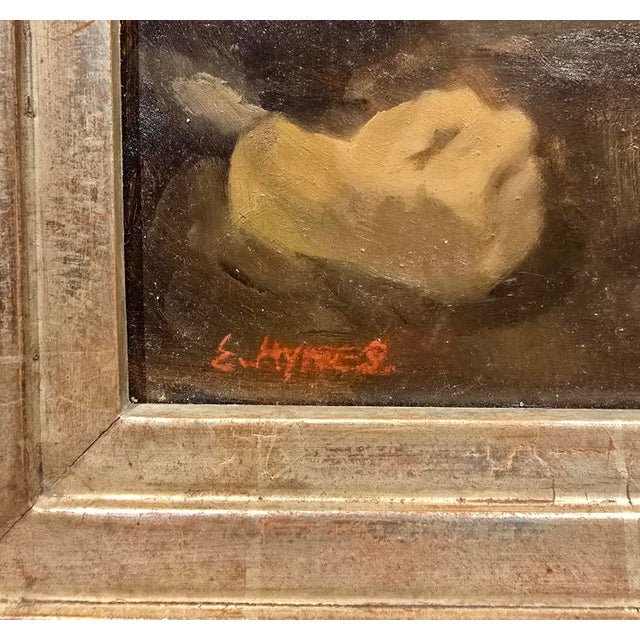
English Expressionist / illustrator - Oil painting on board - Signed - circa 1930s
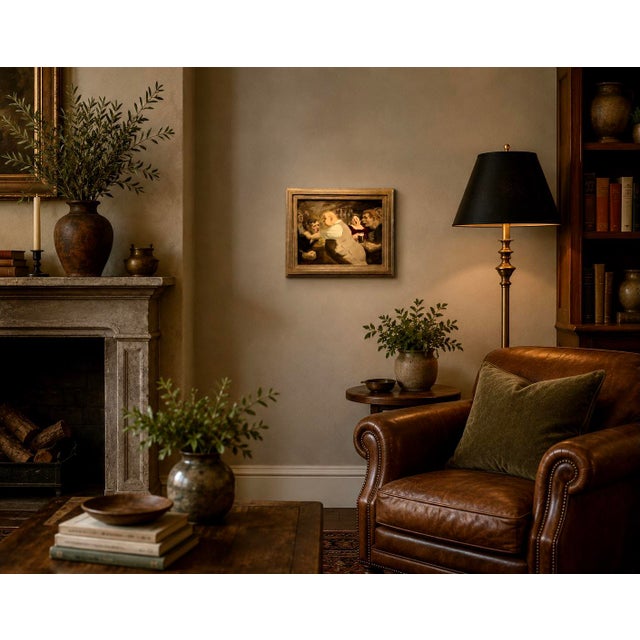
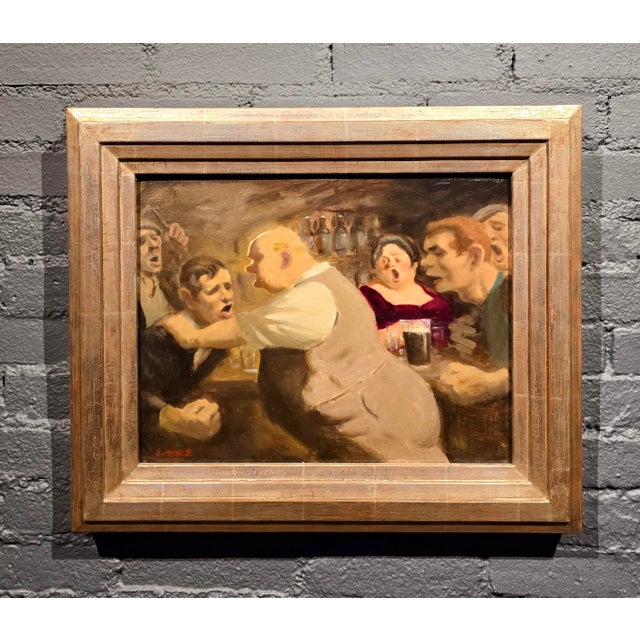
Board size 14x18" Frame size 20x24x2"
Description:
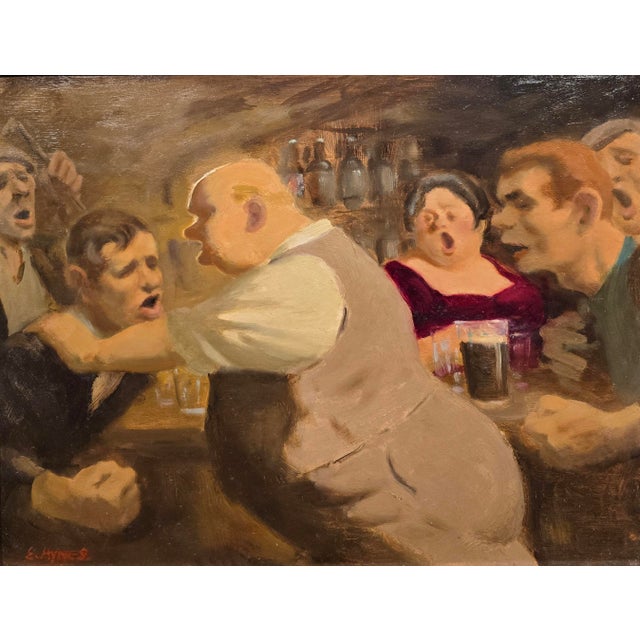
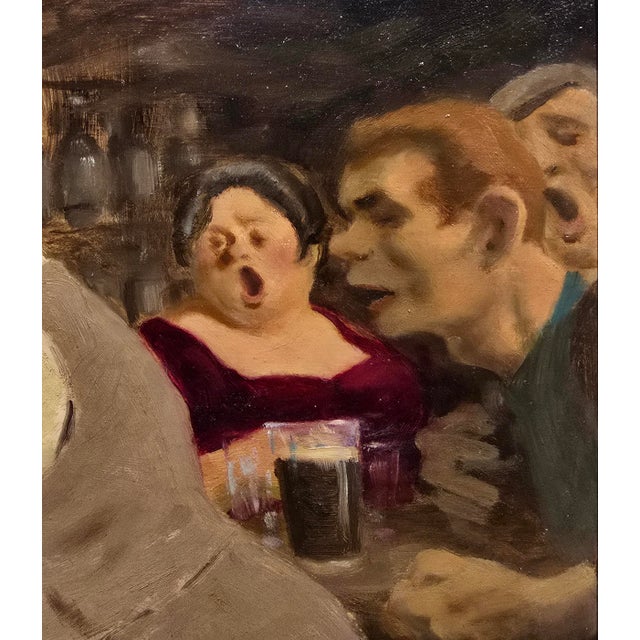
"The Pub Brawl" (or "The Public House Altercation") Few artists chronicled the humor, camaraderie, and occasional turbulence of everyday British life with the warmth and theatrical flair of Edward Sylvester Hynes. In this wonderfully animated composition, Hynes transports the viewer into the lively interior of a neighborhood public house at the very moment a heated disagreement erupts into physical confrontation.The composition centers upon two powerful figures locked in an explosive exchange across a worn wooden table. A broad-shouldered man in a cream waistcoat lunges forward, grasping his opponent by the collar in a gesture that is equal parts aggression and restraint. Rather than depicting outright violence, Hynes captures the dramatic instant just before the situation fully escalates—a moment suspended between anger and intervention.Surrounding the central figures, a cast of expressive onlookers transforms the incident into a captivating social drama. Their exaggerated facial expressions—ranging from shock and alarm to fascination and amusement—create a rhythmic chorus that draws the viewer's eye throughout the composition. A woman dressed in a rich burgundy blouse gasps in disbelief while neighboring patrons lean inward, their animated reactions contributing as much to the story as the confrontation itself.Hynes employs broad, confident brushwork with remarkable economy. Figures emerge from softly blended earth tones, warm amber highlights, and deep shadows, creating an atmosphere thick with tobacco smoke, conversation, and the unmistakable intimacy of an English public house. Rather than relying on meticulous detail, he allows painterly passages to remain loose and spontaneous, emphasizing mood and movement over precision. This expressive handling lends the work tremendous vitality, allowing viewers to almost hear the raised voices, clinking pint glasses, and bustling energy of the crowded tavern.The restrained palette of warm ochres, umbers, siennas, and muted blacks perfectly reinforces the cozy yet smoky interior, while subtle touches of crimson and cream provide visual accents that guide the eye through the scene. The dramatic lighting heightens the emotional tension, illuminating the principal figures while allowing the surrounding crowd to dissolve into the atmospheric background.More than a simple depiction of a barroom quarrel, the painting serves as a vivid observation of human nature. Hynes possessed an extraordinary ability to find both humor and dignity within everyday situations, presenting ordinary working-class characters not as caricatures but as recognizable individuals whose emotions feel immediate and authentic. The result is a composition rich in narrative, inviting viewers to imagine the events that preceded—and will inevitably follow—the captured moment.Paintings of this caliber exemplify why Edward Sylvester Hynes remains celebrated as one of Britain's finest interpreters of twentieth-century social life. His works are cherished not only for their expressive painterly technique but also for their remarkable ability to preserve the character, wit, and communal spirit of the traditional English pub—a cultural institution that has long served as the social heart of British life.This engaging composition is both an accomplished work of British genre painting and a timeless celebration of storytelling through paint, combining expressive brushwork, theatrical composition, and keen psychological observation into an image that is as entertaining today as when it was first created.
Artist Biography Edward Sylvester Hynes (1897–1982)
Edward Sylvester Hynes was an accomplished Irish-born British illustrator, caricaturist, painter, and social commentator whose remarkable career spanned more than five decades. Equally gifted as a fine artist and commercial illustrator, Hynes earned widespread recognition for his witty cartoons, expressive caricatures, and richly atmospheric oil paintings depicting the humor and humanity of everyday British life.Born in County Clare, Ireland, in 1897, Hynes was the son of a surgeon and was raised in Nottingham, England. His early life followed an unconventional path. After serving in the Merchant Navy, he briefly pursued medical studies at Sheffield University before ultimately dedicating himself to a career in art. This broad life experience would later become one of the defining characteristics of his work, allowing him to portray people from every walk of life with remarkable empathy, authenticity, and psychological insight.Hynes first gained recognition during the early 1920s when his caricatures began appearing in Town Topics. His exceptional ability to capture personality with only a few confident strokes quickly established him among Britain's most respected commercial illustrators. Throughout the following decades his work appeared regularly in many of Britain's leading publications, including The Daily Sketch, The Sunday Express, The Strand Magazine, London Opinion, The Bystander, Lilliput, Gentlewoman, The Evening News, and numerous other popular periodicals. He also became well known for his theatre caricatures published in the Illustrated Sporting and Dramatic News and enjoyed a successful career in advertising illustration.Perhaps Hynes' most celebrated achievement came through his long association with the British magazine Men Only, for which he produced striking full-color cover illustrations from 1937 through 1956. These sophisticated caricatures combined humor, social satire, and painterly technique, becoming instantly recognizable to generations of readers. During this period he established himself as one of Britain's foremost illustrators, admired for his keen observational skills and exceptional draftsmanship.While illustration brought Hynes considerable professional success, it was in his oil paintings that his greatest artistic sensitivity emerged. His genre scenes celebrate the rhythms of ordinary British life, depicting crowded public houses, bustling cafés, village gatherings, musicians, fishermen, and working-class communities with warmth, humor, and deep humanity. Rather than portraying grand historical events, Hynes found inspiration in everyday encounters—the conversations, celebrations, disagreements, and quiet moments that define the shared human experience.His paintings are distinguished by loose yet highly controlled brushwork, expressive facial characterization, and an exceptional command of atmosphere. Rich earth tones, soft amber lighting, and painterly handling evoke the smoky interiors of traditional English pubs and social clubs, while his dynamic compositions often resemble scenes from a stage play, inviting viewers to imagine the unfolding narrative beyond the canvas. Few artists captured the unique spirit of Britain's public houses with such affection, wit, and psychological understanding.Although frequently associated with British genre painting, Hynes resisted sentimentality. His works balance humor with compassion, presenting ordinary people as complex individuals whose emotions feel genuine and timeless. Whether portraying a lively tavern debate, an animated card game, or an impromptu barroom confrontation, his paintings possess an immediacy that continues to resonate with contemporary audiences.Beyond his artistic accomplishments, Hynes was also a Fellow of the Royal Geographical Society and published a volume of cartoons entitled Cocktail Cavalcade in 1937, further demonstrating the breadth of his creative talents.In his later years Hynes returned to County Clare, where he devoted much of his time to painting in oils and charcoal until his death in 1982. His artistic legacy bridges the worlds of illustration and fine art, reflecting an era when technical mastery, storytelling, and keen social observation were held in equal esteem.Today, Edward Sylvester Hynes' works are held in numerous private collections and continue to enjoy strong appreciation among collectors of British and Irish genre painting, illustration, and twentieth-century social realism. His finest paintings stand as enduring records of everyday life, combining masterful draftsmanship, expressive painterliness, and an unmistakable sense of humor to create scenes that remain both historically evocative and universally engaging.
See less
- Dimensions
- 24ʺW × 2ʺD × 20ʺH
- Styles
- English
- Expressionism
- Frame Type
- Framed
- Period
- 1930s
- Country of Origin
- Ireland
- Item Type
- Vintage, Antique or Pre-owned
- Materials
- Oil Paint
- Wood
- Condition
- Good Condition, Original Condition Unaltered, Some Imperfections
- Color
- Burgundy
- Condition Notes
- Excellent - Minor wear consistent with age and history Excellent - Minor wear consistent with age and history less
Questions about the item?
Returns & Cancellations
Return Policy - All sales are final 48 hours after delivery, unless otherwise specified in the description of the product.
Cancellation Policy - Prior to shipping or local pickup, buyers may cancel an order for up to 48 hours, unless otherwise specified.
Related Collections
- Photorealism Canvas Paintings
- Photorealism Paintings in New York
- Ed Ruscha Paintings
- Richard Serra Paintings
- Herman Miller Paintings
- Jo Baskerville Paintings
- Louise Nevelson Paintings
- Karen Offutt Paintings
- Nicola Simbari Paintings
- BDDW Paintings
- Carl-Axel Acking Paintings
- Joseph Stella Paintings
- Karl-Erik Ekselius Paintings
- James McCray Paintings
- Jaanika Peerna Paintings
- Leroy Neiman Paintings
- Cassina Paintings
- Black Photorealism Paintings
- Lawson-Fenning Paintings
- Vienna Secession Paintings
- Jean-Paul Barray Paintings
- Hans Andersen Paintings
- Johannes Andersen Paintings
- Pedro Friedeberg Paintings
- Peter Behrens Paintings