

Details
Description
Importing art into the united states is exempt from all u.s. Tariffs but please, do check
mototsugu sugiyama — “venice …
Read more
Importing art into the united states is exempt from all u.s. Tariffs but please, do check
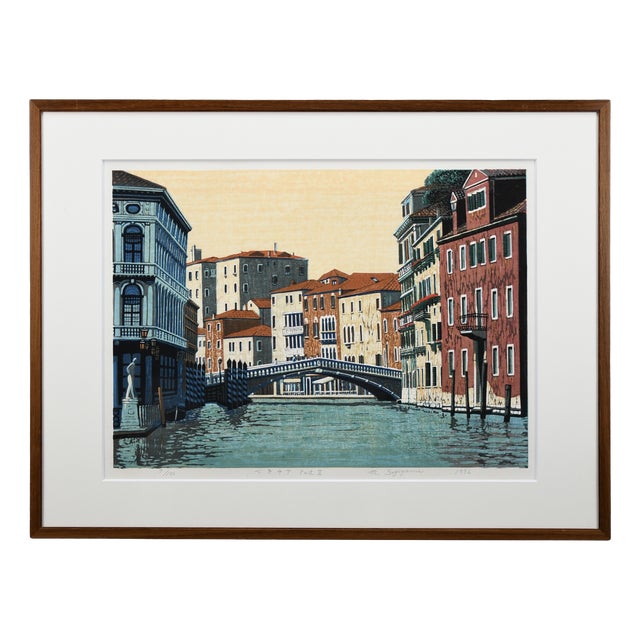
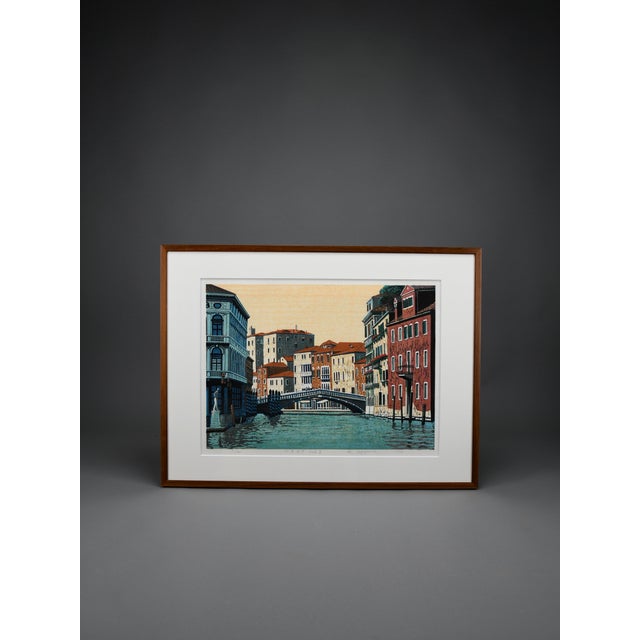
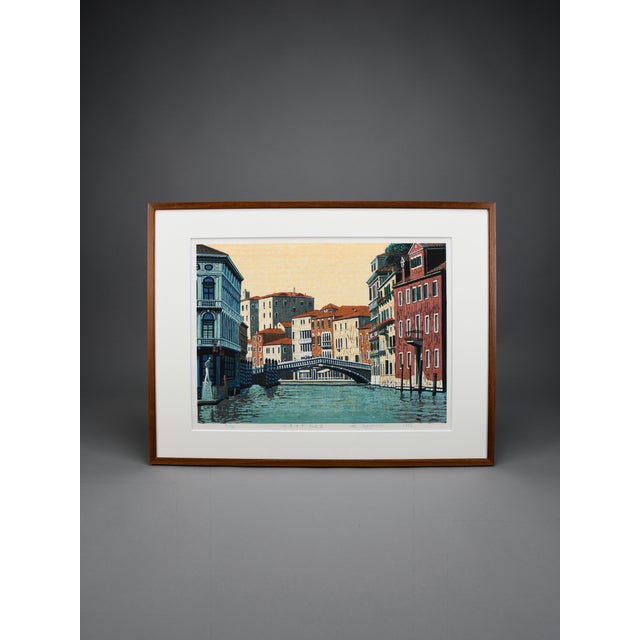
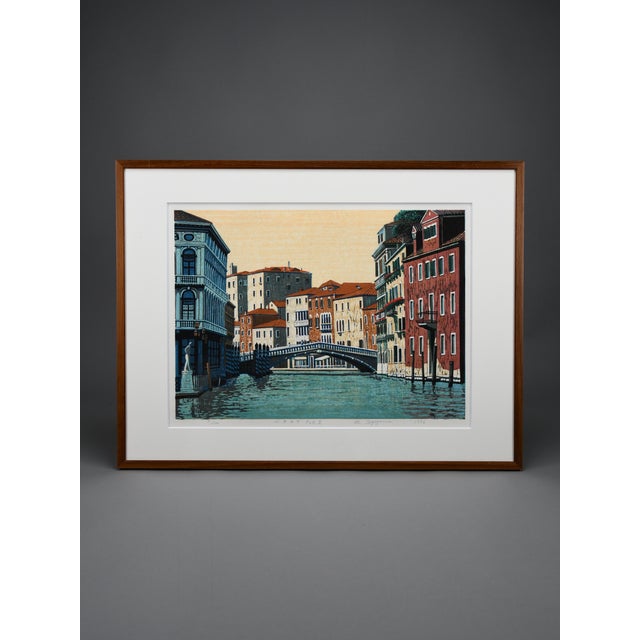
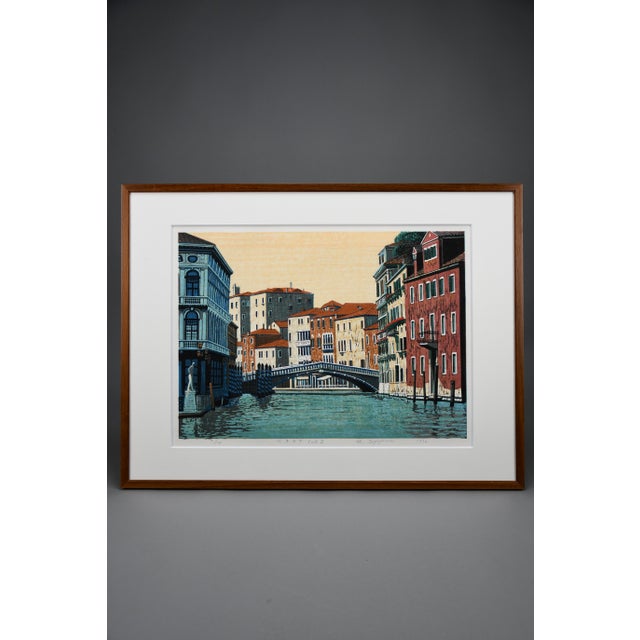
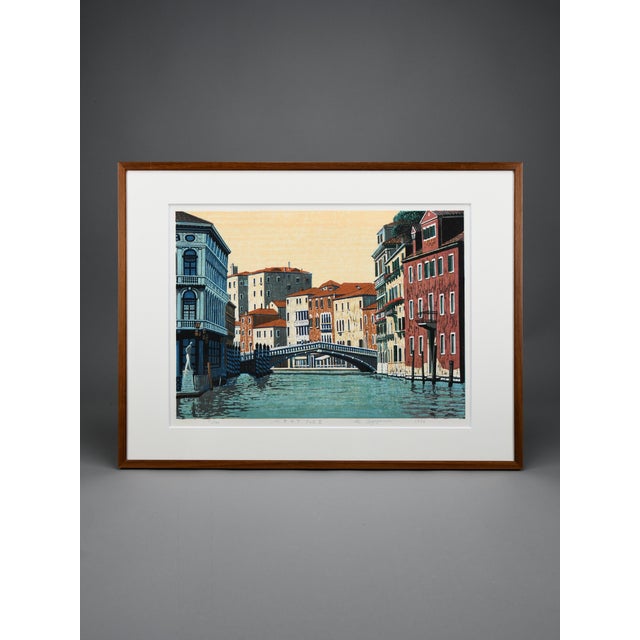
mototsugu sugiyama — “venice part ii” — original japanese woodblock print, signed, numbered 7/100, 1996
a canal scene of extraordinary stillness and chromatic precision, this large-format colour woodblock print by mototsugu sugiyama (杉山元次, born 1925) captures the grand canal of venice with the particular clarity of vision that has made this self-taught printmaker one of the most admired figures in contemporary japanese graphic art.
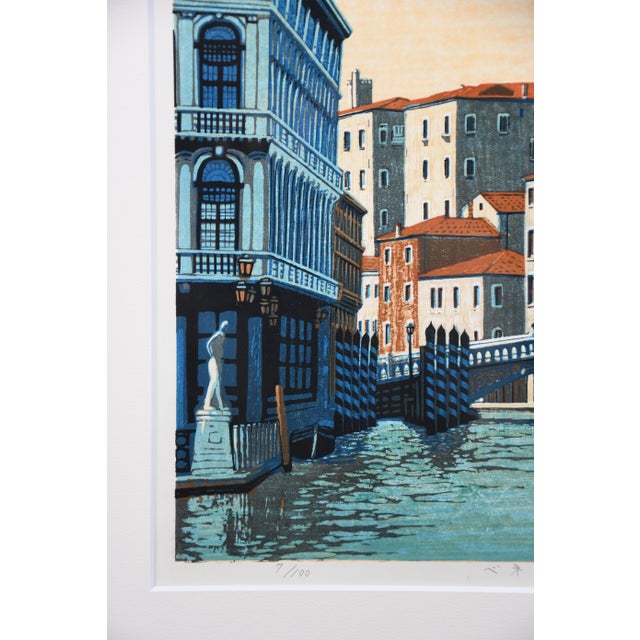
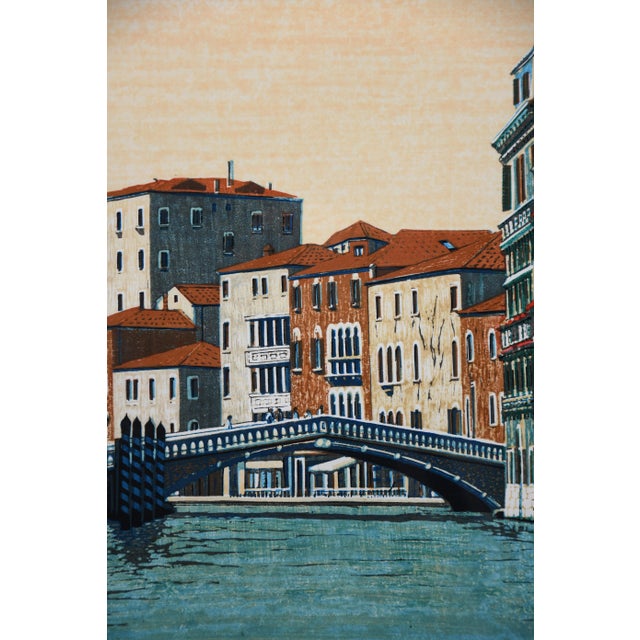
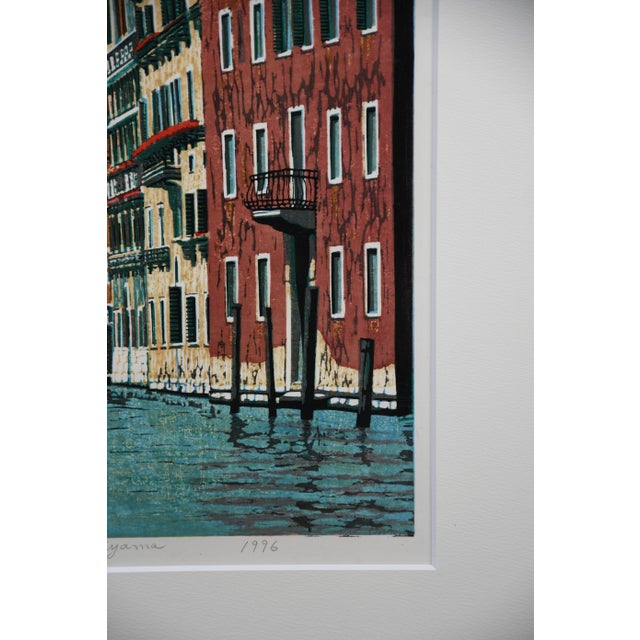
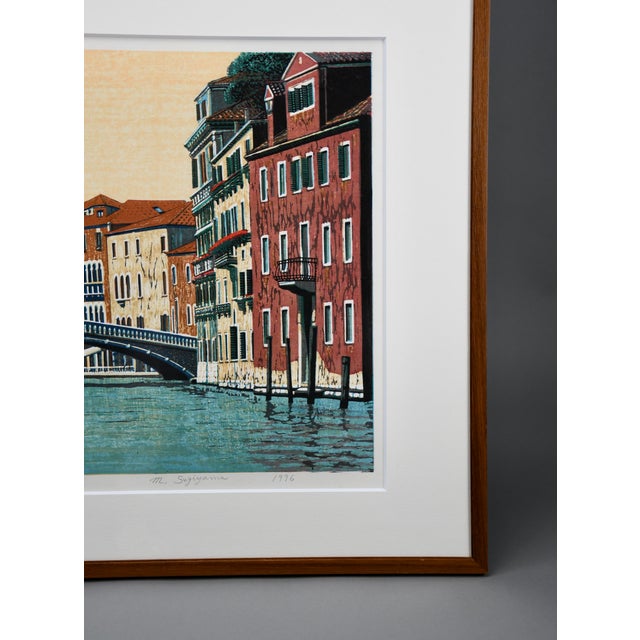
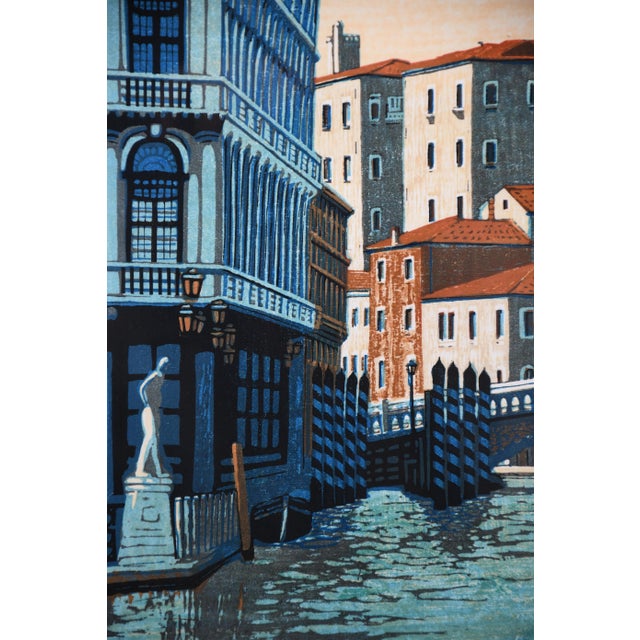
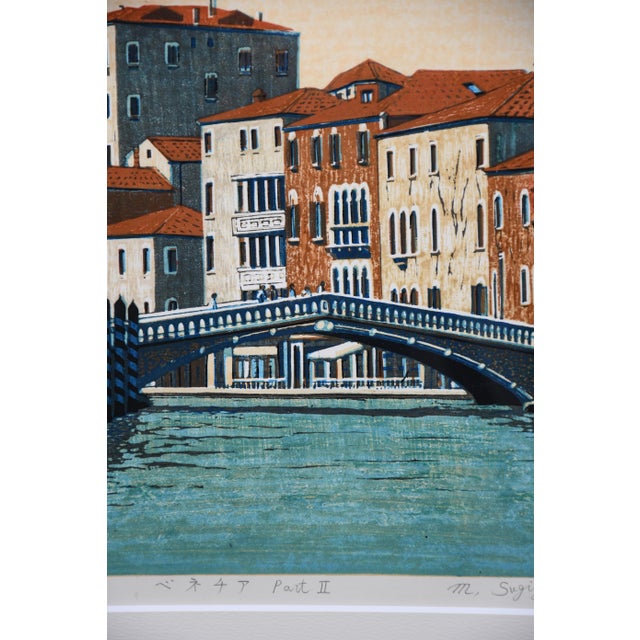
the composition frames a view along the canal from water level, the eye drawn through the warm amber of a venetian sky toward a stone bridge in the middle distance. To the left, the ornate blue-grey facade of a baroque palazzo anchors the scene with architectural weight, a solitary classical figure — a white marble statue — standing sentinel at the water’s edge. Opposite, a rank of terracotta-roofed palazzi recedes in warm ochre and venetian red, their shuttered windows, ironwork balconies, and damp-stained plaster rendered with meticulous fidelity. The canal water is worked in layered teals and blue-greens, its surface broken into rhythmic facets that convey both movement and reflection. The texture of the japanese washi paper is palpable throughout, absorbing the water-based pigments in characteristic moku hanga fashion, giving the image an organic warmth no offset reproduction can replicate.
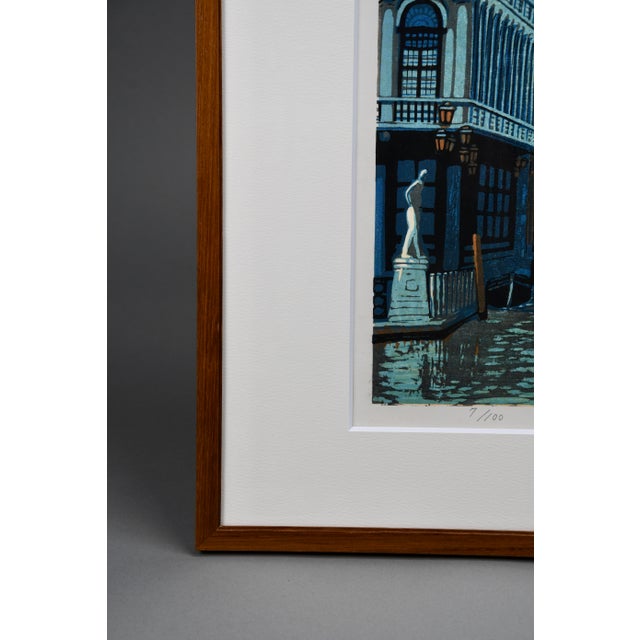
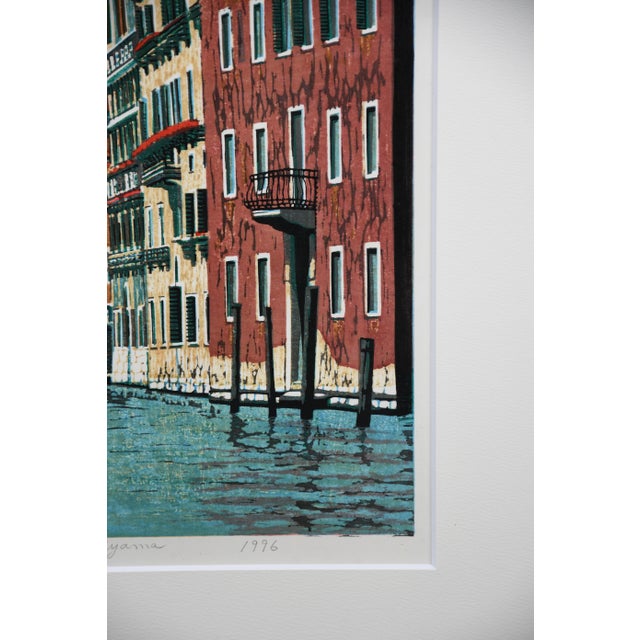
this is impression 7 from an edition of 100 — an exceptionally low, early number. The lower margin carries the title in japanese (ベネ — abbreviated from ヴェネツィア, venezia), followed by “part ii” in roman script, the edition number 7/100, the artist’s pencil signature m. Sugiyama, and the date 1996. The work is framed in a warm-toned hardwood frame with a generous white mat, and is in excellent condition throughout.
about the artist
mototsugu sugiyama was born in 1925 in regional japan. Having pursued a career in business, he began studying the woodblock art at the age of 50, in 1975, with master printmaker funasaka yoshisuke. Woodblockprint after retiring from business in 1995, he devoted himself entirely to an artistic life woodblockprint, a trajectory that brought his work to international attention. His unique style proved impossible to imitate, and he won remarkable international recognition in his later years — including having a work chosen as the centrepiece of the east meets west exhibition in michigan in 2004. Woodblockprint
sugiyama hand-carved every woodblock himself — sometimes as many as eight individual carved blocks for a single composition — and hand-printed every impression. Woodblockprint his subjects, always scenes drawn from observed life, combine incredible detail and ultra-modern form with an aura of timeless japan woodblockprint — and, as venice part ii demonstrates, an equally acute eye for the architecture and light of europe. His limited editions, invariably held to editions of 100, are now sought after by collectors worldwide.
on japanese woodblock printing
the tradition of japanese woodblock printing — mokuhanga (木版画) — stretches back to the edo period, when it produced the great ukiyo-e masters: hiroshige, hokusai, utamaro. The technique involves carving a separate block of cherry wood for each colour, registering them with extraordinary precision, and printing onto dampened washi paper using water-based pigments and a hand-held baren. The resulting image has a depth, surface texture, and tonal subtlety quite unlike any other printmaking method. Moku hanga uses water-based pigments, hand-carved woodblocks, and hand printing with a baren, and is known for precise colour layering and fine detail. Artelino in the twentieth century the sōsaku-hanga (“creative print”) movement extended this tradition by insisting that the artist design, carve, and print every work personally — a philosophy sugiyama embodied completely.
dimensions
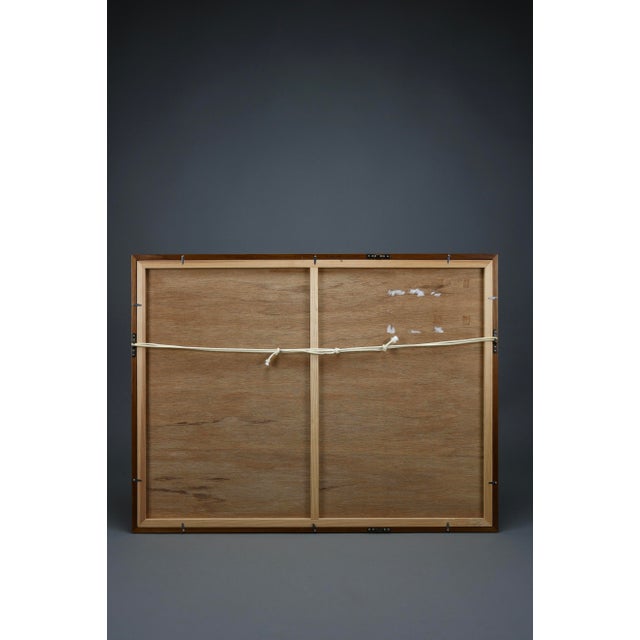
framed (including frame): h 57 × w 75 × d 2 cm / h 22.4 × w 29.5 × d 0.8 in
condition
excellent. Colours vivid and unfaded. Paper clean. Frame and mat intact.
a note on the title as inscribed: the lower left margin bears the japanese characters ベネ (an abbreviated form of venezia), consistent with sugiyama’s practice of inscribing a japanese title alongside the western title “part ii” — confirming the subject and the work’s place within a documented series.
colors may slightly vary due to photographic lighting sources or your monitor settings.
wear consistent with age and use.
See less
- Dimensions
- 29.53ʺW × 0.79ʺD × 22.44ʺH
- Period
- 1990s
- Country of Origin
- Japan
- Item Type
- Vintage, Antique or Pre-owned
- Condition
- Good Condition, Unknown, Some Imperfections
- Color
- Condition Notes
- Very Good — This vintage item has no defects, but it may show slight traces of use. Very Good — This vintage item has no defects, but it may show slight traces of use. less
Returns & Cancellations
Return Policy - All sales are final 48 hours after delivery, unless otherwise specified in the description of the product.
Cancellation Policy - Prior to shipping or local pickup, buyers may cancel an order for up to 48 hours, unless otherwise specified.
Related Collections
- Medium-Density Fibreboard Original Prints
- Rattan Original Prints
- Soicher Marin Original Prints
- Johannes Kip Original Prints
- Sam Francis Original Prints
- Damien Hirst Original Prints
- Silver Finish Original Prints
- Dye Transfer Original Prints
- Original Prints in Lexington, KY
- John Kiraly Original Prints
- Donald Sultan Original Prints
- Original Prints in Panama City, FL
- Original Prints in Salt Lake City
- Ralph Lauren Original Prints
- Botanical Prints
- Framed Prints
- Bird Prints
- Woodblock Prints
- Screen Prints
- Japanese Woodblock Prints
- Thomas McKnight Original Prints
- George Barbier Original Prints
- Frank Stella Original Prints
- Gustave Baumann Original Prints
- Teak Original Prints