

Details
Description
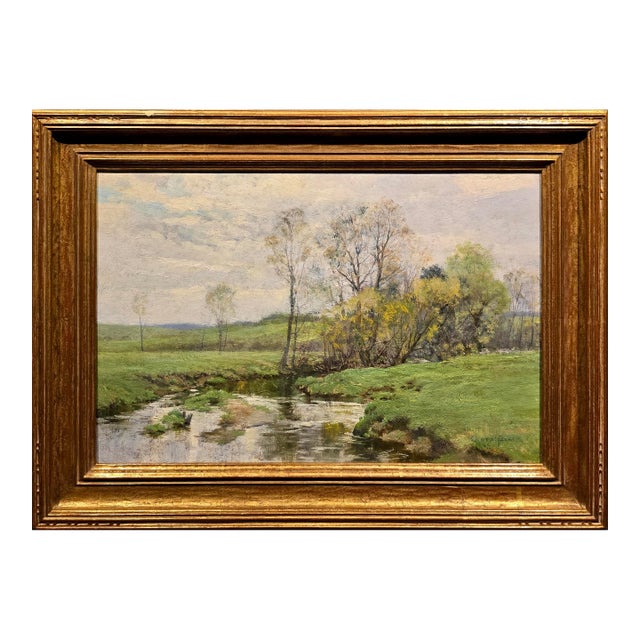
Olive Parker Black "Trout Stream" Original 1910s East Coast Impressionist Oil Painting
American Impressionist - Oil painting on canvas - …
Read more
Olive Parker Black "Trout Stream" Original 1910s East Coast Impressionist Oil Painting
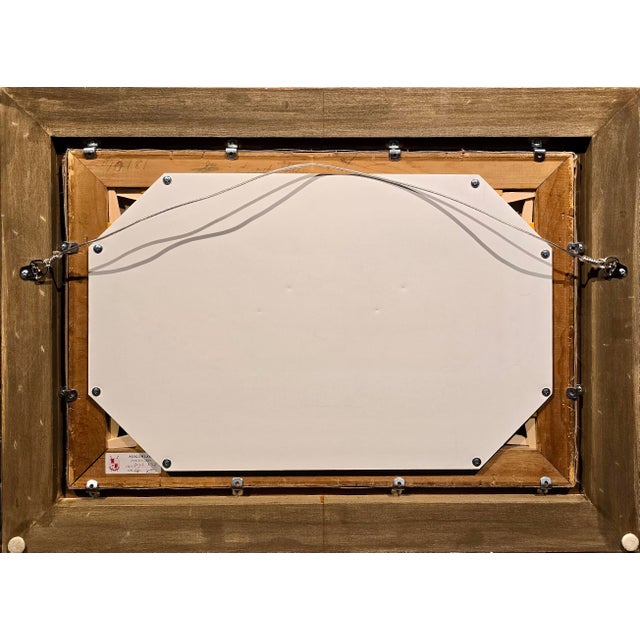
American Impressionist - Oil painting on canvas - Signed and titled in verso
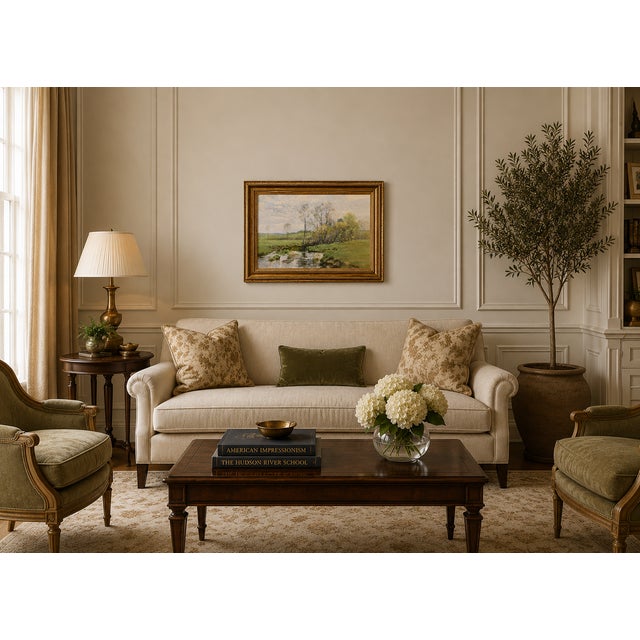
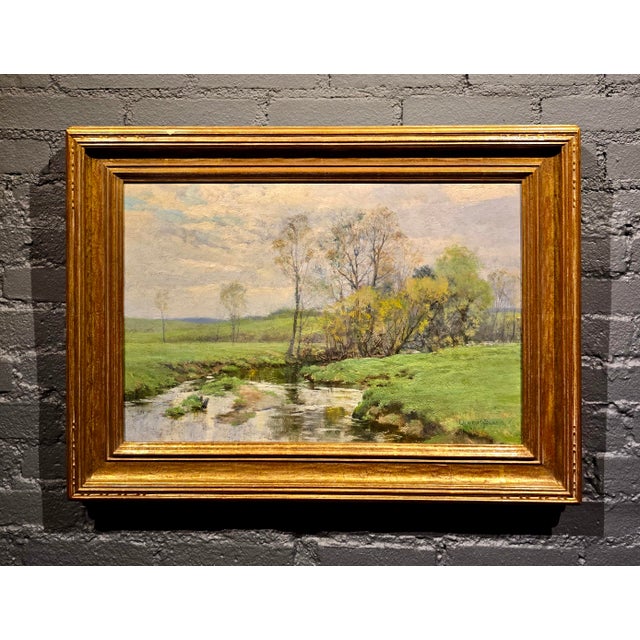
Canvas size: 20x30 - Frame size 26x36x3"
Item Overview
Creator: Olive Parker Black (American, 1868–1948).
Title: Trout Stream.
Period: Late 19th to Early 20th Century (circa 1900–1915).
Medium: Oil on Canvas.
Movement: American Impressionism / New England Barbizon School.
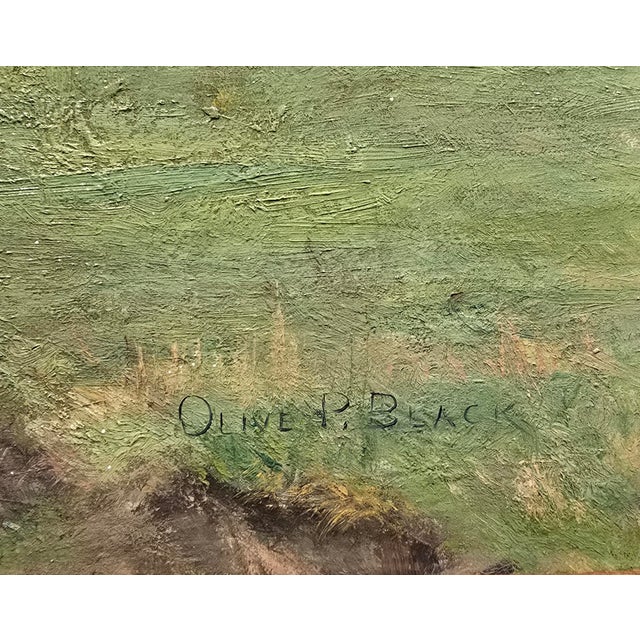
Signature: Hand-signed by the artist in the lower right corner
Detailed Description & Composition
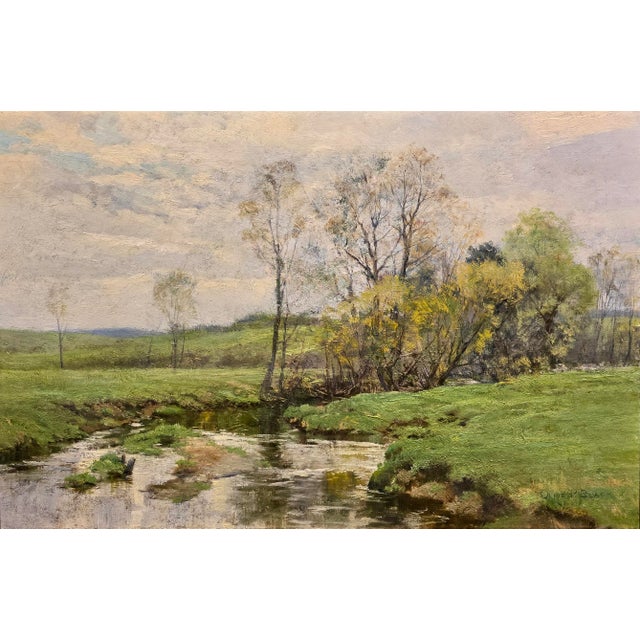
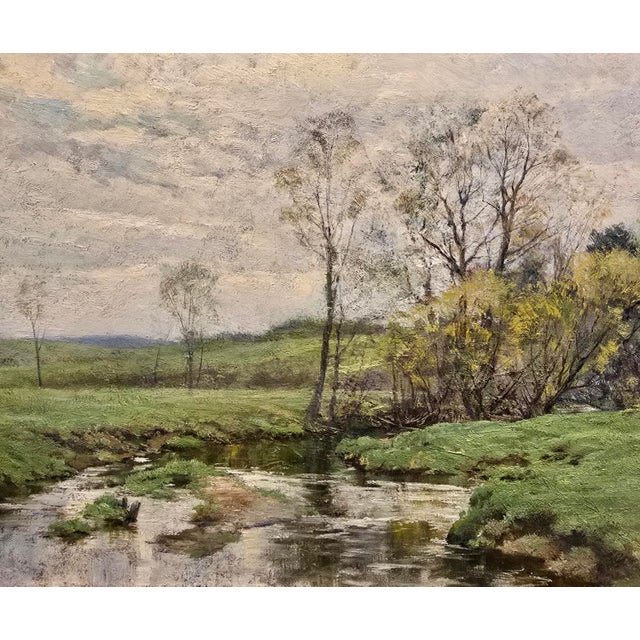
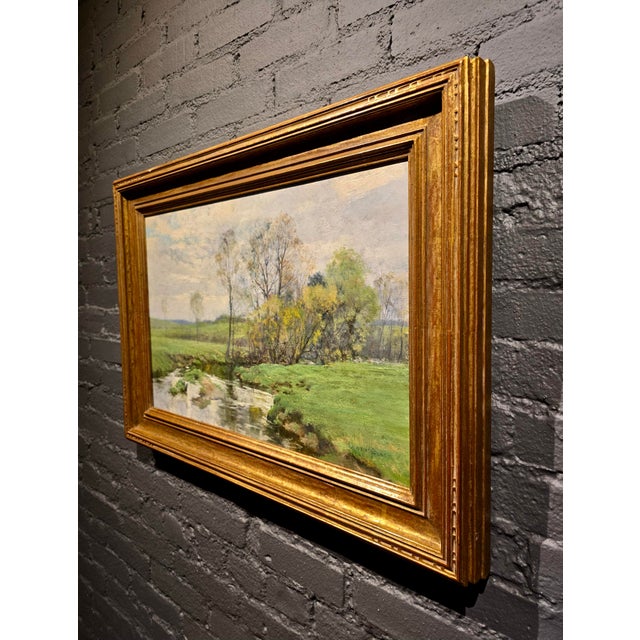
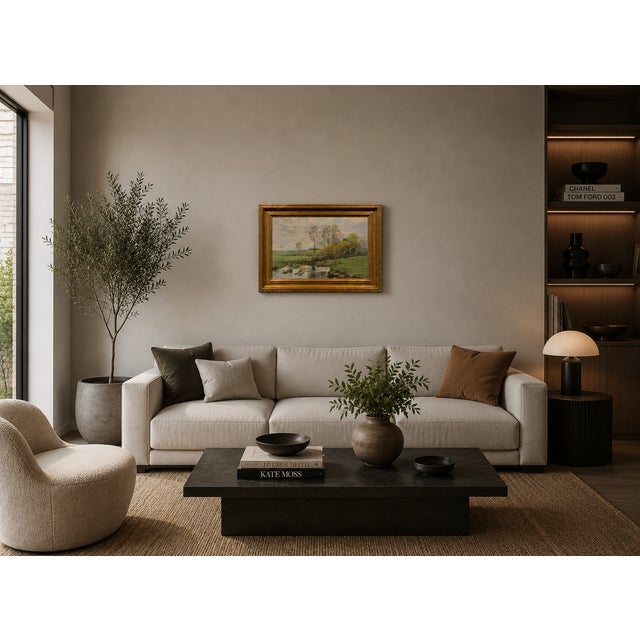
This museum-quality original oil painting is a quintessential example of late 19th-century American Impressionism by celebrated artist Olive Parker Black. Titled Trout Stream, the canvas captures a pristine, peaceful fly-fishing habitat tucked deep within the northeastern countryside.
The composition utilizes a classic low-horizon perspective to let the quiet beauty of the landscape take center stage:
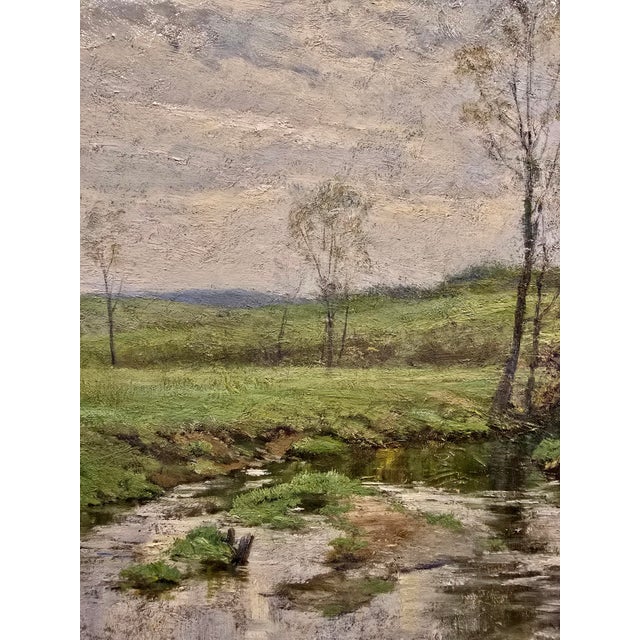
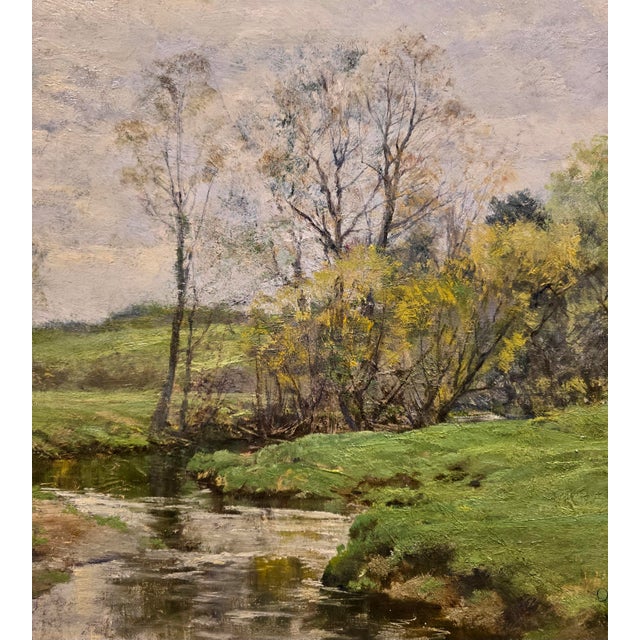
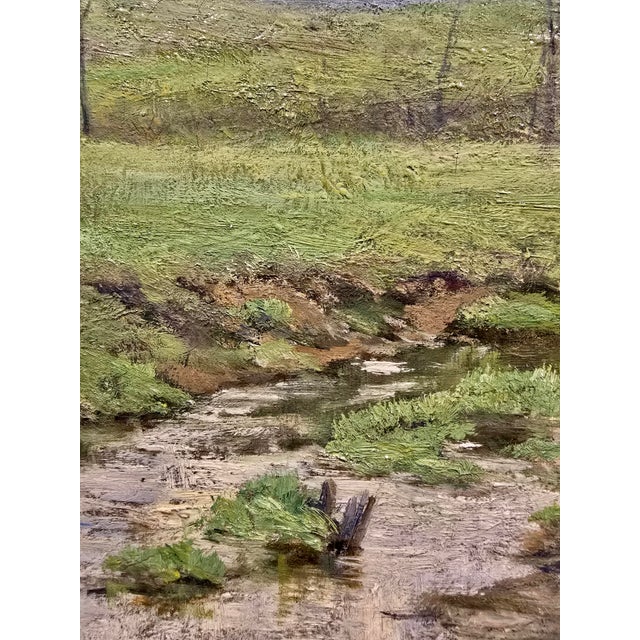
The Stream (Foreground): A shallow, slow-moving trout stream gently meanders from the left side of the frame. The water is rendered with clear, reflective quality, mirroring a soft, light-filled sky. Beneath the water’s surface, the artist meticulously suggests exposed sandy riverbeds, shallow flats, and submerged river stones. Low clumps of wild marsh grass slice up through the currents, establishing structural depth.
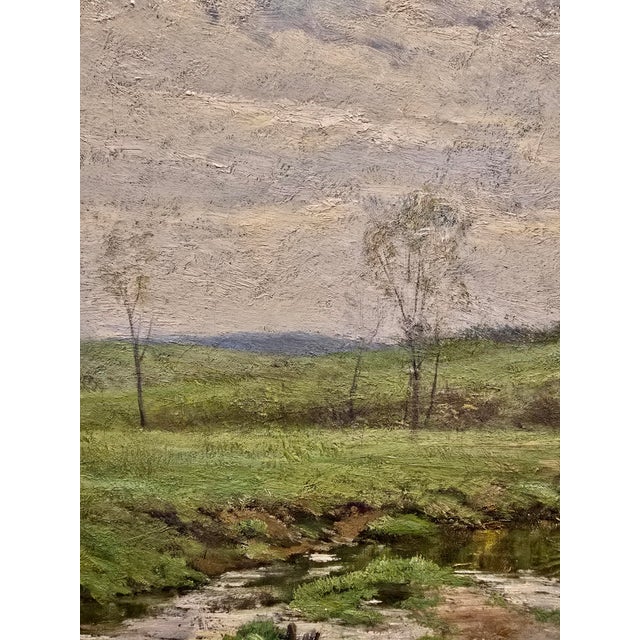
The Pasture & Trees (Midground): To the right, a lush, vibrant green grassy knoll slopes down directly to meet the stream's edge. An impressive, dense grove of trees grounds the center of the image. Tall, slender trees with intricate, bare upper branches reach toward the sky, while the lower brush bursts with thick, textured foliage in alternating shades of spring green and mossy yellow.
The Horizon (Background): In the far distance, the vibrant field fades into soft, flat-topped green hills under an expansive, diffused sky. The cloud cover is light and soft-focus, creating an even, tranquil blanket of atmospheric afternoon light.
Palette & Brushwork Technique
The color story is deeply rooted in the natural world, favoring an elegant and soothing range of rich grass greens, olive greens, earthy ochres, soft sandy tans, and cool river grays.
Heavily influenced by her master instructors, Black uses a rhythmic, deliberate brush technique. The paint is applied with varied textures—short, descriptive dabs define the budding seasonal foliage, while broad, smooth, horizontal sweeps give the water and far-off sky their serene, glassy surface. There are no harsh shadows, ensuring the work maintains a peaceful, atmospheric tone.
Frame & Presentation
The painting is beautifully housed in its classic, deep-profile molded giltwood frame. The frame features elegant aged-gold coloration with classic, understated linear detailing and subtle reed-and-bead accents running along the inner and outer borders. Both the canvas and the gilt frame retain a gorgeous vintage patina that highlights its period-correct authenticity.
Artist Biography
Olive Parker Black (American, 1868–1948)
She was a highly accomplished landscape painter who achieved significant national recognition during a male-dominated era of American art. Masterfully blending the vibrant light of American Impressionism with the moody, emotional qualities of the Barbizon and Tonalist traditions, Black is celebrated as one of the premier female voices of early 20th-century American landscape painting.
Early Life and Education
Born in Cambridge, Massachusetts in 1868, Black showed an early aptitude for fine art. She began her formal training at the School of the Museum of Fine Arts in Boston, studying under the esteemed masters Otto Grundmann and Frank Crowninshield.
Seeking to immerse herself in the epicenter of the American art world, she moved to New York City in the early 1890s to study at the Art Students League and the National Academy of Design. It was here that she trained under William Merritt Chase, one of America’s most iconic Impressionists. Black quickly excelled and became widely recognized as one of Chase’s star pupils. She spent summers polishing her plein air (outdoor) technique alongside him at his famous Shinnecock Summer School of Art on Long Island.
Stylistic Influences and Artistic Approach
While her luminous brushwork and treatment of light directly reflect Chase’s Impressionist teachings, Black’s style was heavily balanced by another crucial mentor: Hugh Bolton Jones. Under Jones, she absorbed a deep love for the subtle, harmonious tones, deep atmospheric effects, and rustic simplicity championed by the French Barbizon school.
This dual education shaped her signature aesthetic. Her works—frequently depicting the rolling hills of the Berkshire Mountains, Hudson Valley pastures, and tranquil winding rivers—are highly recognizable for their:
Lyrical Compositions: A persistent motif in her body of work is a shallow stream gently cutting through a green landscape, perfectly mirroring the sky above.
Rhythmic Brushwork: Loose, energetic brush dabs define spring or autumn foliage, while wider, glassy strokes capture water and open skies.
Seasonal Atmosphere: Rather than dramatic or chaotic weather, she specialized in the quiet, calming subtleties of changing seasons—particularly early spring thaw and late summer afternoons.
Career and Professional Associations
By the late 1890s, Black was an established fixture in the professional art community. Around 1910, she permanently moved her primary residence from Cambridge, Massachusetts to a studio home in New York City, though she maintained a beloved summer residence in South Egremont, Massachusetts, nestled in the Berkshires.
Breaking into prestigious, traditionally male artist networks, she held active memberships in several elite organizations:
National Association of Women Artists
The Copley Society of Boston (originally the Boston Art Students Association)
American Artists Professional League
New York Society of Painters
Exhibition History and Institutional Legacy
Throughout her active career, Black exhibited widely across the United States. She maintained a remarkably consistent presence at the National Academy of Design, exhibiting her landscapes there almost continuously from 1897 through 1930.
Her works were additionally selected for major exhibitions at:
The Carnegie Institute (Pittsburgh)
The Pennsylvania Academy of the Fine Arts (Philadelphia)
The Boston Art Club
The Society of American Artists (New York)
The Art Club of Philadelphia
Legacy Today
Olive Parker Black passed away in 1948, leaving behind a rich visual record of the late 19th and early 20th-century Northeastern landscape. Today, her paintings are highly sought after by collectors of fine American art, particularly those who prize classic sporting, angling, and New England countryside imagery. Her works are held in numerous prestigious private collections, fine art galleries, and public museums, including the Oklahoma City Museum of Art.
See less
- Dimensions
- 36ʺW × 3ʺD × 26ʺH
- Styles
- American
- Impressionist
- Art Subjects
- Landscape
- Frame Type
- Framed
- Artist
- Black
- Period
- 1910s
- Country of Origin
- United States
- Item Type
- Vintage, Antique or Pre-owned
- Materials
- Canvas
- Oil Paint
- Condition
- Good Condition, Original Condition Unaltered, Some Imperfections
- Color
- Olive
- Condition Notes
- Excellent - Minor wear consistent with age and history Excellent - Minor wear consistent with age and history less
Questions about the item?
Returns & Cancellations
Return Policy - All sales are final 48 hours after delivery, unless otherwise specified in the description of the product.
Cancellation Policy - Prior to shipping or local pickup, buyers may cancel an order for up to 48 hours, unless otherwise specified.
Related Collections
- Photorealism Canvas Paintings
- Ed Ruscha Paintings
- Photorealism Paintings in New York
- Richard Serra Paintings
- Herman Miller Paintings
- BDDW Paintings
- Jo Baskerville Paintings
- Louise Nevelson Paintings
- Karen Offutt Paintings
- Nicola Simbari Paintings
- Carl-Axel Acking Paintings
- Joseph Stella Paintings
- Karl-Erik Ekselius Paintings
- James McCray Paintings
- Jaanika Peerna Paintings
- Leroy Neiman Paintings
- Cassina Paintings
- Black Photorealism Paintings
- Lawson-Fenning Paintings
- Vienna Secession Paintings
- Jean-Paul Barray Paintings
- Hans Andersen Paintings
- Johannes Andersen Paintings
- Pedro Friedeberg Paintings
- Peter Behrens Paintings