

Details
Description
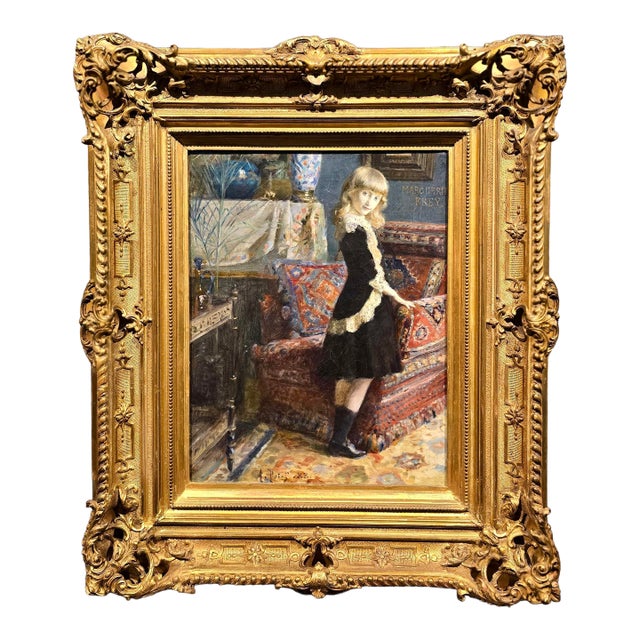
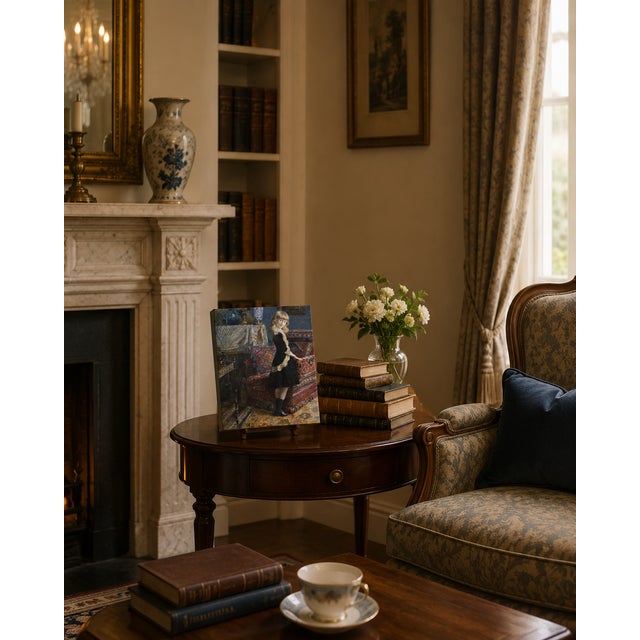
Armand Point -Portrait of a young Girl in an Interior- 19th century French Oil painting
French Realism - Oil painting …
Read more
Armand Point -Portrait of a young Girl in an Interior- 19th century French Oil painting
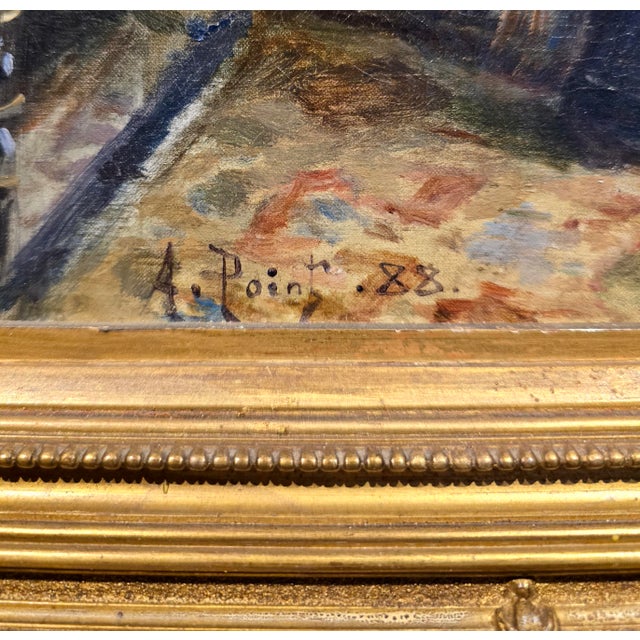
French Realism - Oil painting on Canvas- Signed and dated 1888
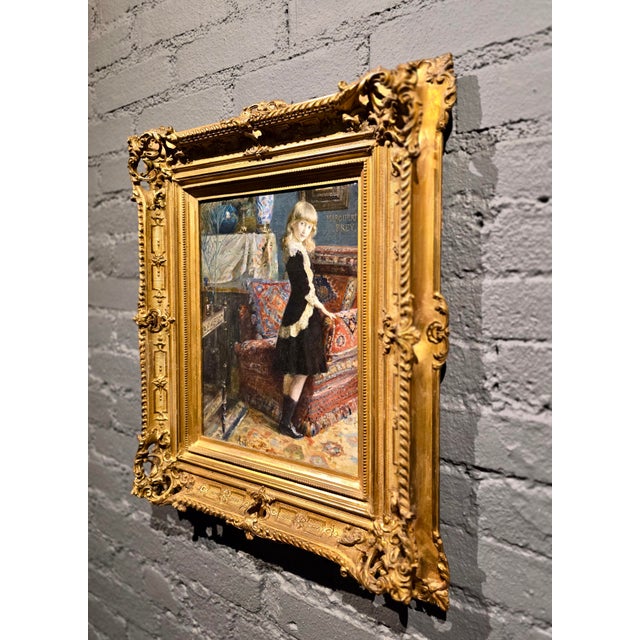
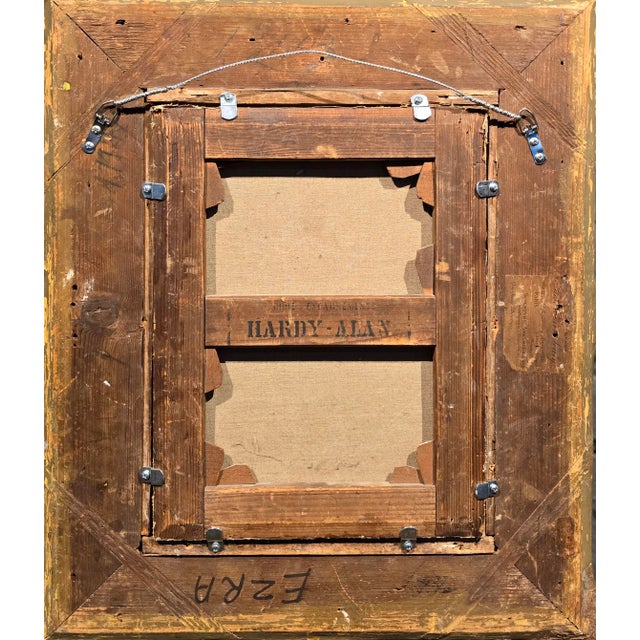
canvas size 14x11" - Frame size 21x17x2"
Overview
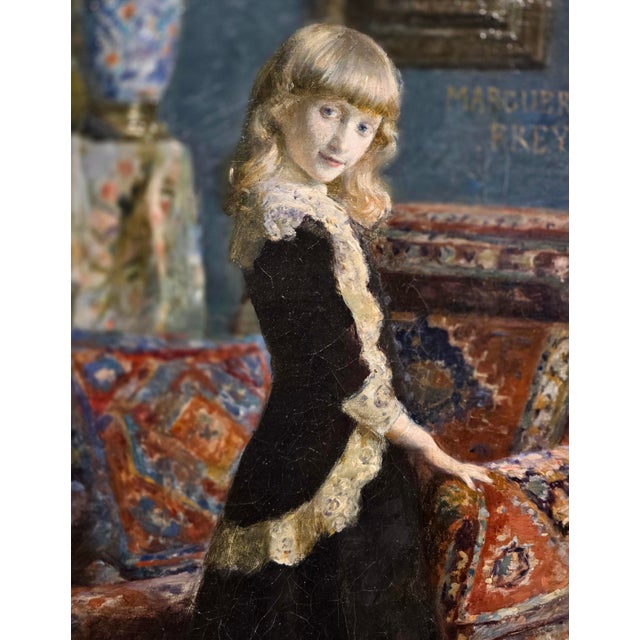
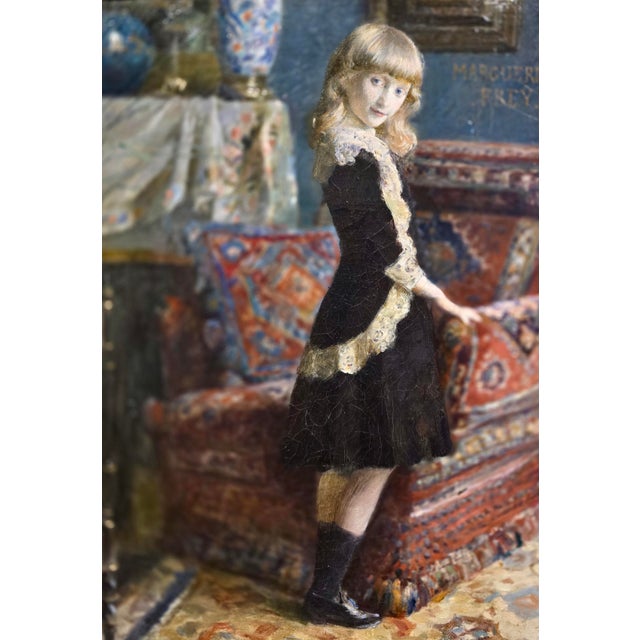
Step back into the refined world of Late 19th-Century French opulence with this breathtaking portrait by the renowned Symbolist painter, Armand Point (1860–1932). Dated 1888, this masterful oil painting depicts a young girl named Marguerite Frey, standing gracefully within a rich, meticulously detailed interior. Encased in its magnificent, gilded period frame, this striking piece seamlessly balances academic realism with the warm, textured nuances of the early Symbolist movement.
Visual Narrative & Composition
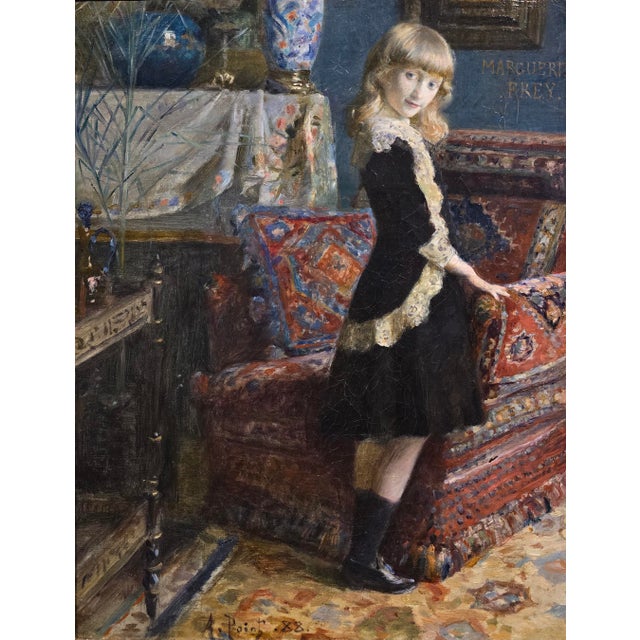
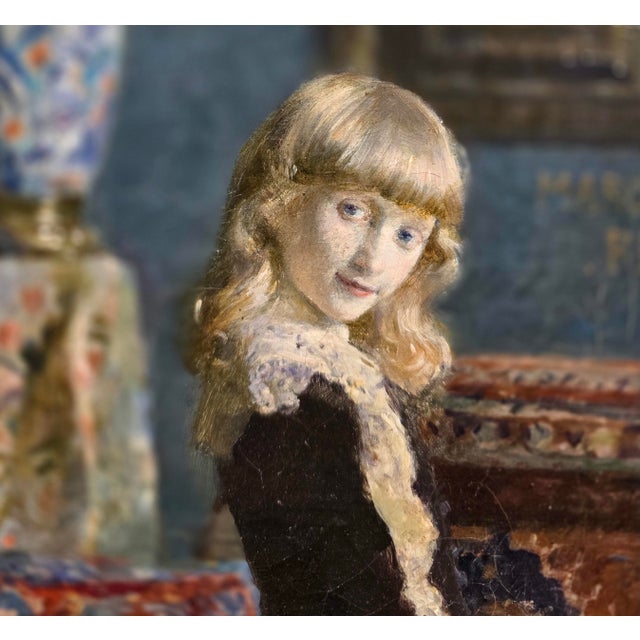
The portrait captures a moment of quiet innocence and timeless elegance. The young subject, Marguerite, is dressed in a classic black velvet dress adorned with delicate white lace trim. She looks directly toward the viewer with a soft, captivating gaze.
Point showcases his exceptional talent through the complex handling of textures in the surrounding scene:
The Background: A plush, patterned Oriental or Persian textile sofa provides a deep crimson backdrop that contrasts beautifully with her blonde hair.
The Decor: To the left, an ornate console table is accented with fine Chinese porcelain and delicate blue-and-white vases, showcasing the era’s fascination with Chinoiserie and global aesthetics.
The Lighting: A gentle light washes across the girl's face and dress, illuminating the masterful brushwork and jewel-toned color palette.
The Frame
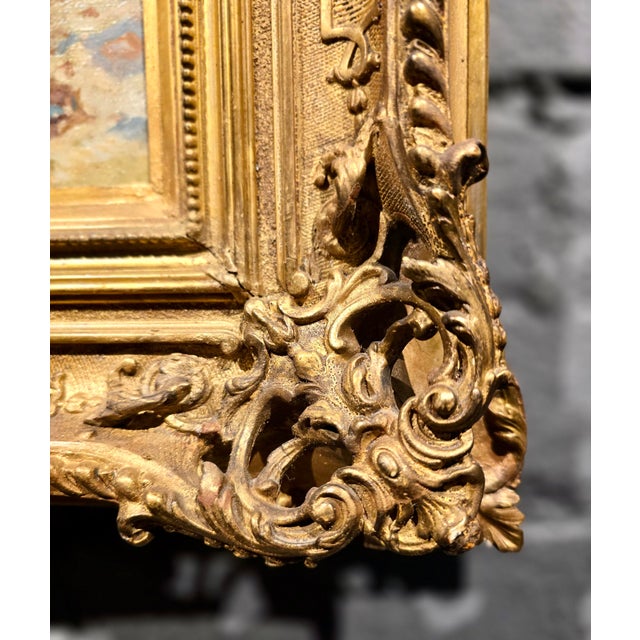
The painting is presented in its original 19th-century openwork rococo-style frame. The heavy, ornate molding is finished in a brilliant gold leaf patina, featuring scrolled acanthus leaves, shell motifs, and floral detailing at the corners and centers. The frame serves as a statement piece on its own, elevating the artwork to a true gallery-worthy centerpiece.
Styling & Placement
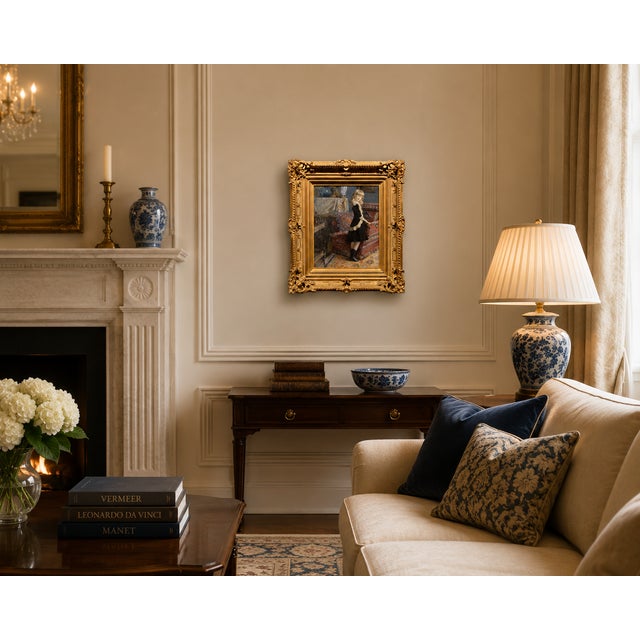
This exquisite portrait brings immediate prestige, history, and warmth to a home. It effortlessly complements a wide range of sophisticated interior design styles:
Grand Tradition & Antique Eclectic: An ideal anchor piece above an entryway console table, a parlor fireplace mantel, or inside a moody, wood-paneled library.
Modern Maximalism: Pair it against bold, saturated wall colors or rich wallpapers to let the gold leaf frame and crimson textiles pop.
New Traditionalist: Use it in a dining room to inject European heritage and conversational character into a curated space.
Condition & Inscriptions
Signed & Dated: Distinctly signed and dated by the artist, "A. Point 88", near the bottom edge.
Subject Inscription: The upper right quadrant bears the elegant period lettering reading "MARGUERITE FREY".
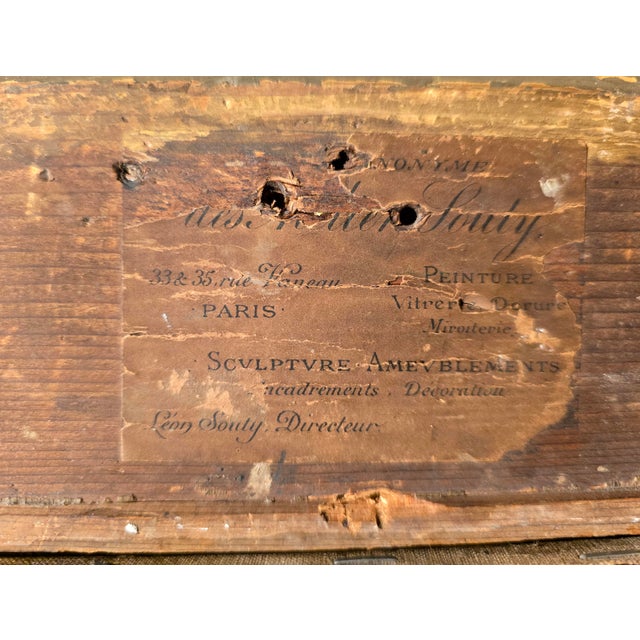
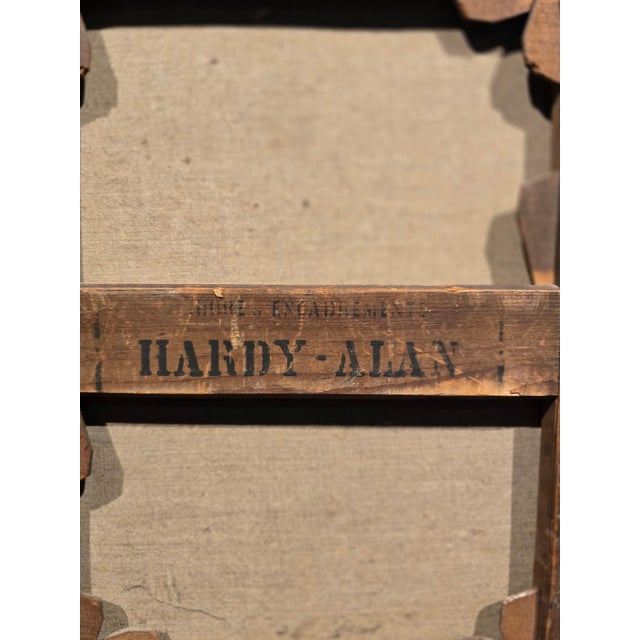
Condition: Exceptional antique condition. The canvas boasts beautifully preserved color saturation, with minor, stable age-appropriate craquelure that adds authentic vintage character. The period gilded frame retains its brilliant luster with minimal historical wear.
Artist Biography
Early Life and Orientalist Roots (1861–1892)
Armand Point was born on March 23, 1861, in Algiers, Algeria. After losing both of his parents at a young age, he was raised by his aunt and moved to Paris in 1870. His formal art education began at the École des Beaux-Arts under the tutelage of Auguste Herst.
In his early twenties, Point returned to North Africa. Captivated by the region's vibrant light, markets, and landscapes, he established himself as a successful Orientalist painter. He made his debut at the Paris Salon in 1882, showcasing works inspired by Algerian culture. His stylistic brilliance during this decade is beautifully captured in pieces like Portrait of Marguerite Frey, which masterfully bridges traditional Realism with complex, richly textured interior textiles. [1, 2]
⚜️ The Symbolist Shift and Religious Awakening (1892–1893)
By the early 1890s, Point grew weary of Academic realism and Orientalism. His artistic path transformed entirely after a trip to Italy in 1893 with his partner, Hélène Linder. There, he fell deeply in love with the 15th-century masterpieces of Sandro Botticelli, Leonardo da Vinci, and the early Italian Renaissance.
Upon his return to France, Point abandoned his earlier style to embrace Symbolism and the Rosicrucian movement. He became a key figure in Joséphin Péladan’s Salons de la Rose+Croix, an elite circle of artists aiming to revive spiritual mysticism and ideal beauty in art, rejecting the industrialized modern world.
️ Haute-Claire: The French Arts & Crafts Colony (1896–1911)
Driven by a desire to combine fine art with functional craftsmanship—much like William Morris and the English Arts and Crafts movement—Point founded an artist community called Haute-Claire in Marlotte near the Fontainebleau forest in 1896.
Haute-Claire became a renowned collaborative sanctuary. Under Point’s direction, artists and craftsmen produced a vast array of high-quality decorative items, including:
Hand-woven tapestries and embroidered silks
Ornate, jewel-encrusted goldsmithing and metalwork
Champlevé enamel boxes and ceramics
Hand-carved furniture and illuminated books
Point viewed decorative arts as a sacred defense against the cold, mass-produced objects of the industrial era. His fine art paintings from this era evolved to reflect this philosophy, featuring dreamlike, mythological figures and ethereal women rendered with an almost meticulous, jewel-like precision.
️ Later Years and Legacy (1911–1932)
As the avant-garde movements of Fauvism and Cubism began dominating the 20th-century Parisian art scene, Point’s idealized, historicist aesthetic faded from mainstream popularity. Despite changing trends, he remained steadfastly devoted to his classicist ideals, continuing to paint and design from his rural retreat.
Armand Point passed away on February 6, 1932, in Naples, Italy, at the age of 70. Today, he is remembered as a visionary force of the French Symbolist movement, notable not only for his evocative paintings but for his profound impact on the late 19th-century decorative art revival.
See less
- Dimensions
- 17ʺW × 2ʺD × 21ʺH
- Frame Type
- Framed
- Art Subjects
- Portrait
- Period
- Late 19th Century
- Country of Origin
- France
- Item Type
- Vintage, Antique or Pre-owned
- Materials
- Canvas
- Oil Paint
- Condition
- Good Condition, Original Condition Unaltered, Some Imperfections
- Color
- Blue
- Condition Notes
- Excellent - Minor wear consistent with age and history Excellent - Minor wear consistent with age and history less
Questions about the item?
Returns & Cancellations
Return Policy - All sales are final 48 hours after delivery, unless otherwise specified in the description of the product.
Cancellation Policy - Prior to shipping or local pickup, buyers may cancel an order for up to 48 hours, unless otherwise specified.
Related Collections
- Photorealism Canvas Paintings
- Ed Ruscha Paintings
- Photorealism Paintings in New York
- Richard Serra Paintings
- Louise Nevelson Paintings
- Silk Velvet Paintings
- Herman Miller Paintings
- BDDW Paintings
- James McCray Paintings
- Milton Avery Paintings
- Carl-Axel Acking Paintings
- Joseph Stella Paintings
- Karl-Erik Ekselius Paintings
- Leroy Neiman Paintings
- Photorealism Paintings in Los Angeles
- Jaanika Peerna Paintings
- Jo Baskerville Paintings
- Nicola Simbari Paintings
- Soicher Marin Paintings
- Cassina Paintings
- Lawson-Fenning Paintings
- Black Photorealism Paintings
- Jean-Paul Barray Paintings
- Hans Andersen Paintings
- Johannes Andersen Paintings