

Details
Description
Excellent Condition Antique
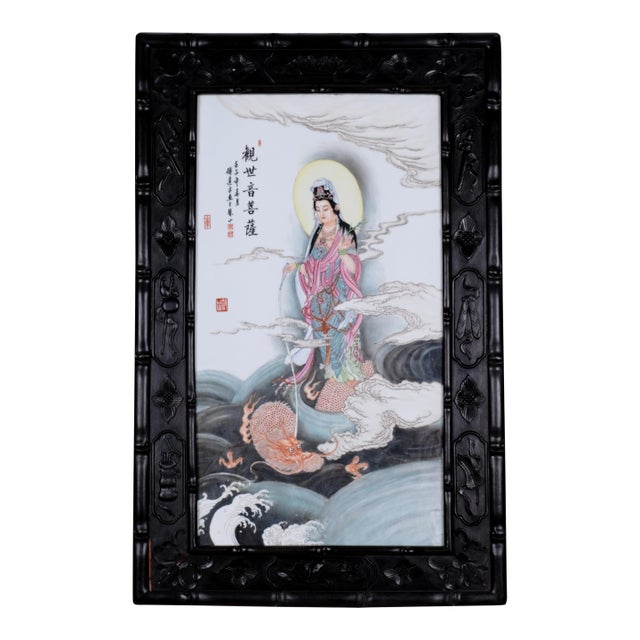
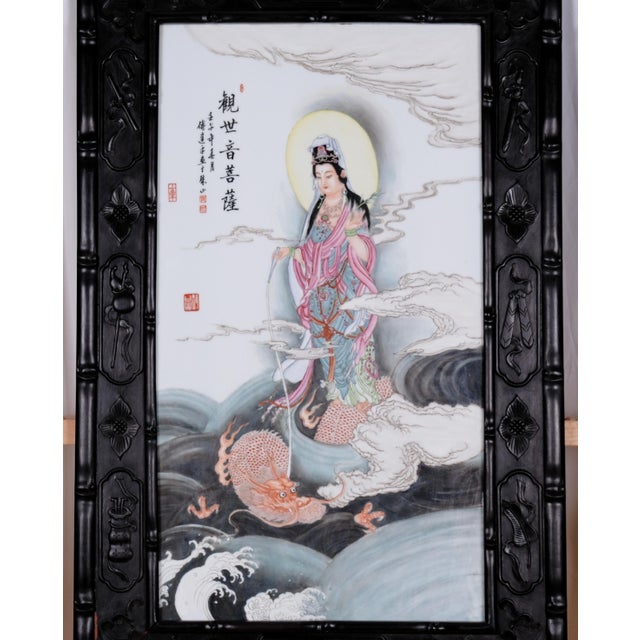
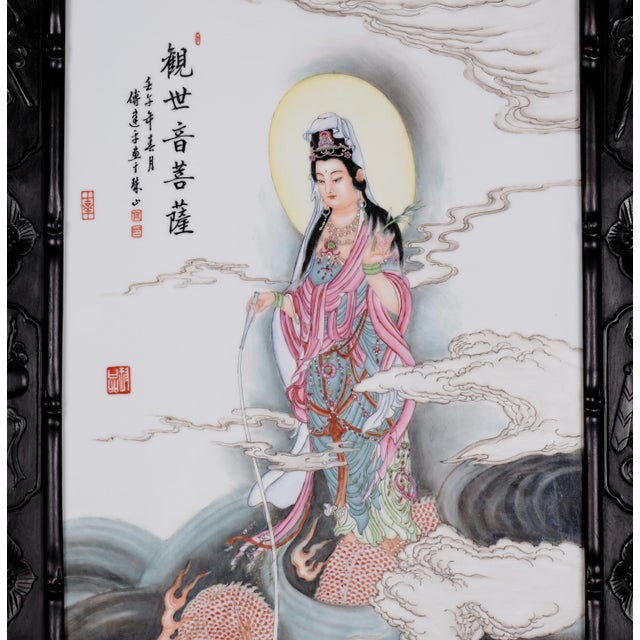
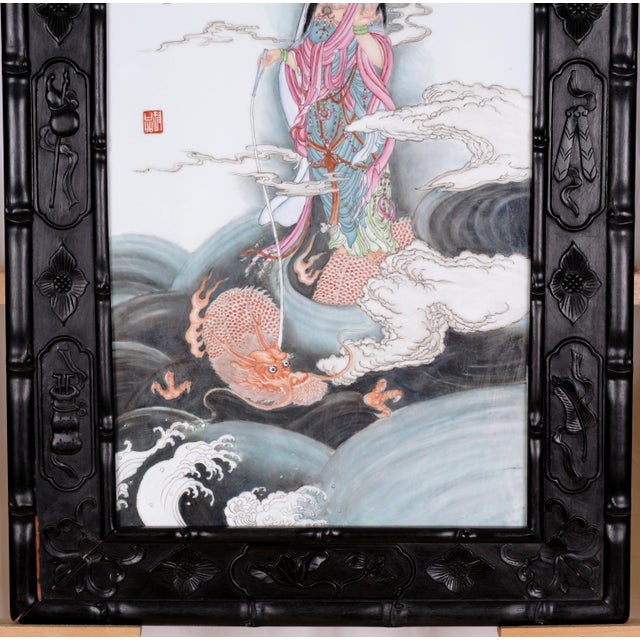
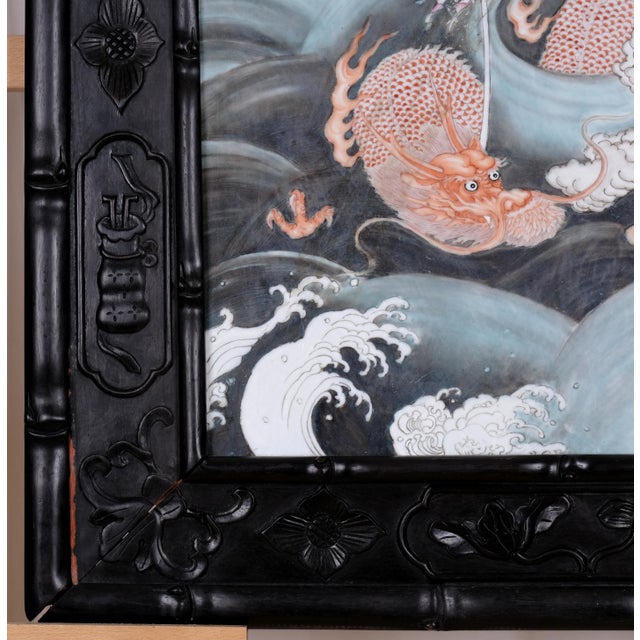
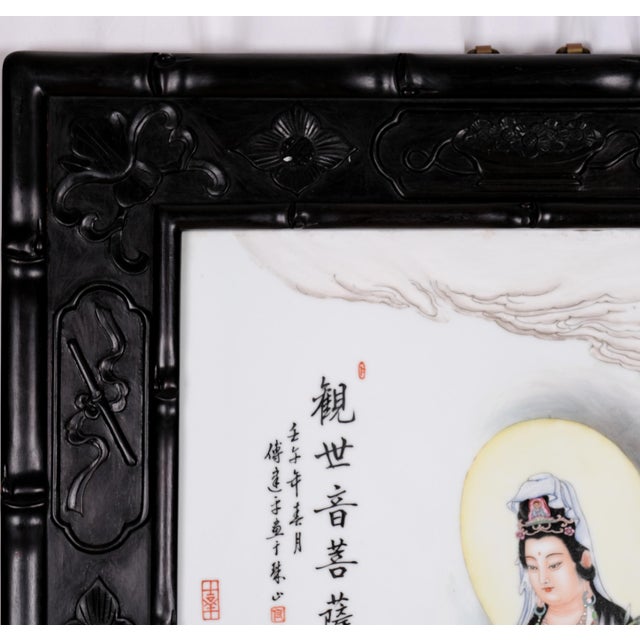
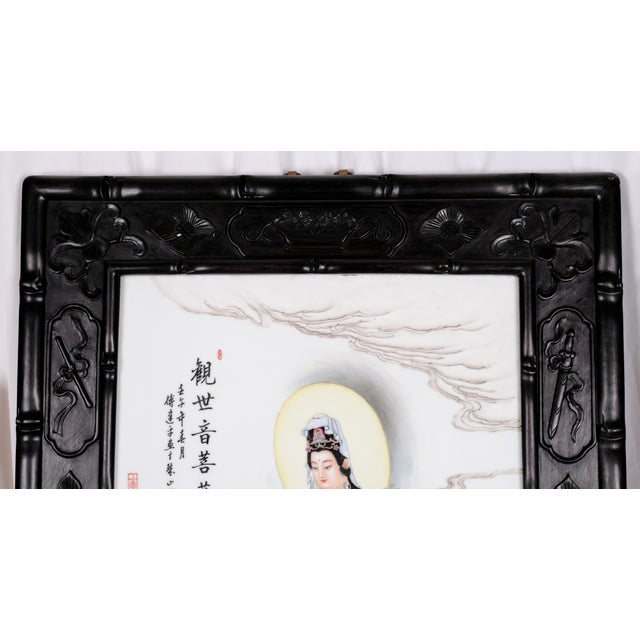
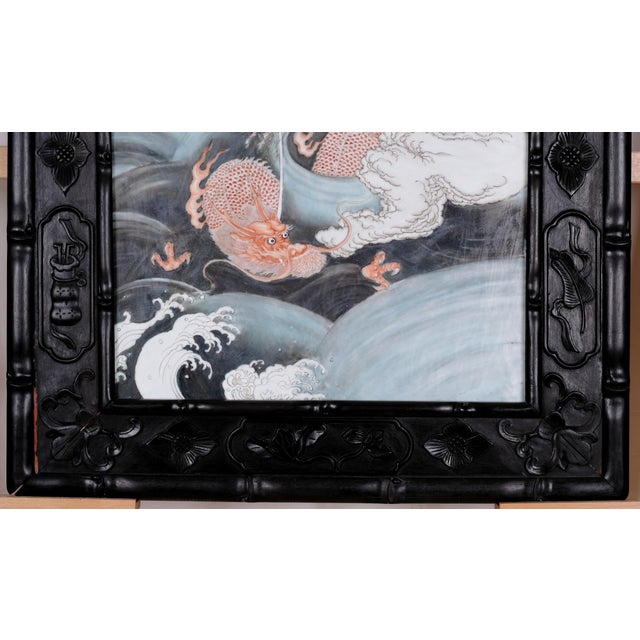
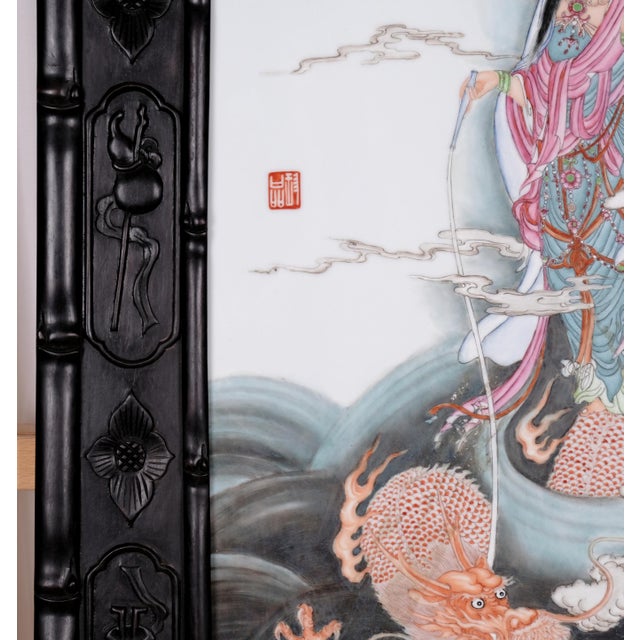
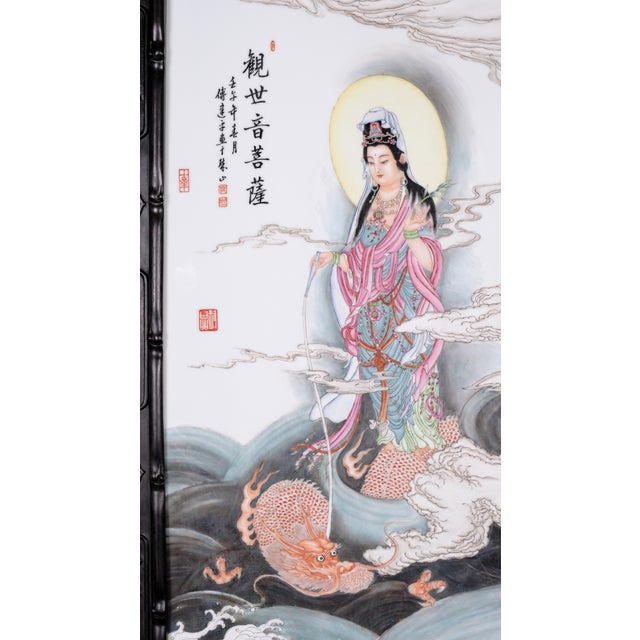
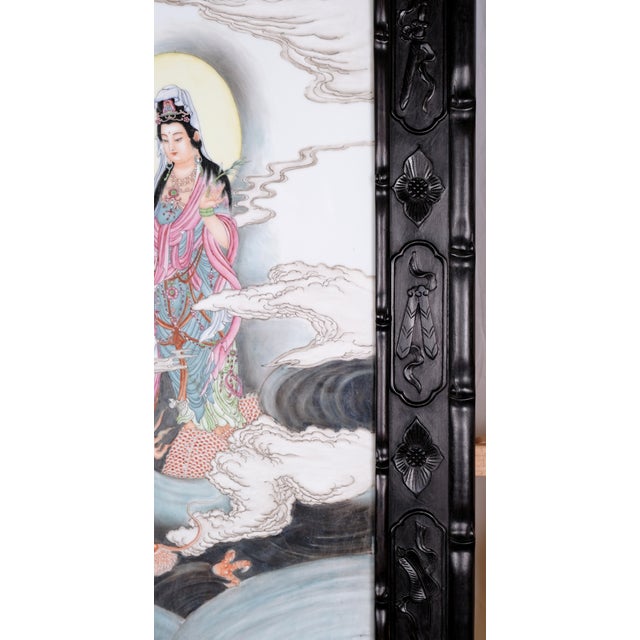
Guanyin Riding Dragon
(Kwan Yin) (Quan Yin)
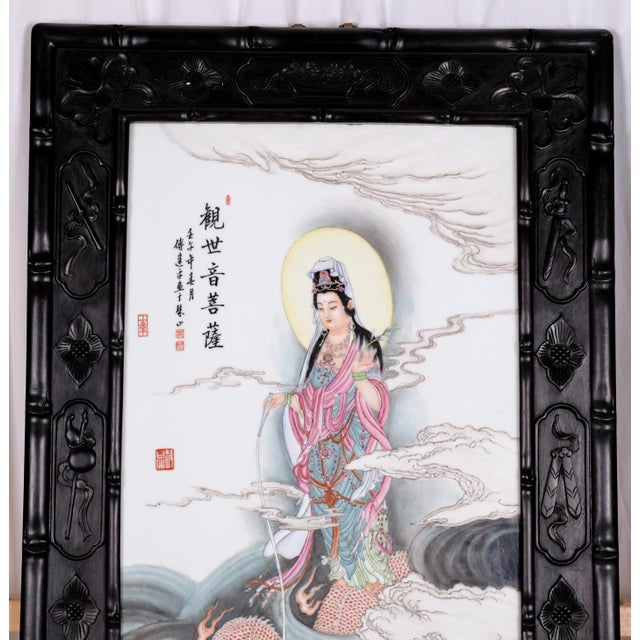
Large Hand Painted Porcelain Tile
in Carved Black Wooden Frame
…
Read more
Excellent Condition Antique
Guanyin Riding Dragon
(Kwan Yin) (Quan Yin)
Large Hand Painted Porcelain Tile
in Carved Black Wooden Frame
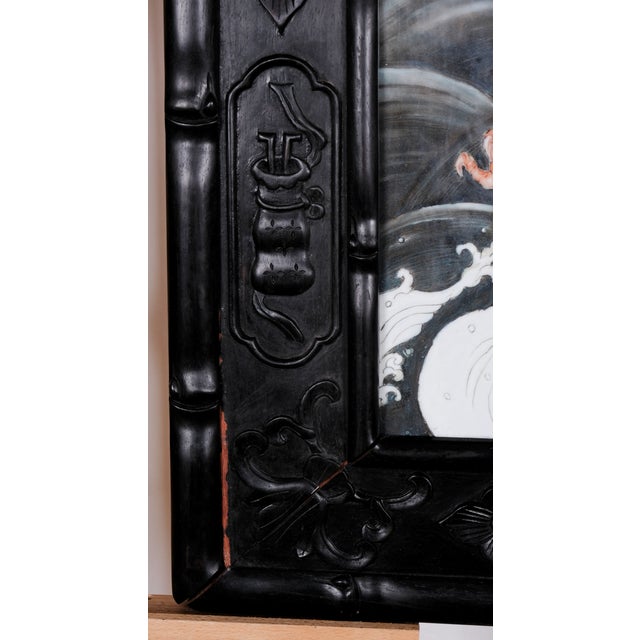
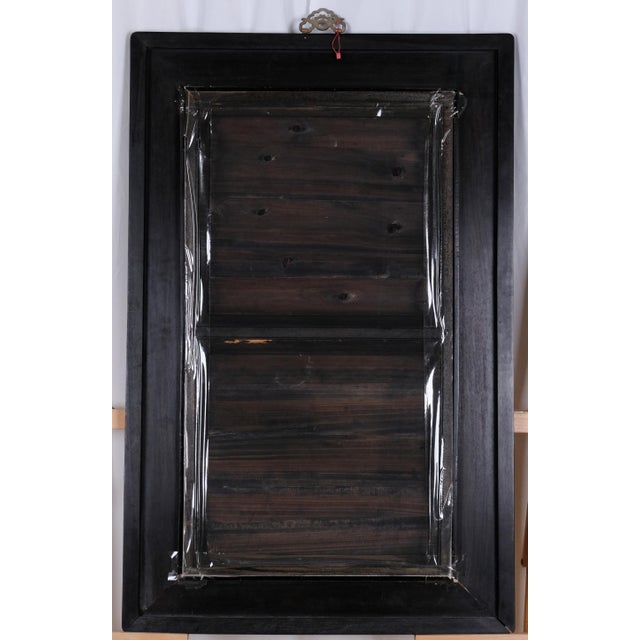
frame is approximately 40 3/4" high x 26 1/4" wide
the painted tile is approximately 32 1/4" high x 17 1/2" wide
Enchanting and Beautiful
Fine Asian Collector Item
--------------------------------------
Please read ! This lovely panel features Guan Yin, the Goddess of Compassion ~ this fabulous wall hanging porcelain tile is in excellent overall condition ~ there are no notable condition issues apart from a slight separation of the frame in the lower left corner as shown in the photos, yet there are very light signs of handling and/or wear ~ this will add great charm to your decor ~ please see photos for condition details ~ all shipments include tracking number ~ All items are from a smoke free environment. We ship orders every day, and same day when possible. Your complete satisfaction is our goal!
About Guan Yin:
One of the deities most frequently seen on altars in China’s temples is Quan Yin (also spelled Kwan Yin, Kuanyin; in pinyin, Guanyin). In Sanskrit, her name is Padma-pâni, or "Born of the Lotus." Quan Yin, alone among Buddhist gods, is loved rather than feared and is the model of Chinese beauty. Regarded by the Chinese as the goddess of mercy, she was originally male until the early part of the 12th century and has evolved since that time from her prototype, Avalokiteshvara, "the merciful lord of utter enlightment," an Indian bodhisattva who chose to remain on earth to bring relief to the suffering rather than enjoy for himself the ecstasies of Nirvana. One of the several stories surrounding Quan Yin is that she was a Buddhist who through great love and sacrifice during life, had earned the right to enter Nirvana after death. However, like Avlokiteshvara, while standing before the gates of Paradise she heard a cry of anguish from the earth below. Turning back to earth, she renounced her reward of bliss eternal but in its place found immortality in the hearts of the suffering. In China she has many names and is also known as "great mercy, great pity; salvation from misery, salvation from woe; self-existent; thousand arms and thousand eyes," etc. In addition she is often referred to as the Goddess of the Southern Sea — or Indian Archipelago — and has been compared to the Virgin Mary. She is one of the San Ta Shih, or the Three Great Beings, renowned for their power over the animal kingdom or the forces of nature. These three Bodhisattvas or P’u Sa as they are know in China, are namely Manjusri (Skt.) or Wên Shu, Samantabhadra or P’u Hsien, and Avalokitesvara or Quan Yin.
Quan Yin is a shortened form of a name that means One Who Sees and Hears the Cry from the Human World. Her Chinese title signifies, “She who always observes or pays attention to sounds,” i.e., she who hears prayers. Sometimes possessing eleven heads, she is surnamed Sung-Tzu-Niang-Niang, “lady who brings children.” She is goddess of fecundity as well as of mercy. Worshiped especially by women, this goddess comforts the troubled, the sick, the lost, the senile and the unfortunate. Her popularity has grown such through the centuries that she is now also regarded as the protector of seafarers, farmers and travelers. She cares for souls in the underworld, and is invoked during post-burial rituals to free the soul of the deceased from the torments of purgatory. There are temples all over China dedicated to this goddess, and she is worshiped by women in South China more than in the North, on the 19th day of the 2nd, 6th and 9th moons. (For example, it is a prevalent birth custom in Foochow that when a family has a daughter married since the 15th day of the previous year, who has not yet given birth to a male infant, a present of several articles is sent to her by her relatives on a lucky day between the 5th and 14th of the first month. The articles sent are as follows: a paper lantern bearing a picture of the Goddess of Mercy, Quan Yin, with a child in her arms, and the inscription, “May Quan Yin present you with a son”; oysters in an earthenware vessel; rice-cakes; oranges; and garlic.) Worshipers ask for sons, wealth, and protection.
20260624X13611 46x30x6
See less
- Dimensions
- 26ʺW × 3ʺD × 41ʺH
- Styles
- Chinese
- Frame Type
- Framed
- Period
- Early 20th Century
- Country of Origin
- China
- Item Type
- Vintage, Antique or Pre-owned
- Materials
- Paint
- Porcelain
- Wood
- Condition
- Good Condition, Original Condition Unaltered, Some Imperfections
- Color
- Black
- Condition Notes
- Please read ! This lovely panel features Guan Yin, the Goddess of Compassion ~ this fabulous wall hanging porcelain tile … morePlease read ! This lovely panel features Guan Yin, the Goddess of Compassion ~ this fabulous wall hanging porcelain tile is in excellent overall condition ~ there are no notable condition issues apart from a slight separation of the frame in the lower left corner as shown in the photos, yet there are very light signs of handling and/or wear ~ this will add great charm to your decor ~ please see photos for condition details less
Questions about the item?
Returns & Cancellations
Return Policy - All sales are final 48 hours after delivery, unless otherwise specified in the description of the product.
Cancellation Policy - Prior to shipping or local pickup, buyers may cancel an order for up to 48 hours, unless otherwise specified.
Related Collections
- Photorealism Canvas Paintings
- Ed Ruscha Paintings
- Ralph Lauren Paintings
- Photorealism Paintings in New York
- Richard Serra Paintings
- Louise Nevelson Paintings
- Silk Velvet Paintings
- Herman Miller Paintings
- BDDW Paintings
- Jean-Paul Barray Paintings
- Johannes Andersen Paintings
- Peter Behrens Paintings
- Carl-Axel Acking Paintings
- Joseph Stella Paintings
- Karl-Erik Ekselius Paintings
- Pedro Friedeberg Paintings
- Piet Hein Eek Paintings
- James McCray Paintings
- Milton Avery Paintings
- Raphael Paintings
- Jaanika Peerna Paintings
- Hans Andersen Paintings
- Cassina Paintings
- Photorealism Paintings in Los Angeles
- Leroy Neiman Paintings