

Details
Description
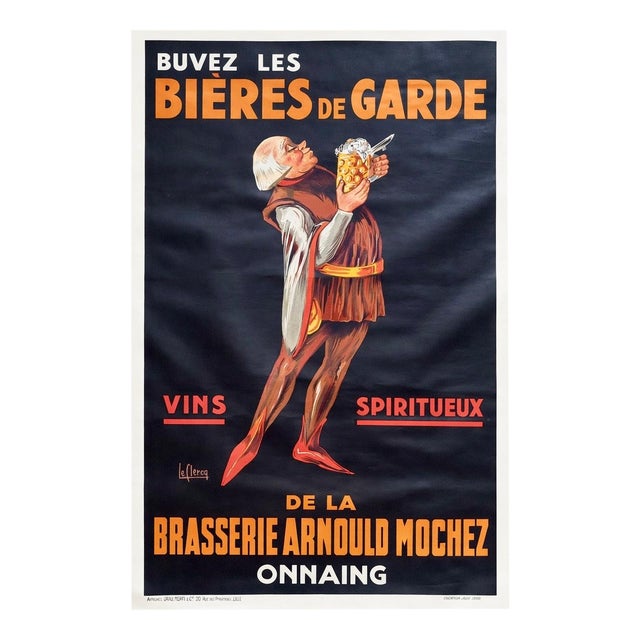
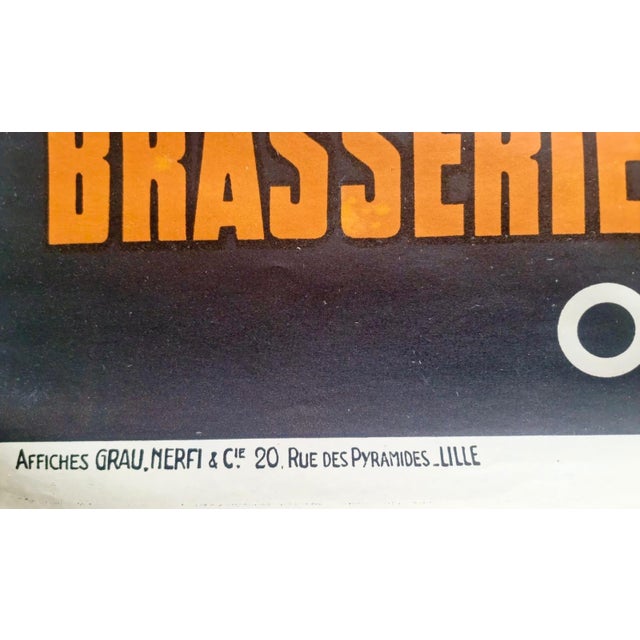
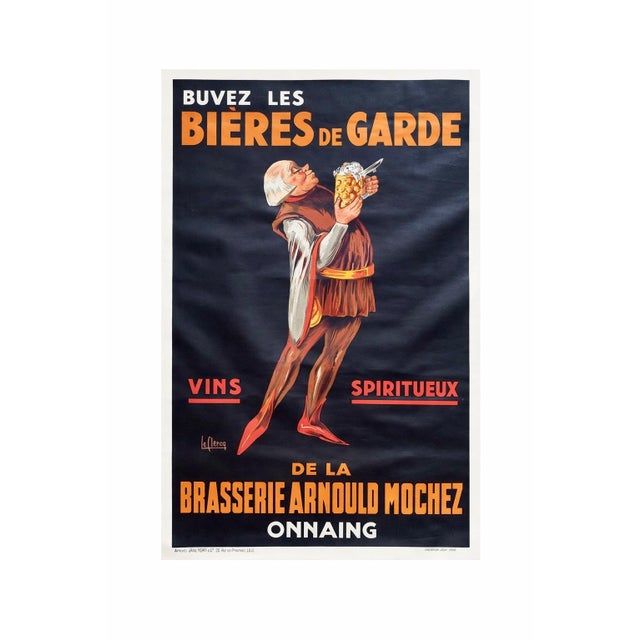
Original French advertising poster from the 1930s, designed by graphic artist Le Clercq (or LeClercq) for the Brasserie Arnould Mochez …
Read more
Original French advertising poster from the 1930s, designed by graphic artist Le Clercq (or LeClercq) for the Brasserie Arnould Mochez brewery.
Produced using lithography or chromolithography. Collector's item.
Poster Details
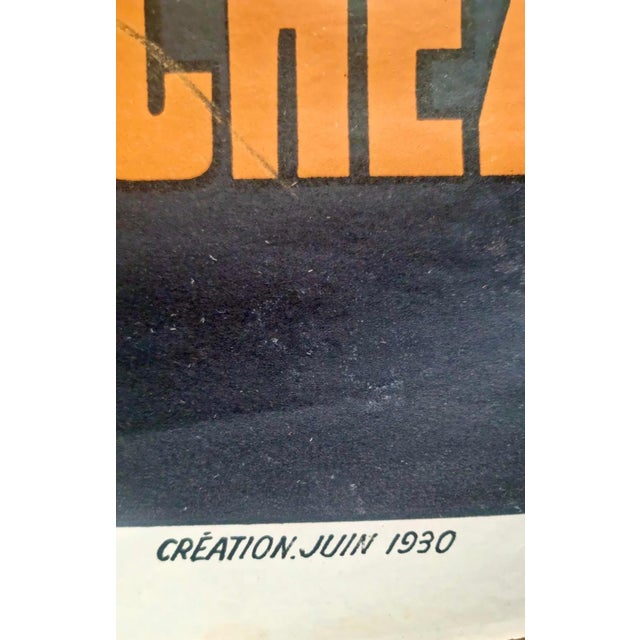
Date of creation: Circa 1930, Art Deco style.
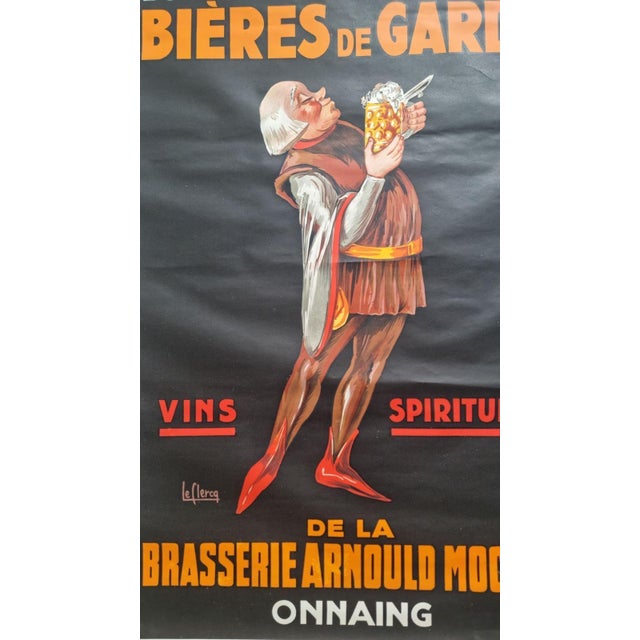
Artist: Le Clercq, whose signature can be seen in the lower left corner of the poster.
Brewery: Brasserie Arnould Mochez, located in the northern French town of Onnaing. This brewery is no longer in operation.
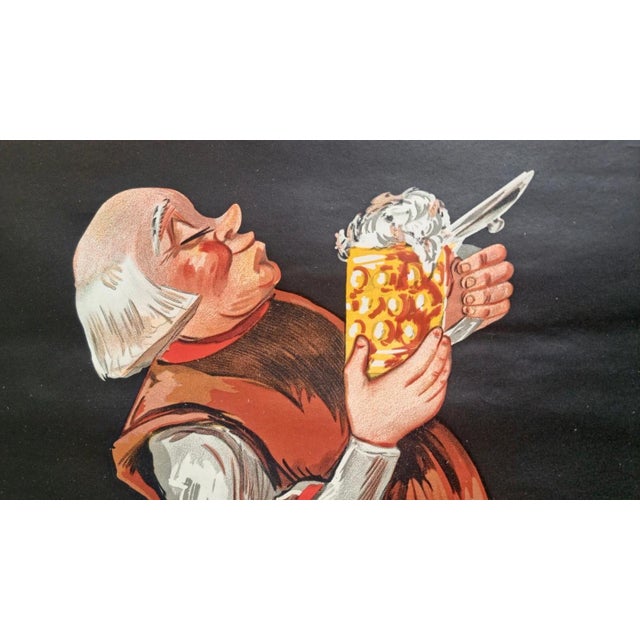
Illustration: It depicts a medieval monk or abbot raising a jug of frothy beer, alluding to the monastic origins of brewing.
Dimensions: 120 × 80 cm
These lithograph posters from the 1930s are outstanding examples of interwar visual culture, characterized by Art Deco style, bold typography, and a rich color palette. Produced using the original lithographic printing process, these posters are highly sought-after works of art, often used to advertise tourism, films, or consumer goods.
Lithography (stone printing) was one of the most popular and artistic poster production methods in the 1930s, based on the repulsion of water and grease. Although offset printing was already widespread at this time, most large-format, colorful art posters were still produced using this traditional technique.
The lithographic process step by step.
In this process, the artist worked directly on a special stone plate, allowing for a freer, more painterly expression.
Preparation of the stone: A 5–10 cm thick, porous limestone slab (often from Solnhofen in Bavaria) was ground completely smooth.
Application of the drawing: The artist transferred the image in reverse onto the stone using greasy lithographic crayon or ink. The grease penetrated the pores of the stone.
Chemical treatment: The stone was treated with a mixture of weak nitric acid and gum arabic. This fixed the drawing and made the unprinted areas water-repellent or absorbent.
Inking: Before printing, the stone was moistened with water. The water adhered only to the unprinted areas. When the oil-based printing ink was applied, it adhered only to the greasy drawings and ran off the wet areas.
Printing: The sheet of paper was placed on the stone, and the ink was transferred to the paper under high pressure using a special rubbing press.
Color Posters (Cromolithography)
For the color posters of the 1930s, a separate stone wheel was used for each individual color. For a more complex poster, up to 8–10 stones were needed, which were precisely aligned (matched) and printed. This piece has an attribution mark,
I am sure that it is completely authentic and take full responsibility for any authenticity
issues arising from misattribution
See less
- Dimensions
- 31.5ʺW × 31.5ʺD × 47.24ʺH
- Period
- 1920s
- Country of Origin
- France
- Item Type
- Vintage, Antique or Pre-owned
- Condition
- Good Condition, Unknown, Some Imperfections
- Color
- Condition Notes
- Patina Consistent with Age and Use Patina Consistent with Age and Use less
Returns & Cancellations
Return Policy - All sales are final 48 hours after delivery, unless otherwise specified in the description of the product.
Cancellation Policy - Prior to shipping or local pickup, buyers may cancel an order for up to 48 hours, unless otherwise specified.
Related Collections
- Le Corbusier Posters
- Baroque Posters
- Posters in Savannah
- Posters in Naples, FL
- Silk Posters
- Ceramic Posters
- Screen Print Posters
- Marc Chagall Posters
- Art Deco Posters
- Mid-Century Modern Posters
- Mark Rothko Posters
- Pablo Picasso Posters
- Posters in Los Angeles
- French Posters
- Milton Avery Posters
- Peter Max Posters
- Museum Posters
- Polish Posters
- Japanese Posters
- Lee Krasner Posters
- Keith Haring Posters
- Framed Posters
- Posters in Orlando
- Woodcut Posters