

Details
Description
"this piece of furniture is a superb example of cabinetmaking from the napoleon iii period (second empire, circa 1852–1870), which …
Read more
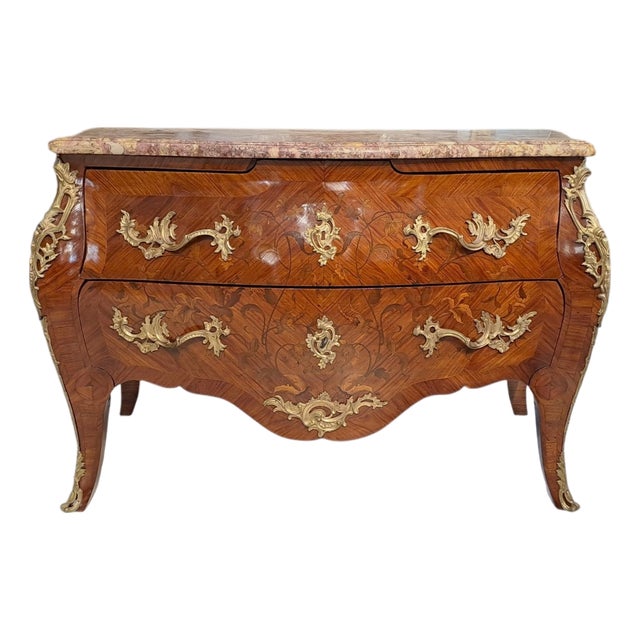
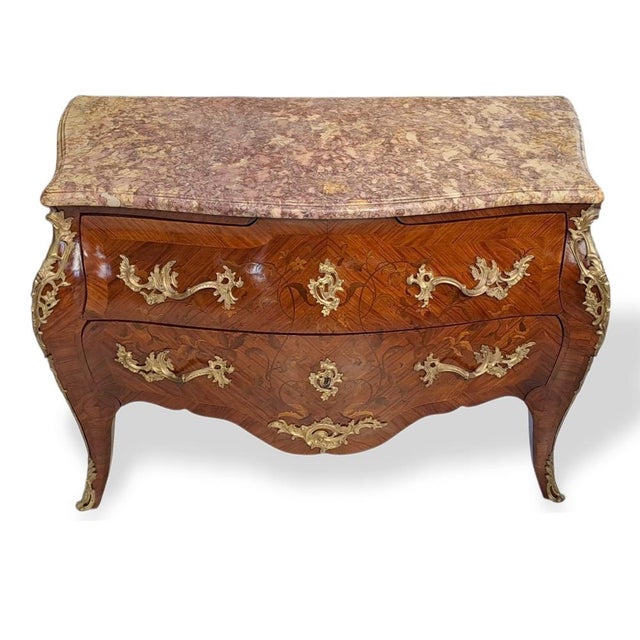
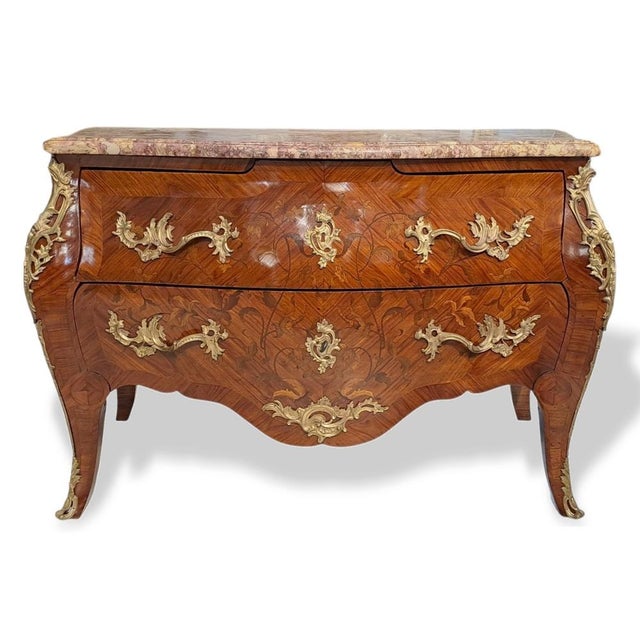
"this piece of furniture is a superb example of cabinetmaking from the napoleon iii period (second empire, circa 1852–1870), which reinterprets the louis xv style (french rococo) with extraordinary richness and historical accuracy.
technical and descriptive specifications
1. Type and design (tombeau or en arbalète commode)
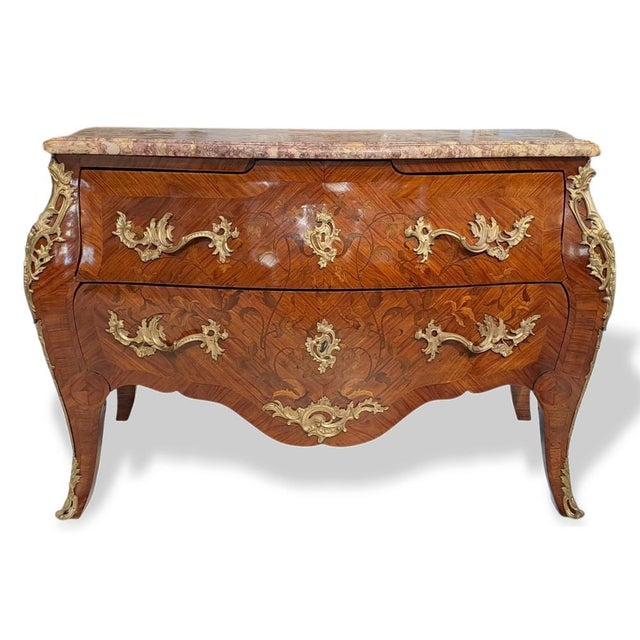
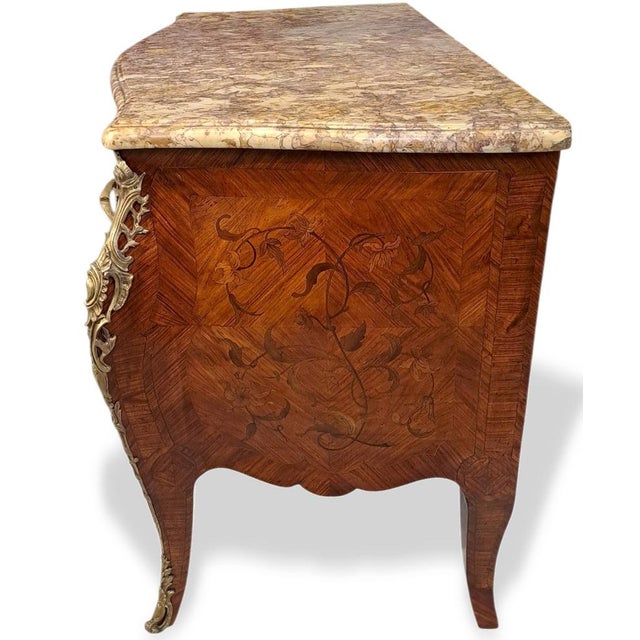
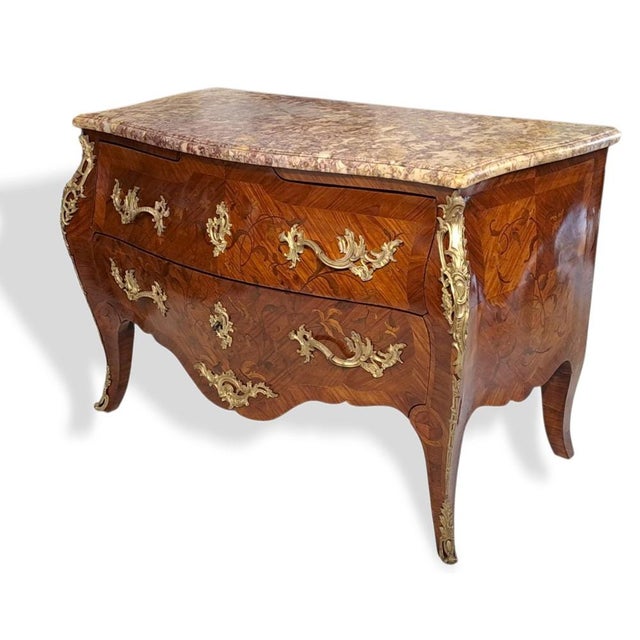
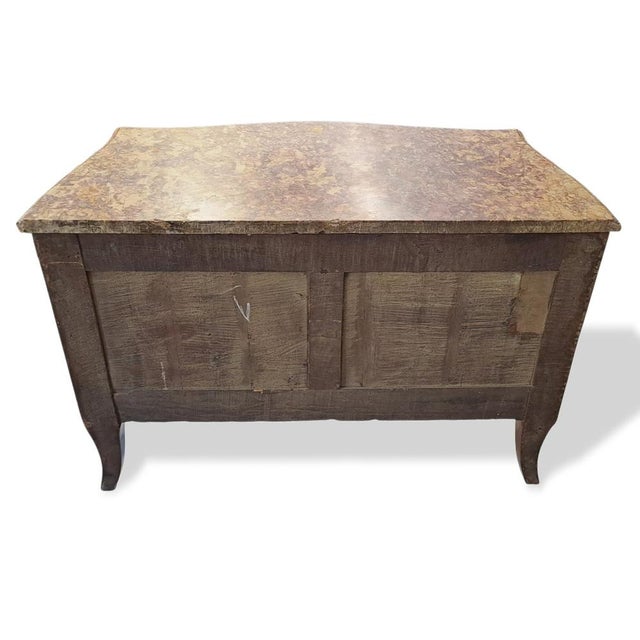
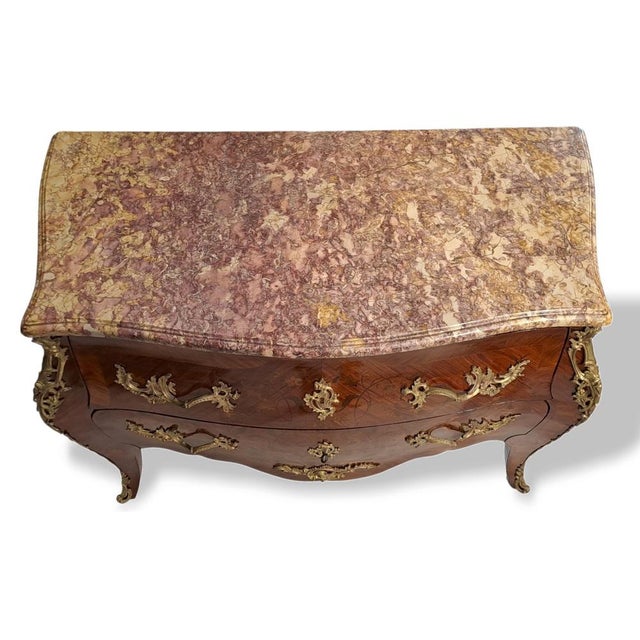
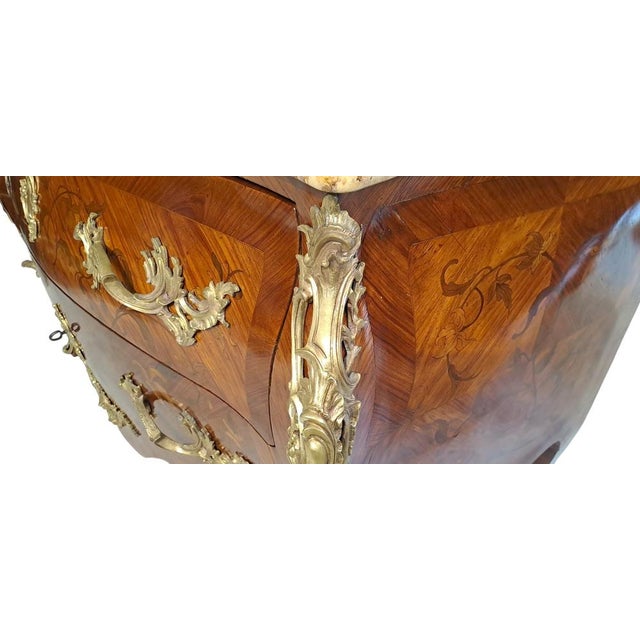
the piece features a pronounced, sinuous, undulating line on both the front and sides (three-dimensional curvature). The lower apron is elegantly shaped with an “en arbalète” (crossbow) profile, typical of the most refined 18th-century chests of drawers. It rests on four slender, sinuous legs (cabriole legs).
2. Structure and opening
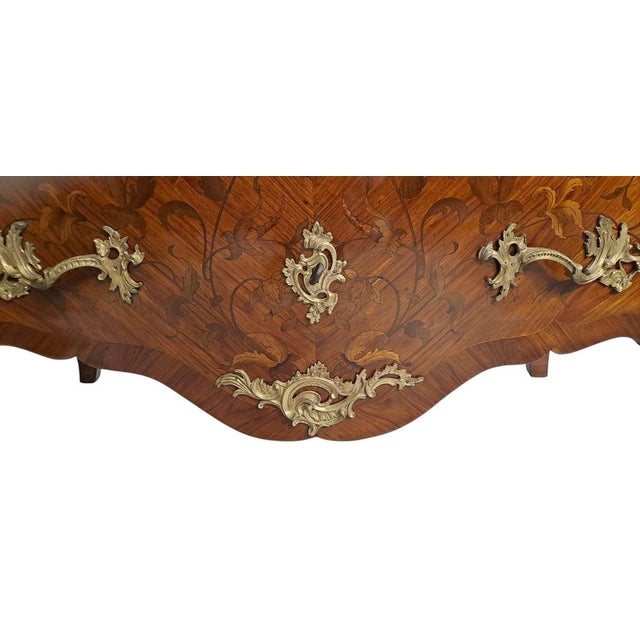
this is a two-drawer model without visible crossbars (sans traverse). This highly complex technique allows the inlay decoration and the wood grain to flow uniformly across the entire front surface without visual interruptions, simulating a single large panel.
3. Materials and inlay
veneer and inlay: the body is beautifully veneered in walnut wood arranged in a herringbone pattern to create geometric contrasts that capture the light.
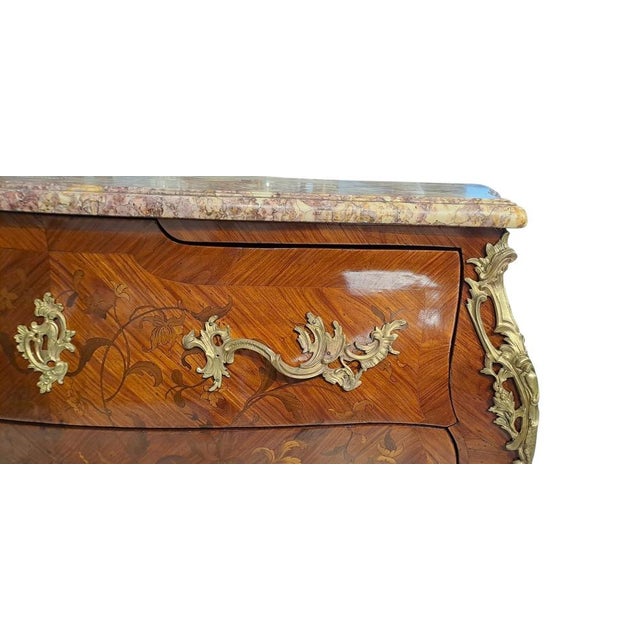
floral decorations: the front and sides feature exquisite inlay work with floral and botanical motifs (vines, leaves, and buds) in stained woods, executed with the highest pictorial precision.
the marble top: the piece is crowned by a thick, custom-shaped original marble slab, featuring an “owl’s beak” edge that closely follows the piece’s sinuous outline. It is made of fine spanish broccatello marble, renowned for its shades of purple, red, and yellow.
4. Gilded bronze details
the exceptional quality of the piece is evident in the richness of the finely chiseled gilded bronze castings:
distinctive leaf-shaped “sabot” feet.
lush corner friezes (chutes) running along the uprights and accentuating the piece’s sinuous lines.
handles shaped like large, asymmetrical rococo volutes and imposing central keyholes, perfectly integrated into the inlay design.
5 dimensions
127 x 63 cm, height 85 cm
analysis of the markings: “perino” and the lily
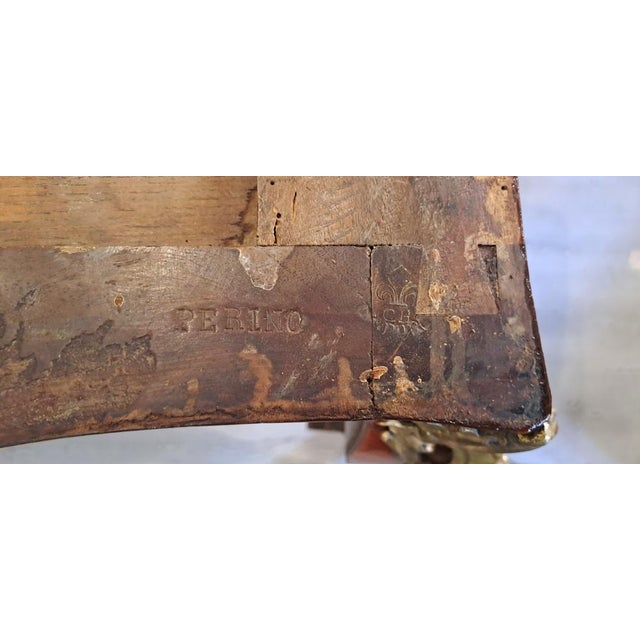
the photo of the lower portion of the frame (below the marble) reveals two elements fundamental to the piece’s authenticity and history:
the inscription “perino” cold-stamped into the wood: in the 19th century, particularly during the reign of napoleon iii, the practice of marking furniture experienced a strong revival, linked both to the proud tradition of 18th-century guilds and to the need to protect the creations of the great parisian and turin workshops from imitations. The perino family (or the individual cabinetmaker) belongs to that select circle of master cabinetmakers active in the second half of the 19th century. In particular, the surname is closely associated with the high-quality cabinetmaking craftsmanship of the subalpine/piedmontese region (turin) or with the influx of italian craftsmen who worked in close collaboration with the designs of parisian masters.
the lily mark with letters (ch\.): below the surname, there is a brand mark or stamp featuring a stylized lily flanked by letters (among which “ch” appears to be legible). This type of mark generally indicates a mark of origin or inventory: it could refer to a ducal/royal workshop, an art exhibition of the time, or the inspection by a specific authorized guild or workshop that certified the quality of the materials, particularly the bronzes or the finished artwork.
note on value: the presence of a clear and legible stamp like this one drastically increases the object’s collectible value. This is not a late 19th-century industrial production, but rather the work of excellence from a signed cabinetmaking atelier, originally intended for a client from the upper middle class or nobility of the era.
condition and notes
the piece features an exceptional patina enhanced by a shellac polish; the inlay is firmly secured, and the bronze fittings display the magnificent, warm luster of antique gold that has not been chemically polished. A truly impressive piece that embodies the eclectic opulence characteristic of the french second empire.
See less
- Dimensions
- 50ʺW × 24.8ʺD × 33.46ʺH
- Country of Origin
- Italy
- Item Type
- Vintage, Antique or Pre-owned
- Materials
- Walnut
- Condition
- Original Condition Unaltered, Some Imperfections
- Color
- Brown
Returns & Cancellations
Return Policy - All sales are final 48 hours after delivery, unless otherwise specified in the description of the product.
Cancellation Policy - Prior to shipping or local pickup, buyers may cancel an order for up to 48 hours, unless otherwise specified.
Related Collections
- Rope Chests of Drawers
- Chests of Drawers in Monterey, CA
- Satin Brass Finish Chests of Drawers
- Cast Iron Chests of Drawers
- Tangerine Chests of Drawers
- Nautical Chests of Drawers
- Chinoiserie Chests of Drawers
- Thomasville Chests of Drawers
- Campaign Chests of Drawers
- Pennsylvania House Chests of Drawers
- Mahogany Chests of Drawers
- Burlwood Chests of Drawers
- Painted Chests Of Drawers
- Hitchcock Chests of Drawers
- Ethan Allen Chests of Drawers
- French Provincial Chests of Drawers
- Davis Cabinet Company Chests of Drawers
- Asian Chests of Drawers
- Chests of Drawers in Los Angeles
- Gilbert Rohde Chests of Drawers
- Bunny Williams Home Chests of Drawers
- Grosfeld House Chests of Drawers
- Raymond Loewy Chests of Drawers
- Edmond J. Spence Chests of Drawers
- Antique Bronze Finish Chests of Drawers