

Details
Description
Carlo francesco nuvolone (milan 1609 - milan 1662) attributed to
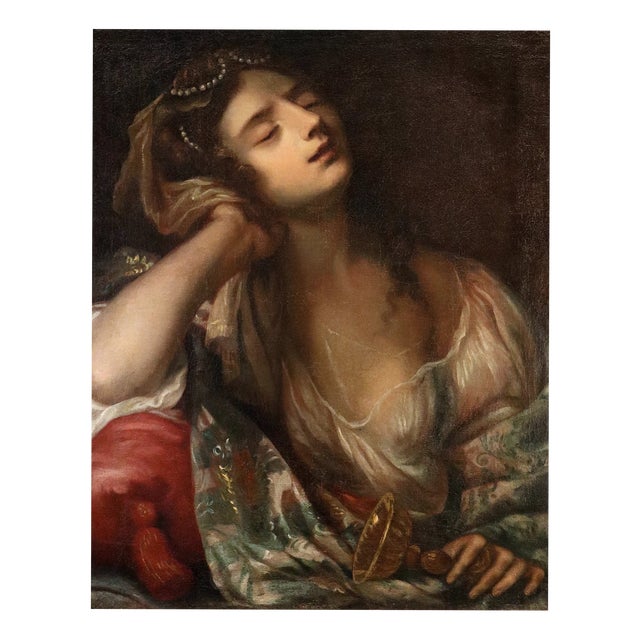
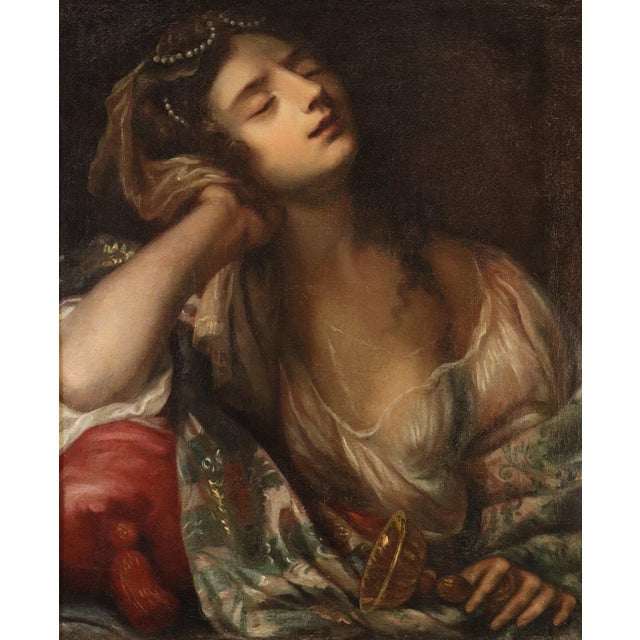
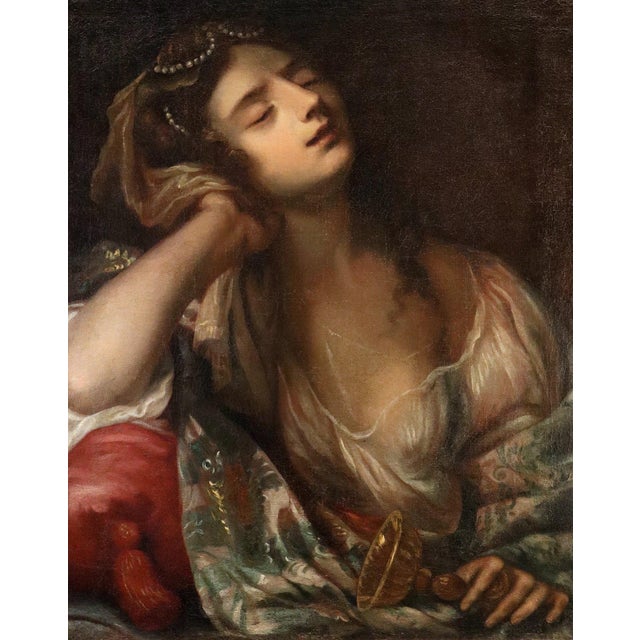
the suicide of queen sophonisba
oil on canvas
76 x …
Read more
Carlo francesco nuvolone (milan 1609 - milan 1662) attributed to
the suicide of queen sophonisba
oil on canvas
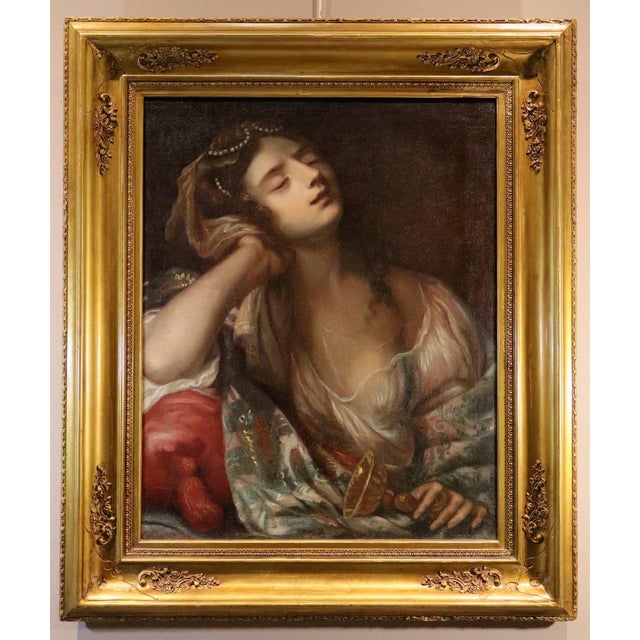
76 x 60 cm - framed 100 x 85 cm
full painting details (click here)
this painting captures the tragic moment when sophonisba, the last queen of carthage, takes her own life rather than be marched to rome and paraded as a prisoner of war, submitting to the romans.
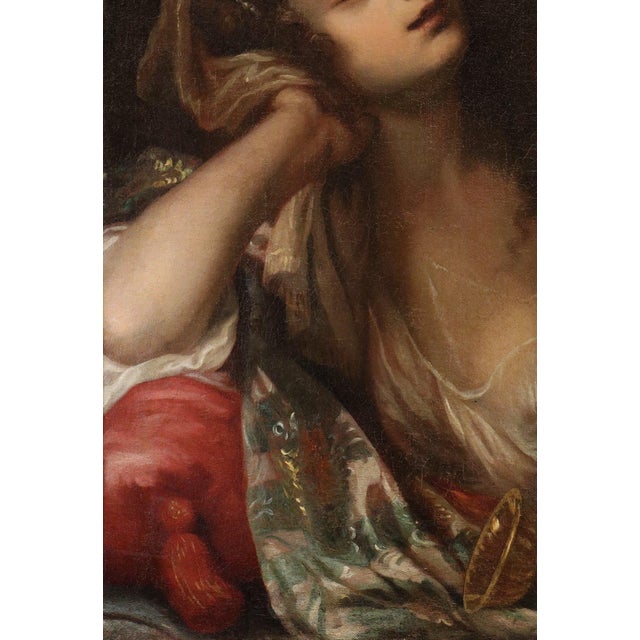
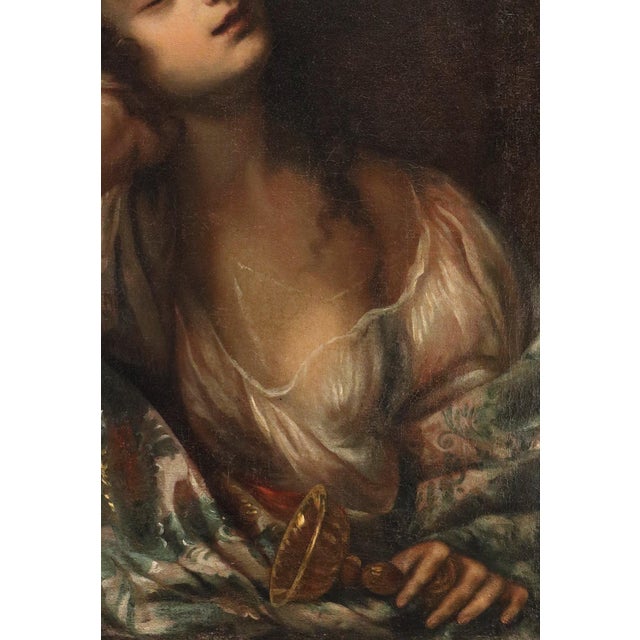
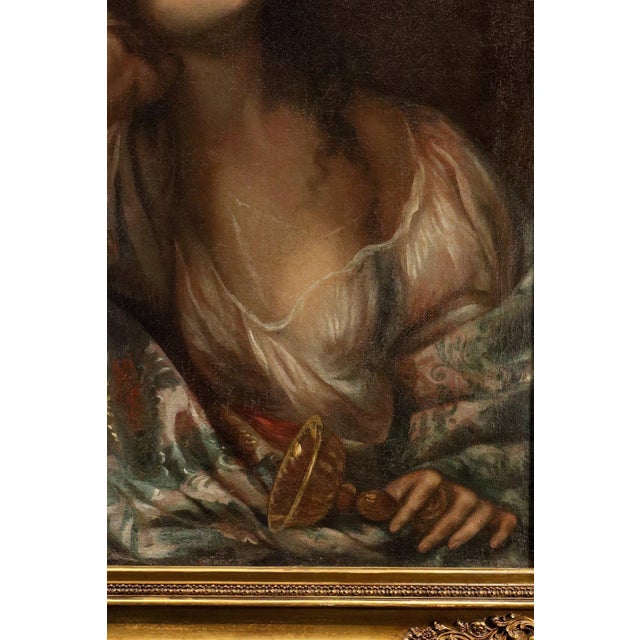
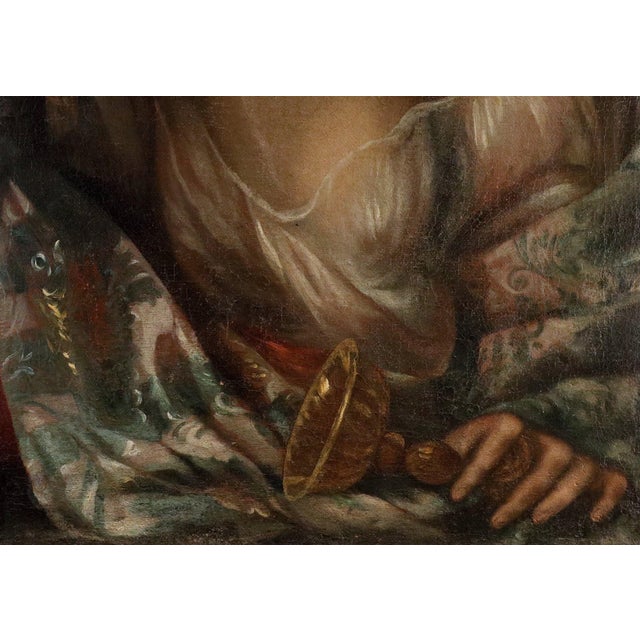
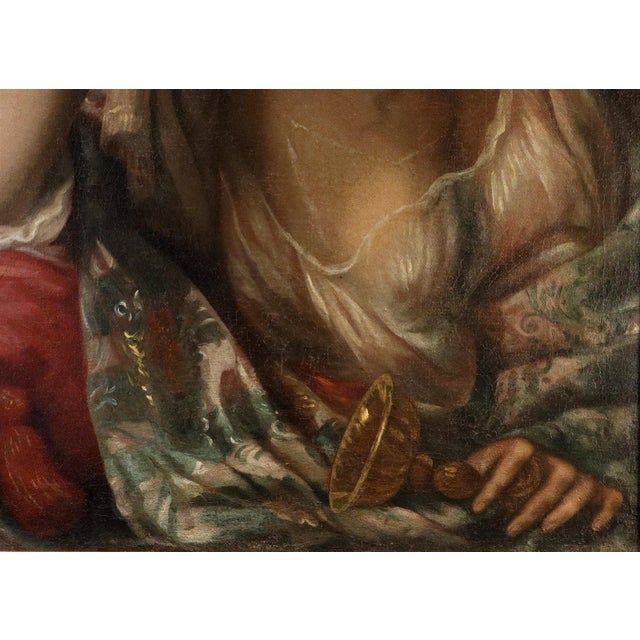
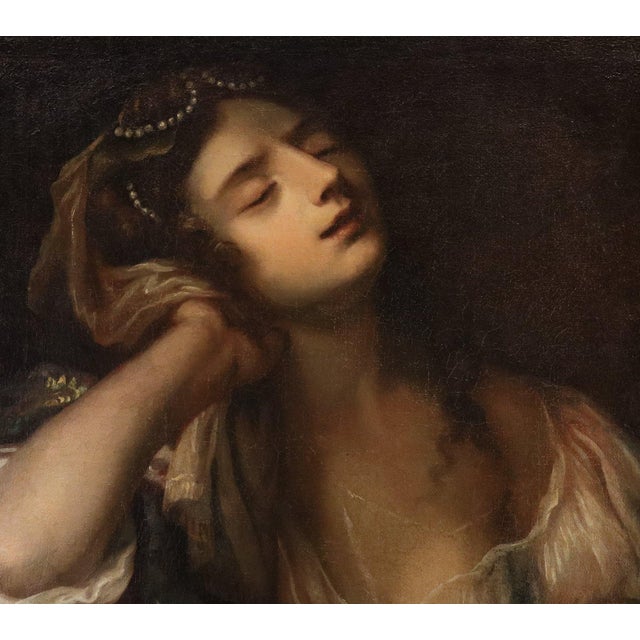
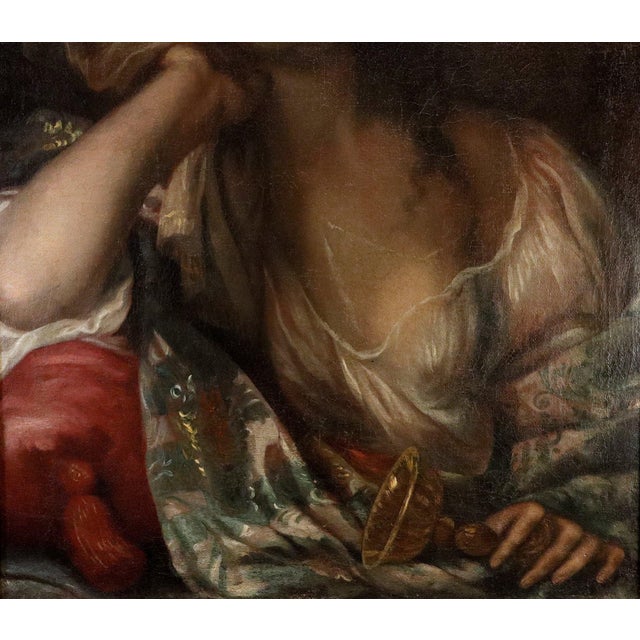
this is a beloved theme in baroque painting for its high dramatic potential, emphasized here by the depiction of the woman immortalized at the moment the poison begins to take effect, her head bowed in languid abandon, still supported by her arm resting on a rich red velvet cushion with a tassel. In her left hand, resting low, she holds the golden cup from which she has just drunk the poison, a symbol of her ultimate sacrifice.
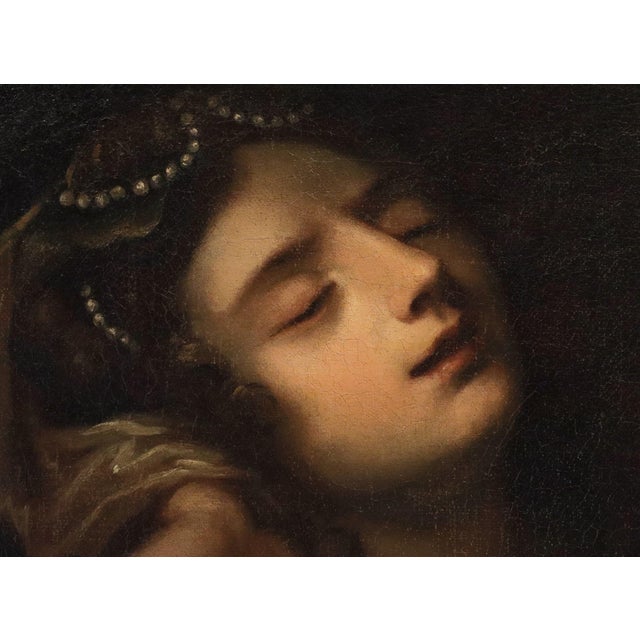
the carthaginian queen is portrayed in all her beauty, wearing sumptuous robes, a finely draped white chemise, partially slipped to reveal the shoulder, and a damask overdress with floral motifs. Her hair is adorned with woven strings of pearls, emphasizing her royal rank.
her story, a tale of political intrigue and love set against the backdrop of the second punic war, has made her one of the most celebrated and fascinating female figures of antiquity. Over time, she has become a symbol of pride and dignity, her gesture emblematic of courage, thus inspiring numerous literary and artistic works.
sophonisba married syphax, king of the numidians, to seal the alliance between carthage and numidia against rome. After syphax was defeated by the romans and masinissa, the latter entered the city of cirta and, upon seeing her, was struck by her beauty. He fell in love with her and immediately married her to save her from being taken prisoner to rome.
but unfortunately, the roman general scipio demanded that the woman be handed over to rome anyway to parade as a trophy in his triumph. Since masinissa could not oppose this decision, he sent poison to sophonisba so that she could kill herself and avoid the humiliation of captivity.
voluntary death was the only way to preserve royal dignity and personal autonomy in the face of slavery imposed by the roman victors.
the story of sophonisba was a very popular theme also because it allowed artists to explore the contrast between feminine beauty and nobility of soul, all emphasized by a tale characterized by intense dramatic effect, focusing on the protagonist's tragic ecstasy.
the painting is attributed to the milanese painter carlo francesco nuvolone (milan 1609 - milan 1662), a leading exponent of seventeenth-century lombardy with a strong baroque sensibility.
the work displays his distinctive features, with his classic soft and nuanced brushwork, influenced by murillo—so much so that he was nicknamed the "murillo of lombardy"—using soft brushstrokes to create an almost ethereal atmosphere around his figures.
nuvolone's figures, especially the female ones, are characterized by a strong emotional component, with a melancholic grace: the intimacy and suffused sensuality that the painting offers are a hallmark of the painter's maturity and his total commitment to the baroque world.
specifically, if we compare his famous cleopatra or herodias, as in the work exhibited here, they often feature reclining faces, half-closed eyes, and slightly open mouths, blending the sacred and the profane in an aesthetic of voluptuous suffering.
the powerfully pathetic expression here appears softened by the pursuit of ideal beauty and a compelling narrative typical of carlo francesco's mature years.
the use of a bright red cushion on which the artist's arm rests and the metallic reflections of the cup are typical elements of his compositions, balancing lombard realism with a search for aristocratic elegance. The exquisite details, such as the meticulous rendering of the pearl-adorned hair and the flowing fabrics of the dress, demonstrate the artist's technical skill in rendering different materials.
additional information:
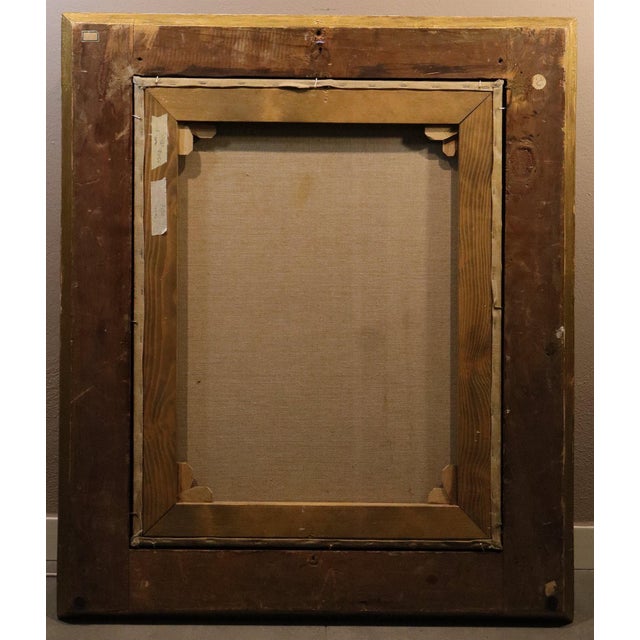
the painting is sold complete with an antique frame and comes with a certificate of authenticity and an iconographic. This piece is attributed to the mentioned designer/maker. It has no attribution mark and no
official proof of authenticity,
however it is well documented in design history. I take full responsibility for any authenticity
issues arising from misattribution
See less
- Dimensions
- 33.46ʺW × 4.72ʺD × 39.37ʺH
- Styles
- Baroque
- Art Subjects
- Portrait
- Period
- 17th Century
- Country of Origin
- Italy
- Item Type
- Vintage, Antique or Pre-owned
- Condition
- Good Condition, Unknown, Some Imperfections
- Color
- Condition Notes
- Patina Consistent with Age and Use,Reupholstered,Partially Restored Patina Consistent with Age and Use,Reupholstered,Partially Restored less
Returns & Cancellations
Return Policy - All sales are final 48 hours after delivery, unless otherwise specified in the description of the product.
Cancellation Policy - Prior to shipping or local pickup, buyers may cancel an order for up to 48 hours, unless otherwise specified.
Related Collections
- Photorealism Canvas Paintings
- Ed Ruscha Paintings
- Ralph Lauren Paintings
- Photorealism Paintings in New York
- Richard Serra Paintings
- Louise Nevelson Paintings
- Silk Velvet Paintings
- Herman Miller Paintings
- BDDW Paintings
- Jean-Paul Barray Paintings
- Johannes Andersen Paintings
- Peter Behrens Paintings
- Karl-Erik Ekselius Paintings
- Carl-Axel Acking Paintings
- Joseph Stella Paintings
- Raphael Paintings
- Pedro Friedeberg Paintings
- Piet Hein Eek Paintings
- James McCray Paintings
- Milton Avery Paintings
- Hans Andersen Paintings
- Photorealism Paintings in Los Angeles
- Leroy Neiman Paintings
- Jaanika Peerna Paintings
- Black Photorealism Paintings