


Details
Description
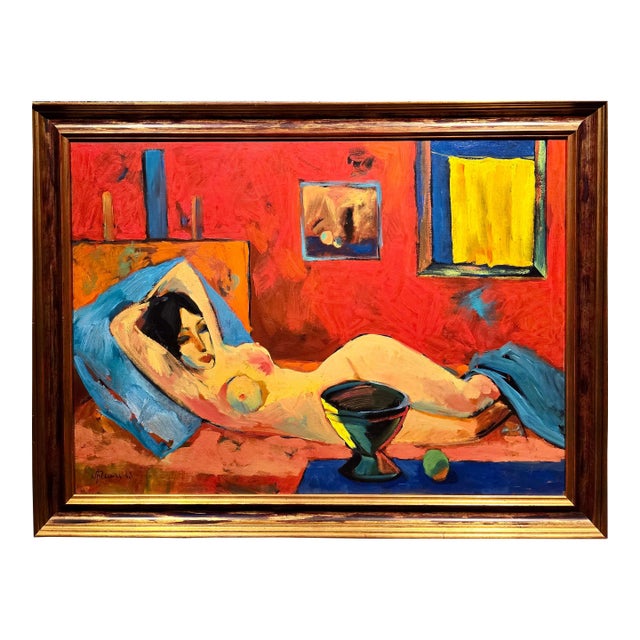
Minas Avetisyan 1963 Mid-Century Armenian Modernist Reclining Nude -Oil Painting
Armenian Expressionist - Oil painting on canvas - signed and …
Read more
Minas Avetisyan 1963 Mid-Century Armenian Modernist Reclining Nude -Oil Painting
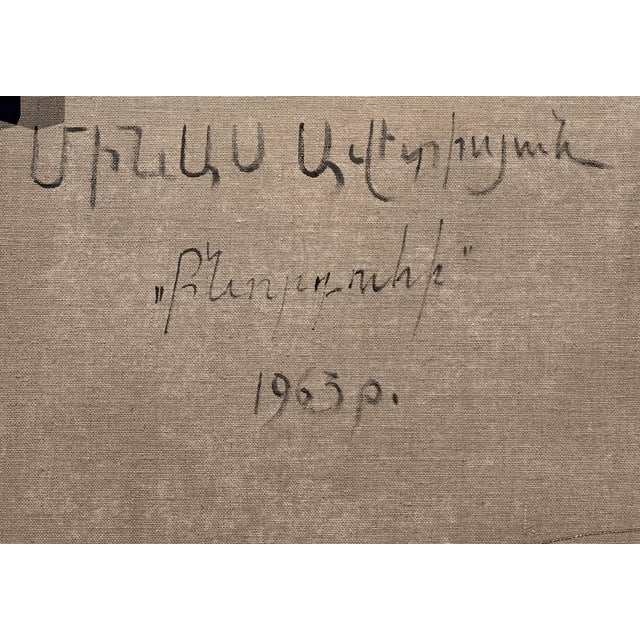
Armenian Expressionist - Oil painting on canvas - signed and dated 1963
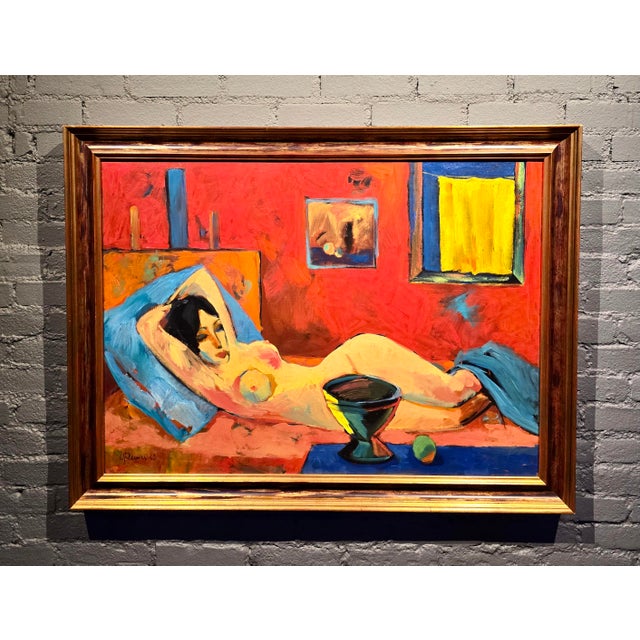
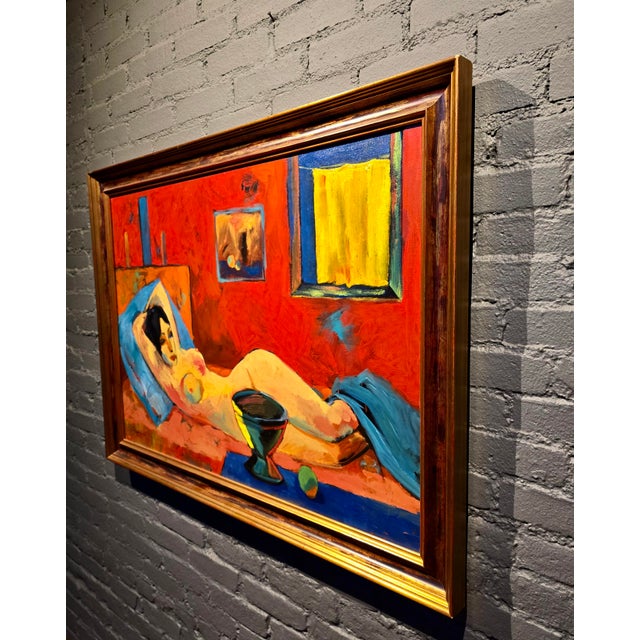
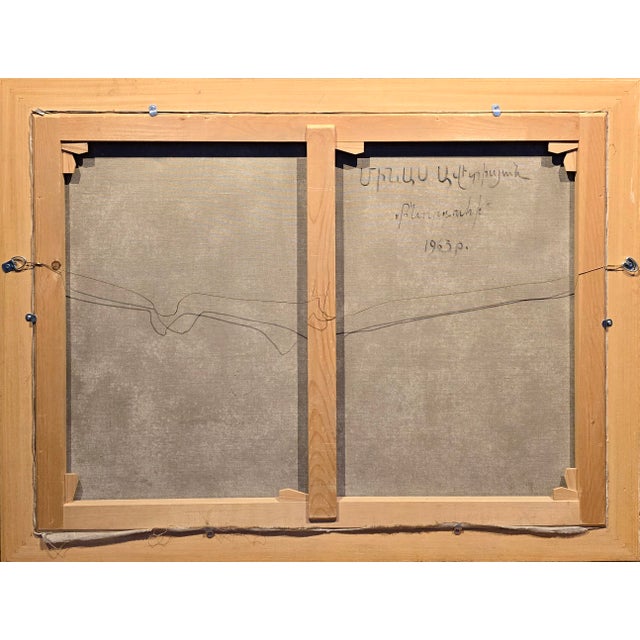
Canvas size: 29x39" - Frame size: 33x43x2"
Item Description
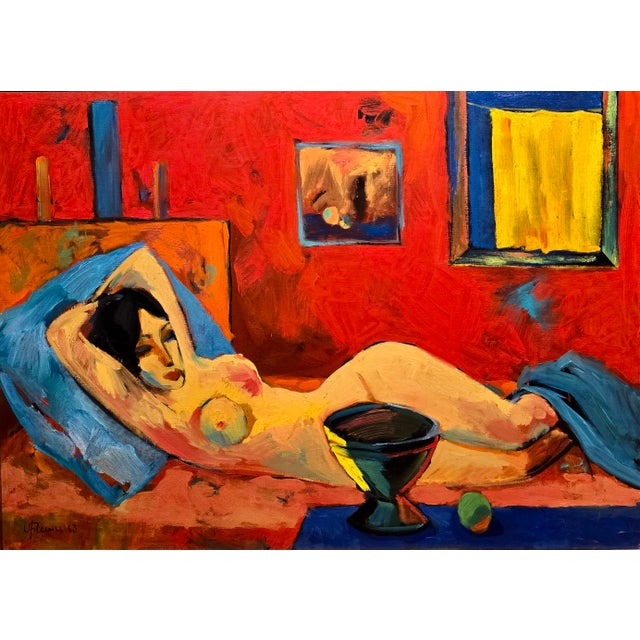
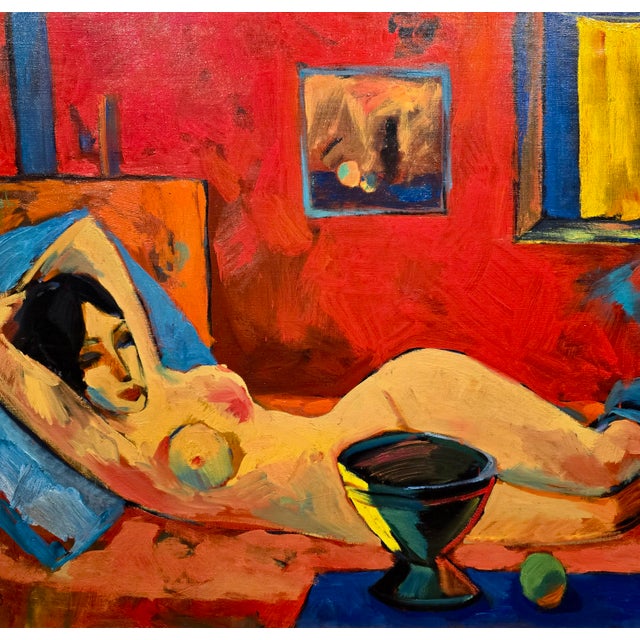
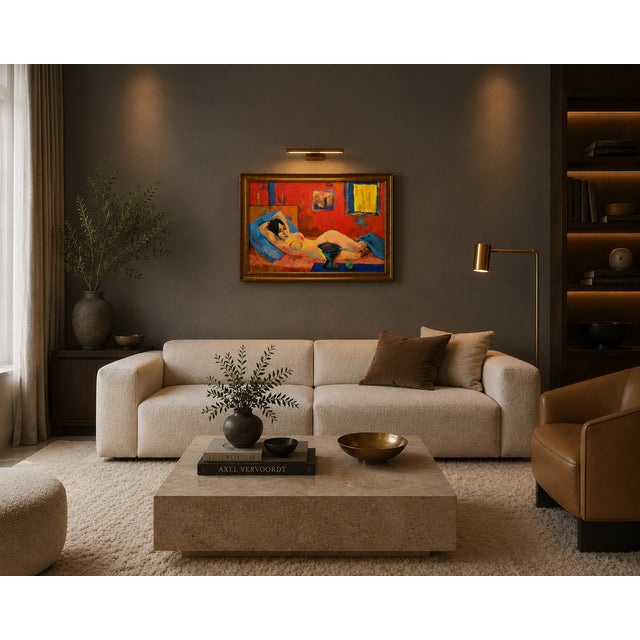
An exceptional, museum-quality mid-century modern oil painting by the legendary Armenian modernist master Minas Avetisyan (1928–1975). This stunning work features a stylized reclining female nude positioned against a fiercely saturated, flat red interior backdrop.
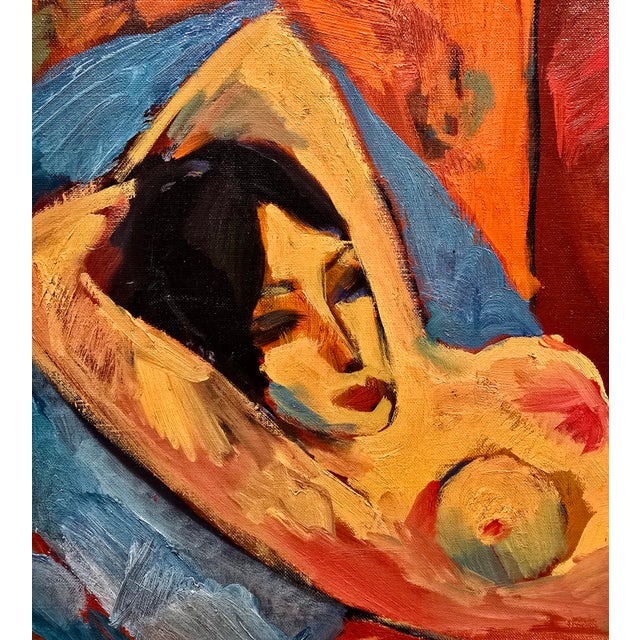
Avetisyan’s signature mastery of raw, expressive color contrast is on full display. The glowing, golden-yellow tones of the central figure are masterfully juxtaposed against cool, heavy cobalt and cerulean blues found in the structural drapery and pillow. A dark, graphic chalice-style vessel rests in the foreground, anchoring the composition. Grounded heavily in the traditions of Armenian medieval manuscript miniatures and folk art, the piece simultaneously embraces the emotional intensity of Western Fauvism and Expressionism.
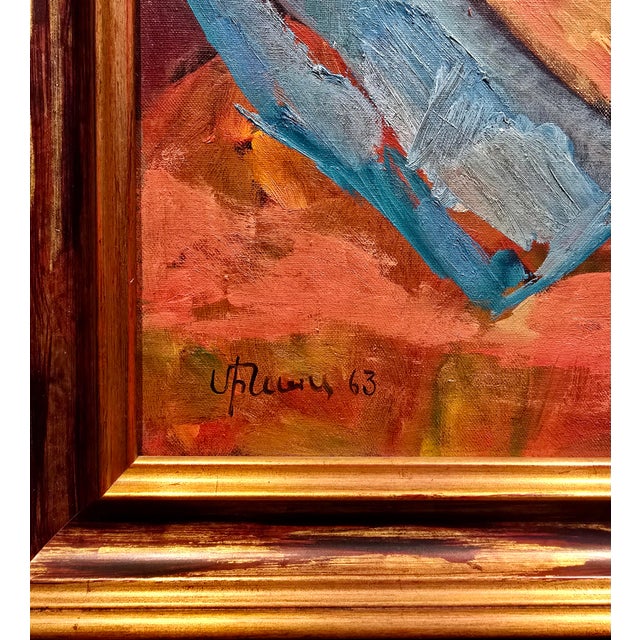
This painting is beautifully housed in its original, substantial gilded-bronze tone wooden gallery frame, which adds a layer of classic mid-century opulence. Signed and dated by the artist in the lower left corner ("Minas 63").
Creator: Minas Avetisyan (Armenian, 1928–1975)
Date of Creation: 1963
Medium: Oil on Canvas (or Canvas board)
Style: Modernist, Expressionism, Soviet Non-Conformist / Avant-Garde
Condition: Excellent vintage condition. The paint layer is stable, vibrant, and well-preserved. Minor age-appropriate wear or superficial scuffing on the gilded wooden frame.
Styling Inspiration
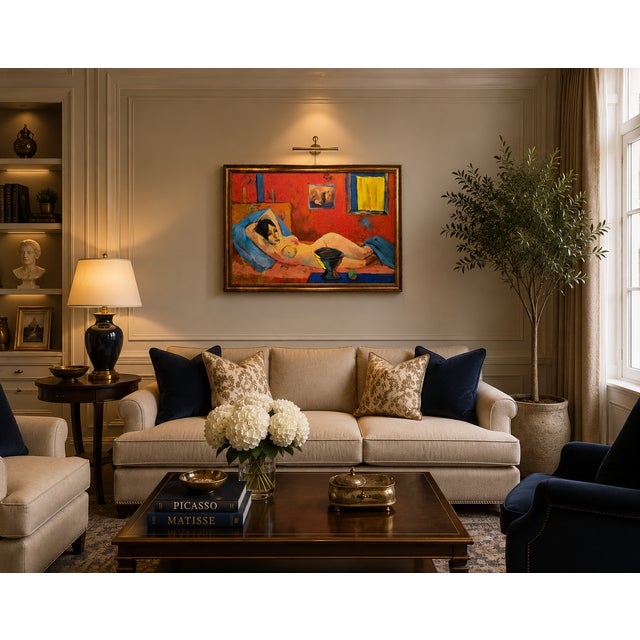
With its bold dimensions and striking presence, this painting serves as an magnificent focal point over a modern luxury sofa. It pairs exquisitely with minimalist warm-neutral environments—such as a room with camel leather, textured cream bouclé, travertine furniture, and matte charcoal or warm stone-gray accent walls.
Minas Avetisyan (1928–1975)
One of the most important and influential figures in 20th-century Armenian art history.
Early Life and Education
Minas Avetisyan was born on July 20, 1928, in the small, remote mountain village of Jajur, Armenia.
The Rural Muse: Growing up surrounded by the stark, sun-bleached mountains and vibrant clay-earth tones of the Armenian highlands deeply shaped his visual memory. This rural landscape remained his primary lifelong inspiration [INDEX].
Academic Training: He pursued formal art training at the Yerevan Fine Arts and Theater Institute, followed by the prestigious Repin Institute of Painting, Sculpture, and Architecture in Leningrad (now St. Petersburg), graduating in 1960. Under the guidance of renowned Soviet masters, he gained a flawless command of classical drawing and composition technique.
Artistic Philosophy & Style
Avetisyan emerged during the Soviet Union's "Thaw" era, a brief period of relaxed political censorship that allowed artists more creative freedom.
The Master of Color: At a time when Soviet art was dominated by rigid, muted, and propaganda-driven Socialist Realism, Avetisyan boldly rebelled. He discarded muddy tones in favor of a wild, expressive, and fiery palette [INDEX]. His heavy use of primary blues, searing ochres, and deep terracotta oranges earned him immediate attention [INDEX].
Fauvist & Avant-Garde Influences: While firmly rooted in ancient Armenian miniature painting and the works of Armenian master Martiros Saryan, Avetisyan's style drew heavily from European Post-Impressionism, Fauvism, and Expressionism. His brushwork was thick, tactile (impasto), and heavy with raw emotion [INDEX].
Studio Execution: Although inspired by nature, he rarely painted plein air (outdoors). Instead, he used the outdoors to gather sensory impressions, executing the final works entirely from memory in his studio. This approach transformed his landscapes from simple geographical copies into profound, psychological reflections of national identity.
Career Highlights and Mediums
While your piece is an oil landscape, Avetisyan was a highly versatile artist who conquered multiple mediums:
Murals and Frescoes: He designed massive, breathtaking frescoes for factories and cultural centers across Armenia (many of which are now preserved as national monuments).
Theatrical Design: He was a celebrated set and costume designer for major national productions, including the ballet Gayane by Aram Khachaturian at the Yerevan Opera Theater.
National Recognition: In 1962, he held a highly successful solo exhibition in Yerevan, cementing his status as a leading voice of the Armenian avant-garde.
Tragic Fate and Rarity
The tragic nature of Avetisyan’s life is a critical factor in why his surviving pieces are so immensely valuable and highly sought after by fine art collectors today.
The Studio Fire (1972): On New Year's Night in 1972, a catastrophic and highly suspicious fire broke out in his Yerevan studio. More than 300 of his finest paintings, journals, and archival documents were entirely turned to ash. This devastating loss broke the artist’s spirit but made any pieces that survived outside his studio incredibly rare.
A Untimely Death (1975): On February 24, 1975, at just 46 years old, Avetisyan was struck and killed by a car while walking on a sidewalk in Yerevan. Because of his outspoken national pride and refusal to conform to Soviet artistic restrictions, widespread speculation continues to this day that his death was an assassination orchestrated by the KGB.
Market Value & Institutional Presence
Today, Minas Avetisyan is celebrated as a national hero in Armenia.
His masterpieces are prominently displayed in the National Gallery of Armenia and the Tretyakov Gallery in Moscow [INDEX].
A dedicated Minas Avetisyan House-Museum operates in his birthplace of Jajur, displaying his remaining frescoes and landscapes.
Because the vast majority of his lifetime output was destroyed in 1972, authenticated oils from his village landscape series are highly prized items when they appear on the international secondary market, making them exceptional investment-grade pieces for platforms like Chairish.
See less
- Dimensions
- 43ʺW × 2ʺD × 33ʺH
- Styles
- Expressionism
- Frame Type
- Framed
- Period
- 1960s
- Country of Origin
- Armenia
- Item Type
- Vintage, Antique or Pre-owned
- Materials
- Canvas
- Oil Paint
- Condition
- Good Condition, Original Condition Unaltered, Some Imperfections
- Color
- Red
- Condition Notes
- Excellent - Minor wear consistent with age and history Excellent - Minor wear consistent with age and history less
Questions about the item?
Returns & Cancellations
Return Policy - All sales are final 48 hours after delivery, unless otherwise specified in the description of the product.
Cancellation Policy - Prior to shipping or local pickup, buyers may cancel an order for up to 48 hours, unless otherwise specified.
Related Collections
- Ed Ruscha Paintings
- Ralph Lauren Paintings
- Photorealism Canvas Paintings
- Photorealism Paintings in New York
- Louise Nevelson Paintings
- Richard Serra Paintings
- Silk Velvet Paintings
- Herman Miller Paintings
- Jaanika Peerna Paintings
- Jo Baskerville Paintings
- Jean-Paul Barray Paintings
- Johannes Andersen Paintings
- Peter Behrens Paintings
- Photorealism Paintings in Los Angeles
- Black Photorealism Paintings
- BDDW Paintings
- James McCray Paintings
- Lawson-Fenning Paintings
- Milton Avery Paintings
- Carl-Axel Acking Paintings
- Joseph Stella Paintings
- Karl-Erik Ekselius Paintings
- Pedro Friedeberg Paintings
- Piet Hein Eek Paintings
- Raphael Paintings