


Details
Description
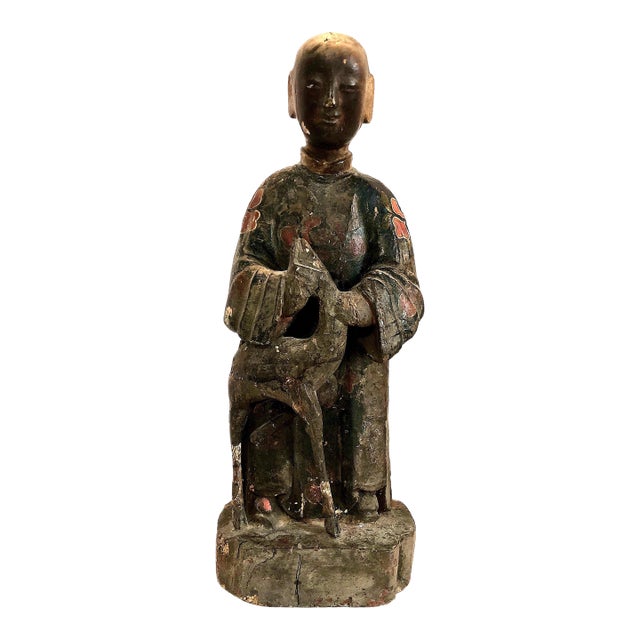
This sculpture is an antique Chinese lacquered and polychrome-painted wood figure dating from late in the Qing Dynasty (1644–1911). Hand-carved …
Read more
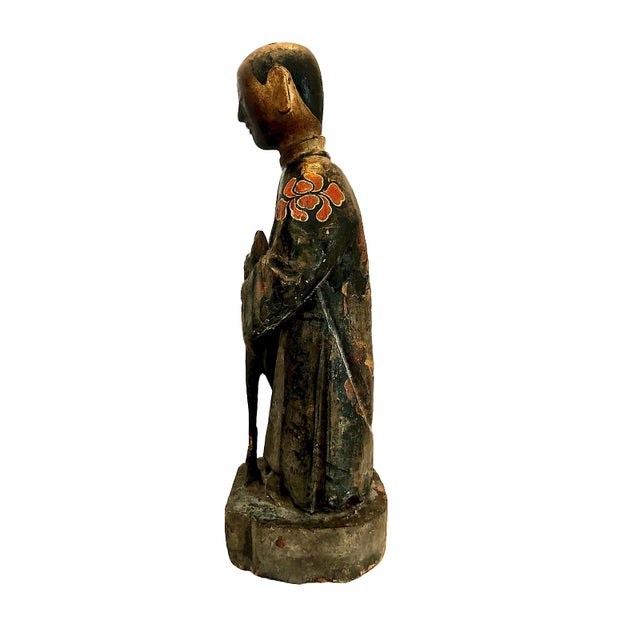
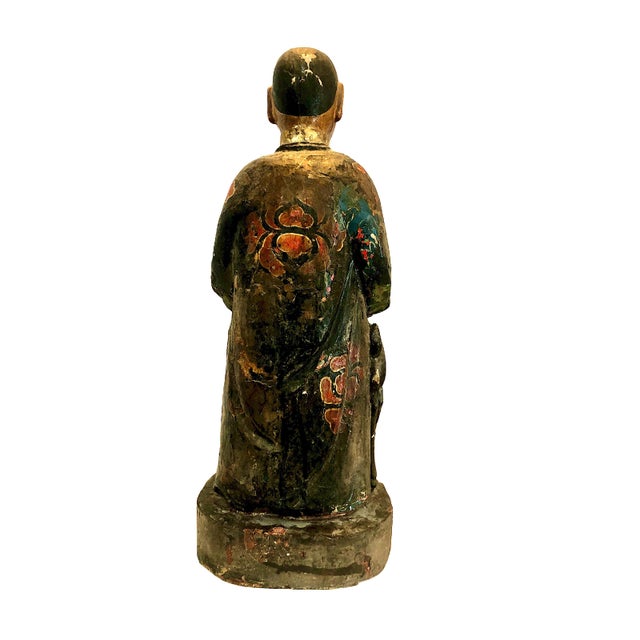
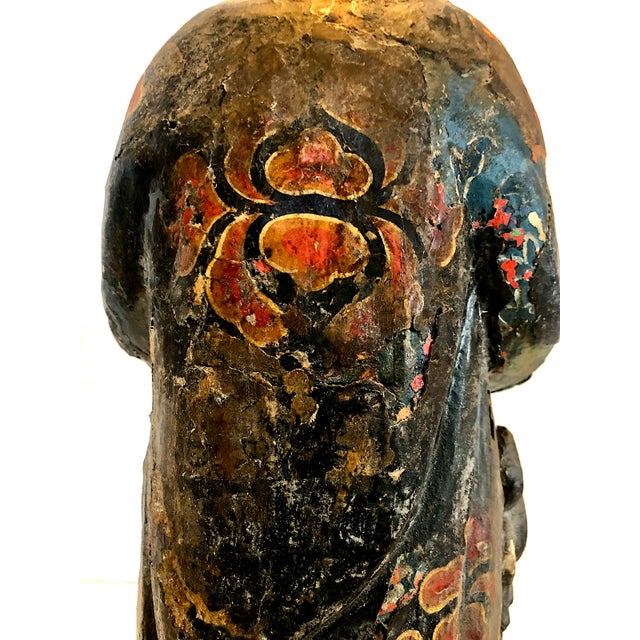
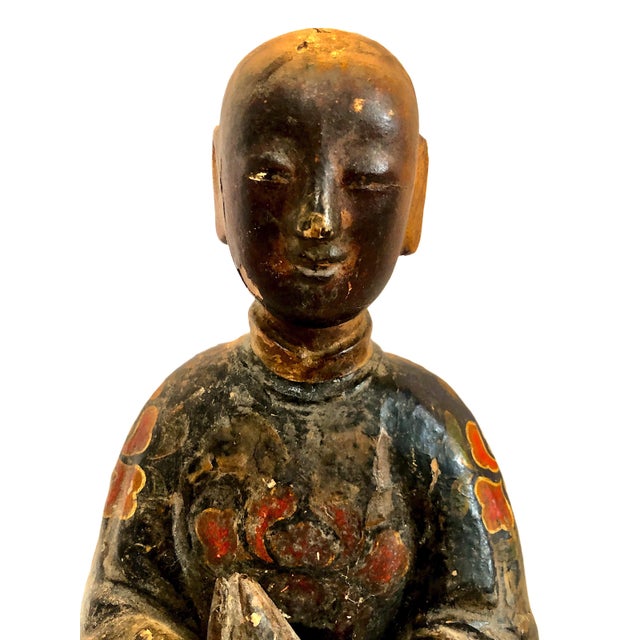
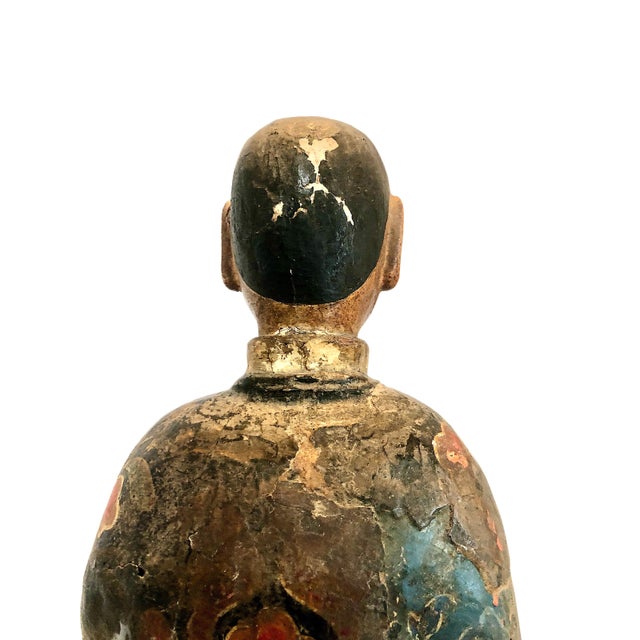
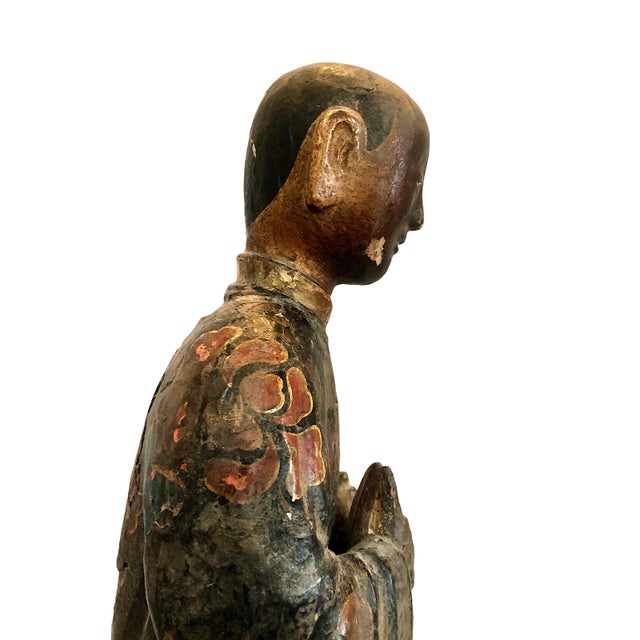
This sculpture is an antique Chinese lacquered and polychrome-painted wood figure dating from late in the Qing Dynasty (1644–1911). Hand-carved from a single piece of wood, set on an integrated rustic base, the statue features a traditional gilt and polychrome lacquer finish over a dark base coat. Traces of bright red, green, and orange pigments remain visible in the floral patterns on the front and back.
The figure is cradling a deer (or stag) in front of him. In Chinese culture, the deer (lù, 鹿) is a powerful homophone for wealth/prosperity (lù, 祿) and is deeply associated with longevity, health, and spiritual purity. In Buddhist tradition, it can represent the famous Deer Park sermon or the gentle nature of an enlightened being living in harmony with nature.
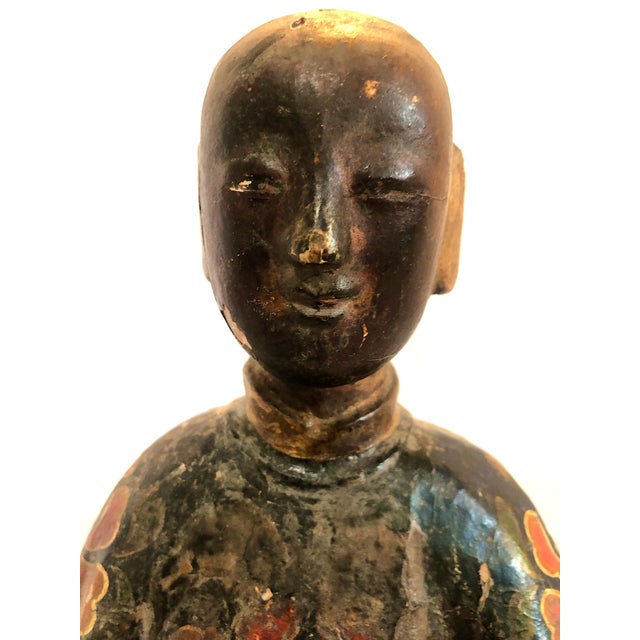
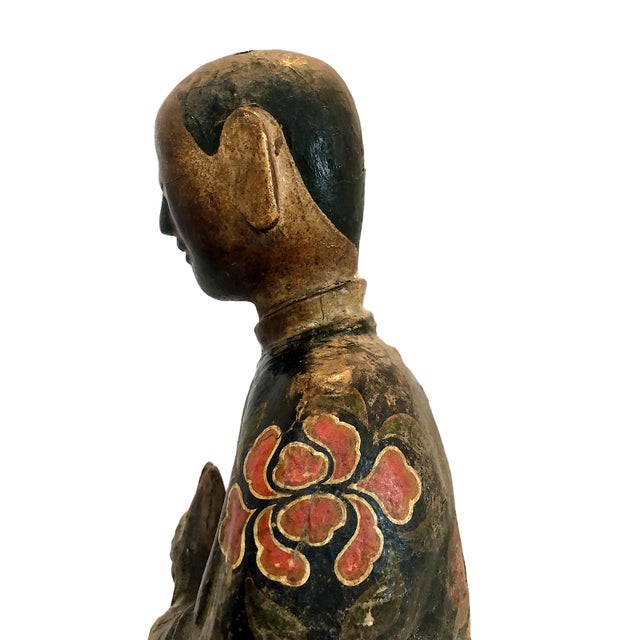
The shaven head, peaceful expression, and elongated earlobes indicate this is a Buddhist monk or Luohan (Arhat). His high-collared, flowing robe is decorated with peonies (mudan 牡丹), a deeply symbolic flower in traditional East Asian and Buddhist art. In the "Sacred Garment" (Kashaya) tradition, Buddhist monks wear patched robes (kashaya), which historically represented humility. However, over the centuries—especially in figures commissioned by wealthy patrons or imperial workshops during the Ming and Qing eras—these robes became highly stylized. Covering the back and shoulders with magnificent blooming peonies signifies that this monk is cloaked entirely in virtues, dignity, and divine grace.
The specific style painted here, showing the flower open, symmetrical, and facing outward from the back, represents a state of ultimate fulfillment, completion, and the arrival of a flourishing life. In a religious figure, this mirrors the complete realization of Buddhist teachings.
Additionally, in Chinese folklore, lacquer acts as a physical barrier against decay, while the Yang energy of the vibrant red peony acts as a spiritual shield. Placing the flower on the back, shoulders, and sides ensures the figure is guarded against negative influences from all directions.
The heavy cracking, flaking lacquer, missing paint layers and exposed raw wood at the base and head are consistent with an authentic aged devotional figure. These pieces were typically kept on home altars or in local temples where centuries of incense smoke (notable on the figure’s left side, photo #10) and climate exposure created this specific weathered patina.
Signature/Maker’s mark: Nonexistent.
See less
- Dimensions
- 7ʺW × 6ʺD × 18.5ʺH
- Styles
- Qing
- Period
- Late 19th Century
- Country of Origin
- China
- Item Type
- Vintage, Antique or Pre-owned
- Materials
- Paint
- Wood
- Condition
- Good Condition, Original Condition Unaltered, Some Imperfections
- Color
- Coffee
- Condition Notes
- Condition commensurate with age and use. Please review all photos. Condition commensurate with age and use. Please review all photos. less
Questions about the item?
Returns & Cancellations
Return Policy - All sales are final 48 hours after delivery, unless otherwise specified in the description of the product.
Cancellation Policy - Prior to shipping or local pickup, buyers may cancel an order for up to 48 hours, unless otherwise specified.
Related Collections
- Straw Sculpture
- Roman Bronze Works Sculpture
- Constantin Brancusi Sculpture
- Louis XIV Sculpture
- Fernando Botero Sculpture
- Bakelite Sculpture
- Gold-Plate Sculpture
- Medium-Density Fibreboard Sculpture
- Polished Brass Finish Sculpture
- Albert Ernest Carrier-Belleuse Sculpture
- Sculpture in Panama City, FL
- Gourd Sculpture
- Recycled/Repurposed Sculpture
- Flavio Poli Sculpture
- Barovier and Toso Sculpture
- Far Pavilions Sculpture
- Emmanuel Villanis Sculpture
- Georgian Sculpture
- Maison Jansen Sculpture
- Sculpture in Columbus
- Geode Sculpture
- Antique Iron Finish Sculpture
- René Lalique Sculpture
- Worlds Away Sculpture
- Photography Sculpture