

Details
Description
This important and rare landscape painting by the great roman artist aldo natili (rome, 1913–1975) displays an artistic style akin …
Read more
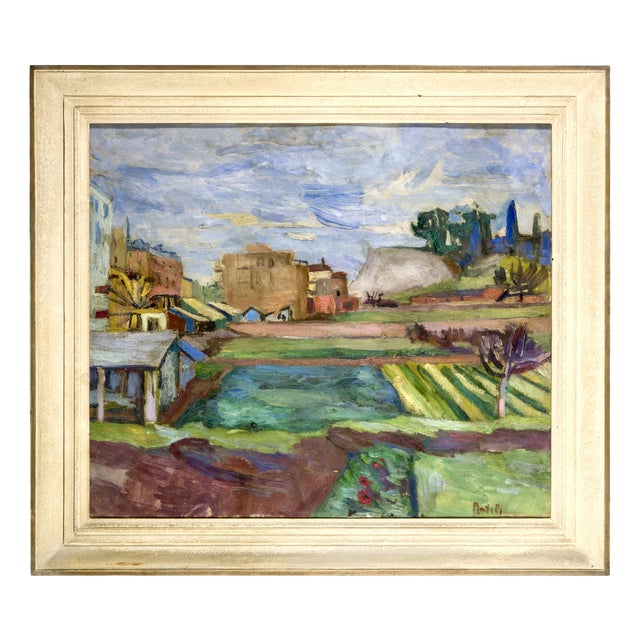
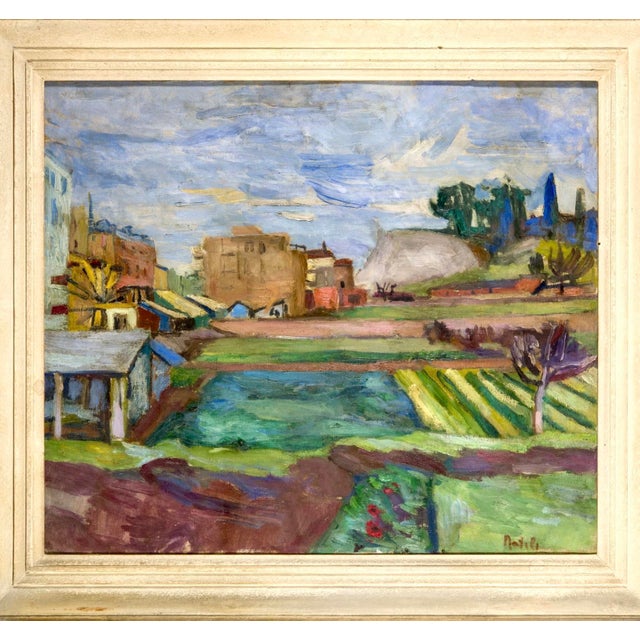
This important and rare landscape painting by the great roman artist aldo natili (rome, 1913–1975) displays an artistic style akin to the fauvist movement.
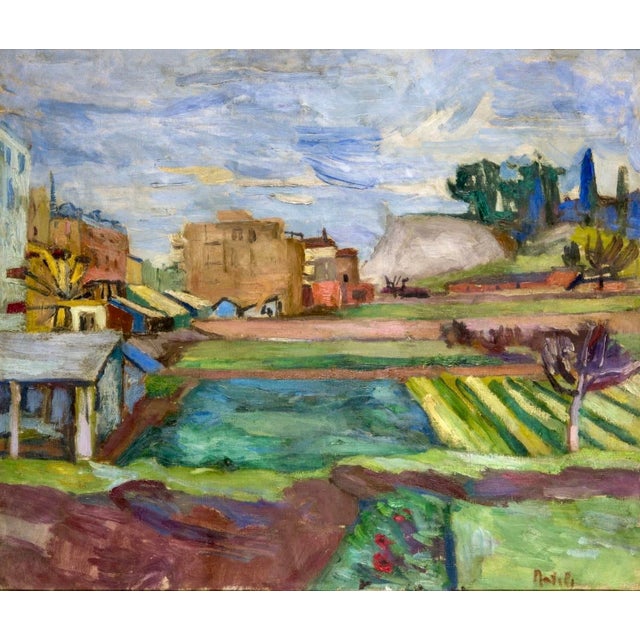
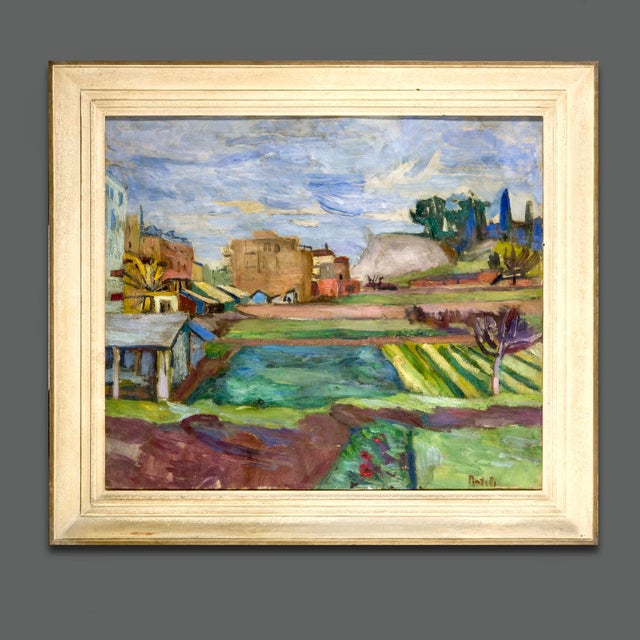
the painting depicts a rural or suburban landscape with cultivated fields, a stretch of water and buildings in the background.
the pictorial style is distinguished by its use of colour and graphic simplification, characteristics that bring the work closer to the fauvist movement, known for its use of colour that blends impressionism with the impressionist school.
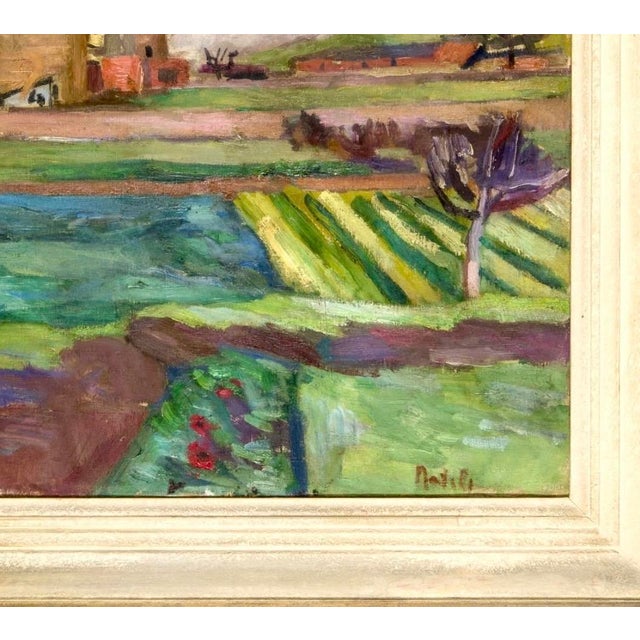
signed on the front, bottom right: ‘natili’
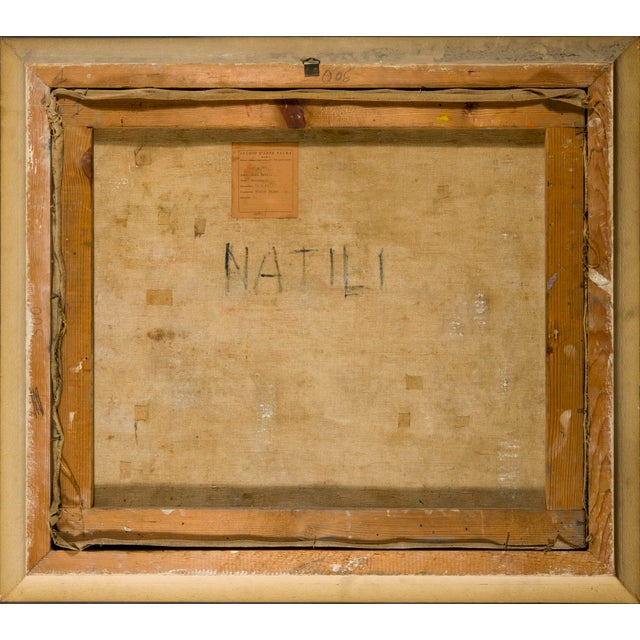
signed on the reverse ‘natili’
on the reverse is the original label from a major exhibition at one of the most prestigious art galleries
" studio d'arte palma
rome
piazza augusto imperatore
no. 140 "
aldo natili (rome, 1913 – 1975) social realism / roman post-tonalism the painting depicts a suburban view where the rural area (the vegetable gardens in the foreground) meets urban expansion (the buildings in the background).
this theme is central to natili’s work, as he often documented the social and urban transformations of rome in the post-war period.
the composition is divided into horizontal bands that guide the eye from the cultivated fields towards the angular architecture and the turbulent sky.
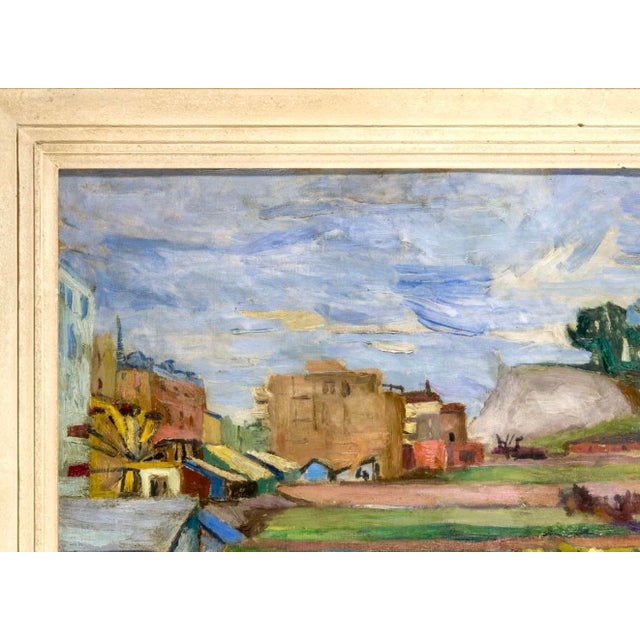
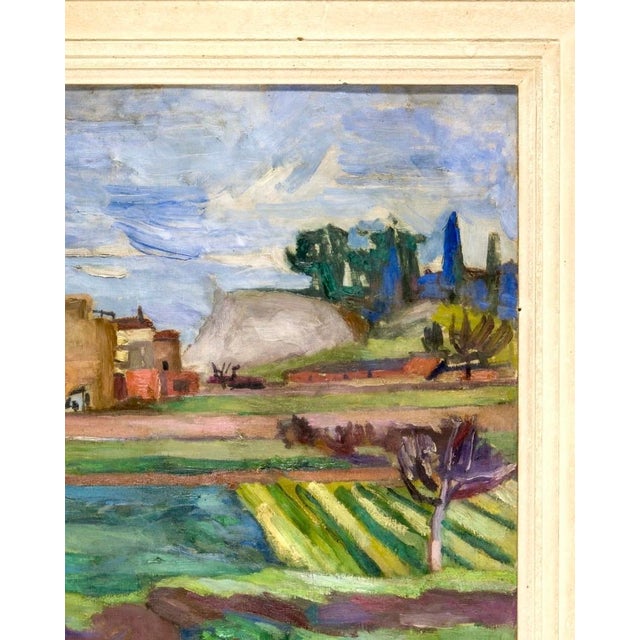
the execution is characterised by a textured and vibrant application of paint.
the brushstrokes are broad and constructive, typical of a style that departs from objective naturalism to embrace a more expressive and synthetic realism.
the colour palette alternates between earthy and brown tones for the architecture and acid greens and deep blues for the vegetation and water.
the influence of roman tonalism is evident, though tempered by a formal rigour that echoes the neorealist debate of those years.
aldo natili was a prominent figure on the roman art scene, participating in several editions of the rome quadriennale (from 1943 to 1960).
a friend of artists such as guttuso, mafai and fazzini, his work reflects a strong civic commitment.
in this wonderful painting, the landscape is not merely an idyllic view, but a testament to everyday reality in all its simplicity.
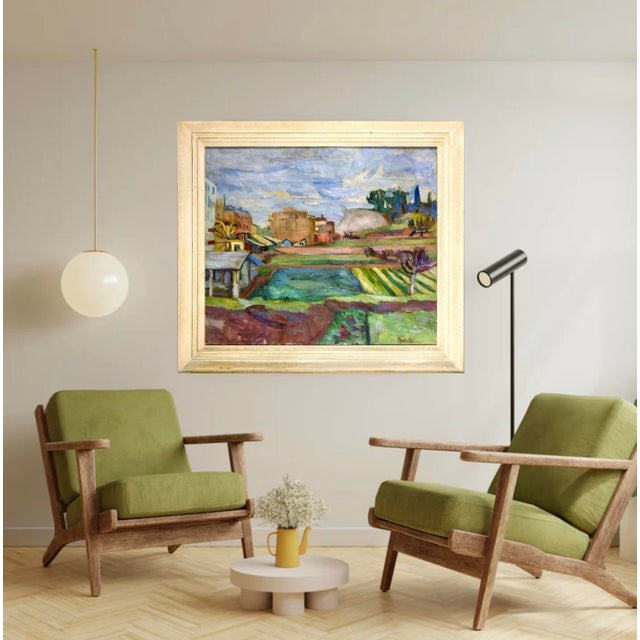
this artwork, never before on the market, comes from an important italian private collection and is beautified by an impressive antique frame in white laquered wood, in very good condition.
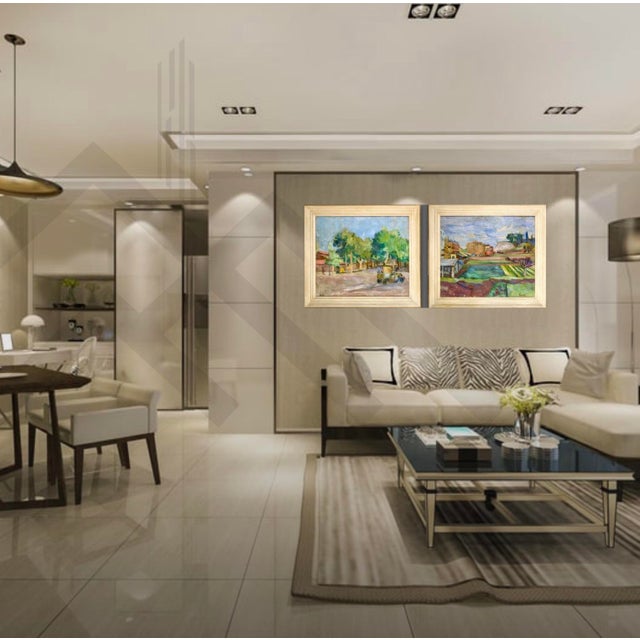
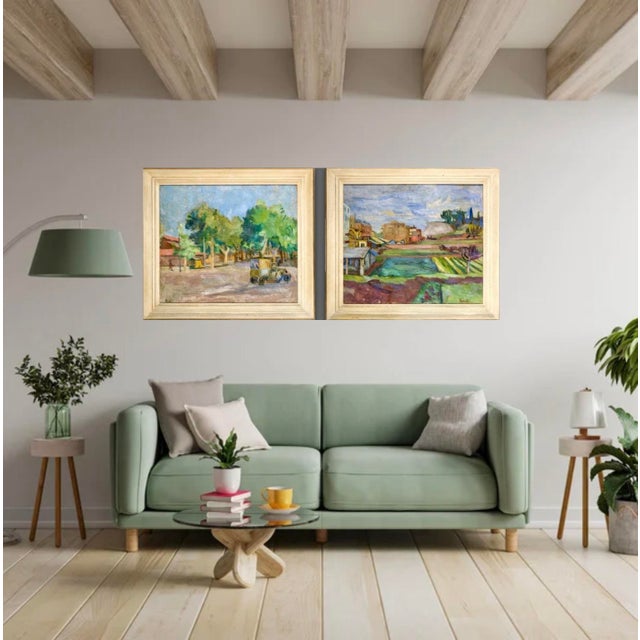
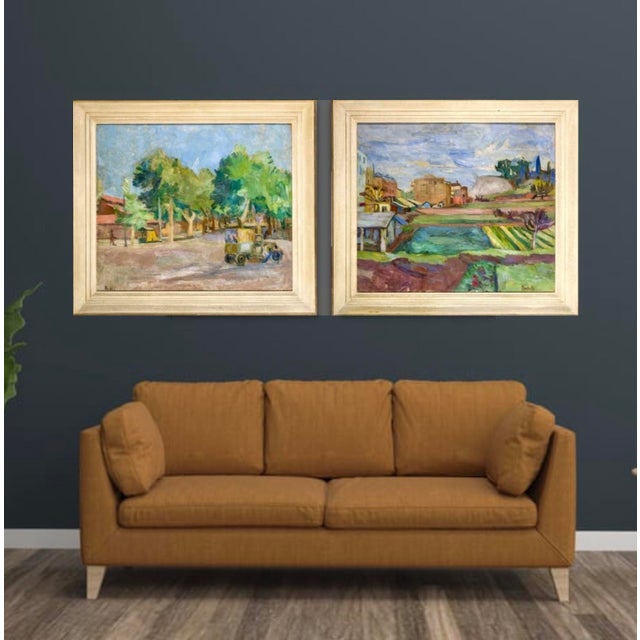
this beautiful work is part of a pair.
every item of our gallery, upon request, is accompanied by a certificate of authenticity issued by sabrina egidi official expert in italian furniture for the chamber of commerce of rome and for the rome civil courts.
" in many ways, aldo natili's work can be considered emblematic of the positions, developments and even contradictions of italian painting between the 1930s and 1970s, particularly with regard to the situation in rome.
born in rome in 1913, natili spent his youth exploring themes close to those of the roman school, before turning his attention to social issues in the immediate post-war period, working alongside figures such as guttuso, fazzini and mafai in the libera associazione arti figurative (free association of figurative arts), which held its first exhibition in 1945.
this marked the beginning of a period of great recognition for natili, characterised by a convinced and passionate realist language with strong civil and political implications, which, in the suffering and defeated humanity that survived the war, apparently deprived of everything, traced the signs and certainties of a future of redemption.
his bluntly realistic, sometimes almost folksy language and his strong, immediate themes bring his work from these years closer to that of birolli, pizzinato, migneco and, of course, guttuso, with whom he also shared clear and courageous political stances.
these were the years in which natili successfully participated in the rome quadriennials (1948, 1952, 1956) and the memorable exhibition of art against barbarism (1951), and in which zavattini involved him in the famous “collezione roma” project (1946), when the writer asked around fifty roman artists to pay homage to the city by creating a small painting that portrayed one of its many contrasting aspects (among the many artists who took part in the initiative were afro, corpora, capogrossi, de chirico, donghi, guttuso, pirandello, prampolini, savinio, turcato and ziveri).
but a growing and unstoppable distrust of realism led natili, starting in the early 1960s, to completely different results in terms of expressive methods and pictorial composition: ‘many aesthetics,’ declared the painter in 1960, ‘which we had proudly adorned ourselves with and believed to be part of our very substance, a sure guide for our existence and our daily work as artists, proved to be fragile and alien to the new actions that ever-changing days forced upon us.’
this marked the beginning of the last phase of his work, openly informal and increasingly abstract, to which natili remained faithful until his death in rome in 1975. These are dense, dark, exasperated and sometimes desperate works, a vibrant testimony to an unmediated existential struggle: ‘i would like,’ says natili, ‘all my contradictions to come directly onto the canvas, as they really are, through the arteries of my brushes, just as blood is pushed by the heart.’
this informal period of natili's, characterised by a rich production of high quality, is in many ways still to be discovered and understood, as it is almost unknown except for the exhibition at the galleria san marco in 1963.
natili's work is therefore complex and diverse. Over his forty-year career, he moved, with inner consistency, from the intimism of the 1930s to the realism of the post-war period, culminating in the dramatic informal canvases of the last decade."
luca quattrocchi
full professor of contemporary art history at the university of siena
aldo natili taught from 1945 to 1955 at the academy of fine arts in rome (among his students was the painter giulia battaglia); from 1955 to 1963 at the academy of fine arts in carrara and from 1963 until 1975, the year of his death, at the art school in via ripetta, rome.
he was a close friend of roberto melli, afro, mirko and dino basaldella, salvatore scarpitta, leoncillo leonardi, giulio turcato, mario penelope, emilio villa, marcello venturoli and other artists and critics.
as anti-fascist, aldo natili was a friend of umberto terracini, mario alicata, antonio giolitti and adolfo battaglia, as well as poets and writers including pablo neruda and alberto moravia.
dimensions are frame included this piece has an attribution mark,
i am sure that it is completely authentic and take full responsibility for any authenticity
issues arising from misattribution
See less
- Dimensions
- 29.53ʺW × 2.76ʺD × 33.46ʺH
- Styles
- Mid-Century Modern
- Period
- 1940s
- Country of Origin
- Italy
- Item Type
- Vintage, Antique or Pre-owned
- Condition
- Good Condition, Unknown, Some Imperfections
- Color
- Condition Notes
- Heavy Signs of Use,Patina Consistent with Age and Use Heavy Signs of Use,Patina Consistent with Age and Use less
Returns & Cancellations
Return Policy - All sales are final 48 hours after delivery, unless otherwise specified in the description of the product.
Cancellation Policy - Prior to shipping or local pickup, buyers may cancel an order for up to 48 hours, unless otherwise specified.
Related Collections
- Photorealism Canvas Paintings
- Ed Ruscha Paintings
- Photorealism Paintings in New York
- Richard Serra Paintings
- Louise Nevelson Paintings
- Silk Velvet Paintings
- Herman Miller Paintings
- BDDW Paintings
- Carl-Axel Acking Paintings
- Joseph Stella Paintings
- Karl-Erik Ekselius Paintings
- James McCray Paintings
- Milton Avery Paintings
- Jaanika Peerna Paintings
- Photorealism Paintings in Los Angeles
- Leroy Neiman Paintings
- Jo Baskerville Paintings
- Nicola Simbari Paintings
- Soicher Marin Paintings
- Cassina Paintings
- Black Photorealism Paintings
- Lawson-Fenning Paintings
- Vienna Secession Paintings
- Jean-Paul Barray Paintings
- Hans Andersen Paintings