

Details
Description
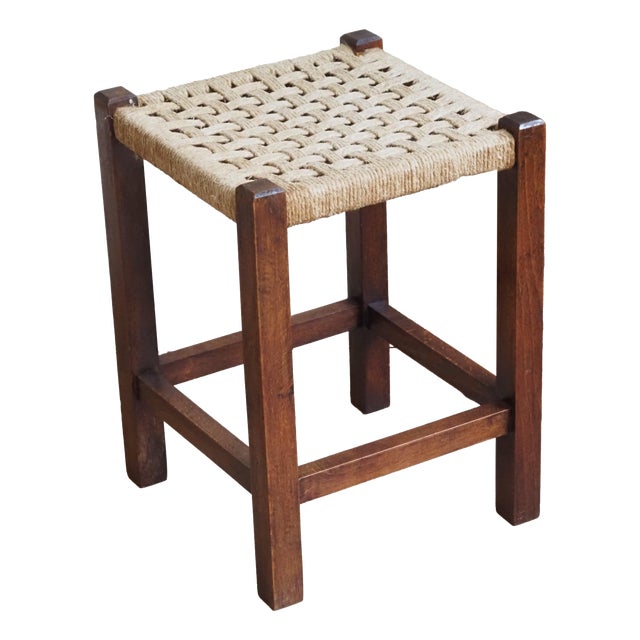
A square stool with a woven natural fiber seat, originating from the European Functionalist movement and dating from approximately 1930–1950. …
Read more
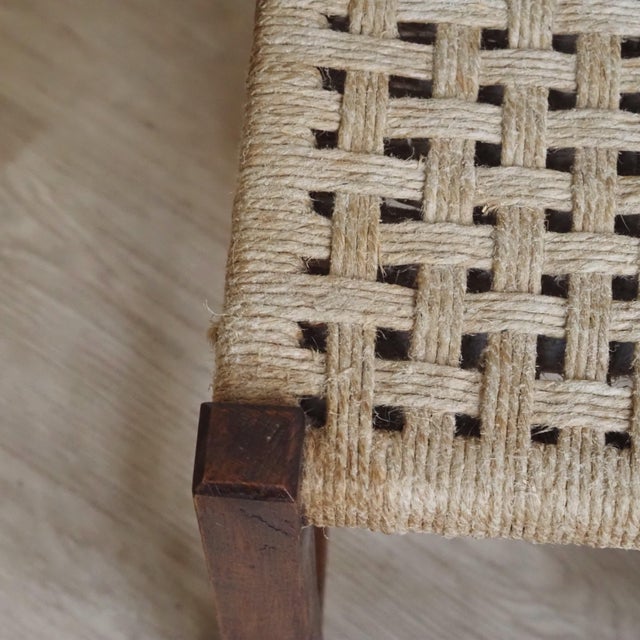
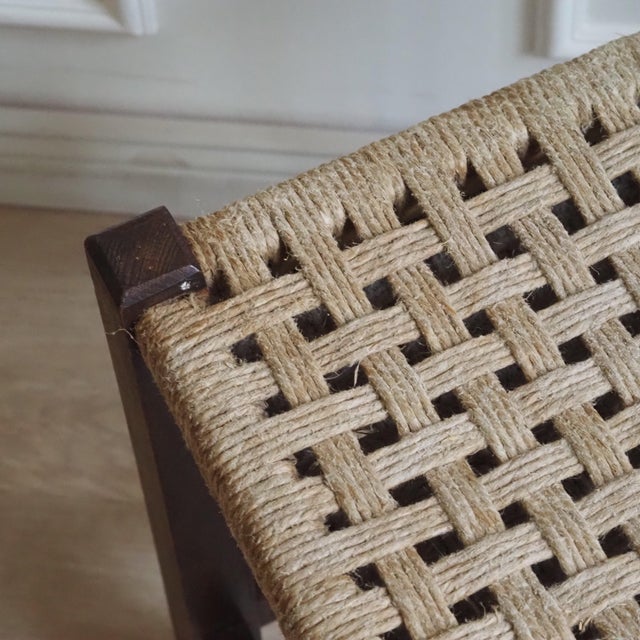
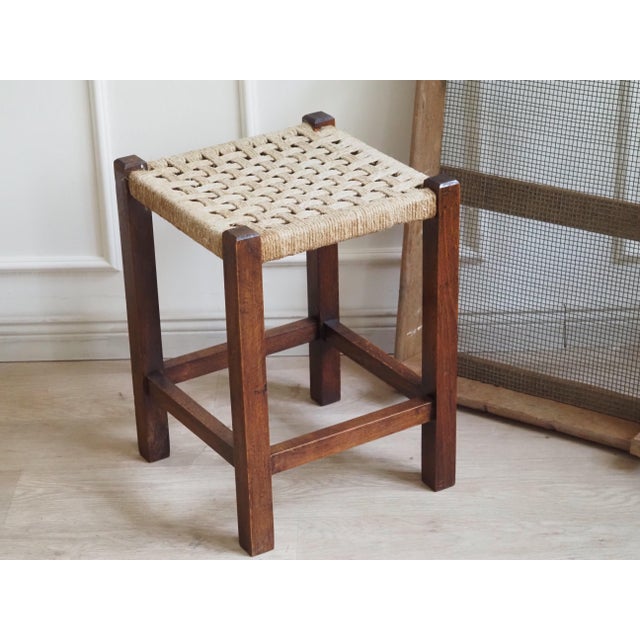
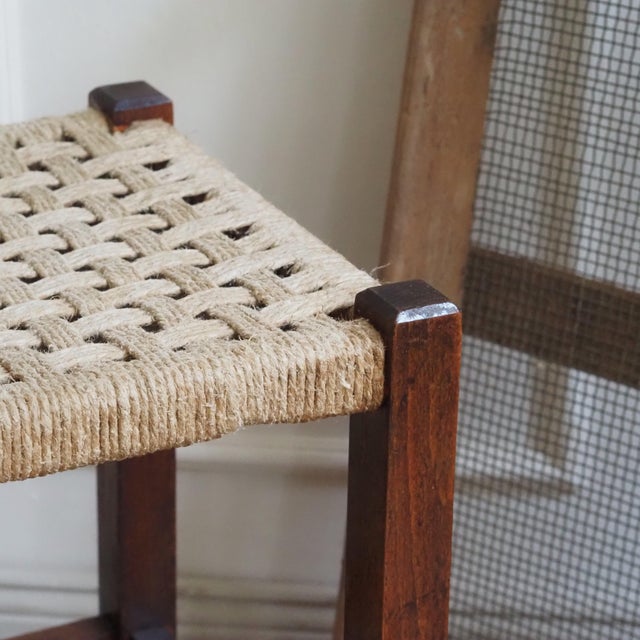
A square stool with a woven natural fiber seat, originating from the European Functionalist movement and dating from approximately 1930–1950. The combination of clearly proportioned wooden struts and the hand-woven wickerwork creates a calm, honest overall effect. Historical Context: The simple stool with a woven seat is one of the characteristic furniture forms of the European reform movement and Functionalism of the first half of the 20th century. Such pieces were used in workshops, schools, and studios where simplicity of form and honesty of materials were programmatically important. The combination of a dark wooden frame and natural wickerwork made of plant fibers represented a conscious departure from ornamental overload and spread in the context of progressive education, the Bauhaus movement, and related European design trends. Features: The square leg tenons protrude visibly beyond the seat, making the piece's construction principle formally legible. The regular canvas weave of the seat is made of undyed natural fiber webbing and features a uniform grid pattern. Design: The stool follows a completely reduced, constructive design language without ornamentation or decoration. Four square legs, connected by simple crossbars in the lower third, form a stable, geometrically clear frame. The seat does not play a load-bearing role; the weave divides it uniformly and evenly. The design principle corresponds to European functionalism of the 1930s to 1950s, with references to both the German Bauhaus movement and related French workshop traditions.
Function: Formerly: Seat in workshop, studio, or living room, occasionally as a footstool. Today: Seat, side table, or storage surface. Dimensions: Height 46 × Width 33 × Depth 33 cm. Material and Condition: Frame made of hardwood, dark stained; wood species not definitively identifiable. Seat made of undyed natural fiber weave (jute or sisal). Condition: Very good. Age-appropriate patina on the wooden frame, wickerwork intact and evenly preserved.
See less
- Dimensions
- 12.99ʺW × 12.99ʺD × 18.11ʺH
- Styles
- Bauhaus
- Period
- 1940s
- Country of Origin
- France
- Item Type
- Vintage, Antique or Pre-owned
- Materials
- Linen
- Oak
- Condition
- Good Condition, Unknown, Some Imperfections
- Color
- Beige
- Condition Notes
- Very Good — This vintage item has no defects, but it may show slight traces of use. Very Good — This vintage item has no defects, but it may show slight traces of use. less
Returns & Cancellations
Return Policy - All sales are final 48 hours after delivery, unless otherwise specified in the description of the product.
Cancellation Policy - Prior to shipping or local pickup, buyers may cancel an order for up to 48 hours, unless otherwise specified.
Related Collections
- English Traditional Bar Stools
- Bar Stools in South Bend
- Axel Einar Hjorth Bar Stools
- Gold Leaf Bar Stools
- Fruitwood Bar Stools
- Medium-Density Fibreboard Bar Stools
- Natural Fiber Bar Stools
- Jute Bar Stools
- Victorian Bar Stools
- Bar Stools in Baltimore
- Linen Bar Stools
- Early American Bar Stools
- Sky Blue Bar Stools
- Bernhardt Bar Stools
- Iskos-Berlin Design Bar Stools
- Rococo Bar Stools
- Baby Blue Bar Stools
- Red Leather Bar Stools
- Kenneth Ludwig Chicago Bar Stools
- Wrought Iron Bar Stools
- Mid-Century Modern Bar Stools
- Rattan Bar Stools
- Bamboo Bar Stools
- Art Deco Bar Stools
- Swivel Bar Stools