


Details
Description
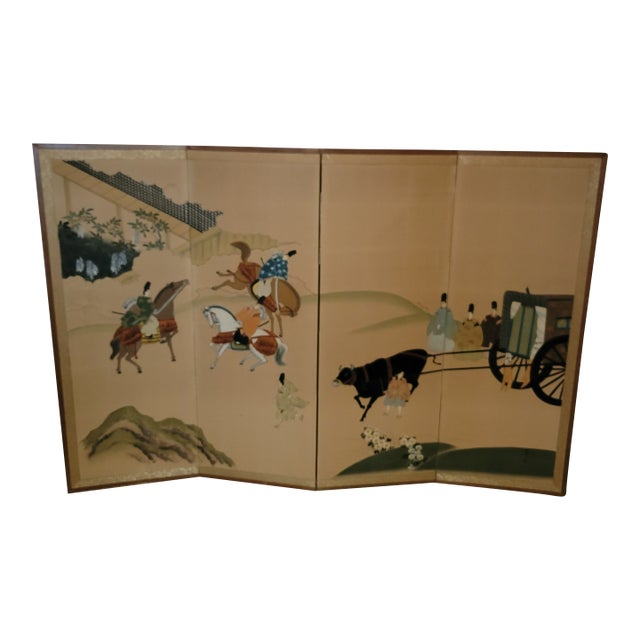
This is a Japanese byōbu (folding screen), specifically a four-panel screen. Based on the imagery—the distinct ox carriage (gissha), the …
Read more
This is a Japanese byōbu (folding screen), specifically a four-panel screen. Based on the imagery—the distinct ox carriage (gissha), the courtiers in Heian-style robes, and the blossoming wisteria—the scene depicts a famous episode from the Tale of Genji (Genji Monogatari).
1. Subject Matter & Narrative
The scene likely depicts the "Battle of the Carriages" (Kuruma-arasoi) or a related festive procession from the Heian period (794–1185).
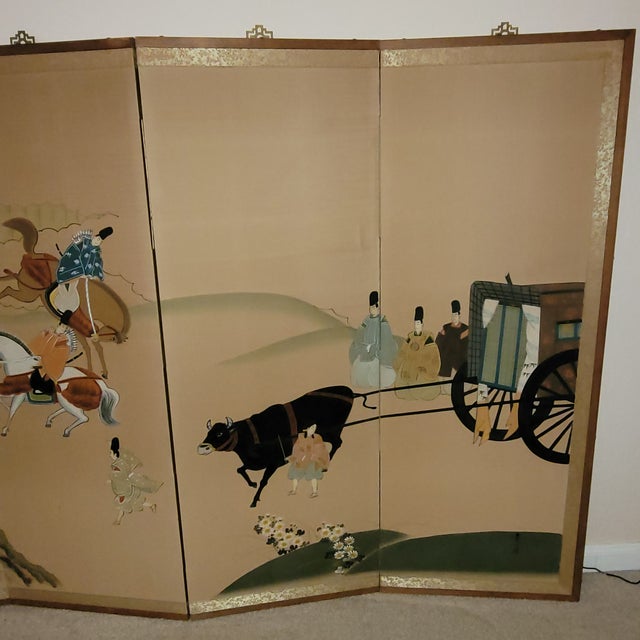
The Ox Carriage (Gissha): This was the primary mode of transport for high-ranking nobility. In the Tale of Genji, a famous clash occurs when the carriages of Genji’s wife (Lady Aoi) and his lover (Lady Rokujō) fight for a spot to view a festival procession.
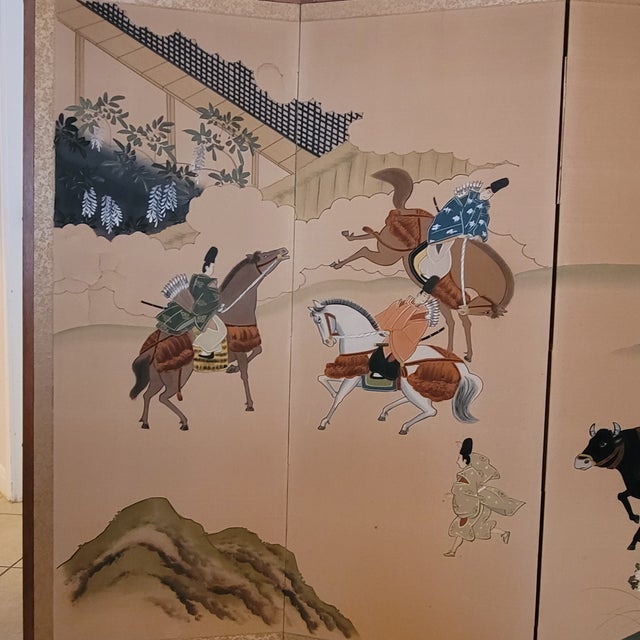
Wisteria (Fuji): Visible in the upper-left panel, wisteria is a symbol of the Fujiwara clan and high nobility. It often sets the season as late spring.
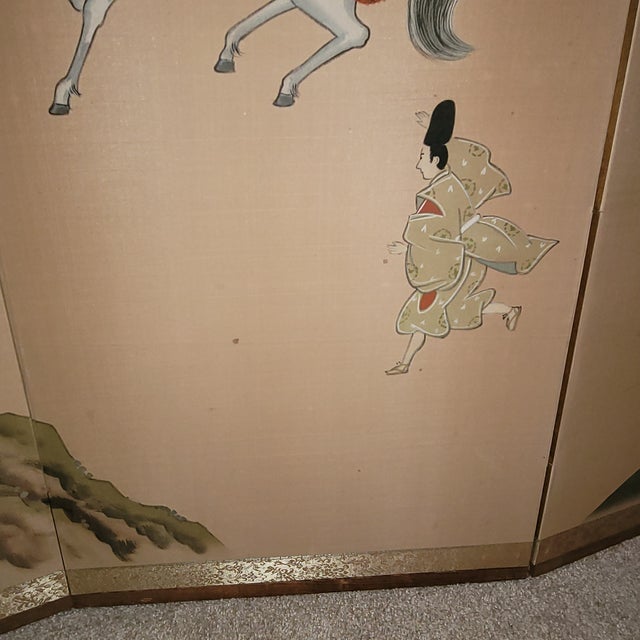
The Figures: The riders on horseback and the attendants on foot wear eboshi (tall black hats) and kariginu (hunting robes), which were the standard informal dress of Heian aristocrats.
2. Style and School
This screen is painted in the Yamato-e style, most likely by an artist of the Tosa School.
Technique: It uses "cloud-shifting" or "mist-cutting" compositions to separate different narrative moments.
Perspective: It employs the fukinuki yatai ("blown-off roof") or bird’s-eye perspective, allowing the viewer to look down into the scene.
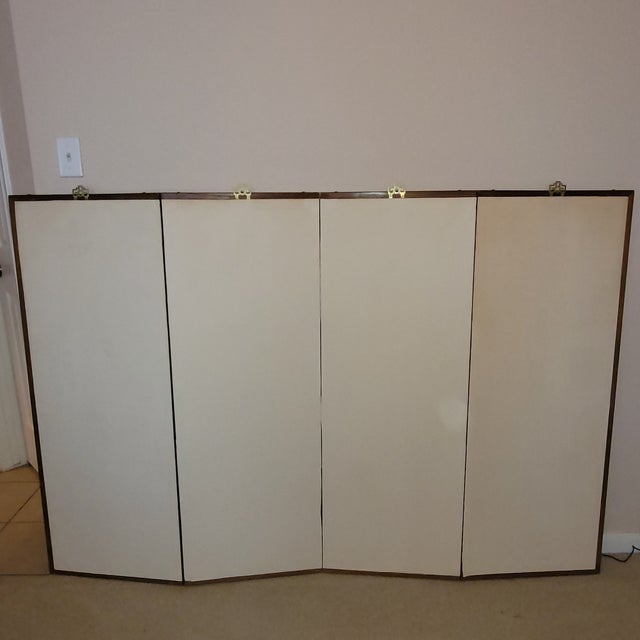
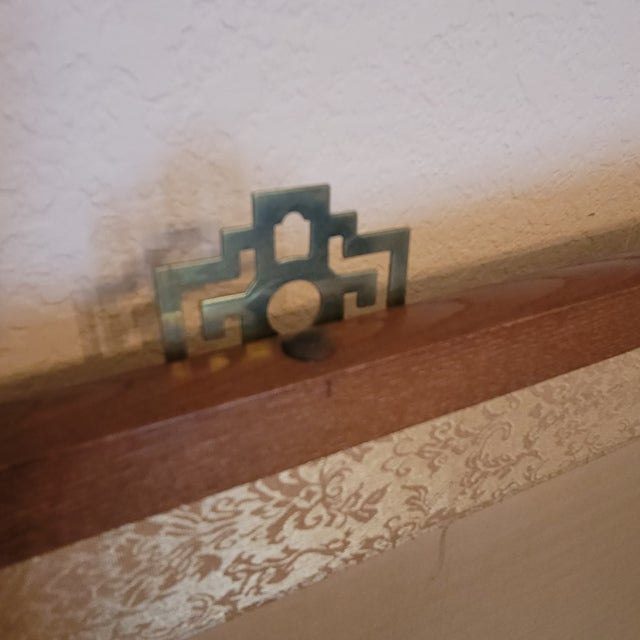
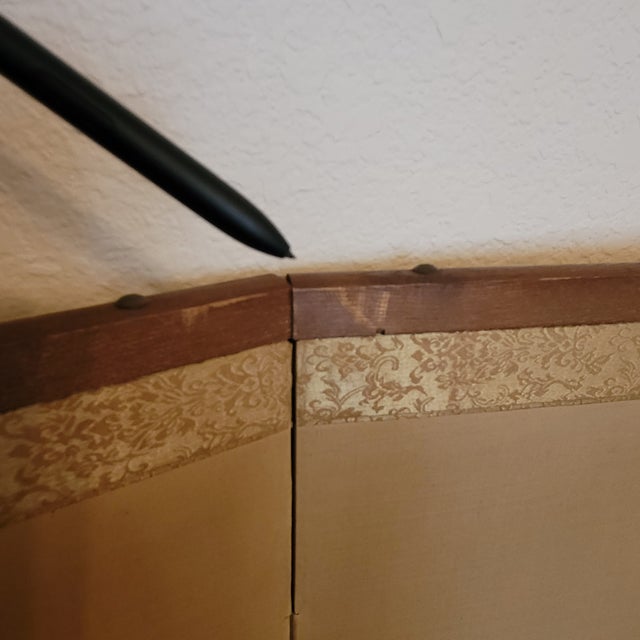
Borders: The gold-patterned silk brocade borders and the brass hardware (the "cloud" shaped hangers at the top) are characteristic of late-Edo to mid-Shōwa period decorative screens.
3. Construction & Condition
Construction: These screens are made of a wooden lattice core covered in multiple layers of washi paper. The painting is applied to the final surface layer, often with mineral pigments and gold leaf or gold dust.
This striking four-panel Japanese byōbu (folding screen) captures a vibrant narrative scene from the classical Japanese epic, The Tale of Genji. Rendered in the traditional Yamato-e style, the composition features high-ranking Heian-period courtiers in a festive procession, complete with a traditional ox-drawn carriage (gissha) and riders on horseback. Elegant wisteria vines—a symbol of nobility—frame the upper panels against a backdrop of stylized golden clouds.
The screen is constructed with a traditional wooden lattice core and layered washi paper, finished with mineral pigments and gold-flecked accents. It is framed by a black lacquer-style wood border with ornate brass corner hardware and "cloud" hangers. This piece is an excellent example of mid-20th century classical revival, ideal as a wall-mounted focal point or a room divider.
Details & Dimensions:
Period: Mid-20th Century (Circa 1950s–1970s)
Styles: Japanese, Traditional, Edo (In the style of)
Materials: Paper, Wood, Silk Brocade, Brass, Pigment
See less
- Dimensions
- 72.75ʺW × 0.75ʺD × 50ʺH
- Styles
- Japanese
- Period
- 1950s
- Country of Origin
- Japan
- Item Type
- Vintage, Antique or Pre-owned
- Materials
- Silk
- Condition
- Original Condition Unaltered, Needs Restoration
- Color
- Black
- Condition Notes
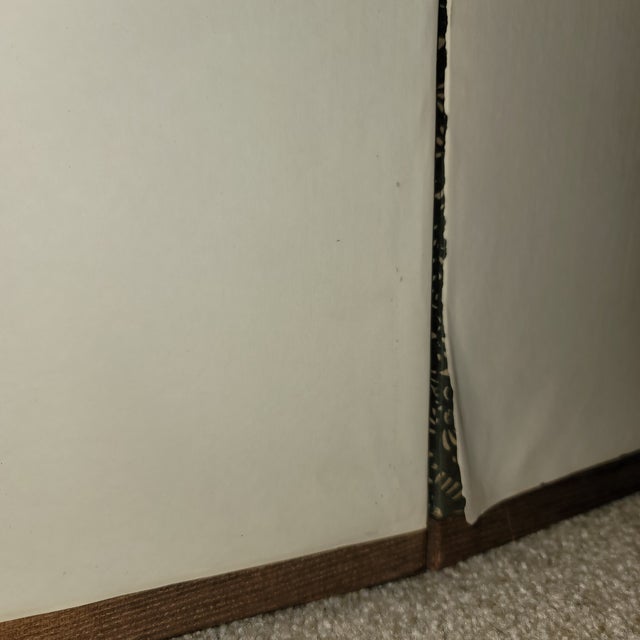
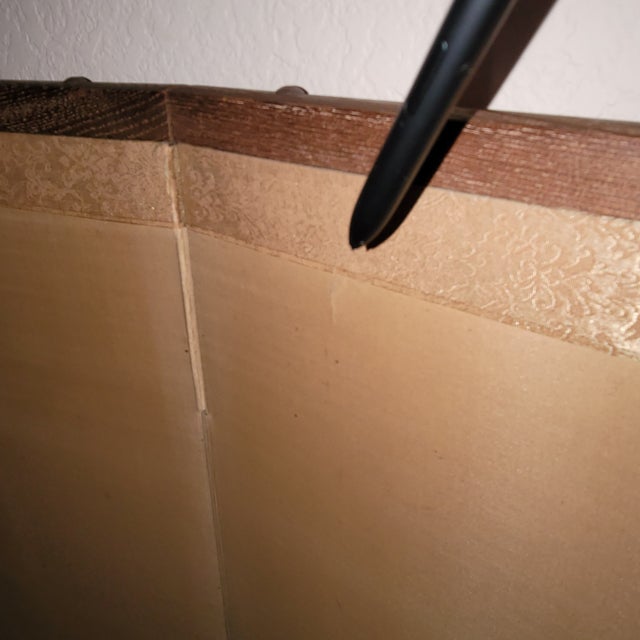
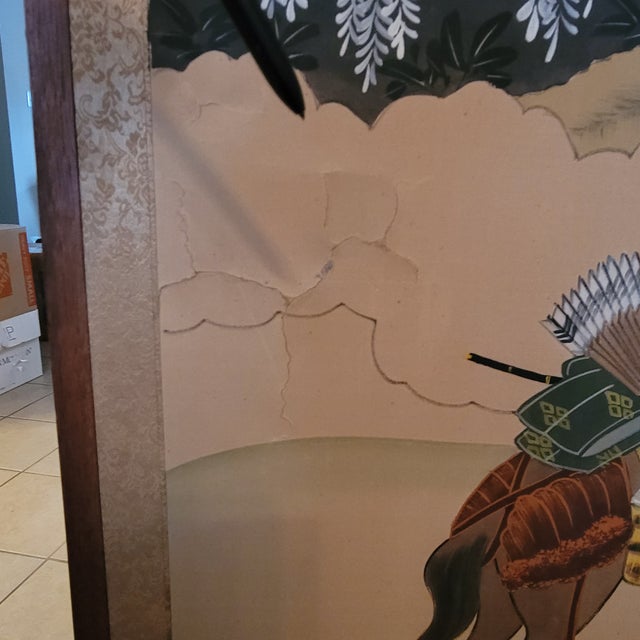
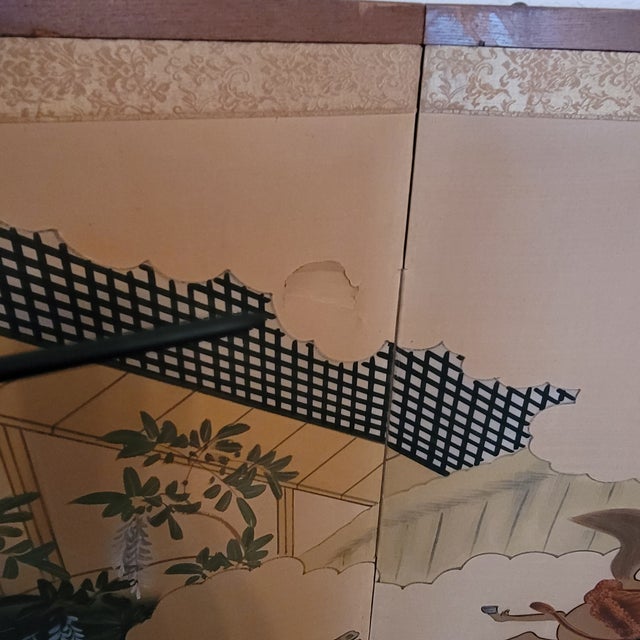
- Good/Fair (Distressed). This item shows an aged, distressed patina consistent with its history. Please review photos carefully. There is significant … moreGood/Fair (Distressed). This item shows an aged, distressed patina consistent with its history. Please review photos carefully. There is significant "skinning" and loose paper in several areas where the painted surface has delaminated from the paper substrate. The brass hardware shows a natural patina. On the left panel, there are two punctures through the picture, but not punctured to the back. Created from careless movers and not due from age. See photos with pointers. less
Questions about the item?
Returns & Cancellations
Return Policy - All sales are final 48 hours after delivery, unless otherwise specified in the description of the product.
Cancellation Policy - Prior to shipping or local pickup, buyers may cancel an order for up to 48 hours, unless otherwise specified.
Related Collections
- Eames Screens and Room Dividers
- British Colonial Screens and Room Dividers
- Paper Mache Screens and Room Dividers
- Antique Gold Finish Screens and Room Dividers
- Screens and Room Dividers in Las Vegas
- Celadon Screens and Room Dividers
- Vivai del Sud Screens and Room Dividers
- Peach Screens and Room Dividers
- Rose Screens and Room Dividers
- Portraiture Screens and Room Dividers
- Parchment Screens and Room Dividers
- Herman Miller Screens and Room Dividers
- Chinoiserie Screens and Room Dividers
- Chinese Screens and Room Dividers
- Japanese Screens and Room Dividers
- Silk Screens and Room Dividers
- French Screens and Room Dividers
- Coromandel Screens
- Asian Screens and Room Dividers
- Glass Screens and Room Dividers
- Mid-Century Modern Screens and Room Dividers
- Anglo-Indian Screens and Room Dividers
- Asian Antique Screens and Room Dividers
- Moroccan Screens and Room Dividers
- Teak Screens and Room Dividers