

Details
Description
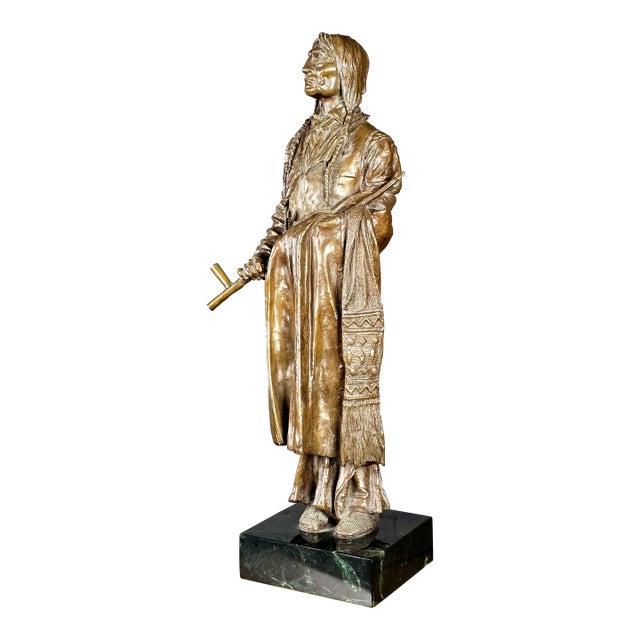
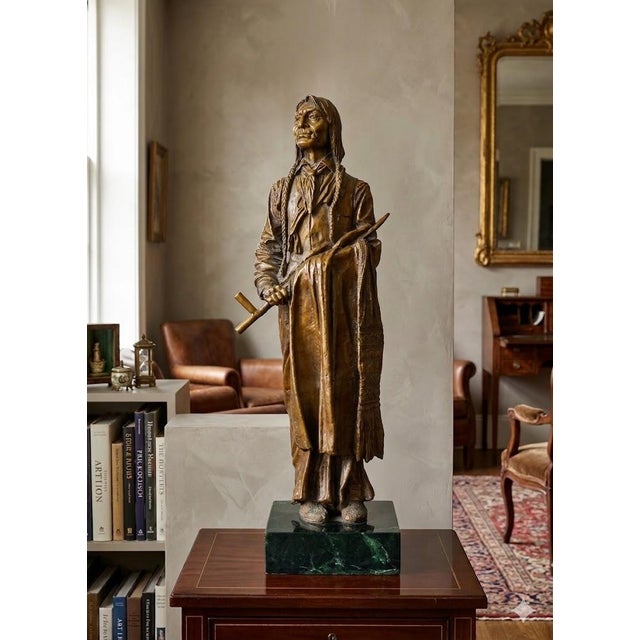
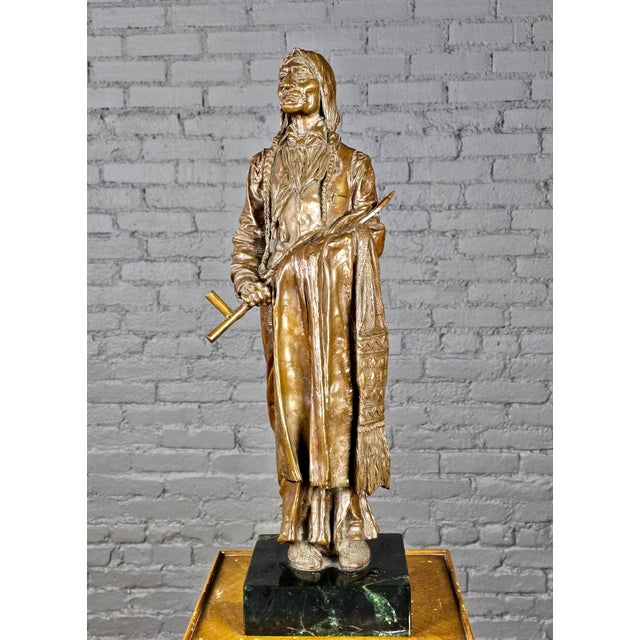
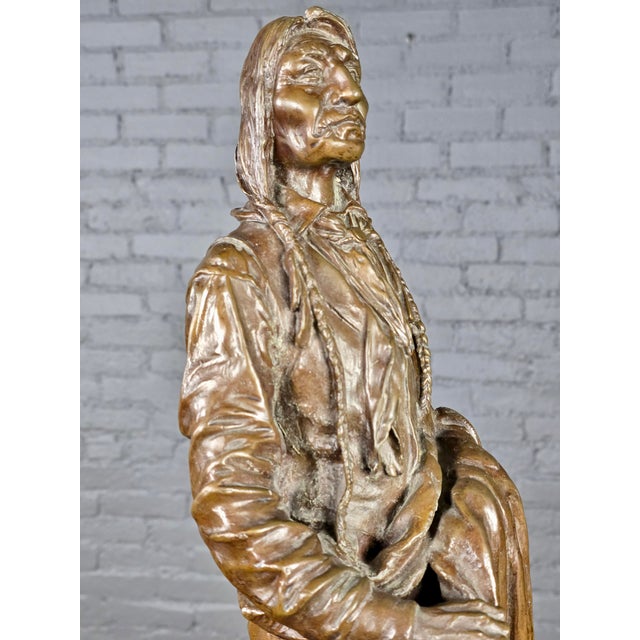
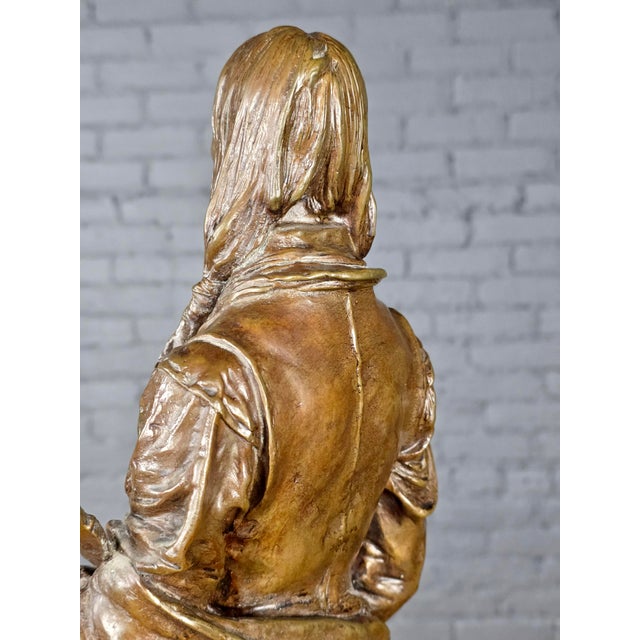
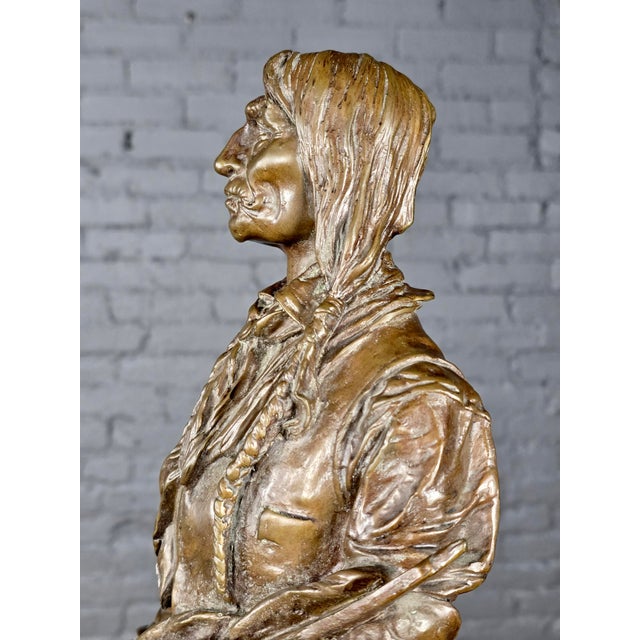
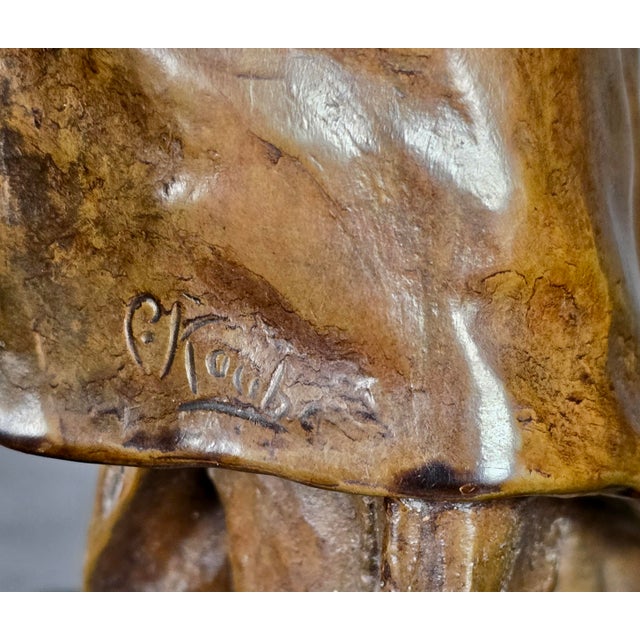
Carl Kauba "Chief Wolf Robe" Patinated Bronze Sculpture on Marble Base
Austrian artist - Bronze sculpture - Signed circa 1910s
…
Read more
Carl Kauba "Chief Wolf Robe" Patinated Bronze Sculpture on Marble Base
Austrian artist - Bronze sculpture - Signed circa 1910s
Dimensions 24" H x 6" W x 6" D
Description
Overview
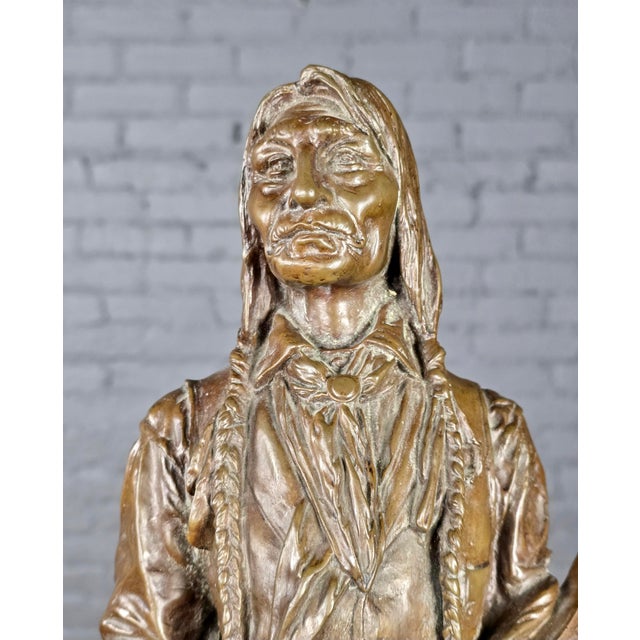
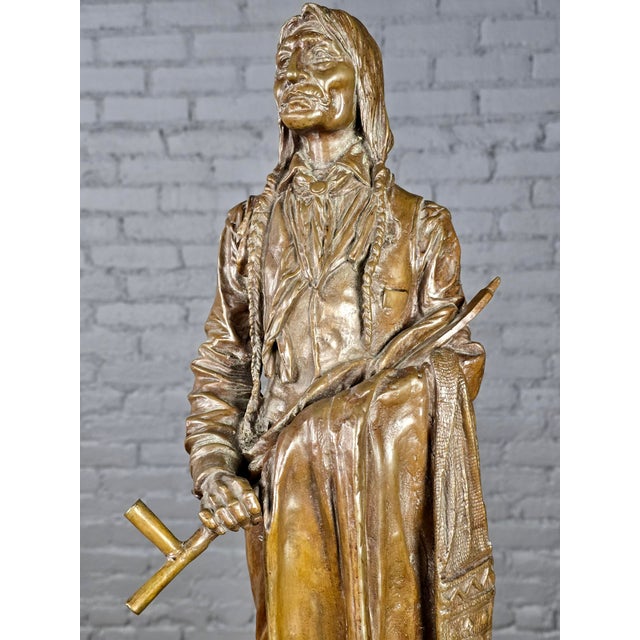
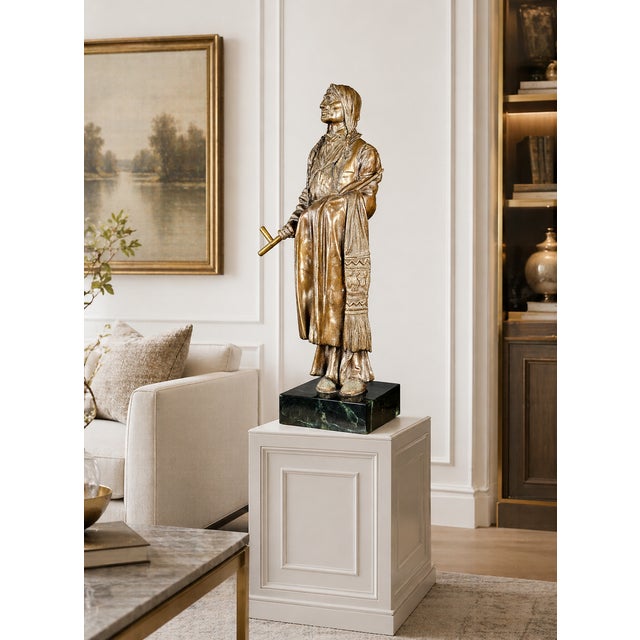
This finely detailed patinated bronze sculpture depicts the prominent Southern Cheyenne leader, Chief Wolf Robe, standing in a posture of quiet dignity. Created by the acclaimed Austrian sculptor Carl Kauba (1865–1922), this piece is a classic example of early 20th-century Viennese bronze artistry.
Artist & History
Carl Kauba was a master of the Viennese Bronze tradition and is celebrated for his meticulously detailed representations of the American West. Interestingly, Kauba never visited the United States; he sculpted his subjects in his Vienna studio using contemporary photographs, such as the famous 1898 Rinehart images taken at the Indian Congress.
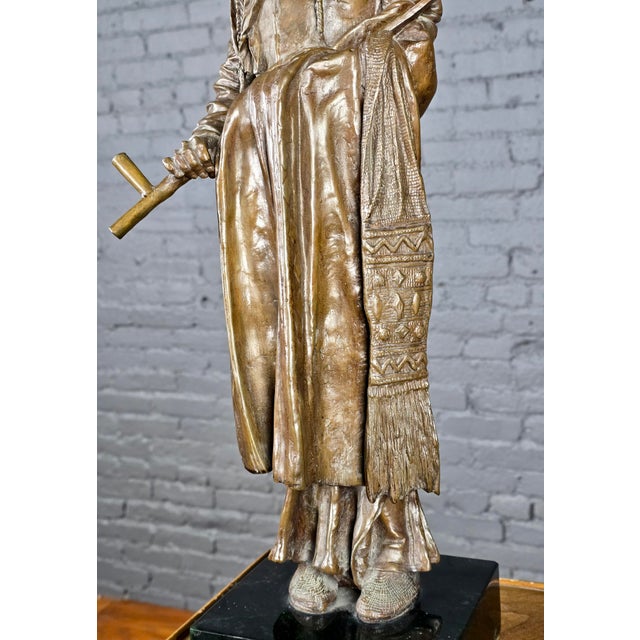
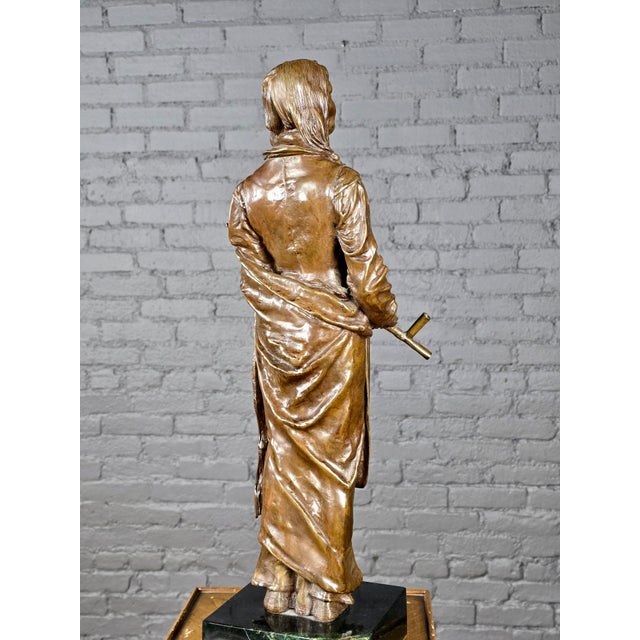
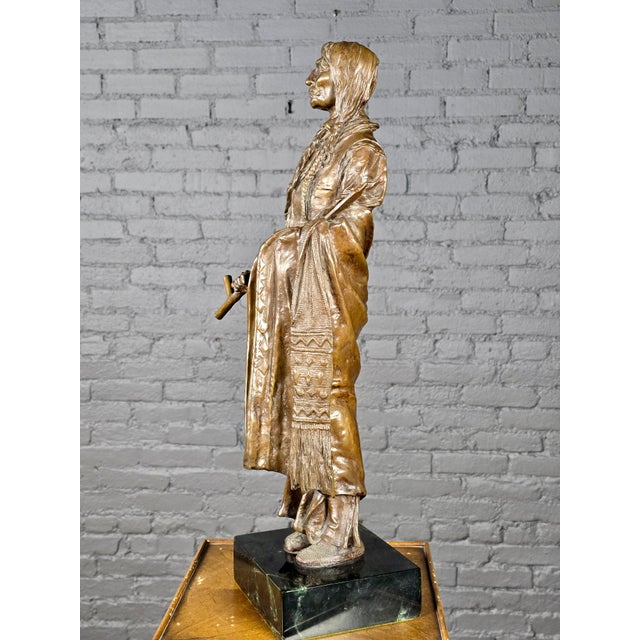
Subject: Chief Wolf Robe is shown in traditional Cheyenne attire, featuring a long-fringed tunic and moccasins.
Attributes: He holds a traditional long-stemmed peace pipe and is draped in a prominent tribal blanket with intricately cast geometric patterns.
Finish: The bronze features a rich, brown patina that highlights the textures of the textiles and facial features.
Mounting: The figure is securely mounted on a polished, square variegated green marble plinth.
Artist Biography
This Austrian sculptor was born in Vienna in 1865. His teachers were Karl Waschmann (1848-1905), known for his ivory sculptures and portrait plaquettes of contemporary celebrities, and Stefan Schwartz (1851-1924), who exhibited in Paris, including the Exposition Universelle of 1900 where he won a gold medal. Kauba's intricate bronzes, imported to the United States between 1895 and 1912, were cast at the Roman Bronze Works. Kauba was part of the nineteenth-century tradition of polychrome bronze sculpture. There were several types of patinas on a single statue: he could render the color of buckskin, variously tinted shirts, blankets, feathers, as well as beaded moccasins. Reportedly, Kauba came to America around 1886. Inspired by the Western tales of German author Karl May, he traveled to the West and made sketches and models. Critics, however, pointed out inaccuracies of costume and other details. For instance, the guns that his "mid-nineteenth-century" figures use are models produced after 1898. Apparently he did all of his works back in Vienna.
Besides the variety of color, Kauba's bronzes show a great range of textures and his style is highly naturalistic. The sculptor loved ornament, some of which he rendered with coiled wire for reins, rope and feathers in headdresses. He successfully rendered figures in motion and often executed compositions with more than one figure. Berman (1974) illustrates non-Western subjects by Kaula, such as the pendants Where? and There (ca. 1910), a seated Scottish couple, impressive in the expressions and the details on patterned fabrics of both sitters. Another genre piece is Buster Brown, ca. 1910, and Nude on Vase shows Kauba's versatility even further. The smooth skin contrasts with the stylistic, plant-like vase.
Artistic Career & The American West
Despite being one of the most famous depictors of cowboys and Native Americans, it is widely believed by scholars that Kauba never actually visited the United States. Instead, his fascination with the "Old West" was fueled by
Adventure Stories: He was heavily influenced by the popular Western novels of German author Karl May.
Artifacts & Photographs: He reportedly relied on historical photographs—such as the 1898 Rinehart portraits—and artifacts sent to him by a friend in Ohio to ensure the realism of his subjects.
Viennese Craftsmanship: His work is considered a hallmark of the Viennese Bronze tradition, characterized by intricate detail and the use of polychrome patinas to render the colors of buckskin, blankets, and beadwork.
Notable Works and Legacy
While best known for his Western figures like the "Chief Wolf Robe" in your image, Kauba was a versatile artist who also produced:
"Naughties": A series of avant-garde mechanical sculptures popular in the Art Nouveau period.
Pseudonyms: To navigate contractual obligations with different foundries, he sometimes signed his work as "T. Curts" or "Karl Thenn"
Today, collectors rank Kauba alongside legendary American artists like Frederic Remington and Charles M. Russell for his contribution to the Western art genre. His works are highly prized and can be found in major galleries like the Ophir Gallery and Thomas Nygard Gallery.
See less
- Dimensions
- 6ʺW × 6ʺD × 24ʺH
- Styles
- Expressionism
- Art Subjects
- Figure
- Period
- 1910s
- Country of Origin
- Austria
- Item Type
- Vintage, Antique or Pre-owned
- Materials
- Marble
- Satin Bronze Finish
- Condition
- Good Condition, Original Condition Unaltered, Some Imperfections
- Color
- Bronze
- Condition Notes
- Excellent - Minor wear consistent with age and history Excellent - Minor wear consistent with age and history less
Questions about the item?
Returns & Cancellations
Return Policy - All sales are final 48 hours after delivery, unless otherwise specified in the description of the product.
Cancellation Policy - Prior to shipping or local pickup, buyers may cancel an order for up to 48 hours, unless otherwise specified.
Related Collections
- Straw Sculpture
- Constantin Brancusi Sculpture
- Louis XIV Sculpture
- Fernando Botero Sculpture
- Roman Bronze Works Sculpture
- Sculpture in Panama City, FL
- Recycled/Repurposed Sculpture
- Worlds Away Sculpture
- Flavio Poli Sculpture
- Barovier and Toso Sculpture
- Bentwood Sculpture
- Far Pavilions Sculpture
- Georgian Sculpture
- Albert Ernest Carrier-Belleuse Sculpture
- Maison Jansen Sculpture
- Bakelite Sculpture
- Magenta Sculpture
- Antique Iron Finish Sculpture
- Photography Sculpture
- Gold-Plate Sculpture
- Medium-Density Fibreboard Sculpture
- Sculpture in Columbus
- Polished Brass Finish Sculpture
- Austin Productions Sculpture
- Alabaster Sculpture