

Details
Description
Eugène grasset (1841 - 1917)
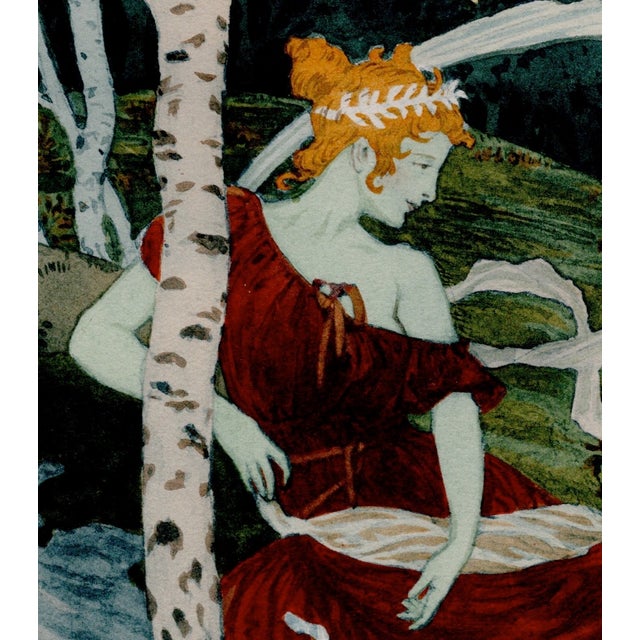
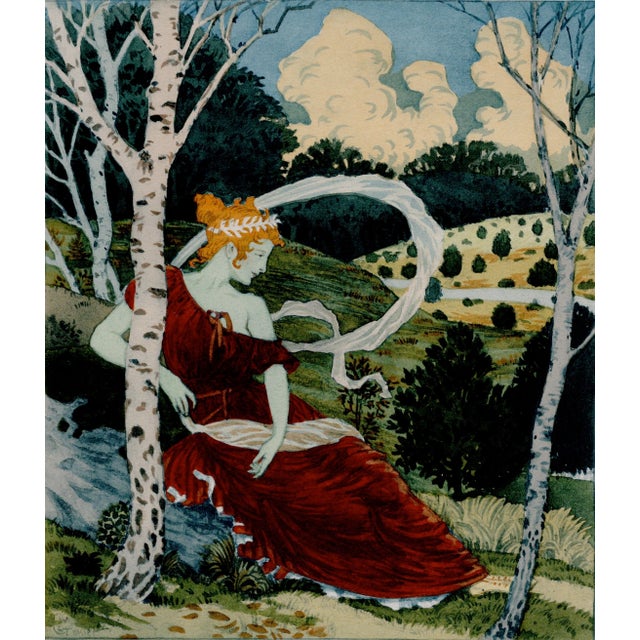
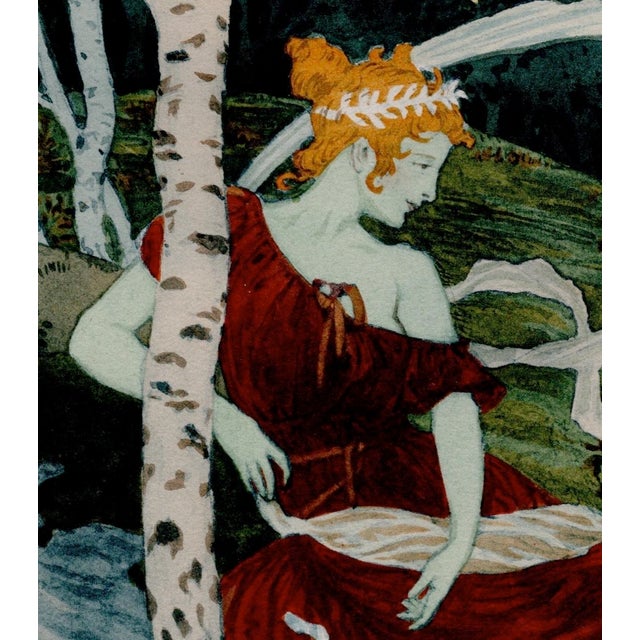
dans le bois
(in the woods)
original lithograph from the glorious portfolio "l'estampe moderne", issue …
Read more
Eugène grasset (1841 - 1917)
dans le bois
(in the woods)
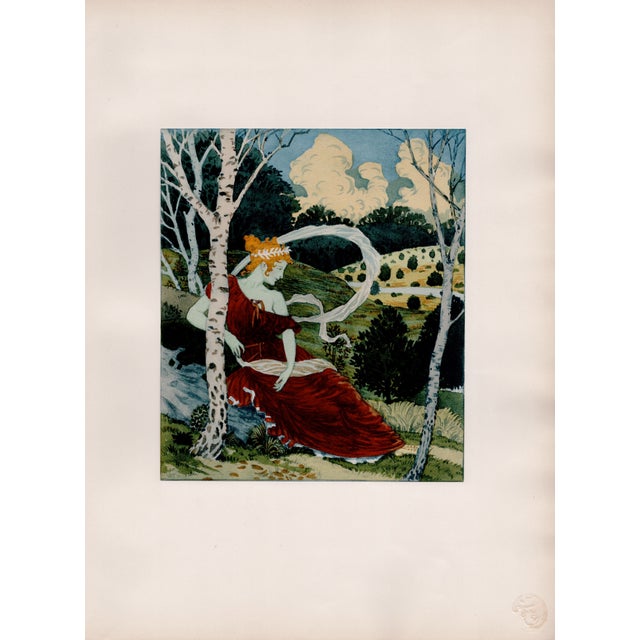
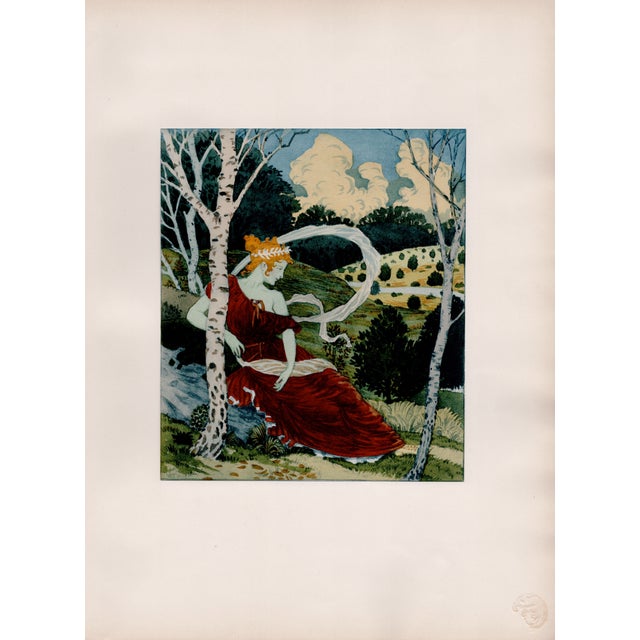
original lithograph from the glorious portfolio "l'estampe moderne", issue #23 (march 1899)
on wove paper
year: 1899
size (sheet): 405 x 305 mm
size (image): 222 x 192 mm
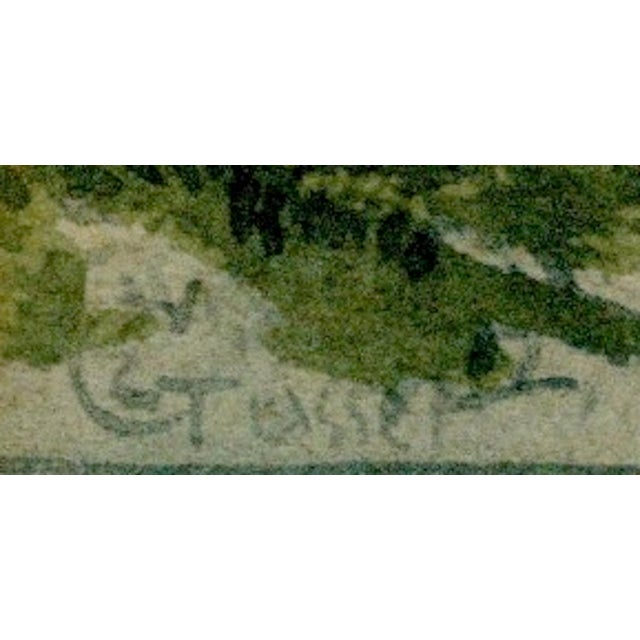
signed in the plate, bottom left
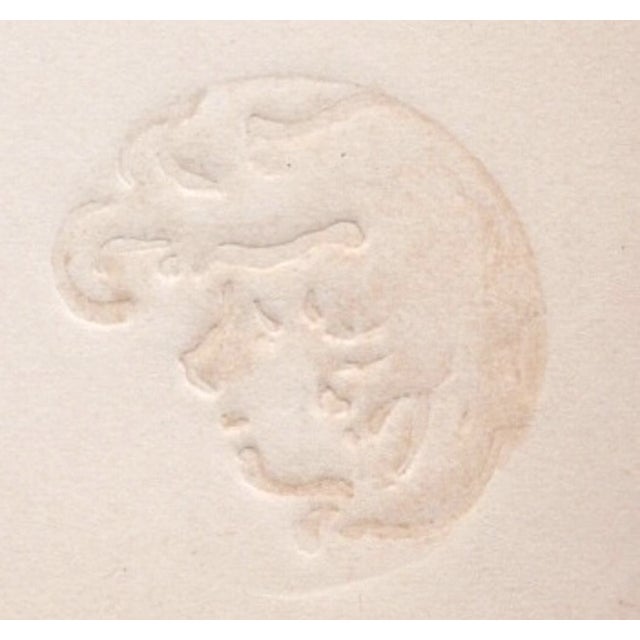
blind stamp of the publisher, bottom right, out of the image
excellent condition: minor signs of age
great colours
full margins (not cropped, not trimmed)
same print in:
the cleveland museum of art, cleveland, inventory: 2014.695.pp
___
about the collection (l'estampe moderne)
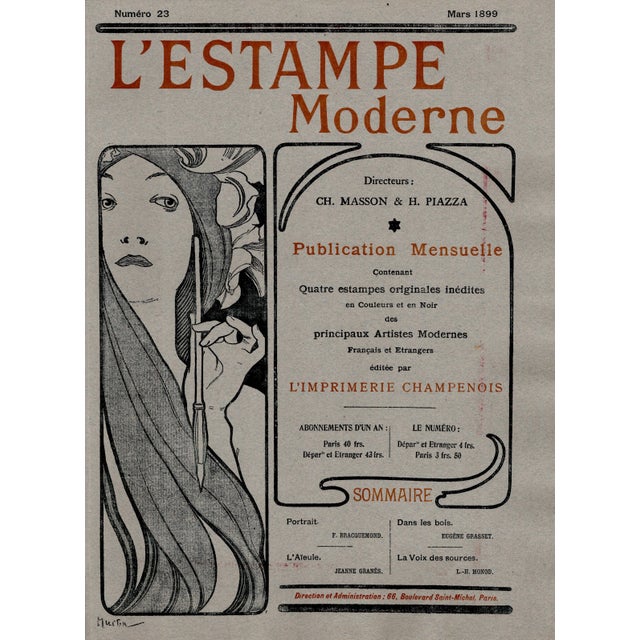
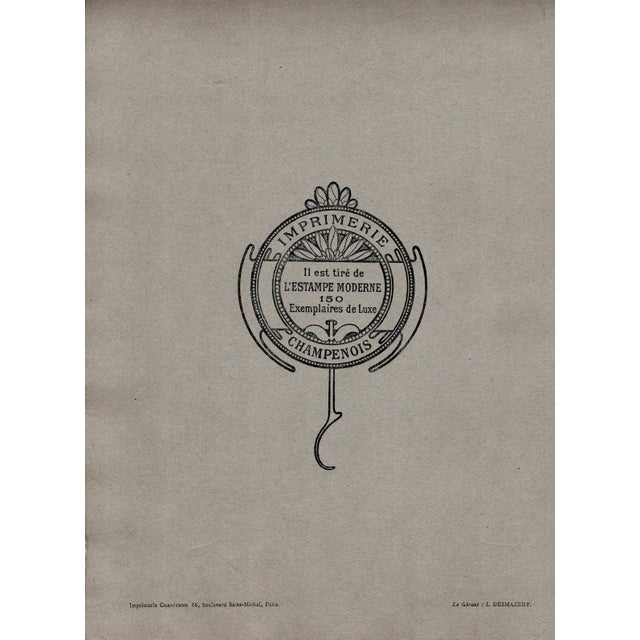
l'estampe moderne appeared in 1897-1899 as a series of 24 monthly fascicles, each containing 4 original lithographs, printed by parisian imprimerie champenois. Many accomplished european art nouveau painters contributed works to this publication, which contained only original prints invented and produced especially for this collection. The publication was edited by charles masson and h. Piazza. Each issue came in a paper cover bearing an original lithograph by alphonse mucha.
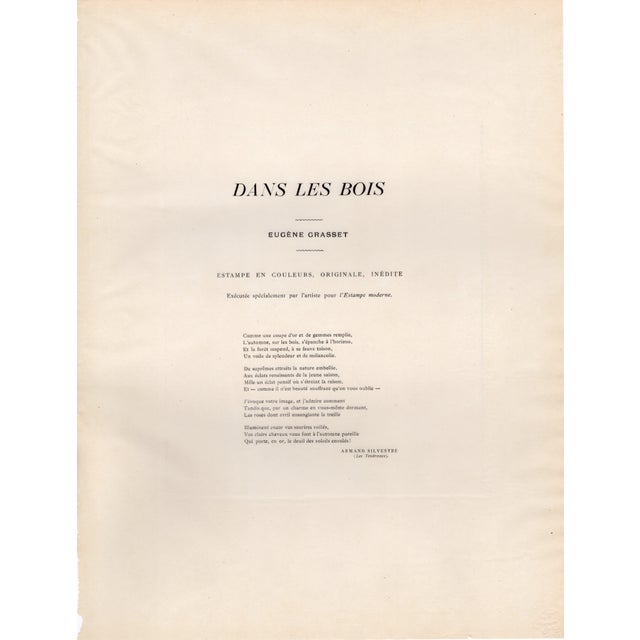
each lithograph was accompanied by a tissue containing the details (title of the artwork, name of the artist, etc.) and a short text by a well-known author who inspired the artist (this one being by armand silvestre).
___
about the artist
eugène samuel grasset (1845 – 1917) was a swiss decorative artist who worked in paris, france in a variety of creative design fields during the belle époque. He is considered a pioneer in art nouveau design.
grasset was born in lausanne, switzerland on 25 may 1845.[2] he was raised in an artistic environment as the son of a cabinetmaker and sculptor who taught him at an early age how to use the chisel and the gouge.he studied drawing under francois-louis david bocion (1828–1890) and in 1861 went to zürich to study architecture. After completing his education, he visited egypt, an experience that would later be reflected in a number of his poster designs. He became an admirer of japanese art, which influenced some of his designs as well.
between 1869 and 1870, grasset worked as a theater painter and sculptor in lausanne. Here he met viollet le duc, whose reflection on the middle ages and the method advocating the link between form, function and material came to permeate grasset's work. In 1871 he moved to paris and he started to design furniture, wallpapers, fabrics, and tapestries as well as ceramics and jewelry. He created architectural elements of woodwork that were integrated into buildings. His fine art decorative pieces were crafted from ivory, gold, and other precious materials in unique combinations, and his creations are considered a cornerstone of art nouveau motifs and patterns.
in 1877 eugène grasset turned to graphic design, producing income-generating products such as postcards and eventually postage stamps for both france and switzerland. It was poster art, based on the work of viollet le duc, that quickly became his forte. Some of his works became part of the maîtres de l'affiche, including his lithograph, "jeanne d'arc sarah bernhardt". In 1890, he designed the "semeuse who spreads seeds of dandelion" logo used by the dictionary publishers, éditions larousse. Grasset's commercial work would be based on the drawings of viollet le duc.
with the growing popularity of french posters in the united states, grasset was soon contacted by several american companies. In the 1880s, he did his first american commission and more success led to his cover design for the 1892 christmas issue of harper's magazine. In 1894 he created "the wooly horse" and "the sun of austerlitz" for the century magazine to help advertise their serialized story on the life of napoleon bonaparte. The "wooly horse" image proved so popular that louis comfort tiffany recreated it in stained glass. Grasset's work for u.s. Institutions helped pave the way for art nouveau to dominate american art.
grasset taught design at the école guérin from 1890 to 1903, at the école d’art graphique in the rue madame from 1903 to 1904, at the académie de la grande chaumière from 1904 to 1913, and at the école estienne in paris. Grasset had freely adapted the alphabet of nicolas jenson (1471) with the intention of using it to print a book on his own method for ornamental composition, inspired by the courses he gave to the guérin school. Georges peignot acquired grasset's alphabet and obtained an official patent on 7 october 1897 for the typeface under the name, "grasset".
at the universal exhibition of 1900 in paris, the g. Peignot et fils typefoundry introduced the "grasset" typeface, an italic design created by eugène grasset in 1898 for use on some of his posters. Additionally, grasset collaborated with jeweler henri vever, showcasing works such as the intricate 'hercules' pendant, praised for its detailed artistry and mythological inspiration.
___
from the text on the tissue paper, by armand silvestre:
comme une coupe d'or et de gemmes remplie,
l'automne, sur les bois, s'épanche à l'horizon,
et la forêt suspend, à sa fauve toison,
un voile de splendeur et de mélancolie.
de suprêmes attraits la nature embellie,
aux éclats renaissants de la jeune saison,
mêle un éclat pensif où s'étreint la raison,
et — comme il n'est beauté souffrant qu'on vous oublie —
j'évoque votre image, et j'admire comment
tandis que, par un charme en vous-même dormant,
les roses dont avril ensanglante la treille
illuminent encor vos sourires voilés,
vos clairs cheveux vous font à l'automne pareille
qui porte, en or, le deuil des soleils envolés!
___
important:
. The listing is for the original print, in the above mentioned excellent condition.
. The original tissue paper introduction will be given to the buyer as a gift
. The cover by mucha and the edition (back of the cover) are shown as a reference and proof of authenticity this piece has an attribution mark,
i am sure that it is completely authentic and take full responsibility for any authenticity
issues arising from misattribution
See less
- Dimensions
- 11.81ʺW × 15.75ʺH
- Period
- 19th Century
- Country of Origin
- France
- Item Type
- Vintage, Antique or Pre-owned
- Condition
- Good Condition, Original Condition Unaltered, Some Imperfections
- Color
Returns & Cancellations
Return Policy - All sales are final 48 hours after delivery, unless otherwise specified in the description of the product.
Cancellation Policy - Prior to shipping or local pickup, buyers may cancel an order for up to 48 hours, unless otherwise specified.
Related Collections
- Soicher Marin Original Prints
- Medium-Density Fibreboard Original Prints
- Rattan Original Prints
- Ralph Lauren Original Prints
- Damien Hirst Original Prints
- Johannes Kip Original Prints
- Silver Finish Original Prints
- Sam Francis Original Prints
- Dye Transfer Original Prints
- Original Prints in Panama City, FL
- Original Prints in Salt Lake City
- Donald Sultan Original Prints
- Original Prints in Lexington, KY
- Botanical Prints
- Framed Prints
- Bird Prints
- Woodblock Prints
- Screen Prints
- Japanese Woodblock Prints
- Thomas McKnight Original Prints
- George Barbier Original Prints
- Frank Stella Original Prints
- Gustave Baumann Original Prints
- Teak Original Prints
- Clay Original Prints