

Details
Description
Jeanne Granès (1870-1923)
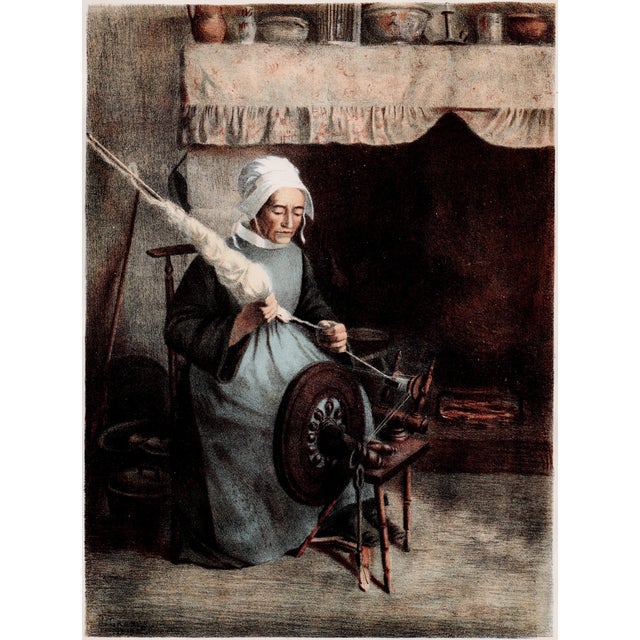
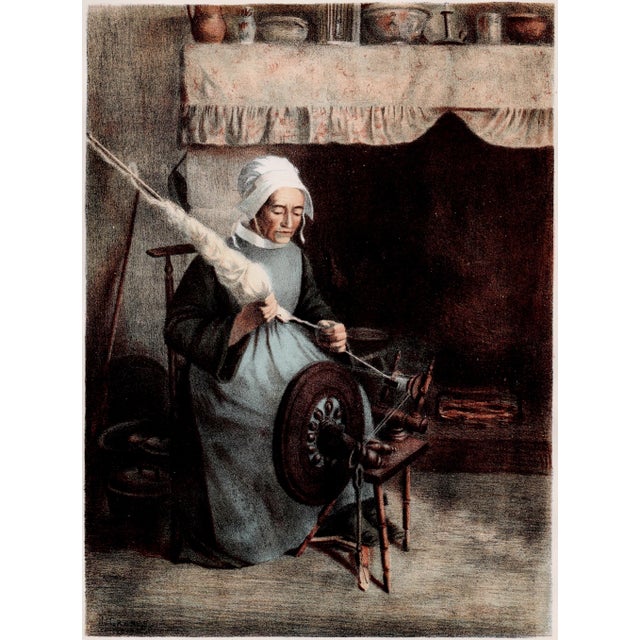
L'Aïeule
(The Grandmother)
Original Lithograph from the glorious portfolio "L'Estampe Moderne", issue #23 (March 1899)
On wove …
Read more
Jeanne Granès (1870-1923)
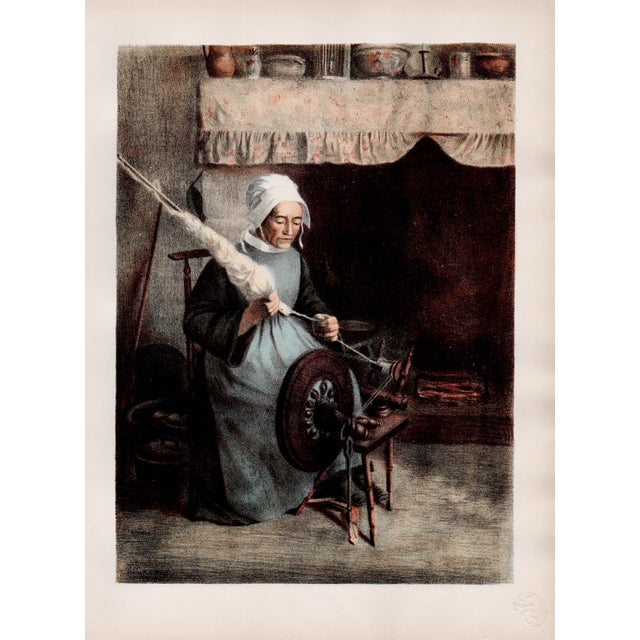
L'Aïeule
(The Grandmother)
Original Lithograph from the glorious portfolio "L'Estampe Moderne", issue #23 (March 1899)
On wove paper
Year: 1899
Size (sheet): 405 x 305 mm
Size (image): 342 x 252 mm
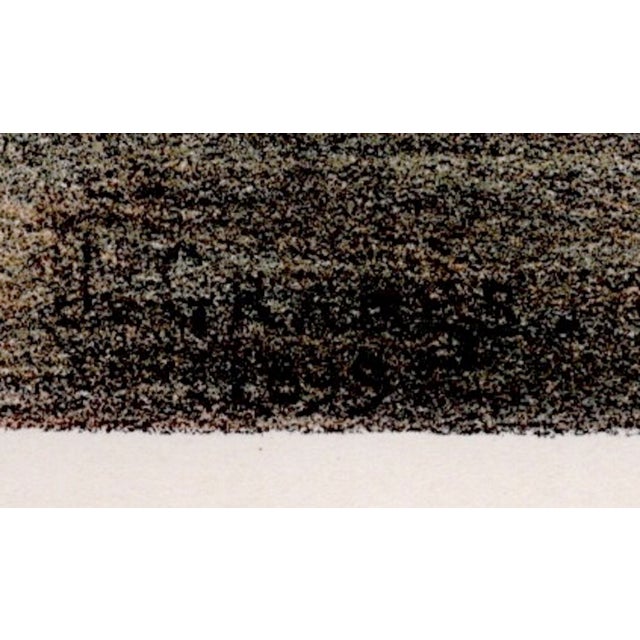
Signed in the plate, bottom left
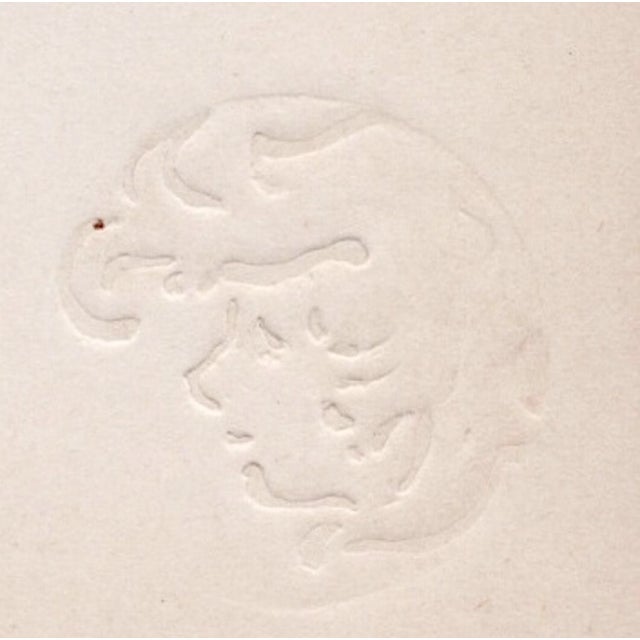
Blind stamp of the publisher, bottom right, out of the image
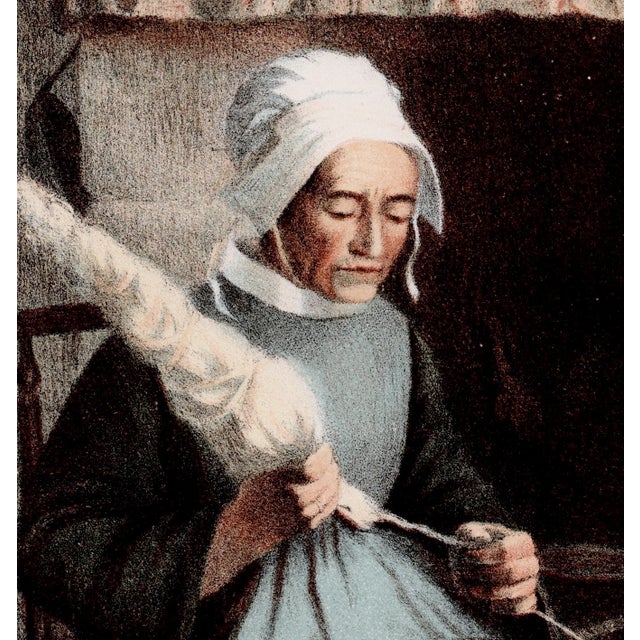
Excellent condition: minor signs of age
Great colours
Full margins (not cropped, not trimmed)
Same print in:
The Cleveland Museum of Art, Cleveland, inventory: 2014.695.rr
___
About the Collection (L'Estampe Moderne)
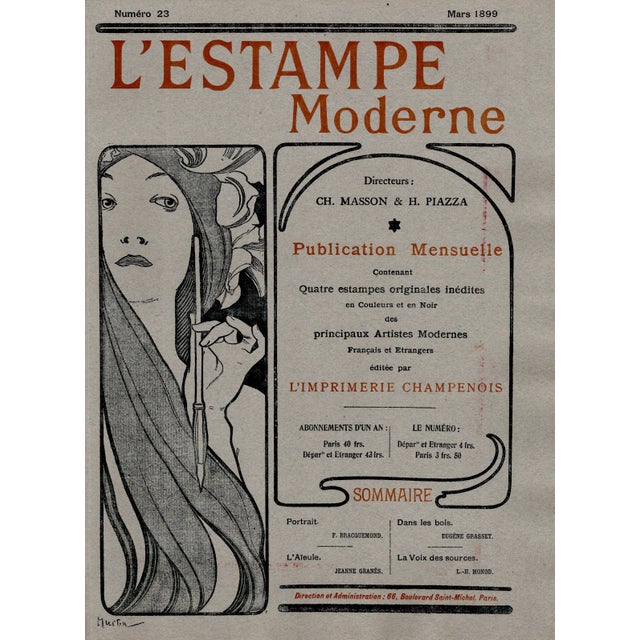
L'Estampe Moderne appeared in 1897-1899 as a series of 24 monthly fascicles, each containing 4 original lithographs, printed by Parisian Imprimerie Champenois. Many accomplished European Art Nouveau painters contributed works to this publication, which contained only Original prints invented and produced especially for this collection. The publication was edited by Charles Masson and H. Piazza. Each issue came in a paper cover bearing an original lithograph by Alphonse Mucha.
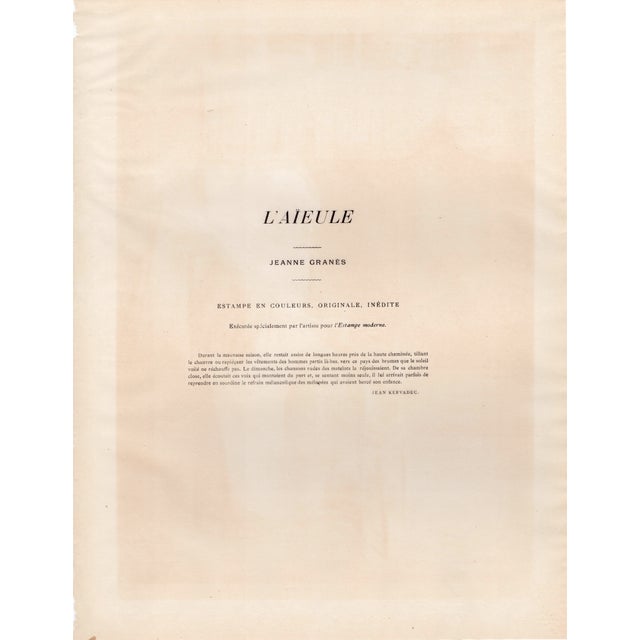
Each lithograph was accompanied by a tissue containing the details (title of the artwork, name of the artist, etc.) and a short text by a well-known author who inspired the artist (this one being by Jean Kervadec).
___
About the artist
Jeanne Granès (1870-1923) was a French painter, draftsman, and lithographer, who was primarily a portraitist, teacher, and feminist activist.
In October 1897, she participated in the first exhibition of French lithographic artists, held at the Salle populaire des beaux-arts, rue de la Grange-Batelière in Paris. Among 59 exhibitors, she was highlighted by the newspaper L'Aurore. On June 13, 1898, the French government purchased 10 lithographs from her, based on The Thieves and the Donkey, a series by Honoré Daumier. Her lithograph "The Grandmother," inspired by a text by Jean Kervadec, was published in L'Estampe Moderne on March 23, 1899. In 1900, for the Universal Exhibition, she received the bronze medal.
On October 1, 1910, she opened a painting academy in her name in Algiers, on Rue Changarnier, not far from the Villa Abd-el-Tif, where she hosted the painter Georges Rochegrosse as her sponsor for workshops. In addition to drawing, leather and metalwork were practiced there.
On August 7, 1913, she married Élie Barrau, a civil servant at the Ministry of the Interior, in Paris. L'Écho d'Alger reported that her school was highly regarded by the Algiers community. That year, she exhibited at the Salon des peintres orientalistes. Shortly before the First World War, she had to leave Algiers, facing a series of slanders targeting her "feminism, her social commitment and her strong character", reflecting her articles published in the Annales africaines where she affirmed that women have the same rights as men: discouraged, she returned to Paris where she was reported to be practicing her profession in 1916. She did not give up activism since she became close to Colette Reynaud and Louise Bodin, director of La Voix des femmes, a weekly socialist feminist and pacifist magazine founded in 1917 and which disappeared in 1921. from 1919 onwards, Jeanne seems to have become close to the periodical Le Populaire, "weekly newspaper-review of socialist and internationalist propaganda", whose illustrated cards and calendars she sold at her Parisian workshop located at 42 rue Mazarine; she was also close to the daily newspaper L'Humanité and perhaps joined the French Communist Party, like Bodin. In 1922, she vowed to return to Algiers.
___
from the text on the tissue paper, by Jean Kervadec:
Durant la mauvaise saison, elle restait assise de longues heures près de la haute cheminée, tillant le chanvre ou rapiéçant les vêtements des hommes partis là-bas, vers ce pays des brumes que le soleil voilé ne réchauffe pas. Le dimanche, les chansons rudes des matelots la réjouissaient. De sa chambre close, elle écoutait ces voix qui montaient du port et, se sentant moins seule, il lui arrivait parfois de reprendre en sourdine le refrain mélancolique des mélopées qui avaient bercé son enfance.
___
Important:
. The listing is for the original print, in the above mentioned excellent condition.
. The original tissue paper introduction will be given to the buyer as a gift
. The cover by Mucha and the edition (back of the cover) are shown as a reference and proof of authenticity This piece has an attribution mark,
I am sure that it is completely authentic and take full responsibility for any authenticity
issues arising from misattribution
See less
- Dimensions
- 11.81ʺW × 15.75ʺH
- Art Subjects
- Figure
- Period
- 19th Century
- Country of Origin
- France
- Item Type
- Vintage, Antique or Pre-owned
- Condition
- Good Condition, Original Condition Unaltered, Some Imperfections
- Color
Returns & Cancellations
Return Policy - All sales are final 48 hours after delivery, unless otherwise specified in the description of the product.
Cancellation Policy - Prior to shipping or local pickup, buyers may cancel an order for up to 48 hours, unless otherwise specified.
Related Collections
- Soicher Marin Original Prints
- Rattan Original Prints
- Medium-Density Fibreboard Original Prints
- Silver Finish Original Prints
- Robert Kipniss Original Prints
- Dye Transfer Original Prints
- Original Prints in Salt Lake City
- Original Prints in Lexington, KY
- Original Prints in Panama City, FL
- Ralph Lauren Original Prints
- Damien Hirst Original Prints
- Sam Francis Original Prints
- Johannes Kip Original Prints
- Botanical Prints
- Framed Prints
- Bird Prints
- Woodblock Prints
- Screen Prints
- Japanese Woodblock Prints
- Thomas McKnight Original Prints
- George Barbier Original Prints
- Frank Stella Original Prints
- Gustave Baumann Original Prints
- Teak Original Prints
- Chaim Gross Original Prints