


Details
Description
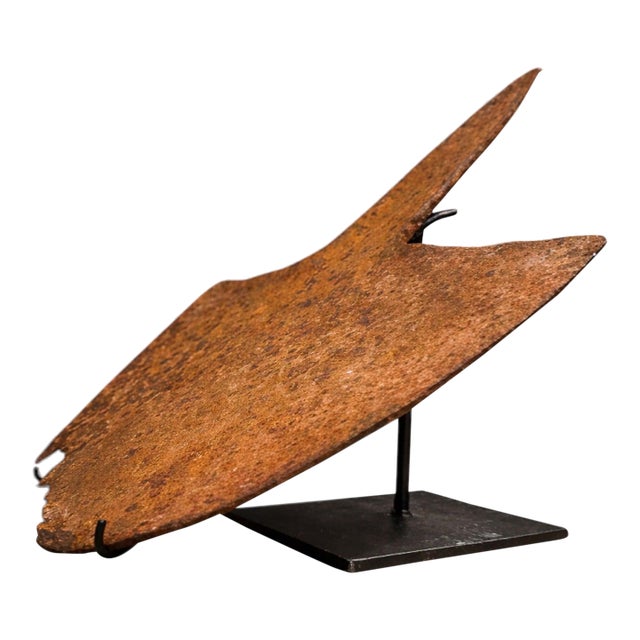
A sculptural iron form once used as currency among the Mambila and Chamba peoples of northeastern Nigeria and the Cameroon …
Read more
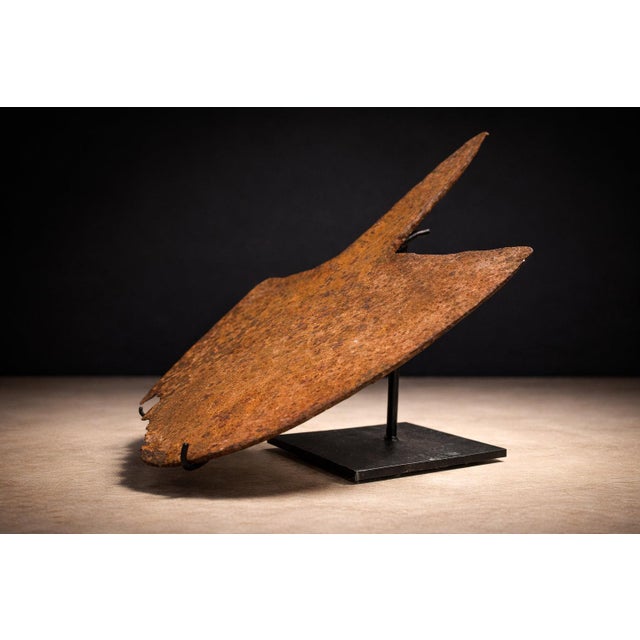
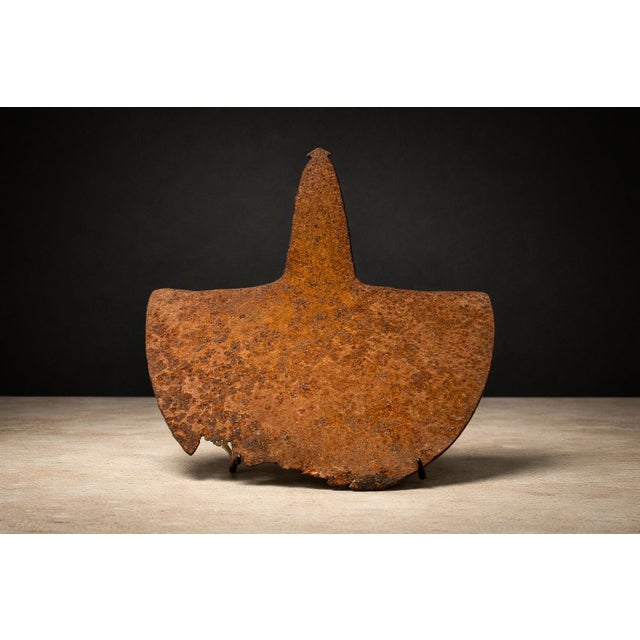
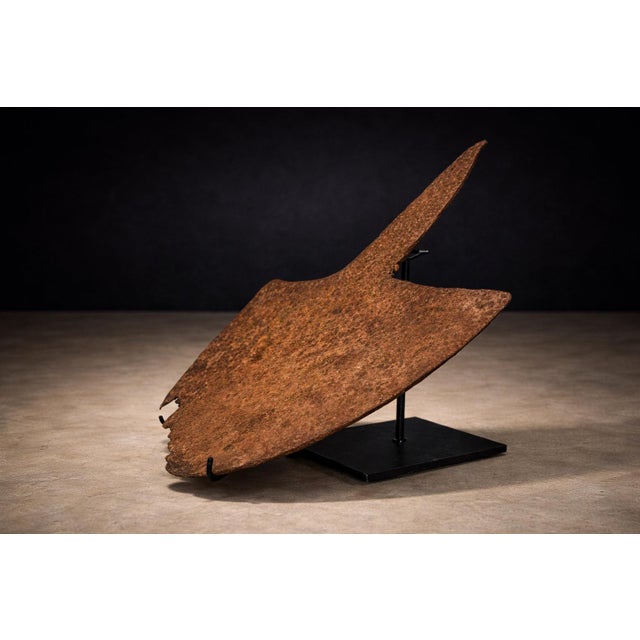
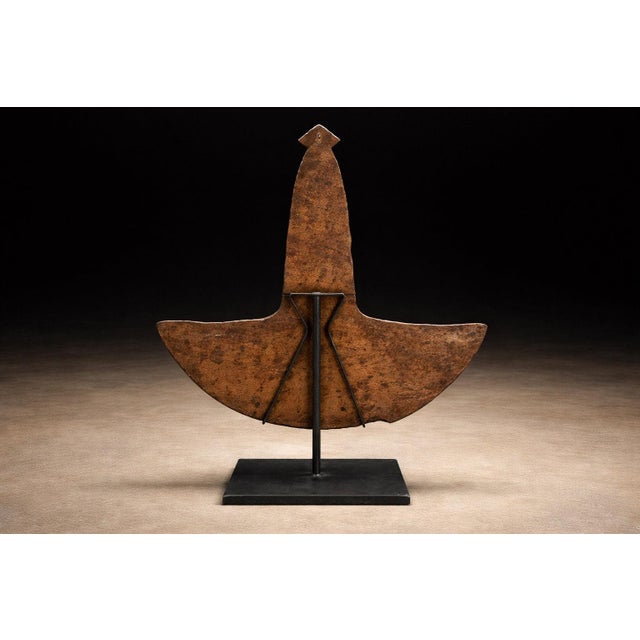
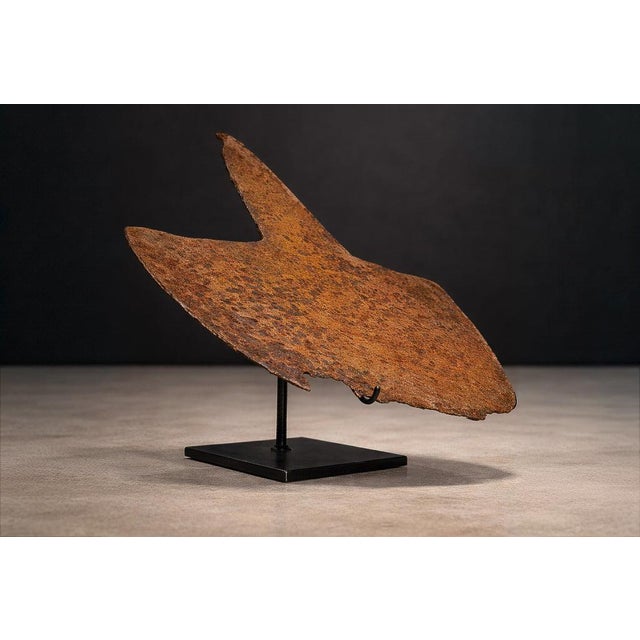
A sculptural iron form once used as currency among the Mambila and Chamba peoples of northeastern Nigeria and the Cameroon highlands, this forged hoe-shaped object embodies the intersection of utility, symbolism, and wealth in pre-colonial West Africa.
Across many African societies, currency did not exist solely as coinage. Wealth was often expressed through material forms with intrinsic value — iron, copper, brass, cloth, cattle — objects that could circulate in trade yet also function ceremonially. Known today as “African currency,” these forms operated within sophisticated regional economies long before colonial monetary systems were imposed.
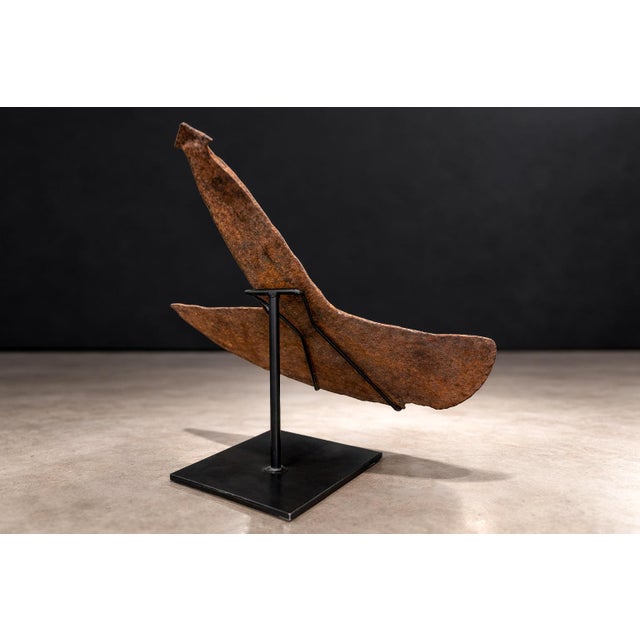
The hoe currency is among the most architecturally compelling of these objects. Its exaggerated blade, attenuated points, and dramatic negative space transform an agricultural tool into a symbol of prosperity, exchange, and social alliance. Iron held profound meaning: it represented fertility, labor, and technological mastery. These forms were used in bridewealth transactions, inter-community trade, and status display. Scale and craftsmanship directly correlated to value.
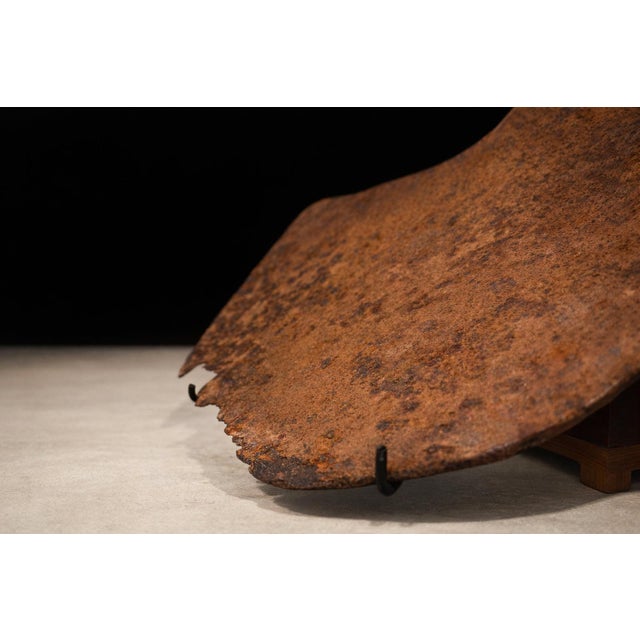
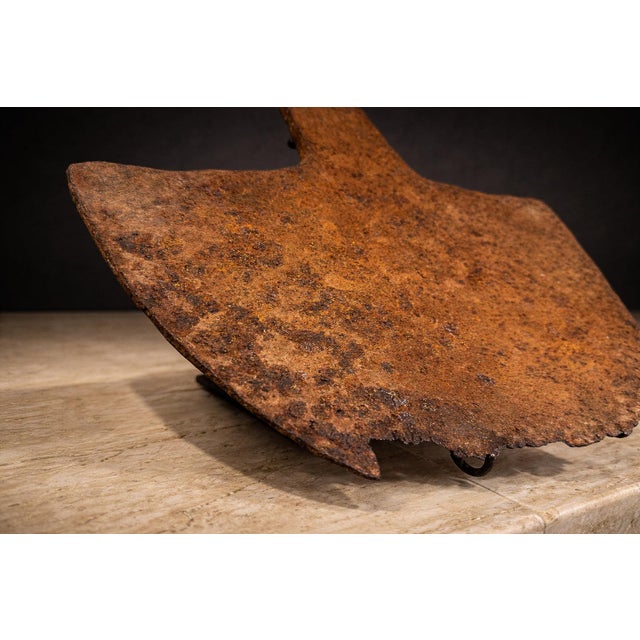
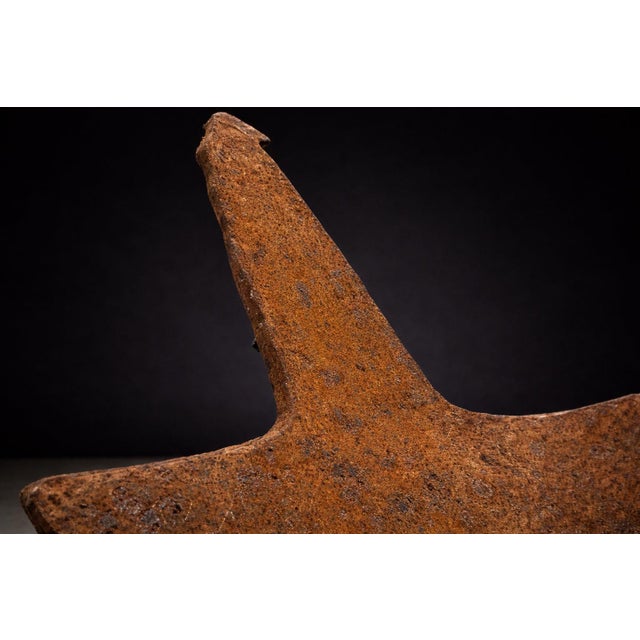
What distinguishes Mambila and Chamba examples is their restrained yet powerful silhouette — broad planar surfaces tapering into sharp, sculptural extremities. Over time, the iron develops a deeply variegated patina, a surface alive with oxidation that reads almost painterly under light. No two are identical; each carries evidence of the forge.
Today, such pieces are highly sought after by collectors of African tribal art and by contemporary designers alike. Their appeal lies not only in ethnographic importance but in their modernist presence. Placed on a minimal stand, the form reads as pure sculpture — abstract, balanced, and commanding.
These currency forms represent early systems of structured trade and wealth exchange. Each example is hand-forged, and subtle asymmetries confirm authenticity. The patina develops organically over decades and cannot be convincingly replicated. They bridge anthropology and sculpture — culturally significant yet visually timeless.
This example retains strong mass, honest age, and a surface rich in tonal variation. Mounted on a discreet custom stand, it presents as both artifact and object — equally at home in a serious collection or a rigorously curated interior.
A rare and intellectually compelling addition for collectors of African art, ethnographic material, or sculptural ironwork.
See less
- Dimensions
- 10ʺW × 10ʺD × 12ʺH
- Styles
- Space Age
- Traditional
- Art Subjects
- Other
- Period
- Early 20th Century
- Country of Origin
- Cameroon
- Item Type
- Vintage, Antique or Pre-owned
- Materials
- Iron
- Condition
- Good Condition, Original Condition Unaltered, Some Imperfections
- Color
- Brown
- Condition Notes
- Fair Fair less
Questions about the item?
Returns & Cancellations
Return Policy - All sales are final 48 hours after delivery, unless otherwise specified in the description of the product.
Cancellation Policy - Prior to shipping or local pickup, buyers may cancel an order for up to 48 hours, unless otherwise specified.
Related Collections
- Straw Sculpture
- Roman Bronze Works Sculpture
- Fernando Botero Sculpture
- Constantin Brancusi Sculpture
- Louis XIV Sculpture
- Bakelite Sculpture
- Medium-Density Fibreboard Sculpture
- Gold-Plate Sculpture
- Antique Iron Finish Sculpture
- Sculpture in Columbus
- Polished Brass Finish Sculpture
- Recycled/Repurposed Sculpture
- Gourd Sculpture
- Geode Sculpture
- Photography Sculpture
- Sculpture in Panama City, FL
- René Lalique Sculpture
- Albert Ernest Carrier-Belleuse Sculpture
- Worlds Away Sculpture
- Flavio Poli Sculpture
- Barovier and Toso Sculpture
- Far Pavilions Sculpture
- Emmanuel Villanis Sculpture
- Maison Jansen Sculpture
- Georgian Sculpture