







Details
Description
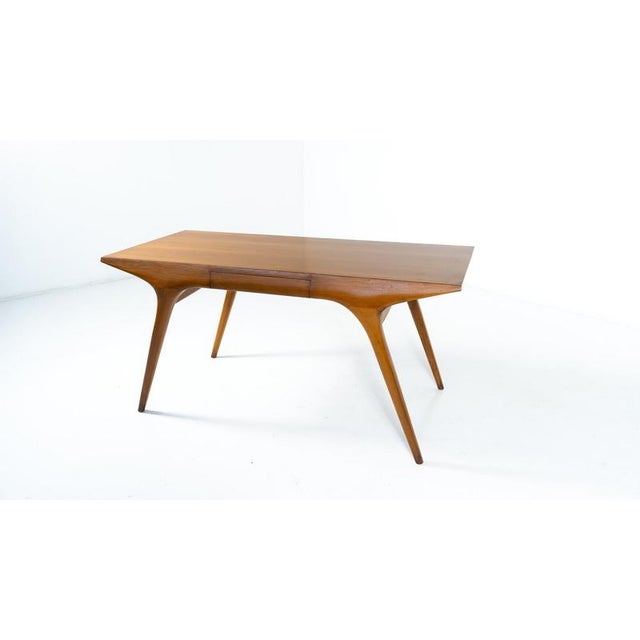
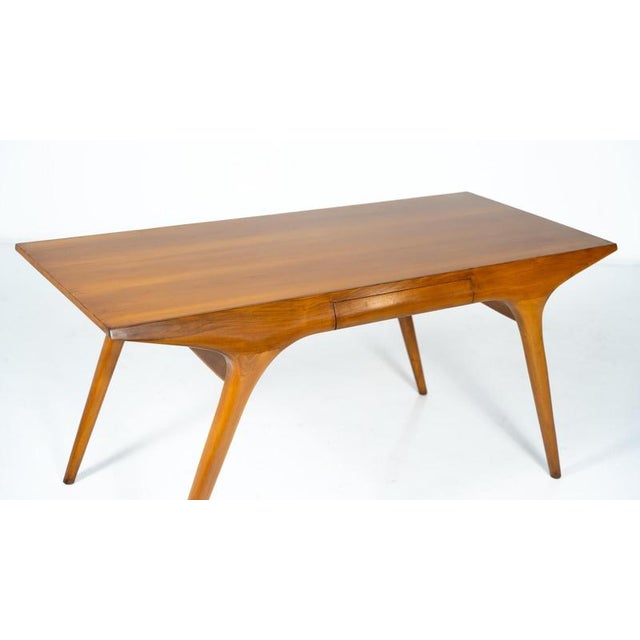
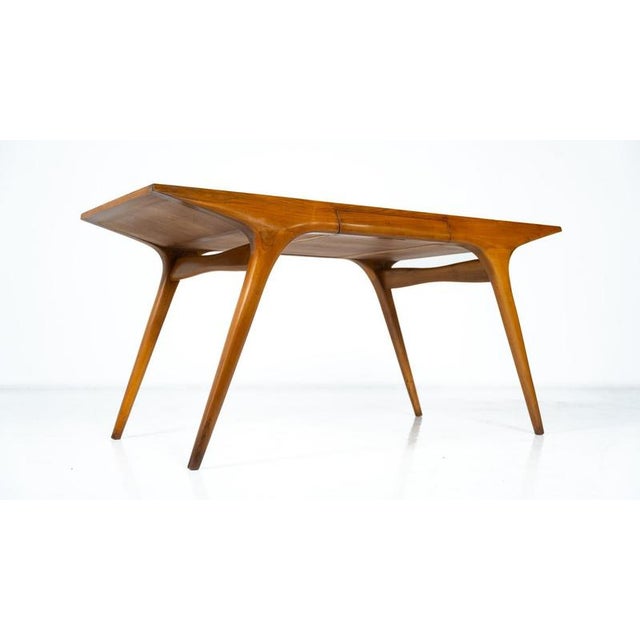
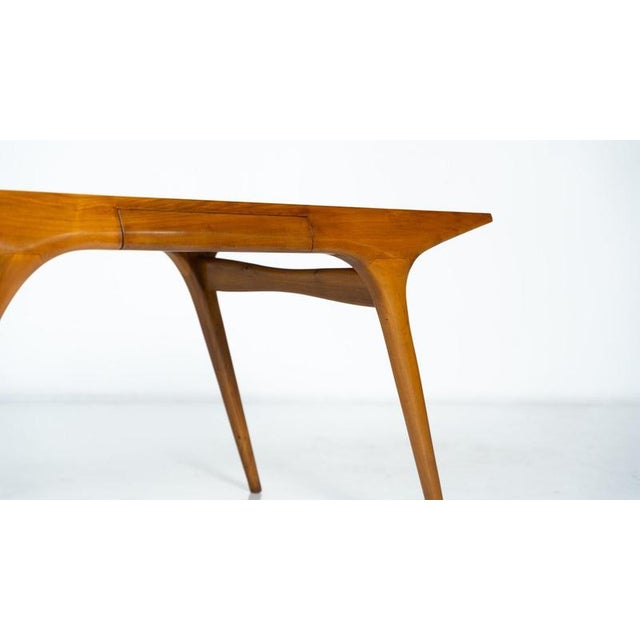
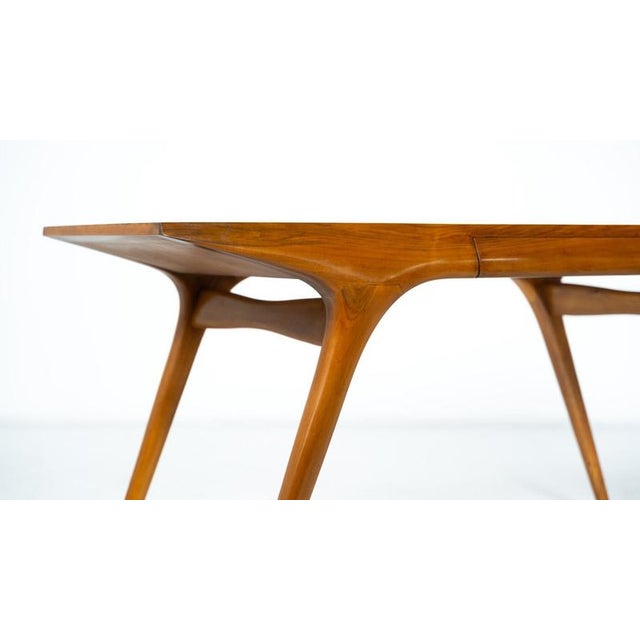
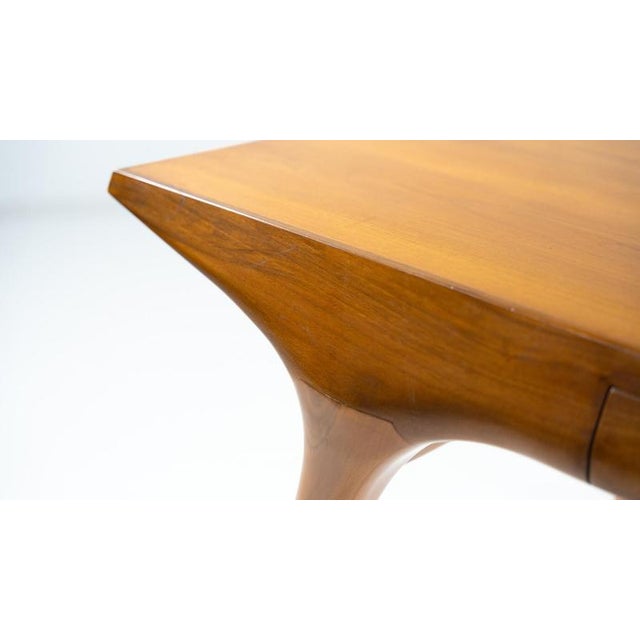
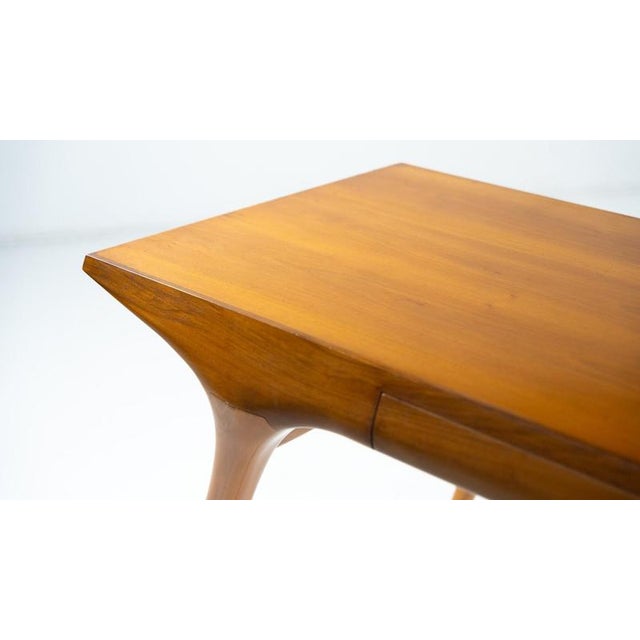
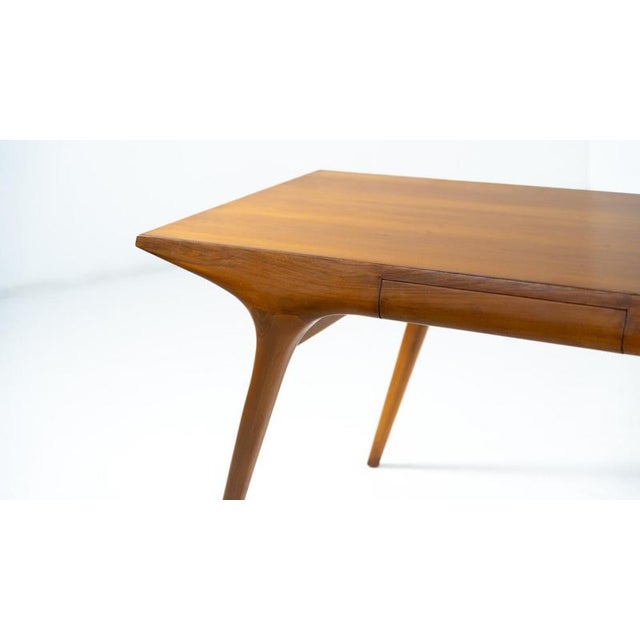
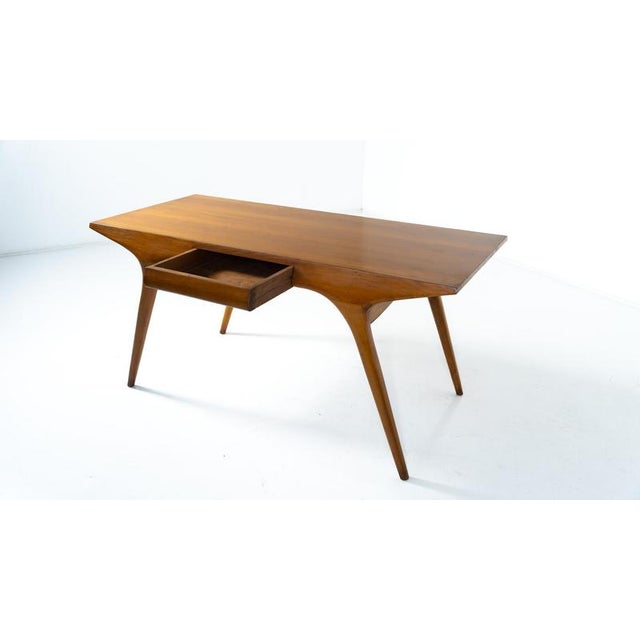
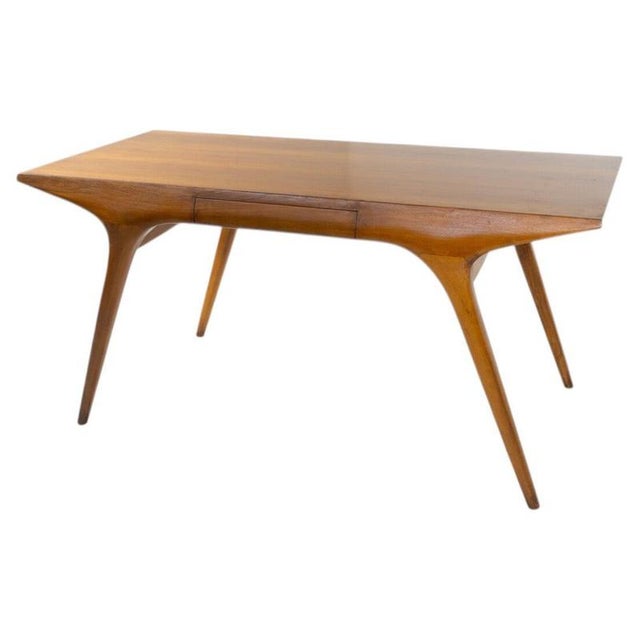
Writing Desk by Carlo di Carli, Walnut, 1950s Carlo Di Carli (1910–1999) was an influential Italian architect, designer, and educator, …
Read more
Writing Desk by Carlo di Carli, Walnut, 1950s Carlo Di Carli (1910–1999) was an influential Italian architect, designer, and educator, widely recognized for his contributions to modern Italian architecture and furniture design in the mid-20th century. His work reflects a refined balance between rationalist principles and a human-centered approach, emphasizing harmony between structure, materials, and everyday living. Born in Milan, Di Carli studied architecture at the prestigious Politecnico di Milano, where he later became a professor and shaped generations of architects. Early in his career, he collaborated with prominent figures of the Italian modernist movement, including Gio Ponti, which helped define his sensitivity toward craftsmanship and design innovation. Di Carli’s architectural work spans residential, commercial, and public buildings, characterized by clean lines, structural clarity, and thoughtful integration with the surrounding environment. Alongside architecture, he developed a significant body of furniture design, where he explored elegant forms and high-quality materials—often combining wood, metal, and upholstery in timeless compositions. A key aspect of his philosophy was the idea of “spatial continuity,” where interiors and exteriors interact fluidly, creating environments that feel both functional and emotionally engaging. This vision made his work particularly relevant in post-war Italy, as society sought modern yet humane living solutions. Today, Carlo Di Carli’s legacy endures through his architectural projects, his design pieces—many of which remain highly collectible—and his lasting influence on Italian design culture. His work continues to appeal to collectors, architects, and design enthusiasts who value authenticity, craftsmanship, and understated elegance. This piece is attributed to the mentioned designer/maker. It has no attribution mark and no
official proof of authenticity,
however it is well documented in design history. I take full responsibility for any authenticity
issues arising from misattribution
See less
- Dimensions
- 62.6ʺW × 27.56ʺD × 30.31ʺH
- Period
- 1950s
- Country of Origin
- Italy
- Item Type
- Vintage, Antique or Pre-owned
- Materials
- Wood
- Condition
- Good Condition, Unknown, Some Imperfections
- Color
Returns & Cancellations
Return Policy - All sales are final 48 hours after delivery, unless otherwise specified in the description of the product.
Cancellation Policy - Prior to shipping or local pickup, buyers may cancel an order for up to 48 hours, unless otherwise specified.
Related Collections
- Bright Green Writing Desks
- Writing Desks in Salt Lake City
- Herter Brothers Writing Desks
- Rope Writing Desks
- Chelsea House Inc Writing Desks
- Jean-Michel Frank Writing Desks
- Gunni Omann Writing Desks
- John Vesey Writing Desks
- Gothic Revival Writing Desks
- Arts and Crafts Writing Desks
- Walnut Writing Desks
- Lexington Furniture Writing Desks
- Mahogany Writing Desks
- English Traditional Writing Desks
- French Writing Desks
- Maitland - Smith Writing Desks
- Stanley Furniture Writing Desks
- Ladies Writing Desks
- Green Writing Desks
- Louis XVI Writing Desks
- Japanese Writing Desks
- Black Writing Desks
- Pine Writing Desks
- Italian Writing Desks
- Antique Writing Desks