



Details
Description
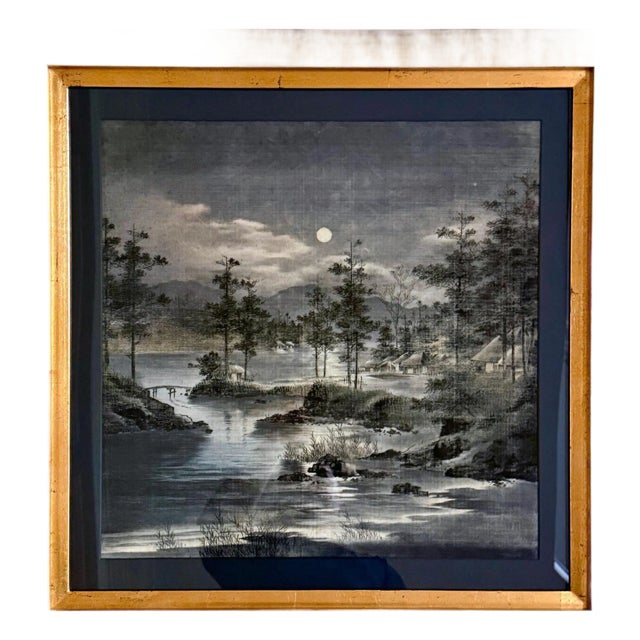
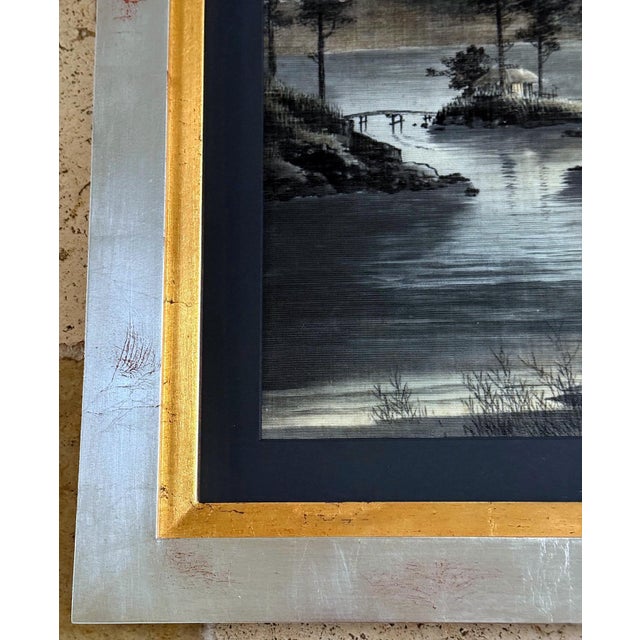
A Japanese tapestry velvet panel from Meiji period presented in a beautiful silver and gold leaf wood frame. The realistic …
Read more
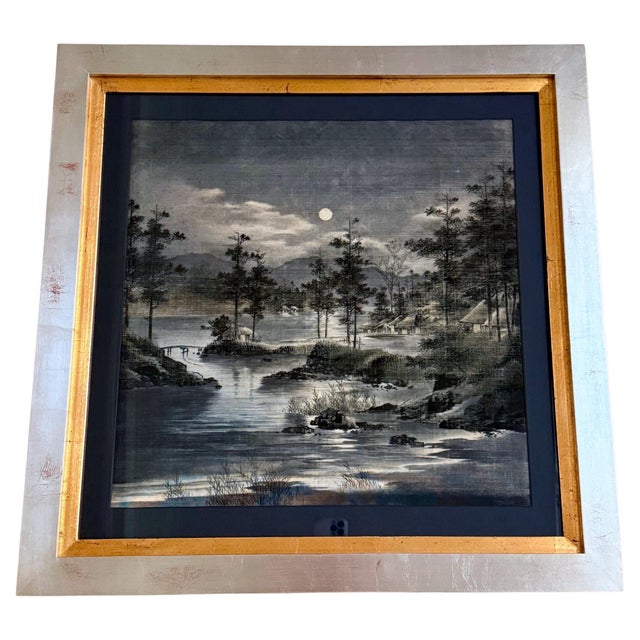
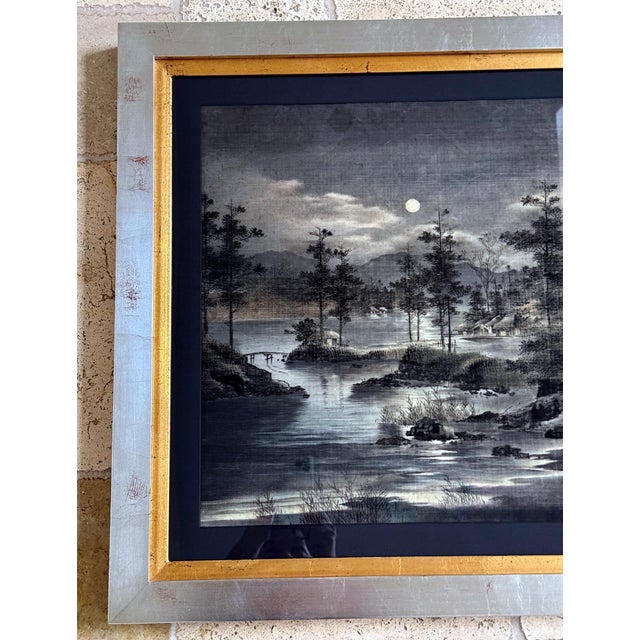
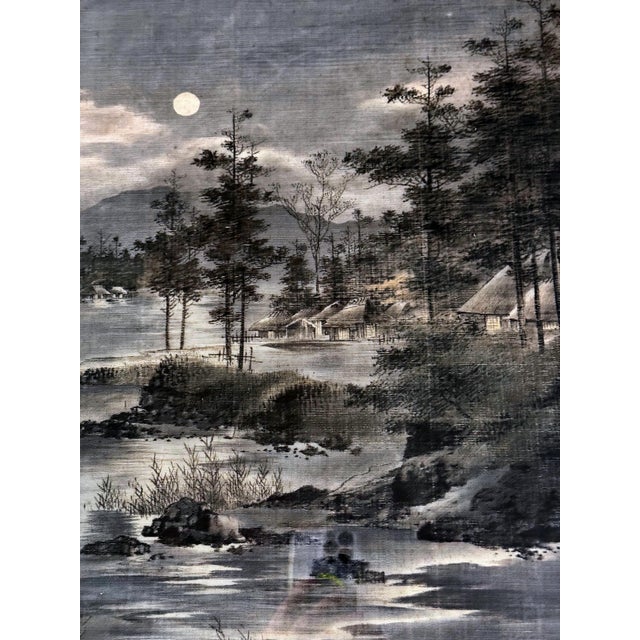
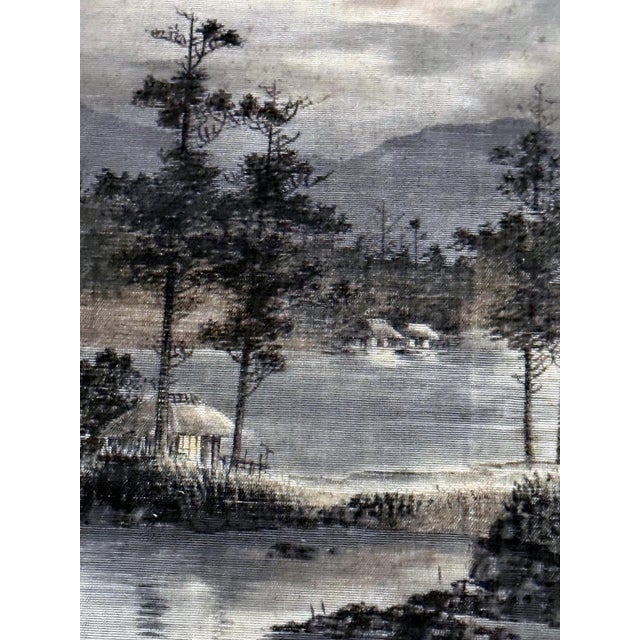
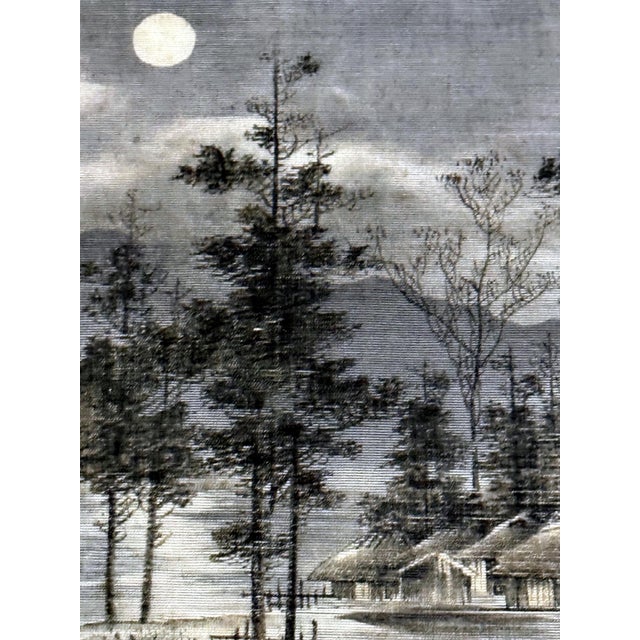
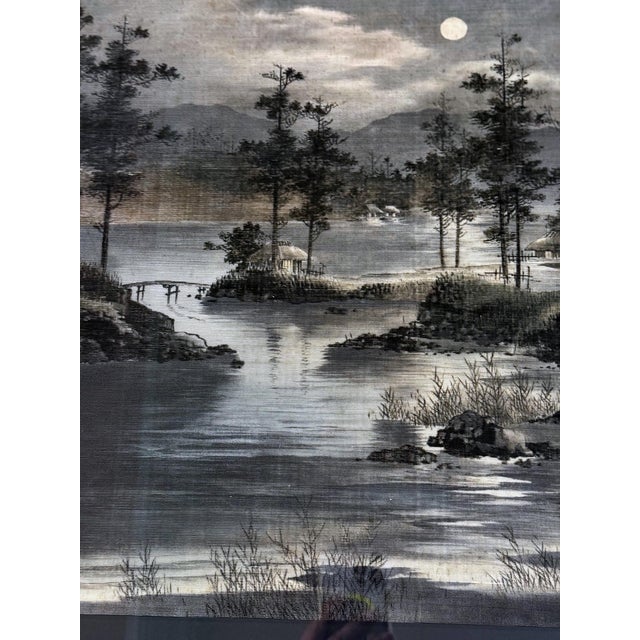
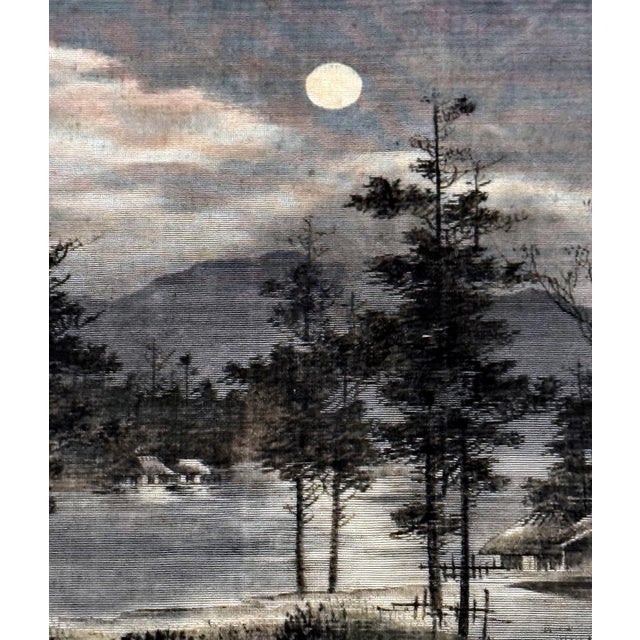
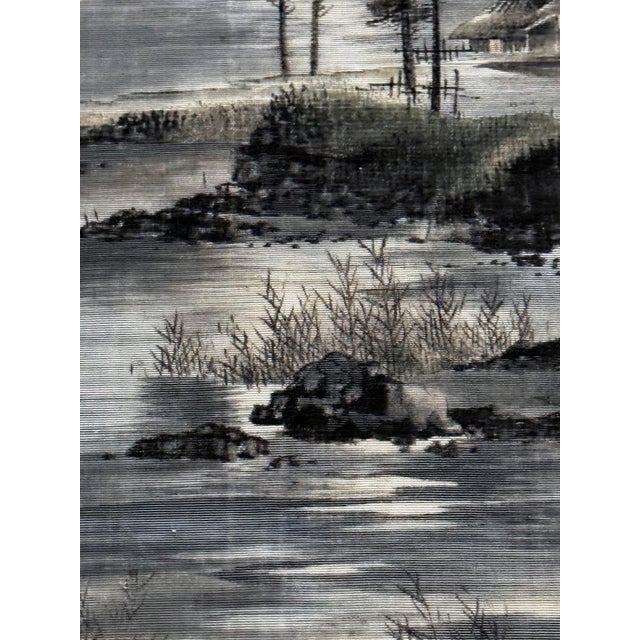
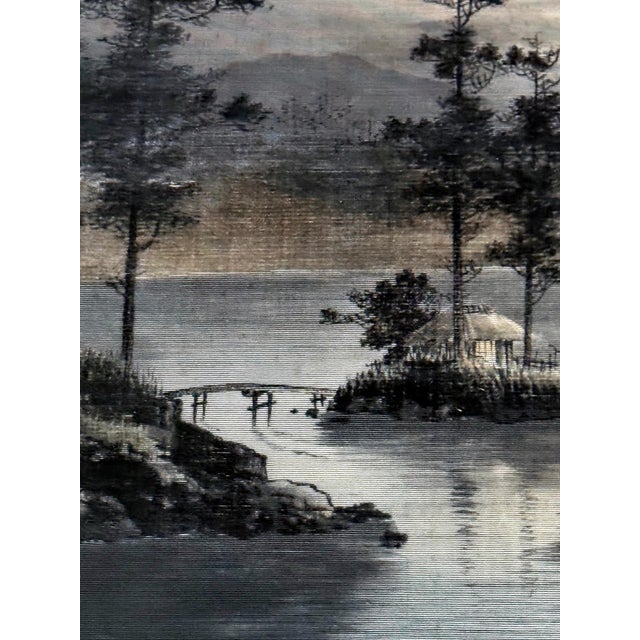
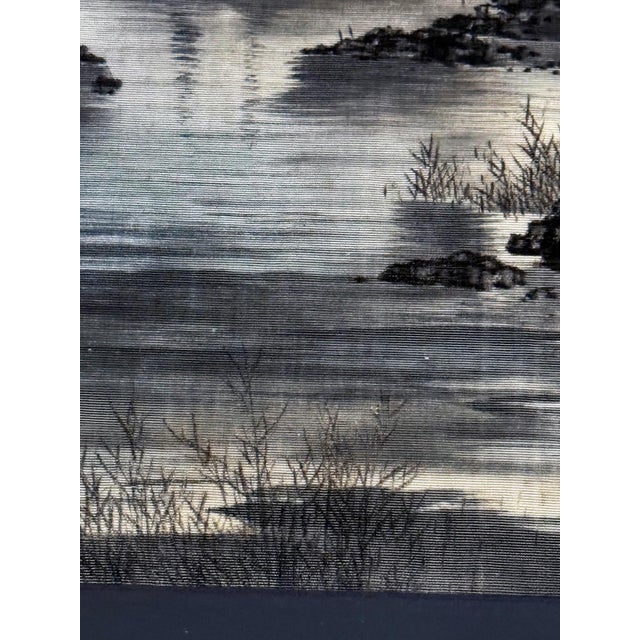
A Japanese tapestry velvet panel from Meiji period presented in a beautiful silver and gold leaf wood frame. The realistic landscape textile was created using resistant dye on cut velvet. This labor-intensive method is called Yūzen Birodo in Japanese and requires high technical precision to achieve its signature three-dimensional, "chiaroscuro" effect. The tapestry is dated to late Meiji period (circa 1900-1920s) and was made to appeal the taste of the West. By fully harnessing the technical ability of the native Japanese textile artists, the composition of the typical Japanese scenery blended in strong visual perspective and dimension found in the western landscape painting. The result, like many late Meiji Export art, is a true marvel of East-Meet-West. The romantic nocturnal landscape depicts lake cove among towering pines and under a full moon, A small foot bridge and clusters of thatched-roof houses dotted the meandering rocky coast. The resistant dye on the cut velvet was taken advantage to the fullest by the artist to create its dreamy effect in black and white like an ink painting. Although the scenery is purely Japanese, the visuality has a strong sense of dimension found in Western oil landscape painting. This unique art form at the turn of the 20th century reflected the historical context when Japanese traditional art enjoyed an unprecedented exchange with the West. The panel was matted and presented in an antiqued wood frame with silver and gold leaf.
Image size is 20.5" x 20.5".
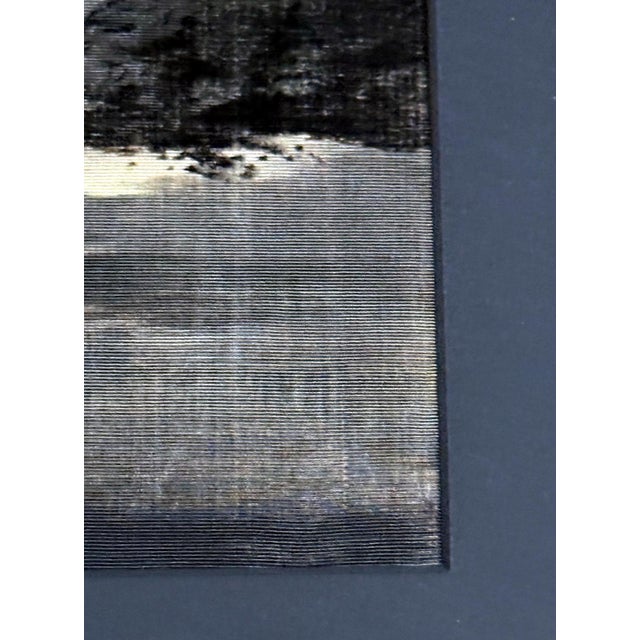
The invention of Yuzen-Birodo was credited to Nishimura Sozaemon, the famous Kyoto textiles firm, in 1868. The velvet was woven by passing the fine metal wires parallel to the weft to raise the loop. The design was painted on the uncut velvet using resistant dye method (Yuzen). Afterward, the fabric was steamed, and the velvet was selectively cut to form the piles. The precise cutting creates a tufted pile that adds depth, texture, and a sense of perspective, often making the textile resemble a painting.
The first example of Yuzen-Birodo was exhibited at the Second National Industrial Exhibition in Tokyo in 1881 before it was exhibited in the west.
Reference: "Threads of silk and gold, Ornamental Textiles from Meiji Japan" by H. McDermott and C. Pollard, The Oxford Ashmolean Museum Catalogue Exhibition, 2012, pp. 160-169.
See less
- Dimensions
- 28.75ʺW × 2.5ʺD × 28.75ʺH
- Styles
- Industrial
- Traditional
- Period
- Early 20th Century
- Country of Origin
- Japan
- Item Type
- Vintage, Antique or Pre-owned
- Materials
- Gold Leaf
- Velvet
- Condition
- Good Condition, Original Condition Unaltered, Some Imperfections
- Color
- Silver
- Condition Notes
- General wear consistent with age and use. General wear consistent with age and use. less
Questions about the item?
Returns & Cancellations
Return Policy - All sales are final 48 hours after delivery, unless otherwise specified in the description of the product.
Cancellation Policy - Prior to shipping or local pickup, buyers may cancel an order for up to 48 hours, unless otherwise specified.
Related Collections
- Loloi Rugs Textile Art
- Louis XIII Textile Art
- Resin Textile Art
- Workaday Handmade Textile Art
- Chanel Textile Art
- Antique Gold Finish Textile Art
- Kenneth Ludwig Chicago Textile Art
- Mid-Century Modern Textile Art
- Chinese Textile Art
- Japanese Textile Art
- Tapestry
- Framed Scarves
- Scandinavian Textile Art
- Aubusson Tapestry
- Edwardian Textile Art
- Cardboard Textile Art
- Ralph Lauren Textile Art
- Märta Måås-Fjetterström Textile Art
- Pablo Picasso Textile Art
- Surrealism Textile Art
- Space Age Textile Art