

Details
Description
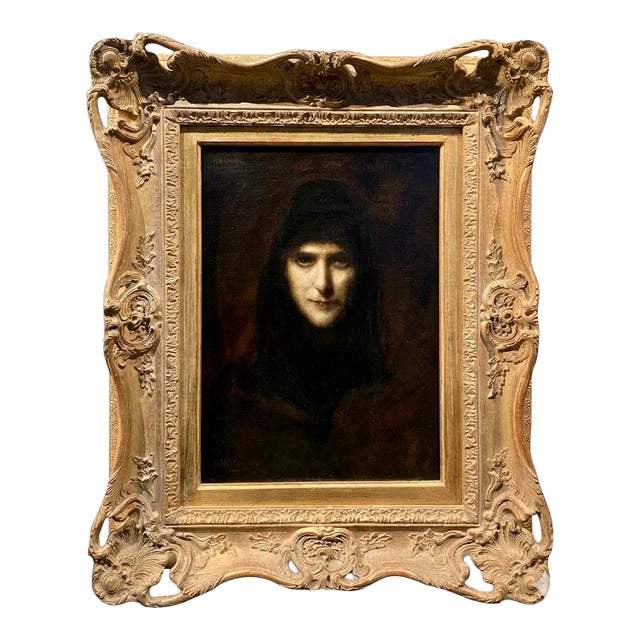
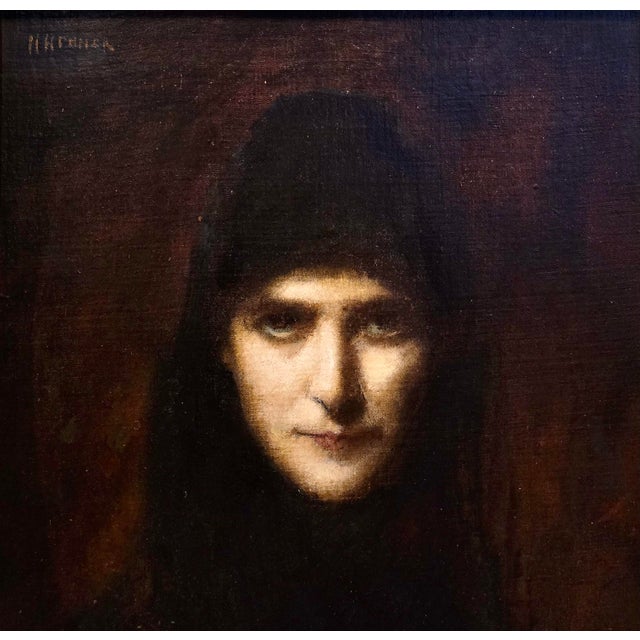
Jean-Jacques Henner - La Religieuse ( The Nun) -19th century Oil Painting
French Academic Realism - Oil painting on canvas …
Read more
Jean-Jacques Henner - La Religieuse ( The Nun) -19th century Oil Painting
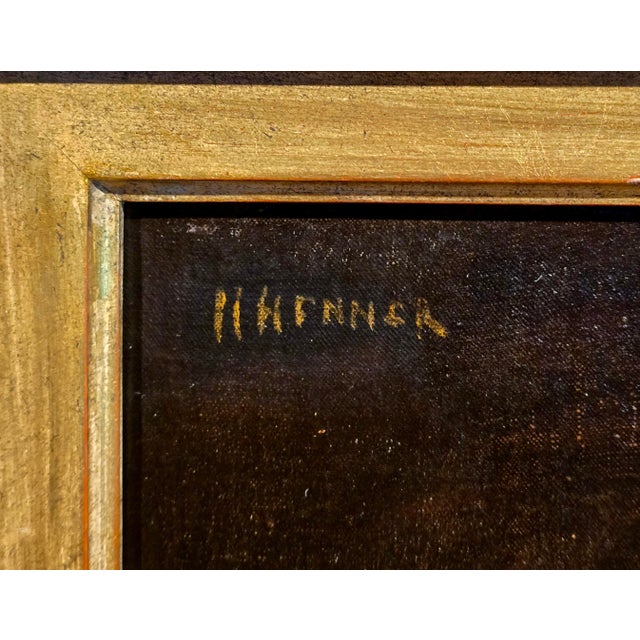
French Academic Realism - Oil painting on canvas - Signed -circa 1895
Canvas size 18x13" - Frame size: 26x22x4"
Description
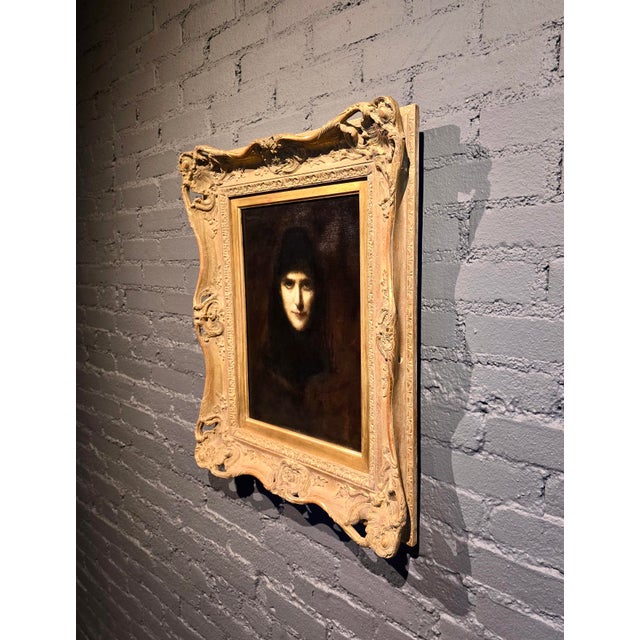
This 19th-century oil painting by Jean-Jacques Henner, titled La Religieuse (The Nun), is a masterclass in Symbolist portraiture and dramatic lighting. Measuring approximately 26" x 22" in its frame, the work captures a moment of intense, quiet introspection.
The Figure and Composition
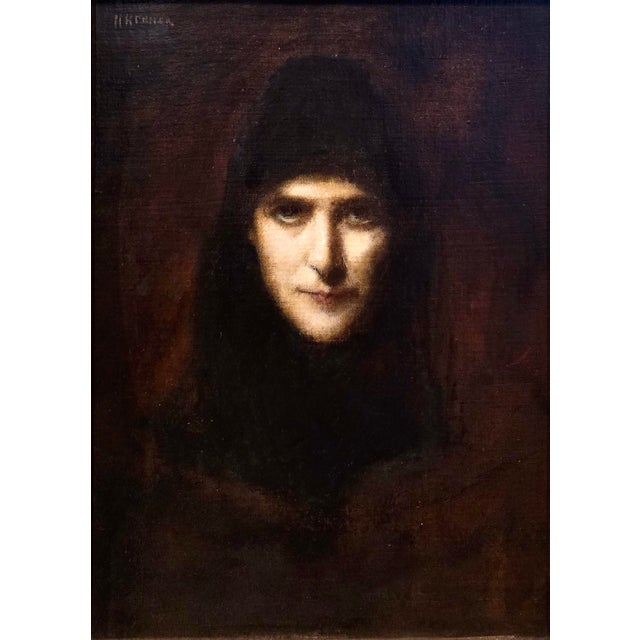
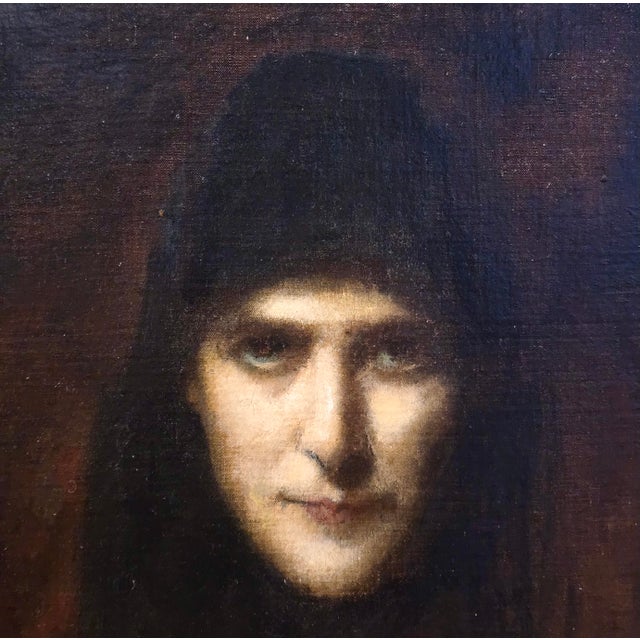
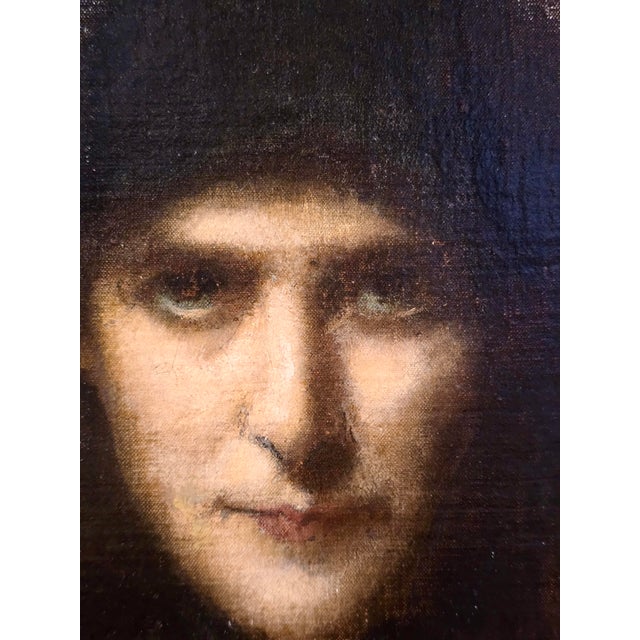
Atmospheric Sfumato: The subject's face emerges from a deep, velvety darkness through Henner’s signature use of sfumato. This technique softens the edges of her features, giving her an ethereal, almost spectral presence.
The Subject: Dressed in the heavy, dark folds of a religious habit and hood, the young woman stares directly at the viewer. Her expression is complex—a blend of solemnity, devotion, and a faint, knowing smile that suggests a rich inner life.
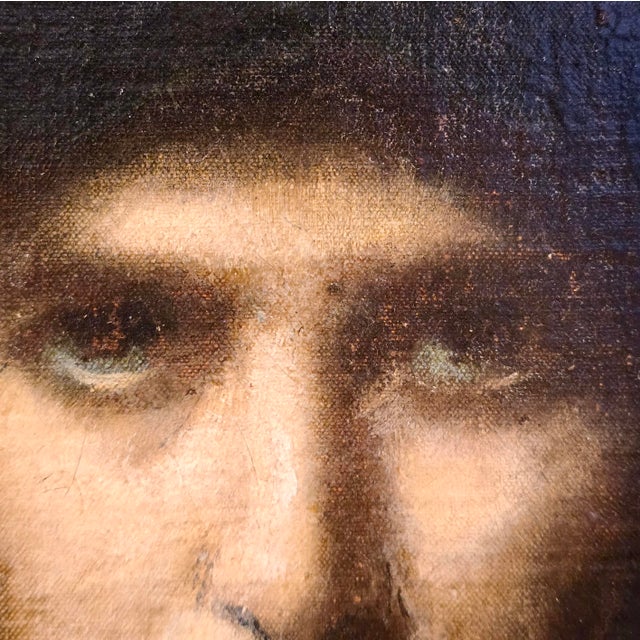
Chiaroscuro Palette: The painting utilizes a stark chiaroscuro effect. The porcelain-like pallor of her skin and the luminous clarity of her eyes provide the only significant light source against a background of umber and near-black shadows.
Artistic Style
Symbolist Influence: Rather than a literal depiction of a nun, the painting serves as a symbol of the meditative state. It prioritizes mood and emotion over realistic detail, a hallmark of Henner’s later career.
The "Henner Glow": The light appears to emanate from within the subject herself, a characteristic that made Henner’s work highly sought after in the Parisian Salons for its mysterious, candlelit quality.
The Frame
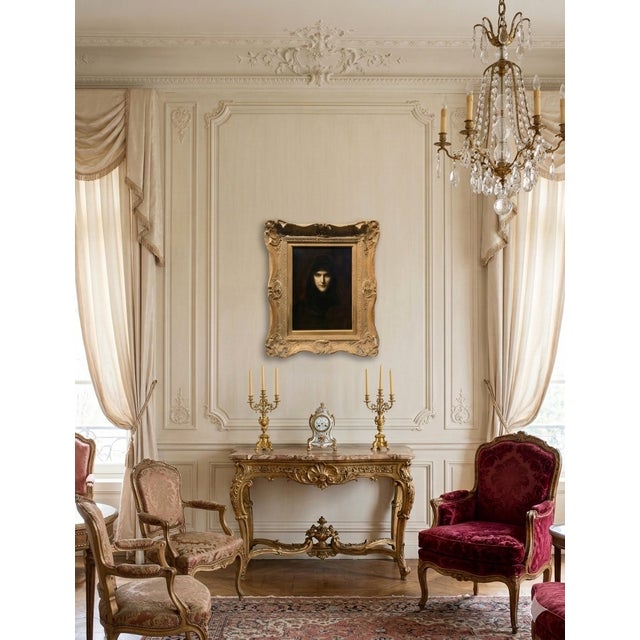
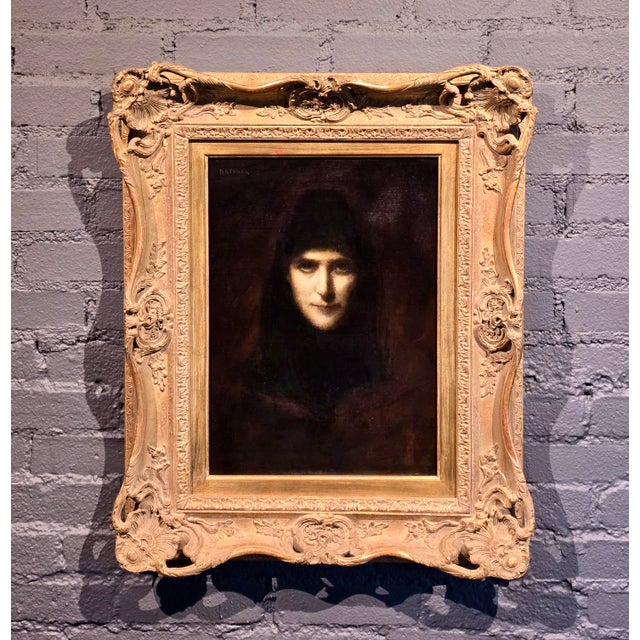
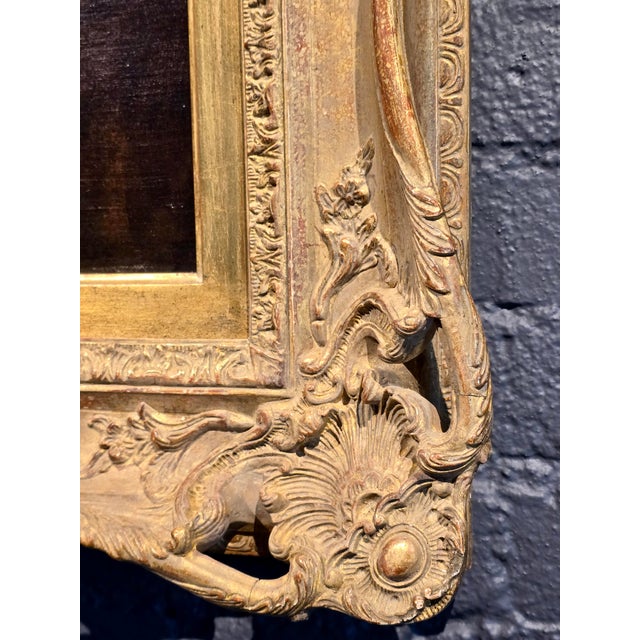
Louis XV Influence: The painting is housed in a magnificent Baroque-style gilded frame. It features elaborate "c-scroll" and shell motifs at the corners and centers, known as rocaille ornamentation.
Gilded Contrast: The aged gold of the frame acts as a radiant border, emphasizing the darkness of the canvas and adding a sense of historical weight and "jewel-like" importance to the portrait.
Artist Biography
Jean-Jacques Henner (1829–1905) was a prominent French painter celebrated for his unique blend of Academicism and Symbolism. He is most famous for his "sfumato" technique—a soft, hazy blurring of outlines—and his dramatic use of chiaroscuro to make pale, ethereal figures emerge from dark, mysterious backgrounds.
Early Life and Education
Humble Beginnings: Born in Bernwiller, Alsace, to a family of well-to-do farmers, his artistic talent was recognized early by his drawing teacher.
Formal Training: He studied in Strasbourg before moving to Paris in 1846. He entered the École des Beaux-Arts in 1848, studying under masters like Michel Martin Drolling and François-Édouard Picot.
Prix de Rome: In 1858, after two previous attempts, he won the prestigious Grand Prix de Rome for his painting Adam and Eve Discovering the Body of Abel.
Career and Italian Influence
The Italian Years (1859–1865): Henner spent five years at the Villa Medici in Rome. During this time, he was deeply influenced by the Italian Renaissance masters, particularly Titian and Correggio, whose use of color and light shaped his signature style.
Success in Paris: Upon returning to France, he became a highly successful and sought-after artist. He exhibited regularly at the Paris Salon from 1865 until his death.
Honors: His career was marked by numerous official distinctions, including becoming a member of the Institut de France (1889) and receiving the Grand Prix at the 1900 Exposition Universelle.
Artistic Style and Subjects
Signature Motif: He is widely known for his depictions of women with vibrant auburn or red hair and luminous, porcelain-like skin.
Major Themes: His work spanned religious subjects, mythology, and idealistic portraits. Notable pieces include The Chaste Susanna (1865) and his 1885 painting of Saint Fabiola (the original is lost, but it became a global icon for devotional art).
Legacy: While he remained distinct from the Impressionist movement, his atmospheric and "dream-like" style is often viewed as a precursor to Symbolism.
Today, much of his life's work is preserved at the Musée National Jean-Jacques Henner in Paris, housed in a historic 19th-century mansion
See less
- Dimensions
- 22ʺW × 4ʺD × 26ʺH
- Frame Type
- Framed
- Art Subjects
- Portrait
- Period
- Late 19th Century
- Country of Origin
- France
- Item Type
- Vintage, Antique or Pre-owned
- Materials
- Canvas
- Oil Paint
- Condition
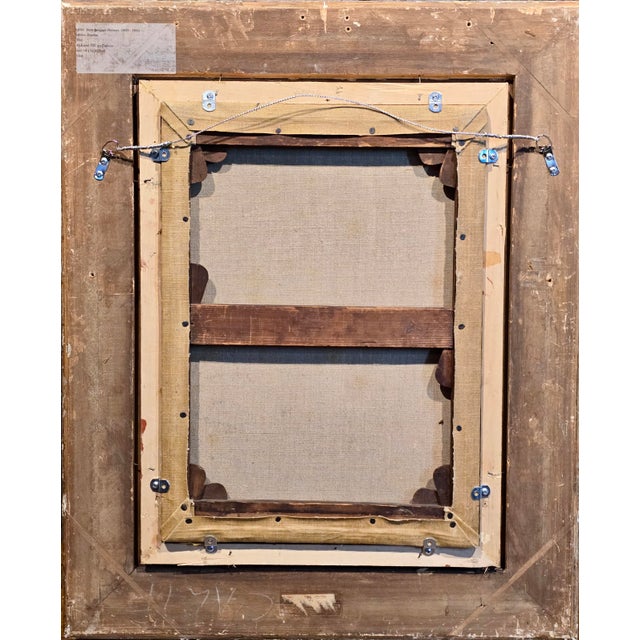
- Good Condition, Original Condition Unaltered, Some Imperfections
- Color
- Brown
- Condition Notes
- Excellent - Minor wear consistent with age and history Excellent - Minor wear consistent with age and history less
Questions about the item?
Returns & Cancellations
Return Policy - All sales are final 48 hours after delivery, unless otherwise specified in the description of the product.
Cancellation Policy - Prior to shipping or local pickup, buyers may cancel an order for up to 48 hours, unless otherwise specified.
Related Collections
- Photorealism Canvas Paintings
- Ed Ruscha Paintings
- Photorealism Paintings in New York
- Richard Serra Paintings
- Jo Baskerville Paintings
- Louise Nevelson Paintings
- Karen Offutt Paintings
- Nicola Simbari Paintings
- Herman Miller Paintings
- BDDW Paintings
- Leroy Neiman Paintings
- Jaanika Peerna Paintings
- Johannes Andersen Paintings
- Pedro Friedeberg Paintings
- Peter Behrens Paintings
- Piet Hein Eek Paintings
- Raphael Paintings
- Vienna Secession Paintings
- Carl-Axel Acking Paintings
- Karl-Erik Ekselius Paintings
- Hans Andersen Paintings
- Jean-Paul Barray Paintings
- Cassina Paintings
- Jeff Slemmons Paintings
- Soicher Marin Paintings