

Details
Description
Regency Geometry: A Pair of Diced Caneware Bough Pots
Attributed to Neale & Co. or Davenport
Circa 1800
This charming …
Read more
Regency Geometry: A Pair of Diced Caneware Bough Pots
Attributed to Neale & Co. or Davenport
Circa 1800
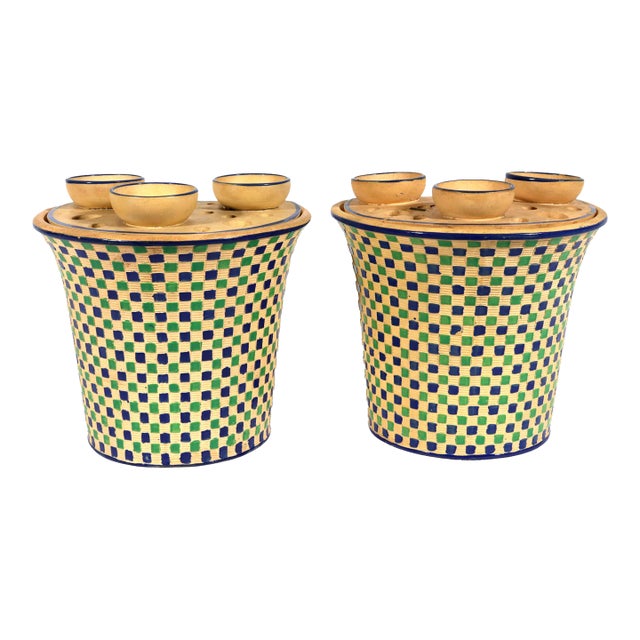
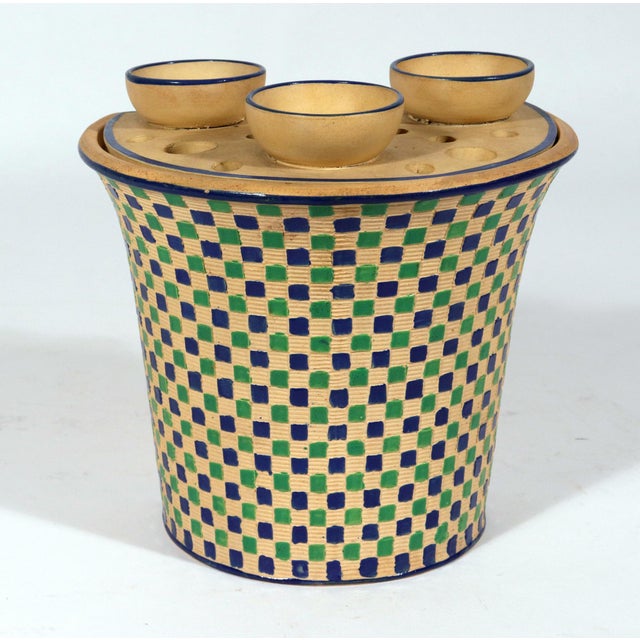
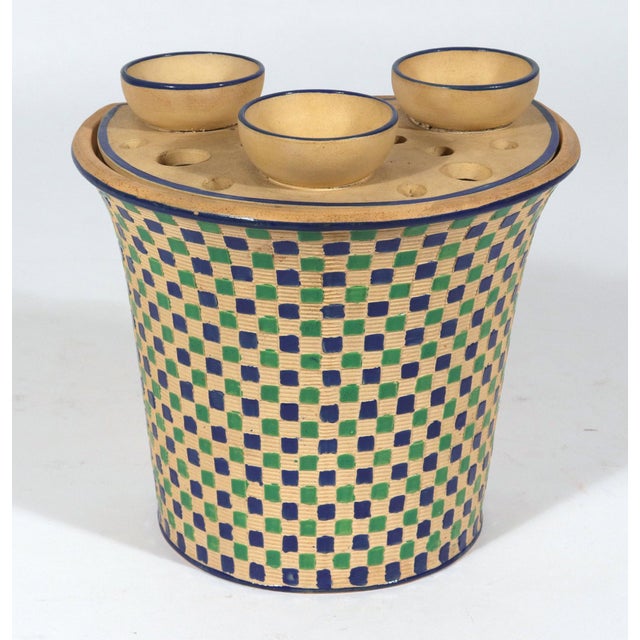
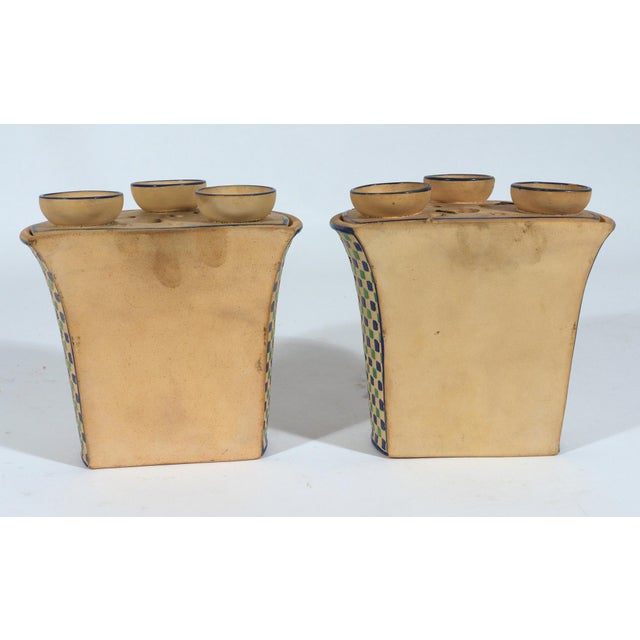
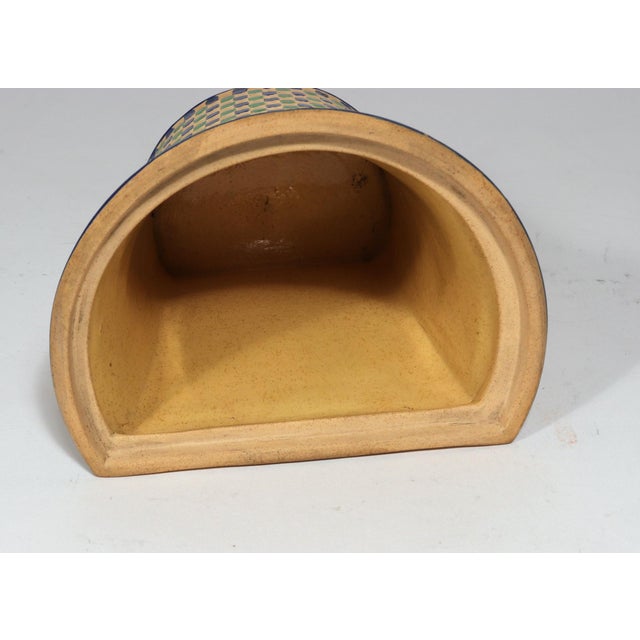
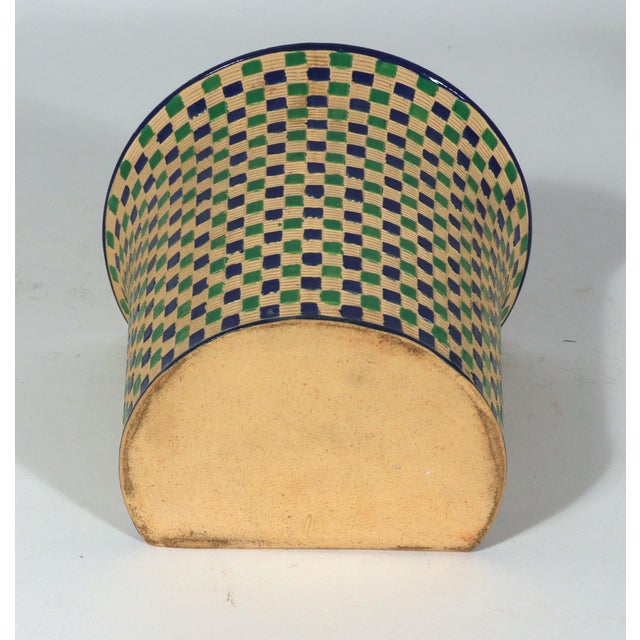
This charming pair of early 19th-century caneware bough pots features a striking geometric "diced" pattern that feels remarkably modern. Potted in a classic demilune (D-shaped) form with flat backs, these vessels were designed to sit flush against a wall, mantlepiece, or hearth.
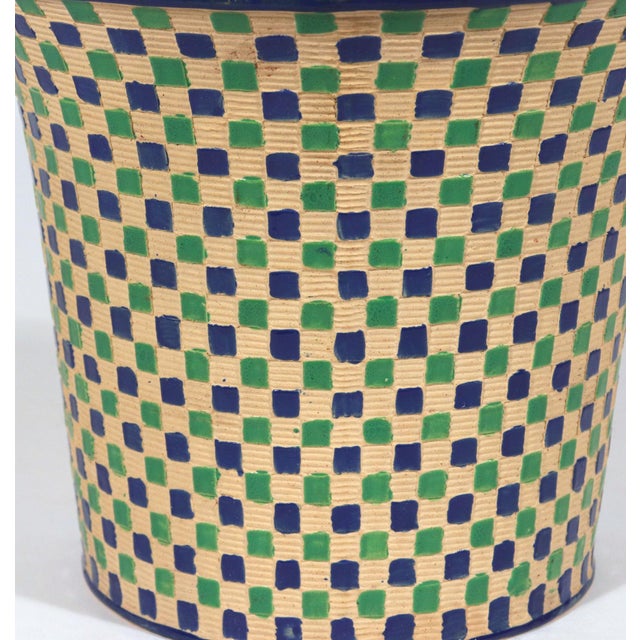
The exterior is decorated with a meticulously arranged checkerboard pattern consisting of three alternating elements: vibrant, jewel-like green and blue enamel squares, and unglazed ivory-colored caneware squares. Each unglazed square is further detailed with four finely incised lines, creating a subtle textured, basket-weave effect.
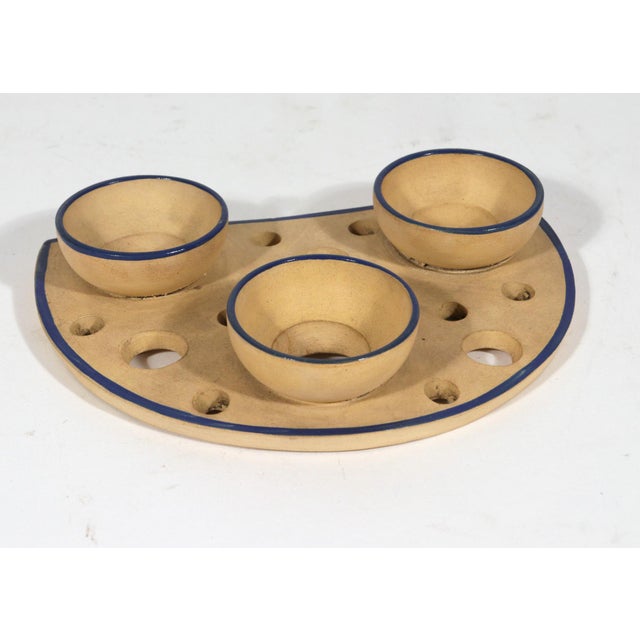
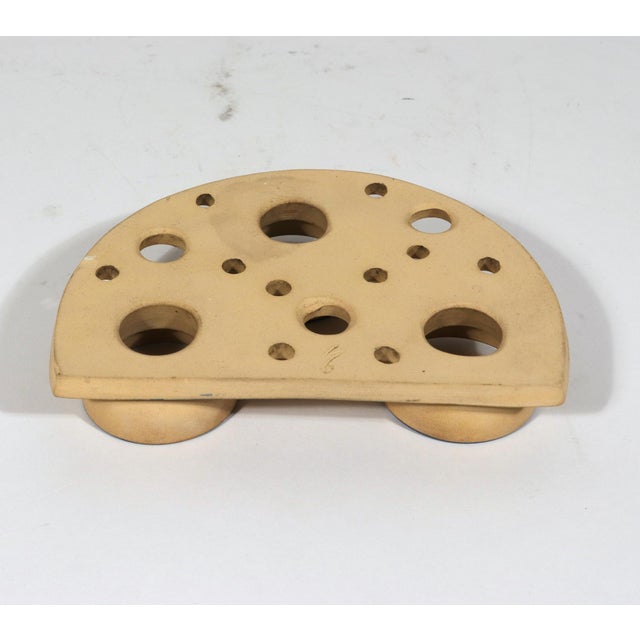
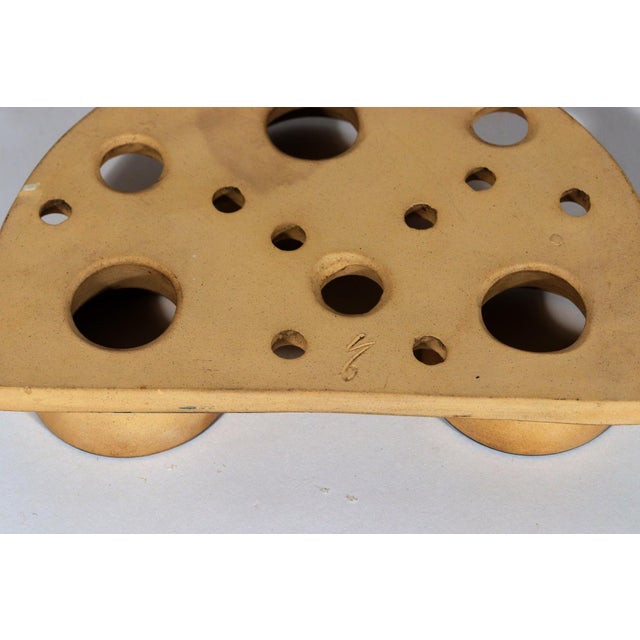
Each pot retains its original fitted cover, which is pierced with thirteen holes for arranging cut flower stems and features three large, raised cup-shaped holders—edged in blue enamel—specifically designed for forcing spring bulbs.
Measurements:
Height: 5 3/4 inches (14.6 cm)
Width: 5 3/4 inches (14.6 cm)
Depth: 4 inches (10.2 cm)
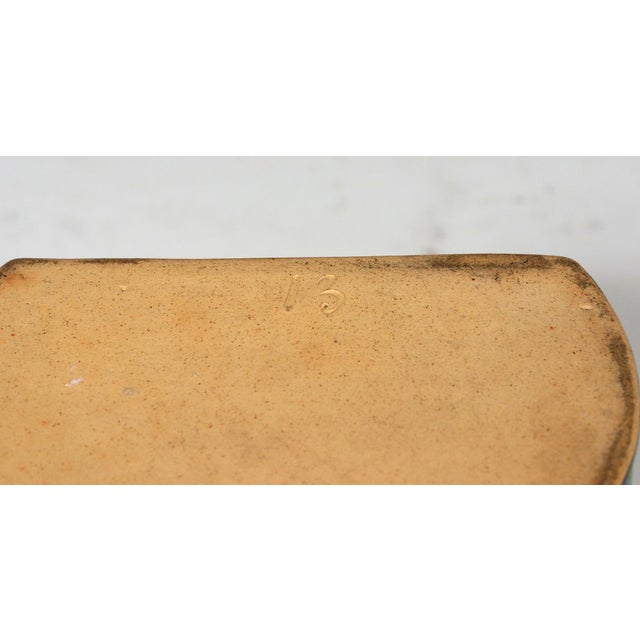
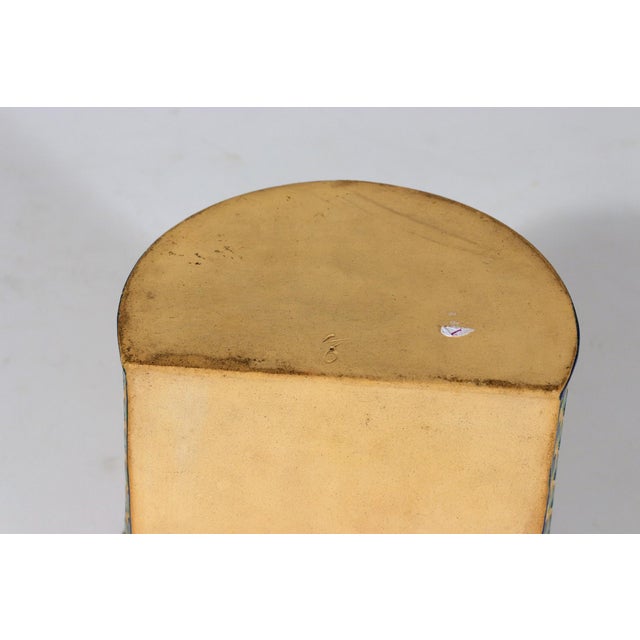
Marks: One pair with the 13 scratched on base and base of cover and the other pair with 1/6 similarly placed.
Condition: Good: Visually excellent; one cover was formerly broken in half (with no material losses) and has been professionally and invisibly repaired.
Historical Context: The Bough Pot & Caneware
During the late 18th and early 19th centuries, bough pots (or crocus pots) were essential decorative items in affluent households. Before the widespread use of central heating, they were often placed inside empty fireplaces during the summer months and filled with fragrant boughs of greenery or cut flowers to freshen the room. During the winter, the raised cups were used to force bulbs like hyacinths or crocuses, bringing early blooms indoors.
Caneware is a type of dry-bodied (unglazed) stoneware introduced by Josiah Wedgwood in the 1770s, named for its buff or tan color resembling bamboo or natural cane. The technique of engine-turning or molding the clay to create textured, colored geometric patterns (often called "diced" ware) was highly popular. While Wedgwood pioneered the style, other premier potters of the era, such as Neale & Co. and Davenport, produced exceptionally high-quality examples like this pair to meet the demands of Regency high society.
(Ref: NY11034-nkmr)
See less
- Dimensions
- 5.75ʺW × 4ʺD × 5.75ʺH
- Styles
- Regency
- Period
- Early 19th Century
- Country of Origin
- United Kingdom
- Item Type
- Vintage, Antique or Pre-owned
- Materials
- Ceramic
- Condition
- Good Condition, Original Condition Unaltered, Some Imperfections
- Color
- Orange
- Condition Notes
- One cover in half and now invisibly conserved- impossible to see! One cover in half and now invisibly conserved- impossible to see! less
Questions about the item?
Returns & Cancellations
Return Policy - All sales are final 48 hours after delivery, unless otherwise specified in the description of the product.
Cancellation Policy - Prior to shipping or local pickup, buyers may cancel an order for up to 48 hours, unless otherwise specified.