

Details
Description
….From the same grand old Nantucket summer house that has yielded so many quiet treasures to our shop comes this: …
Read more
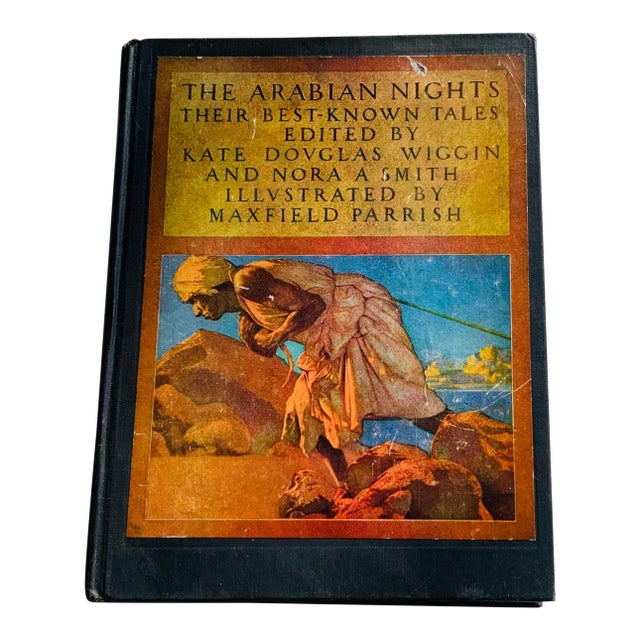
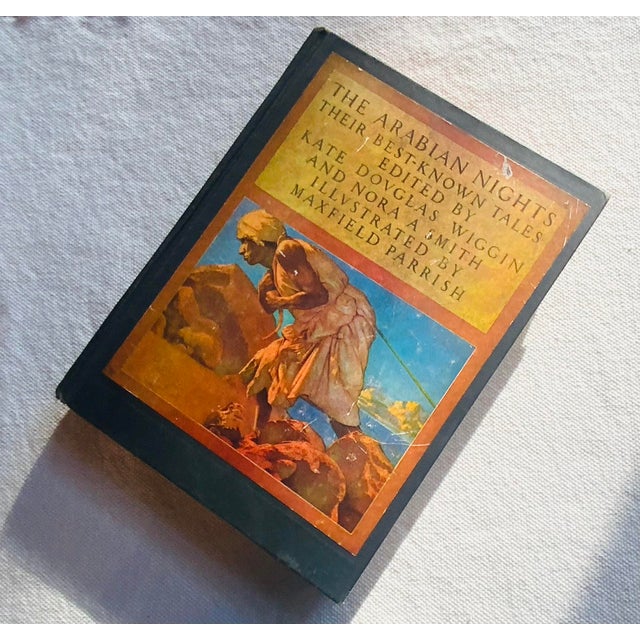
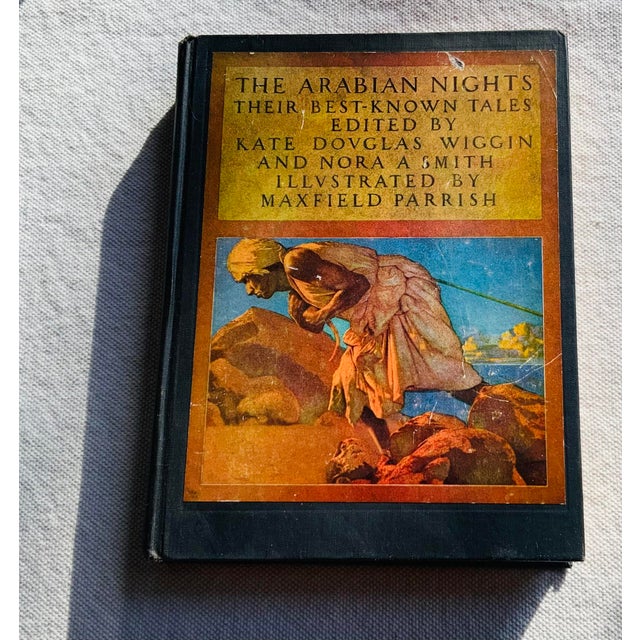
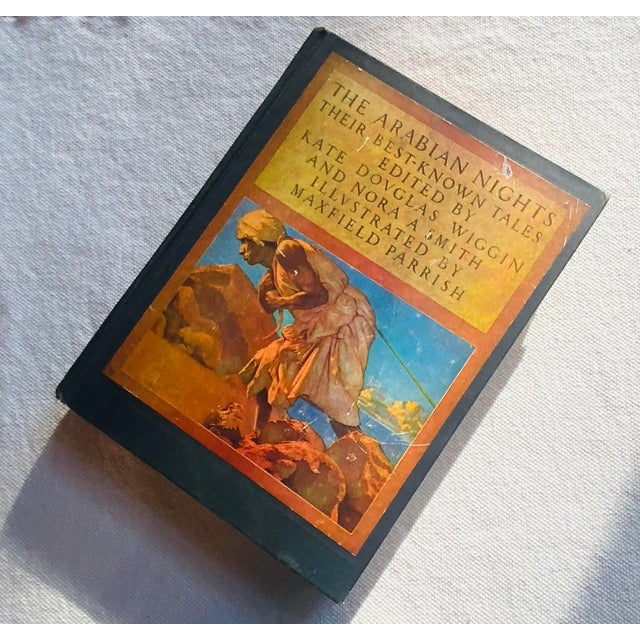
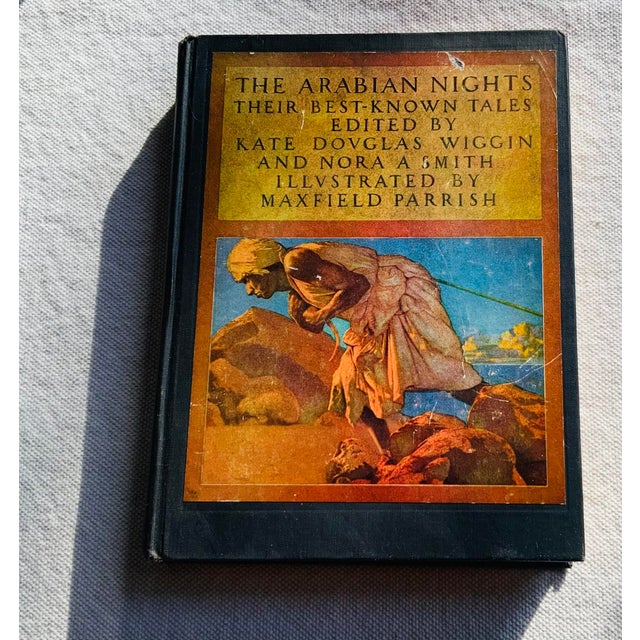
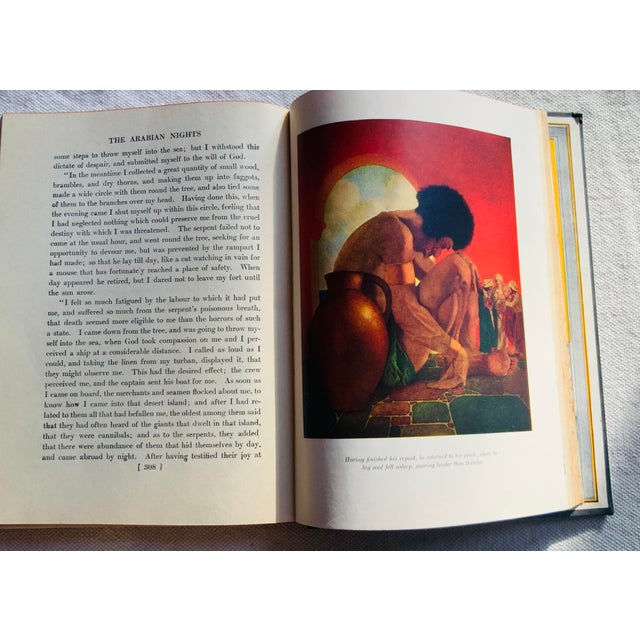
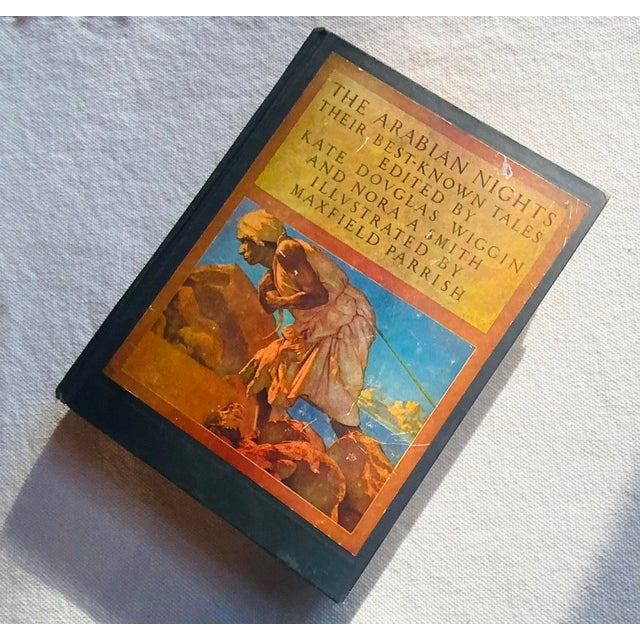
….From the same grand old Nantucket summer house that has yielded so many quiet treasures to our shop comes this: a well-loved copy of The Arabian Nights: Their Best-Known Tales, illustrated by Maxfield Parrish — and it spent the better part of a century on a family's shelves by the sea.
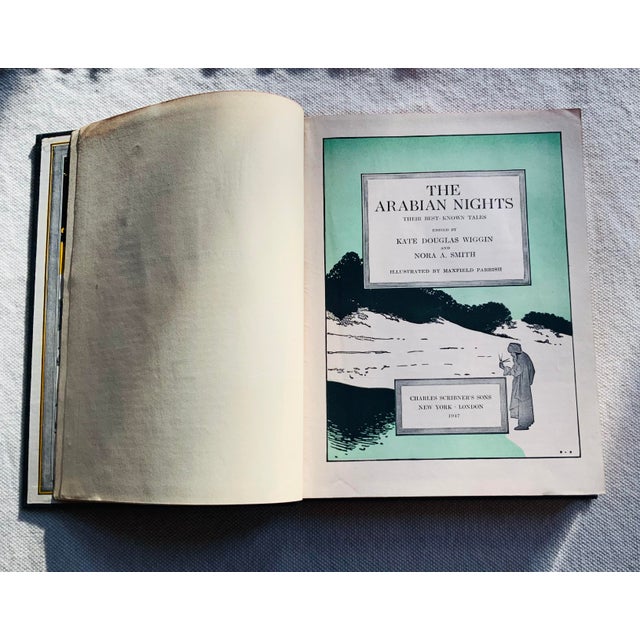
Published by Charles Scribner's Sons, New York and London, 1947 — a name that once meant something, a house whose books were objects in themselves, conceived from the start as things worth keeping. Scribner's is sadly but a memory now, swallowed by the same forces that gave us the airport paperback and the algorithmically generated cover. But the books endure, and this one endures beautifully.
There was a time in American publishing — roughly from the 1890s through the mid-twentieth century — when even a children's book was understood to be a cultural object. Publishers like Scribner's believed that what a child held in their hands mattered: that the weight of the paper, the quality of the binding, the artistry of the illustrations were not decorative extras but the point itself. Books were made to educate the eye as much as the mind, to instill a standard of beauty early, to be passed down. The idea of a throwaway book would have seemed not merely wasteful but almost morally wrong.
This edition embodies that philosophy completely.
What makes it particularly worth noting: it was edited by two sisters — Kate Douglas Wiggin (1856–1923) and Nora A. Smith (1859–1934) — pioneer educators who founded San Francisco's first free kindergarten and spent their lives thinking rigorously about what children should read and why. Kate went on to write Rebecca of Sunnybrook Farm; Nora followed their lifelong collaboration to its last chapter, writing her sister's biography after Kate's death. This was not a commercial editorial job. It was an act of literary stewardship by two women who understood that the stories we give children shape the adults they become.
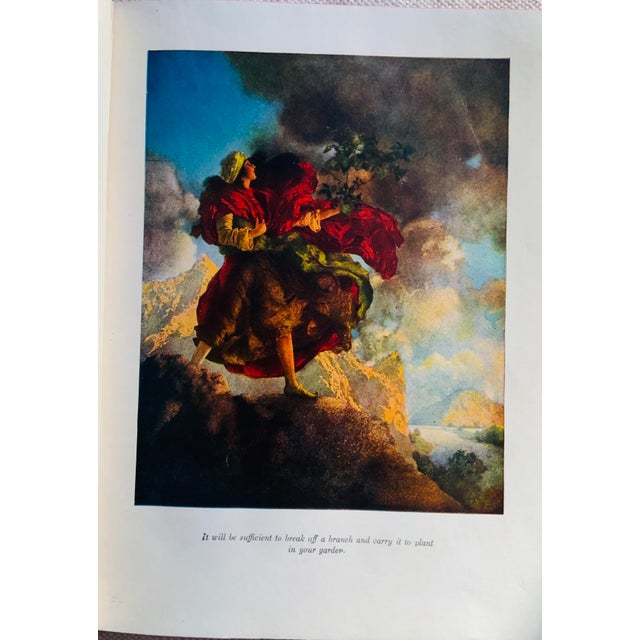
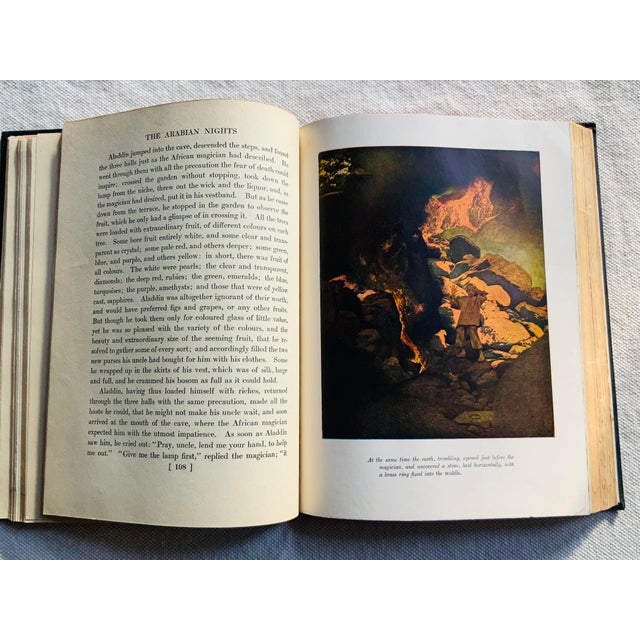
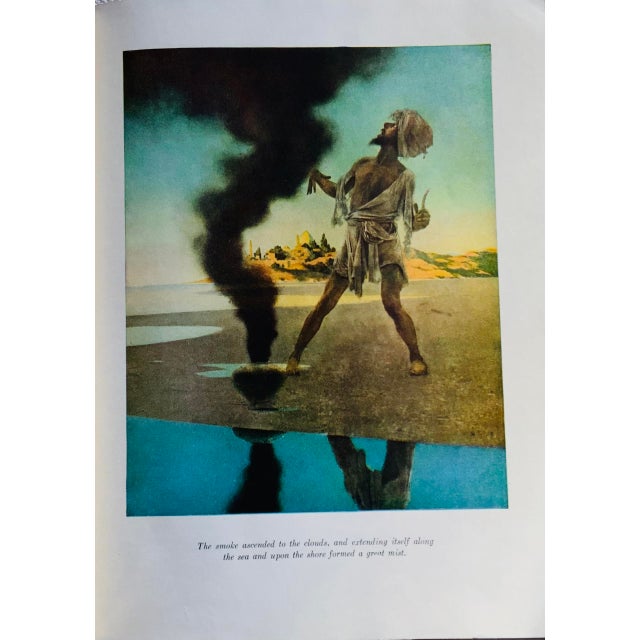
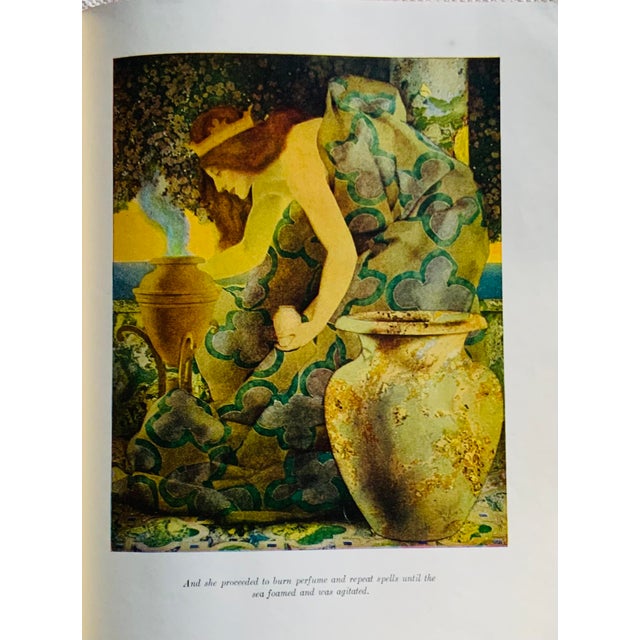
And it was illustrated by Maxfield Parrish (1870–1966) — perhaps the most luminous figure of America's Golden Age of Illustration, whose career lasting more than half a century helped shape both the Golden Age of illustration and American visual arts more broadly. Wikipedia He illustrated poetic narratives set in otherworldly landscapes of ancient gnarled trees, tumbling waterfalls, and azure skies, painted with precision and dreamlike clarity. Encyclopedia Britannica His technique was extraordinary: he would apply numerous layers of thin, transparent oil, alternating with varnish, a painstaking process that achieved both high luminosity and extraordinary detail. Literary Ladies Guide His cobalt blues were so distinctive that the shade became known simply as "Parrish Blue." For The Arabian Nights specifically, his illustrations incorporated sweeping architectural elements — magnificent staircases, towering pillars Encyclopedia.com — and figures rendered with the drama and gravity of the Old Masters he had studied as a young man traveling through Europe. His works hang today in the Metropolitan Museum of Art, the Philadelphia Museum of Art, and the Cleveland Museum of Art. The Literature Network This was not a man who did book illustrations as a side project. He brought the full weight of his genius to the page.
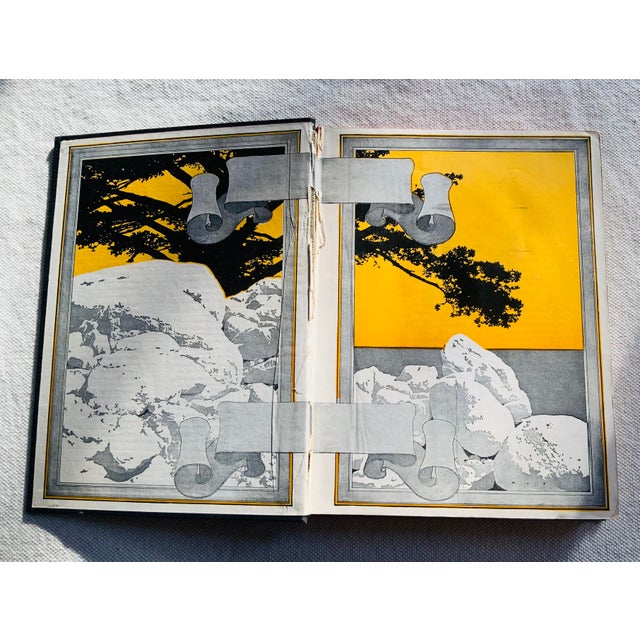
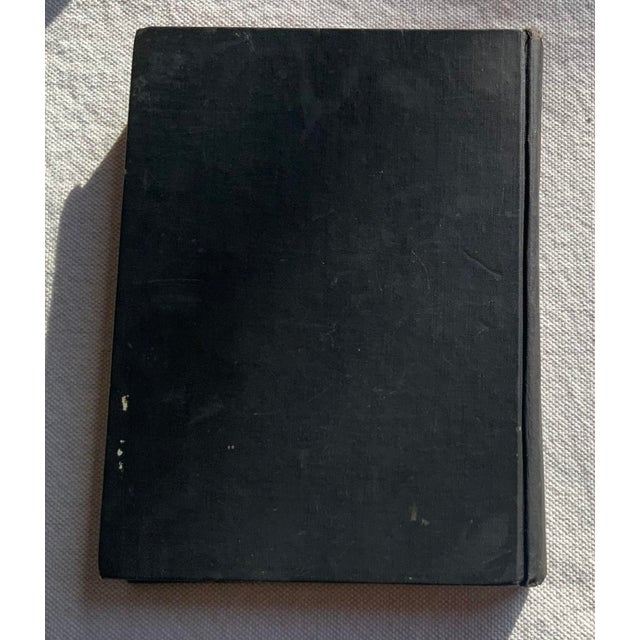
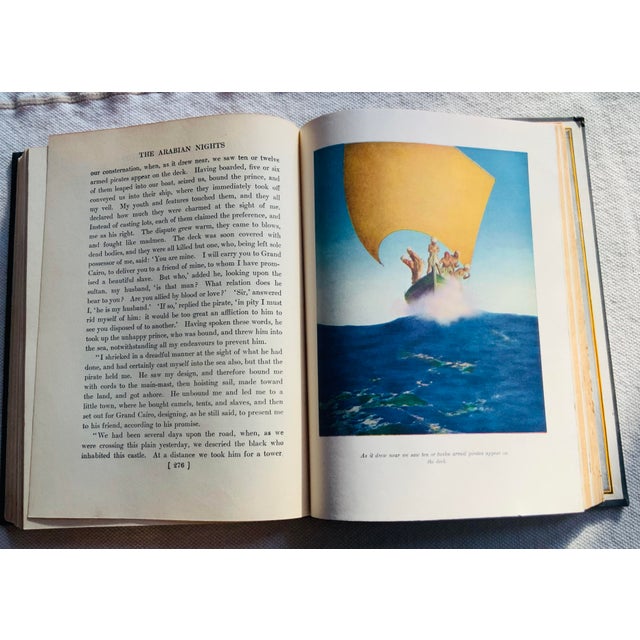
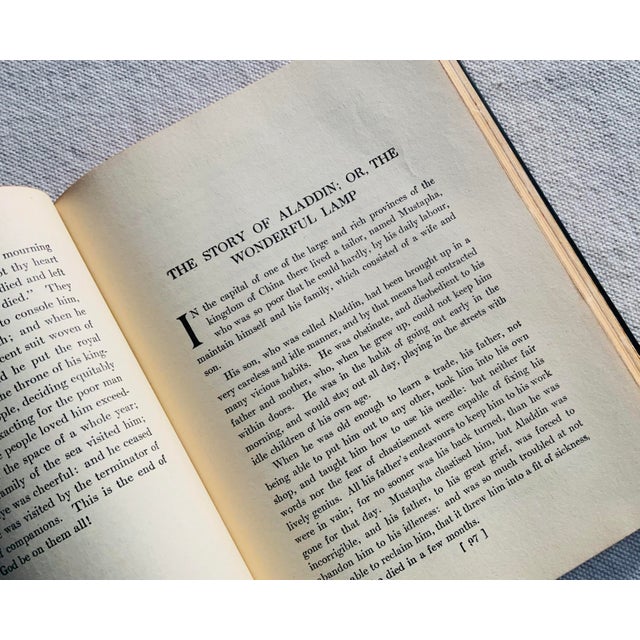
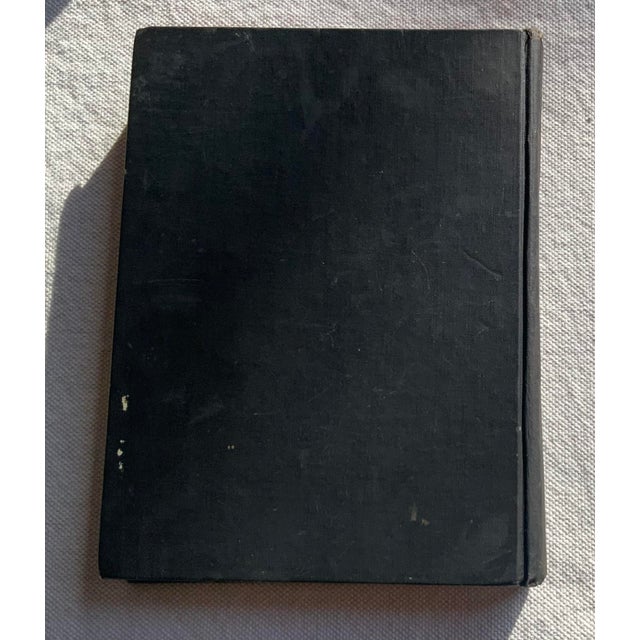
The book has aged superbly — as well-made things do. Like all the best older books, this one shows the evidence of being genuinely read: carried from room to room, passed between hands, shared on long summer afternoons on the island. A summer house book lives differently than a library book. It travels. It gets picked up by guests. It gets read aloud on porches, left on window seats, returned to over decades. This copy has that quality about it — a warmth worn in rather than worn out. The black cloth boards bear the illustrated cover in warm ochres and deep turquoise. The endpapers are a gorgeous two-tone design in orange and grey — Parrish's hand felt from the very first opening. Inside, the full-color plates face the text pages, each one a small painting. The pages are cream and holding; the illustrations crisp and complete.
Someone knew better than to let this one go. Now it's ready for its next shelf.
Dimensions: Approximately 8.5" × 6" × 1"
See less
- Dimensions
- 7.5ʺW × 1.25ʺD × 9.5ʺH
- Period
- 1940s
- Country of Origin
- United States
- Item Type
- Vintage, Antique or Pre-owned
- Materials
- Paper
- Condition
- Good Condition, Original Condition Unaltered, Some Imperfections
- Color
- Cream
- Condition Notes
- Loving cared for and read over and over Loving cared for and read over and over less
Questions about the item?
Returns & Cancellations
Return Policy - All sales are final 48 hours after delivery, unless otherwise specified in the description of the product.
Cancellation Policy - Prior to shipping or local pickup, buyers may cancel an order for up to 48 hours, unless otherwise specified.
Related Collections
- Ralph Lauren Books
- Bone Books
- Porcelain Books
- Celadon Books
- Oyster Gray Books
- The Hudson River School Books
- Gustav Klimt Books
- Vienna Secession Books
- Raoul Dufy Books
- Fernand Léger Books
- Gemstone Books
- René Magritte Books
- Digital Books
- Leather Books
- Coffee Table Books
- Pink Books
- Cartier Books
- Decorative Books
- Alabaster Books
- Byzantine Books