






Details
Description
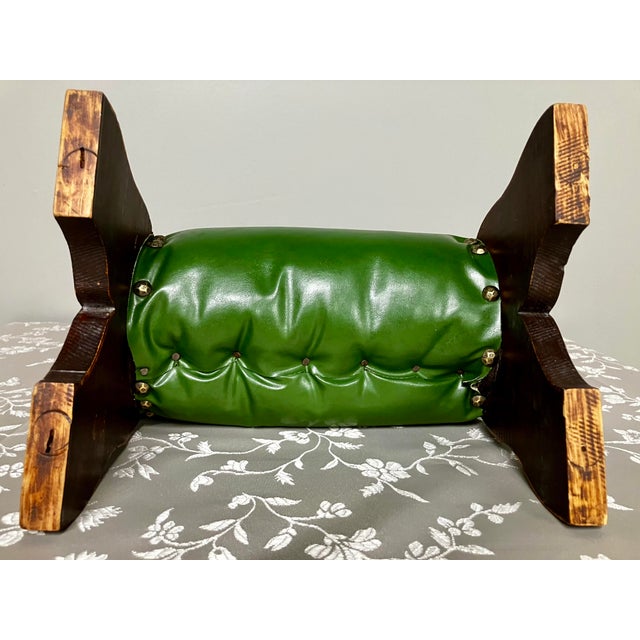
This remarkable antique "rolling pin" gout stool, dating to the late 19th or early 20th century, is a standout example …
Read more
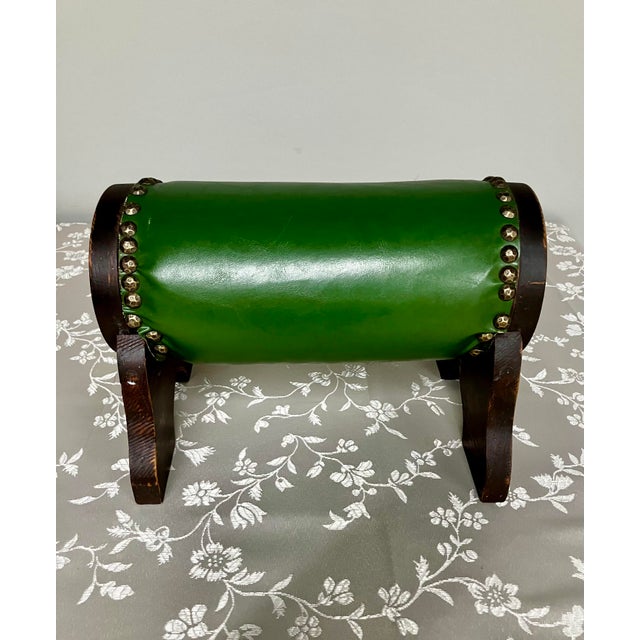
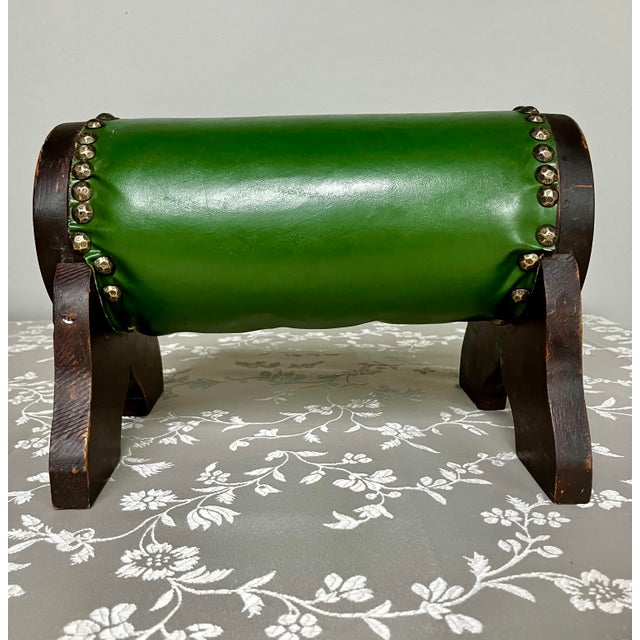
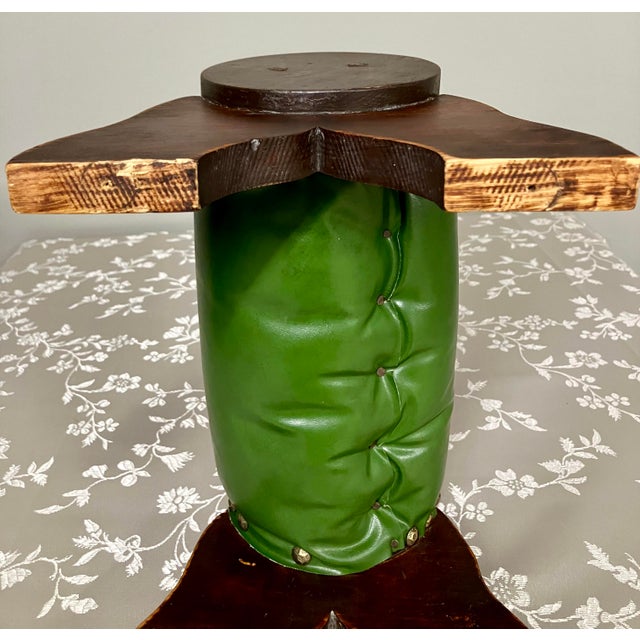
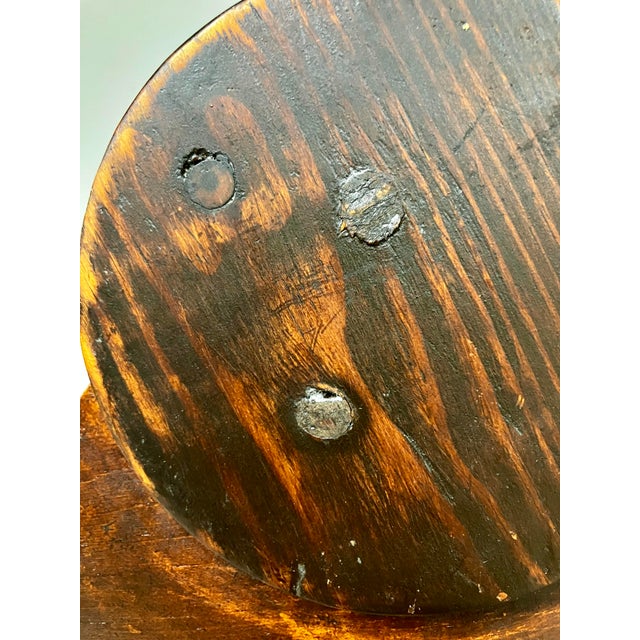
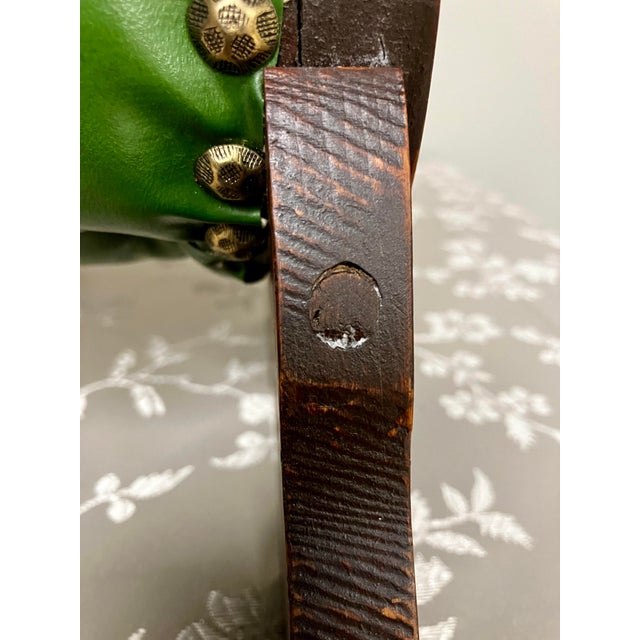
This remarkable antique "rolling pin" gout stool, dating to the late 19th or early 20th century, is a standout example of early medical furniture transitioned into high-end decor. The standout feature is its hand-pegged mortise-and-tenon joinery, an artisan detail that confirms its storied, bench-made origin. The cylindrical "rolling pin" form is upholstered in a striking verdant green leatherette, creating a bold, curated pop of color that perfectly complements the deep, honest patina of the dark-stained hardwood base.
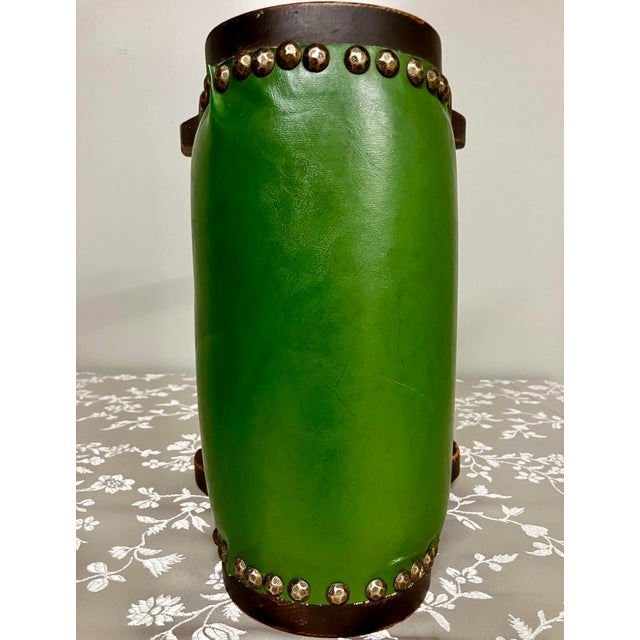
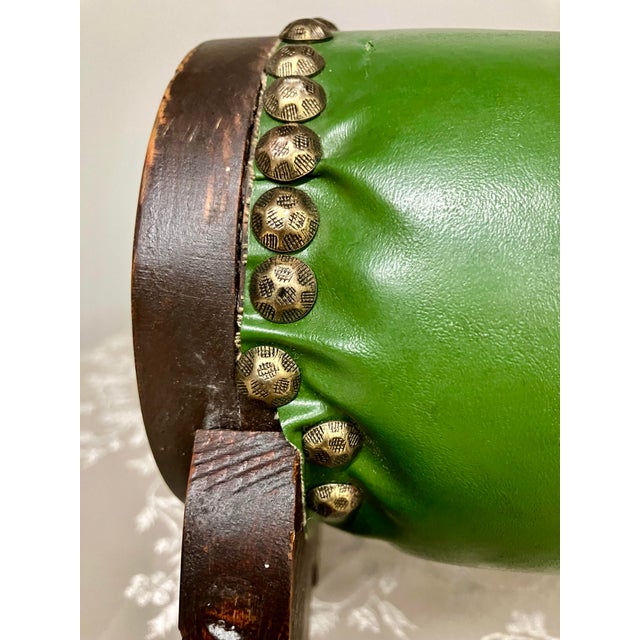
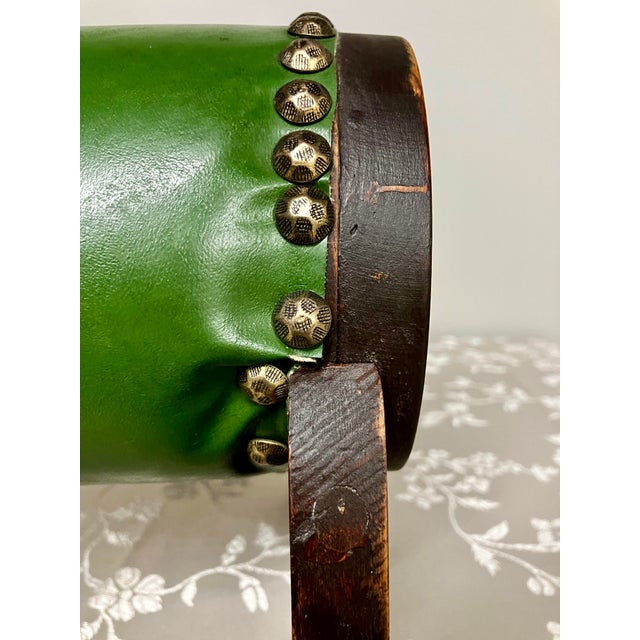
The piece is accented with a meticulously applied row of antiqued brass-tone nailhead trim, highlighting its unique sculptural silhouette. Originally designed to offer ergonomic comfort, it now serves as a high-end vintage accent piece for a library, hearth, or eclectic living space. This stool is a quintessential find for the collector who values authentic construction and a vibrant, storied aesthetic.
This specific "rolling pin" style was a specialty piece, often referred to as a medical or "gout" stool, designed to provide elevated, ergonomic relief.
Known as the "Disease of Kings," gout was historically associated with the wealthy, who indulged in rich foods and wine. Because the pain was so excruciating, specialized furniture like your gout stool was created as a high-status medical necessity.
The Story of the Piece: A Throne for the "King of Diseases"
While it appears as a charming decorative accent today, this antique rolling pin stool has a storied past rooted in 19th-century luxury and medical necessity. Historically known as a gout stool, it was a specialized tool used by the affluent to find relief from "the disease of kings"—a painful form of arthritis often brought on by the rich diets of the aristocracy.
The unique cylindrical "rolling pin" design was intentional; its ergonomic curve allowed a sufferer to elevate their foot at a precise angle, providing relief from inflammation without the pressure of a flat surface. Unlike the mass-produced versions of the mid-20th century, this particular stool features authentic hand-pegged joinery, a hallmark of an artisan-crafted "bench-made" piece.
In an era before modern medicine, such a stool was a prized possession, often kept by the fireside in a private library or study. Today, it has transitioned from a medical aid into a curated design object. Its vibrant, verdant green upholstery and honest, centuries-old patina tell a story of resilience and high-end craftsmanship, making it a conversation-starting addition to any modern, sophisticated interior.
You can position this stool within these three trending 2026 interior styles. Each style values the specific verdant green color and the authentic pegged joinery of your piece:
1. Dark Academia
This aesthetic is centered around a scholarly, "moody" atmosphere that prioritizes vintage textures like leather, dark wood, and deep greens.
Why it fits: The dark-stained wood and "rolling pin" shape evoke a 19th-century professor's study or a private library.
Styling Tip: Suggest it as a "library footrest" next to a floor-to-ceiling bookshelf and a leather wingback chair.
2. Grandmillennial ("Granny Chic")
A major trend for 2026, this style celebrates "storied antiques" and "nostalgic" items that look like high-end heirlooms from a grandparent's home.
Why it fits: The stool’s "rolling pin" silhouette and traditional nailhead trim are quintessential "heritage" details that feel curated and personal.
Styling Tip: Use it as a sculptural accent in a sunroom or bedroom featuring floral wallpaper and pleated lampshades.
3. Elegant Maximalism
Unlike cluttered maximalism, this 2026 evolution focuses on "curated excess," where every antique has a job and a story.
Why it fits: The verdant green acts as a "saturated neutral" that can hold its own against bold patterns like botanicals or animal prints.
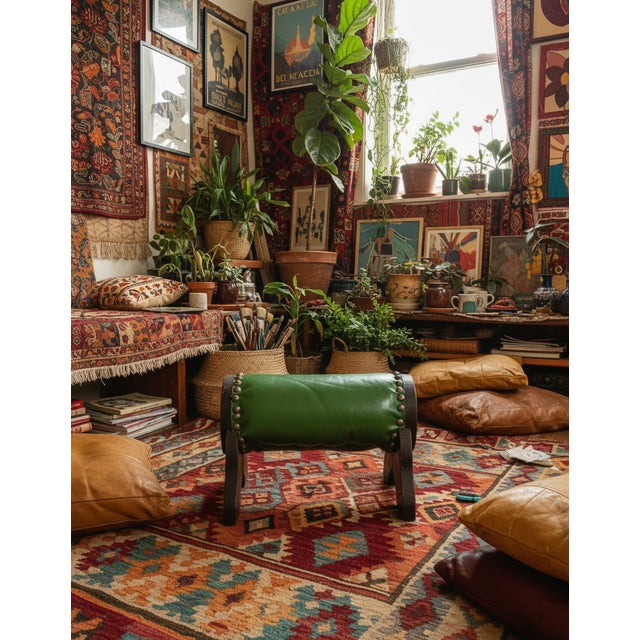
Styling Tip: Position it as a "pop of color" in a high-contrast room, perhaps paired with a chocolate brown sofa or a vibrant, patterned rug.
Victorian, Edwardian, Primitive, Curated Antique, Dark Academia, Grandmillennial, Library, Study, Fireside, Reading Nook, Bedroom, Mortise and Tenon, Pegged Joinery, Rolling Pin Stool, Gout Stool, Hunter Green, Antique Gout Stool, Cylinder Footstool, Rolling Pin Stool, Primitive Footrest, Bench-made Stool, 19th Century Antique, Early 20th Century, Edwardian, Victorian, American Primitive, Country Antique, Mortise and Tenon, Hand-Crafted, Artisan Made, Solid Wood, Original Patina, Dark Academia, Grandmillennial, English Country House, Library Decor, Curated Vintage, Rustic Luxury, Verdant Green, Hunter Green, Forest Green, Emerald Vinyl, British Racing Green, Brass Nailhead Trim, Stained Hardwood, High-End Eclectic, Masculine Office, Fireside Accent, Small Space Seating, Unique Gift for Bibliophile, Statement Footstool, Historic Medical Furniture, Curated Oddity.
See less
- Dimensions
- 11.25ʺW × 8.25ʺD × 8ʺH
- Seat Height
- 8.0 in
- Period
- Early 20th Century
- Country of Origin
- United States
- Item Type
- Vintage, Antique or Pre-owned
- Materials
- Leatherette
- Metal
- Wood
- Condition
- Good Condition, Original Condition Unaltered, Some Imperfections
- Color
- Green
- Condition Notes
- Overall Condition: Excellent Antique Condition This piece is in exceptional shape for its estimated age (circa 1890–1920). It remains a … moreOverall Condition: Excellent Antique Condition This piece is in exceptional shape for its estimated age (circa 1890–1920). It remains a sturdy, functional, and visually striking accent. Structural Integrity Joinery: The hand-pegged mortise-and-tenon joints are remarkably tight. There is no wobbling, "play," or structural movement in the base. Stability: The stool sits perfectly level on its four bracket-style feet. Wood & Finish Patina: The dark-stained hardwood displays a rich, authentic original patina. It features "honest wear"—minor nicks and softening of the edges—that confirms its antique status. Surface: There are no major cracks, deep gouges, or signs of past woodworm. The finish remains warm and lustrous, with light surface scuffing on the feet commensurate with over a century of use. Upholstery & Trim Material: The verdant green leatherette is in very good condition. It remains supple and maintains its vibrant hue without significant fading. Wear: There is a light, natural "crinkling" or softening to the top of the cylinder, typical of vintage upholstery. No rips, tears, or visible stains were noted. Nailheads: The brass-tone decorative tacks are all present and secure, showing a light, attractive oxidation that adds to the antique character. While this item shows signs of its long history, these minor imperfections are considered desirable 'patina' and serve as proof of its authentic hand-crafted origin. It is ready for immediate use in a high-end interior. less
Questions about the item?
Returns & Cancellations
Return Policy - All sales are final 48 hours after delivery, unless otherwise specified in the description of the product.
Cancellation Policy - Prior to shipping or local pickup, buyers may cancel an order for up to 48 hours, unless otherwise specified.
Related Collections
- Louis XIV Ottomans and Footstools
- Ingmar Relling Ottomans and Footstools
- Seagrass Ottomans and Footstools
- Gio Ponti Ottomans and Footstools
- Mies Van der Rohe Ottomans and Footstools
- Weiman Ottomans and Footstools
- Horn Ottomans and Footstools
- Full-Grain Leather Ottomans and Footstools
- Black Leather Ottomans and Footstools
- Brown Leather Ottomans and Footstools
- Victorian Ottomans and Footstools
- Fringe Ottomans
- Asian Ottomans and Footstools
- Coffee Table Ottomans
- Skirted Ottomans
- Ethan Allen Ottomans and Footstools
- French Ottomans and Footstools
- Zebra Ottomans
- English Traditional Ottomans and Footstools
- Rattan Ottomans and Footstools
- Tufted Leather Ottomans
- Bamboo Ottomans and Footstools
- Turkish Ottomans and Footstools
- Mid-Century Modern Ottomans and Footstools
- Vinyl Ottomans and Footstools