




Details
Description
Antique Indian cotton textile panel printed with wooden blocks, dating to the second half of the 19th century.
The panel …
Read more
Antique Indian cotton textile panel printed with wooden blocks, dating to the second half of the 19th century.
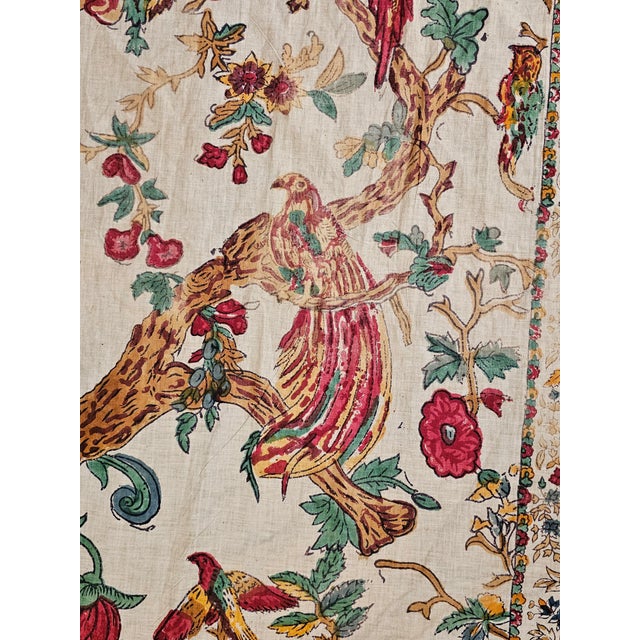
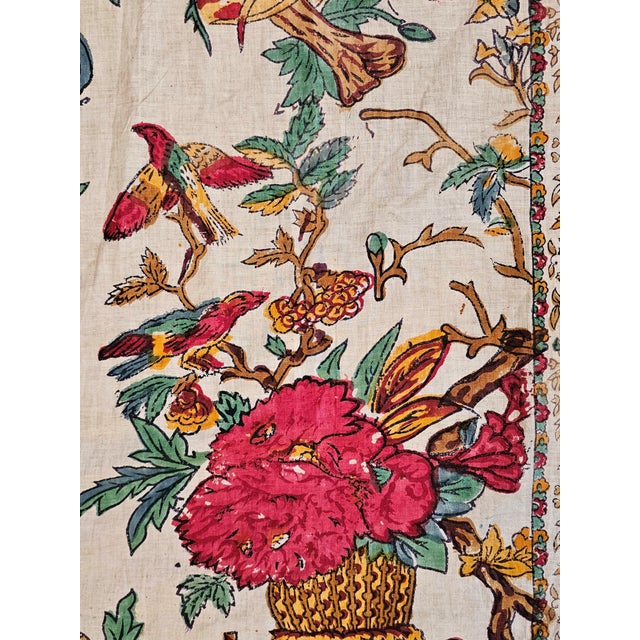
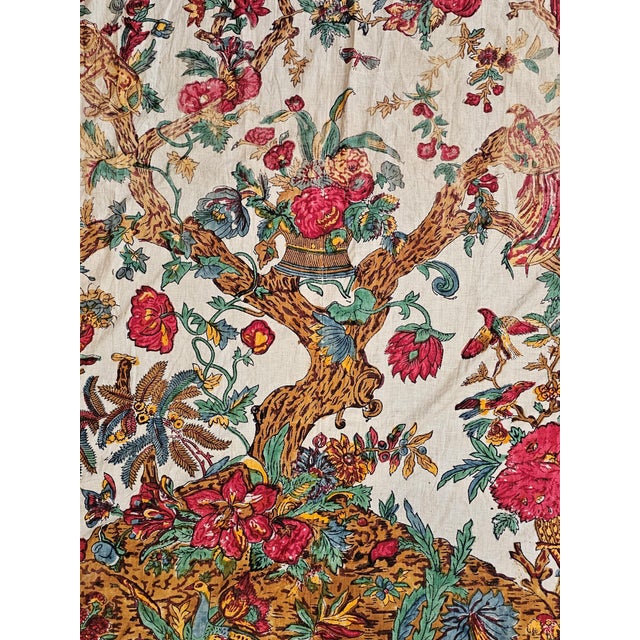
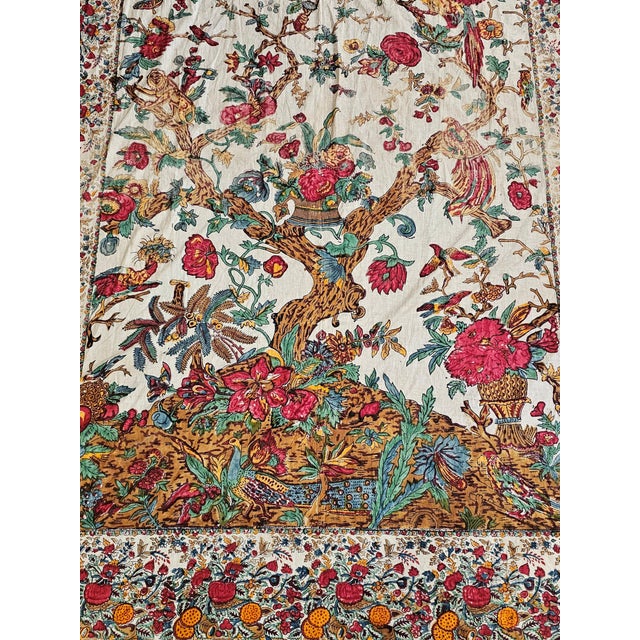
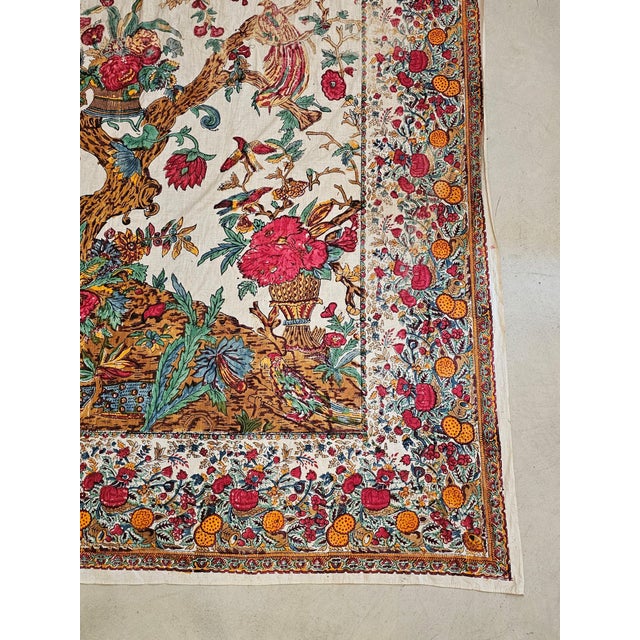
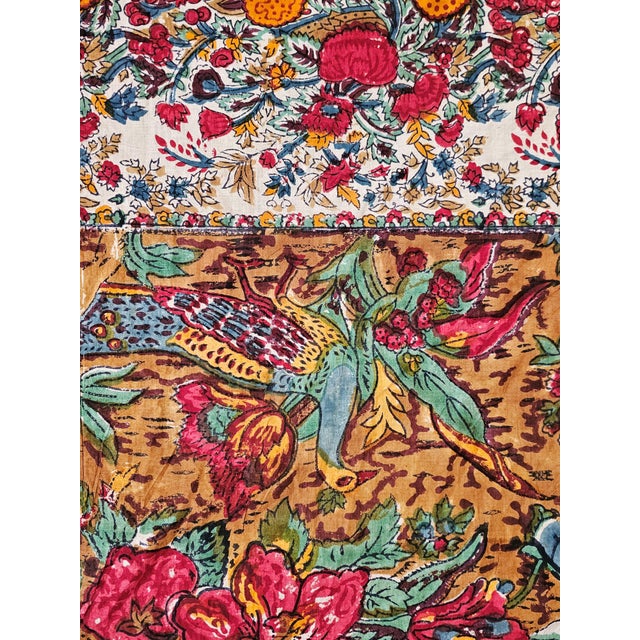
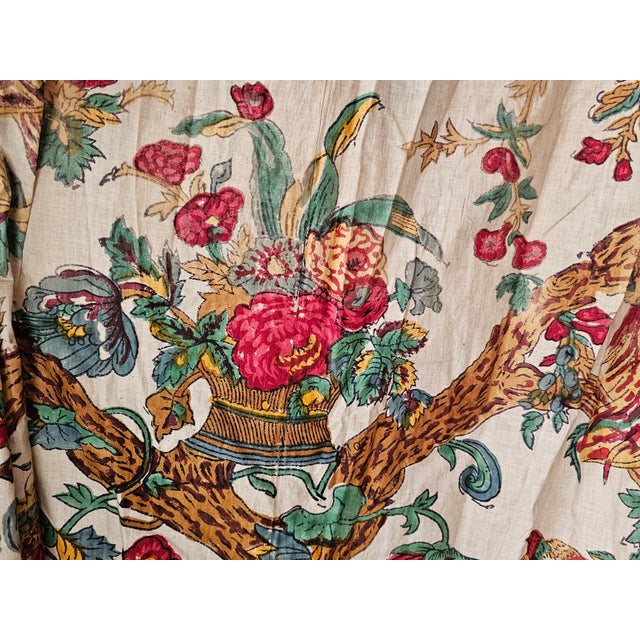
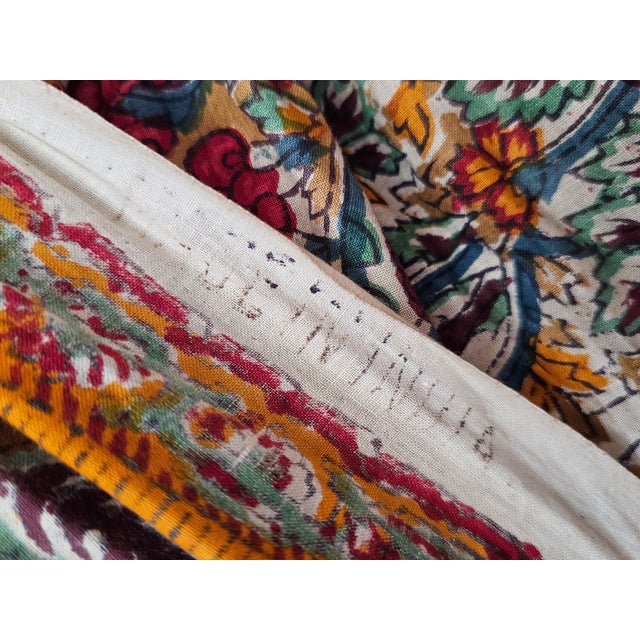
The panel features a rich polychrome decoration centered on the iconic “Tree of Life” motif, populated by birds, flowers and fruits. The composition, organized around a flowering tree rising from a stylized mound, strongly recalls the ornamental structure of the famous Genoese mezzari — large decorative textiles produced in Genoa between the 17th and 18th centuries.
Textiles of this type are often associated with the tradition of Indian palampores, large hand-printed cotton cloths decorated with the Tree of Life motif that were highly prized in Europe from the 17th century onward. These fabrics represent a fascinating example of cultural exchange between East and West.
During the 18th century, the celebrated Indian chintz textiles conquered European markets and profoundly influenced Western textile production, inspiring local manufactories and decorative traditions such as the Genoese mezzaro.
In the 19th century the process partially reversed: Indian workshops began to reinterpret European decorative models that had themselves been inspired by Indian textiles. As a result, some Indian export fabrics adopted compositional schemes very close to those used in Genoese mezzari, including the large central tree populated with birds and animals.
The lively block printing displays traditional colors in shades of red, green, ochre and blue on a light ground. The central flowering tree with exotic birds and abundant vegetation clearly echoes the ornamental language found in Ligurian mezzari such as the well-known “Macaco” (Monkey) pattern.
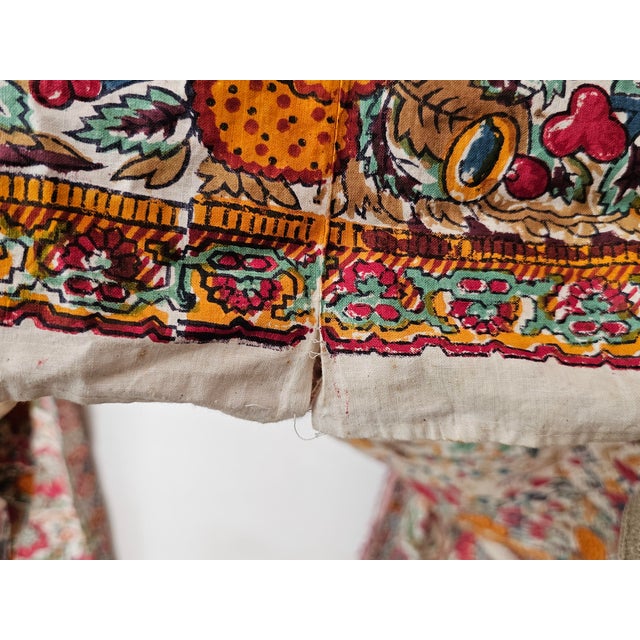
The textile is constructed from two large cotton panels hand-sewn together. Each panel measures approximately 91 cm in width, creating a total textile width of about 182 cm. This construction method was typical for large hand-printed cotton textiles.
Originally part of a larger decorative cloth, the piece is now presented as a single panel.
Thanks to its generous scale and strong visual impact, the textile can be used in several decorative ways, such as:
– wall hanging or framed textile
– decorative interior panel
– curtain panel
– bed or sofa cover in eclectic interiors
A textile of great historical and decorative charm, particularly appealing for collectors of antique textiles, Indian chintz and Mediterranean decorative fabrics.
Companion textile panel available in our gallery.
Origin: India
Period: second half of the 19th century
Material: cotton
Technique: traditional hand block printing
Dimensions:
Width: 182 cm
Length: 261 cm
Condition: good antique condition with signs of age consistent with use
See less
- Dimensions
- 71.65ʺW × 102.76ʺH
- Period
- 19th Century
- Country of Origin
- India
- Item Type
- Vintage, Antique or Pre-owned
- Materials
- Cotton
- Condition
- Good Condition, Unknown, Some Imperfections
- Color
- Beige
- Condition Notes
- Patina Consistent with Age and Use Patina Consistent with Age and Use less
Returns & Cancellations
Return Policy - All sales are final 48 hours after delivery, unless otherwise specified in the description of the product.
Cancellation Policy - Prior to shipping or local pickup, buyers may cancel an order for up to 48 hours, unless otherwise specified.
Related Collections
- Loloi Rugs Textile Art
- Louis XIII Textile Art
- Resin Textile Art
- Workaday Handmade Textile Art
- Chanel Textile Art
- Antique Gold Finish Textile Art
- Kenneth Ludwig Chicago Textile Art
- Mid-Century Modern Textile Art
- Chinese Textile Art
- Japanese Textile Art
- Tapestry
- Framed Scarves
- Scandinavian Textile Art
- Aubusson Tapestry
- Edwardian Textile Art
- Cardboard Textile Art
- Ralph Lauren Textile Art
- Märta Måås-Fjetterström Textile Art
- Pablo Picasso Textile Art
- Space Age Textile Art
- Surrealism Textile Art
- Brutalist Textile Art