

Details
Description
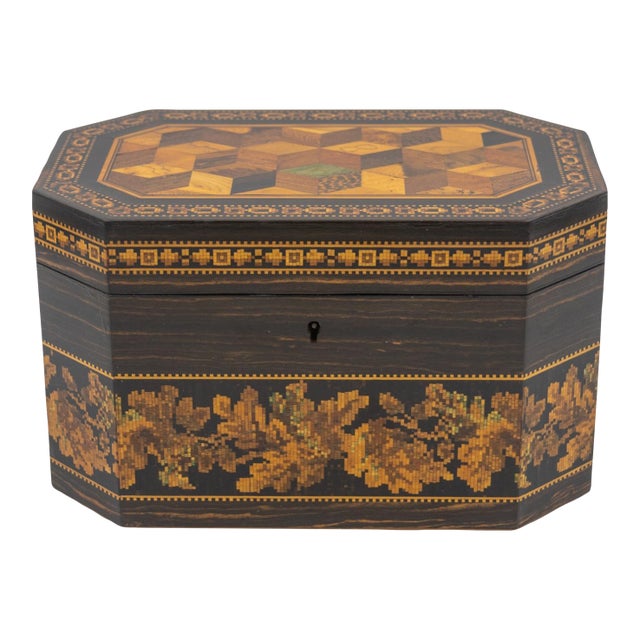
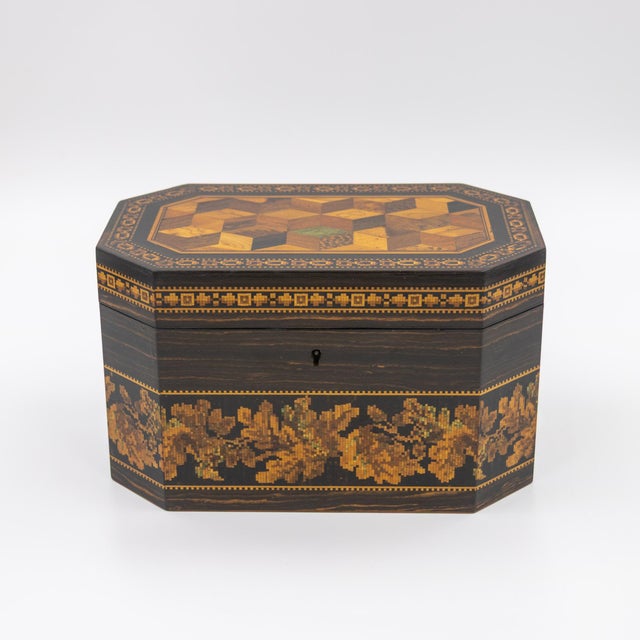
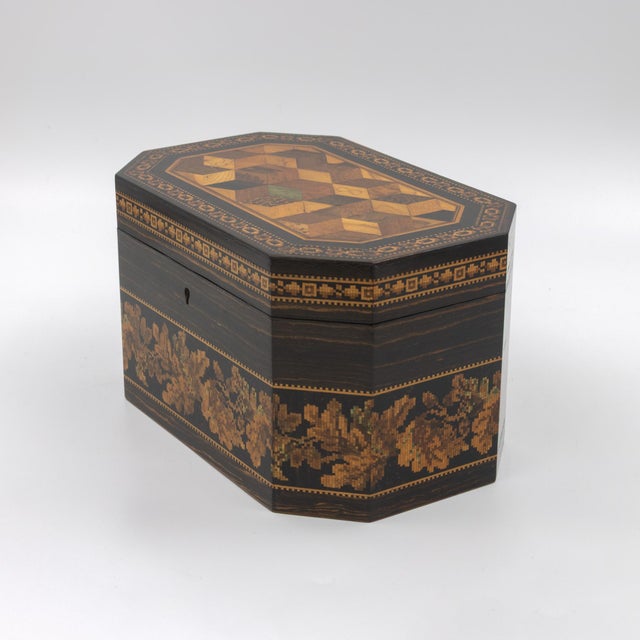
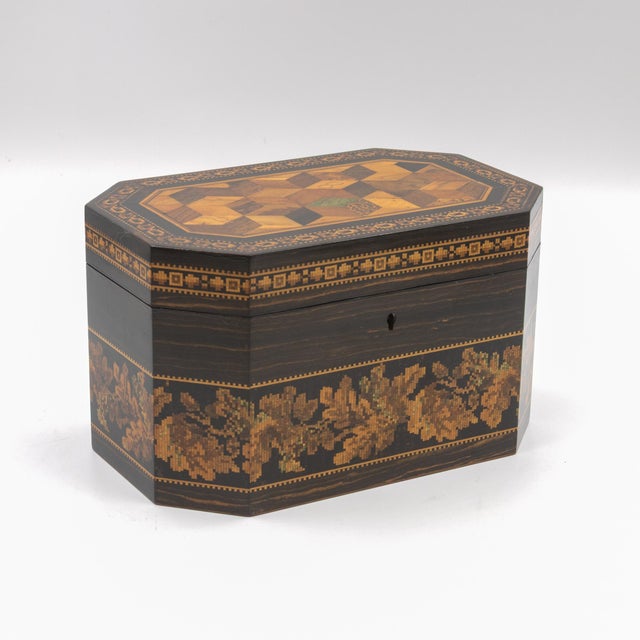
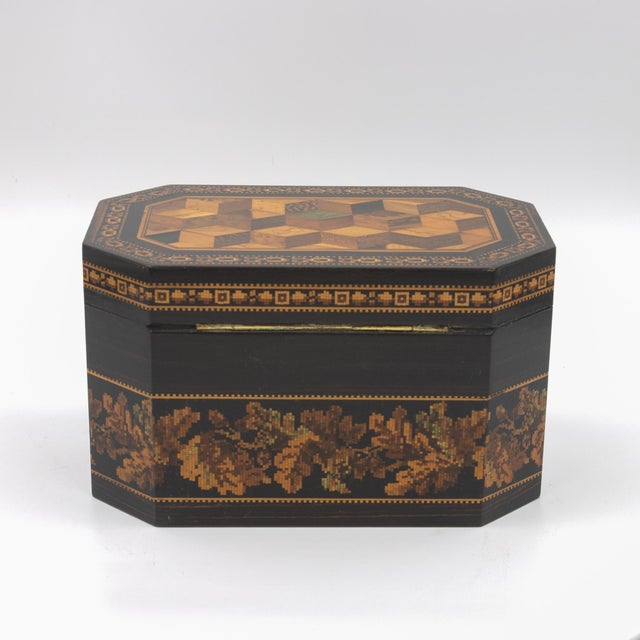
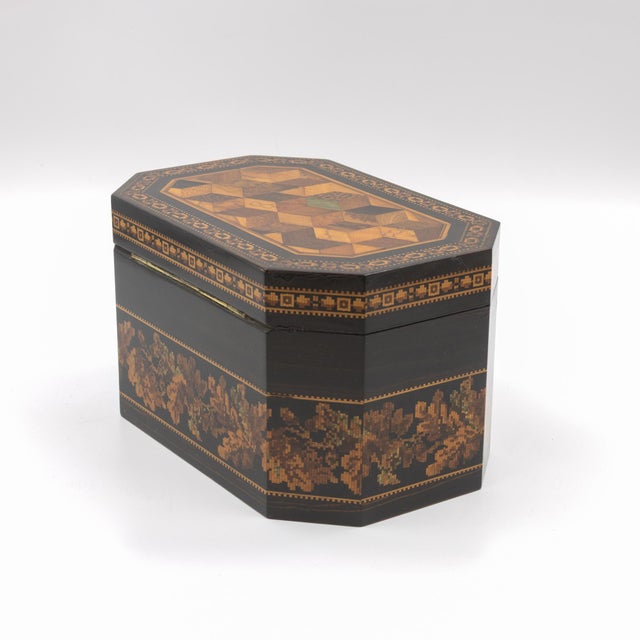
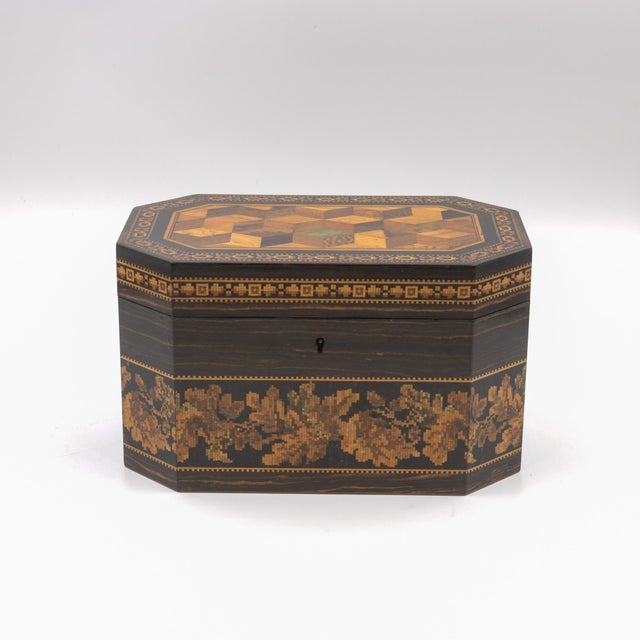
A hexagonal Tunbridgeware tea caddy attributed to Thomas Barton 1, the lid inlaid with a central tumbling block mosaic composed …
Read more
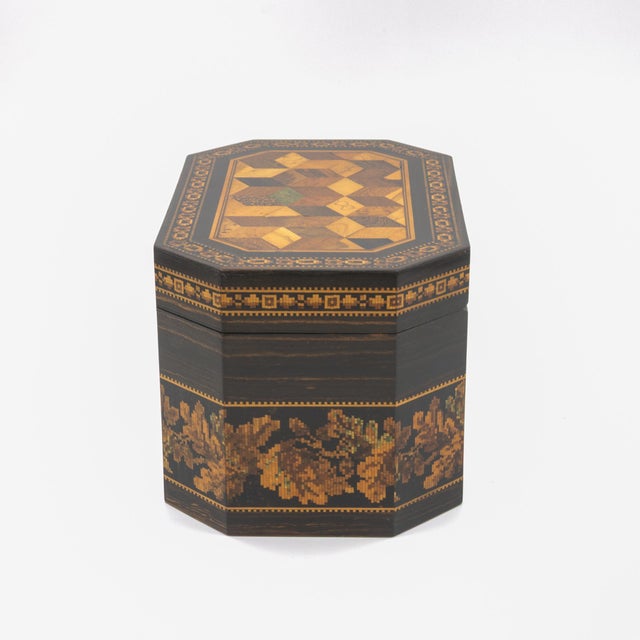
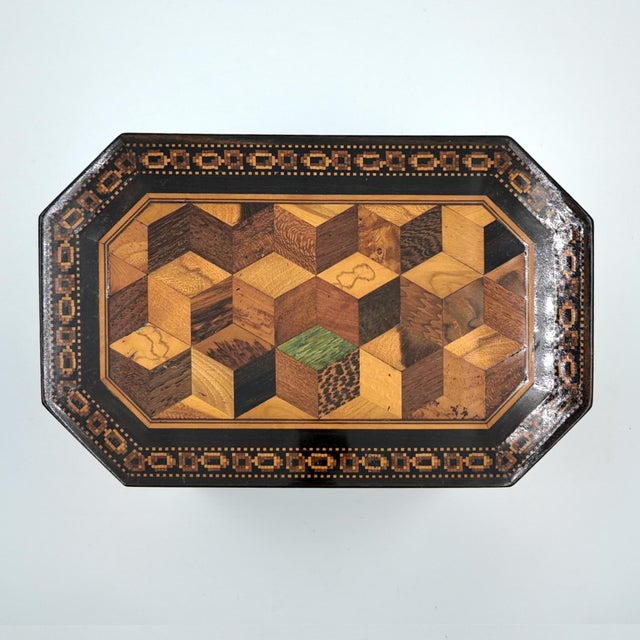
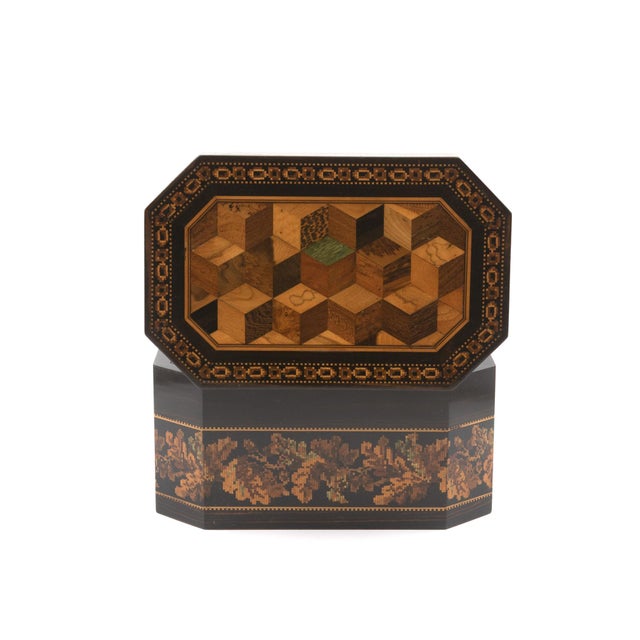
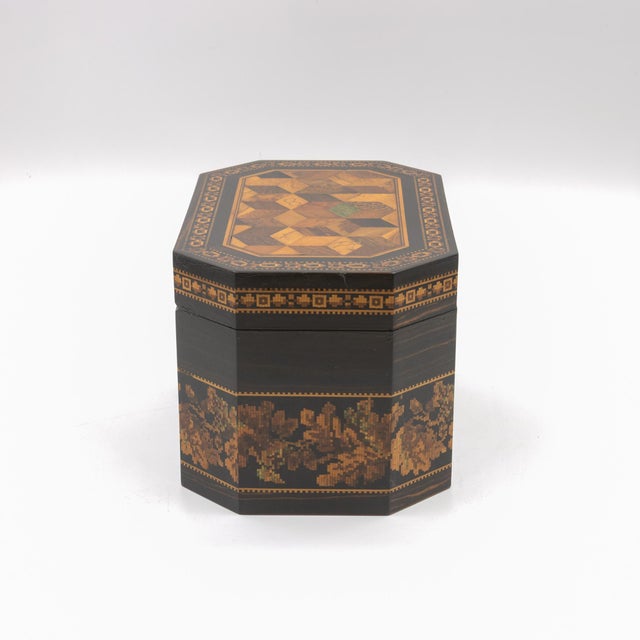
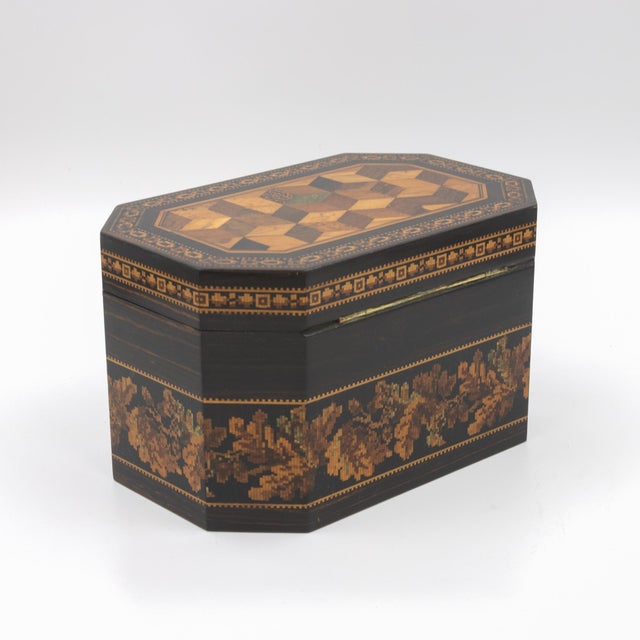
A hexagonal Tunbridgeware tea caddy attributed to Thomas Barton 1, the lid inlaid with a central tumbling block mosaic composed of multiple specimen woods and characteristic single green-stained tile, arranged within a double-line border and framed by geometric banding.
The sides with a continuous floral mosaic band in finely cut tesserae, set against a dark ground and enclosed by repeating geometric borders. The box retains its hexagonal form throughout, with crisp faceting to the body and lid.
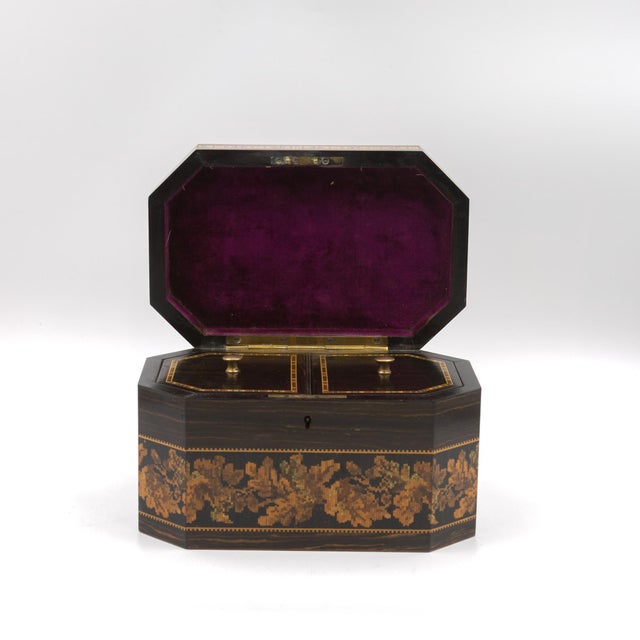
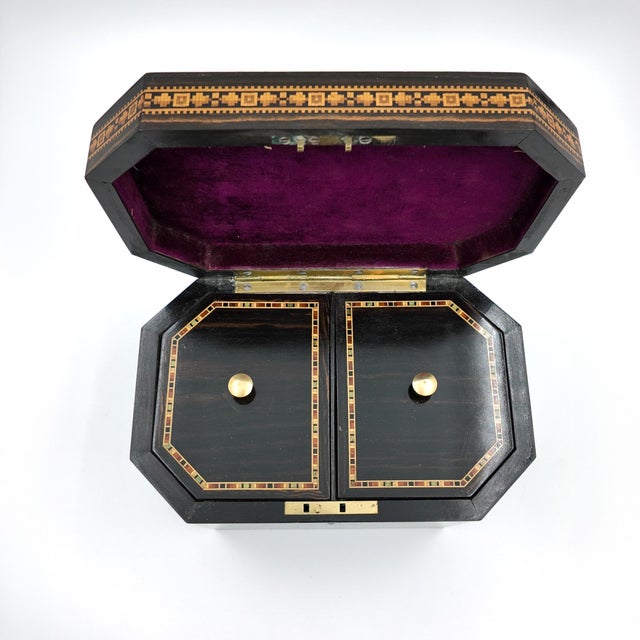
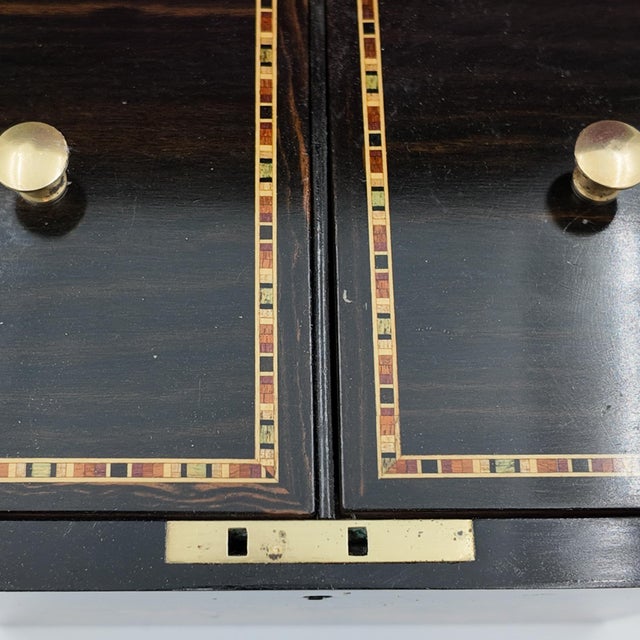
The interior fitted with two lidded compartments, each with a small turned knop and bordered with polychrome mosaic banding. The inside of the lid lined in burgundy velvet. Brass hinge and escutcheon; working lock and key.
Tunbridge Wells, Kent, circa 1865.
Height: 4.75 in. (12 cm.)
Width: 8 in. (20 cm.)
Depth: 5 in. (13 cm.)
Thomas Barton (c. 1819–1903) was among the most highly regarded Tunbridgeware makers of the Victorian period, active at Tunbridge Wells, Kent, for more than four decades. He began his career as an employee and designer for Edmund Nye, whose Mount Ephraim workshop — known as The Chalet — was one of the principal Tunbridgeware establishments of the mid-nineteenth century. Much of the design work for Nye's exhibits at the Great Exhibition of 1851 — including a galleon in full sail said to be composed of 110,800 pieces of wood — was the work of Barton.
Barton's preferred style was dark backgrounds of mahogany or coromandel, and inlays incorporating oak stained bright green by a fungus tunbridgetales — a signature accent identifiable in the present caddy, where a single green-stained tile appears within the tumbling block mosaic of the lid.
When Nye died in 1863, Barton took advantage of the option left to him in Nye's will to purchase the lease on the Mount Ephraim and Pantiles properties, and continued producing Tunbridgeware at The Chalet for the next forty years. Finished work was sold through a shop on the Pantiles; visitors were received at the workshop by appointment.
When Barton died in 1903, aged 84, his obituary noted that he had also served as alderman, magistrate, chair of the Water Board, and chair of the Tradesmen's Association.
The Tunbridge Wells Museum and Art Gallery holds documented examples of his work and remains the primary institutional authority on maker attribution.
Source: Anne Carwardine, "1826. The Three Craftsmen," Tunbridge Tales, September 6, 2015. tunbridgetales.com/2015/09/06/1826-the-three-craftsmen/
See less
- Dimensions
- 8ʺW × 5ʺD × 4.75ʺH
- Period
- Mid 19th Century
- Country of Origin
- United Kingdom
- Item Type
- Vintage, Antique or Pre-owned
- Materials
- Wood
- Condition
- Good Condition, Original Condition Unaltered, Some Imperfections
- Color
- Brown
- Condition Notes
- Very good condition; minor restorations; working lock and key. Very good condition; minor restorations; working lock and key. less
Questions about the item?
Returns & Cancellations
Return Policy - All sales are final 48 hours after delivery, unless otherwise specified in the description of the product.
Cancellation Policy - Prior to shipping or local pickup, buyers may cancel an order for up to 48 hours, unless otherwise specified.
Related Collections
- Alessandro Albrizzi Boxes
- Enzo Mari Boxes
- Abaca Boxes
- Tony Duquette Boxes
- Anthony Redmile Boxes
- Violet Boxes
- Bright Green Boxes
- Ettore Sottsass Boxes
- Acacia Wood Boxes
- Zitan Boxes
- Port 68 Boxes
- Polyester Boxes
- Gustavsberg Boxes
- Jewelry Boxes
- Burlwood Boxes
- Hat Boxes
- Silver Boxes
- Japanese Boxes
- Pill Boxes
- Maitland - Smith Boxes
- Cigar Boxes
- Porcupine Quill Boxes
- Porcelain Boxes
- Alabaster Boxes
- Tool Boxes