

Details
Description
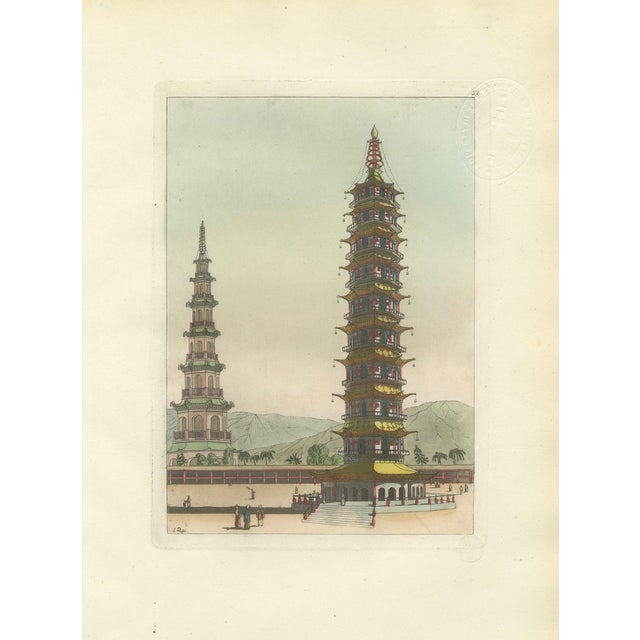
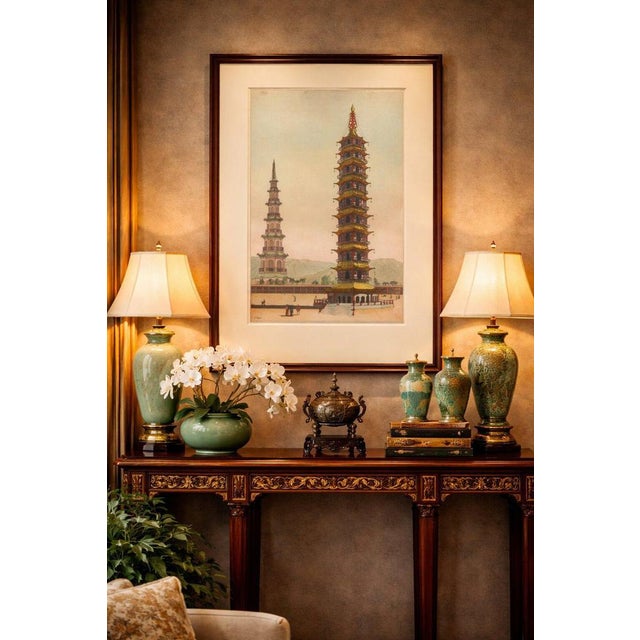
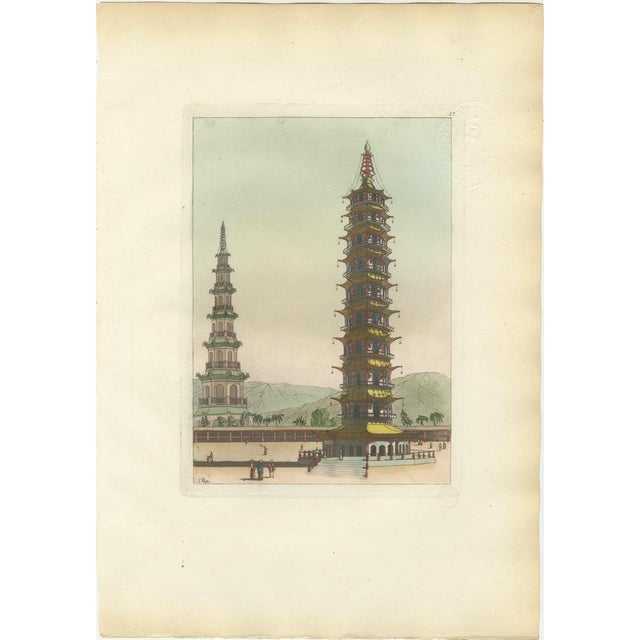
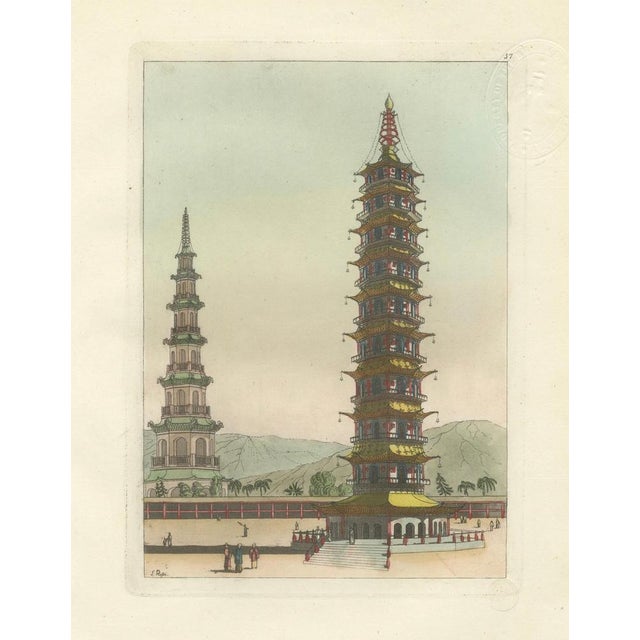
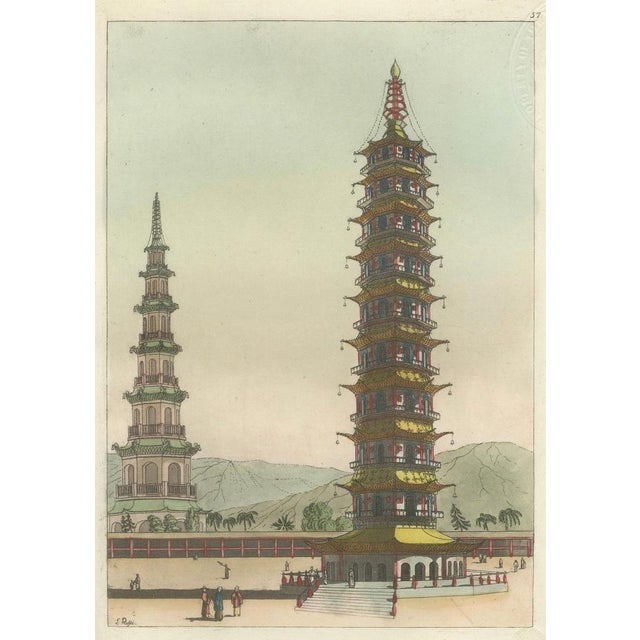
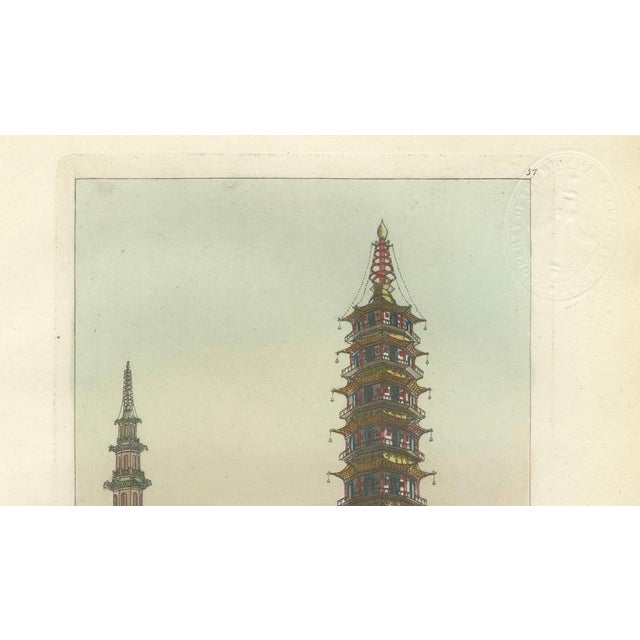
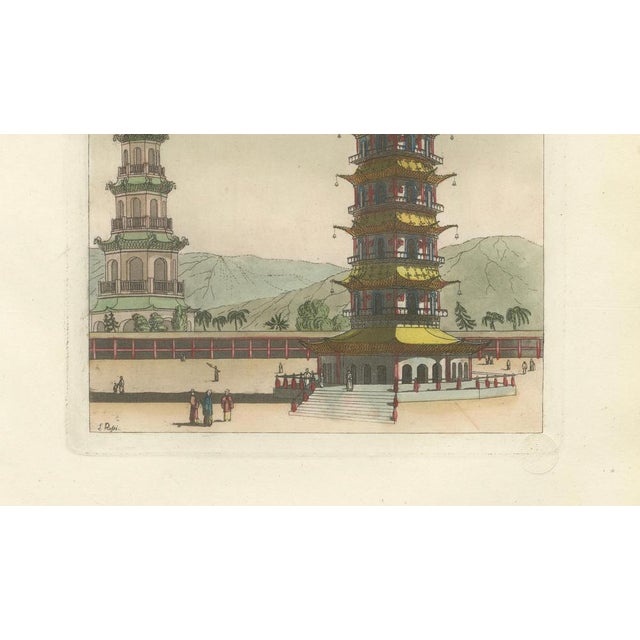
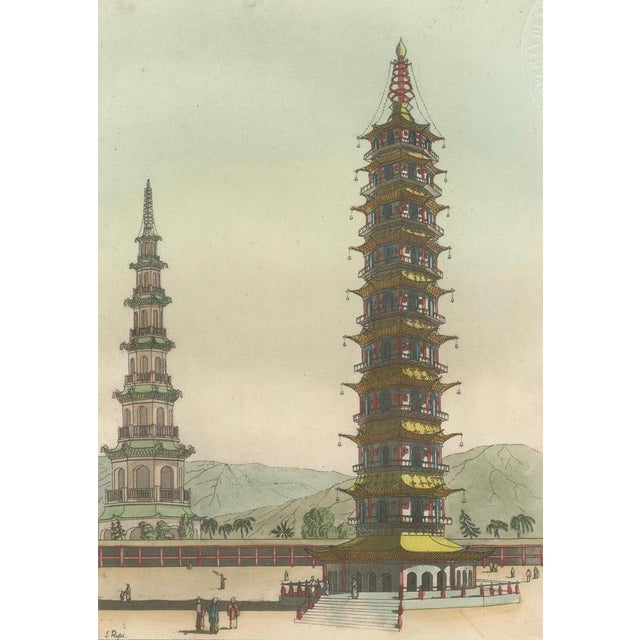
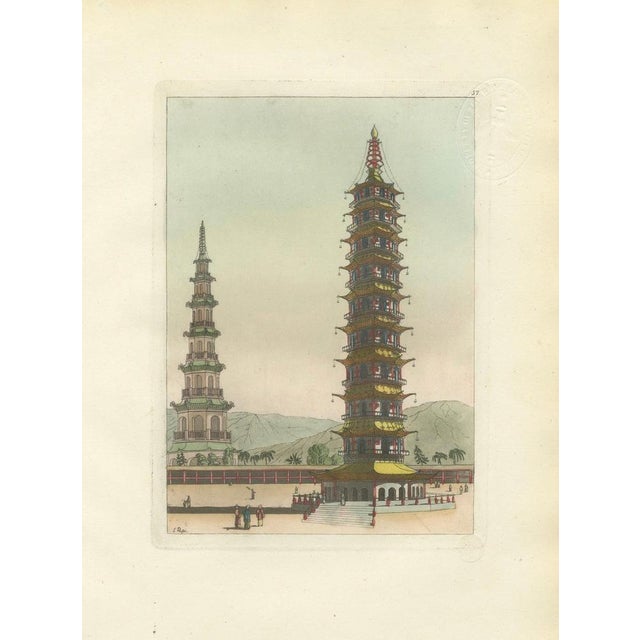
Porcelain Tower of Nanjing Pagoda – Ferrario Antique Chinese Architecture, 1815 : This finely hand-colored engraving depicts the celebrated Porcelain … Read more Porcelain Tower of Nanjing Pagoda – Ferrario Antique Chinese Architecture, 1815 : This finely hand-colored engraving depicts the celebrated Porcelain Tower of Nanjing, one of the most famous architectural monuments of imperial China. The image originates from Giulio Ferrario’s monumental publication Il Costume Antico e Moderno di Tutti i Popoli (Costumes Ancient and Modern of All Peoples), issued in Milan in the early nineteenth century. Ferrario’s ambitious multi-volume work sought to illustrate the architecture, customs, dress, and daily life of cultures around the world, offering European audiences a richly illustrated visual survey of global societies during the Enlightenment and early modern period. The composition centers on the remarkable Porcelain Tower of Nanjing, also known as the Pagoda of the Bao’en Temple. Built during the Ming Dynasty in the early fifteenth century under the Yongle Emperor, the tower was one of the most admired structures in China and became widely known to Europeans through travelers’ accounts and early illustrations. The pagoda stood approximately 79 meters (about 260 feet) tall and rose in nine elegant octagonal stories, each level marked by projecting roofs with gracefully curved eaves and decorative finials. The structure gained its name from the distinctive white porcelain bricks used in its construction. These glazed ceramic tiles reflected sunlight during the day and were said to shimmer brilliantly, giving the tower a luminous appearance. Contemporary s also note that the pagoda was adorned with colorful glazed decorations and hundreds of small bells suspended from the eaves, which produced a gentle musical sound when stirred by the wind. Within the print, the tower dominates the foreground, rising above the temple compound and surrounding walls. Small figures gathered near the base provide a sense of scale, emphasizing the monumentality of the structure. In the background, a second pagoda is shown across a mountainous landscape, reinforcing the architectural traditions of tiered Buddhist towers that became iconic symbols of Chinese religious architecture. The Porcelain Tower of Nanjing was long regarded by European travelers as one of the architectural marvels of Asia and was even described in some early accounts as one of the “Seven Wonders of the Medieval World.” Sadly, the original structure was destroyed in the nineteenth century during the Taiping Rebellion, bringing an end to one of China’s most celebrated historic monuments. In recent years the site has been revived with the construction of a modern commemorative tower, completed in 2015 near the original location. The engraving itself is executed with precise line work and enhanced with delicate hand coloring applied at the time of publication. The warm tones of the pagoda roofs and the carefully rendered architectural details give the print both historical interest and decorative appeal. Plates from Ferrario’s work are valued today for their combination of ethnographic curiosity, artistic refinement, and historical significance. This example is an original antique engraving with original hand coloring applied at the time of publication. It is not a modern reproduction. Any presentation images showing the print framed are for visual inspiration only. The print is supplied unframed. Condition: Good condition for a print of this age. Light age toning and minor scattered foxing in the margins. The plate mark remains clearly visible around the engraved image. Framing tips: This print frames beautifully with a warm ivory or light cream mat that complements the natural tone of the antique paper. A dark walnut or black frame provides an elegant contrast and emphasizes the tall vertical form of the pagoda, making it particularly striking as a decorative architectural print. Technique: Hand-colored engraving Maker: Luigi Rossi after designs for Giulio Ferrario, Milan, circa 1815 See less
- Dimensions
- 9.84ʺW × 13.78ʺH
- Period
- Early 19th Century
- Country of Origin
- Italy
- Item Type
- Vintage, Antique or Pre-owned
- Materials
- Paper
- Condition
- Good Condition, Unknown, Some Imperfections
- Color
- Black
- Condition Notes
- Very Good — This vintage item has no defects, but it may show slight traces of use\. Good condition for … moreVery Good — This vintage item has no defects, but it may show slight traces of use\. Good condition for a print of this age. Light age toning and occasional minor foxing in the wide margins. The plate mark remains clearly visible around the engraved image. less
Returns & Cancellations
Return Policy - All sales are final 48 hours after delivery, unless otherwise specified in the description of the product.
Cancellation Policy - Prior to shipping or local pickup, buyers may cancel an order for up to 48 hours, unless otherwise specified.
Related Collections
- Tatiana Alida Original Prints
- Frank Stella Original Prints
- Greg Copeland Original Prints
- William Meyerowitz Original Prints
- Gustave Baumann Original Prints
- Leonardo Nierman Original Prints
- Shaun Ellison Original Prints
- Robert Kipniss Original Prints
- Abraham Rattner Original Prints
- Louis XIII Original Prints
- Byzantine Original Prints
- Balmain Original Prints
- Damien Hirst Original Prints
- George Barbier Original Prints
- Botanical Prints
- Japanese Woodblock Prints
- Bird Prints
- Woodblock Prints
- Framed Prints
- Thomas McKnight Original Prints
- Black and White Prints
- Screen Prints
- Ross Bleckner Original Prints
- Clay Walker Original Prints
- Paul Wunderlich Original Prints